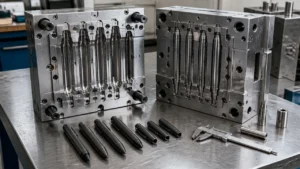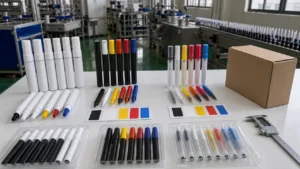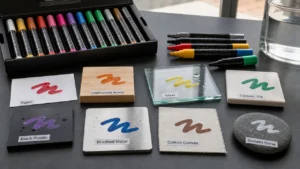
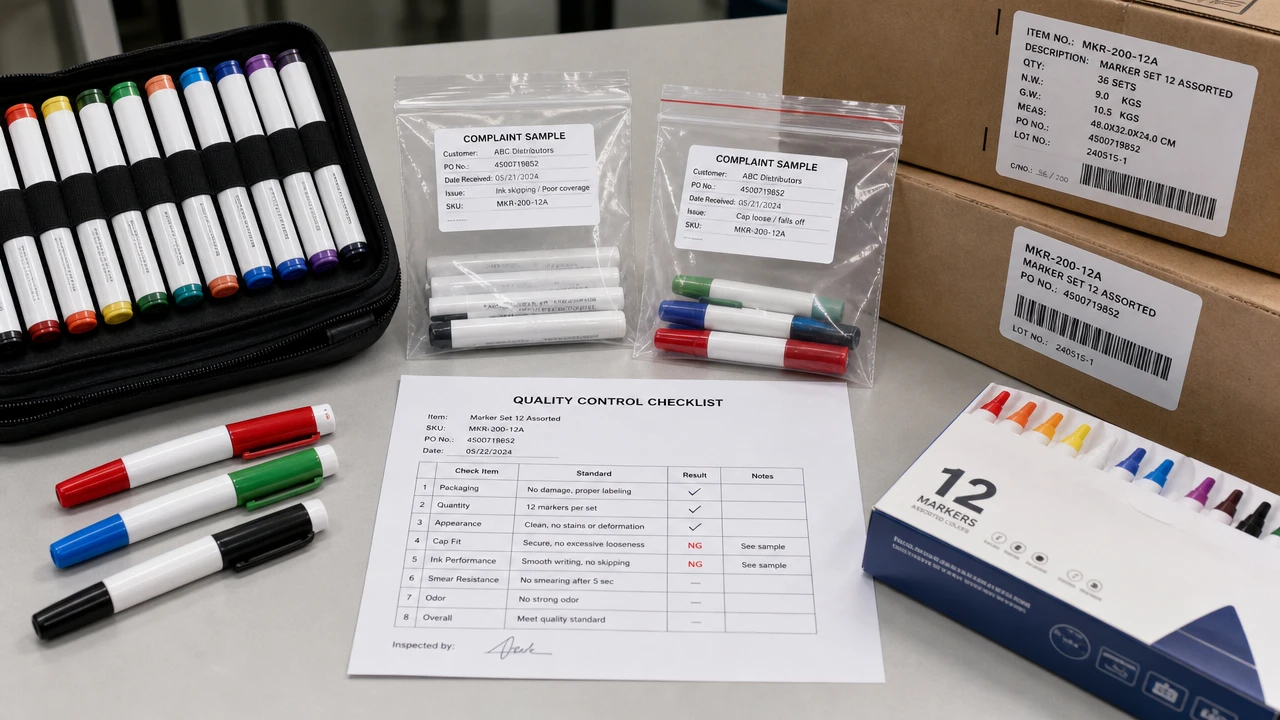
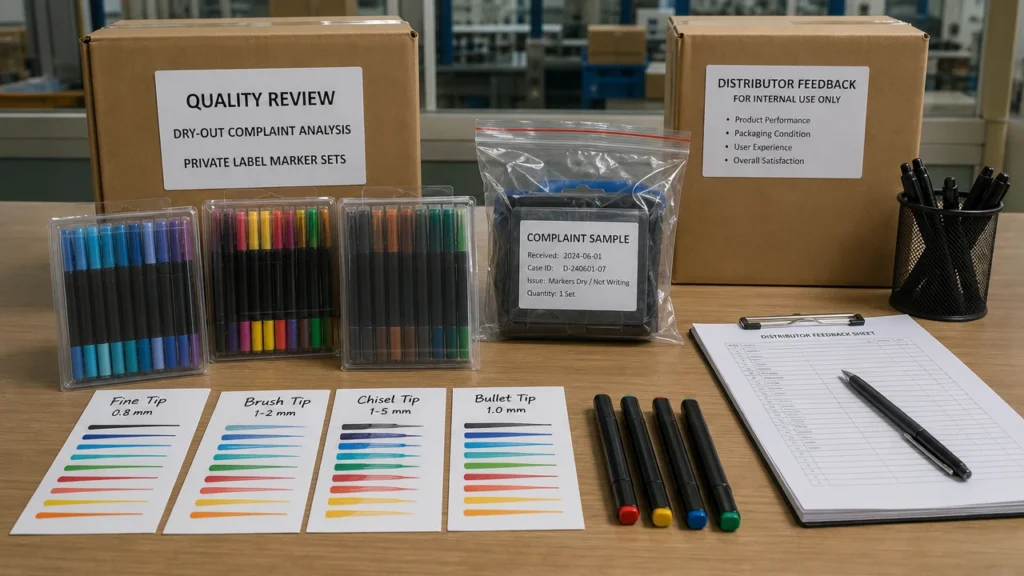
Marker dry-out complaints hurt a distributor because they usually show after the product has moved through the warehouse, channel, and shelf. In this anonymized case, ZH Stationery reviewed dry-out complaints for a distributor. We changed the control flow around cap seal, nib fit, storage risk, and reorder feedback.
This article does not name the buyer or print private complaint numbers. It shows the fix flow. Buyers can use the same way when sourcing markers, comparing a China maker, or preparing an RFQ for private-label sets.
Quick Answer
We cut repeat dry-out complaints by treating the issue as a finished-product system problem. It was not only an ink problem. The fix plan checked cap seal, nib fit, ink flow, packing pressure, carton handling, storage exposure, and complaint tracking. The biggest change was simple. Every reorder had to tie the buyer complaint, kept sample, production batch, and pre-shipment writing test together.
Quick Links
- Quick Answer
- Case Background
- First Diagnosis for Marker Dry-Out Complaints
- Root Causes We Checked
- Factory Changes
- Distributor-Side Changes
- QC Checklist
- Results and Limits
- Ask Better Supplier Questions
- FAQs
Case Background
The distributor sold sets through a mixed channel. Retail stores. School-supply resellers. Online sellers. The complaint pattern was not dramatic at first. A few customers said some markers felt weak. Then several accounts reported markers that wrote for a short time and stopped. The product still sold in many spots. The distributor needed a cleaner answer before the next reorder.
The first mistake would have been blaming ink right away. Ink matters. Dry-out complaints can come from the cap, nib, barrel, storage time, carton pressure, hot warehouse conditions, or a slow retail shelf. We treated the case as a chain of small risks.
The distributor also needed compliance and marking files for retail review. For US art products, the CPSC art materials guidance explains ASTM D-4236 marking hopes. The official ASTM D4236 page covers chronic health hazard marking. Those papers matter. They do not prove shelf act. We kept compliance review apart from dry-out fixes.
First Diagnosis for Marker Dry-Out Complaints
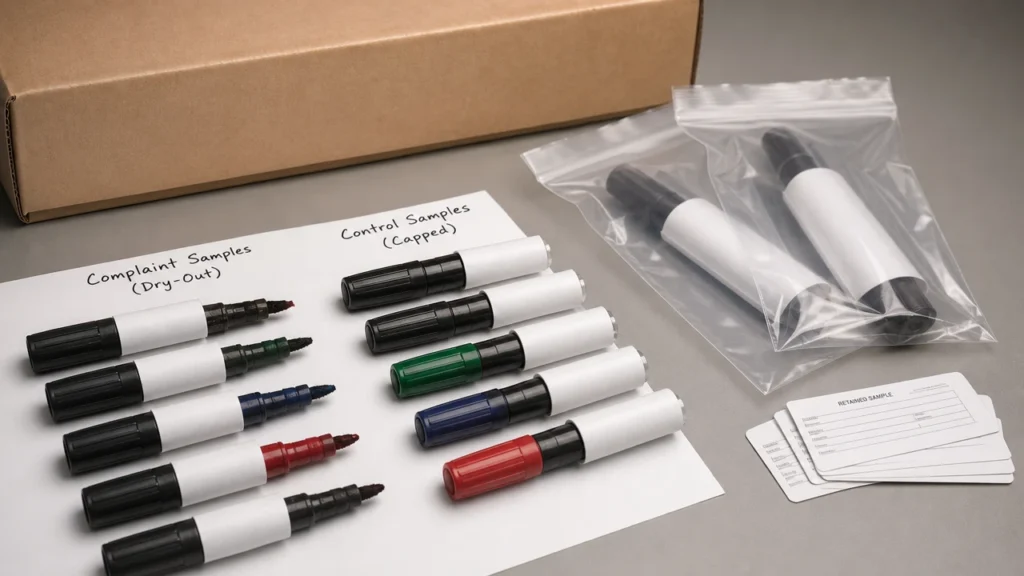
We asked the distributor to send three groups of info. Complaint samples. Unopened kept sets from the same order, if any. The carton or barcode data tied to the complaint lots. That gave the factory team something better than screenshots and customer words.
| Evidence Requested | Why It Was Needed | What It Helped Us Decide |
|---|---|---|
| Complaint samples | Showed whether the cap, nib, or ink had visible problems | Whether the defect was isolated or repeated |
| Unopened retained sets | Separated factory condition from retail handling | Whether the issue existed before the retail shelf |
| Lot or carton label | Connected complaint samples to a production batch | Which batch records to review |
| Storage notes | Showed heat, humidity, and shelf-time exposure | Whether shipment or warehouse conditions may have contributed |
| Affected colors | Showed whether the issue was color-specific | Whether to check one ink, one nib, or the whole product structure |
Root Causes We Checked
Dry-out complaints rarely have one clean cause. In this case, the useful question was not which part failed. It was which part of the system let a weak marker reach the buyer.
Cap Seal and Barrel Fit
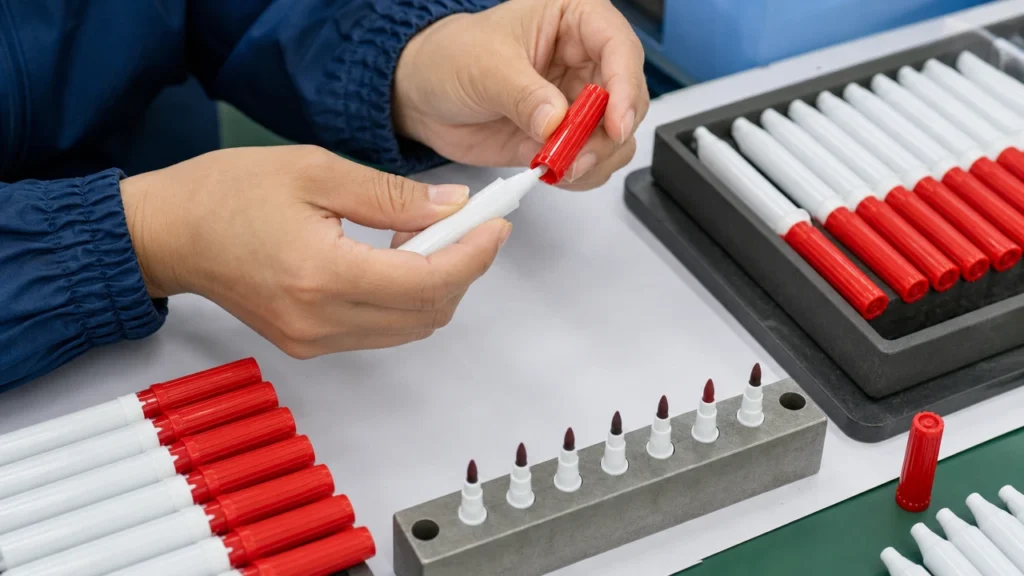
A cap can look right and still seal poorly. We checked whether the cap clicked firm. We checked whether the inner cap touched the nib area right. We checked whether cap looseness grew after carton pressure or handling. Small cap-fit changes matter. Water-based and acrylic systems can lose usable flow when the nib area stays open too long.
Nib Fit and Ink Flow
A nib that fits too loose may write uneven. A nib that fits too tight may not pull ink at the expected speed. That is why we tied the dry-out review to finished-marker writing tests. We did not check the ink alone. For acrylic projects, the valve press marker technology page is useful background. Valve control changes how ink reaches the tip.
Packaging Pressure and Transit Conditions
Packing can push caps, bend trays, or expose sets to heat and dryness in storage. The official ASTM D4332 page covers conditioning containers, packages, or packing parts to mimic field states in tests. For normal sourcing, buyers do not need a full lab program for every order. They should know that packing and environment shape complaints.
Factory Changes
The fix focused on checks that could repeat on future orders. We did not want a one-time rescue. We wanted a flow the production team and the distributor could use again.
| Change | What We Added | Buyer Benefit |
|---|---|---|
| Cap-fit sampling | More frequent checks on cap click feel, tightness, and post-handling fit | Reduced the chance of weak-seal units reaching cartons |
| Nib-flow check | Finished-marker writing tests after assembly and short resting time | Caught markers that looked fine but wrote weakly |
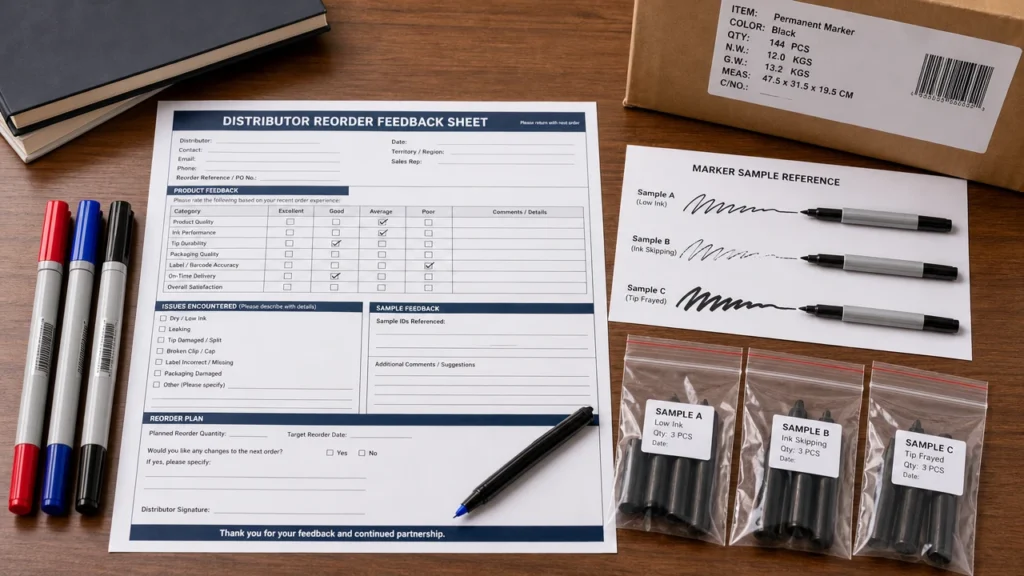
| Retained samples | Sealed sample sets tied to production batch and carton labels | Made future complaint tracing faster |
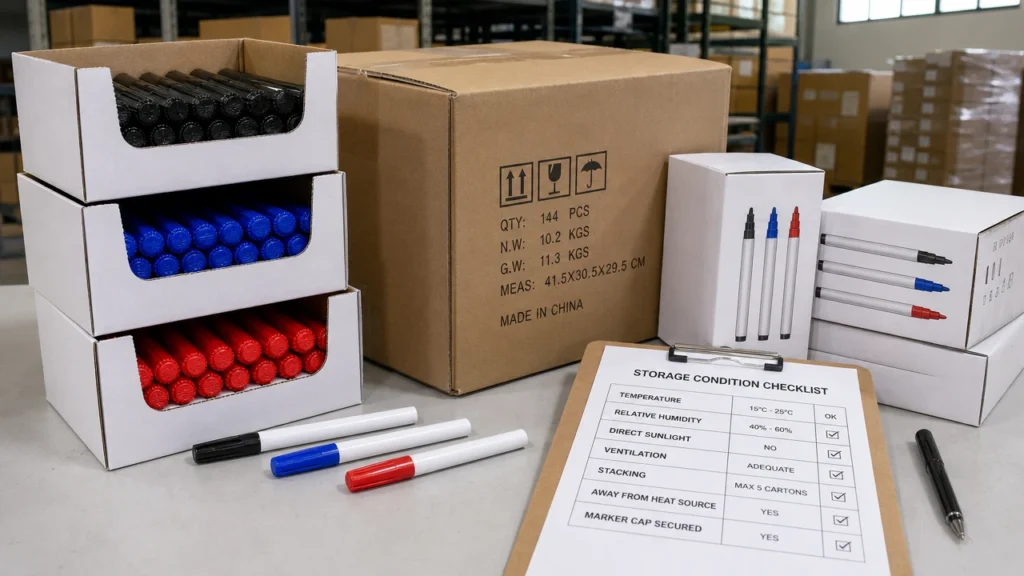
| Packaging review | Checked tray pressure, cap contact, carton stacking, and inner-pack movement | Reduced preventable transport and storage stress |
| Complaint feedback sheet | Standardized distributor notes for lot, color, channel, and shelf time | Turned vague complaints into usable data |
We also reviewed whether the product group, cap design, and packing format matched the distributor channel. Buyers planning retail sets can tie this step to the acrylic marker packing formats guide and the carton size and CBM guide.
Distributor-Side Changes
The distributor also changed its own handling. That part matters. If the supplier fixes factory checks but the buyer stores cartons near heat, opens inner boxes early, or mixes lots without marks, the problem can return.
- Keep one unopened retained set from each shipment and label it with PO and receipt date.
- Store marker cartons away from heat, direct sun, and very dry warehouse zones.
- Ask sales accounts to record affected SKU, color, lot, shelf time, and photos before replacing stock.
- Separate dry-out complaints from ink color complaints, leakage complaints, and damaged packaging claims.
- Send complaint samples back in sealed bags so the factory can inspect caps and nibs without more exposure.
A steady reorder file also helped. The distributor tied complaint notes to the next PO. The new run could then be checked against real field feedback. That is close to the color-consistency reorder flow. Dry-out control just focuses on cap seal, nib flow, and storage instead of color match.

QC Checklist
For future orders, we turned the case into a simple QC checklist. The checklist is not a promise. It catches common fail points before the product reaches the distributor.
| QC Point | Factory Check | Distributor Check |
|---|---|---|
| Cap seal | Check cap fit after assembly and after sample handling | Inspect random sets after receiving cartons |
| Nib condition | Check nib position, wetness, and writing strength | Test retained samples before releasing a reorder |
| Ink flow | Write sample strokes after a short resting period | Separate weak-flow reports from fully dry reports |
| Packaging pressure | Review tray fit, cap contact, and carton stacking | Check whether cartons arrived crushed or heat-exposed |
| Batch traceability | Label retained samples and carton references | Record lot, SKU, channel, and complaint date |
| Compliance files | Keep relevant labeling and test documents ready | Do not confuse compliance files with shelf-performance proof |
For wider check and compliance context, buyers can review the ASTM D-4236 report guide, the watercolor marker sourcing guide, and ZH Stationery's certifications page.
Results and Limits
After the fix flow ran, the distributor had a cleaner complaint process and fewer repeat dry-out talks on the next order. The useful result was not a marketing number. It was control. The buyer and factory could name the affected SKU. They could compare kept samples. They could check cap and nib state. They could decide whether the issue came from production, packing, storage, or retail handling.
There are limits. No supplier can remove every dry-out risk after months of storage and mixed retail handling. Heat, wetness, shelf time, user act, and packing damage all matter. ISO 554 is a useful note that test conditions should be controlled when results are compared. For B2B sourcing, the practical lesson is simpler. Keep the test state steady before judging whether a batch changed.
That is why ZH Stationery treats dry-out complaints as a factory-and-channel problem. Factory checks matter. The distributor's receiving check, storage, and feedback care decide how fast the issue can be traced. Buyers who want to know factory ability can review the factory tour and who we are pages.
Ask Better Supplier Questions
When dry-out risk matters, ask questions that force a supplier to describe the control way. Do not accept only a product pitch.
| Question | A Useful Answer Should Include |
|---|---|
| How do you check cap sealing before shipment? | Sampling method, inspection timing, and what counts as a weak cap |
| Do you test finished markers or only ink samples? | Finished-marker writing test, resting time, and affected color rules |
| How are retained samples labeled? | PO number, SKU, batch date, carton or lot reference, and storage method |
| What packaging pressure checks are used? | Tray fit, cap contact, carton stacking, and shipping-protection review |
| How should dry-out complaints be reported? | Photos, affected colors, lot number, shelf time, storage notes, and sample return process |
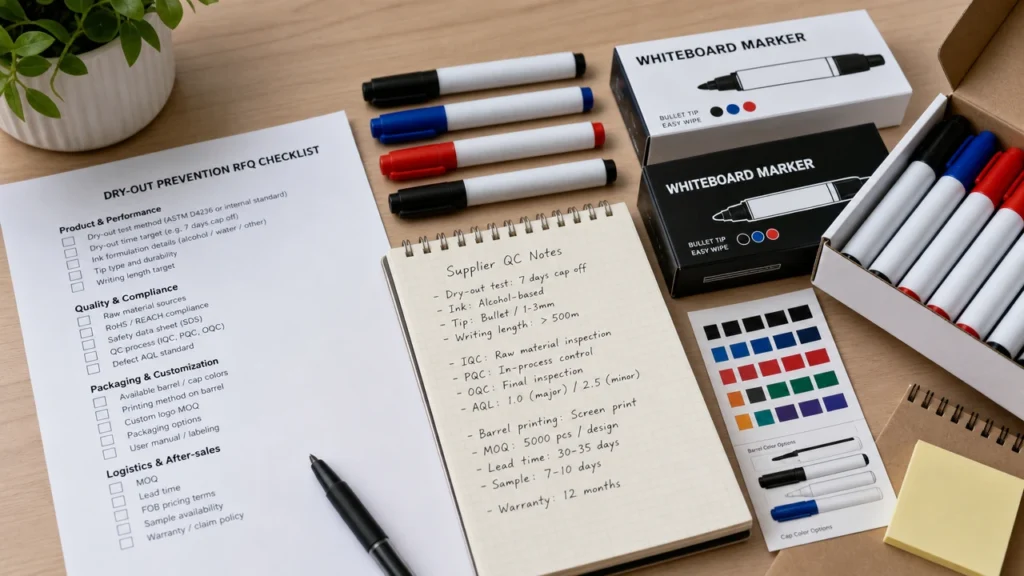
| What changes require reapproval? | Cap, nib, barrel, ink formula, packaging tray, retail card, or carton structure |
FAQs
These FAQs cover the buyer questions that usually appear after a distributor gets dry-out complaints.
What usually causes dry-out complaints from distributors?
Weak cap seal, poor nib fit, ink loss in storage, damaged packing, long heat or dry-air time, and uneven retail handling. The supplier should check the finished marker, not only the ink mix.
Can a factory promise markers never dry out?
No good supplier should. Dry-out risk depends on design, ink system, cap fit, storage, shipping route, shelf time, and user act. A factory can cut preventable risks with cap-fit control, writing tests, kept samples, packing checks, and clear storage instructions.
Should distributors test samples before every reorder?
For repeat programs, yes. A short reorder check can confirm cap fit, nib flow, stroke strength, and packing state before mass production. If the product changed, treat it as a controlled update, not a simple reorder.
What should buyers ask after a dry-out case appears?
Ask for the lot number, production date, carton mark, photos of cap and nib, storage state, shelf time, and whether the issue hits one color, one SKU, or the whole shipment. Without this, the factory cannot trace the likely cause.
Does ASTM D-4236 fix dry-out problems?
No. ASTM D-4236 covers chronic health hazard marking for art products. It is not about cap seal or shelf act. It matters for compliance. Dry-out control needs design, packing, storage, and QC checks.
What is the best RFQ wording for dry-out prevention?
Use specific words. Require cap-fit checks, nib-flow sampling, kept samples, carton guard, storage instructions, and a fix flow for complaints. Avoid vague lines like premium quality or long shelf life unless the supplier defines how they are tested.
Conclusion
Dry-out complaints are easier to cut when buyer and factory stop treating them as isolated customer words. The better flow is practical. Collect samples. Trace the batch. Check cap and nib fit. Review packing pressure. Control storage guesses. Build the next reorder around what was learned.
If you are sourcing private-label markers for a distributor channel, send ZH Stationery the marker type, cap design, packing format, destination market, expected shelf time, and any past complaint notes. The team can turn those notes into a sampling and QC checklist before the next order.
Related guide: How to Keep Marker Colors Consistent Across Reorders.
Related guide: How to Handle Customer Complaints About Dry Markers or Color Differences.