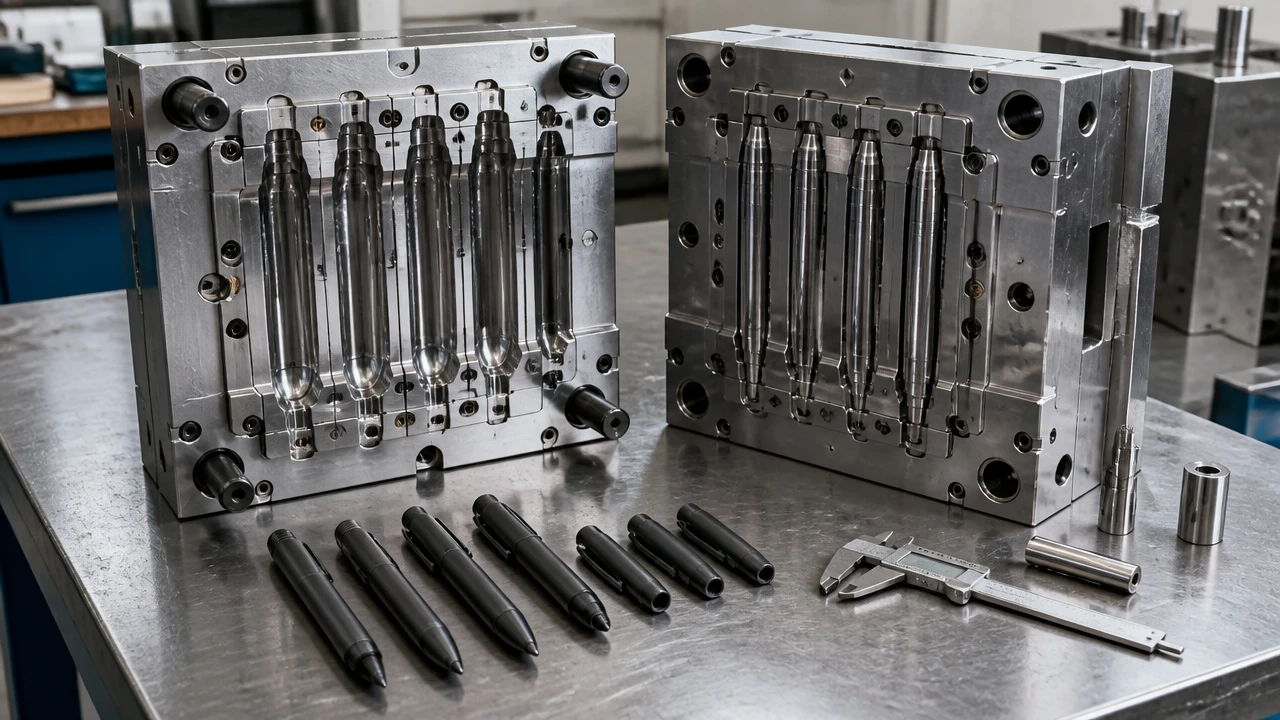
A pen mold factory in China turns an approved part design into repeatable plastic components. For a pen or marker brand, the critical output is not a polished steel tool alone: it is a barrel, cap, plug or grip that fits its mating parts, survives assembly, looks consistent and can be produced at the required rate. This guide focuses on injection molds for pen components, not on finished-pen supplier rankings or generic plastic molding.
Quick Answer
Choose a pen mold factory by asking for a part-specific design-for-manufacture (DFM) review, an agreed tool specification, documented T1 trial conditions and measurable acceptance criteria. Compare quotations at the same resin, cavity count, gate concept, surface finish, steel specification, trial scope and tool-ownership terms. Do not approve production from one attractive sample: check dimensional variation across cavities, cap fit, leakage-related interfaces and cosmetic defects after a controlled run.
Quick Links
- Which pen parts need molds?
- Tool design decisions
- T1 and mold acceptance
- RFQ checklist
- Frequently asked questions
What a Pen Mold Factory in China Makes
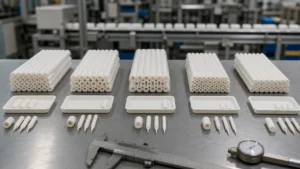
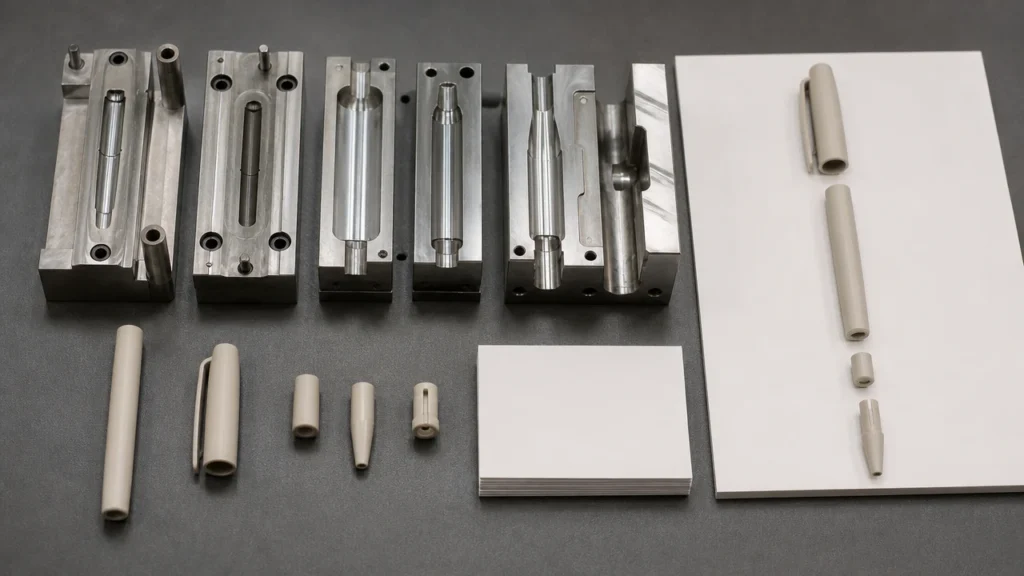
The usual candidates are plastic barrels, caps, rear plugs, nose cones, clip components and some rigid grips. A marker program may also need a valve housing, nib holder or inner sealing component. Each part has a different critical function. A visible barrel needs controlled gloss, color and parting-line placement. A cap needs predictable retention and a seal that matches the nib and ink system. A plug needs reliable insertion and retention without cracking the barrel. A small internal part may have less cosmetic risk but tighter fit or flow requirements.
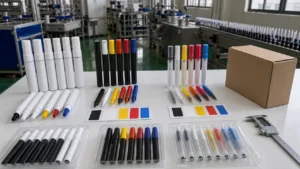
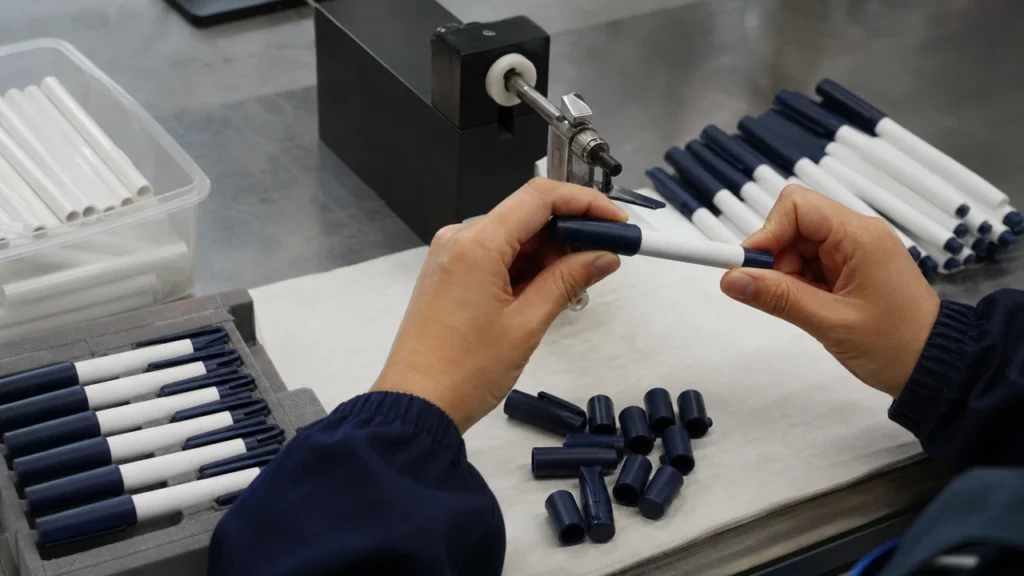
This distinction changes how you select the factory. A moldmaker that produces clean cosmetic barrels may still need to prove cap sealing and assembly repeatability. Conversely, a technically sound inner part may not meet the finish expected for a retail-facing barrel. Define the complete mating assembly before pricing the tool, including the refill or ink reservoir, tip, cap and packaging clearance. ZH Stationery’s factory tour shows injection molding as part of its pen and marker production workflow; use it as context for coordinating tooling with downstream assembly, rather than as evidence for any specific mold specification.
Pen Mold Design Decisions That Change Cost and Quality
Part Geometry, Wall Thickness and Draft
Long, slender pen barrels amplify small differences in cooling and ejection. Uneven walls can create sink, warpage or an off-center bore; a cap with insufficient draft may scrape during ejection. Mark the dimensions that actually control fit, then let the toolmaker propose the parting line, draft and coring method. Protolabs’ design guidance on draft explains why draft depends on material, depth, finish and tool construction. Its wall-thickness guidance explains why large thickness changes can make cooling uneven. Neither source provides a universal pen-barrel dimension; the chosen resin and geometry still need DFM review.
Gate, Runner and Visible Surfaces
Ask where molten resin enters the part and where the gate vestige will remain. A gate that is acceptable on a hidden rear plug may be conspicuous on a transparent barrel. Runner layout also affects fill balance between cavities. Request a drawing that marks the gate, parting line, ejector marks, venting points and any proposed side actions. Protolabs’ injection-molding guide identifies gate location, cooling, ejection and undercuts as part-design decisions that affect molded quality.
Cavity Count and Tool Layout
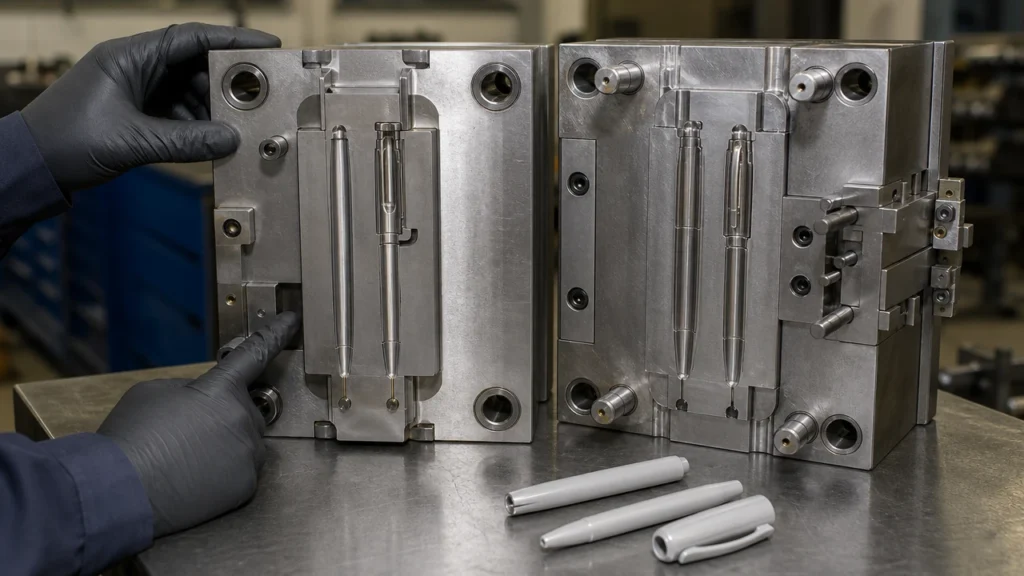
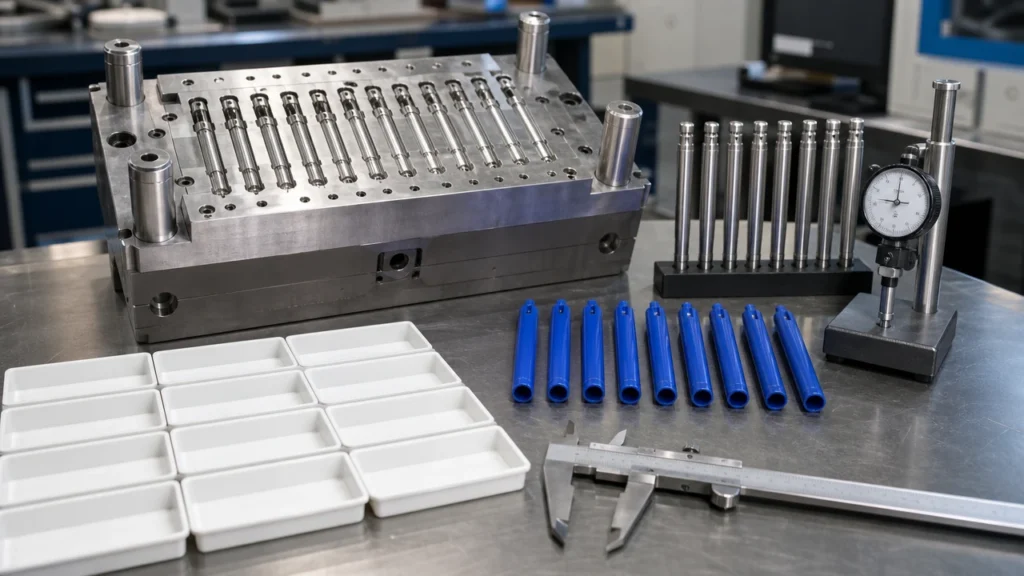
More cavities can raise output per cycle, but a high cavity count does not automatically lower the delivered cost. The press must have the appropriate clamp force and shot capacity, the runner must fill evenly, and each cavity must meet the same dimensional and cosmetic standard. Request the proposed cavity count and a piece-price calculation at your forecast volume. If the quote offers interchangeable inserts or a family mold, ask what can be changed independently and whether parts with different weights will fill consistently.
Steel, Finish and Maintenance
“Hardened steel mold” is too vague for a purchase order. Ask the supplier to state the steel grade for cavity, core and inserts; heat treatment where relevant; surface finish or texture standard; expected maintenance points; and the conditions behind any life-cycle claim. A tool for clear barrels may demand a different polishing and handling plan from a textured opaque cap. Record who pays for wear-part replacement, corrosion prevention, storage and repair. Treat quoted mold life as a conditional supplier commitment, not a guarantee that survives any resin, colorant, machine or maintenance regime.
How to Compare Pen Mold Factory Quotations
| RFQ item | What the quotation should state | Why buyers need it |
|---|---|---|
| Part and resin | Approved 3D file, revision, resin grade, color and additive assumptions | Shrink and finish depend on the material actually molded |
| Tool construction | Steel grades, cavity count, runner/gate, inserts and side actions | “One mold” can describe very different deliverables |
| Surface requirements | Gloss, texture, transparency, visible parting line and gate location | Cosmetic approval needs a shared reference |
| Trials | Number of included trials, resin supplied, sample quantity and process record | T1 may expose changes that require another run |
| Acceptance | Critical dimensions, cavity-to-cavity variation, fit, retention and visual limits | An attractive sample is not a repeatability test |
| Commercial terms | Tool price, modification charges, ownership, storage, transfer and spare parts | A low initial price can hide future lock-in |
Compare quotations only after filling missing fields. A very low mold price may reflect fewer cavities, a different steel, fewer trial rounds or excluded shipping and modifications. For broader OEM cost context, see the custom pen manufacturing cost guide; keep the mold investment separate from per-piece molding, assembly, ink and packaging charges. The MOQ negotiation guide explains why tooling and production MOQ should be negotiated as different commitments.
T1 Samples and Mold Acceptance
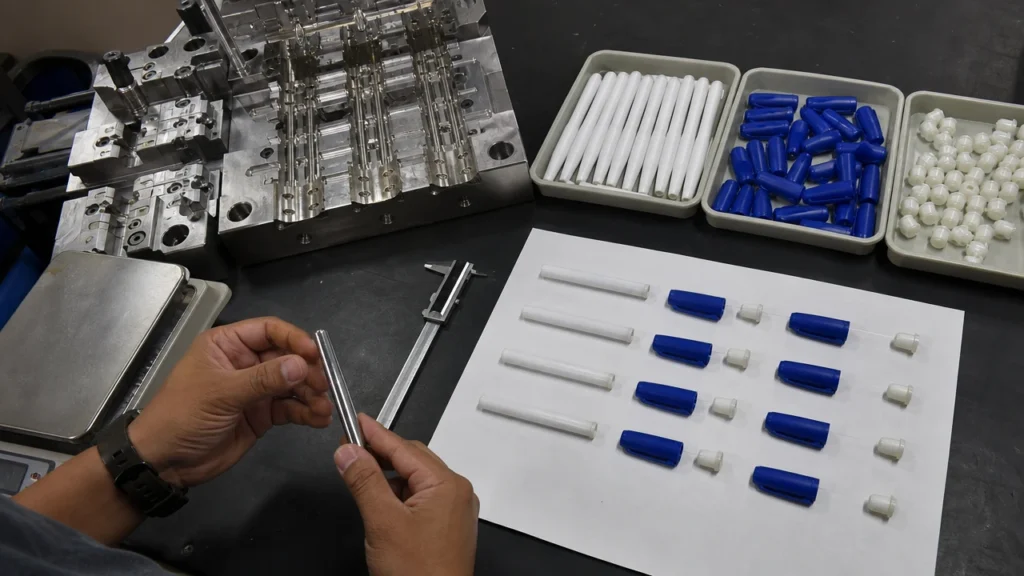
T1 is the first structured trial after tool manufacture. It is a diagnostic stage, not a final production sign-off. Ask for a short-shot or fill study when useful, a trial sheet showing resin and machine settings, photographs of every cavity, and a dimensional report tied to the numbered cavities. Review parts after they stabilize, using the agreed measurement conditions. Record defects by cavity and by location rather than writing “appearance problem” on a general checklist.
The first review should answer four questions: Does the part fill and eject reliably? Are the functional dimensions capable of mating with the approved components? Is the cosmetic result acceptable on visible surfaces? Can the tool repeat the result through a continuous run? A single good sample does not answer the last question. Protolabs’ molding-defect guide covers defects such as drag marks, sink and warpage that can originate in part design or process conditions.
For pen-specific testing, assemble the molded parts with the actual nib, ink reservoir or refill. Measure cap pull-off force, plug retention, thread or snap fit, concentricity, visible gap and any leak-sensitive interface. For markers, store assembled samples in multiple orientations and inspect for drying or migration; use the marker quality-control guide as adjacent context. The marker factory audit checklist covers the broader factory process after tooling approval.
A Practical Approval Sequence
- Freeze the part drawing and mark functional, cosmetic and reference dimensions.
- Approve the DFM review: resin, shrink allowance, draft, gate, parting line and ejection.
- Inspect T1 samples from every cavity and document deviations.
- Agree tool changes and run T2 or later trials when needed.
- Test assembly, fit and storage with real pen components and ink where relevant.
- Run a sustained production trial and compare start, middle and end samples.
- Sign off the tool against the approved drawing, sample and written acceptance criteria.
If a change modifies the part drawing, revise the drawing before reapproval. Keep a signed master sample and a record of which cavity produced it. Ask for the final tool drawing, spare-parts list and maintenance instructions if the tool belongs to your brand. The OEM/ODM pen manufacturing guide is useful for coordinating the tool release with downstream pen assembly and private-label approval.
Pen Mold RFQ Checklist
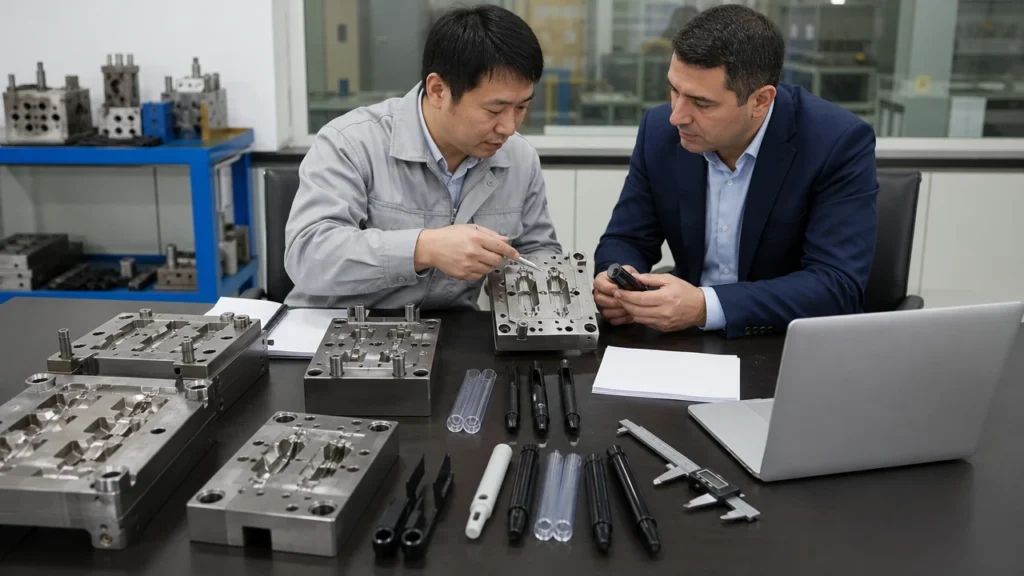
Send the same pack to each candidate factory: part drawings with revisions, 3D files, expected annual volume, intended resin and color, mating-part drawings, cosmetic reference, packaging constraint and destination market. State whether the factory is quoting tool manufacture only or also injection molding and assembly. Then ask:
- Who owns the mold, inserts, CAD and process data after final payment?
- Which machining, polishing, texturing and trial steps are done in-house?
- What cavity count and press size are proposed, and why?
- Which dimensions will be measured per cavity, and with which method?
- What changes are included after T1, and what triggers extra charges?
- How will the tool be stored, maintained, insured and transferred if production moves?
- What trial quantity and production-run evidence are needed for acceptance?
Do not ask every supplier to promise the same fixed mold life or lead time before the design is reviewed. Ask instead for the assumptions behind its quote and a milestone plan with drawing approval, steel release, machining, T1, corrections and final acceptance. Where a pen has an unusual shell shape, the animal-shaped pen OEM guide offers adjacent design context; this article remains focused on the tool itself.
Frequently Asked Questions
Does a pen brand need to own its injection mold?
Ownership is a commercial decision, but it must be written down. The purchase order should identify the tool, inserts, CAD files, storage location, maintenance duties and transfer procedure. Paying a tooling charge alone does not settle every ownership or access question.
Is a multi-cavity mold always cheaper per pen part?
Only if the expected volume, cycle time, scrap rate and cavity balance justify the higher tool investment. Ask for a comparison at your own forecast quantity rather than accepting the cavity count as a quality signal.
What should a T1 report include?
At minimum, identify the resin and trial settings, provide numbered samples from each cavity, measure agreed critical dimensions, map defects and recommend tool or process corrections. Add assembly and storage tests when the part affects cap seal, nib fit or ink containment.
Can one factory make both the mold and finished pens?
Yes, some vertically integrated pen manufacturers make or manage tooling and then mold, print and assemble the finished product. Verify which steps are performed in-house and who is responsible for corrective action when a mold passes dimensional checks but fails assembly.
When is a pen mold ready for mass production?
When the final part revision, cavity samples, appearance standard, assembly tests and sustained-run results meet written acceptance criteria. Approval should cover the tool and the parts it produces under a documented process window.
Final Buyer Takeaway
Buy a repeatable component system, not an impressive first shot. Give the pen mold factory the real mating parts and product requirements, review its DFM decisions, and make cavity-level trials and production-run acceptance part of the contract. If your program also needs molding, printing and final assembly, request one owner for the handoff between tooling and finished-pen production.