The right marker depends on the drawing flow. It is not a simple rank of ink carriers. Compare samples on the real paper. Include blending, bleed-through, cap handling, and the planned cleanup claim in the buying call.
Quick Answer
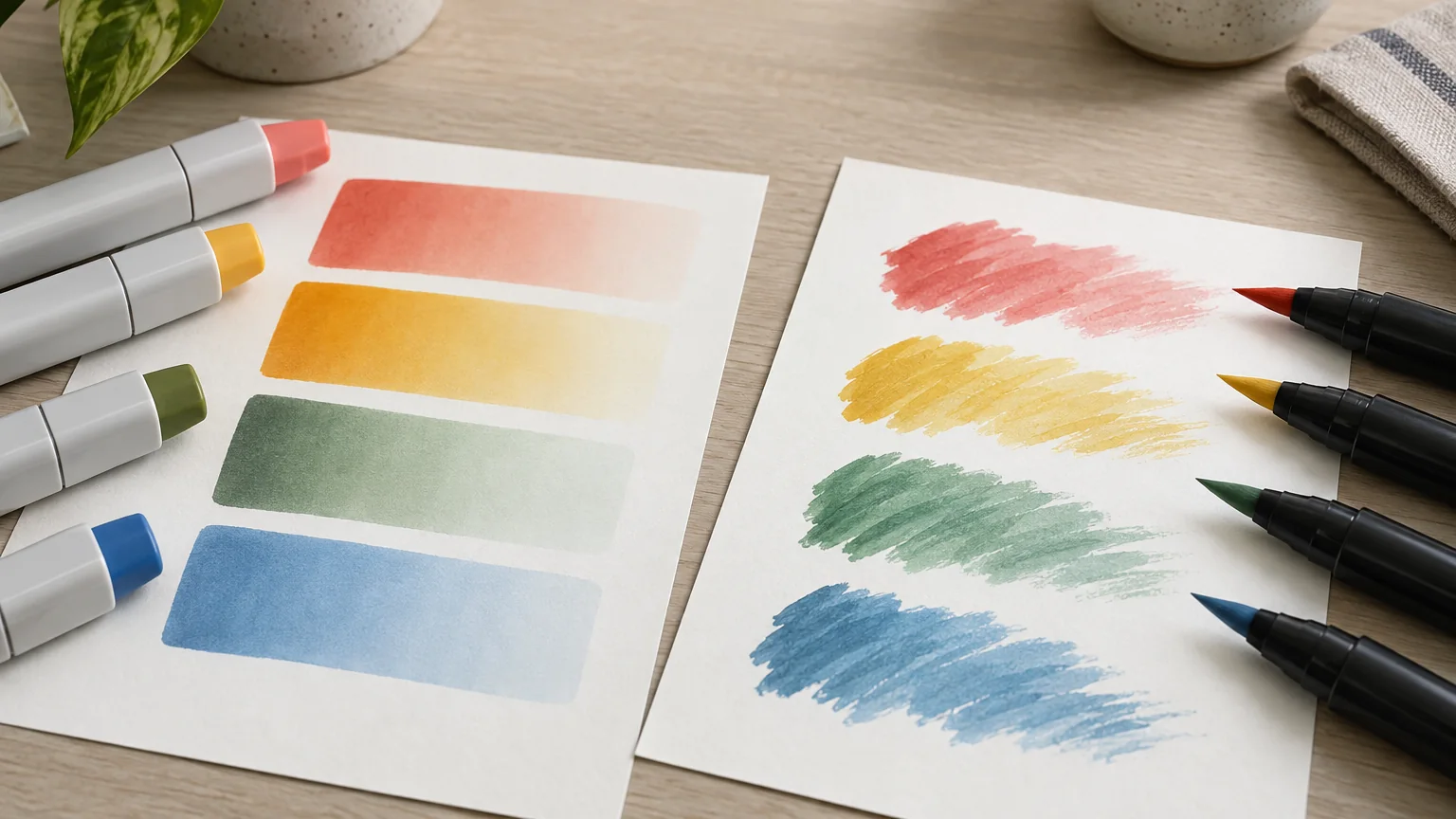
Water-based vs alcohol-based markers is mainly a pick of drawing performance, paper, and cleanup. Alcohol illustration markers often suit layered gradients. Water-based markers can suit lettering and water-reactivated effects when the formula allows. Either can stain or perform badly on the wrong surface. Compare the exact marker and paper. Do not treat the carrier as a quality grade.
Quick Links
- Water-Based vs Alcohol-Based Markers: Practical Comparison
- Run a Small Swatch Test Before Buying a Large Set
- Compare the Whole Ink System
- Odor, Storage and Packaging
- How to Write the Sourcing Specification
- FAQs
- Three Reasons a Marker Set Disappoints
Water-Based vs Alcohol-Based Markers: Practical Comparison
| Inspection Evidence | Approval Decision |
|---|---|
| Same paper with single and overlapping strokes | Review both sides before approving the set. |
| Side-by-side swatches and blending task | Choose the range that supports the intended artwork. |
| Start-up after agreed storage and cap handling | Investigate skips or drying before bulk approval. |
Run a Small Swatch Test Before Buying a Large Set
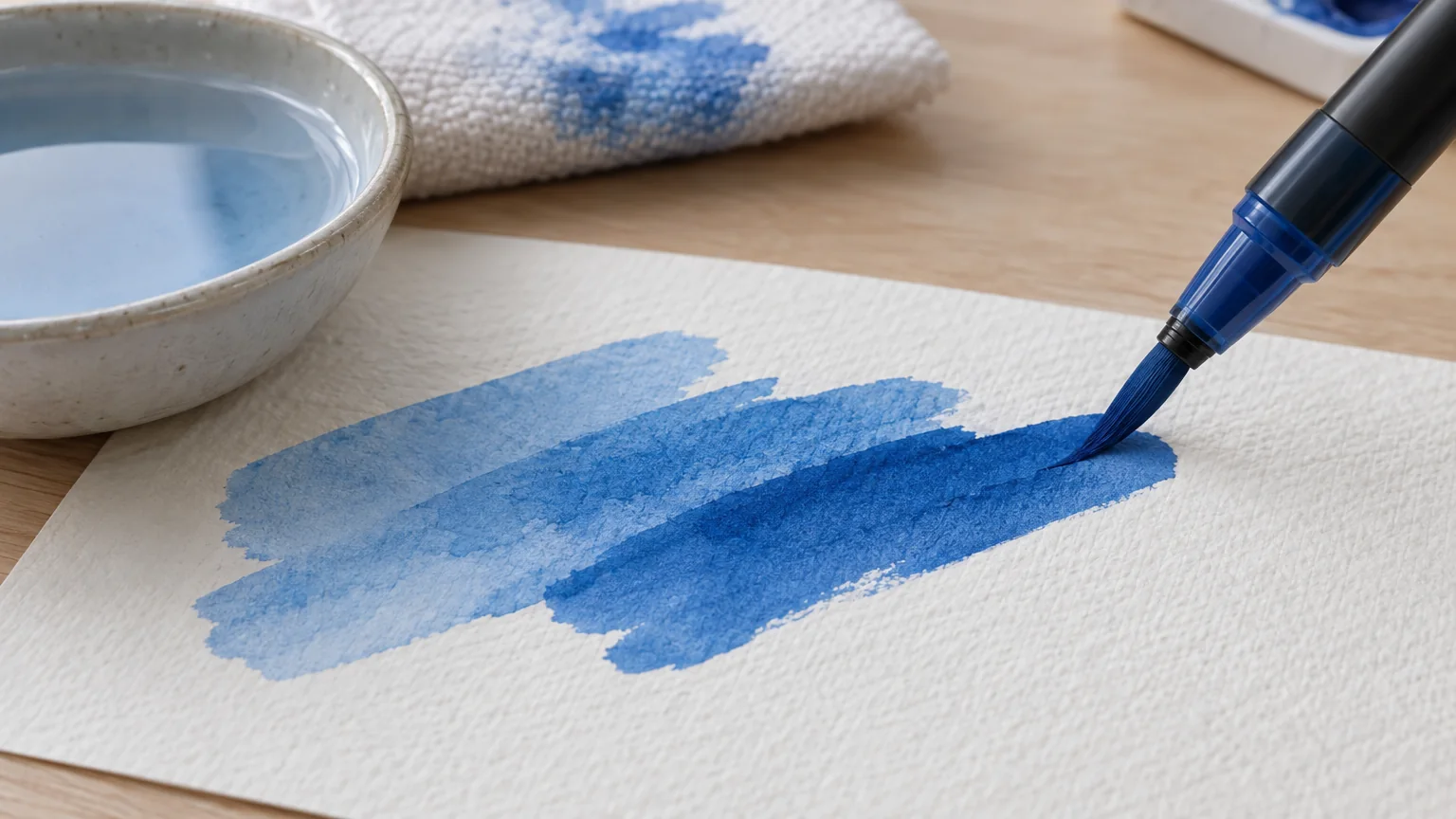
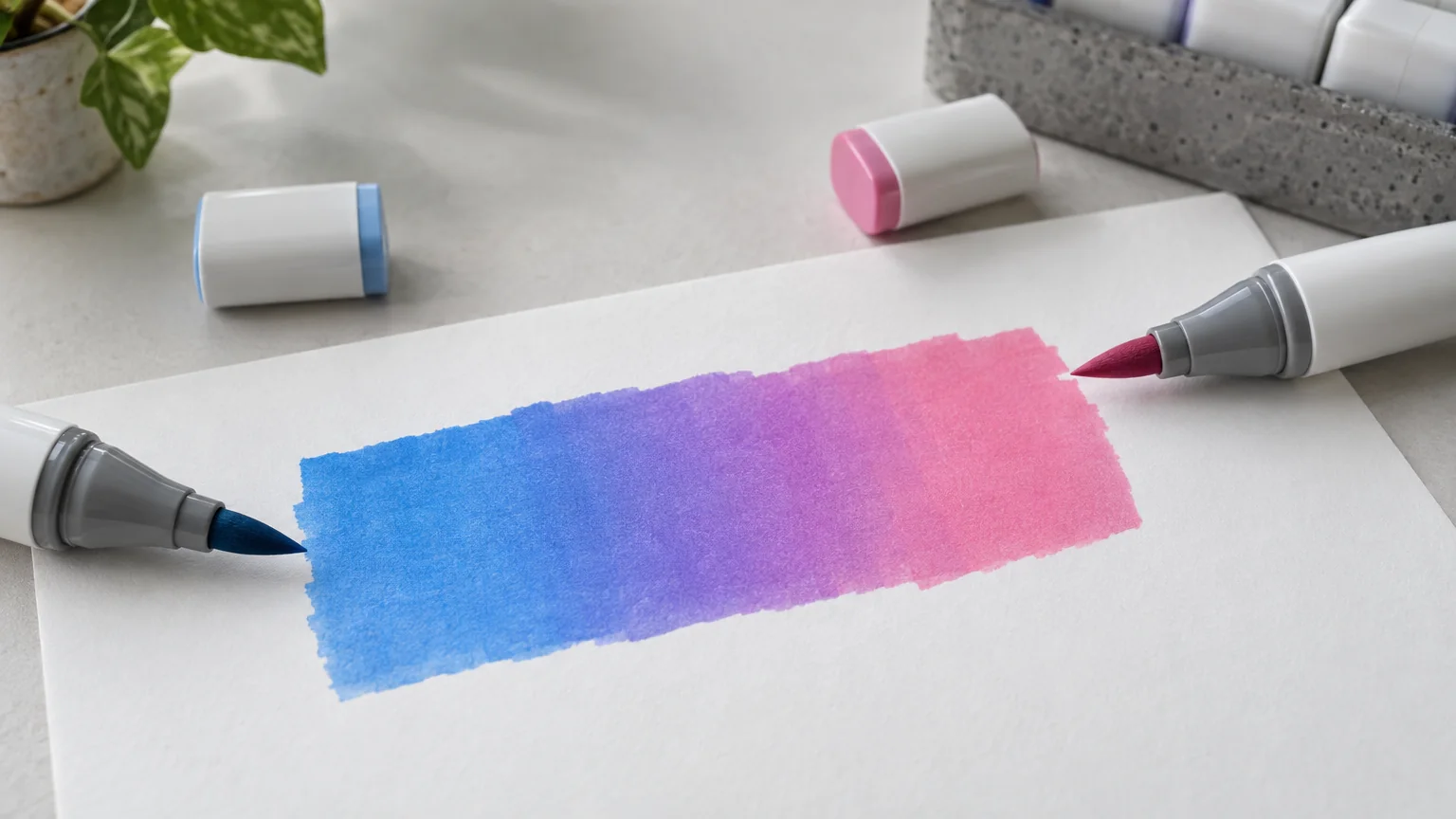
Use the paper or base your customers really use. Make one light stroke, an overlapping stroke, and a filled square. Check the back of the sheet. Put a light color next to a dark one. See whether blending stains the tip or spreads past the edge. Write down the paper name so the compare can be repeated.
For classroom packs, put the stated age range, cap handling, spare parts, and cleaning steps first. For illustration sets, look at color spacing, refill options, nib picks, and how an outlined drawing acts under the ink. A big color count does not fix a poor fit to the flow.
Compare the Whole Ink System
Ink base is only one part. Tip pores, colorant load, resin or binder, keep-fresh agents, barrel seal, and cap design all shape writing. Two alcohol markers can differ in smell and bleed because their carrier and binder differ. Two water-based markers can differ in drying and washability for the same reason.
Use the water-based versus oil-based marker guide for the same system thinking. Ask the factory to compare samples under one paper, tip, and storage state.
Odor, Storage and Packaging
Smell is shaped by carrier, scent, barrel venting, cap seal, and storage heat. A low-odor claim needs a set panel or tool method. It should come with airflow notes. Packing should keep the seal and stop caps from loosening during shipping.
When you plan a private-label pack, review acrylic marker packing options for carton, blister, and cap-hold picks. A strong ink mix can still fail when loss or cap loss shortens shelf life.
How to Write the Sourcing Specification
Set ink base, target dry time, smell limit, bleed limit, tip size, cap seal, shelf-life test, packing, color set, and sample method. Add a formula-change notice need. Ask for a technical data sheet and a kept passed sample for every color family.
A marker factory audit should check incoming ink checks, batch codes, fill volume, tip assembly, and complaint review. These controls guard the compare after the first order becomes a repeat program.
Three Reasons a Marker Set Disappoints
The checks below name common failure modes and the proof needed to fix them. They are a buying and check frame, not measured claims for a ZH Stationery SKU.
- The paper and ink do not match. A pleasing front-side swatch can hide bleed-through or surface pilling.
- Color count hides poor color spacing. More barrels do not necessarily give useful light-to-dark transitions.
- Storage changes the writing result. An approved fresh sample does not describe behavior after pauses or storage.
For a product-format start, review the watercolor pens and markers. Confirm the exact model and planned use before treating a catalog option as a match.
Sources and Scope
manufacturer guidance applies to the named product. Follow the steps for your exact item. These tables and buyer checks are editorial help, not tests run by ZH Stationery.
FAQs
Which is better for children's markers?
Pick the system that meets the planned use, marking, and destination-market needs. Water-based does not automatically mean compliant.
Do alcohol markers always smell stronger?
Often they can. Smell depends on the full carrier and packing system. Measure the exact SKU.
Which ink dries faster?
Alcohol systems are often picked for fast drying. Heat, base, and formula can change the result.
Can I switch ink bases without changing the tip?
Sometimes. Flow, drying, fit, and cap seal must be rechecked with the new ink.
Compare Marker Options for Your Range
Send ZH Stationery your target paper, drawing style, color range, nib pick, and pack quantity. Use the inquiry to ask for project-specific details before sample sign-off:
- Product fit: available models and any limitations against your brief.
- Sample and quotation scope: sample availability and charges, MOQ by variation, packaging options and lead time after approval.
- Evidence: the relevant specification, document scope and proposed acceptance checks for the offered item.
For custom work, review the OEM/ODM manufacturing guide before you decide which changes belong in the quote. Sample terms and performance needs must be set for the exact project.