Fabric markers vs acrylic paint markers is a real pick for textile brands, craft stores, and private-label kits. Both can decorate fabric. They perform differently after washing, heat, layering, and repeat handling. Fabric markers are mixed for controlled soak or bond with textile fibers. Acrylic paint markers can make stronger surface cover. They may need a textile medium, heat set, or a softer top layer.
Fabric Markers vs Acrylic Paint Markers: Quick Answer
Pick fabric markers when the product needs a soft feel, steady line control, and direct textile use. Pick acrylic paint markers when opacity, bold look, and fit with mixed craft surfaces matter more. Neither group should be sold as wash-proof for every fabric without a set wash and cure test. The best call depends on fiber type, fabric color, wanted cover, user age, drying flow, and retail claim.
Quick Links

Formula and Finish
Fabric marker mixes are usually built to move into or bond with textile fibers while the mark stays flexible. Acrylic paint markers tend to form a clearer film on top of the fabric. That film can give strong color and sharp edges. It may feel stiffer when used thick. On flexible clothes, heavy paint can crack or shift when the textile folds.
| Factor | Fabric markers | Acrylic paint markers |
|---|---|---|
| Hand feel | Often softer when lightly applied | Can feel raised or firm after heavy coverage |
| Opacity | May need layering on dark cloth | Usually stronger surface coverage |
| Detail work | Good for lines and signatures | Good for bold decoration and highlights |
| Wash result | Depends on formula and heat setting | Depends on adhesion, cure and fabric movement |
Fabric Type and Color
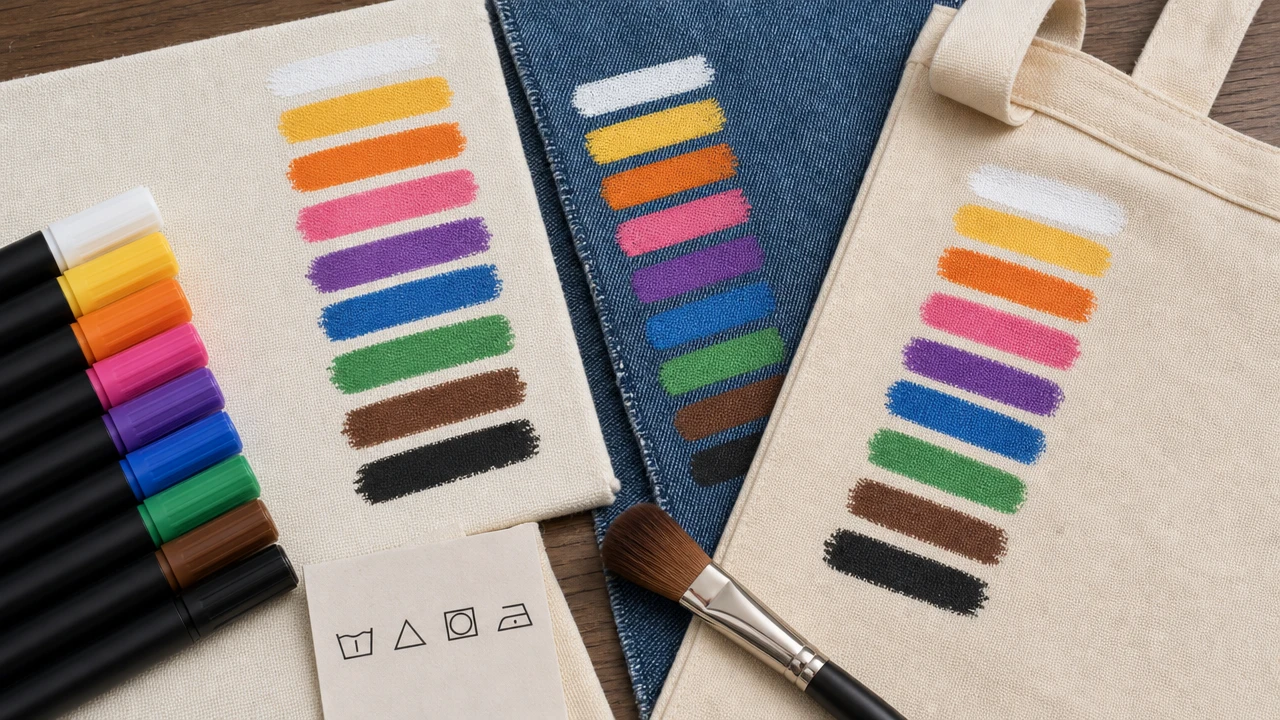
Cotton, linen, canvas, polyester blends, and treated textiles do not take color in the same manner. Porous light cotton may let a fabric marker look even. A dark sweatshirt may need a white or opaque acrylic layer first. Smooth synthetic fibers can push away water-based mixes and may need another binder or prep. Always test the real production fabric. Do not test a look-alike substitute.
- Light cotton: compare feathering and color spread.
- Dark cotton: check opacity and whether layering creates stiffness.
- Canvas: test coverage, edge control and resistance to flexing.
- Polyester: test adhesion, heat sensitivity and wash durability.
- Blends: record the fiber ratio and repeat the test across colors.
Wash and Cure Testing
For textiles, permanent must tie to a process. Draw a standard test design. Let it dry for the advised time. Heat-set only when the steps say to. Then wash by the planned care label. Compare color loss, edge spread, cracking, transfer to other fabric, and feel. Test a light design and a full filled area. Heavy cover is usually the bigger risk.
- Record fabric composition, color and pre-wash condition.
- Use the same marker tip, pressure and number of passes.
- Document air-dry and heat-set conditions.
- Run repeat washes rather than relying on one cycle.
- Inspect the reverse side and neighboring fabric for transfer.
Which Marker Is Better for Your Textile Product?
Fabric markers are normally the safer start for clothing custom work, textile marks, school fabric projects, and products where bend matters. Acrylic paint markers can fit decorative canvas, shoes, bags, patches, and mixed-media kits where strong surface color is part of the promise. For both, the cap seal, nib recovery, drying time, and steps should be passed with the final packing.
FAQs
Are acrylic paint markers suitable for clothing?
They can be used for some textile projects, but the formula, fabric and curing process must be tested. Heavy layers may reduce softness or crack during flexing.
Do fabric markers always survive washing?
No. Wash durability varies by formula, fiber, application thickness, cure and wash conditions.
Which option is better for dark fabric?
Opaque acrylic paint markers often provide stronger coverage, but a fabric-specific opaque formula may give a softer result. Compare both on the target cloth.
For related textile help, review how acrylic paint markers perform on fabric and compare water-based and oil-based formulas. ZH Stationery can help build textile marker samples, packing instructions, and private-label test rules.
Textile Decision Factors Beyond Coverage
Compare fabric markers and acrylic paint markers on the finished textile, not only on paper. Fiber type, weave, stretch, dye depth, and surface treatment change how the ink spreads and how the fabric feels after drying. A marker with bright cover on cotton canvas may feel too stiff on a thin shirt. A softer formula may keep feel but need more layers on dark cloth.
Run a controlled textile test on light and dark fabric, smooth and rough weaves, and thin lines, broad fills, and overlapping colors. Record whether the line feathers, whether the nib catches fibers, and whether the design stays flexible after cure. For washable items, follow the planned cure and wash flow. Then check cracking, fading, transfer, and stiffness. One wash result does not back a universal lasting claim.
OEM Claims, Instructions and Sample Approval
Private-label packing should state the advised textile types and any cure or care steps that were really tested. If the marker fits craft art but not every garment, say so in the product documents. Buyers should also pick the position: children, hobbyists, apparel work, or professional textiles. Each channel wants a different mix of opacity, softness, price, and safety talk.
Before production, keep signed textile swatches from the exact ink batch, nib, fabric lot, and cure method. Review the cap seal, tip recovery, color matching, packing insert, and carton guard.
Cost, Claims and Customer Expectations
Lower unit cost is not always lower risk. A fabric marker that needs fewer coats may cut user work. A high-opacity acrylic marker may make a stronger first look but add stiffness and complaint risk on flexible clothes. Buyers should compare the whole deal: marker cost, packing, steps, sample testing, returns, and the textile shown in demos.
Keep marketing language tied to the tested use case. Designed for cotton craft projects is sharper than a universal wash-proof promise. If the product is for patches, canvas shoes, or decorative bags, show those materials in the sample review. That helps stores and users see where the marker works. It also stops a textile formula from being judged on an unsupported claim.
Testing Textile Markers Across Real Garment Conditions
Textile work changes when fabric stretches, folds, rubs, or washes. A flat swatch helps for screening. It does not copy the stress of a sleeve, tote bag, patch, or shoe panel. Add a flex test and a fold test after cure. Then check whether the design cracks, transfers, or feels clearly harder than the cloth around it. Test fine details and dense fills, because they can fail in different ways.
For a buyer check, use the same shapes and equal passes with both marker groups. Keep one untreated control swatch. Name every fabric mix in the record. If heat set is used, write down the heat, contact method, and whether the textile can take that step. Do not assume a cotton tip works on polyester, blends, or coated fabric.
Packaging and Compliance Communication
Textile marker packing should make the use case easy to read without turning a small test into a broad claim. State the advised fabric groups, cure steps, and care limits that were checked. If the mix is for decorative craft rather than washable clothes, show that line in the product documents. A clear use case is often worth more than a strong but vague lasting claim.
Before production, pass the final color swatches, nib size, cap seal, step card, and textile samples together. Keep a sample from every important revision. That helps the buyer explain the product to stores. It also gives the factory a real base if a later lot shows different softness, opacity, or wash behavior. A factory can help compare both marker platforms. The final call should rest on the buyer's target textile and claim copy, not the marker name alone.