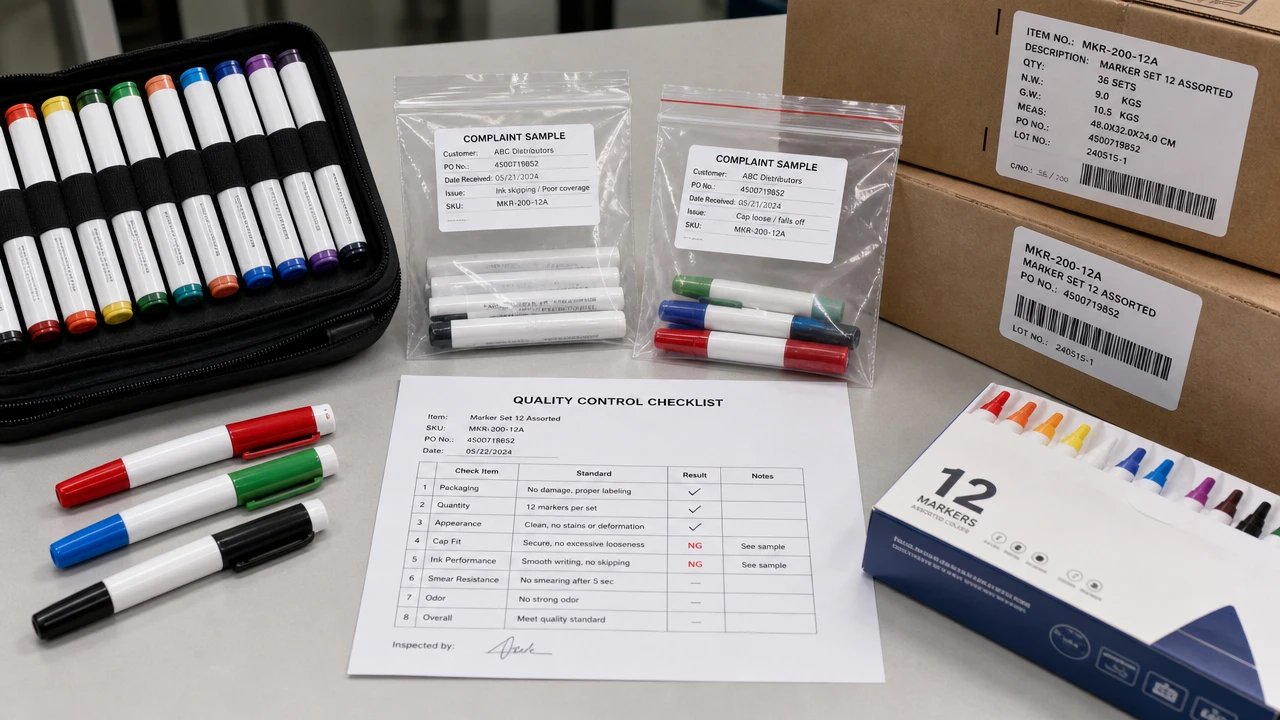
Marker dry-out complaints hurt a distributor because they usually show after the product has moved through the warehouse, channel, and shelf. In this anonymized case, ZH Stationery reviewed dry-out complaints for a distributor. We changed the control flow around cap seal, nib fit, storage risk, and reorder feedback.
This article does not name the buyer or print private complaint numbers. It shows the fix flow. Buyers can use the same method when sourcing markers, comparing a China manufacturer, or preparing an RFQ for private-label sets.
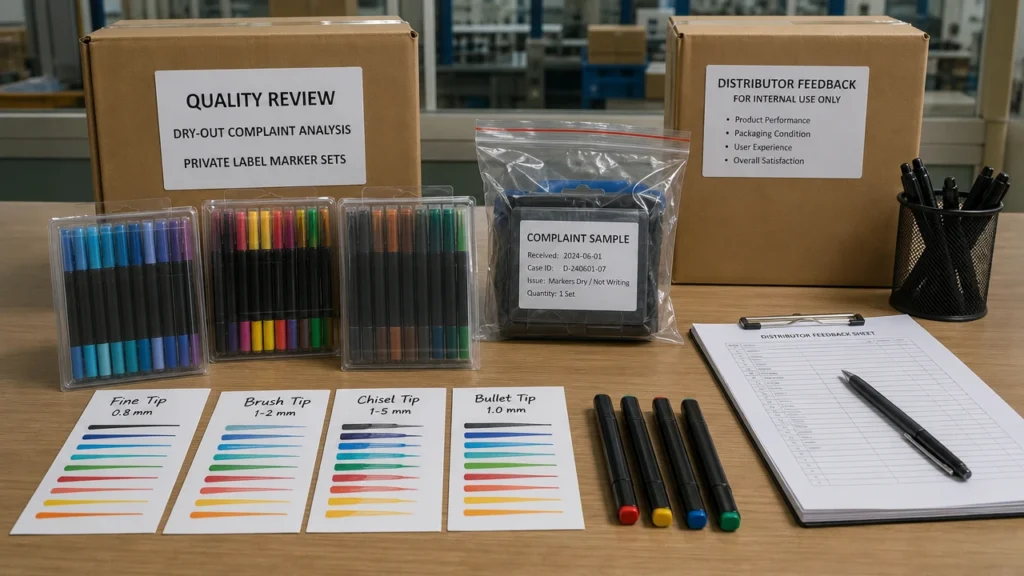
快速解答
We cut repeat dry-out complaints by treating the issue as a finished-product system problem. It was not only an ink problem. The fix plan checked cap seal, nib fit, ink flow, packing pressure, carton handling, storage exposure, and complaint tracking. The biggest change was simple. Every reorder had to tie the buyer complaint, kept sample, production batch, and pre-shipment writing test together.
目次
ケースの背景
The distributor sold sets through a mixed channel. Retail stores. School-supply resellers. Online sellers. The complaint pattern was not dramatic at first. A few customers said some markers felt weak. Then several accounts reported markers that wrote for a short time and stopped. The product still sold in many spots. The distributor needed a cleaner answer before the next reorder.
The first mistake would have been blaming ink right away. Ink matters. Dry-out complaints can come from the cap, nib, barrel, storage time, carton pressure, hot warehouse conditions, or a slow retail shelf. We treated the case as a chain of small risks.
The distributor also needed compliance and marking files for retail review. For US art products, the CPSCの画材に関するガイダンス explains ASTM D-4236 marking hopes. The official ASTM D4236 page covers chronic health hazard marking. Those documents matter. They do not prove shelf performance. We kept compliance review apart from dry-out fixes.
マーカーのインク切れクレームに対する初期診断
We asked the distributor to send three groups of info. Complaint samples. Unopened kept sets from the same order, if any. The carton or barcode data tied to the complaint lots. That gave the factory team something better than screenshots and customer remarks.
| 要求した証拠 | 必要な理由 | 判断に役立った点 |
|---|---|---|
| クレームサンプル | キャップ、ニブ、またはインクに目に見える問題があるかどうかを示した | 欠陥が単発か反復的かを判断 |
| 未開封の保管セット | 工場出荷時の状態と小売での取り扱いを分離 | 問題が小売店の棚に並ぶ前から存在したかどうか |
| ロットまたは段ボール箱のラベル | クレームサンプルを製造ロットに関連付け | 確認すべきバッチ記録の特定 |
| 保管メモ | 熱、湿度、棚での保管期間の影響を示した | 輸送または倉庫環境が原因となった可能性があるか |
| 影響を受けた色 | 問題が色特有かどうかを示した | 1つのインク、1つのニブ、または製品構造全体を確認するか |
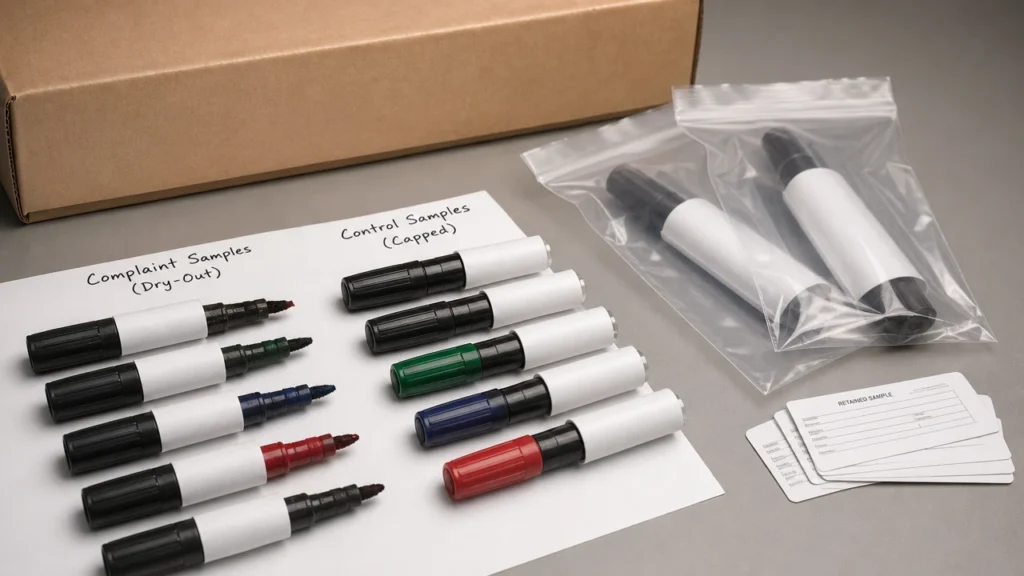
確認した根本原因
Dry-out complaints rarely have one clean cause. In this case, the useful question was not which part failed. It was which part of the system let a weak marker reach the buyer.
キャップの密閉とバレルの適合
A cap can look right and still seal poorly. We checked whether the cap clicked firm. We checked whether the inner cap touched the nib area right. We checked whether cap looseness grew after carton pressure or handling. Small cap-fit changes matter. Water-based and acrylic systems can lose usable flow when the nib area stays open too long.
ニブの適合とインクの流れ
A nib that fits too loose may write uneven. A nib that fits too tight may not pull ink at the expected speed. That is why we tied the dry-out review to finished-marker writing tests. We did not check the ink alone. For acrylic projects, the valve press marker technology page is useful background. Valve control changes how ink reaches the tip.
包装圧力と輸送条件
Packing can push caps, bend trays, or expose sets to heat and dryness in storage. The official ASTM D4332 page covers conditioning containers, packages, or packing parts to mimic field states in tests. For normal sourcing, buyers do not need a full lab program for every order. They should know that packing and environment shape complaints.
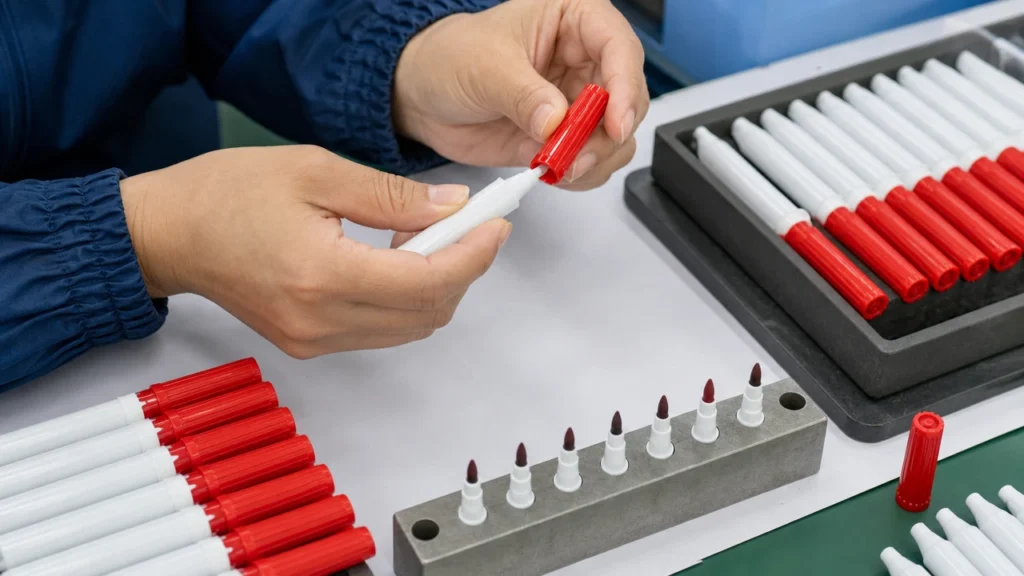
工場側の変更
The fix focused on checks that could repeat on future orders. We did not want a one-time rescue. We wanted a flow the production team and the distributor could use again.
| 変更点 | 追加した内容 | 購入者のメリット |
|---|---|---|
| キャップ適合サンプリング | キャップのクリック感、締まり具合、取り扱い後の適合性のチェック頻度を増加 | 密閉性の弱いユニットが段ボール箱に到達する可能性を低減 |
| ニブの流れチェック | 組み立て後および短時間の静置後に完成品マーカーの筆記テストを実施 | 見た目は正常でも筆記が弱いマーカーを検出 |
| 保管サンプル | 製造ロットと段ボール箱ラベルに関連付けた密封サンプルセット | 将来のクレーム追跡を迅速化 |
| 包装審査 | トレイの圧力、キャップの接触、カートン積載、内装の動きを確認 | 輸送・保管時のストレスを軽減 |
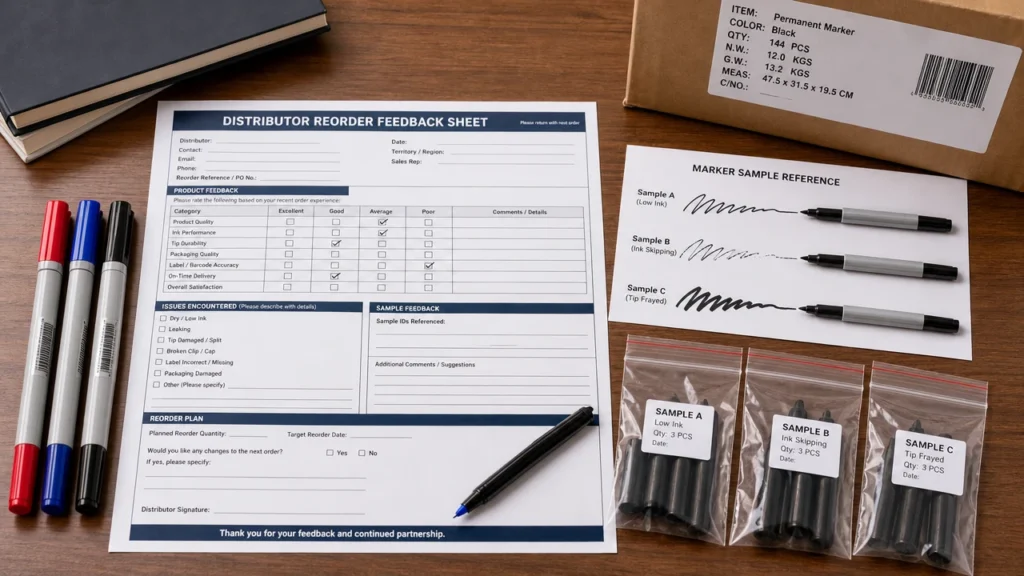
| クレームフィードバックシート | ロット、色、チャネル、保管期間に関する販売店向けメモを標準化 | 曖昧なクレームを活用可能なデータに変換 |
We also reviewed whether the product group, cap design, and packing format matched the distributor channel. Buyers planning retail sets can tie this step to the acrylic marker packing formats guide 和 外箱尺寸及CBM指南.
販売代理店側の変更
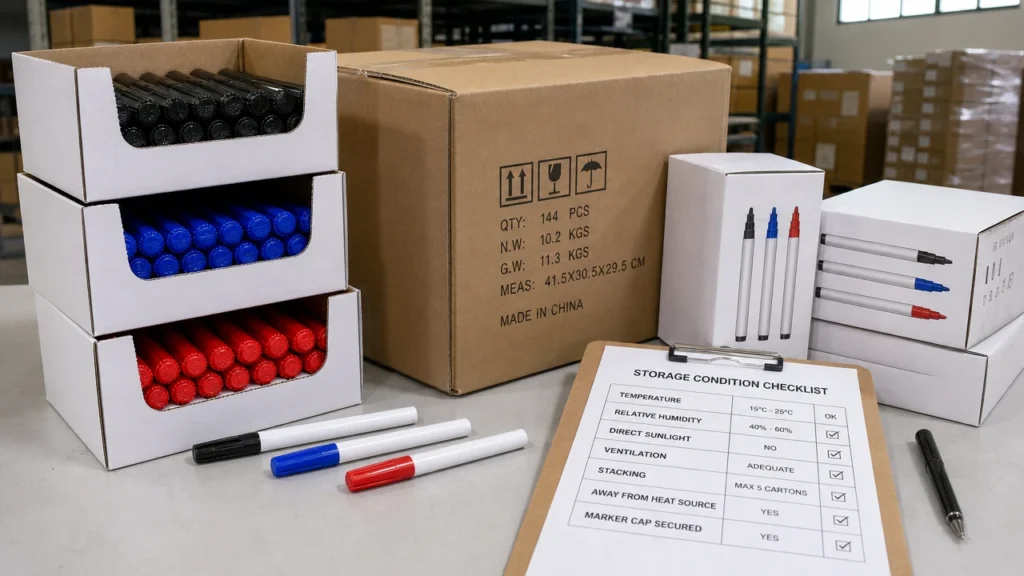
The distributor also changed its own handling. That part matters. If the supplier fixes factory checks but the buyer stores cartons near heat, opens inner boxes early, or mixes lots without marks, the problem can return.
- 各出荷から未開封の保管用セットを1つ保持し、PO番号と受領日をラベルに記載してください。
- マーカーカートンは、熱、直射日光、極端に乾燥した倉庫エリアを避けて保管してください。
- 販売アカウントに対し、交換前に影響を受けたSKU、色、ロット、保管期間、写真を記録するよう依頼してください。
- 乾燥クレームを、インク色クレーム、漏れクレーム、包装破損クレームと区別してください。
- クレームサンプルは密封袋に入れて返送し、工場がキャップとニブを追加暴露なしで検査できるようにしてください。
A steady reorder file also helped. The distributor tied complaint notes to the next PO. The new run could then be checked against real field feedback. That is close to the color-consistency reorder flow. Dry-out control just focuses on cap seal, nib flow, and storage instead of color match.
QCチェックリスト
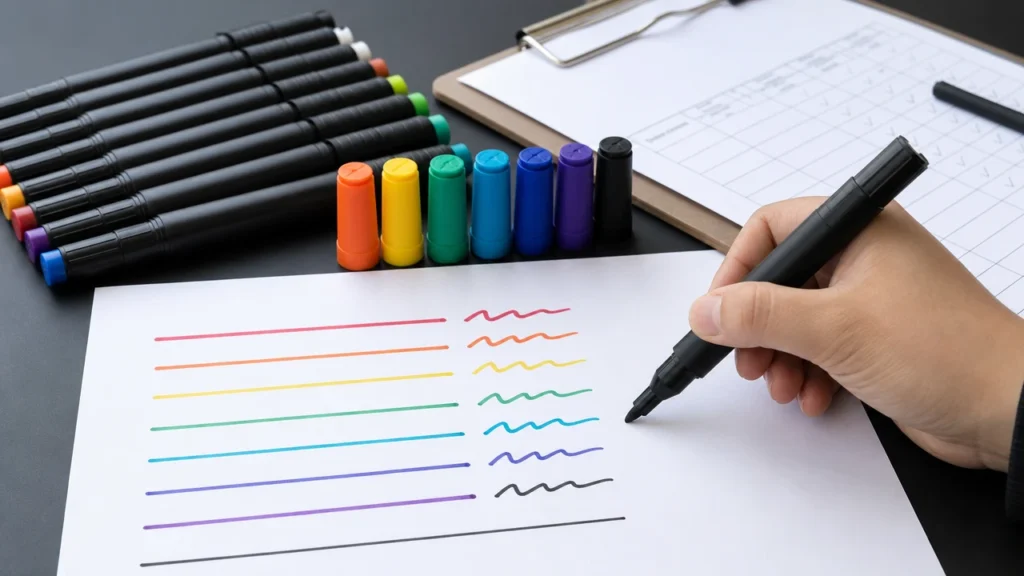
For future orders, we turned the case into a simple QC checklist. The checklist is not a promise. It catches common fail points before the product reaches the distributor.
| QCポイント | 工場チェック | 販売店チェック |
|---|---|---|
| キャップシール | 組み立て後およびサンプル取り扱い後にキャップの適合を確認 | カートン受領後にランダムセットを検査 |
| ニブの状態 | ニブの位置、湿り気、筆記強度を確認 | 再注文をリリースする前に保管サンプルをテスト |
| インクフロー | 短い休止時間の後にサンプル筆記ストロークを実施 | フロー低下の報告と完全乾燥の報告を区別 |
| 包装圧力 | トレイの適合、キャップの接触、カートン積載を確認 | カートンが潰れたり熱にさらされたりしていないか確認 |
| バッチトレーサビリティ | 保管サンプルとカートン参照情報にラベルを付ける | ロット、SKU、チャネル、クレーム日を記録 |
| コンプライアンスファイル | 関連するラベル表示およびテスト文書を準備しておく | コンプライアンスファイルを保管性能の証明と混同しないこと |
For wider check and compliance context, buyers can review the ASTM D-4236 report guide、 ウォーターカラーマーカー調達ガイド, 、および ZH Stationery's certifications page.
結果と限界
After the fix flow ran, the distributor had a cleaner complaint process and fewer repeat dry-out talks on the next order. The useful result was not a marketing number. It was control. The buyer and factory could name the affected SKU. They could compare kept samples. They could check cap and nib state. They could decide whether the issue came from production, packing, storage, or retail handling.
There are limits. No supplier can remove every dry-out risk after months of storage and mixed retail handling. Heat, wetness, shelf time, user behavior, and packing damage all matter. ISO 554 is a useful note that test conditions should be controlled when results are compared. For B2B sourcing, the practical lesson is simpler. Keep the test state steady before judging whether a batch changed.
That is why ZH Stationery treats dry-out complaints as a factory-and-channel problem. Factory checks matter. The distributor's receiving check, storage, and feedback care decide how fast the issue can be traced. Buyers who want to know factory ability can review the 工場見学 および 私たちについて のページをご覧ください。
仕入先に確認すべき質問
When dry-out risk matters, ask questions that force a supplier to describe the control method. Do not accept only a product pitch.
| 質問 | 有用な回答に含めるべき内容 |
|---|---|
| 出荷前にキャップシールをどのようにチェックしますか? | サンプリング方法、検査タイミング、弱いキャップと見なす基準 |
| 完成マーカーをテストしますか、それともインクサンプルのみですか? | 完成マーカーの筆記テスト、休止時間、影響を受ける色のルール |
| 保管サンプルはどのようにラベル付けされますか? | PO番号、SKU、バッチ日、カートンまたはロット参照、保管方法 |
| どのような包装圧力チェックが使用されますか? | トレイの適合、キャップの接触、カートン積載、輸送保護のレビュー |
| 乾燥クレームはどのように報告すべきですか? | 写真、影響を受ける色、ロット番号、保管期間、保管メモ、サンプル返却プロセス |
| どのような変更に再承認が必要ですか? | キャップ、ニブ、バレル、インク配合、包装トレイ、小売カード、またはカートン構造 |
常見問題
These FAQs cover the buyer questions that usually appear after a distributor gets dry-out complaints.
What usually causes dry-out complaints from distributors?
Weak cap seal, poor nib fit, ink loss in storage, damaged packing, long heat or dry-air time, and uneven retail handling. The supplier should check the finished marker, not only the ink mix.
Can a factory promise markers never dry out?
No good supplier should. Dry-out risk depends on design, ink system, cap fit, storage, shipping route, shelf time, and user behavior. A factory can cut preventable risks with cap-fit control, writing tests, kept samples, packing checks, and clear storage instructions.
Should distributors test samples before every reorder?
For repeat programs, yes. A short reorder check can confirm cap fit, nib flow, stroke strength, and packing state before mass production. If the product changed, treat it as a controlled update, not a simple reorder.
What should buyers ask after a dry-out case appears?
Ask for the lot number, production date, carton mark, photos of cap and nib, storage state, shelf time, and whether the issue hits one color, one SKU, or the whole shipment. Without this, the factory cannot trace the likely cause.
Does ASTM D-4236 fix dry-out problems?
No. ASTM D-4236 covers chronic health hazard marking for art products. It is not about cap seal or shelf performance. It matters for compliance. Dry-out control needs design, packing, storage, and QC checks.
乾燥防止に関する最適なRFQの文言は何ですか?
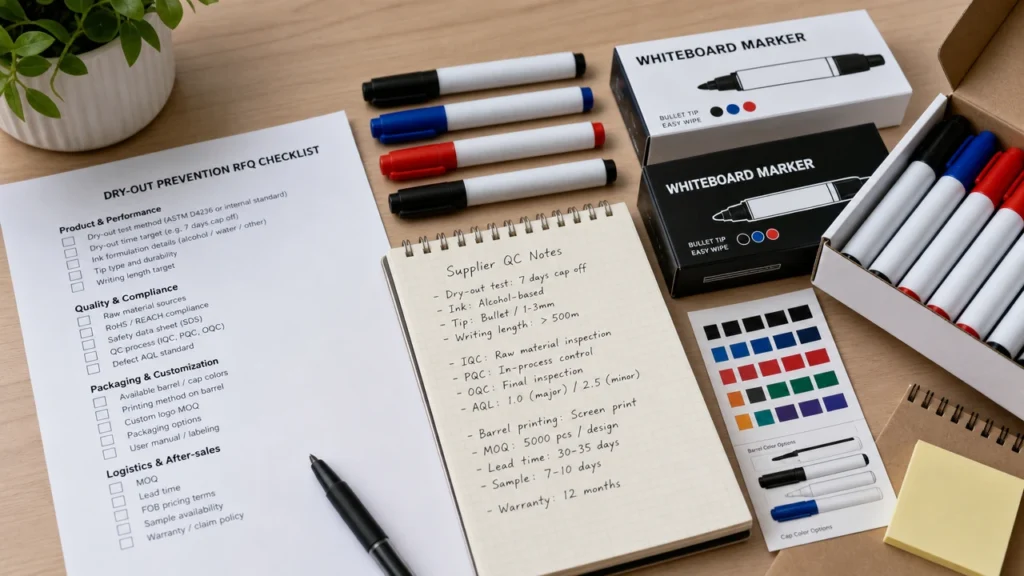
Use specific language. Require cap-fit checks, nib-flow sampling, kept samples, carton guard, storage instructions, and a fix flow for complaints. Avoid vague lines like premium quality or long shelf life unless the supplier defines how they are tested.
結論
Dry-out complaints are easier to cut when buyer and factory stop treating them as isolated customer remarks. The better flow is practical. Collect samples and trace the batch. Check cap and nib fit, review packing pressure, and control storage guesses. Build the next reorder around what was learned.
If you are sourcing private-label markers for a distributor channel, send ZH Stationery the marker type, cap design, packing format, destination market, expected shelf time, and any past complaint notes. The team can turn those notes into a sampling and QC checklist before the next order.
関連ガイド: 再注文全体でマーカーの色を一貫させる方法.
関連ガイド: 乾燥マーカーや色差に関する顧客クレームへの対処方法.