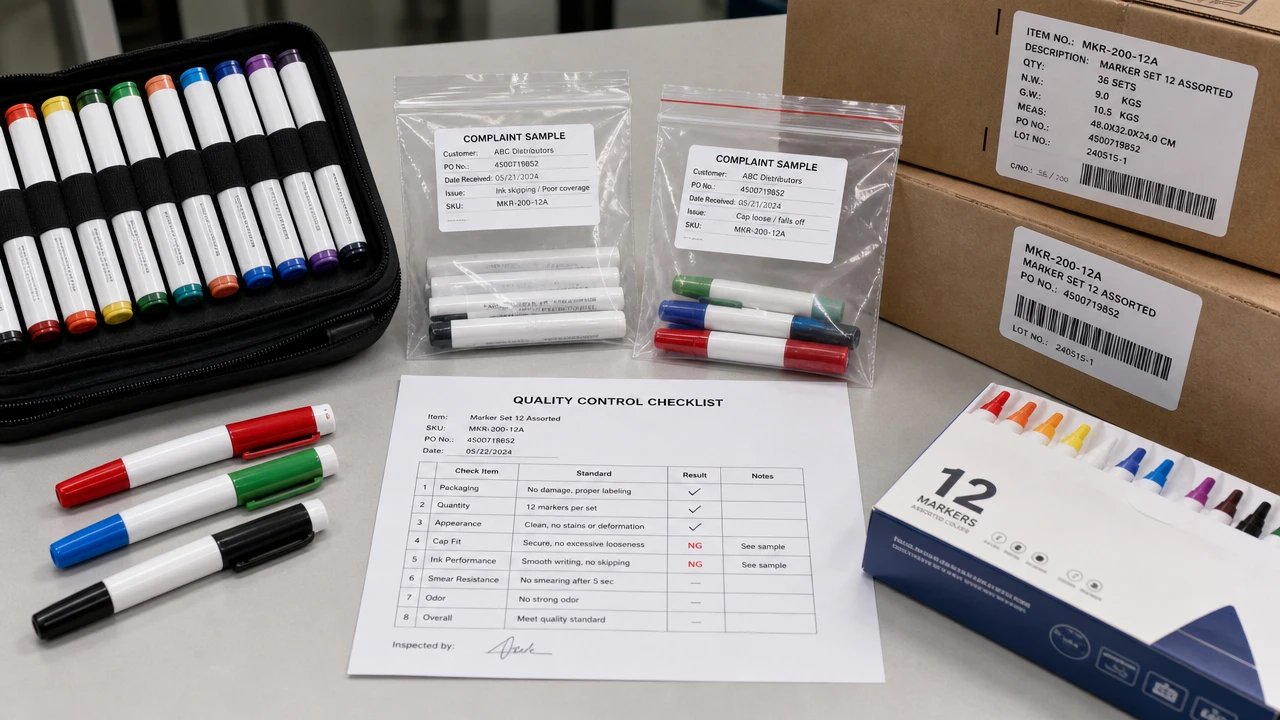
Marker dry-out complaints hurt a distributor because they usually show after the product has moved through the warehouse, channel, and shelf. In this anonymized case, ZH Stationery reviewed dry-out complaints for a distributor. We changed the control flow around cap seal, nib fit, storage risk, and reorder feedback.
This article does not name the buyer or print private complaint numbers. It shows the fix flow. Buyers can use the same method when sourcing markers, comparing a China manufacturer, or preparing an RFQ for private-label sets.
빠른 답변
We cut repeat dry-out complaints by treating the issue as a finished-product system problem. It was not only an ink problem. The fix plan checked cap seal, nib fit, ink flow, packing pressure, carton handling, storage exposure, and complaint tracking. The biggest change was simple. Every reorder had to tie the buyer complaint, kept sample, production batch, and pre-shipment writing test together.
빠른 링크
사례 배경
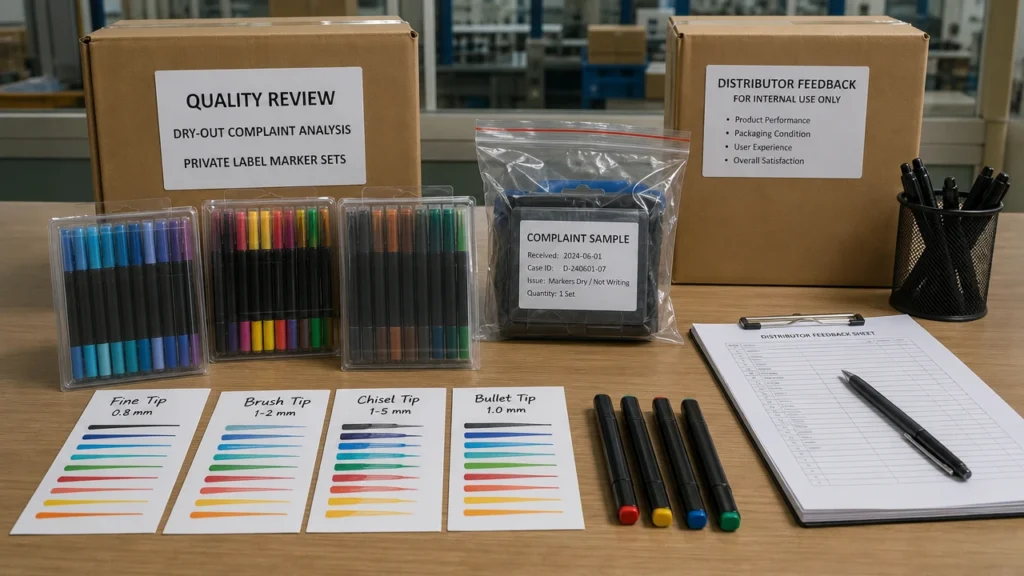
The distributor sold sets through a mixed channel. Retail stores. School-supply resellers. Online sellers. The complaint pattern was not dramatic at first. A few customers said some markers felt weak. Then several accounts reported markers that wrote for a short time and stopped. The product still sold in many spots. The distributor needed a cleaner answer before the next reorder.
The first mistake would have been blaming ink right away. Ink matters. Dry-out complaints can come from the cap, nib, barrel, storage time, carton pressure, hot warehouse conditions, or a slow retail shelf. We treated the case as a chain of small risks.
The distributor also needed compliance and marking files for retail review. For US art products, the CPSC 예술 재료 지침 explains ASTM D-4236 marking hopes. The official ASTM D4236 page covers chronic health hazard marking. Those documents matter. They do not prove shelf performance. We kept compliance review apart from dry-out fixes.
마커 건조 불만에 대한 1차 진단
We asked the distributor to send three groups of info. Complaint samples. Unopened kept sets from the same order, if any. The carton or barcode data tied to the complaint lots. That gave the factory team something better than screenshots and customer remarks.
| 요청한 증거 | 필요 이유 | 판단에 도움이 된 사항 |
|---|---|---|
| 불만 샘플 | 캡, 닙, 잉크에 육안으로 보이는 문제가 있는지 확인 | 결함이 단발성인지 반복적인지 여부 |
| 미개봉 보관 세트 | 공장 상태와 소매 취급을 분리 | 소매 선반 이전에 문제가 존재했는지 여부 |
| 로트 또는 골판지 상자 라벨 | 불만 샘플을 생산 배치와 연결 | 검토할 배치 기록 확인 |
| 보관 기록 | 열, 습도, 보관 기간 노출 확인 | 운송 또는 창고 환경이 원인인지 여부 |
| 영향받은 색상 | 문제가 특정 색상에 한정되는지 확인 | 단일 잉크, 단일 닙, 또는 전체 제품 구조를 점검할지 여부 |
점검한 근본 원인
Dry-out complaints rarely have one clean cause. In this case, the useful question was not which part failed. It was which part of the system let a weak marker reach the buyer.
캡 밀봉 및 배럴 결합
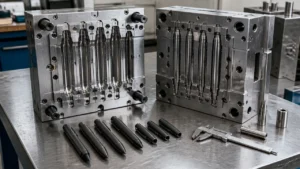
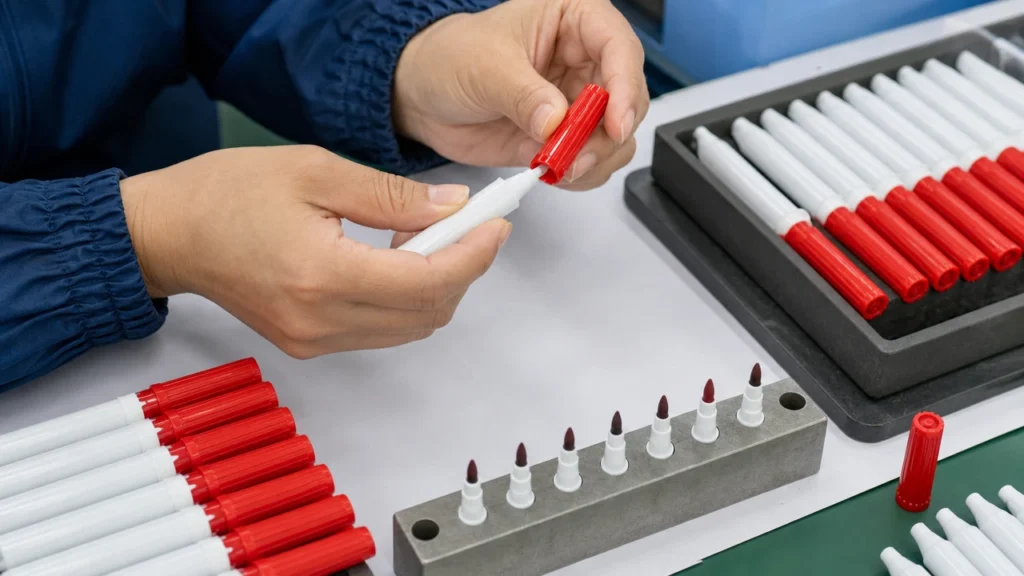
A cap can look right and still seal poorly. We checked whether the cap clicked firm. We checked whether the inner cap touched the nib area right. We checked whether cap looseness grew after carton pressure or handling. Small cap-fit changes matter. Water-based and acrylic systems can lose usable flow when the nib area stays open too long.
닙 결합 및 잉크 흐름
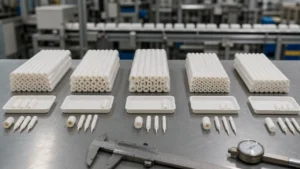
A nib that fits too loose may write uneven. A nib that fits too tight may not pull ink at the expected speed. That is why we tied the dry-out review to finished-marker writing tests. We did not check the ink alone. For acrylic projects, the valve press marker technology page is useful background. Valve control changes how ink reaches the tip.
포장 압력 및 운송 조건
Packing can push caps, bend trays, or expose sets to heat and dryness in storage. The official ASTM D4332 page covers conditioning containers, packages, or packing parts to mimic field states in tests. For normal sourcing, buyers do not need a full lab program for every order. They should know that packing and environment shape complaints.
공장 측 변경 사항
The fix focused on checks that could repeat on future orders. We did not want a one-time rescue. We wanted a flow the production team and the distributor could use again.
| 변경 사항 | 추가한 내용 | 구매자 혜택 |
|---|---|---|
| 캡 결합 샘플링 | 캡 클릭감, 조임, 취급 후 결합 상태에 대한 점검 빈도 증가 | 약한 밀봉 유닛이 골판지 상자에 도달할 가능성 감소 |
| 닙 흐름 점검 | 조립 및 짧은 휴지 시간 후 완제품 마커 필기 테스트 | 겉보기에는 정상이지만 필기감이 약한 마커 발견 |
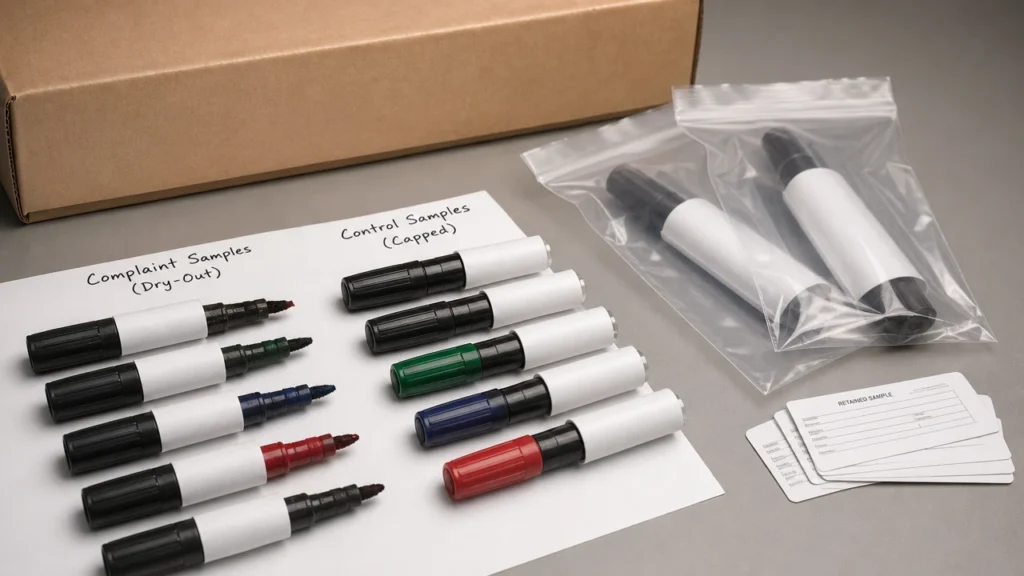
| 보관 샘플 | 생산 배치 및 골판지 상자 라벨과 연결된 밀봉 샘플 세트 | 향후 불만 추적 속도 향상 |
| 포장 검토 | 트레이 압력, 캡 접촉, 골판지 상자 적재, 내부 포장 이동 확인 | 운송 및 보관 중 발생하는 예방 가능한 스트레스를 줄임 |
| 불만 접수 피드백 양식 | 로트, 색상, 유통 채널 및 유통 기간에 대한 표준화된 유통업체 기록 | 모호한 불만 사항을 활용 가능한 데이터로 전환 |
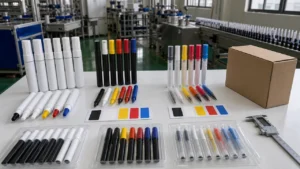
We also reviewed whether the product group, cap design, and packing format matched the distributor channel. Buyers planning retail sets can tie this step to the acrylic marker packing formats guide 및 카톤 크기 및 CBM 가이드.
유통업체 측 변경 사항
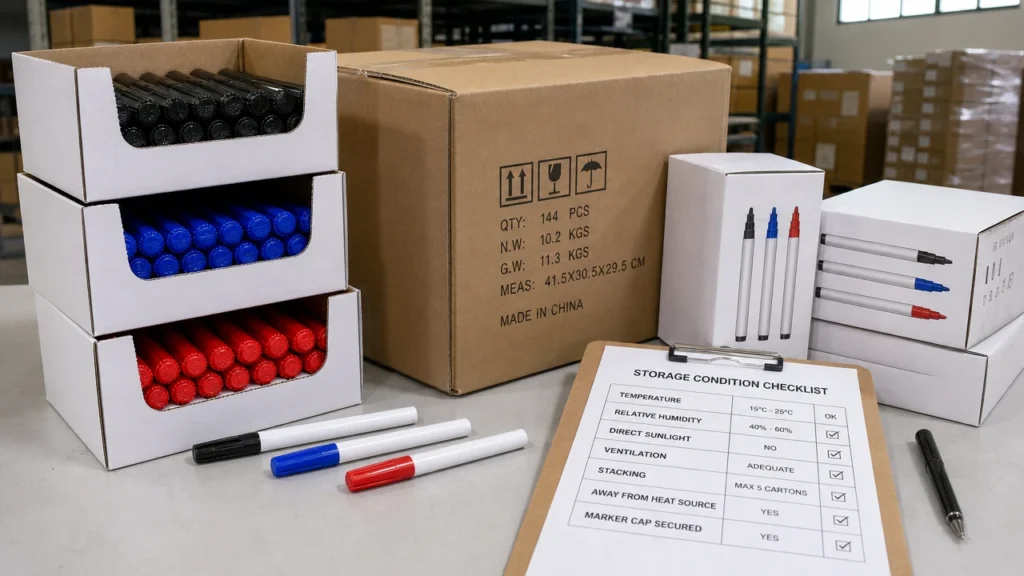
The distributor also changed its own handling. That part matters. If the supplier fixes factory checks but the buyer stores cartons near heat, opens inner boxes early, or mixes lots without marks, the problem can return.
- 각 선적분에서 개봉하지 않은 보관용 세트를 하나씩 유지하고 PO 번호와 입고 날짜를 라벨로 표시하십시오.
- 마커 카톤을 열기, 직사광선 및 매우 건조한 창고 구역에서 멀리 보관하십시오.
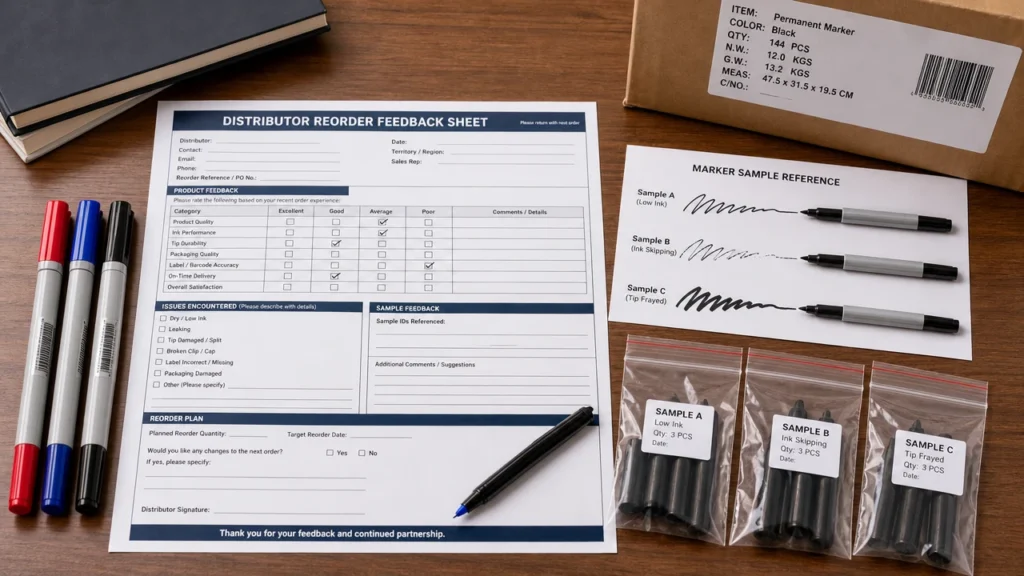
- 영업 계정에 교체 재고를 보내기 전에 영향을 받은 SKU, 색상, 로트, 유통 기간 및 사진을 기록하도록 요청하십시오.
- 건조 불만을 잉크 색상 불만, 누수 불만 및 포장 손상 클레임과 분리하십시오.
- 불만 샘플을 밀봉 백에 담아 반송하여 공장이 추가 노출 없이 캡과 닙을 검사할 수 있도록 하십시오.
A steady reorder file also helped. The distributor tied complaint notes to the next PO. The new run could then be checked against real field feedback. That is close to the color-consistency reorder flow. Dry-out control just focuses on cap seal, nib flow, and storage instead of color match.
QC 체크리스트
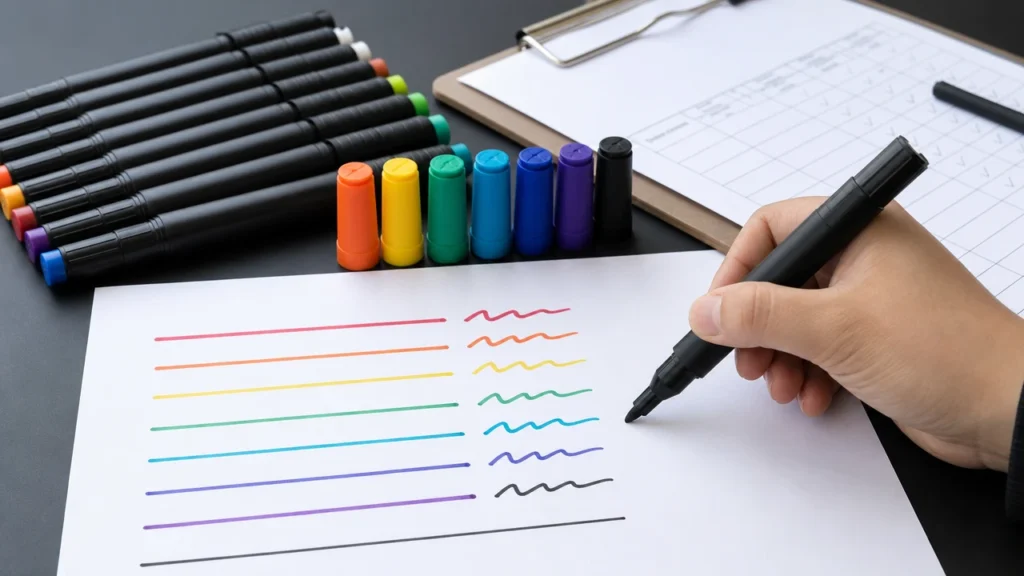
For future orders, we turned the case into a simple QC checklist. The checklist is not a promise. It catches common fail points before the product reaches the distributor.
| QC 포인트 | 공장 점검 | 유통업체 점검 |
|---|---|---|
| 캡 밀봉 | 조립 후 및 샘플 취급 후 캡 맞춤 확인 | 카톤 수령 후 무작위 세트 검사 |
| 닙 상태 | 닙 위치, 촉촉함 및 필기 강도 확인 | 재주문 출고 전 보관 샘플 테스트 |
| 잉크 흐름 | 짧은 휴지 시간 후 샘플 필기 테스트 | 약한 흐름 보고와 완전 건조 보고를 분리 |
| 포장 압력 | 트레이 맞춤, 캡 접촉 및 카톤 적재 방식 검토 | 카톤이 압착되거나 열에 노출되어 도착했는지 확인 |
| 배치 추적성 | 보관 샘플 및 카톤 참조 번호에 라벨 표시 | 로트, SKU, 채널 및 불만 날짜 기록 |
| 규정 준수 파일 | 관련 라벨링 및 테스트 문서를 준비해 두십시오 | 규정 준수 파일을 유통 기간 성능 증거와 혼동하지 마십시오 |
For wider check and compliance context, buyers can review the ASTM D-4236 report guide, 그 워터컬러 마커 소싱 가이드, 및 ZH Stationery's certifications page.
결과 및 한계
After the fix flow ran, the distributor had a cleaner complaint process and fewer repeat dry-out talks on the next order. The useful result was not a marketing number. It was control. The buyer and factory could name the affected SKU. They could compare kept samples. They could check cap and nib state. They could decide whether the issue came from production, packing, storage, or retail handling.
There are limits. No supplier can remove every dry-out risk after months of storage and mixed retail handling. Heat, wetness, shelf time, user behavior, and packing damage all matter. ISO 554 is a useful note that test conditions should be controlled when results are compared. For B2B sourcing, the practical lesson is simpler. Keep the test state steady before judging whether a batch changed.
That is why ZH Stationery treats dry-out complaints as a factory-and-channel problem. Factory checks matter. The distributor's receiving check, storage, and feedback care decide how fast the issue can be traced. Buyers who want to know factory ability can review the 공장 견학 그리고 우리는 누구인가 페이지를 참조하십시오.
더 나은 공급업체 질문을 하세요
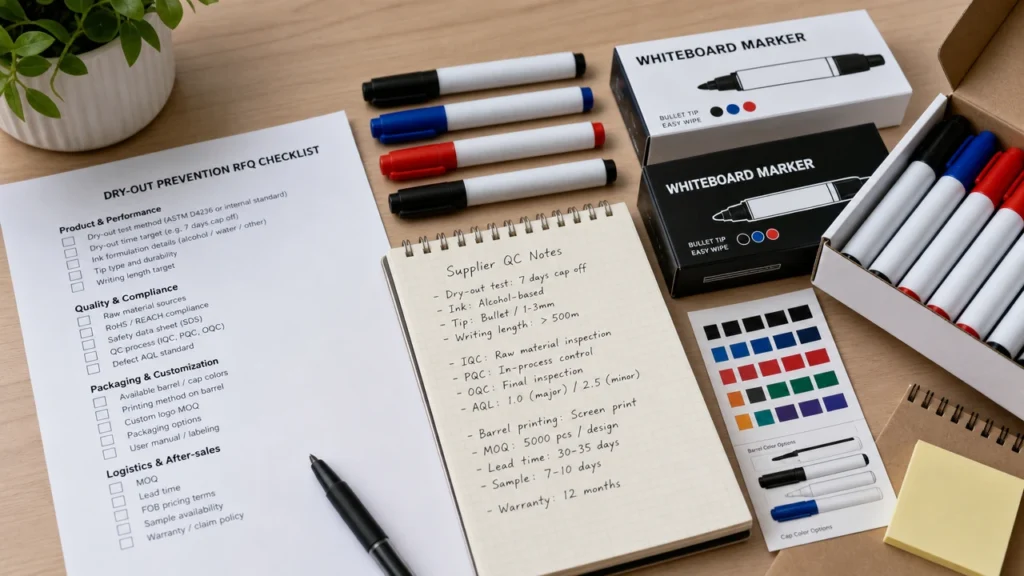
When dry-out risk matters, ask questions that force a supplier to describe the control method. Do not accept only a product pitch.
| 질문 | 유용한 답변에 포함되어야 할 사항 |
|---|---|
| 선적 전 캡 밀봉을 어떻게 점검합니까? | 샘플링 방법, 검사 시점 및 약한 캡으로 간주되는 기준 |
| 완제품 마커를 테스트합니까, 아니면 잉크 샘플만 테스트합니까? | 완제품 마커 필기 테스트, 휴지 시간 및 영향을 받는 색상 규칙 |
| 보관 샘플은 어떻게 라벨링됩니까? | PO 번호, SKU, 배치 날짜, 카톤 또는 로트 참조 번호 및 보관 방법 |
| 어떤 포장 압력 점검이 사용됩니까? | 트레이 맞춤, 캡 접촉, 카톤 적재 및 운송 보호 검토 |
| 건조 불만은 어떻게 보고해야 합니까? | 사진, 영향을 받는 색상, 로트 번호, 유통 기간, 보관 기록 및 샘플 반송 절차 |
| 어떤 변경 사항이 재승인을 요구합니까? | 캡, 닙, 배럴, 잉크 포뮬러, 포장 트레이, 리테일 카드 또는 카톤 구조 |
자주 묻는 질문
These FAQs cover the buyer questions that usually appear after a distributor gets dry-out complaints.
What usually causes dry-out complaints from distributors?
Weak cap seal, poor nib fit, ink loss in storage, damaged packing, long heat or dry-air time, and uneven retail handling. The supplier should check the finished marker, not only the ink mix.
Can a factory promise markers never dry out?
No good supplier should. Dry-out risk depends on design, ink system, cap fit, storage, shipping route, shelf time, and user behavior. A factory can cut preventable risks with cap-fit control, writing tests, kept samples, packing checks, and clear storage instructions.
Should distributors test samples before every reorder?
For repeat programs, yes. A short reorder check can confirm cap fit, nib flow, stroke strength, and packing state before mass production. If the product changed, treat it as a controlled update, not a simple reorder.
What should buyers ask after a dry-out case appears?
Ask for the lot number, production date, carton mark, photos of cap and nib, storage state, shelf time, and whether the issue hits one color, one SKU, or the whole shipment. Without this, the factory cannot trace the likely cause.
Does ASTM D-4236 fix dry-out problems?
No. ASTM D-4236 covers chronic health hazard marking for art products. It is not about cap seal or shelf performance. It matters for compliance. Dry-out control needs design, packing, storage, and QC checks.
건조 방지를 위한 최적의 RFQ 문구는 무엇인가요?
Use specific language. Require cap-fit checks, nib-flow sampling, kept samples, carton guard, storage instructions, and a fix flow for complaints. Avoid vague lines like premium quality or long shelf life unless the supplier defines how they are tested.
결론
Dry-out complaints are easier to cut when buyer and factory stop treating them as isolated customer remarks. The better flow is practical. Collect samples and trace the batch. Check cap and nib fit, review packing pressure, and control storage guesses. Build the next reorder around what was learned.
If you are sourcing private-label markers for a distributor channel, send ZH Stationery the marker type, cap design, packing format, destination market, expected shelf time, and any past complaint notes. The team can turn those notes into a sampling and QC checklist before the next order.
관련 가이드: 재주문 시 마커 색상 일관성을 유지하는 방법.
관련 가이드: 마커 건조 또는 색상 차이에 대한 고객 불만 처리 방법.