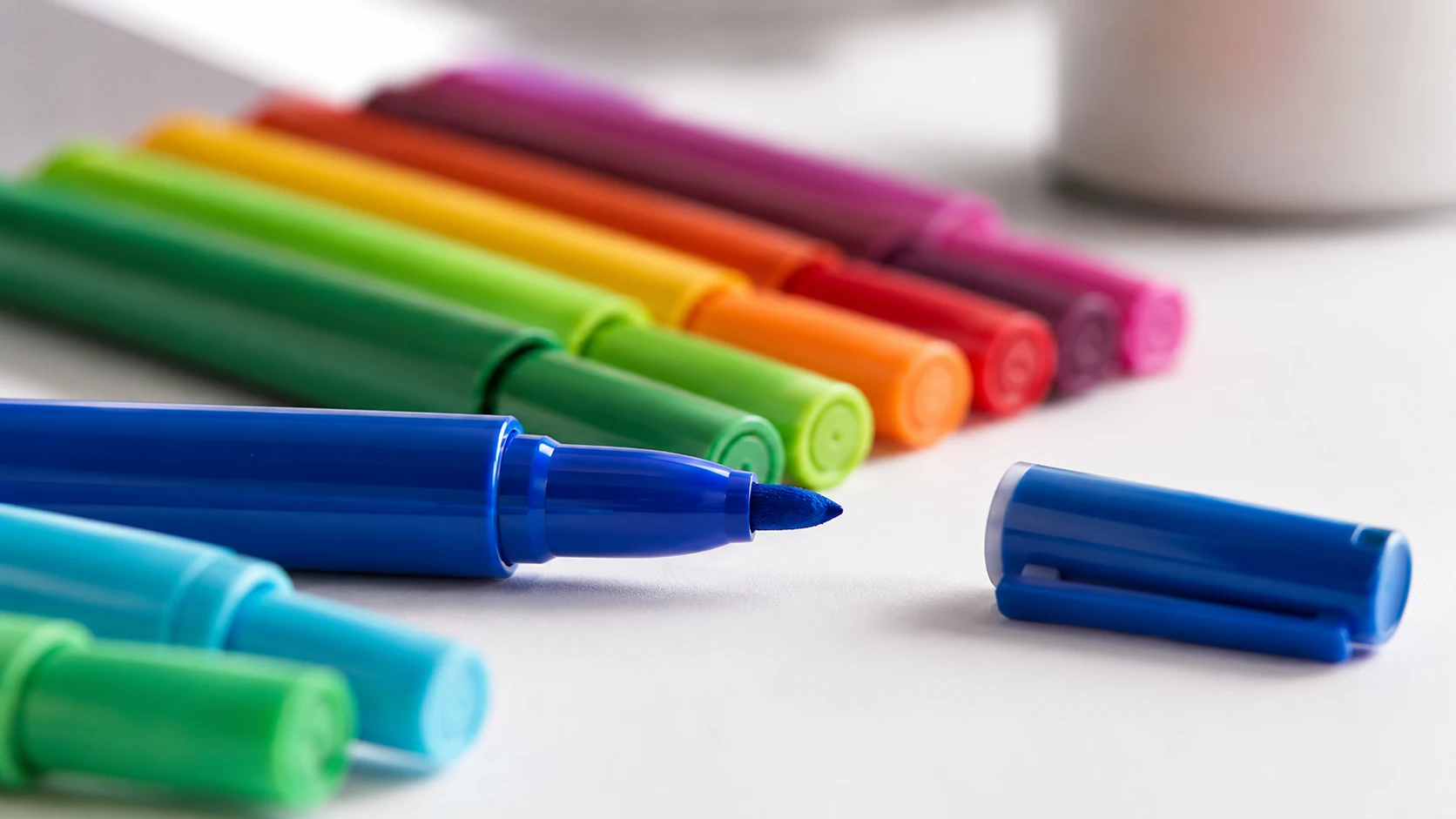
Every stationery buyer has faced the same frustrated customer. The message goes like this: I just bought these markers last month, and they are already dried out. For a consumer, that is an annoyance. For a brand owner, wholesaler, or retail buyer, the stakes are higher. Orders run from 50,000 to 500,000 units. Dried-out markers mean returns, bad reviews, and lasting damage to brand reputation.
Marker pen quality control is not just a factory-floor concern. It is the biggest factor in whether your products survive shipping, shelf time, and daily use. When a marker dries out early, one specific point in production failed. That point can be ink mixing, cap sealing, nib fit, or storage stability testing.
Understanding why markers dry out, and what factory controls prevent it, gives B2B buyers a practical framework. Use it to evaluate suppliers, cut after-sales complaints, and build product lines customers trust.
목차
빠른 답변: 마커가 마르는 이유는 무엇이며, B2B 구매자는 무엇을 확인해야 합니까?
Marker dry-out happens when the solvent in the ink evaporates faster than the sealing system can stop it. For B2B buyers, the root causes fall into four groups:
- 캡 밀봉 불량 (The most common cause. If the cap doesn’t create a consistent airtight barrier, alcohol-based solvents escape within days. Even microscopic gaps in the cap-to-barrel seal accelerate evaporation across an entire production batch.
- 잉크 배합 불균형) When the solvent-to-pigment ratio isn’t precisely controlled, ink either evaporates too quickly or separates during storage. This is especially common when factories source ink from third-party suppliers without batch-level verification.
- 닙 및 섬유 시스템 불일치 (If the nib material, fiber density, and ink viscosity aren’t engineered as a coordinated system, capillary action breaks down. The tip clogs, ink stops flowing, and the marker feels “dead” even when the reservoir is full.
- 보관 및 운송 불안정성) Markers shipped through high-temperature containers or stored in unconditioned warehouses can experience accelerated solvent loss before they ever reach a retail shelf.
These factors help brand owners and procurement managers set tighter sourcing and inspection standards. Do it before a production run turns into a customer service problem.
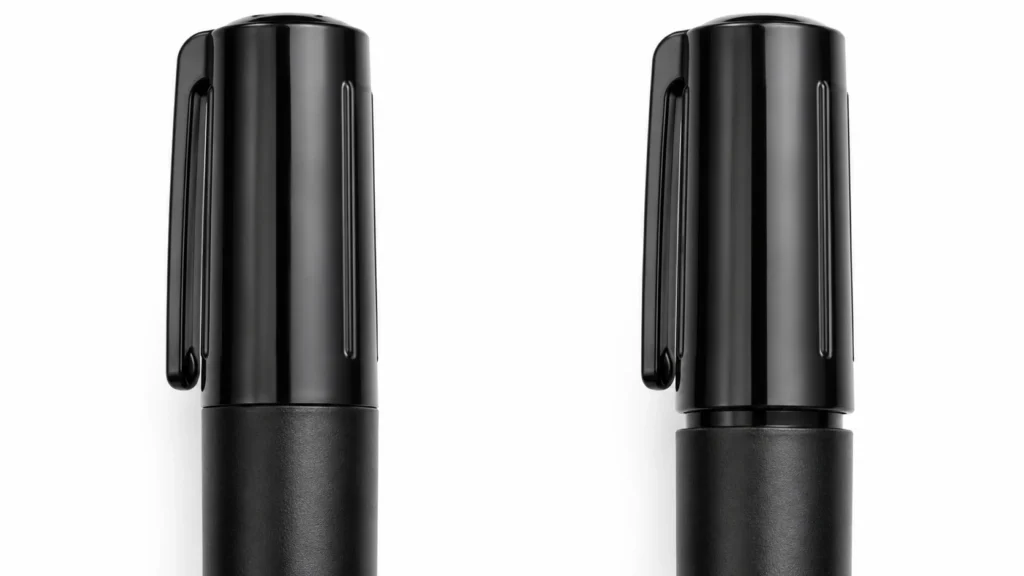
일반적인 마커 건조 문제: 최종 사용자 불만이 공장 품질에 대해 드러내는 점
When customers say this marker is dried out, they are describing a symptom. Each version of that complaint points to a different production gap. Here is how to read the signals:
| 일반적인 특징/문제 | 중요성/실패 이유 (고객 불만의 근본 원인) | 공장 품질 관리 지표 |
| 마커가 첫 사용 후 몇 주 안에 건조됨 | 캡-몸체 밀봉의 틈을 통해 용매가 증발함; 알코올계 잉크는 공기 교환에 특히 취약함 | 온도 주기 및 반복적인 개폐 시뮬레이션에 걸친 캡 밀봉 기밀성 테스트 |
| 색상이 희미해지거나 줄무늬가 생기거나 일관성이 없어짐 | Ink formulation instability (solvent evaporates but pigment remains concentrated, or pigment separates from the solvent base during shelf storage | 배치 수준 점도 측정, ΔE 공차를 사용한 색상 편차 테스트 및 가속 노화 프로토콜 |
| 닙이 굳거나, 닳거나, 잉크 공급이 중단됨 | 잉크 화학 성분과 닙 섬유 재질 간의 비호환성; 닙이 압축되거나 건조된 안료로 섬유가 막히면 모세관 흐름이 중단됨 | 실제 생산 잉크 배합과 함께 수행되는 닙 내구성 사이클 테스트; 유량 일관성 검증 |
| “가득 참”으로 표시된 마커가 빈 것처럼 써짐 | 내부 섬유 저장소가 고르게 포화되지 않음; 충전 중에 기포가 형성되어 저장소에서 팁으로의 모세관 경로를 차단함 | 자동화된 충전량 검증; 기준 표준과의 중량 비교를 통한 저장소 포화도 검사 |
| 전체 배치가 조기 건조를 보임 | Systematic manufacturing defect) mold tolerance drift in cap/barrel dimensions, material grade substitution, or ink batch variation | 입고 자재 검사 프로토콜; 캡-몸체 결합면 치수에 대한 통계적 공정 관리 모니터링 |
The pattern is consistent. End-user complaints about dried-out markers almost never trace back to one bad unit. They trace back to a quality control choice, or the lack of one. That choice was made weeks earlier on the production floor.
마커 건조의 과학: 배럴 내부에서 일어나는 현상
To judge a supplier's quality control, you first need to know what you are controlling. Marker dry-out is not one problem. It is a chain reaction that starts with chemistry and ends with mechanics.
알코올계 대 수성 잉크 시스템 및 마커 펜 내구성 기준
The ink type decides how fast a marker dries out, and which quality checks matter most.
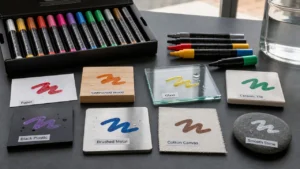
Alcohol-based markers use solvents like ethanol or isopropanol to carry pigment through the nib. These solvents evaporate fast by design. That is what gives alcohol markers their quick drying and blendable feel. But it also means that once the cap seal fails, damage shows in days, not weeks. A marker can write well at the factory. It can still arrive at the customer's door already weak. That happens when the cap cannot hold a near-perfect seal through shipping temperature swings.
Water-based markers are kinder on evaporation speed. They bring a different set of challenges. Water-based inks can pick up biological contamination, such as fungal growth inside the reservoir. They can also suffer pigment settling during long storage. Without proper biocide treatment and viscosity control, problems show at the customer's end. Markers can arrive working but deliver uneven, streaky color. Customers read that as drying out.
The takeaway for buyers is simple. The ink system you choose decides which QC checks matter most. Alcohol markers demand rigorous cap sealing checks. Water-based markers demand storage stability tests and contamination prevention.
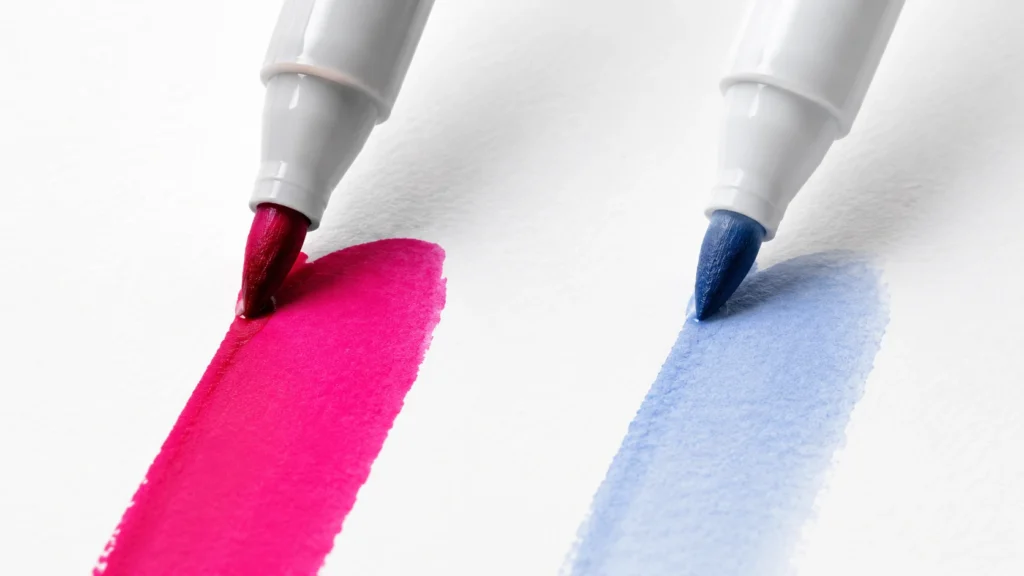
캡 실링이 유통기한을 결정하는 방법
If one production detail separates markers that last from markers that do not, it is the cap seal. Not the cap design on the prototype. Not the cap fit on the approved sample. The seal consistency across 50,000 units.
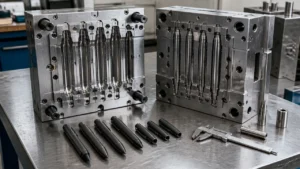
Here is what happens in production. The cap and barrel are molded separately. They are often made from different plastics, such as PP for barrels and PE or special resins for caps. Each material expands and shrinks at its own rate with temperature changes. The tolerance between cap inner diameter and barrel outer diameter must stay tight. If it does not, the seal varies from unit to unit.
A fraction of a millimeter on the mating surface can turn an airtight seal into a slow leak. Multiply that across a production run, and you get the most frustrating problem in stationery. Some markers last two years, others dry out in two months, and there is no visible difference between them.
Cap-off testing measures writing performance after the nib is exposed. It does not directly measure how well a closed cap seals. Evaluate closed-cap storage or evaporation performance separately. Record temperature, time, sample size, and writing criteria. Compare results with the approved product spec.
Some factories treat cap seal integrity as a standard production checkpoint. It is not a one-time design check there. In those factories, batch-to-batch dry-out complaints drop sharply. The testing gear and records pay for themselves in fewer returns. That math matters whether you source 50,000 pens for a test market or 500,000 for a retail chain.
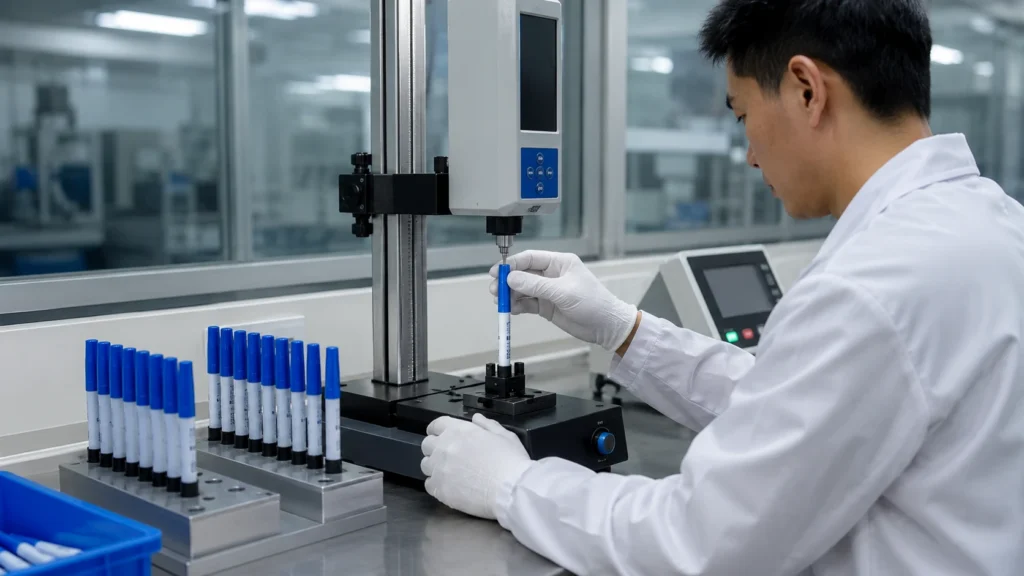
B2B 구매자가 공급업체의 QC 시스템에서 평가해야 할 사항
When you source markers for a private-label brand, retail program, or wholesale catalog, quality control matters early. It is not something you check after production. It is something you judge before you place the order. Here are the areas where supplier differences matter most.
마커펜 잉크 제조법: 자체 개발 vs 외주 개발
Where a factory gets its ink tells you a lot about consistency. Factories that mix ink in-house, with their own R&D lab, can find and fix issues within hours. They control pigment dispersion, solvent ratios, and batch tests in one place. When a color drifts, the cause is found at the mixing stage. It is not discovered after 20,000 units are filled.
Factories that buy ink from third parties face a different reality. They rely on the supplier's quality claims. Ink viscosity can shift between batches. That is common when solvent ratios are not precise. The line may then produce markers that look the same but perform differently. The thinner batch dries out faster. The thicker batch clogs sooner. Same SKU, same box, different customer experience.
For B2B buyers ordering at scale, the practical question is not whether the factory tests ink. It is whether the factory can show batch records that link specific ink data to specific production runs. Good records trace raw pigment lots through mixing, viscosity tests, color checks, and filling. That separates real control from after-the-fact inspection.
ZH STATIONERY runs an in-house ink R&D lab. Alcohol-based and water-based mixes are developed and tested before production. That ability was built over 26+ years of OEM/ODM work. What matters is what it enables: batch-specific ink performance data for buyers, instead of generic promises.

생산 환경: 자동화, 검사 및 공정 제어
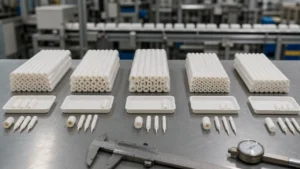
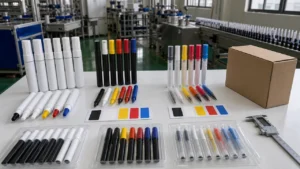
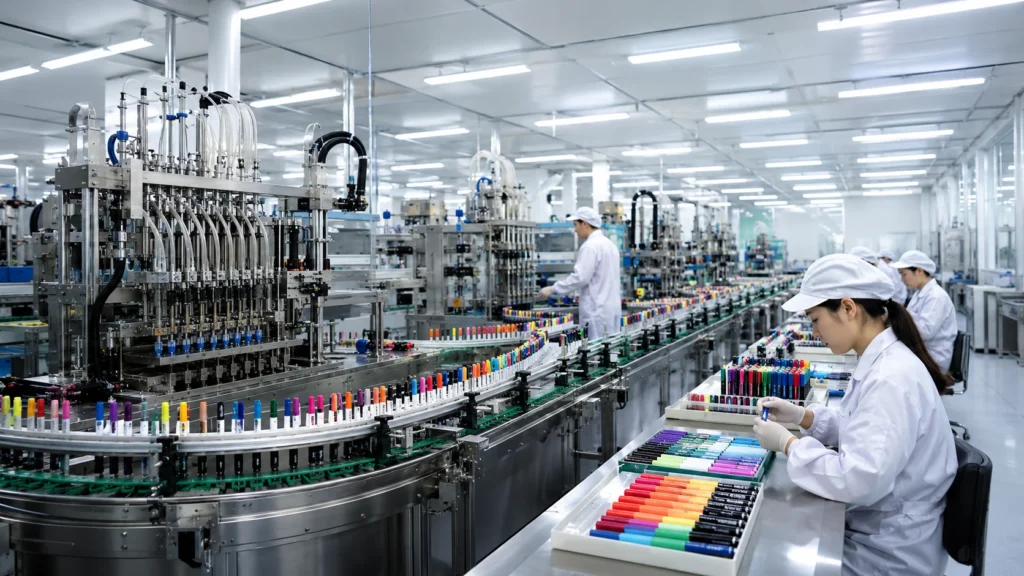
A 10000+ sqm factory area with 8 production workshops is more than a capacity number. It is a quality signal. Automated ink filling cuts the volume swings that make some markers run dry while others stay wet. Automated cap assembly applies steady seating force instead of operator feel. And when 100% of units pass visual and functional checks before packing, the defect escape rate drops.
Automation does not erase quality problems. It makes them systematic instead of random. That makes them traceable and fixable. A well-documented production line with clear checkpoint data gives buyers something samples cannot. It gives confidence that batch two will match batch one.
For buyers developing new SKUs, 3D design and physical sampling matter as much as automation. A factory can make a physical sample from your design files. The sample shows barrel feel, cap fit, and tip performance before mold creation. That cuts the iteration cycles that delay launches and raise costs.
중요한 인증 및 제조 표준
When markers are sold in U.S. and European markets, safety compliance is not optional. It is a legal requirement with direct business impact. Two standards matter most for marker buyers.
- ASTM D-4236 ASTM D-4236은 미국의 미술 및 공예 재료 표준입니다. 이는 제품이 급성 및 만성 건강 위험에 대해 독성학자에 의해 평가되어야 하며,.
- EN71 is the European toy safety standard. Part 3 specifically addresses the migration of heavy metals (relevant for markers that may be used by children. EN71-9 covers organic chemical compounds, and the broader EN71 framework sets mechanical and physical requirements including cap safety standards to prevent choking hazards.
These certificates are not marketing badges. They are proof that a factory sent products to third-party testing, and that its ink meets regulated safety limits. For buyers importing into the EU or U.S., current reports should be a basic requirement. EN71 and ASTM D-4236 are not a bargaining point.
Beyond safety, here are the production abilities that support steady quality in bulk marker sourcing:
- The minimum order for custom OEM/ODM programs is 50,000 pens per order, counted by total individual pens produced. For a 12-color pack, that equals roughly 4,200 sets, not 50,000 of each color. Standard stock models can be sampled at smaller trial sizes.
- Custom packaging options (blister cards, color boxes, display stands) designed for specific retail channel requirements
- 3D 설계 및 실물 샘플링 역량을 갖추어, 구매자가 금형 생산에 투입되기 전에 미적 요소와 기능적 적합성을 모두 검증할 수 있도록 함
- 특정 색상 요구 사항에 맞추고 목표 시장 조건에 맞게 점도를 조정하기 위한 사내 잉크 연구개발
When a factory has built these abilities over decades of OEM/ODM work, the base for consistent quality already exists. The buyer's job is to verify that the documented process matches real production. It is not to build quality control from scratch.
자주 묻는 질문
1. 캡이 닫혀 있어도 마커펜이 마르는 원인은 무엇인가요?
A weak closed-cap seal is one possible cause. Ink delivery, fill level, and storage exposure also need checks. Evaluate sealing with closed-cap leakage or evaporation tests and storage tests. Use cap-off tests separately to check recovery after exposure. Do not treat them as proof of cap sealing.
2. 마른 마커를 되살릴 수 있나요, 아니면 본질적으로 불량 제품인가요?
For end users, short-term revival can work. Soak the tip in isopropyl alcohol, or add a few drops of solvent into the barrel. That restores writing because you are replacing the lost solvent, so the remaining pigment can flow again. From a product quality view, a marker that needs revival has already failed. The solvent escaped, the ink chemistry changed, and performance will never match a properly sealed unit. For B2B buyers, markers that arrive dried out point to a production defect. The same is true when they dry out after a few uses. The cause is most likely cap sealing, ink stability, or storage during transport. These units should trigger a supplier quality review, not a customer workaround. If you are researching how to fix dried-out markers for your line, fix the production process. Do not teach users revival tricks.
3. B2B 구매자는 제품 내구성을 위해 마커펜 공급업체를 어떻게 평가해야 하나요?
Ask for separate evidence on cap-off recovery, closed-cap storage, and nib-to-ink fit. Record the conditions and pass limits for each test. Connect the results to the SKU and batch you are ordering. ZH Stationery has confirmed unit-level functional inspection; ask which batch and development tests apply to your product.
4. What is the difference between alcohol-based and water-based markers in shelf life?
Alcohol-based markers evaporate faster and need stronger cap sealing. Their solvent chemistry resists biological growth and can stay stable for long periods when sealed well. Water-based markers evaporate slower but face other risks. Pigment can settle over time. Fungus can grow in the reservoir. Freeze-thaw changes can hurt them during winter shipping. Neither system is automatically better. The deciding factor is whether production addresses each ink type's weak points. Alcohol markers need airtight seals and tight tolerances. Water-based markers need biocide treatment, viscosity control, and climate-aware storage.
5. 미국 및 유럽 시장을 위해 마커펜이 가져야 할 인증은 무엇인가요?
For the U.S. market, ASTM D-4236 certification confirms the ink passed a toxicology review. It also confirms proper labeling under LHAMA. For Europe, EN71 is the baseline, especially Part 3 for heavy metal migration and Part 9 for organic compounds. Some buyers also ask for REACH records on specific substances. Certificates should be current. They should come from accredited third-party labs. They should cover the exact ink mixes in your order. Always check that the documents match the products being shipped.
6. 품질 일관성을 희생하지 않고 마커펜을 맞춤 제작할 수 있나요?
Yes, when the factory's quality system is built to handle change. Customization adds variables. Different barrel colors change the plastic's pigment mix. Different cap materials change sealing behavior. Unique packaging can expose products to different storage conditions. A factory with documented checkpoints at each stage can absorb these variables. The checkpoints cover incoming material checks, in-process ink tests, and finished product tests. Project-based MOQs let brands validate custom products with the right sample and pilot plan before full production. If you want to discuss specs, ink mixes, packaging, or quality test plans for custom markers, contact ZH STATIONERY. We will review your needs and send samples.
결론
When a marker dries out, the customer does not blame the cap seal or the ink mix. They blame the brand. For B2B buyers, marker pen quality control is not technical curiosity. It is about protecting the reputation you have built. That holds whether you run a private-label line, stock retail shelves, or supply schools.
The markers that last are the ones where ink mixing, cap sealing, nib fit, and production consistency were treated as one system. They were not separate buying decisions. When you evaluate suppliers, look past samples and price sheets. Ask about cap-off time data, batch-level ink records, and in-process checkpoints. The answers tell you more about durability than any catalog.
If you are sourcing marker pens, metallic markers, or gel pens for your brand or retail program, contact ZH STATIONERY. We can discuss specs and request samples. We can also review quality documents before you commit to production.
관련 가이드: 관련 규정 준수 계획은 다음을 참조하세요. 2026년 중국 최고의 마커 펜 제조업체 7곳.