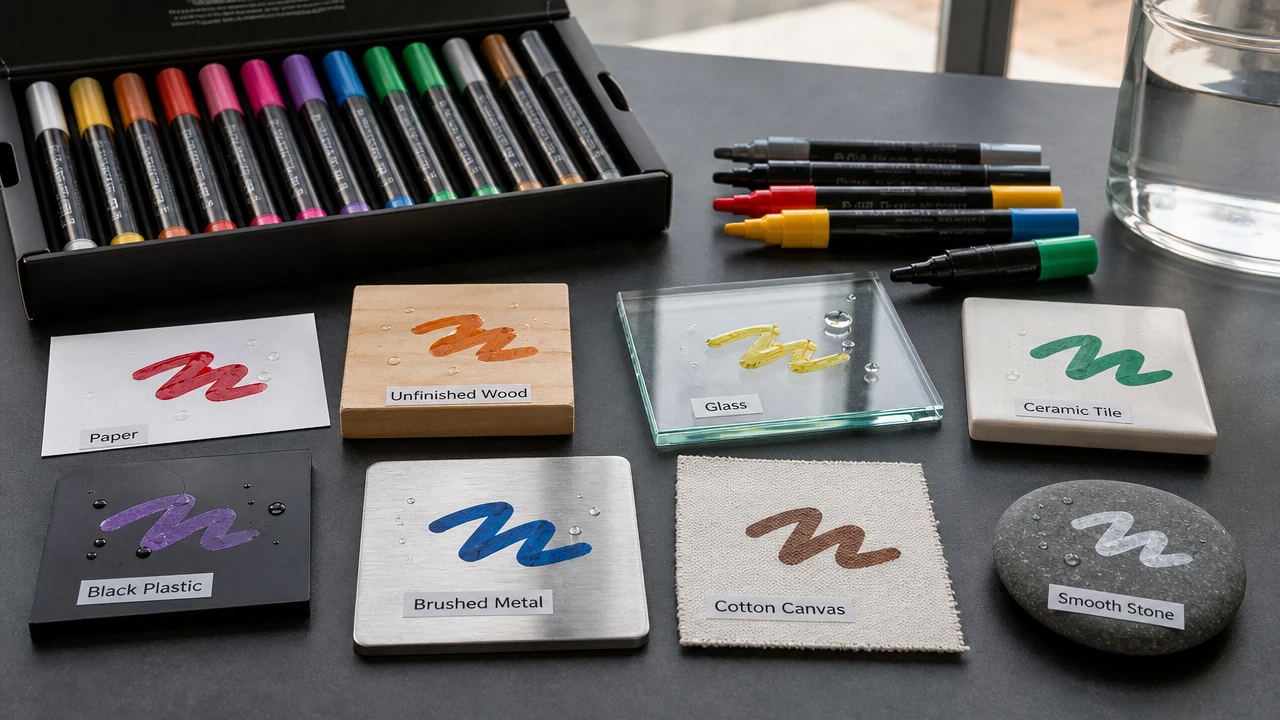
If your buyers ask, are acrylic paint markers permanent and waterproof, the honest answer is: after drying, they are usually water resistant and often permanent on the right surface. Not on every surface. Not under every kind of wear. For B2B sourcing, the wording on the pack must match the surface, cure time, and cleaning method, and test result.
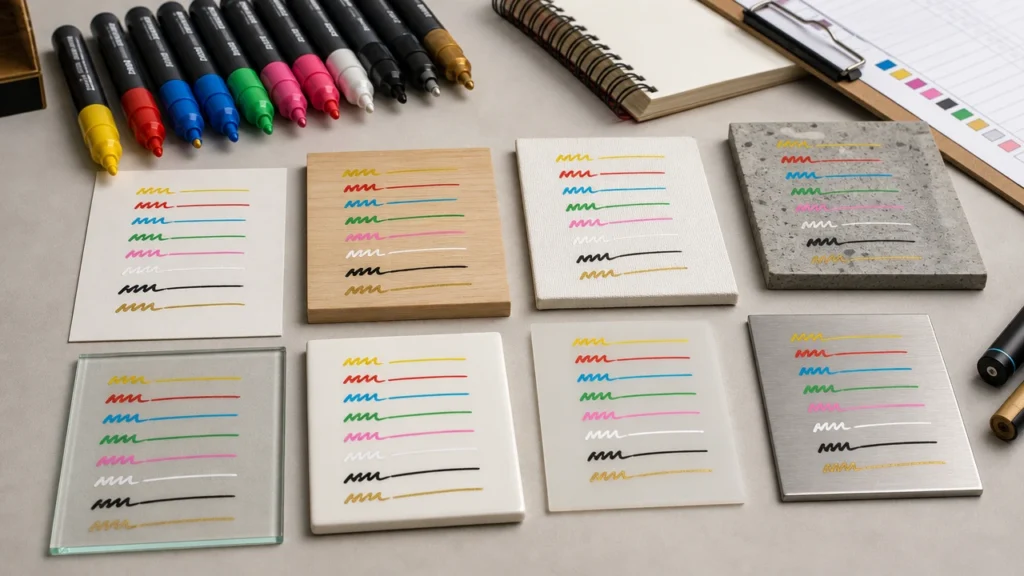
아크릴 페인트 마커는 영구적이고 방수인가요? 빠른 답변
Acrylic paint markers dry into a pigmented acrylic film. On porous faces like paper, raw wood, canvas, and stone, that film can grip well and become hard to remove. On low-energy surfaces like glass, glazed ceramic, metal, and many plastics, the mark may resist water after drying. It can still scratch off unless the surface is prepped, the ink cures, and a sealer is used when needed.
So when a buyer asks about permanence and waterproofing, the supplier should answer by surface and test method. A good sample report splits ordinary craft permanence from washable fabric claims, dishwasher exposure, outdoor display, and scratch resistance.
For importers, retailers, and private-label brands, the useful question is not only whether the marker is waterproof. It is which surface, what buyer use, what label claim, and what proof the supplier can give. ZH Stationery supports OEM and ODM acrylic paint markers. That includes set planning, surface-use instructions, pack copy, and sample review. See the 제품 범위.
빠른 링크
- 영구성과 방수성의 의미
- Surface-by-Surface Results
- 다공성 표면
- 비다공성 표면
- 패브릭 및 웨어러블 표면
- 방수 주장 테스트 방법
- 포장 및 지침
- 더 나은 공급업체 질문을 하세요
- 자주 묻는 질문
아크릴 페인트 마커에서 영구 및 방수의 의미
In retail talk, permanent usually means the mark is not built to wash away like a washable school marker. Waterproof usually means the dried mark resists water touch. Neither word automatically means outdoor durable, dishwasher safe, scratch proof, solvent proof, UV steady, or fit for food-contact faces.
That split matters because acrylic marker ink has two jobs. It must flow through a nib while wet. Then it must form a film after water or solvent leaves the ink. The film can be strong. It still depends on surface energy, surface texture, dirt, dry time, pigment load, binder system, and whether the user rubs, soaks, heats, or washes the marked object.
Safety language is a separate issue from performance language. In the US, CPSC 예술 재료 지침 says art materials under LHAMA need toxicology review and ASTM D-4236 conformance marking. The ASTM D4236 standard covers chronic health risk marks for art materials. It does not prove waterproof on glass or permanent on plastic.
바이어가 알아야 할 표면별 결과
Use this table as a buyer hope map, not a universal promise. The same marker can perform differently on a dusty stone, sealed wood board, glossy tumbler, raw cotton bag, or oily plastic toy. Always test the exact surface your buyers use.
| 표면 | 건조 후 예상 결과 | 구매자 위험 | 권장 확인 사항 |
|---|---|---|---|
| 종이 및 카드지 | 일반 공예용으로는 대개 충분히 영구적입니다. | 번짐, 비침, 잉크 번짐, 과도한 도포로 인한 종이 손상. | 쓰고, 건조시키고, 마른 천으로 문지른 후 색상 가장자리와 종이 변형을 확인합니다. |
| 가공되지 않은 목재 | 표면이 깨끗하고 약간 흡수성이 있을 때 그립감이 좋습니다. | 거친 결에 색상이 고르지 않음, 먼지 오염, 색상 어두워짐. | 사포질, 먼지 닦기, 표시, 건조 후 물방울 및 문지름 테스트를 실시합니다. |
| 캔버스 | 원단이 깨끗하고 프라이밍 처리되었거나 적절한 질감이 있으면 고정력이 좋습니다. | 유연한 표면 균열, 색상 변화, 불균일한 흡수. | 건조 후 구부리고 문지르세요. 프라이머 처리한 캔버스와 처리하지 않은 캔버스를 비교하세요. |
| 석재 및 암석 | 표면이 다공성이고 질감이 있어 종종 강합니다. | 먼지, 실러, 실외 날씨, 마모. | 먼저 석재를 세척하고 건조시킨 후, 물 노출과 표면 마찰을 테스트하십시오. |
| 유리 | 건조 후에는 방수 기능이 있지만 긁힘 위험은 남아 있습니다. | 접착력 불량, 지문, 식기세척기 노출, 고객 과대 주장. | 알코올로 세척하고, 마킹하고, 건조 또는 경화시킨 후, 닦아내기, 담그기, 테이프 당김을 테스트하십시오. |
| 유약 처리된 세라믹 | 호환되는 실러 또는 베이킹 공정이 승인되지 않는 한 유리와 유사합니다. | 식기세척기 사용 주장, 식품 접촉 오용, 가장자리 깨짐. | 적합성(컴플라이언스)이 확인되지 않는 한 실외 장식 표면에만 테스트하세요. |
| 플라스틱 | 수지 종류와 표면 마감에 따라 차이가 매우 큽니다. | PP, PE, 유성 또는 유연한 플라스틱에는 접착력이 낮습니다. | 임의의 샘플 카드가 아닌 실제 플라스틱으로 테스트하세요. |
| 금속 | 깨끗하고 가벼운 질감의 금속에 작업 가능하며, 매끄러운 코팅은 결과가 다를 수 있습니다. | 오일 잔여물, 스크래치, 코팅 비호환성, 옥외 노출. | 탈지, 표시, 건조 후 접착력 및 마모 테스트를 진행하십시오. |
| 직물 | 직물에 표시할 수 있지만, 세탁 내구성은 별도의 보증 사항입니다. | 세탁 실패, 뻣뻣한 촉감, 신축성 원단의 균열. | 세탁 사이클 테스트, 마찰 테스트, 명확한 세탁 라벨 문구. |
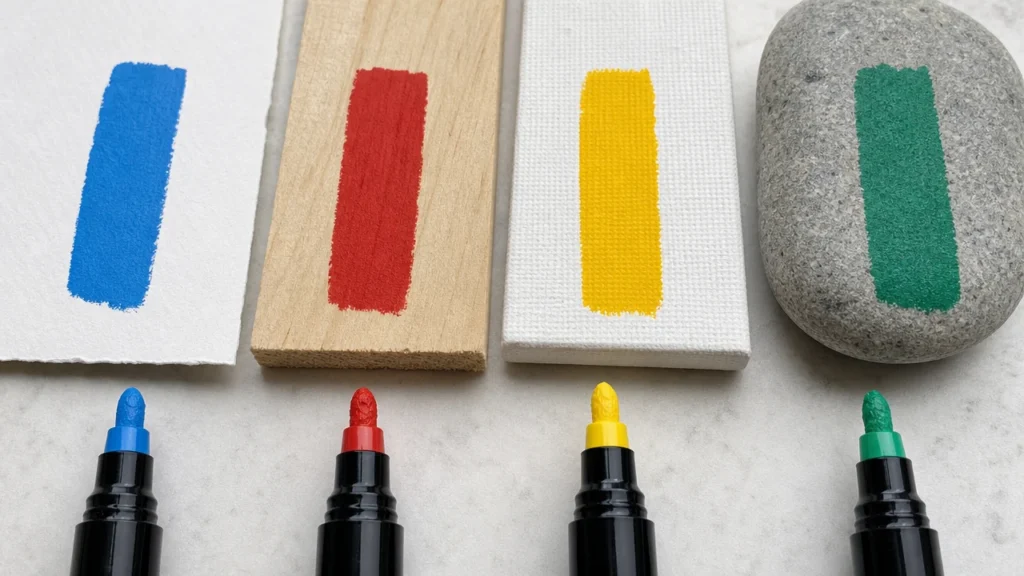
다공성 표면: 종이, 판지, 목재, 캔버스 및 석재
Porous faces are usually the safest place for permanence claims. The ink can grip both by shape and by chemistry. Paper, cardboard, raw wood, unsealed stone, and some canvas give the film more contact than glass or plastic. That is why rock and wood craft sets often perform well with acrylic paint markers.
Still, do not treat every porous material the same. Coated paper can push ink away. Dusty stone can make paint sit on loose bits. Freshly sanded wood can take pigment unevenly. Canvas can flex after drying. The sample approval should use the real buyer surface, not only a clean white card.
For a private-label set, build the use card around real faces. Paper crafts, wood tags, canvas boards, stones, gift boxes, or school projects. If the line includes 슈퍼 글리터 아크릴 페인트 마커, test sparkle on darker porous samples as well as white cards. Glitter can vanish when the surface soaks up too much binder.
비다공성 표면: 유리, 세라믹, 플라스틱 및 금속
Non-porous surfaces make more complaints. Buyers expect the marker to perform like paint, but the film has fewer places to grip. A mark can live through a water drop and still fail a fingernail scratch. That is why waterproof and scratch resistant must be tested apart.
Glass and glazed ceramic need a clean surface. Fingerprints, oil, mold-release film, and dust all cut grip. Plastic is harder because PP and PE can reject many coats. Metal depends on raw, painted, powder coated, anodized, polished, or slightly textured conditions. One passed metal sample does not prove every metal product.
A simple supplier talk should cover the marker system, nib delivery, and prime feel. ZH Stationery's 阀门按压标记笔技术 explains why controlled ink flow matters for opaque acrylic systems. For surface claims, the buyer still needs use tests on the planned base.
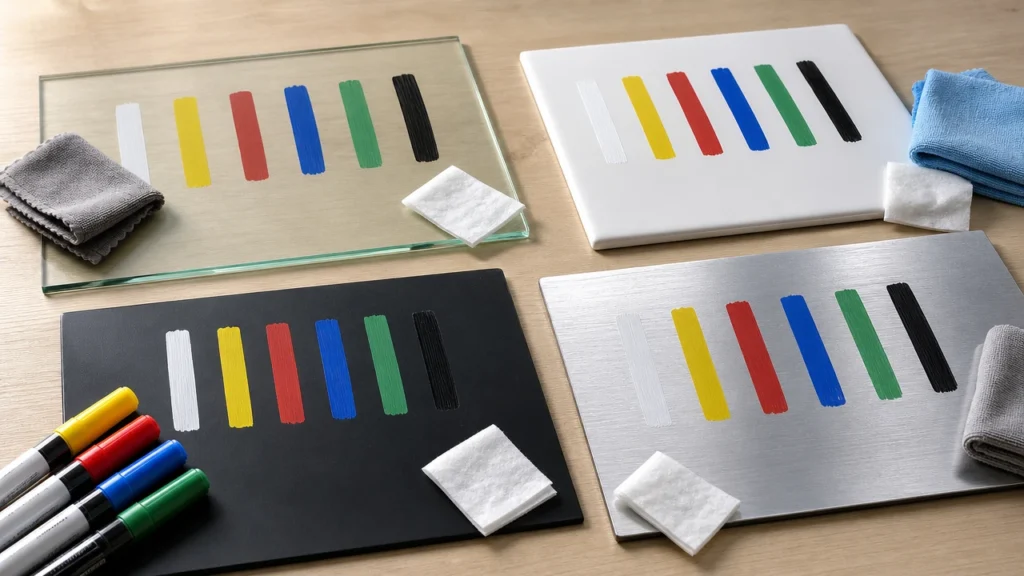
패브릭 및 웨어러블 표면
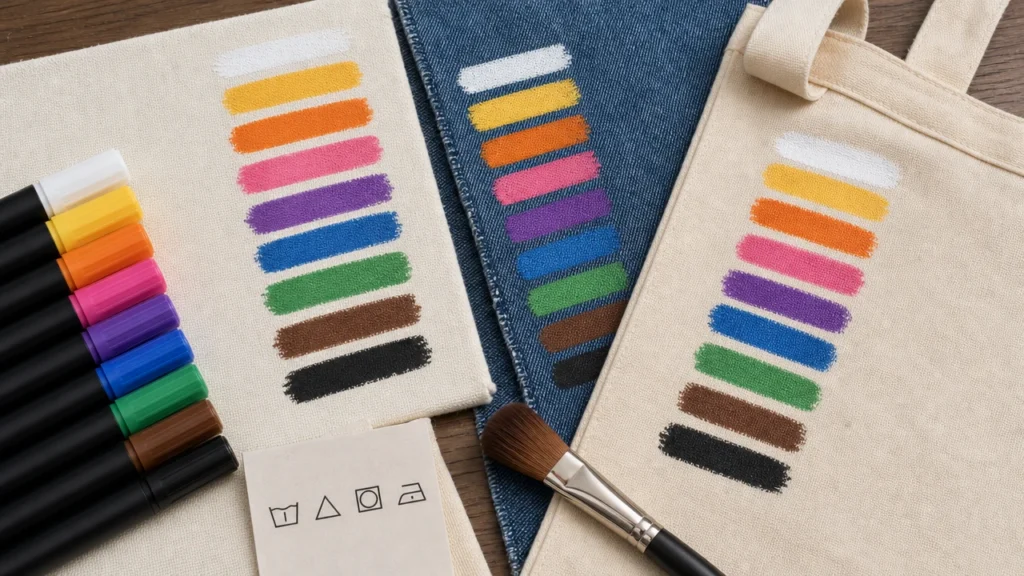
Fabric is where many marker claims get too wide. Acrylic paint markers can leave a clear mark on cotton, canvas totes, denim, and synthetics. Washable fabric performance is a separate need. Stretch, soap, heat, dry method, and fiber content all change the result.
If the product will sell for totes, shoes, hats, costumes, or kids' fabric crafts, ask whether the marker is only for occasional decoration or has passed a set wash test. If heat set is advised, the pack should say so clearly. The card should match the tested state. Do not use loose language like works on all fabrics unless the supplier can back it.
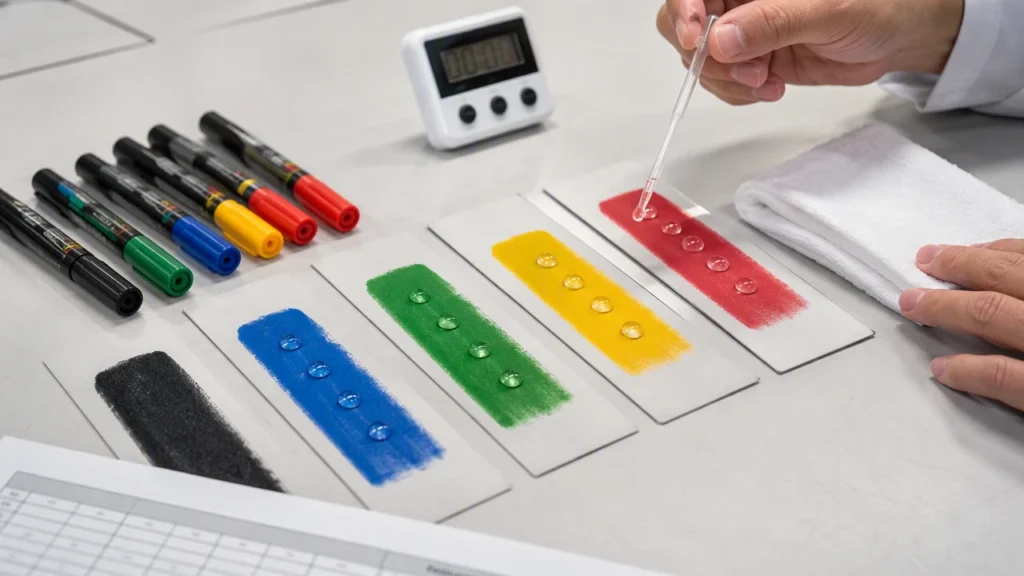
PO 전에 방수 주장을 테스트하는 방법
A buyer does not need an expensive lab plan for every first screen sample. The method must be written down. If each seller tests a marker different, the result becomes a debate instead of proof.
- 표면 정의: 정확한 재질, 코팅, 색상, 마감 및 세척 방법을 명시합니다.
- Define drying or curing time: for example, 24 hours at room temperature before water exposure.
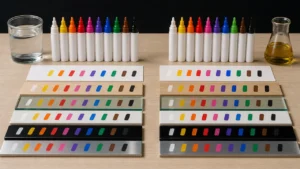
- 물방울 테스트 실행: 표시 위에 물을 떨어뜨리고, 일정 시간 대기 후 블로팅하여 색 번짐을 확인합니다.
- 젖은 천 닦기 테스트 실행: 동일한 천 압력과 동일한 횟수로 닦습니다.
- 소매 클레임이 침수 또는 야외 비 노출을 암시하는 경우에만 침수 테스트를 실행합니다.
- 스크래치 또는 문지름 테스트는 물 노출과 별도로 실행합니다.
- 승인된 결과에 대해 보관 샘플과 사진 기록을 유지합니다.
For higher-risk non-porous claims, buyers can borrow from coat tests. The ASTM D3359 테이프 접착 표준 rates coat grip by tape test. It is not a marker retail rule. It reminds buyers that grip should be checked with a set method, not guessed from a nice sample.
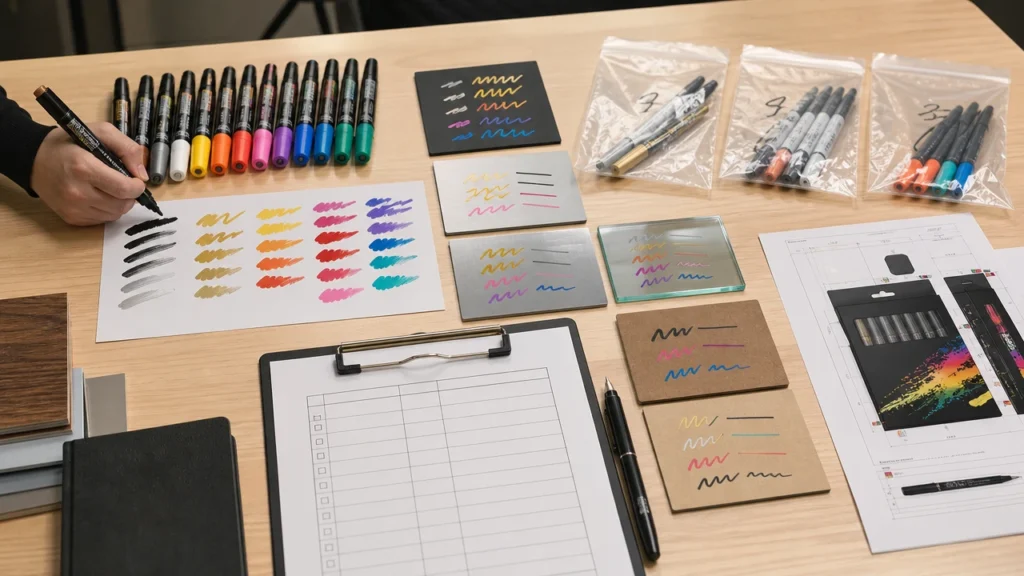
Tie this test record to your 샘플 승인 체크리스트. Keep the passed surface panels, cure note, pack copy, barcode sample, and supplier sign-off together. That makes reorder review easier when you later compare marker color consistency across batches.
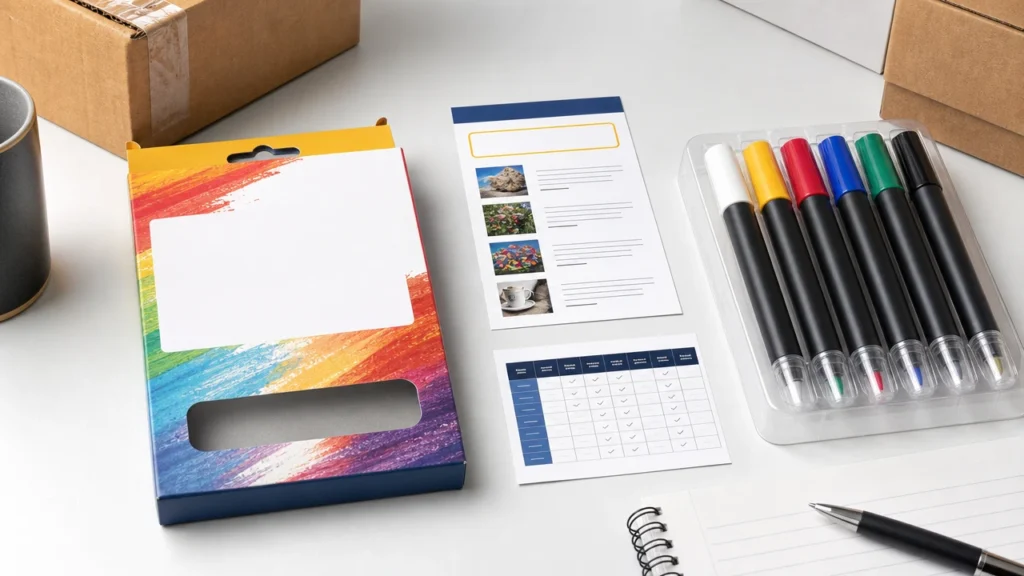
포장 및 지침이 고객 기대치를 형성합니다
Most complaints start when the buyer reads more into the pack than the supplier tested. Waterproof may sound simple. A shopper may read it as rainproof, washable, dishwasher safe, outdoor permanent, child safe, or mug safe. Those are different claims.
Better packs use specific language. For example: water resistant after drying on suitable surfaces. Seal for outdoor use. Test a small area first. Decorative use only on the outside of drinkware. Keep away from food-contact faces unless the product has specific pass. Let ink dry fully before handling. These lines cut false hopes without weakening the product.
The art also needs room for safety and compliance language. The ASTM D4236-26 업데이트 shows art-material marking can change over time. Buyers should ask suppliers to confirm the current version for the target market. ZH buyers can also review our ASTM D-4236 테스트 보고서 가이드 그리고 certificate page before final pack pass.
주의가 필요한 일반적인 주장 문구
| 표기 | 위험할 수 있는 이유 | 구매자 통제형 안전 문구 |
|---|---|---|
| 모든 표면에 영구적 | 모든 표면에서 동일하게 작동하는 마커는 없습니다. | 건조 후 많은 다공성 표면에 영구적입니다. 매끄러운 표면에서는 먼저 테스트하십시오. |
| 방수 | 노출 방법 없이는 너무 광범위함 | 적합한 표면에서 건조 후 내수성 |
| 식기세척기 사용 가능 | 열, 세제, 압력, 마모 테스트가 필요합니다. | 제품별 식기세척기 테스트가 뒷받침할 경우에만 사용하십시오. |
| 야외 영구 지속 | UV, 비, 열, 마모가 모두 중요합니다. | 야외 전시용 실링. 의도된 야외 조건에서 테스트하십시오. |
| 머그컵에 안전 | 고객이 식품 접촉 부위에 표시할 수 있습니다. | 적합성이 식품 접촉 적합성을 확인하지 않는 한 장식용 외부 사용 전용입니다. |
| 직물에 사용 가능 | 세탁 내구성은 매우 다양합니다. | 선택된 직물 공예에 적합합니다. 건조 또는 열 고정 지침을 따르십시오. |
더 나은 공급업체 질문을 하세요
The best supplier answers are not just yes or no. They tie the surface claim to a formula, a sample method, and pack copy.
- 이 정확한 잉크 포뮬러로 어떤 표면을 테스트했습니까? 유용한 답변은 밀봉되지 않은 목재, 유약 처리된 세라믹, 붕규산 유리, PP 플라스틱 또는 면 캔버스와 같은 재료 및 표면 마감을 명시합니다.
- 물에 노출되기 전에 마크가 얼마나 오래 건조되어야 합니까? 유용한 답변은 '건조 후'가 아닌 시간과 조건을 제공합니다.
- 테스트에서 방수란 무엇을 의미합니까? 유용한 답변은 물방울, 젖은 닦기, 담그기, 비 노출 및 식기 세척기 사이클을 구분합니다.
- 모든 시장에서 포장에 동일한 주장을 사용할 수 있습니까? 유용한 답변은 문구 승인 전에 목적지 시장, 연령 등급, 안전 라벨 요구 사항 및 판매 채널을 묻습니다.
- 유리, 세라믹, 금속 또는 실외용품에 실러(보호 코팅제)를 권장하시나요? 유용한 답변은 표면 종류를 명시하고 실러가 선택 사항인지 필수인지 설명합니다.
- 승인된 배치에서 보관 샘플을 유지할 수 있나요? 유용한 답변에는 보관된 잉크, 완성된 마커, 표면 표시 샘플 및 재주문 비교용 사진이 포함됩니다.
- 고객이 표면 불량을 불만으로 제기하면 어떻게 처리하시나요? 유용한 답변은 불만이 전혀 없다고 약속하기보다 증거 수집, 배치 추적 및 시정 조치를 설명합니다.
If you compare factories, add these questions to your RFQ beside packing, color range, and compliance files. A mature supplier should be at ease talking test limits. You can also compare how a supplier handles complaints with the dry-out case study. Then plan retail display with 아크릴 마커 포장 옵션.
자주 묻는 질문
These answers are written for B2B sourcing teams prepping product claims, sample tests, and pack steps.
아크릴 페인트 마커는 종이와 나무에 영구적인가요?
Usually yes after the ink dries. Porous faces help the film grip. The result still depends on ink formula, surface dust, coat, dry time, and how much rub or water the item gets.
아크릴 페인트 마커는 유리에 방수가 되나요?
They can be water resistant on clean glass after drying. Plain water resistance is not dishwasher or scratch resistance. For glass programs, pass cleaning, cure, wipe, soak, and tape-pull checks before bulk orders.
아크릴 페인트 마커는 플라스틱에 남나요?
Plastic varies. Some plastics have low surface energy, so acrylic paint sits on top instead of bonding strong. Ask the supplier to test the exact plastic type and finish, not a generic sample.
아크릴 페인트 마커를 원단에 사용할 수 있나요?
They can mark many fabrics. Wash durability depends on fiber, ink load, cure, heat set if advised, and wash conditions. Do not sell them as fabric markers unless that claim has product-specific tests.
아크릴 페인트 마커는 식기세척기에서 사용해도 안전한가요?
Do not assume dishwasher safety from a waterproof claim. Dishwasher cycles mix heat, soap, water pressure, and rub. Treat dishwasher resistance as a separate claim with a set test plan and passed sample.
What should B2B buyers ask before passing waterproof claims?
Ask for the exact surface, cleaning method, dry or cure time, water test, rub check, sealer advice, and the pack copy. The claim should match the test, not outrun it.
결론
Acrylic paint markers can be permanent and water resistant. Only when the claim ties to the right surface and a clear test method. Porous craft faces are usually easier. Glass, ceramic, metal, plastic, fabric, and outdoor items need stricter sample passes.
When you send an inquiry to ZH Stationery, share the target surfaces, selling country, color count, packing format, order quantity, and any wording you want on the retail box. Our team can review the marker build, sample plan, and pack steps before your OEM or ODM project moves to bulk. Start with product groups, then check our 공장 견학 if factory ability is part of your review.
관련 읽을거리
The minimum order for custom OEM/ODM programs is 50,000 pens per order, counted by total individual pens produced. For a 12-color pack, that equals roughly 4,200 sets, not 50,000 of each color. Standard stock models can be sampled at smaller trial sizes.