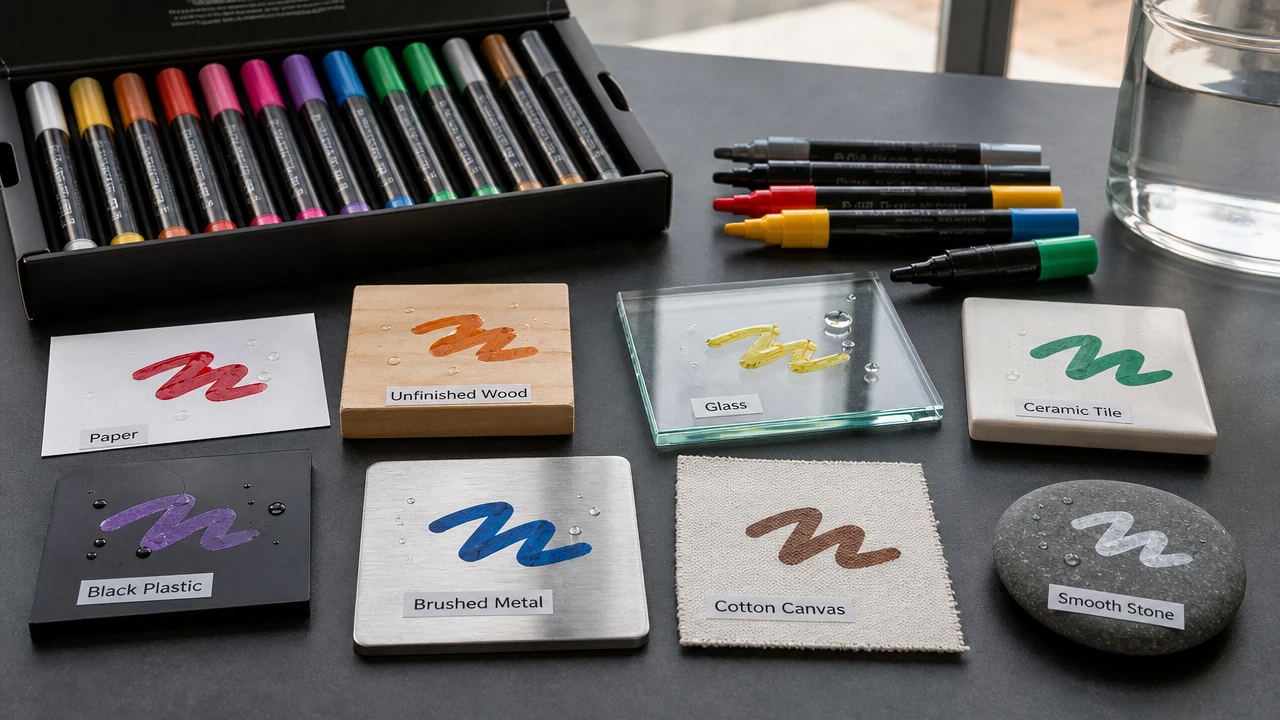
If your buyers ask, are acrylic paint markers permanent and waterproof, the honest answer is: after drying, they are usually water resistant and often permanent on the right surface. Not on every surface. Not under every kind of wear. For B2B sourcing, the wording on the pack must match the surface, cure time, and cleaning method, and test result.
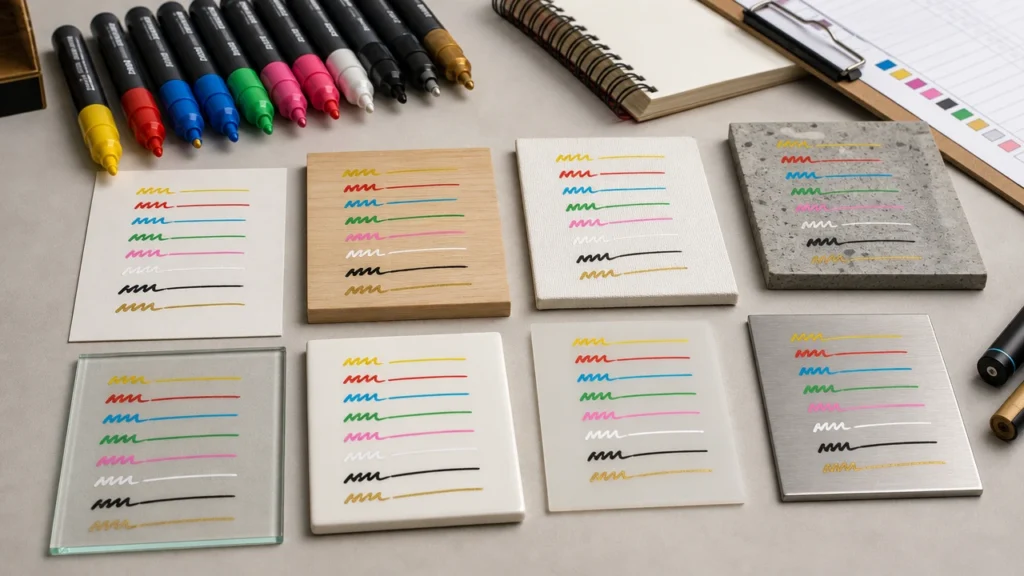
丙烯酸油漆筆是否永久且防水?快速解答
Acrylic paint markers dry into a pigmented acrylic film. On porous faces like paper, raw wood, canvas, and stone, that film can grip well and become hard to remove. On low-energy surfaces like glass, glazed ceramic, metal, and many plastics, the mark may resist water after drying. It can still scratch off unless the surface is prepped, the ink cures, and a sealer is used when needed.
So when a buyer asks about permanence and waterproofing, the supplier should answer by surface and test method. A good sample report splits ordinary craft permanence from washable fabric claims, dishwasher exposure, outdoor display, and scratch resistance.
For importers, retailers, and private-label brands, the useful question is not only whether the marker is waterproof. It is which surface, what buyer use, what label claim, and what proof the supplier can give. ZH Stationery supports OEM and ODM acrylic paint markers. That includes set planning, surface-use instructions, pack copy, and sample review. See the 产品範圍.
快速連結
丙烯酸油漆筆的「永久」与「防水」含義
In retail talk, permanent usually means the mark is not built to wash away like a washable school marker. Waterproof usually means the dried mark resists water touch. Neither word automatically means outdoor durable, dishwasher safe, scratch proof, solvent proof, UV steady, or fit for food-contact faces.
That split matters because acrylic marker ink has two jobs. It must flow through a nib while wet. Then it must form a film after water or solvent leaves the ink. The film can be strong. It still depends on surface energy, surface texture, dirt, dry time, pigment load, binder system, and whether the user rubs, soaks, heats, or washes the marked object.
Safety language is a separate issue from performance language. In the US, 藝術材料指引 says art materials under LHAMA need toxicology review and ASTM D-4236 conformance marking. The ASTM D4236 standard covers chronic health risk marks for art materials. It does not prove waterproof on glass or permanent on plastic.
买家應預期的逐表面結果
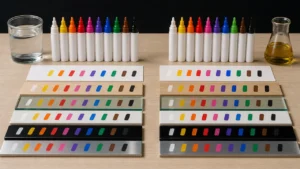
Use this table as a buyer hope map, not a universal promise. The same marker can perform differently on a dusty stone, sealed wood board, glossy tumbler, raw cotton bag, or oily plastic toy. Always test the exact surface your buyers use.
| 表面材質 | 乾燥後的可能結果 | 买家風險 | 建議檢查 |
|---|---|---|---|
| 紙張和卡紙 | 通常足以持久,適合一般手工用途。 | 暈染、透印、羽化、過度塗抹造成的紙張損壞。 | 书写、乾燥、用乾布擦拭,然後檢查颜色邊緣和紙張翹曲。 |
| 未加工木材 | 表面清洁且轻微吸水时,附着力良好。 | 粗糙木纹上颜色不均、灰尘污染、颜色变深。 | 打磨、擦去灰尘、标记、干燥,然后进行水滴和摩擦测试。 |
| 帆布 | 织物清洁并经过预处理或具有适当纹理时,附着力良好。 | 柔性表面开裂、颜色变化、吸收不均。 | 乾燥後彎曲並摩擦。比較有底漆与無底漆的画布。 |
| 石頭与岩石 | 通常附著力強,因為表面多孔且有紋理。 | 灰塵、密封劑、戶外氣候、磨損。 | 先清洗並晾乾石材,再測試水浸及表面摩擦。 |
| 玻璃 | 乾燥後具防水性,但仍有刮傷風險。 | 附著力差、指紋、洗碗機清洗、客戶過度宣稱。 | 以酒精清潔、標記、乾燥或固化,然後測試擦拭、浸泡及膠帶拉扯。 |
| 釉面陶瓷 | 与玻璃相似,除非已核准相容的密封劑或烘烤程序。 | 洗碗機宣稱、食品接觸誤用、邊緣崩裂。 | 除非已確認合規,否則僅測試外部裝飾區域。 |
| 塑膠 | 因樹脂类型及表面處理而差異極大。 | 對PP、PE、含油或柔性塑膠附著力低。 | 請測試實際的塑膠材質,而非隨機的樣品卡。 |
| 金屬 | 适用于乾淨、輕微紋理的金屬表面;光滑塗層效果可能不同。 | 油污殘留、刮痕、塗層不相容、戶外曝曬。 | 除油、標記、乾燥,然後進行附著力和耐磨測試。 |
| 布料 | 可在布料上標記,但耐洗性需另行驗證。 | 洗滌失效、手感僵硬、彈性布料龜裂。 | 進行洗滌測試、摩擦測試,並提供清晰的洗滌標籤說明。 |
多孔表面:紙張、紙板、木材、画布和石材
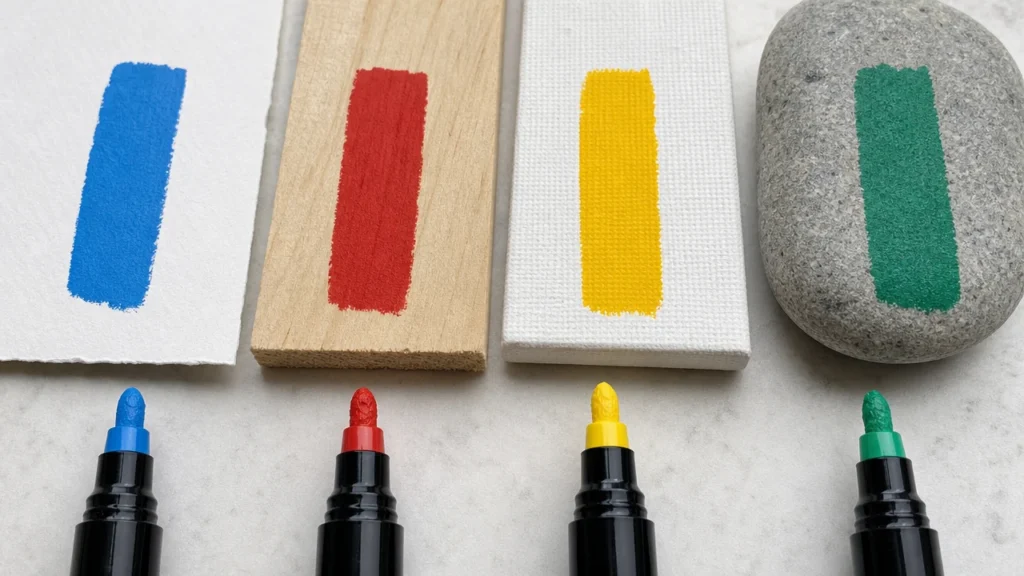
Porous faces are usually the safest place for permanence claims. The ink can grip both by shape and by chemistry. Paper, cardboard, raw wood, unsealed stone, and some canvas give the film more contact than glass or plastic. That is why rock and wood craft sets often perform well with acrylic paint markers.
Still, do not treat every porous material the same. Coated paper can push ink away. Dusty stone can make paint sit on loose bits. Freshly sanded wood can take pigment unevenly. Canvas can flex after drying. The sample approval should use the real buyer surface, not only a clean white card.
For a private-label set, build the use card around real faces. Paper crafts, wood tags, canvas boards, stones, gift boxes, or school projects. If the line includes 超閃亮丙烯顏料筆, test sparkle on darker porous samples as well as white cards. Glitter can vanish when the surface soaks up too much binder.
無孔表面:玻璃、陶瓷、塑膠和金屬
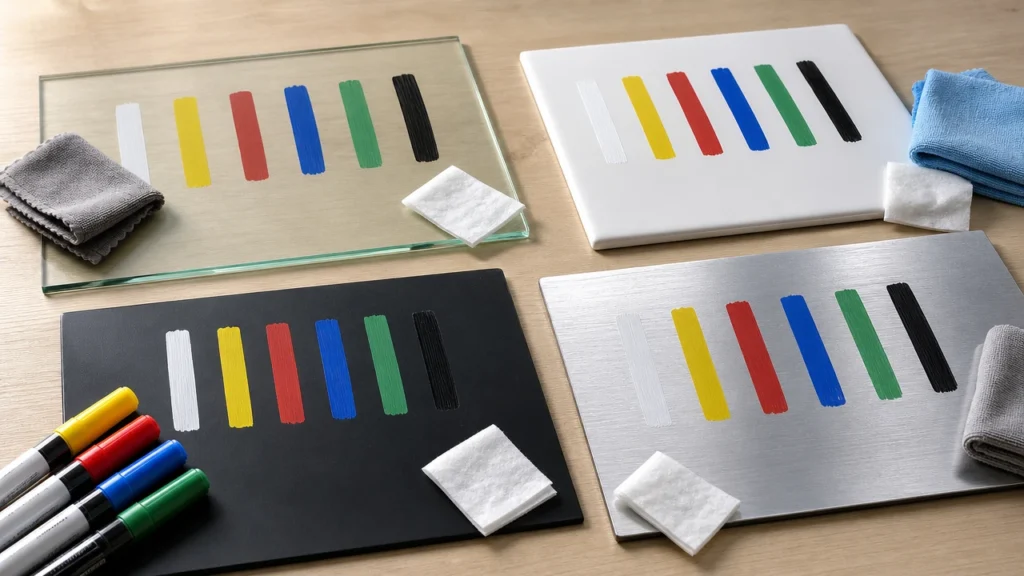
Non-porous surfaces make more complaints. Buyers expect the marker to perform like paint, but the film has fewer places to grip. A mark can live through a water drop and still fail a fingernail scratch. That is why waterproof and scratch resistant must be tested apart.
Glass and glazed ceramic need a clean surface. Fingerprints, oil, mold-release film, and dust all cut grip. Plastic is harder because PP and PE can reject many coats. Metal depends on raw, painted, powder coated, anodized, polished, or slightly textured conditions. One passed metal sample does not prove every metal product.
A simple supplier talk should cover the marker system, nib delivery, and prime feel. ZH Stationery's 按壓閥式筆技術 explains why controlled ink flow matters for opaque acrylic systems. For surface claims, the buyer still needs use tests on the planned base.
布料及可穿戴表面
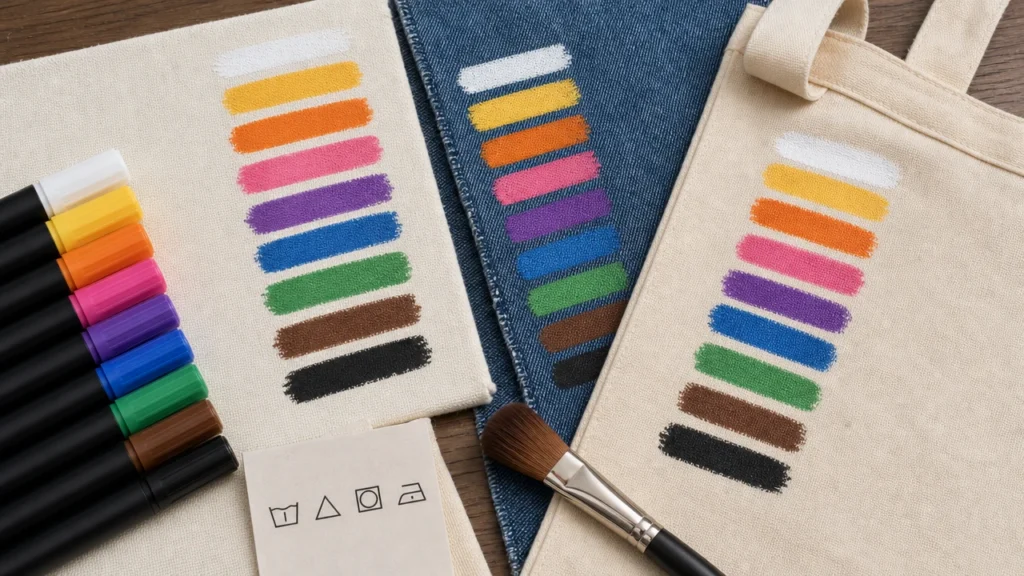
Fabric is where many marker claims get too wide. Acrylic paint markers can leave a clear mark on cotton, canvas totes, denim, and synthetics. Washable fabric performance is a separate need. Stretch, soap, heat, dry method, and fiber content all change the result.
If the product will sell for totes, shoes, hats, costumes, or kids' fabric crafts, ask whether the marker is only for occasional decoration or has passed a set wash test. If heat set is advised, the pack should say so clearly. The card should match the tested state. Do not use loose language like works on all fabrics unless the supplier can back it.
采购訂單前如何測試防水宣稱
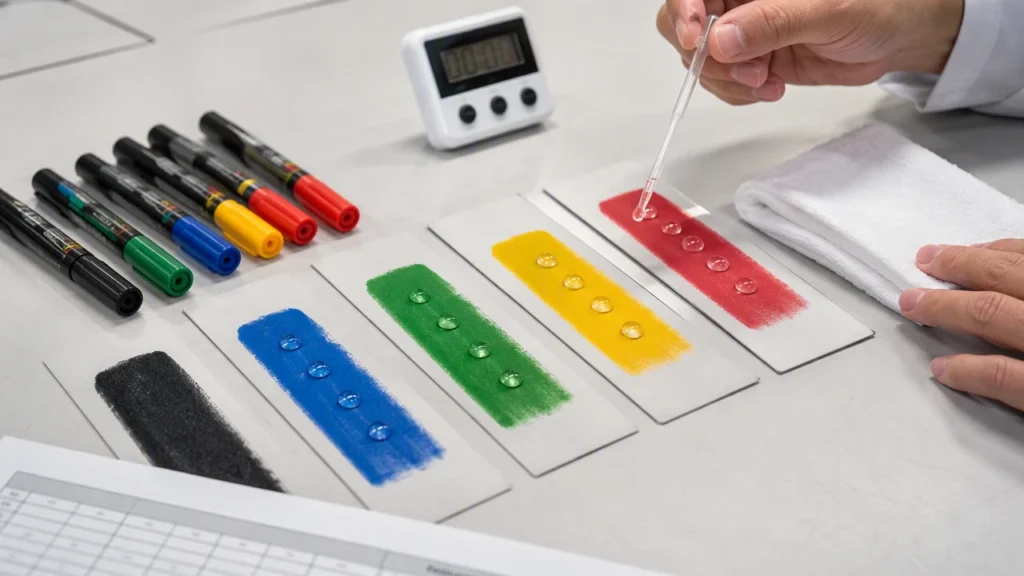
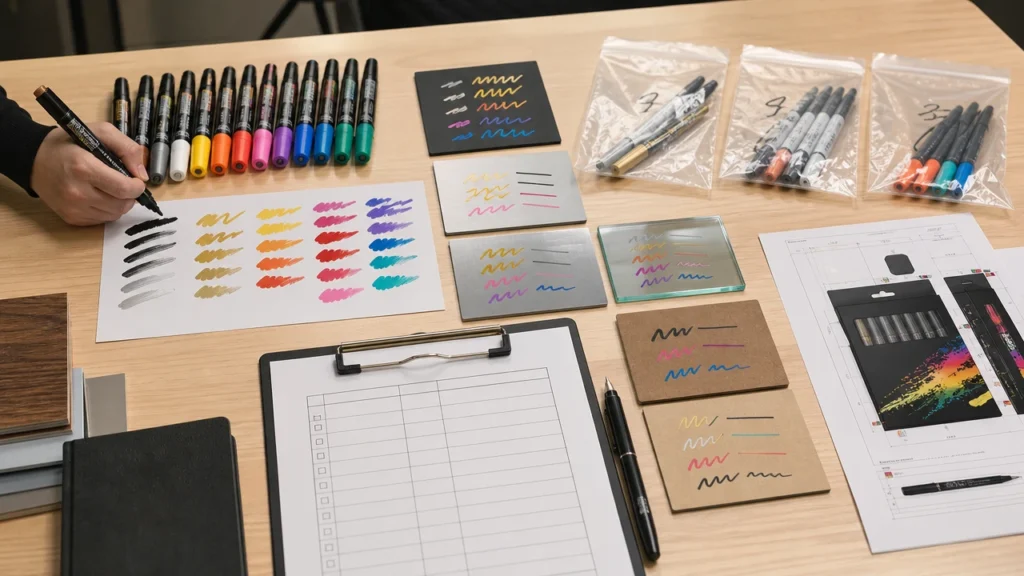
A buyer does not need an expensive lab plan for every first screen sample. The method must be written down. If each seller tests a marker different, the result becomes a debate instead of proof.
- 定義表面:確切材料、塗層、颜色、表面處理和清潔方法。
- 定義乾燥或固化時間:例如,在接觸水前於室溫下放置 24 小時。
- 進行滴水測試:在標記上滴水,等待固定時間,吸乾,檢查颜色滲色情況。
- 進行濕擦測試:以相同布料壓力和相同擦拭次數進行擦拭。
- 僅當零售聲明涉及浸泡或戶外雨淋時,才進行浸泡測試。
- 將刮擦或摩擦測試与水接觸測試分開進行。
- 保留已核准結果的留存樣品及照片記錄。
For higher-risk non-porous claims, buyers can borrow from coat tests. The ASTM D3359 膠帶附著力標準 rates coat grip by tape test. It is not a marker retail rule. It reminds buyers that grip should be checked with a set method, not guessed from a nice sample.
Tie this test record to your 樣品核准清單. Keep the passed surface panels, cure note, pack copy, barcode sample, and supplier sign-off together. That makes reorder review easier when you later compare marker color consistency across batches.
包装与說明塑造客戶期望
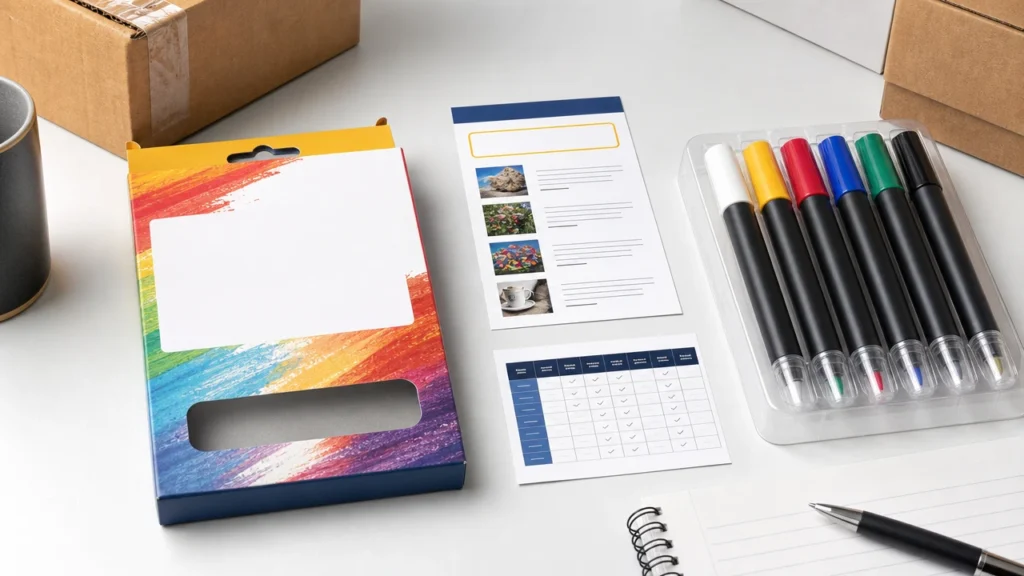
Most complaints start when the buyer reads more into the pack than the supplier tested. Waterproof may sound simple. A shopper may read it as rainproof, washable, dishwasher safe, outdoor permanent, child safe, or mug safe. Those are different claims.
Better packs use specific language. For example: water resistant after drying on suitable surfaces. Seal for outdoor use. Test a small area first. Decorative use only on the outside of drinkware. Keep away from food-contact faces unless the product has specific pass. Let ink dry fully before handling. These lines cut false hopes without weakening the product.
The art also needs room for safety and compliance language. The ASTM D4236-26 更新 shows art-material marking can change over time. Buyers should ask suppliers to confirm the current version for the target market. ZH buyers can also review our ASTM D-4236測試報告指南 及 certificate page before final pack pass.
需謹慎處理的常見宣稱措辭
| 宣稱 | 潛在風險 | 較安全的买家可控措辭 |
|---|---|---|
| 所有表面永久性 | 沒有馬克筆能在所有表面上表現一致。 | 風乾後於多孔表面具永久性。光滑表面請先測試。 |
| 防水 | 未說明暴露方式,過於籠統。 | 於合適表面乾燥後具防水性。 |
| 可用洗碗機清洗 | 需進行耐熱、清潔劑、壓力及磨損測試。 | 僅當产品特定的洗碗機測試支持時使用。 |
| 戶外永久 | 紫外線、雨水、高溫及磨損均需考量。 | 用於戶外展示時需密封。在預期的戶外條件下進行測試。 |
| 馬克杯適用 | 客戶可能會標記食品接觸區域。 | 僅限裝飾性外部使用,除非合規確認食品接觸適用性。 |
| 适用于布料 | 耐洗程度差異很大。 | 适用于特定布料工藝。請遵循乾燥或熱定型說明。 |
提出更好的供應商問題
The best supplier answers are not just yes or no. They tie the surface claim to a formula, a sample method, and pack copy.
- 你們是否針對這個確切墨水配方測試過哪些表面?有用的答案會指明材質和表面處理,例如未密封木材、釉面陶瓷、硼矽酸鹽玻璃、PP塑膠或棉帆布。
- 標記在接觸水之前需要乾燥多久?有用的答案會給出時間和條件,而不只是「乾燥後」。
- 在你們的測試中,「防水」是什麼意思?有用的答案會區分水滴、濕擦、浸泡、雨淋和洗碗機循環。
- 我們可以在所有市場的包装上使用相同的宣稱嗎?有用的答案會在批准措辭前詢問目標市場、年齡等級、安全標籤要求和銷售渠道。
- 你們是否建議對玻璃、陶瓷、金屬或戶外物品使用密封劑?有用的答案會指明表面,並解釋密封劑何時是選用或必需的。
- 你們能否保留核准批次的留存樣品?有用的答案包括留存墨水、成品筆、標記表面樣品和照片,以供重複訂購比對。
- 如果客戶投訴表面失效怎麼辦?有用的答案會解釋證據收集、批次追溯和糾正措施,而不是承諾零投訴。
If you compare factories, add these questions to your RFQ beside packing, color range, and compliance files. A mature supplier should be at ease talking test limits. You can also compare how a supplier handles complaints with the 乾涸案例研究. Then plan retail display with 丙烯馬克筆包装選項.
常見問題
These answers are written for B2B sourcing teams prepping product claims, sample tests, and pack steps.
丙烯顏料筆在紙張和木材上是否持久?
Usually yes after the ink dries. Porous faces help the film grip. The result still depends on ink formula, surface dust, coat, dry time, and how much rub or water the item gets.
丙烯顏料筆在玻璃上是否防水?
They can be water resistant on clean glass after drying. Plain water resistance is not dishwasher or scratch resistance. For glass programs, pass cleaning, cure, wipe, soak, and tape-pull checks before bulk orders.
丙烯顏料筆寫在塑膠上是否持久?
Plastic varies. Some plastics have low surface energy, so acrylic paint sits on top instead of bonding strong. Ask the supplier to test the exact plastic type and finish, not a generic sample.
丙烯酸油漆筆可以用於布料上嗎?
They can mark many fabrics. Wash durability depends on fiber, ink load, cure, heat set if advised, and wash conditions. Do not sell them as fabric markers unless that claim has product-specific tests.
丙烯顏料筆可以放入洗碗機清洗嗎?
Do not assume dishwasher safety from a waterproof claim. Dishwasher cycles mix heat, soap, water pressure, and rub. Treat dishwasher resistance as a separate claim with a set test plan and passed sample.
What should B2B buyers ask before passing waterproof claims?
Ask for the exact surface, cleaning method, dry or cure time, water test, rub check, sealer advice, and the pack copy. The claim should match the test, not outrun it.
結論
Acrylic paint markers can be permanent and water resistant. Only when the claim ties to the right surface and a clear test method. Porous craft faces are usually easier. Glass, ceramic, metal, plastic, fabric, and outdoor items need stricter sample passes.
When you send an inquiry to ZH Stationery, share the target surfaces, selling country, color count, packing format, order quantity, and any wording you want on the retail box. Our team can review the marker build, sample plan, and pack steps before your OEM or ODM project moves to bulk. Start with product groups, then check our 工厂參觀 if factory ability is part of your review.
相關閱讀
定制 OEM/ODM 方案的最低訂購量為每筆訂單 50,000 支筆,以生產的總筆數計算。以 12 色套裝為例,約等於 4,200 套,而非每种颜色 50,000 支。標準庫存型號可以較小的試單数量進行採樣。