If your buyers ask, are acrylic paint markers permanent and waterproof, the honest answer is: after drying, they are usually water resistant and often permanent on the right face. Not on every face. Not under every kind of wear. For B2B sourcing, the words on the pack must match the face, cure time, cleaning way, and test result.
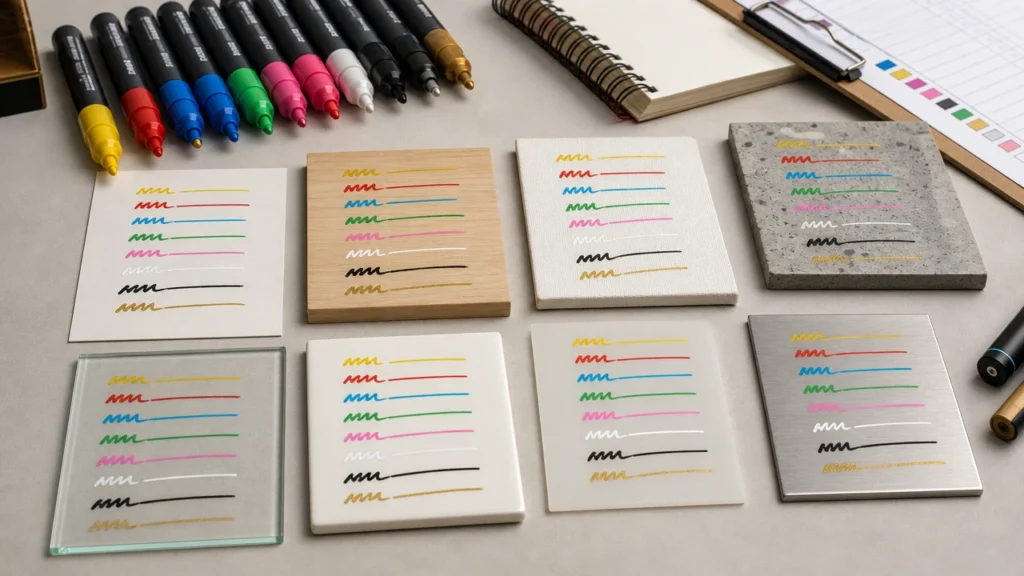
Are Acrylic Paint Markers Permanent and Waterproof? Quick Answer
Acrylic paint markers dry into a pigmented acrylic film. On porous faces like paper, raw wood, canvas, and stone, that film can grip well and become hard to remove. On low-energy surfaces like glass, glazed ceramic, metal, and many plastics, the mark may resist water after drying. It can still scratch off unless the face is prepped, the ink cures, and a sealer is used when needed.
So when a buyer asks about permanence and waterproofing, the supplier should answer by surface and test method. A good sample report splits ordinary craft permanence from washable fabric claims, dishwasher exposure, outdoor display, and scratch resistance.
For importers, retailers, and private-label brands, the useful question is not only whether the marker is waterproof. It is which face, what buyer use, what label claim, and what proof the supplier can give. ZH Stationery supports OEM and ODM acrylic paint markers. That includes set planning, surface-use instructions, pack copy, and sample review. See the product range.
Quick Links
- What Permanent and Waterproof Mean
- Surface-by-Surface Results
- Porous Surfaces
- Non-Porous Surfaces
- Fabric and Wearable Surfaces
- How to Test Waterproof Claims
- Packaging and Instructions
- Ask Better Supplier Questions
- FAQs
What Permanent and Waterproof Mean for Acrylic Paint Markers
In retail talk, permanent usually means the mark is not built to wash away like a washable school marker. Waterproof usually means the dried mark resists water touch. Neither word automatically means outdoor durable, dishwasher safe, scratch proof, solvent proof, UV steady, or fit for food-contact faces.
That split matters because acrylic marker ink has two jobs. It must flow through a nib while wet. Then it must form a film after water or solvent leaves the ink. The film can be strong. It still depends on face energy, face texture, dirt, dry time, pigment load, binder system, and whether the user rubs, soaks, heats, or washes the marked object.
Safety words are a separate issue from performance words. In the US, CPSC art materials guidance says art materials under LHAMA need toxicology review and ASTM D-4236 conformance marking. The ASTM D4236 standard covers chronic health risk marks for art materials. It does not prove waterproof on glass or permanent on plastic.
Surface-by-Surface Results Buyers Should Expect
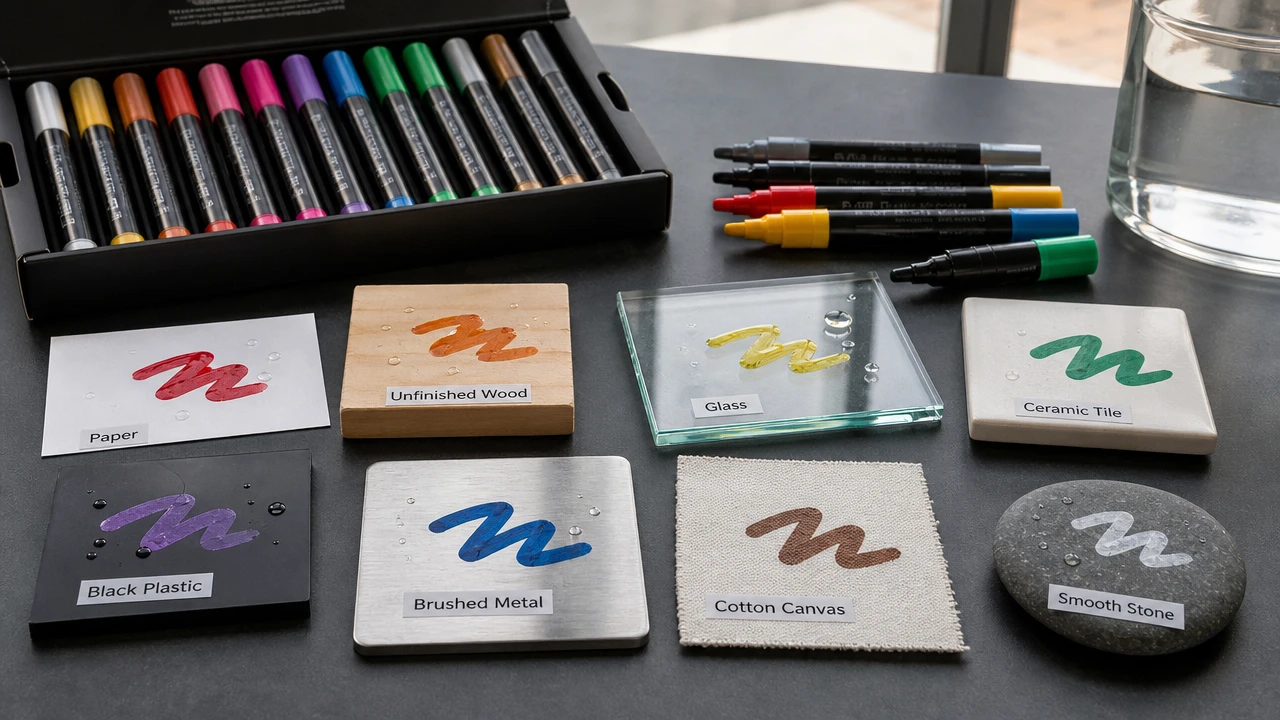
Use this table as a buyer hope map, not a universal promise. The same marker can act different on a dusty stone, sealed wood board, glossy tumbler, raw cotton bag, or oily plastic toy. Always test the exact face your buyers use.
| Surface | Likely Result After Drying | Buyer Risk | Recommended Check |
|---|---|---|---|
| Paper and cardstock | Usually permanent enough for normal craft use. | Bleeding, show-through, feathering, paper damage from over-application. | Write, dry, rub with dry cloth, then check color edge and paper warping. |
| Unfinished wood | Good grip when the surface is clean and lightly absorbent. | Uneven color on rough grain, dust contamination, color darkening. | Sand, wipe dust, mark, dry, then run water-drop and rub checks. |
| Canvas | Good hold when the fabric is clean and primed or suitably textured. | Flexible surface cracking, color shift, uneven absorption. | Bend and rub after drying. Compare primed and unprimed canvas. |
| Stone and rock | Often strong because the surface is porous and textured. | Dust, sealers, outdoor weather, abrasion. | Wash and dry the stone first, then test water exposure and surface rubbing. |
| Glass | Water resistant after drying, but scratch risk remains. | Poor adhesion, fingerprints, dishwasher exposure, customer overclaim. | Clean with alcohol, mark, dry or cure, then test wipe, soak, and tape pull. |
| Glazed ceramic | Similar to glass unless a compatible sealer or bake process is approved. | Dishwasher claims, food-contact misuse, edge chipping. | Test only exterior decorative areas unless compliance is confirmed. |
| Plastic | Highly variable by resin type and surface finish. | Low adhesion on PP, PE, oily or flexible plastics. | Test the exact plastic, not a random sample card. |
| Metal | Can work on clean, lightly textured metal; slick coatings vary. | Oil residue, scratches, coating incompatibility, outdoor exposure. | Degrease, mark, dry, then run adhesion and abrasion checks. |
| Fabric | Can mark fabric, but wash durability is a separate claim. | Laundry failure, stiff hand-feel, cracking on stretch fabric. | Wash-cycle test, rub test, and clear care-label wording. |
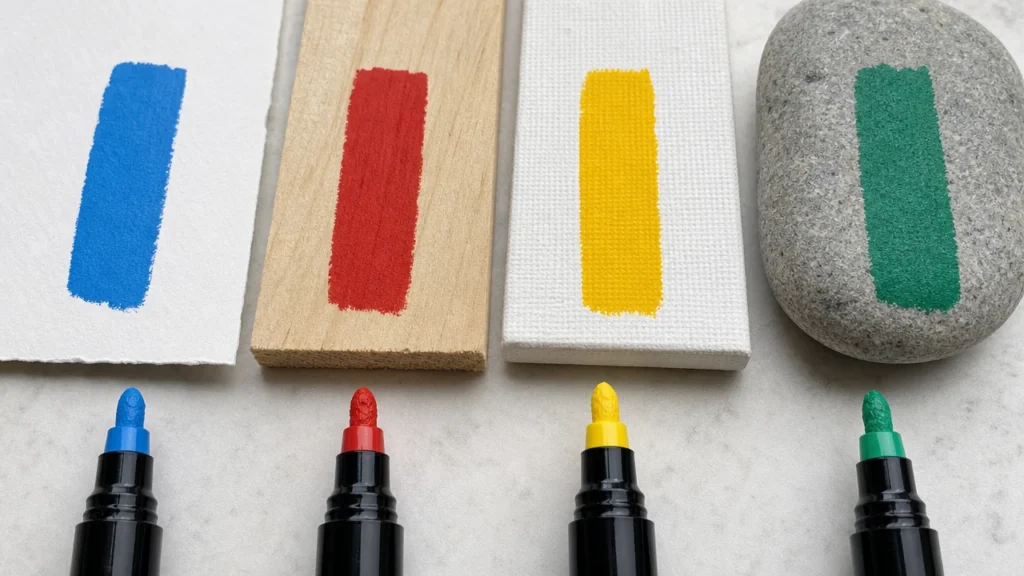
Porous Surfaces: Paper, Cardboard, Wood, Canvas, and Stone
Porous faces are usually the safest place for permanence claims. The ink can grip both by shape and by chemistry. Paper, cardboard, raw wood, unsealed stone, and some canvas give the film more contact than glass or plastic. That is why rock and wood craft sets often act well with acrylic paint markers.
Still, do not treat every porous material the same. Coated paper can push ink away. Dusty stone can make paint sit on loose bits. Freshly sanded wood can take pigment unevenly. Canvas can flex after drying. The sample approval should use the real buyer surface, not only a clean white card.
For a private-label set, build the use card around real faces. Paper crafts, wood tags, canvas boards, stones, gift boxes, or school projects. If the line includes super glitter acrylic paint markers, test sparkle on darker porous samples as well as white cards. Glitter can vanish when the face soaks up too much binder.
Non-Porous Surfaces: Glass, Ceramic, Plastic, and Metal
Non-porous faces make more complaints. Buyers expect the marker to act like paint, but the film has fewer places to grip. A mark can live through a water drop and still fail a fingernail scratch. That is why waterproof and scratch resistant must be tested apart.
Glass and glazed ceramic need a clean surface. Fingerprints, oil, mold-release film, and dust all cut grip. Plastic is harder because PP and PE can reject many coats. Metal depends on raw, painted, powder coated, anodized, polished, or slightly textured states. One passed metal sample does not prove every metal product.
A simple supplier talk should cover the marker system, nib delivery, and prime feel. ZH Stationery's valve-press marker technology explains why controlled ink flow matters for opaque acrylic systems. For face claims, the buyer still needs use tests on the planned base.
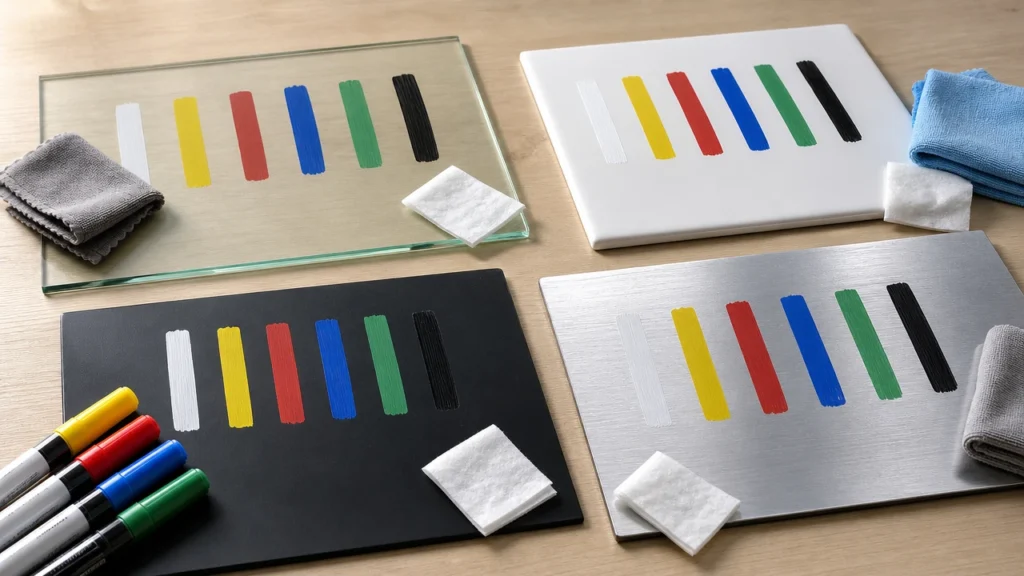
Fabric and Wearable Surfaces
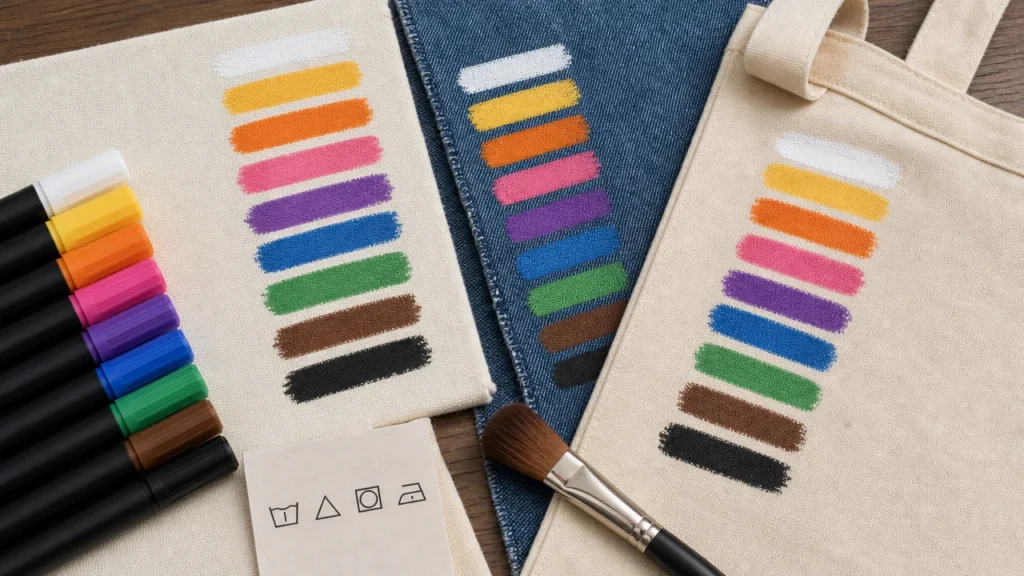
Fabric is where many marker claims get too wide. Acrylic paint markers can leave a clear mark on cotton, canvas totes, denim, and synthetics. Washable fabric act is a separate need. Stretch, soap, heat, dry way, and fiber content all change the result.
If the product will sell for totes, shoes, hats, costumes, or kids' fabric crafts, ask whether the marker is only for occasional decoration or has passed a set wash test. If heat set is advised, the pack should say so clearly. The card should match the tested state. Do not use loose words like works on all fabrics unless the supplier can back it.
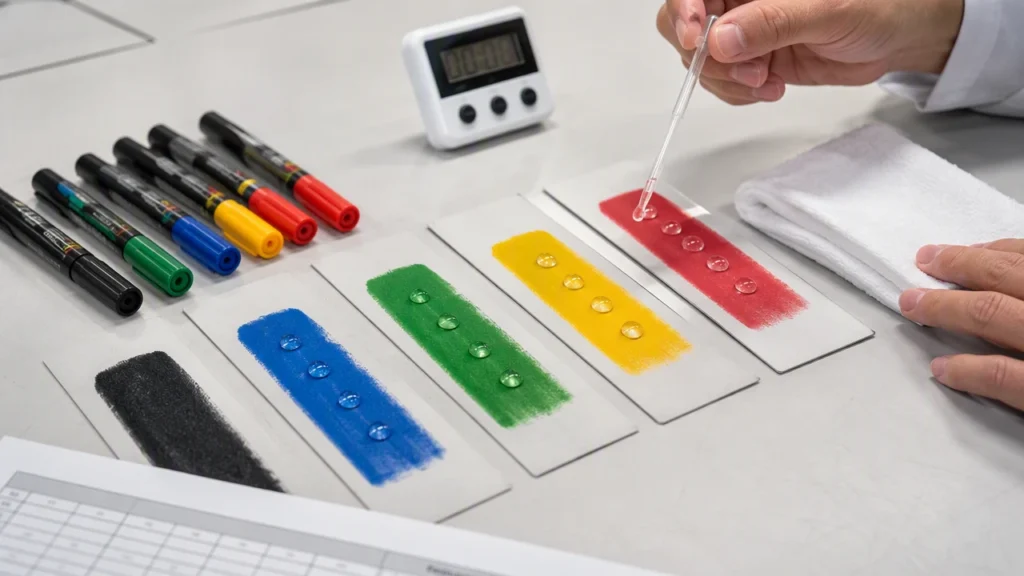
How to Test Waterproof Claims Before a PO
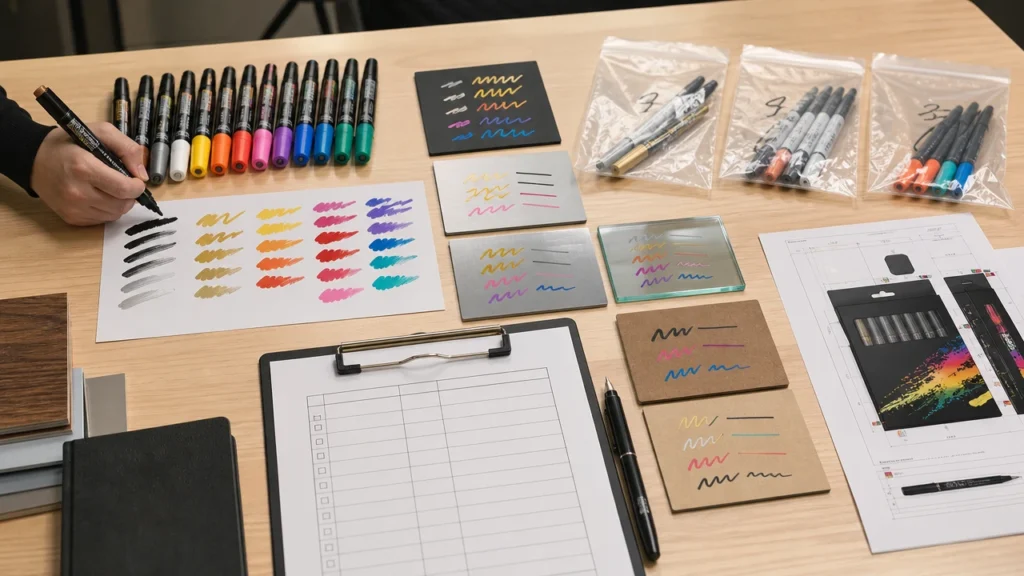
A buyer does not need an expensive lab plan for every first screen sample. The method must be written down. If each seller tests a marker different, the result becomes a debate instead of proof.
- Define the surface: exact material, coating, color, finish, and cleaning method.
- Define drying or curing time: for example, 24 hours at room temperature before water exposure.
- Run a water-drop check: place water on the mark, wait a fixed time, blot, and inspect color bleed.
- Run a wet-wipe check: wipe with the same cloth pressure and same number of strokes.
- Run an immersion check only if the retail claim implies soaking or outdoor rain exposure.
- Run a scratch or rub check separately from water exposure.
- Keep a retained sample and photo record for the approved result.
For higher-risk non-porous claims, buyers can borrow from coat tests. The ASTM D3359 tape adhesion standard rates coat grip by tape test. It is not a marker retail rule. It reminds buyers that grip should be checked with a set method, not guessed from a nice sample.
Tie this test record to your sample approval checklist. Keep the passed surface panels, cure note, pack copy, barcode sample, and supplier sign-off together. That makes reorder review easier when you later compare marker color consistency across batches.
Packaging and Instructions Shape Customer Expectations
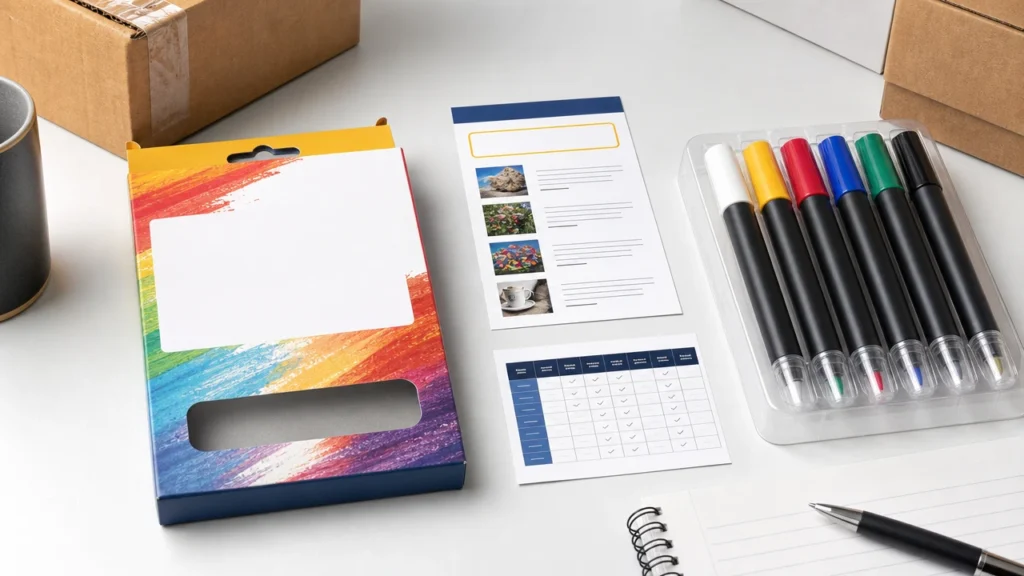
Most complaints start when the buyer reads more into the pack than the supplier tested. Waterproof may sound simple. A shopper may read it as rainproof, washable, dishwasher safe, outdoor permanent, child safe, or mug safe. Those are different claims.
Better packs use specific words. For example: water resistant after drying on suitable faces. Seal for outdoor use. Test a small area first. Decorative use only on the outside of drinkware. Keep away from food-contact faces unless the product has specific pass. Let ink dry fully before handling. These lines cut false hopes without weakening the product.
The art also needs room for safety and compliance words. The ASTM D4236-26 update shows art-material marking can change over time. Buyers should ask suppliers to confirm the current version for the target market. ZH buyers can also review our ASTM D-4236 test report guide and certificate page before final pack pass.
Common Claim Wording That Needs Care
| Claim | Why It Can Be Risky | Safer Buyer-Controlled Wording |
|---|---|---|
| Permanent on all surfaces | No marker performs equally on every surface. | Permanent on many porous surfaces after drying. Test first on slick surfaces. |
| Waterproof | Too broad without exposure method. | Water resistant after drying on suitable surfaces. |
| Dishwasher safe | Requires heat, detergent, pressure, and abrasion testing. | Use only if product-specific dishwasher testing supports it. |
| Outdoor permanent | UV, rain, heat, and abrasion all matter. | Seal for outdoor display. Test under the intended outdoor condition. |
| Safe for mugs | Customers may mark food-contact areas. | Decorative exterior use only unless compliance confirms food-contact suitability. |
| Works on fabric | Wash durability varies widely. | Suitable for selected fabric crafts. Follow drying or heat-setting instructions. |
Ask Better Supplier Questions
The best supplier answers are not just yes or no. They tie the surface claim to a formula, a sample method, and pack copy.
- Which surfaces did you test for this exact ink formula? A useful answer names the material and surface finish, such as unsealed wood, glazed ceramic, borosilicate glass, PP plastic, or cotton canvas.
- How long should the mark dry before water exposure? A useful answer gives a time and condition, not just after dry.
- What does waterproof mean in your test? A useful answer separates water drop, wet wipe, soaking, rain exposure, and dishwasher cycles.
- Can we use the same claim on packaging for every market? A useful answer asks for destination market, age grade, safety label requirements, and selling channel before approving wording.
- Do you recommend a sealer for glass, ceramic, metal, or outdoor items? A useful answer names the surface and explains when the sealer is optional or required.
- Can you keep retained samples from the approved batch? A useful answer includes retained ink, finished markers, marked surface samples, and photos for reorder comparison.
- What happens if customers complain about surface failure? A useful answer explains evidence collection, batch tracing, and corrective action rather than promising zero complaints.
If you compare factories, add these questions to your RFQ beside packing, color range, and compliance files. A mature supplier should be at ease talking test limits. You can also compare how a supplier handles complaints with the dry-out case study. Then plan retail display with acrylic marker packaging options.
FAQs
These answers are written for B2B sourcing teams prepping product claims, sample tests, and pack steps.
Are acrylic paint markers permanent on paper and wood?
Usually yes after the ink dries. Porous faces help the film grip. The result still depends on ink formula, face dust, coat, dry time, and how much rub or water the item gets.
Are acrylic paint markers waterproof on glass?
They can be water resistant on clean glass after drying. Plain water resistance is not dishwasher or scratch resistance. For glass programs, pass cleaning, cure, wipe, soak, and tape-pull checks before bulk orders.
Do acrylic paint markers stay on plastic?
Plastic varies. Some plastics have low face energy, so acrylic paint sits on top instead of bonding strong. Ask the supplier to test the exact plastic type and finish, not a generic sample.
Can acrylic paint markers be used on fabric?
They can mark many fabrics. Wash durability depends on fiber, ink load, cure, heat set if advised, and wash states. Do not sell them as fabric markers unless that claim has product-specific tests.
Are acrylic paint markers dishwasher safe?
Do not assume dishwasher safety from a waterproof claim. Dishwasher cycles mix heat, soap, water pressure, and rub. Treat dishwasher resistance as a separate claim with a set test plan and passed sample.
What should B2B buyers ask before passing waterproof claims?
Ask for the exact face, cleaning way, dry or cure time, water test, rub check, sealer advice, and the pack copy. The claim should match the test, not outrun it.
Conclusion
Acrylic paint markers can be permanent and water resistant. Only when the claim ties to the right surface and a clear test method. Porous craft faces are usually easier. Glass, ceramic, metal, plastic, fabric, and outdoor items need stricter sample passes.
When you send an inquiry to ZH Stationery, share the target surfaces, selling country, color count, packing format, order quantity, and any words you want on the retail box. Our team can review the marker build, sample plan, and pack steps before your OEM or ODM project moves to bulk. Start with product groups, then check our factory tour if factory ability is part of your review.
Related Reading
- Water-Based vs Oil-Based Paint Markers: Durability, Safety and Best Uses
- How to Remove Paint Marker from Glass, Plastic, Wood and Fabric
- How to Use Acrylic Paint Markers on Wood: Prep, Paint and Sealing
- Paint Pens for Rocks: Which Markers Work Best and How to Seal Them
- How to Use Acrylic Paint Markers on Fabric and Make the Design Last
- Glitter Marker Manufacturer Guide: Ink Systems, Tips, Packaging and MOQ
The minimum order for custom OEM/ODM programs is 50,000 pens per order, counted by total individual pens produced. For a 12-color pack, that equals roughly 4,200 sets, not 50,000 of each color. Standard stock models can be sampled at smaller trial sizes.