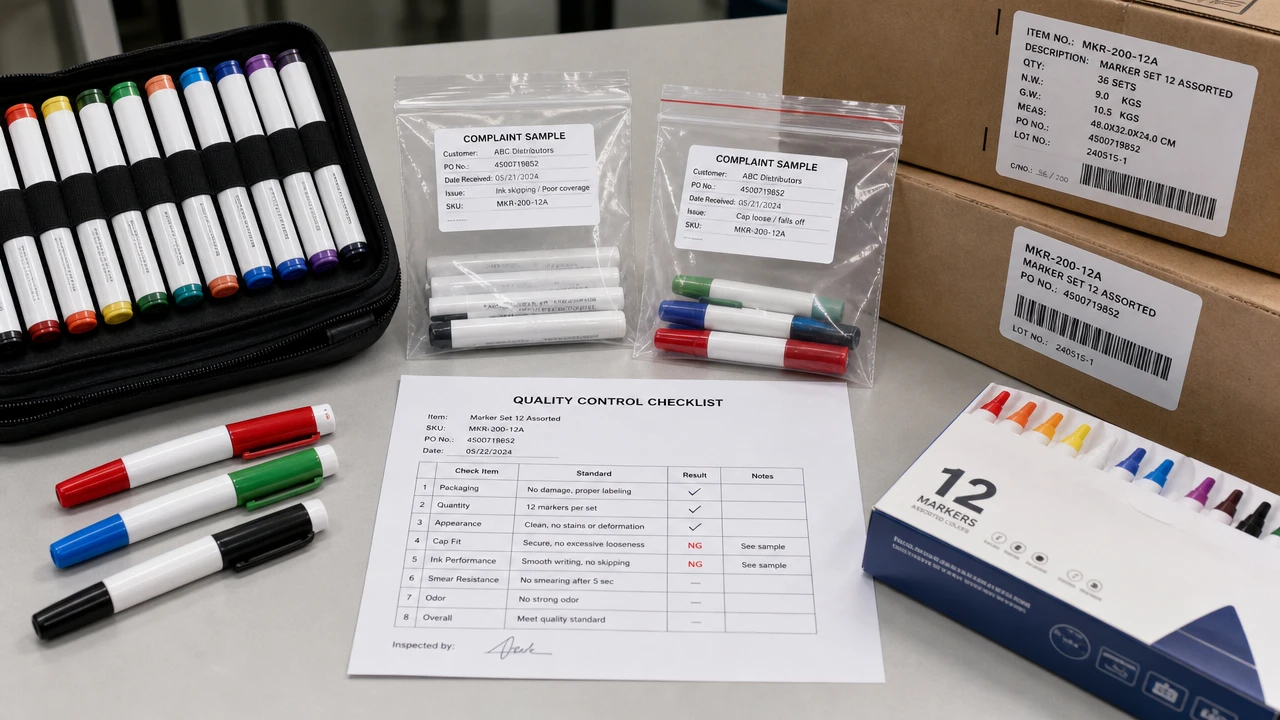
Marker dry-out complaints hurt a distributor because they usually show after the product has moved through the warehouse, channel, and shelf. In this anonymized case, ZH Stationery reviewed dry-out complaints for a distributor. We changed the control flow around cap seal, nib fit, storage risk, and reorder feedback.
This article does not name the buyer or print private complaint numbers. It shows the fix flow. Buyers can use the same method when sourcing markers, comparing a China manufacturer, or preparing an RFQ for private-label sets.
Быстрый ответ
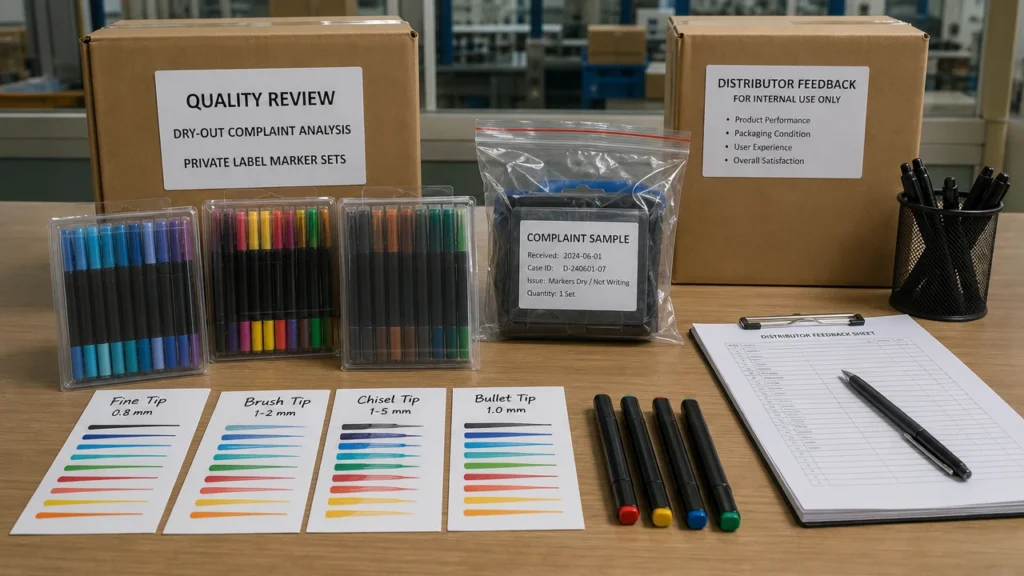
We cut repeat dry-out complaints by treating the issue as a finished-product system problem. It was not only an ink problem. The fix plan checked cap seal, nib fit, ink flow, packing pressure, carton handling, storage exposure, and complaint tracking. The biggest change was simple. Every reorder had to tie the buyer complaint, kept sample, production batch, and pre-shipment writing test together.
Быстрые ссылки
- Быстрый ответ
- История вопроса
- Первичная диагностика жалоб на высыхание маркеров
- Проверенные корневые причины
- Изменения на фабрике
- Изменения на стороне дистрибьютора
- Контрольный список QC
- Результаты и ограничения
- Задавайте поставщику более правильные вопросы
- Часто задаваемые вопросы (FAQ)
История вопроса
The distributor sold sets through a mixed channel. Retail stores. School-supply resellers. Online sellers. The complaint pattern was not dramatic at first. A few customers said some markers felt weak. Then several accounts reported markers that wrote for a short time and stopped. The product still sold in many spots. The distributor needed a cleaner answer before the next reorder.
The first mistake would have been blaming ink right away. Ink matters. Dry-out complaints can come from the cap, nib, barrel, storage time, carton pressure, hot warehouse conditions, or a slow retail shelf. We treated the case as a chain of small risks.
The distributor also needed compliance and marking files for retail review. For US art products, the Руководство CPSC по художественным материалам explains ASTM D-4236 marking hopes. The official ASTM D4236 page covers chronic health hazard marking. Those documents matter. They do not prove shelf performance. We kept compliance review apart from dry-out fixes.
Первичная диагностика жалоб на высыхание маркеров
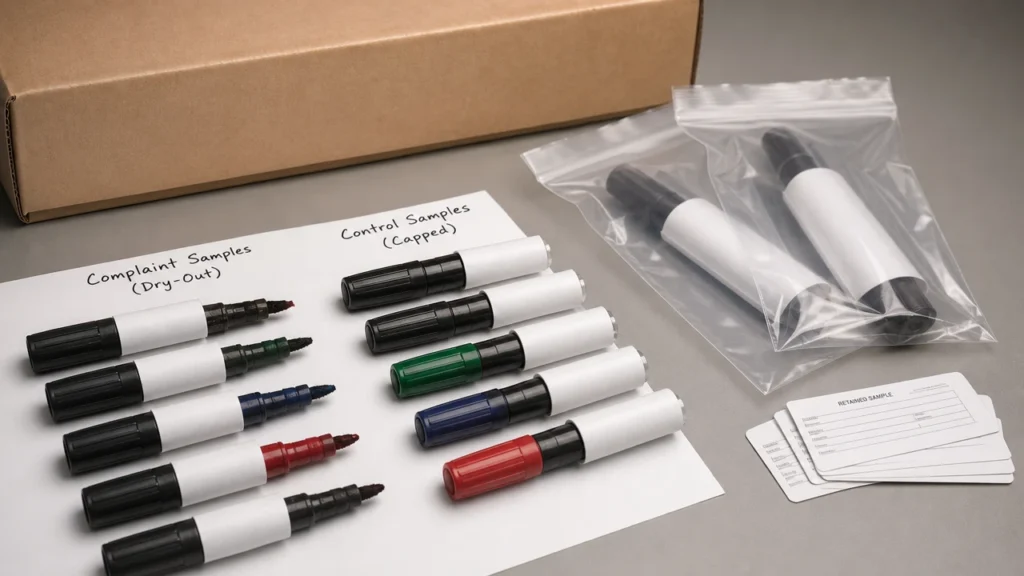
We asked the distributor to send three groups of info. Complaint samples. Unopened kept sets from the same order, if any. The carton or barcode data tied to the complaint lots. That gave the factory team something better than screenshots and customer remarks.
| Запрошенные доказательства | Зачем это было нужно | Что это помогло нам решить |
|---|---|---|
| Образцы по жалобам | Показали, есть ли видимые проблемы с колпачком, наконечником или чернилами | Является ли дефект единичным или повторяющимся |
| Невскрытые сохранённые наборы | Позволили отделить состояние на фабрике от обращения в рознице | Существовала ли проблема до попадания на розничную полку |
| Этикетка партии или коробки | Связали образцы по жалобам с производственной партией | Какие записи партии проверять |
| Заметки о хранении | Показали воздействие тепла, влажности и времени на полке | Могли ли условия отгрузки или склада способствовать проблеме |
| Затронутые цвета | Показали, была ли проблема специфичной для определённого цвета | Проверять ли одни чернила, один наконечник или всю структуру продукта |
Проверенные корневые причины
Dry-out complaints rarely have one clean cause. In this case, the useful question was not which part failed. It was which part of the system let a weak marker reach the buyer.
Герметичность колпачка и посадка корпуса
A cap can look right and still seal poorly. We checked whether the cap clicked firm. We checked whether the inner cap touched the nib area right. We checked whether cap looseness grew after carton pressure or handling. Small cap-fit changes matter. Water-based and acrylic systems can lose usable flow when the nib area stays open too long.
Посадка наконечника и подача чернил
A nib that fits too loose may write uneven. A nib that fits too tight may not pull ink at the expected speed. That is why we tied the dry-out review to finished-marker writing tests. We did not check the ink alone. For acrylic projects, the valve press marker technology page is useful background. Valve control changes how ink reaches the tip.
Давление упаковки и условия транспортировки
Packing can push caps, bend trays, or expose sets to heat and dryness in storage. The official ASTM D4332 page covers conditioning containers, packages, or packing parts to mimic field states in tests. For normal sourcing, buyers do not need a full lab program for every order. They should know that packing and environment shape complaints.
Изменения на фабрике
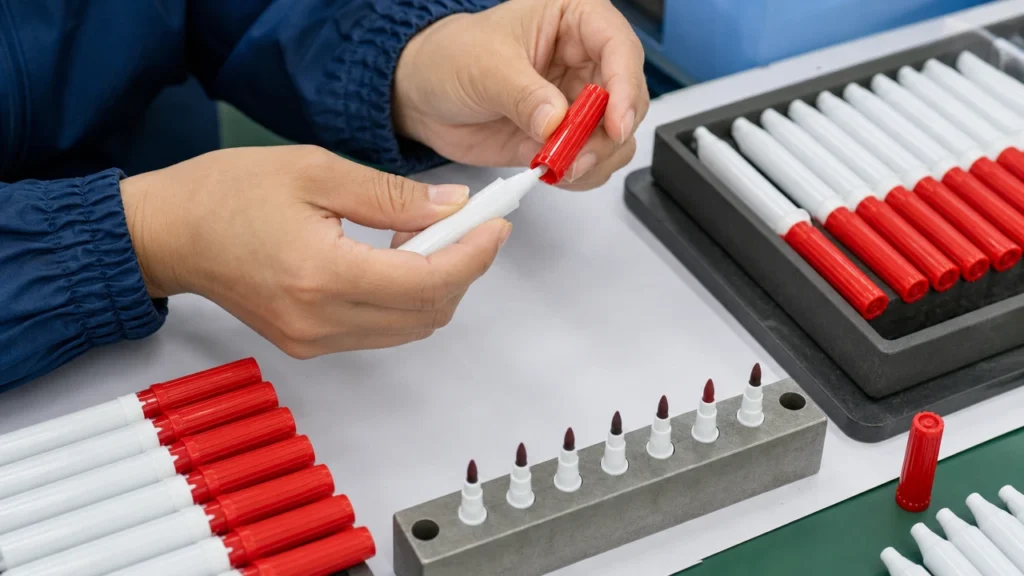
The fix focused on checks that could repeat on future orders. We did not want a one-time rescue. We wanted a flow the production team and the distributor could use again.
| Изменение | Что мы добавили | Выгода для покупателя |
|---|---|---|
| Выборочная проверка посадки колпачка | Более частые проверки ощущения защёлкивания колпачка, плотности и посадки после обращения | Снижение вероятности попадания в коробки единиц со слабой герметизацией |
| Проверка подачи через наконечник | Тесты письма готовых маркеров после сборки и короткого периода покоя | Выявление маркеров, которые выглядели нормально, но писали слабо |
| Хранимые образцы | Запечатанные образцы наборов, привязанные к производственной партии и этикеткам коробок | Ускорение отслеживания будущих жалоб |
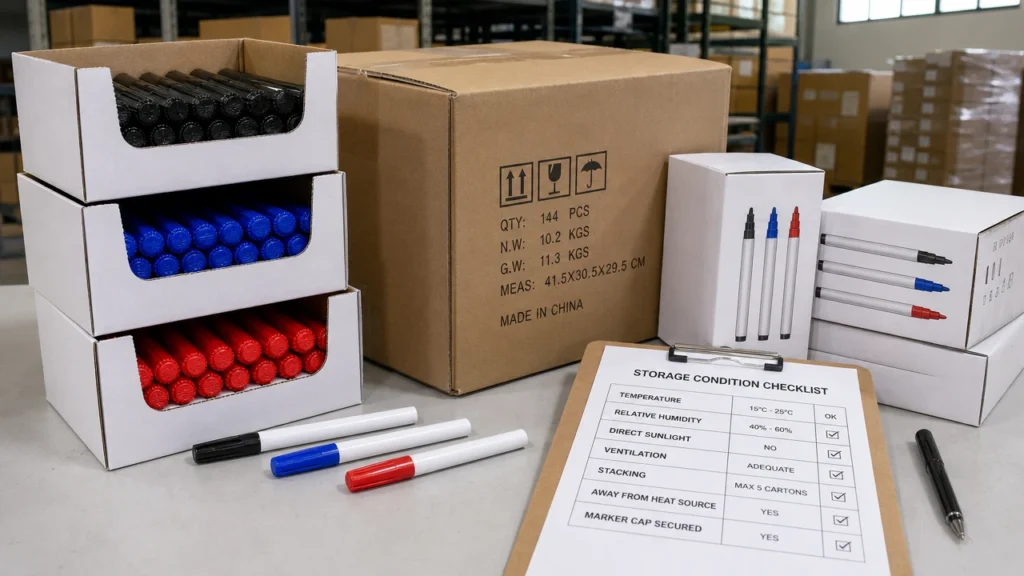
| Проверка упаковки | Проверка давления лотка, контакта колпачка, штабелирования коробок и перемещения внутренней упаковки | Снижение предотвратимых нагрузок при транспортировке и хранении |
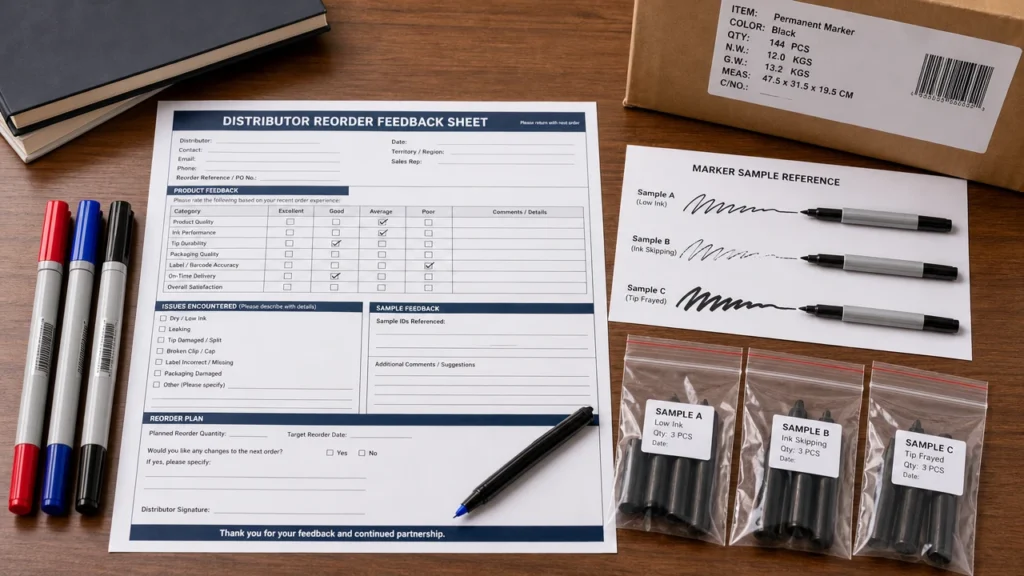
| Форма обратной связи по рекламациям | Стандартизированные заметки дистрибьютора по партии, цвету, каналу и сроку хранения | Превращение расплывчатых жалоб в пригодные для анализа данные |
We also reviewed whether the product group, cap design, and packing format matched the distributor channel. Buyers planning retail sets can tie this step to the acrylic marker packing formats guide и руководство по размеру картонной коробки и CBM.
Изменения на стороне дистрибьютора
The distributor also changed its own handling. That part matters. If the supplier fixes factory checks but the buyer stores cartons near heat, opens inner boxes early, or mixes lots without marks, the problem can return.
- Храните по одной невскрытой контрольной упаковке из каждой партии и маркируйте её номером заказа и датой получения.
- Храните коробки с маркерами вдали от тепла, прямых солнечных лучей и зон склада с чрезмерно сухим воздухом.
- Попросите торговых представителей фиксировать затронутые SKU, цвет, партию, срок хранения и фотографии до замены товара.
- Отделяйте жалобы на высыхание от жалоб на цвет чернил, протечки и повреждение упаковки.
- Возвращайте образцы с рекламациями в герметичных пакетах, чтобы завод мог проверить колпачки и наконечники без дополнительного воздействия.
A steady reorder file also helped. The distributor tied complaint notes to the next PO. The new run could then be checked against real field feedback. That is close to the color-consistency reorder flow. Dry-out control just focuses on cap seal, nib flow, and storage instead of color match.

Контрольный список QC
For future orders, we turned the case into a simple QC checklist. The checklist is not a promise. It catches common fail points before the product reaches the distributor.
| Контрольная точка | Проверка на заводе | Проверка у дистрибьютора |
|---|---|---|
| Герметичность колпачка | Проверка посадки колпачка после сборки и после обращения с образцами | Проверка случайных наборов после получения коробок |
| Состояние наконечника | Проверка положения наконечника, влажности и интенсивности письма | Тестирование контрольных образцов перед выпуском повторного заказа |
| Подача чернил | Написание пробных штрихов после короткого периода покоя | Отделение сообщений о слабой подаче от сообщений о полном высыхании |
| Нагрузка на упаковку | Проверка посадки лотков, контакта колпачков и штабелирования коробок | Проверка, не были ли коробки раздавлены или подвергнуты воздействию тепла |
| Прослеживаемость партий | Маркировка контрольных образцов и ссылок на коробки | Фиксация партии, SKU, канала и даты рекламации |
| Файлы соответствия | Поддержание готовности соответствующих документов по маркировке и испытаниям | Не путайте файлы соответствия с доказательством эксплуатационных характеристик при хранении |
For wider check and compliance context, buyers can review the ASTM D-4236 report guide, компания руководство по закупке акварельных маркеров, и ZH Stationery's certifications page.
Результаты и ограничения
After the fix flow ran, the distributor had a cleaner complaint process and fewer repeat dry-out talks on the next order. The useful result was not a marketing number. It was control. The buyer and factory could name the affected SKU. They could compare kept samples. They could check cap and nib state. They could decide whether the issue came from production, packing, storage, or retail handling.
There are limits. No supplier can remove every dry-out risk after months of storage and mixed retail handling. Heat, wetness, shelf time, user behavior, and packing damage all matter. ISO 554 is a useful note that test conditions should be controlled when results are compared. For B2B sourcing, the practical lesson is simpler. Keep the test state steady before judging whether a batch changed.
That is why ZH Stationery treats dry-out complaints as a factory-and-channel problem. Factory checks matter. The distributor's receiving check, storage, and feedback care decide how fast the issue can be traced. Buyers who want to know factory ability can review the экскурсия по заводу и кто мы .
Задавайте поставщику более правильные вопросы
When dry-out risk matters, ask questions that force a supplier to describe the control method. Do not accept only a product pitch.
| Вопрос | Полезный ответ должен включать |
|---|---|
| Как вы проверяете герметичность колпачка перед отгрузкой? | Метод отбора образцов, сроки проверки и критерии слабого колпачка |
| Тестируете ли вы готовые маркеры или только образцы чернил? | Тест письма готовых маркеров, время покоя и правила по затронутым цветам |
| Как маркируются контрольные образцы? | Номер заказа, SKU, дата партии, ссылка на коробку или партию и метод хранения |
| Какие проверки нагрузки на упаковку используются? | Посадка лотков, контакт колпачков, штабелирование коробок и проверка защиты при транспортировке |
| Как следует сообщать о жалобах на высыхание? | Фотографии, затронутые цвета, номер партии, срок хранения, заметки по хранению и процесс возврата образцов |
| Какие изменения требуют повторного утверждения? | Колпачок, наконечник, корпус, формула чернил, лоток упаковки, розничная карточка или структура коробки |
Часто задаваемые вопросы (FAQ)
These FAQs cover the buyer questions that usually appear after a distributor gets dry-out complaints.
What usually causes dry-out complaints from distributors?
Weak cap seal, poor nib fit, ink loss in storage, damaged packing, long heat or dry-air time, and uneven retail handling. The supplier should check the finished marker, not only the ink mix.
Can a factory promise markers never dry out?
No good supplier should. Dry-out risk depends on design, ink system, cap fit, storage, shipping route, shelf time, and user behavior. A factory can cut preventable risks with cap-fit control, writing tests, kept samples, packing checks, and clear storage instructions.
Should distributors test samples before every reorder?
For repeat programs, yes. A short reorder check can confirm cap fit, nib flow, stroke strength, and packing state before mass production. If the product changed, treat it as a controlled update, not a simple reorder.
What should buyers ask after a dry-out case appears?
Ask for the lot number, production date, carton mark, photos of cap and nib, storage state, shelf time, and whether the issue hits one color, one SKU, or the whole shipment. Without this, the factory cannot trace the likely cause.
Does ASTM D-4236 fix dry-out problems?
No. ASTM D-4236 covers chronic health hazard marking for art products. It is not about cap seal or shelf performance. It matters for compliance. Dry-out control needs design, packing, storage, and QC checks.
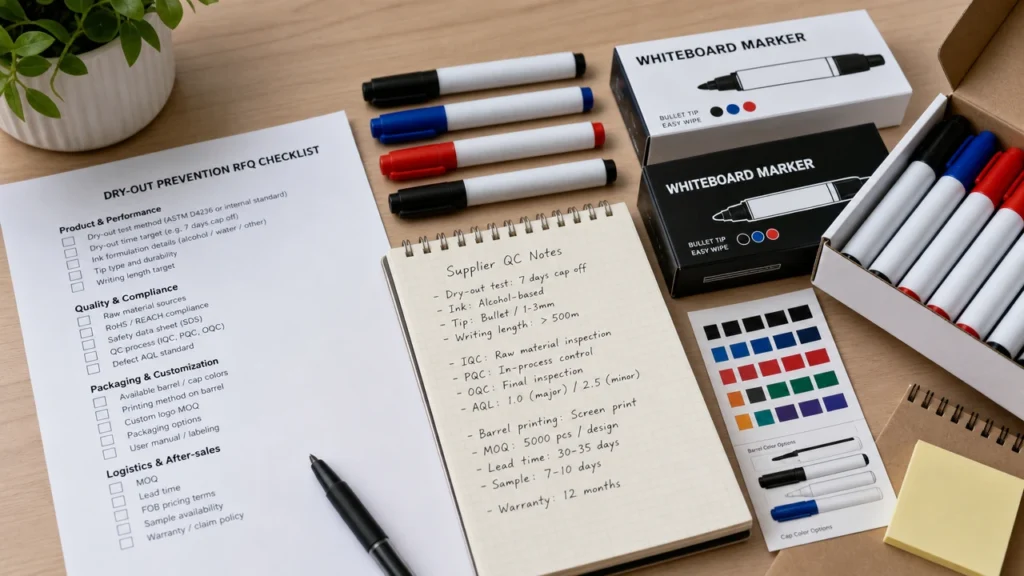
Какая формулировка запроса предложения (RFQ) лучше всего подходит для предотвращения высыхания?
Use specific language. Require cap-fit checks, nib-flow sampling, kept samples, carton guard, storage instructions, and a fix flow for complaints. Avoid vague lines like premium quality or long shelf life unless the supplier defines how they are tested.
Заключение
Dry-out complaints are easier to cut when buyer and factory stop treating them as isolated customer remarks. The better flow is practical. Collect samples and trace the batch. Check cap and nib fit, review packing pressure, and control storage guesses. Build the next reorder around what was learned.
If you are sourcing private-label markers for a distributor channel, send ZH Stationery the marker type, cap design, packing format, destination market, expected shelf time, and any past complaint notes. The team can turn those notes into a sampling and QC checklist before the next order.
Связанное руководство: Как сохранять консистентность цветов маркеров при повторных заказах.
Связанное руководство: Как обрабатывать жалобы клиентов на высохшие маркеры или различия в цвете.