
Welcome to the production heart of ZH STATIONERY. As a leading custom marker pen manufacturer, we know global buyers want more than standard products.
They need steady factory partners who can deliver even quality, room to grow, and tailored OEM/ODM answers. Based in Tonglu, China, our plant is built to meet the exact specs of brands around the world.
Tonglu, China, is known worldwide as the Capital of Pen Making. Over the years, it grew into a huge hub for the global writing supply chain. Now the market asks for higher quality. The old cheap-and-basic style is not enough. Buyers today want premium products.
As a leading factory in this famous region, ZH STATIONERY focuses fully on high-quality professional markers. We join Tonglu's rich making history with modern tech to give world-class OEM and ODM service to global brands.
Here is how we are changing how professional markers are made.
1. Premium Ink Formulas and Precision Tips
Many markers on the market look the same. The real difference is inside the pen. Professional artists and designers need smooth ink and exact colors.
To make your brand stand out, ZH STATIONERY puts real money into core tech:
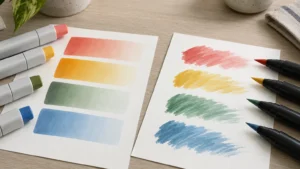
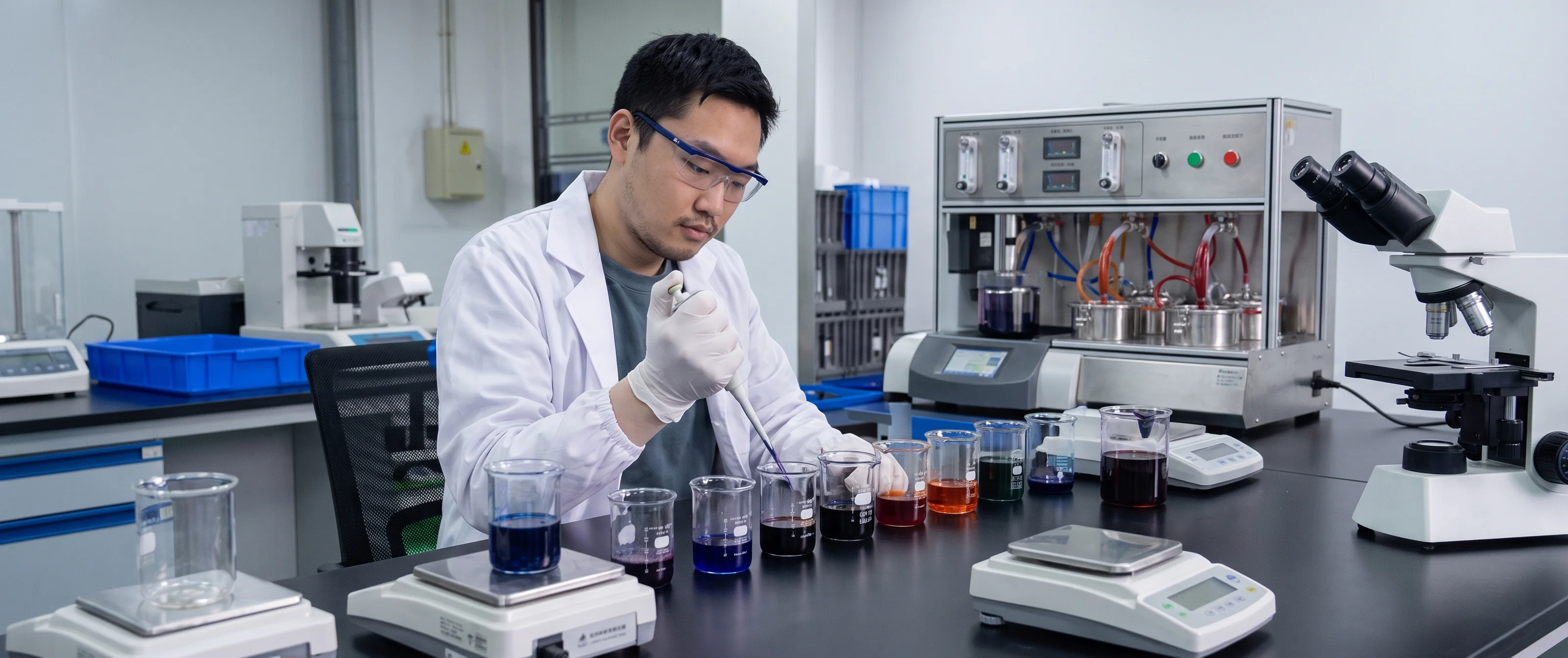
- Advanced Ink Lab: We develop high-precision alcohol-based and water-based inks. Our markers offer bright, highly saturated colors, smooth blending, and long-lasting performance.
- High-Quality Tips: Whether it is a broad chisel tip for large areas or a soft brush tip for details, we use only the best components. This ensures ink flows smoothly without leaking or drying out.
2. Strong R&D to Grow Your Brand
Thanks to strong support and funding from the Tonglu local government, ZH STATIONERY has the resources to keep creating. We do not just make standard pens. We build the future of writing.
When you pick us as your factory partner, you get a supplier that can turn your ideas into products fast. Want a huge 120-color artist set? Want new acrylic markers? Want eco bamboo marker barrels? Our R&D team can make it happen quickly.
3. Agree Design Ownership and Confidentiality
One of the biggest worries for foreign buyers is: will the factory copy my custom design?
At ZH STATIONERY, your brand is fully safe. Tonglu has launched a strict Intellectual Property Protection System to back real creators.
- Complete Privacy: We sign strict NDAs (Non-Disclosure Agreements) with all our clients.
- Local Legal Support: With fast-track patent protection laws in our city, copycats are quickly stopped.
- Worry-Free Innovation: Because your designs are protected by both our factory rules and local laws, you can safely work with us to create unique marker molds and custom packaging that your competitors cannot copy.
Partner with a Trusted Marker Factory
The writing market is moving from Made in China to Intelligently Created in China. ZH STATIONERY is proud to lead this shift in the professional marker industry.
Are you looking for a reliable, high-quality marker supplier to upgrade your product line?
Ready to Elevate Your Stationery Brand?
The right factory partner is key to your growth. We are proud to be the preferred custom marker pen manufacturer for clients across the globe. We offer fair pricing without cutting quality. Whether you have a ready-to-produce design or need help with digital prototyping, our team is here. Contact us today to talk about your OEM needs. Let us bring your marker pen projects to life.
As an experienced factory in Tonglu, we run strict quality checks on every batch before global shipping. Partnering with us means a stable, high-yield supply chain for your writing brand's long-term success.
Related guide: How It's Made Paint Markers.
Related guide: For related compliance planning, see Empowering Our Team: Employee Wellbeing & Ethical Manufacturing at ZH STATIONERY.
What a Custom Marker Pen Manufacturer Actually Controls

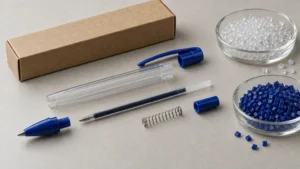
A marker looks simple from the outside. Inside, it is four subsystems that must work together: the ink, the nib, the barrel and cap, and the packaging. When a buyer evaluates a custom marker pen manufacturer, the useful question is not whether the factory can print a logo. It is which of those four subsystems the factory actually controls.
Ink is the hardest to control and the easiest to fake. A factory that buys pre-mixed ink from a third party inherits that supplier’s batch variation. A factory with its own ink lab can tune pigment load, viscosity, drying time, and lightfastness against a target surface. The difference shows up two months after delivery, when Batch 2 does not match Batch 1 on the shelf.
The nib decides how the marker feels in use. Fiber density, tip geometry, and the bond between fiber and binder determine whether a tip holds its shape through 500 strokes or turns mushy by stroke 50. Barrel and cap form a small sealed container. Their job is to stop the ink from evaporating, which is why cap seal should be tested with a closed-storage test, not a cap-off writing test.
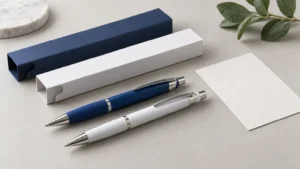
Packaging is the fourth subsystem and the one most often treated as an afterthought. A retail card, blister, or display box changes freight volume, pallet configuration, and landed cost per unit. Buyers who approve packaging late usually pay for it twice: once in tooling, once in freight.
Ink Formulation: Where the Real Differentiation Lives

Most marker complaints trace back to ink, not to the pen body. The pigment-versus-dye choice sets the baseline. Pigment sits on the surface, gives opaque coverage, and resists UV fading. Dye dissolves into the carrier, blends smoothly, and produces brighter color at lower cost, but it fades faster and can wick into paper fibers unevenly.
For solvent-based markers, the carrier is usually alcohol with a small balance of wetting agents and release additives. For water-based markers, the carrier is water plus a humectant to slow drying in an uncapped tip. Both systems need a biocide package if the product will sit in a warehouse for months. Skipping that step is how a shipment arrives with mold in the reservoir.
Viscosity is the parameter buyers should ask about by number, not by feel. A difference of 200 cPs between batches is enough to change how a chisel tip lays down color. Factories with in-house ink capability can hold that window. Factories buying pre-mixed ink cannot, because they have no visibility into what changed upstream.
Ask for the ink batch record. A useful one lists pigment lot, carrier lot, viscosity reading, and the date the batch was mixed. If the supplier cannot produce that record for the SKU you are ordering, the batch consistency claim is not verifiable.
Nib Engineering and the Wear Test That Matters
The nib is the most-felt part of a marker and the least-specified in most purchase orders. Fiber density is the first number to pin down. Below 0.30 g/cm3, a tip collapses under repeated pressure and does not spring back. By the 50th stroke the fine end turns soft, and line precision drops off.
Geometry comes next. A bullet tip is predictable but flattens over time. A chisel tip gives three line widths from one nib but depends on a clean grind angle. A brush tip delivers organic variation but is the easiest to fray when the fiber-to-binder ratio is off.
Wear testing should run on the finished marker, not on a bare nib sample. Ask for a 100-meter writing trial on the intended substrate, with line width and color depth measured at the start and at the end. A tip that loses 15 percent of its line width over 100 meters is not ready for a retail program.
Cap retention and drop resistance belong in the same test plan. A cap that releases under a one-meter drop is a return waiting to happen, especially in school channels where bags get thrown around.
Quality Gates Before Shipment
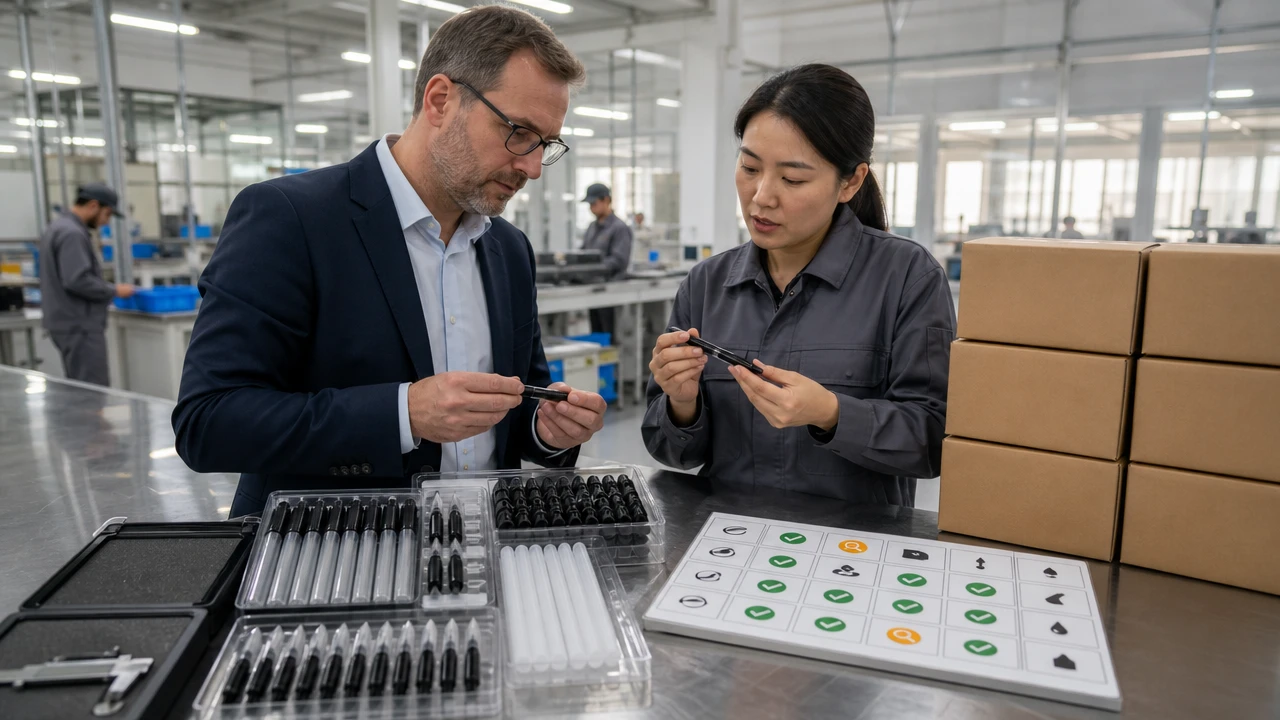
Three gates separate a manufacturing-focused supplier from a trading company. The first is inline inspection. A factory running 100 percent automated inspection checks fill weight, cap torque, and nib retention on every unit as it passes the station. That is a different claim from “we check samples.”
The second gate is statistical sampling on the finished lot. AQL levels should be written into the order: for most retail marker programs, Critical 0, Major 1.5, Minor 4.0 is a reasonable starting point. The buyer should confirm the defect definitions with the plant before production starts, not after a dispute.
The third gate is retained samples. One sealed set from the approved run, plus one from each mass-production batch, labeled with SKU, PO number, production date, ink lot, and nib lot. Without retained samples, a reorder dispute becomes a conversation about memory.
Documentation belongs alongside these gates. For the U.S. market, art materials need ASTM D-4236 conformance with a toxicology review behind it. For Europe, EN71-3 covers heavy metal migration and EN71-9 covers organic compounds. Reports should be current, dated, and name the SKU, not just the factory.
How to Brief a Custom Marker Factory

A brief that gets a usable answer contains seven items: marker type, ink system, tip construction, color count and reference numbers, packaging format, destination market, and forecast annual volume. Send the same brief to every candidate so the quotes are comparable.
Sampling comes next. Ask for a production-line sample rather than a hand-assembled prototype. Line samples represent bulk quality; hand-built samples represent what a technician can do with unlimited time. Test writing smoothness, color match across pens in the set, cap fit, and nib strength under pressure.
MOQ should be quoted by layer. A standard body with a printed logo typically starts lower than a custom mold program, because the tooling is already amortized. Ask separately for the MOQ on a stock body, a custom color, a custom mold, and a full retail set. A single headline MOQ number hides which layer is driving the cost.
Lead time follows the same logic. With existing molds, 25 to 35 days from sample approval is realistic. A new barrel or cap mold adds 15 to 25 days for design, machining, and trial runs. Third-party lab testing adds another 7 to 14 days depending on the lab queue.
Frequently Asked Questions
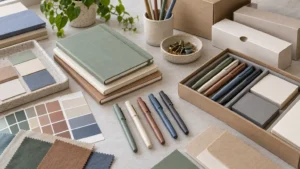
Can you match a specific Pantone color in the ink? Yes, with a caveat. Pantone gives the supplier a target, but the approved ink stroke on the intended substrate is what defines acceptance. A red cap, a red printed label, and a red ink stroke are three separate color problems and should be approved separately.
What is the minimum order for a custom marker program? It depends on the layer. Stock body plus logo starts lower than a new mold. For a fully custom OEM/ODM program, the floor is 50,000 pens per order counted by total individual pens produced; a 12-color pack equals roughly 4,200 sets, not 50,000 of each color.
How do you prevent dry-out during shipping? Cap seal is the first control, followed by fill weight and storage conditions. Ask for a closed-cap evaporation test and a storage trial at elevated temperature. A 50 C oven run for 7 to 14 days simulates a hot container crossing.
Can you supply private-label packaging? Yes. Blister cards, color boxes, display units, and gift boxes are all quotable. Send the retail channel and shelf requirements early, because packaging format changes freight volume and landed cost per unit more than most buyers expect.
Related Reading
- Marker Pen Manufacturing: What B2B Buyers Should Know About Factory Processes
- Top 7 Best Marker Pen Manufacturers in China for 2026
- Meet ZH STATIONERY at the 139th Canton Fair: Your Trusted Source for Custom Markers and Gel Pens
- OEM ODM Pen Manufacturing: A Buyer’s Decision Guide
- A Triumphant Spring: ZH STATIONERY Shines at the 139th Canton Fair 2026
- Top 5 Pen Manufacturers in China: The Ultimate Sourcing Guide for 2026
- Empowering Our Team: Employee Wellbeing & Ethical Manufacturing at ZH STATIONERY
Tooling is usually the largest upfront line item in a custom program. Our pen mold factory and OEM tooling guide breaks down mold cost, cavity counts, and trial-run timelines.