

Bienvenue au cœur de la production de ZH STATIONERY. En tant que fabricant leader de marqueurs personnalisés, nous savons que les acheteurs internationaux recherchent plus que des produits standard.
Ils ont besoin de partenaires d'usine stables capables de fournir une qualité constante, une marge de croissance et des réponses OEM/ODM sur mesure. Basée à Tonglu, en Chine, notre usine est conçue pour répondre aux spécifications exactes des marques du monde entier.
Tonglu, en Chine, est mondialement reconnue comme la capitale de la fabrication de stylos. Au fil des années, elle est devenue un pôle majeur de la chaîne d'approvisionnement mondiale de l'écriture. Aujourd'hui, le marché exige une qualité supérieure. L'ancien style bon marché et basique ne suffit plus. Les acheteurs veulent désormais des produits haut de gamme.
En tant qu'usine leader dans cette région réputée, ZH STATIONERY se concentre entièrement sur les marqueurs professionnels de haute qualité. Nous associons la riche histoire de fabrication de Tonglu à la technologie moderne pour offrir un service OEM et ODM de classe mondiale aux marques internationales.
Voici comment nous révolutionnons la fabrication des marqueurs professionnels.
1. Formules d'encre premium et pointes de précision
De nombreux marqueurs sur le marché se ressemblent. La vraie différence se trouve à l'intérieur du stylo. Les artistes et designers professionnels ont besoin d'une encre fluide et de couleurs précises.
Pour démarquer votre marque, ZH STATIONERY investit réellement dans les technologies de base :
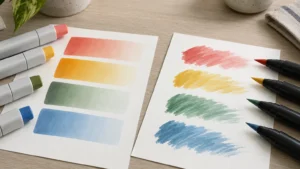
- Laboratoire d'encre avancé : Nous développons des encres à base d'alcool et à base d'eau de haute précision. Nos marqueurs offrent des couleurs vives et hautement saturées, un mélange homogène et une performance durable.
- Pointes de haute qualité : Qu'il s'agisse d'une large pointe biseautée pour les grandes surfaces ou d'une pointe pinceau souple pour les détails, nous utilisons uniquement les meilleurs composants. Cela garantit un débit d'encre fluide sans fuite ni dessèchement.
2. R&D solide pour développer votre marque
Grâce au soutien et au financement solides du gouvernement local de Tonglu, ZH STATIONERY dispose des ressources nécessaires pour continuer à innover. Nous ne fabriquons pas seulement des stylos standard. Nous construisons l'avenir de l'écriture.
En nous choisissant comme partenaire industriel, vous obtenez un fournisseur capable de transformer rapidement vos idées en produits. Vous voulez un énorme set d'artiste de 120 couleurs ? Vous voulez de nouveaux marqueurs acryliques ? Vous voulez des corps de marqueurs en bambou écologique ? Notre équipe R&D peut le réaliser rapidement.
3. Convenez de la propriété du design et de la confidentialité
L'une des plus grandes inquiétudes des acheteurs étrangers est : l'usine copiera-t-elle mon design personnalisé ?
Chez ZH STATIONERY, votre marque est totalement protégée. Tonglu a mis en place un système strict de protection de la propriété intellectuelle pour soutenir les véritables créateurs.
- Confidentialité totale : Nous signons des accords de non-divulgation (NDA) stricts avec tous nos clients.
- Soutien juridique local : Grâce aux lois de protection rapide des brevets dans notre ville, les imitateurs sont rapidement stoppés.
- Innovation sans souci : Parce que vos designs sont protégés à la fois par nos règles d'usine et les lois locales, vous pouvez collaborer avec nous en toute sécurité pour créer des moules de marqueurs uniques et des emballages personnalisés que vos concurrents ne pourront pas copier.
Partenariat avec une usine de marqueurs de confiance
Le marché de l'écriture passe du « Fabriqué en Chine » au « Créé intelligemment en Chine ». ZH STATIONERY est fier de mener ce changement dans l'industrie des marqueurs professionnels.
Recherchez-vous un fournisseur de marqueurs fiable et de haute qualité pour améliorer votre gamme de produits ?
Prêt à Élever Votre Marque de Papeterie ?
Le bon partenaire industriel est la clé de votre croissance. Nous sommes fiers d'être le fabricant de marqueurs personnalisés préféré de clients dans le monde entier. Nous proposons des prix équitables sans compromettre la qualité. Que vous ayez un design prêt à produire ou besoin d'aide pour le prototypage numérique, notre équipe est là. Contactez-nous dès aujourd'hui pour discuter de vos besoins OEM. Donnons vie à vos projets de marqueurs.
En tant qu'usine expérimentée à Tonglu, nous effectuons des contrôles qualité stricts sur chaque lot avant l'expédition mondiale. Travailler avec nous signifie une chaîne d'approvisionnement stable et à haut rendement pour le succès à long terme de votre marque d'écriture.
Guide connexe : Comment sont fabriqués les marqueurs à peinture.
Guide connexe : Pour la planification de conformité connexe, voir Autonomiser notre équipe : Bien-être des employés et fabrication éthique chez ZH STATIONERY.
What a Custom Marker Pen Manufacturer Actually Controls
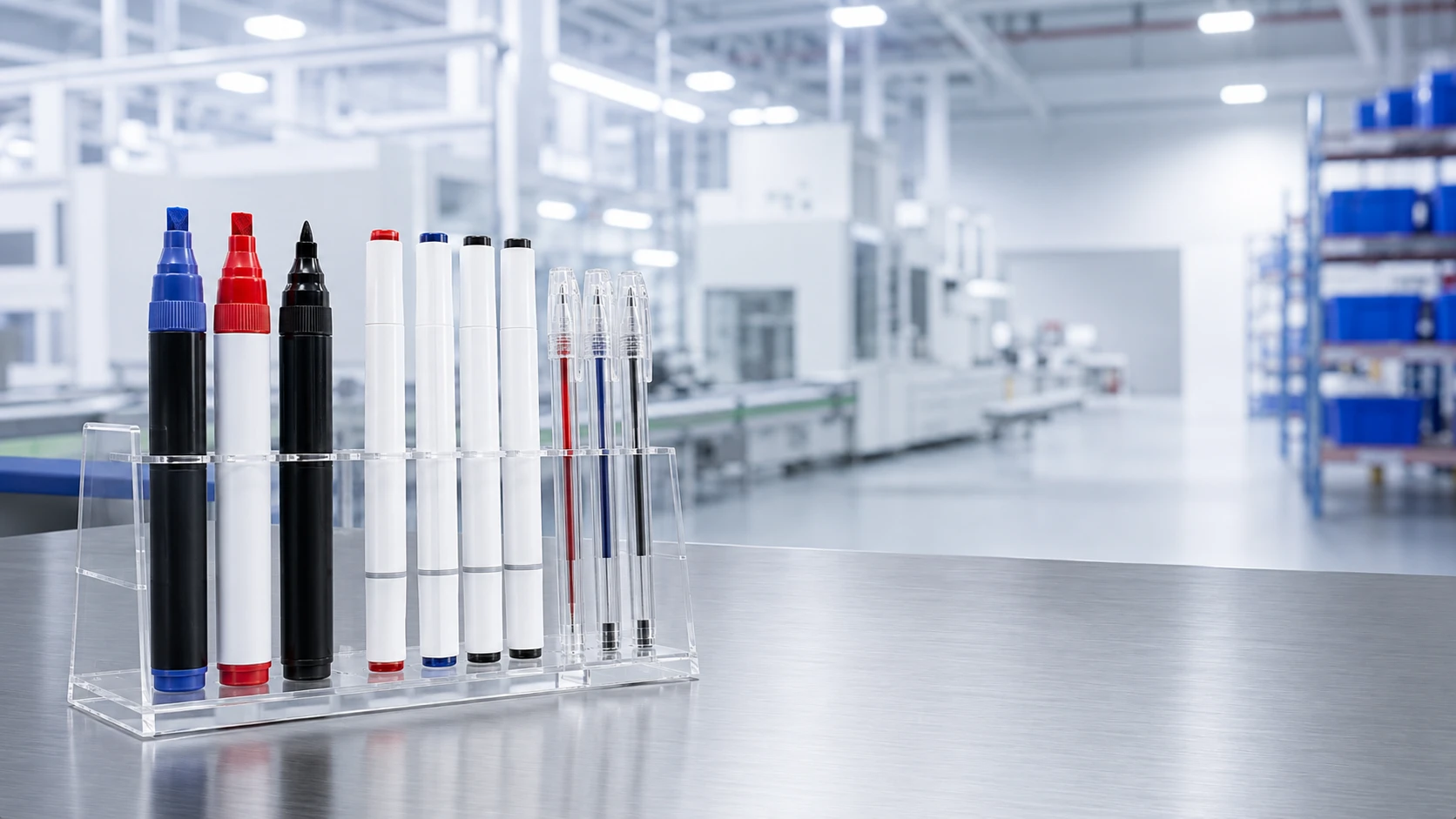
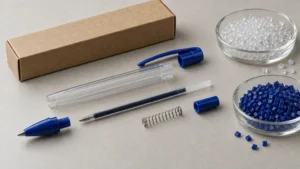
A marker looks simple from the outside. Inside, it is four subsystems that must work together: the ink, the nib, the barrel and cap, and the packaging. When a buyer evaluates a custom marker pen manufacturer, the useful question is not whether the factory can print a logo. It is which of those four subsystems the factory actually controls.
Ink is the hardest to control and the easiest to fake. A factory that buys pre-mixed ink from a third party inherits that supplier’s batch variation. A factory with its own ink lab can tune pigment load, viscosity, drying time, and lightfastness against a target surface. The difference shows up two months after delivery, when Batch 2 does not match Batch 1 on the shelf.
The nib decides how the marker feels in use. Fiber density, tip geometry, and the bond between fiber and binder determine whether a tip holds its shape through 500 strokes or turns mushy by stroke 50. Barrel and cap form a small sealed container. Their job is to stop the ink from evaporating, which is why cap seal should be tested with a closed-storage test, not a cap-off writing test.
Packaging is the fourth subsystem and the one most often treated as an afterthought. A retail card, blister, or display box changes freight volume, pallet configuration, and landed cost per unit. Buyers who approve packaging late usually pay for it twice: once in tooling, once in freight.
Ink Formulation: Where the Real Differentiation Lives

Most marker complaints trace back to ink, not to the pen body. The pigment-versus-dye choice sets the baseline. Pigment sits on the surface, gives opaque coverage, and resists UV fading. Dye dissolves into the carrier, blends smoothly, and produces brighter color at lower cost, but it fades faster and can wick into paper fibers unevenly.
For solvent-based markers, the carrier is usually alcohol with a small balance of wetting agents and release additives. For water-based markers, the carrier is water plus a humectant to slow drying in an uncapped tip. Both systems need a biocide package if the product will sit in a warehouse for months. Skipping that step is how a shipment arrives with mold in the reservoir.
Viscosity is the parameter buyers should ask about by number, not by feel. A difference of 200 cPs between batches is enough to change how a chisel tip lays down color. Factories with in-house ink capability can hold that window. Factories buying pre-mixed ink cannot, because they have no visibility into what changed upstream.
Ask for the ink batch record. A useful one lists pigment lot, carrier lot, viscosity reading, and the date the batch was mixed. If the supplier cannot produce that record for the SKU you are ordering, the batch consistency claim is not verifiable.
Nib Engineering and the Wear Test That Matters
The nib is the most-felt part of a marker and the least-specified in most purchase orders. Fiber density is the first number to pin down. Below 0.30 g/cm3, a tip collapses under repeated pressure and does not spring back. By the 50th stroke the fine end turns soft, and line precision drops off.
Geometry comes next. A bullet tip is predictable but flattens over time. A chisel tip gives three line widths from one nib but depends on a clean grind angle. A brush tip delivers organic variation but is the easiest to fray when the fiber-to-binder ratio is off.
Wear testing should run on the finished marker, not on a bare nib sample. Ask for a 100-meter writing trial on the intended substrate, with line width and color depth measured at the start and at the end. A tip that loses 15 percent of its line width over 100 meters is not ready for a retail program.
Cap retention and drop resistance belong in the same test plan. A cap that releases under a one-meter drop is a return waiting to happen, especially in school channels where bags get thrown around.
Quality Gates Before Shipment
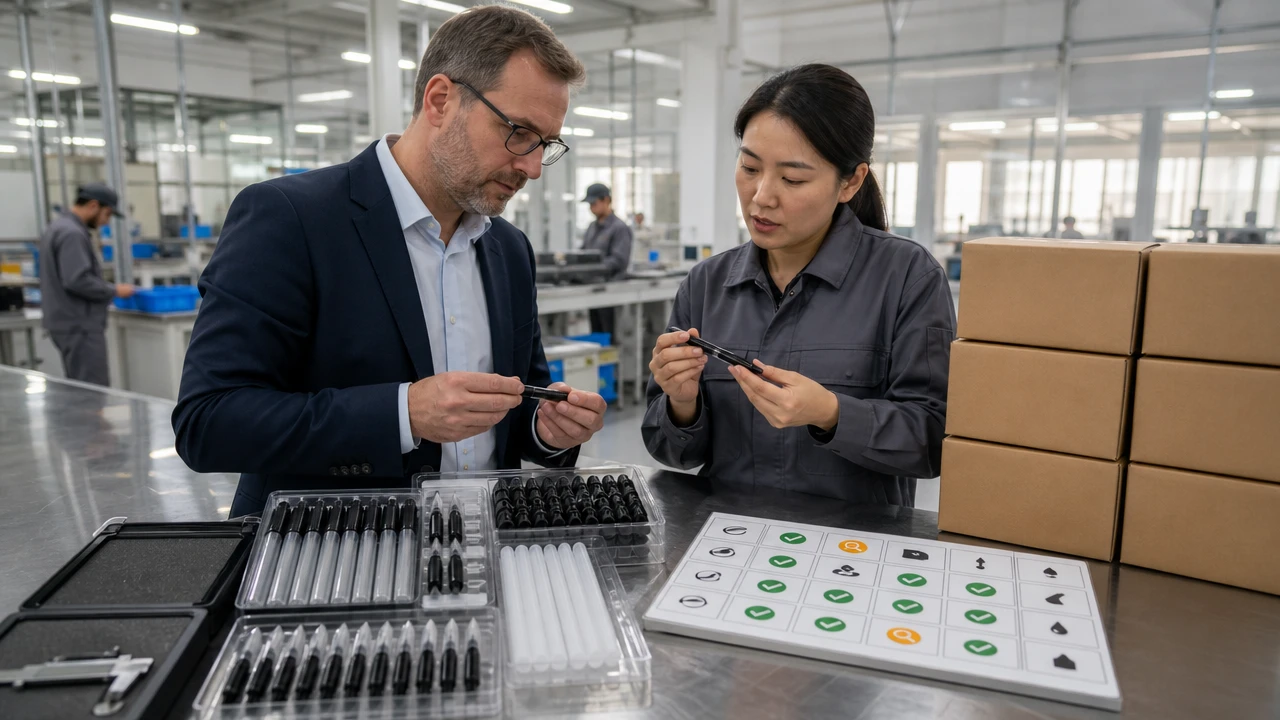
Three gates separate a manufacturing-focused supplier from a trading company. The first is inline inspection. A factory running 100 percent automated inspection checks fill weight, cap torque, and nib retention on every unit as it passes the station. That is a different claim from “we check samples.”
The second gate is statistical sampling on the finished lot. AQL levels should be written into the order: for most retail marker programs, Critical 0, Major 1.5, Minor 4.0 is a reasonable starting point. The buyer should confirm the defect definitions with the plant before production starts, not after a dispute.
The third gate is retained samples. One sealed set from the approved run, plus one from each mass-production batch, labeled with SKU, PO number, production date, ink lot, and nib lot. Without retained samples, a reorder dispute becomes a conversation about memory.
Documentation belongs alongside these gates. For the U.S. market, art materials need ASTM D-4236 conformance with a toxicology review behind it. For Europe, EN71-3 covers heavy metal migration and EN71-9 covers organic compounds. Reports should be current, dated, and name the SKU, not just the factory.
How to Brief a Custom Marker Factory

A brief that gets a usable answer contains seven items: marker type, ink system, tip construction, color count and reference numbers, packaging format, destination market, and forecast annual volume. Send the same brief to every candidate so the quotes are comparable.
Sampling comes next. Ask for a production-line sample rather than a hand-assembled prototype. Line samples represent bulk quality; hand-built samples represent what a technician can do with unlimited time. Test writing smoothness, color match across pens in the set, cap fit, and nib strength under pressure.
MOQ should be quoted by layer. A standard body with a printed logo typically starts lower than a custom mold program, because the tooling is already amortized. Ask separately for the MOQ on a stock body, a custom color, a custom mold, and a full retail set. A single headline MOQ number hides which layer is driving the cost.
Lead time follows the same logic. With existing molds, 25 to 35 days from sample approval is realistic. A new barrel or cap mold adds 15 to 25 days for design, machining, and trial runs. Third-party lab testing adds another 7 to 14 days depending on the lab queue.
Foire aux questions
Can you match a specific Pantone color in the ink? Yes, with a caveat. Pantone gives the supplier a target, but the approved ink stroke on the intended substrate is what defines acceptance. A red cap, a red printed label, and a red ink stroke are three separate color problems and should be approved separately.
What is the minimum order for a custom marker program? It depends on the layer. Stock body plus logo starts lower than a new mold. For a fully custom OEM/ODM program, the floor is 50,000 pens per order counted by total individual pens produced; a 12-color pack equals roughly 4,200 sets, not 50,000 of each color.
How do you prevent dry-out during shipping? Cap seal is the first control, followed by fill weight and storage conditions. Ask for a closed-cap evaporation test and a storage trial at elevated temperature. A 50 C oven run for 7 to 14 days simulates a hot container crossing.
Can you supply private-label packaging? Yes. Blister cards, color boxes, display units, and gift boxes are all quotable. Send the retail channel and shelf requirements early, because packaging format changes freight volume and landed cost per unit more than most buyers expect.
Lecture associée
- Fabrication de marqueurs : Ce que les acheteurs B2B doivent savoir sur les processus en usine
- TOP 7 DES MEILLEURS FABRICANTS DE MARQUEURS EN CHINE POUR 2026
- Rencontrez ZH STATIONERY à la 139e Foire de Canton : votre source de confiance pour les marqueurs et stylos à bille personnalisés
- Fabrication de stylos OEM ODM : Guide de décision pour l'acheteur
- UN PRINTEMPS TRIOMPHANT : ZH STATIONERY BRILLE À LA 139E FOIRE DE CANTON 2026
- Top 5 des fabricants de stylos en Chine : Le guide d'approvisionnement ultime pour 2026
- Autonomiser notre équipe : Bien-être des employés et fabrication éthique chez ZH STATIONERY
Tooling is usually the largest upfront line item in a custom program. Our pen mold factory and OEM tooling guide breaks down mold cost, cavity counts, and trial-run timelines.