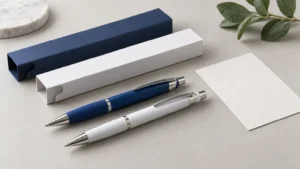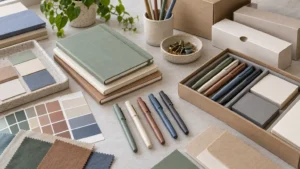


Добро пожаловать в производственное сердце ZH STATIONERY. Как ведущий производитель маркеров на заказ, мы знаем, что мировым покупателям нужно больше, чем стандартная продукция.
Им нужны надёжные партнёры-фабрики, которые могут обеспечить стабильное качество, возможности для роста и индивидуальные решения OEM/ODM. Наш завод в Тунлу, Китай, построен для соответствия точным спецификациям брендов по всему миру.
Тунлу, Китай, известен во всём мире как столица производства ручек. За годы он превратился в огромный центр мировой цепочки поставок письменных принадлежностей. Теперь рынок требует более высокого качества. Старый дешёвый и простой стиль уже недостаточен. Сегодня покупатели хотят продукцию премиум-класса.
Как ведущая фабрика в этом знаменитом регионе, ZH STATIONERY полностью сосредоточена на высококачественных профессиональных маркерах. Мы соединяем богатую историю производства Тунлу с современными технологиями, чтобы предоставлять первоклассный сервис OEM и ODM мировым брендам.
Вот как мы меняем способ производства профессиональных маркеров.
1. Премиальные формулы чернил и прецизионные наконечники
Многие маркеры на рынке выглядят одинаково. Настоящая разница внутри ручки. Профессиональным художникам и дизайнерам нужны гладкие чернила и точные цвета.
Чтобы ваш бренд выделялся, ZH STATIONERY вкладывает реальные средства в основные технологии:
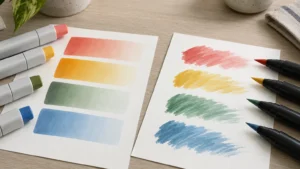
- Передовая лаборатория чернил: Мы разрабатываем высокоточные спиртовые и водные чернила. Наши маркеры предлагают яркие, насыщенные цвета, плавное смешивание и долговечную работу.
- Высококачественные наконечники: Будь то широкий плоский наконечник для больших площадей или мягкий кистевой наконечник для деталей, мы используем только лучшие компоненты. Это гарантирует плавный поток чернил без утечек или высыхания.
2. Мощные исследования и разработки для роста вашего бренда
Благодаря мощной поддержке и финансированию со стороны местного правительства Тунлу, ZH STATIONERY имеет ресурсы для продолжения инноваций. Мы не просто производим стандартные ручки. Мы строим будущее письма.
Выбирая нас в качестве заводского партнера, вы получаете поставщика, который может быстро превратить ваши идеи в продукты. Хотите огромный набор художника из 120 цветов? Хотите новые акриловые маркеры? Хотите экологичные бамбуковые корпуса маркеров? Наша команда R&D может быстро это реализовать.
3. Согласуйте права на дизайн и конфиденциальность
Одно из самых больших опасений иностранных покупателей: скопирует ли завод мой индивидуальный дизайн?
В ZH STATIONERY ваш бренд полностью защищен. Тунлу внедрил строгую систему защиты интеллектуальной собственности для поддержки настоящих создателей.
- Полная конфиденциальность: Мы подписываем строгие соглашения о неразглашении (NDA) со всеми нашими клиентами.
- Местная юридическая поддержка: Благодаря ускоренным законам о защите патентов в нашем городе, подражатели быстро останавливаются.
- Безопасные инновации: Поскольку ваши дизайны защищены как правилами нашей фабрики, так и местными законами, вы можете безопасно работать с нами над созданием уникальных форм для маркеров и индивидуальной упаковки, которые ваши конкуренты не смогут скопировать.
Сотрудничайте с надежной фабрикой маркеров
Рынок письменных принадлежностей переходит от «Сделано в Китае» к «Интеллектуально создано в Китае». ZH STATIONERY гордится тем, что возглавляет этот сдвиг в индустрии профессиональных маркеров.
Ищете ли вы надежного, высококачественного поставщика маркеров для модернизации вашей линейки продуктов?
Готовы поднять ваш бренд канцелярских товаров на новый уровень?
Правильный заводской партнер — ключ к вашему росту. Мы гордимся тем, что являемся предпочтительным производителем маркеров на заказ для клиентов по всему миру. Мы предлагаем справедливые цены без ущерба качеству. Если у вас есть готовый к производству дизайн или нужна помощь с цифровым прототипированием, наша команда готова. Свяжитесь с нами сегодня, чтобы обсудить ваши потребности в OEM. Давайте воплотим ваши проекты маркеров в жизнь.
Как опытный завод в Тунлу, мы проводим строгие проверки качества каждой партии перед глобальной отгрузкой. Партнерство с нами означает стабильную, высокопроизводительную цепочку поставок для долгосрочного успеха вашего бренда письменных принадлежностей.
Связанное руководство: Как это сделано: маркеры для рисования.
Связанное руководство: Для соответствующего планирования соответствия требованиям см. Расширение прав и возможностей нашей команды: Благополучие сотрудников и этичное производство в ZH STATIONERY.
What a Custom Marker Pen Manufacturer Actually Controls

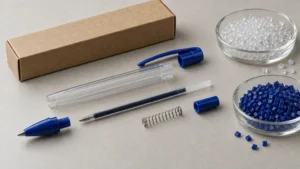
A marker looks simple from the outside. Inside, it is four subsystems that must work together: the ink, the nib, the barrel and cap, and the packaging. When a buyer evaluates a custom marker pen manufacturer, the useful question is not whether the factory can print a logo. It is which of those four subsystems the factory actually controls.
Ink is the hardest to control and the easiest to fake. A factory that buys pre-mixed ink from a third party inherits that supplier’s batch variation. A factory with its own ink lab can tune pigment load, viscosity, drying time, and lightfastness against a target surface. The difference shows up two months after delivery, when Batch 2 does not match Batch 1 on the shelf.
The nib decides how the marker feels in use. Fiber density, tip geometry, and the bond between fiber and binder determine whether a tip holds its shape through 500 strokes or turns mushy by stroke 50. Barrel and cap form a small sealed container. Their job is to stop the ink from evaporating, which is why cap seal should be tested with a closed-storage test, not a cap-off writing test.
Packaging is the fourth subsystem and the one most often treated as an afterthought. A retail card, blister, or display box changes freight volume, pallet configuration, and landed cost per unit. Buyers who approve packaging late usually pay for it twice: once in tooling, once in freight.
Ink Formulation: Where the Real Differentiation Lives

Most marker complaints trace back to ink, not to the pen body. The pigment-versus-dye choice sets the baseline. Pigment sits on the surface, gives opaque coverage, and resists UV fading. Dye dissolves into the carrier, blends smoothly, and produces brighter color at lower cost, but it fades faster and can wick into paper fibers unevenly.
For solvent-based markers, the carrier is usually alcohol with a small balance of wetting agents and release additives. For water-based markers, the carrier is water plus a humectant to slow drying in an uncapped tip. Both systems need a biocide package if the product will sit in a warehouse for months. Skipping that step is how a shipment arrives with mold in the reservoir.
Viscosity is the parameter buyers should ask about by number, not by feel. A difference of 200 cPs between batches is enough to change how a chisel tip lays down color. Factories with in-house ink capability can hold that window. Factories buying pre-mixed ink cannot, because they have no visibility into what changed upstream.
Ask for the ink batch record. A useful one lists pigment lot, carrier lot, viscosity reading, and the date the batch was mixed. If the supplier cannot produce that record for the SKU you are ordering, the batch consistency claim is not verifiable.
Nib Engineering and the Wear Test That Matters
The nib is the most-felt part of a marker and the least-specified in most purchase orders. Fiber density is the first number to pin down. Below 0.30 g/cm3, a tip collapses under repeated pressure and does not spring back. By the 50th stroke the fine end turns soft, and line precision drops off.
Geometry comes next. A bullet tip is predictable but flattens over time. A chisel tip gives three line widths from one nib but depends on a clean grind angle. A brush tip delivers organic variation but is the easiest to fray when the fiber-to-binder ratio is off.
Wear testing should run on the finished marker, not on a bare nib sample. Ask for a 100-meter writing trial on the intended substrate, with line width and color depth measured at the start and at the end. A tip that loses 15 percent of its line width over 100 meters is not ready for a retail program.
Cap retention and drop resistance belong in the same test plan. A cap that releases under a one-meter drop is a return waiting to happen, especially in school channels where bags get thrown around.
Quality Gates Before Shipment
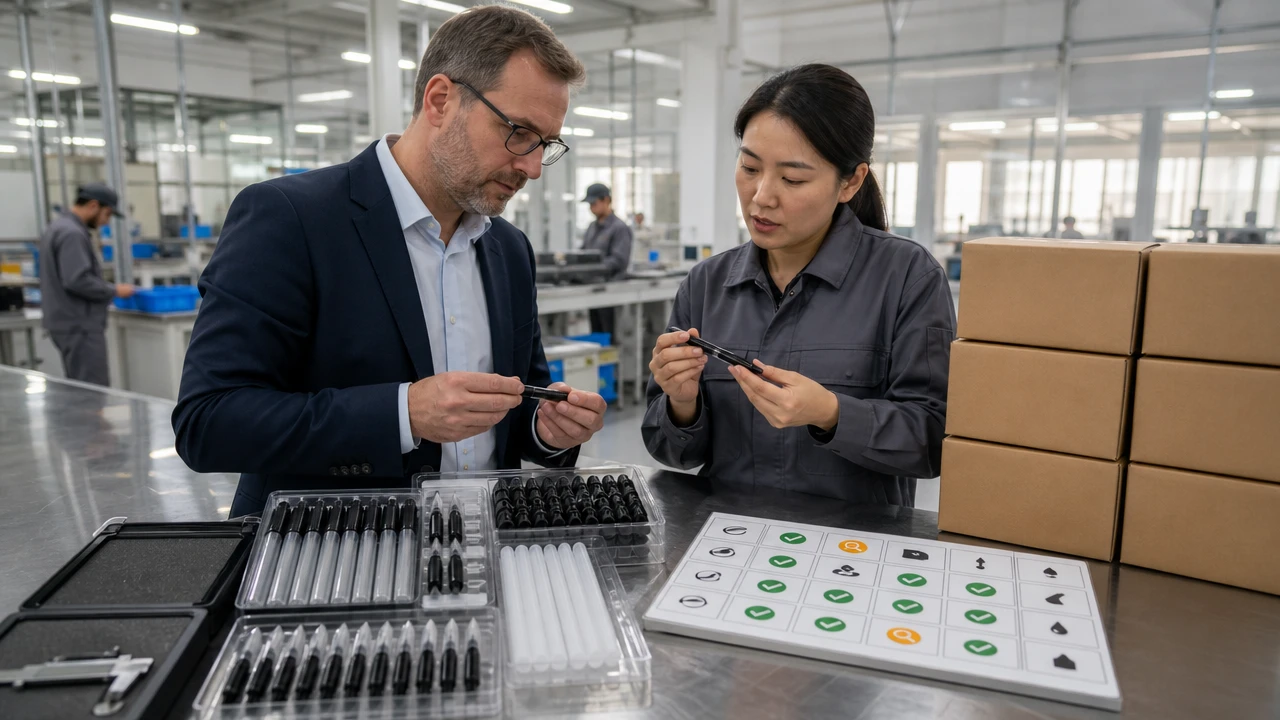
Three gates separate a manufacturing-focused supplier from a trading company. The first is inline inspection. A factory running 100 percent automated inspection checks fill weight, cap torque, and nib retention on every unit as it passes the station. That is a different claim from “we check samples.”
The second gate is statistical sampling on the finished lot. AQL levels should be written into the order: for most retail marker programs, Critical 0, Major 1.5, Minor 4.0 is a reasonable starting point. The buyer should confirm the defect definitions with the plant before production starts, not after a dispute.
The third gate is retained samples. One sealed set from the approved run, plus one from each mass-production batch, labeled with SKU, PO number, production date, ink lot, and nib lot. Without retained samples, a reorder dispute becomes a conversation about memory.
Documentation belongs alongside these gates. For the U.S. market, art materials need ASTM D-4236 conformance with a toxicology review behind it. For Europe, EN71-3 covers heavy metal migration and EN71-9 covers organic compounds. Reports should be current, dated, and name the SKU, not just the factory.
How to Brief a Custom Marker Factory

A brief that gets a usable answer contains seven items: marker type, ink system, tip construction, color count and reference numbers, packaging format, destination market, and forecast annual volume. Send the same brief to every candidate so the quotes are comparable.
Sampling comes next. Ask for a production-line sample rather than a hand-assembled prototype. Line samples represent bulk quality; hand-built samples represent what a technician can do with unlimited time. Test writing smoothness, color match across pens in the set, cap fit, and nib strength under pressure.
MOQ should be quoted by layer. A standard body with a printed logo typically starts lower than a custom mold program, because the tooling is already amortized. Ask separately for the MOQ on a stock body, a custom color, a custom mold, and a full retail set. A single headline MOQ number hides which layer is driving the cost.
Lead time follows the same logic. With existing molds, 25 to 35 days from sample approval is realistic. A new barrel or cap mold adds 15 to 25 days for design, machining, and trial runs. Third-party lab testing adds another 7 to 14 days depending on the lab queue.
Часто задаваемые вопросы
Can you match a specific Pantone color in the ink? Yes, with a caveat. Pantone gives the supplier a target, but the approved ink stroke on the intended substrate is what defines acceptance. A red cap, a red printed label, and a red ink stroke are three separate color problems and should be approved separately.
What is the minimum order for a custom marker program? It depends on the layer. Stock body plus logo starts lower than a new mold. For a fully custom OEM/ODM program, the floor is 50,000 pens per order counted by total individual pens produced; a 12-color pack equals roughly 4,200 sets, not 50,000 of each color.
How do you prevent dry-out during shipping? Cap seal is the first control, followed by fill weight and storage conditions. Ask for a closed-cap evaporation test and a storage trial at elevated temperature. A 50 C oven run for 7 to 14 days simulates a hot container crossing.
Can you supply private-label packaging? Yes. Blister cards, color boxes, display units, and gift boxes are all quotable. Send the retail channel and shelf requirements early, because packaging format changes freight volume and landed cost per unit more than most buyers expect.
Связанные материалы
- Производство маркеров: что следует знать оптовым покупателям о заводских процессах
- Топ-7 лучших производителей маркеров в Китае на 2026 год
- Встречайте ZH STATIONERY на 139-й Кантонской ярмарке: ваш надежный источник маркеров и гелевых ручек на заказ.
- Производство ручек по OEM и ODM: руководство для принятия решений покупателем
- Триумфальная весна: ZH STATIONERY блистает на 139-й Кантонской ярмарке 2026 года
- Топ-5 производителей ручек в Китае: окончательное руководство по закупкам на 2026 год
- Расширение прав и возможностей нашей команды: Благополучие сотрудников и этичное производство в ZH STATIONERY
Tooling is usually the largest upfront line item in a custom program. Our pen mold factory and OEM tooling guide breaks down mold cost, cavity counts, and trial-run timelines.