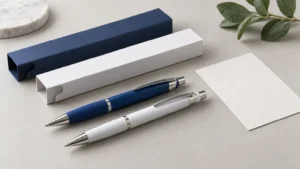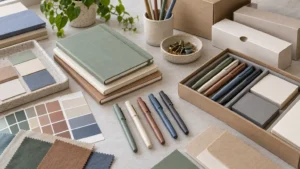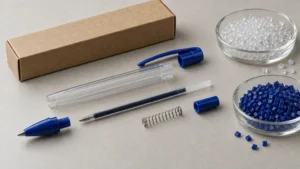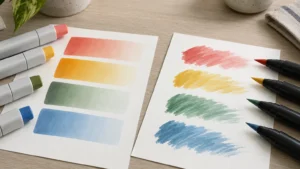


Willkommen im Produktionszentrum von ZH STATIONERY. Als führender Hersteller von individuellen Markern wissen wir, dass globale Einkäufer mehr als Standardprodukte erwarten.
Sie benötigen verlässliche Fabrikpartner, die gleichbleibende Qualität, Wachstumsspielraum und maßgeschneiderte OEM/ODM-Lösungen liefern. Unser Werk in Tonglu, China, ist darauf ausgelegt, die exakten Spezifikationen von Marken weltweit zu erfüllen.
Tonglu, China, ist weltweit als Hauptstadt der Stiftherstellung bekannt. Im Laufe der Jahre entwickelte sich die Region zu einem bedeutenden Zentrum der globalen Schreibwaren-Lieferkette. Heute verlangt der Markt nach höherer Qualität. Der alte Stil von billig und einfach reicht nicht mehr aus. Einkäufer von heute erwarten Premiumprodukte.
Als führende Fabrik in dieser renommierten Region konzentriert sich ZH STATIONERY vollständig auf hochwertige professionelle Marker. Wir verbinden Tonglus reiche Fertigungstradition mit moderner Technologie, um globalen Marken erstklassigen OEM- und ODM-Service zu bieten.
So verändern wir die Herstellung professioneller Marker.
1. Hochwertige Tintenformeln und Präzisionsspitzen
Viele Marker auf dem Markt sehen gleich aus. Der wahre Unterschied liegt im Inneren des Stifts. Professionelle Künstler und Designer benötigen gleichmäßige Tinte und exakte Farben.
Damit Ihre Marke hervorsticht, investiert ZH STATIONERY gezielt in Kerntechnologien:
- Fortschrittliches Tintenlabor: Wir entwickeln hochpräzise alkoholbasierte und wasserbasierte Tinten. Unsere Marker bieten leuchtende, hochgesättigte Farben, sanfte Verläufe und langanhaltende Leistung.
- Hochwertige Spitzen: Ob breite Meißelspitze für große Flächen oder weiche Pinselspitze für Details – wir verwenden nur die besten Komponenten. Dies gewährleistet einen gleichmäßigen Tintenfluss ohne Auslaufen oder Austrocknen.
2. Starke Forschung und Entwicklung für Ihre Marke
Dank starker Unterstützung und Finanzierung durch die lokale Regierung von Tonglu verfügt ZH STATIONERY über die Ressourcen, um kontinuierlich Innovationen voranzutreiben. Wir stellen nicht nur Standardstifte her. Wir gestalten die Zukunft des Schreibens.
Wenn Sie uns als Fabrikpartner wählen, erhalten Sie einen Lieferanten, der Ihre Ideen schnell in Produkte umsetzen kann. Wünschen Sie ein umfangreiches Künstlerset mit 120 Farben? Möchten Sie neue Acrylmarker? Oder umweltfreundliche Bambus-Markergehäuse? Unser F&E-Team kann dies schnell realisieren.
3. Designeigentum und Vertraulichkeit vereinbaren
Eine der größten Sorgen ausländischer Einkäufer ist: Wird die Fabrik mein individuelles Design kopieren?
Bei ZH STATIONERY ist Ihre Marke vollständig geschützt. Tonglu hat ein strenges System zum Schutz geistigen Eigentums eingeführt, um echte Urheber zu unterstützen.
- Vollständige Vertraulichkeit: Wir unterzeichnen strenge Vertraulichkeitsvereinbarungen (NDAs) mit allen unseren Kunden.
- Lokale rechtliche Unterstützung: Dank beschleunigter Patentschutzgesetze in unserer Stadt werden Nachahmer schnell gestoppt.
- Sorgenfreie Innovation: Da Ihre Designs sowohl durch unsere Fabrikrichtlinien als auch durch lokale Gesetze geschützt sind, können Sie sicher mit uns zusammenarbeiten, um einzigartige Marker-Formen und maßgeschneiderte Verpackungen zu entwickeln, die Ihre Konkurrenten nicht kopieren können.
Partnerschaft mit einer vertrauenswürdigen Marker-Fabrik
Der Schreibwarenmarkt entwickelt sich von „Made in China“ zu „Intelligently Created in China“. ZH STATIONERY ist stolz darauf, diesen Wandel in der professionellen Markerindustrie anzuführen.
Suchen Sie einen zuverlässigen, hochwertigen Marker-Lieferanten, um Ihre Produktlinie zu verbessern?
Bereit, Ihre Schreibwarenmarke zu stärken?
Der richtige Fabrikpartner ist der Schlüssel zu Ihrem Wachstum. Wir sind stolz darauf, der bevorzugte Hersteller für kundenspezifische Marker für Kunden auf der ganzen Welt zu sein. Wir bieten faire Preise ohne Kompromisse bei der Qualität. Ob Sie ein produktionsreifes Design haben oder Unterstützung beim digitalen Prototyping benötigen – unser Team ist für Sie da. Kontaktieren Sie uns noch heute, um über Ihren OEM-Bedarf zu sprechen. Lassen Sie uns Ihre Markerprojekte zum Leben erwecken.
Als erfahrene Fabrik in Tonglu führen wir strenge Qualitätskontrollen bei jeder Charge vor dem weltweiten Versand durch. Eine Partnerschaft mit uns bedeutet eine stabile, ertragreiche Lieferkette für den langfristigen Erfolg Ihrer Schreibwarenmarke.
Verwandter Leitfaden: Wie Paint Marker hergestellt werden.
Verwandter Leitfaden: Für die entsprechende Compliance-Planung siehe Stärkung unseres Teams: Mitarbeiterwohlbefinden & ethische Fertigung bei ZH STATIONERY.
What a Custom Marker Pen Manufacturer Actually Controls
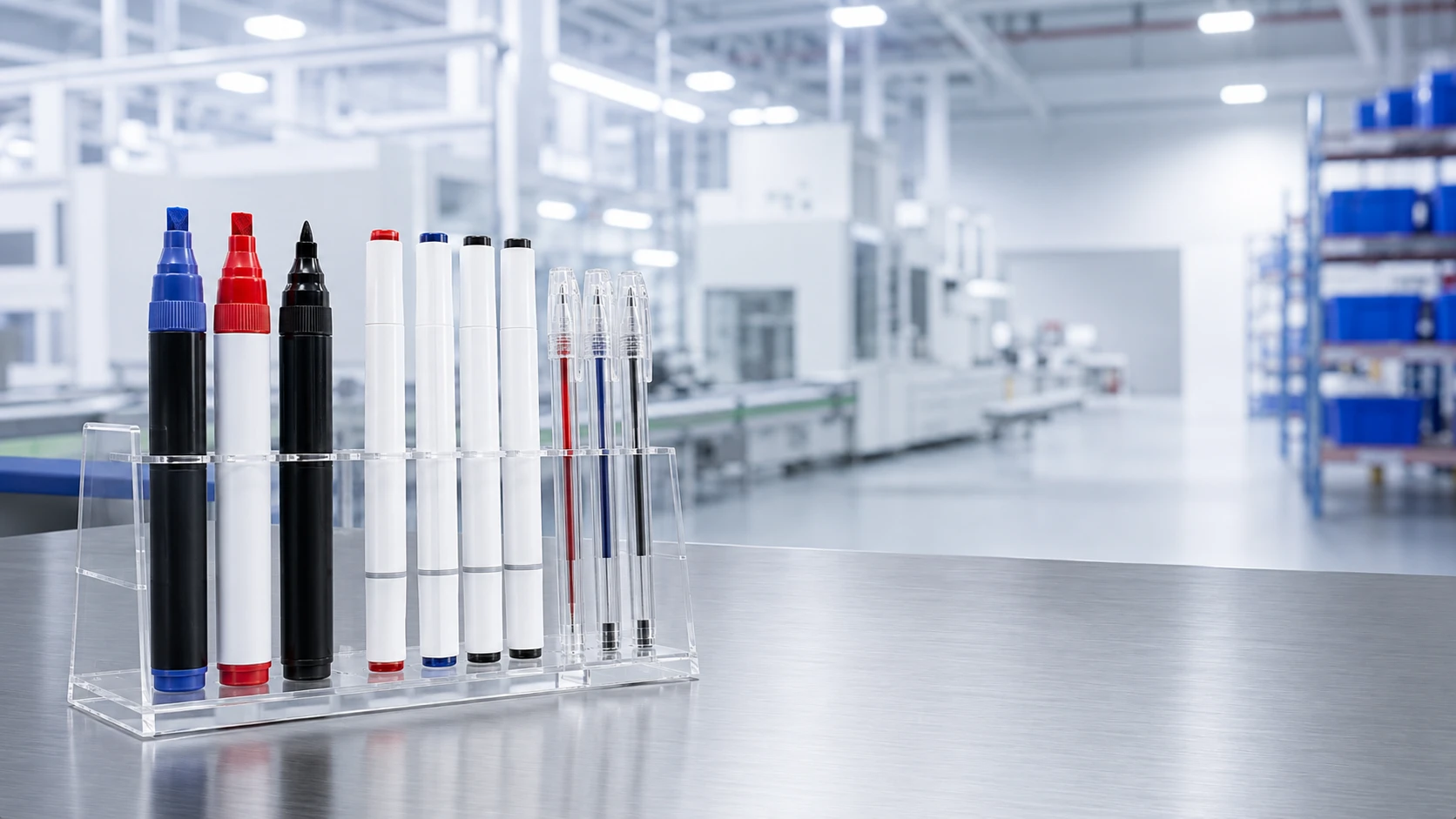
A marker looks simple from the outside. Inside, it is four subsystems that must work together: the ink, the nib, the barrel and cap, and the packaging. When a buyer evaluates a custom marker pen manufacturer, the useful question is not whether the factory can print a logo. It is which of those four subsystems the factory actually controls.
Ink is the hardest to control and the easiest to fake. A factory that buys pre-mixed ink from a third party inherits that supplier’s batch variation. A factory with its own ink lab can tune pigment load, viscosity, drying time, and lightfastness against a target surface. The difference shows up two months after delivery, when Batch 2 does not match Batch 1 on the shelf.
The nib decides how the marker feels in use. Fiber density, tip geometry, and the bond between fiber and binder determine whether a tip holds its shape through 500 strokes or turns mushy by stroke 50. Barrel and cap form a small sealed container. Their job is to stop the ink from evaporating, which is why cap seal should be tested with a closed-storage test, not a cap-off writing test.
Packaging is the fourth subsystem and the one most often treated as an afterthought. A retail card, blister, or display box changes freight volume, pallet configuration, and landed cost per unit. Buyers who approve packaging late usually pay for it twice: once in tooling, once in freight.
Ink Formulation: Where the Real Differentiation Lives

Most marker complaints trace back to ink, not to the pen body. The pigment-versus-dye choice sets the baseline. Pigment sits on the surface, gives opaque coverage, and resists UV fading. Dye dissolves into the carrier, blends smoothly, and produces brighter color at lower cost, but it fades faster and can wick into paper fibers unevenly.
For solvent-based markers, the carrier is usually alcohol with a small balance of wetting agents and release additives. For water-based markers, the carrier is water plus a humectant to slow drying in an uncapped tip. Both systems need a biocide package if the product will sit in a warehouse for months. Skipping that step is how a shipment arrives with mold in the reservoir.
Viscosity is the parameter buyers should ask about by number, not by feel. A difference of 200 cPs between batches is enough to change how a chisel tip lays down color. Factories with in-house ink capability can hold that window. Factories buying pre-mixed ink cannot, because they have no visibility into what changed upstream.
Ask for the ink batch record. A useful one lists pigment lot, carrier lot, viscosity reading, and the date the batch was mixed. If the supplier cannot produce that record for the SKU you are ordering, the batch consistency claim is not verifiable.
Nib Engineering and the Wear Test That Matters
The nib is the most-felt part of a marker and the least-specified in most purchase orders. Fiber density is the first number to pin down. Below 0.30 g/cm3, a tip collapses under repeated pressure and does not spring back. By the 50th stroke the fine end turns soft, and line precision drops off.
Geometry comes next. A bullet tip is predictable but flattens over time. A chisel tip gives three line widths from one nib but depends on a clean grind angle. A brush tip delivers organic variation but is the easiest to fray when the fiber-to-binder ratio is off.
Wear testing should run on the finished marker, not on a bare nib sample. Ask for a 100-meter writing trial on the intended substrate, with line width and color depth measured at the start and at the end. A tip that loses 15 percent of its line width over 100 meters is not ready for a retail program.
Cap retention and drop resistance belong in the same test plan. A cap that releases under a one-meter drop is a return waiting to happen, especially in school channels where bags get thrown around.
Quality Gates Before Shipment
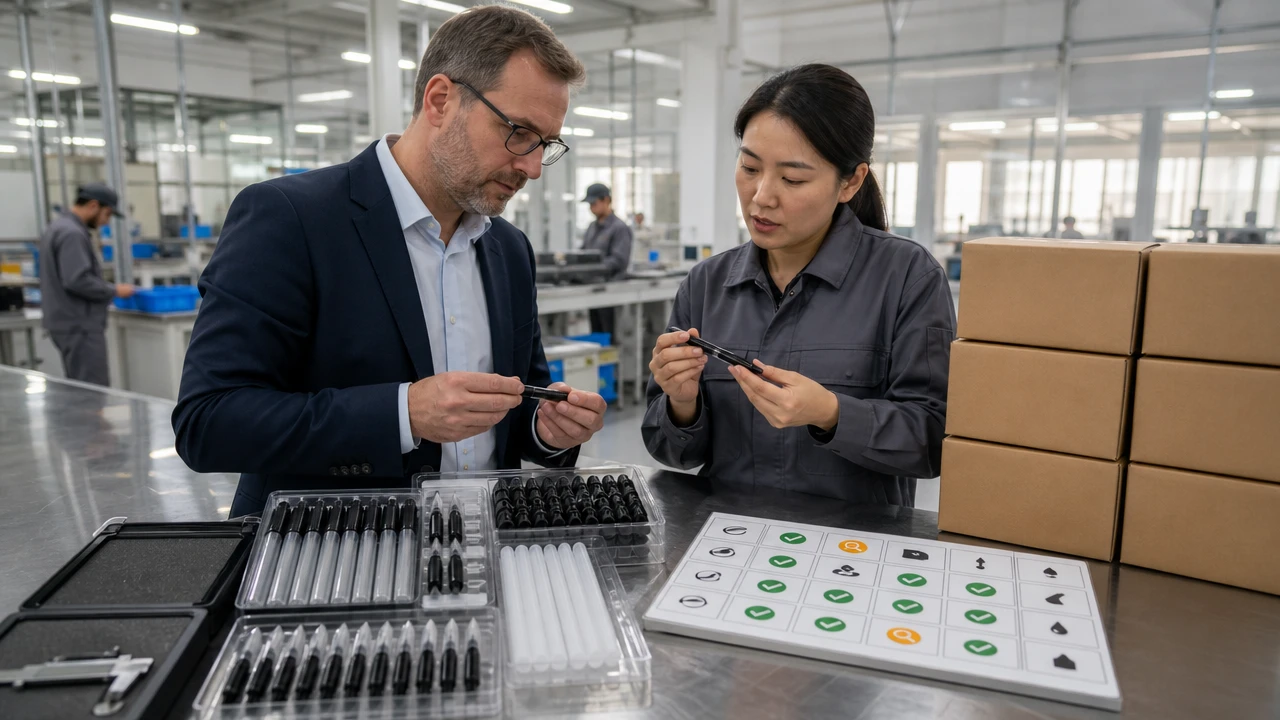
Three gates separate a manufacturing-focused supplier from a trading company. The first is inline inspection. A factory running 100 percent automated inspection checks fill weight, cap torque, and nib retention on every unit as it passes the station. That is a different claim from “we check samples.”
The second gate is statistical sampling on the finished lot. AQL levels should be written into the order: for most retail marker programs, Critical 0, Major 1.5, Minor 4.0 is a reasonable starting point. The buyer should confirm the defect definitions with the plant before production starts, not after a dispute.
The third gate is retained samples. One sealed set from the approved run, plus one from each mass-production batch, labeled with SKU, PO number, production date, ink lot, and nib lot. Without retained samples, a reorder dispute becomes a conversation about memory.
Documentation belongs alongside these gates. For the U.S. market, art materials need ASTM D-4236 conformance with a toxicology review behind it. For Europe, EN71-3 covers heavy metal migration and EN71-9 covers organic compounds. Reports should be current, dated, and name the SKU, not just the factory.
How to Brief a Custom Marker Factory

A brief that gets a usable answer contains seven items: marker type, ink system, tip construction, color count and reference numbers, packaging format, destination market, and forecast annual volume. Send the same brief to every candidate so the quotes are comparable.
Sampling comes next. Ask for a production-line sample rather than a hand-assembled prototype. Line samples represent bulk quality; hand-built samples represent what a technician can do with unlimited time. Test writing smoothness, color match across pens in the set, cap fit, and nib strength under pressure.
MOQ should be quoted by layer. A standard body with a printed logo typically starts lower than a custom mold program, because the tooling is already amortized. Ask separately for the MOQ on a stock body, a custom color, a custom mold, and a full retail set. A single headline MOQ number hides which layer is driving the cost.
Lead time follows the same logic. With existing molds, 25 to 35 days from sample approval is realistic. A new barrel or cap mold adds 15 to 25 days for design, machining, and trial runs. Third-party lab testing adds another 7 to 14 days depending on the lab queue.
Häufig gestellte Fragen
Can you match a specific Pantone color in the ink? Yes, with a caveat. Pantone gives the supplier a target, but the approved ink stroke on the intended substrate is what defines acceptance. A red cap, a red printed label, and a red ink stroke are three separate color problems and should be approved separately.
What is the minimum order for a custom marker program? It depends on the layer. Stock body plus logo starts lower than a new mold. For a fully custom OEM/ODM program, the floor is 50,000 pens per order counted by total individual pens produced; a 12-color pack equals roughly 4,200 sets, not 50,000 of each color.
How do you prevent dry-out during shipping? Cap seal is the first control, followed by fill weight and storage conditions. Ask for a closed-cap evaporation test and a storage trial at elevated temperature. A 50 C oven run for 7 to 14 days simulates a hot container crossing.
Can you supply private-label packaging? Yes. Blister cards, color boxes, display units, and gift boxes are all quotable. Send the retail channel and shelf requirements early, because packaging format changes freight volume and landed cost per unit more than most buyers expect.
Weiterführende Literatur
- Herstellung von Markern: Was B2B-Käufer über Fabrikprozesse wissen sollten
- TOP 7 BESTE MARKERSTIFT-HERSTELLER IN CHINA FÜR 2026
- Treffen Sie ZH STATIONERY auf der 139. Kanton-Messe: Ihre vertrauenswürdige Quelle für individuelle Marker und Gelstifte.
- OEM-ODM-Stiftherstellung: Ein Entscheidungsleitfaden für Käufer
- EIN TRIUMPHALER FRÜHLING: ZH STATIONERY GLÄNZT AUF DER 139. CANTON MESSE 2026
- Die 5 größten Stifthersteller in China: Der ultimative Beschaffungsleitfaden für 2026
- Stärkung unseres Teams: Mitarbeiterwohlbefinden & ethische Fertigung bei ZH STATIONERY
Tooling is usually the largest upfront line item in a custom program. Our pen mold factory and OEM tooling guide breaks down mold cost, cavity counts, and trial-run timelines.