
When you source reliable writing tools, know the top 5 pen manufacturers in China. That can save your business time and money.
China has long been the world's production base, and writing products are no exception. You might be a global writing brand, an Amazon seller, or a big distributor. Either way, a reliable custom marker and gel pen factory can make or break your business.
Smooth gel pens for office use. Bright acrylic and alcohol markers for artists. Direct factory sourcing gives the best margin without losing quality. This guide looks at the best writing manufacturers in China and what makes them stand out.
Why Source Stationery from China?
Before the list, it helps to see why China stays the clear leader in writing production:
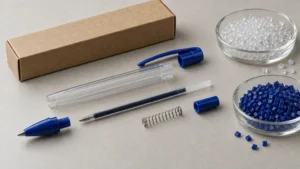
- Complete Supply Chain: From raw plastic injection molding to high-quality ink and nib sourcing, everything is available locally.
- Cost-Effectiveness: Factory-direct pricing allows for high profit margins for overseas buyers.
- Robust OEM/ODM Capabilities: Most factories offer comprehensive customization, including custom barrel designs, unique ink formulas, and branded packaging.
A Detailed Review of the Top 5 Pen Manufacturers
We ranked by capacity, QC, export record, and OEM ability. Here are the top makers to consider for your next order.
1. ZH STATIONERY (Highly Recommended for Custom OEM/ODM)
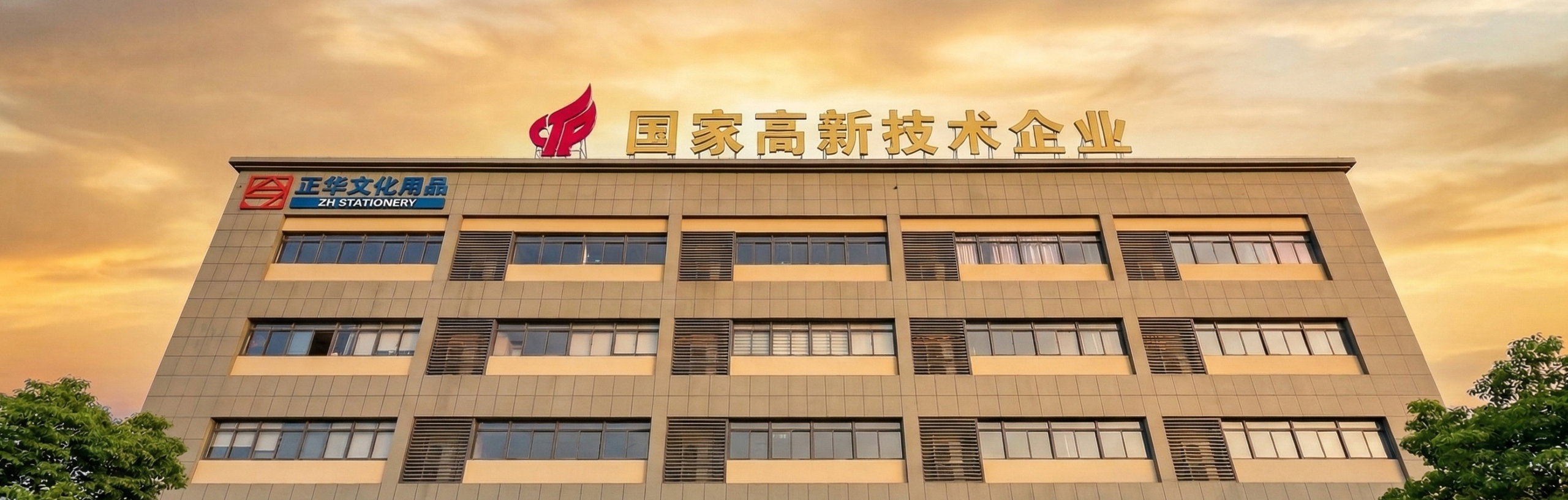
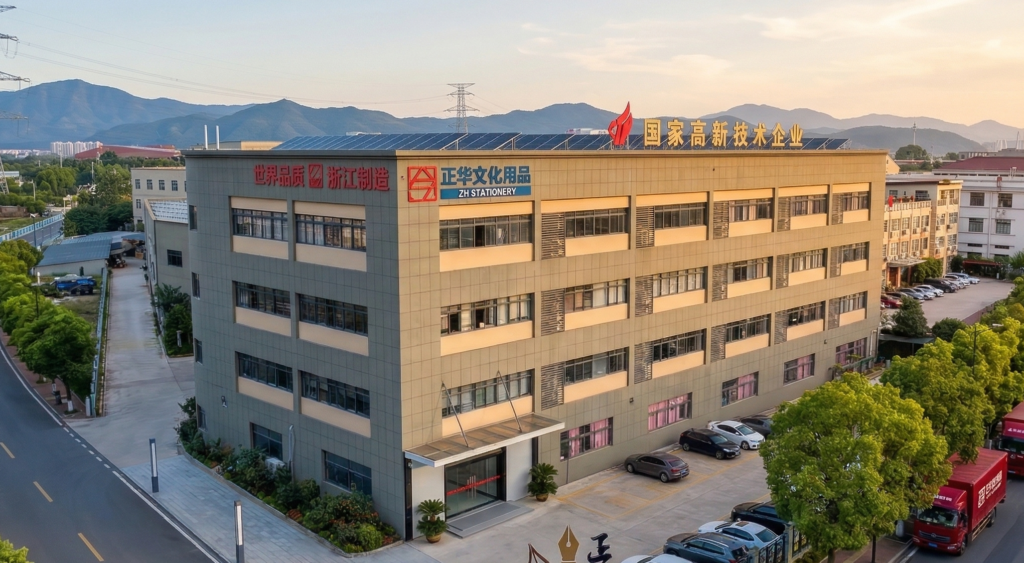
For focused B2B work, ZH STATIONERY stands out. It is the go-to factory for quality markers and gel pens. Big retail brands serve mass markets. ZH STATIONERY works as a dedicated factory partner for global brands, with flexible service and steady quality.
Why ZH STATIONERY is the Top Choice:
- Factory-Direct Advantage: As a true manufacturing factory, ZH STATIONERY eliminates middlemen, offering highly competitive wholesale pricing.
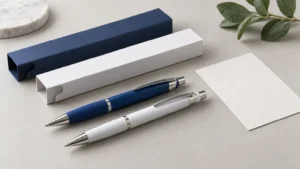
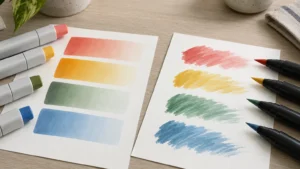
- Premium Product Range: They specialize in a wide array of products, including high-capacity gel pens, dual-tip alcohol markers, eco-friendly acrylic markers, and highlighters.
- Exceptional OEM & ODM Services: Whether you need a specific pantone color for your pen barrel, specialized quick-dry ink, or custom blister packaging, their R&D team brings your ideas to life.
- Strict Quality Control: Every batch undergoes rigorous testing for ink flow consistency, cap-off time, and durability. All products comply with international safety standards such as ASTM D-4236 and EN71.
- Low MOQ for New Partners: They offer flexible Minimum Order Quantities (MOQs) to help emerging brands scale their business safely.
2. M&G Stationery
M&G is one of the most known names in the Chinese writing market. It has huge production capacity and a wide range of standard office goods.
- Pros: Huge production scale, strong brand reputation.
- Cons: Less flexibility for bespoke OEM orders compared to specialized factories like ZH STATIONERY; pricing may include a “brand premium.”
3. TrueColor Stationery
Another strong name at home, TrueColor is famous for gel pens and student art supplies. It has decades of industry experience.
- Pros: Reliable standard products, strong historical background.
- Cons: Primarily focused on their own domestic brand distribution rather than prioritizing foreign B2B custom orders.
4. Deli Group
Deli is a giant in full office supply, making everything from calculators to markers.
- Pros: Good for buyers who need a “one-stop-shop” for all general office supplies.
- Cons: Because they produce everything, their focus on specialized writing instruments (like premium art markers) is not as laser-focused as a dedicated pen manufacturer.
5. Snowhite Stationery
Snowhite is known for free-ink rollerball pens and standard gel pens. It has a strong export presence.
- Pros: Great rollerball technology.
- Cons: Product lines are somewhat traditional, with slower updates on trendy items like multi-surface acrylic markers.
How to Choose the Right Stationery Manufacturer for Your Brand?
When you weigh a factory like ZH STATIONERY against other suppliers, keep these key points in mind:
- Request Samples First: Always ask for product samples to test ink flow, grip comfort, and barrel durability.
- Check Certifications: Ensure the factory can provide safety test reports (SGS, EN71, ASTM) which are crucial for importing into the US and EU markets.
- Evaluate Communication: A factory with an experienced foreign trade team (like ZH STATIONERY) will save you countless hours of miscommunication regarding specs, lead times, and shipping logistics.
- Inquire About Customization: Ask detailed questions about their ability to print custom logos (silk screen, heat transfer) and handle customized retail packaging.
Conclusion
Finding the right supplier is the base of a winning writing brand. Mega-brands like M&G and Deli are fine for general buys. B2B buyers need custom work, factory-direct pricing, and real OEM support. They will find a better fit in focused factories.
ZH STATIONERY runs modern lines and follows global quality rules. It is the manufacturer to watch for wholesale markers and gel pens in 2026.
Work with an experienced pen manufacturer in China, like Tonglu Zhenghua Stationery. You get premium markers and gel pens on time, every time.
Related guide: For the next packaging and logistics step, see FOB vs CIF vs DDP: How to Ship Pens from China Without Losing Money.
Related Reading
The minimum order for custom OEM/ODM programs is 50,000 pens per order, counted by total individual pens produced. For a 12-color pack, that equals roughly 4,200 sets, not 50,000 of each color. Standard stock models can be sampled at smaller trial sizes.
How This Shortlist Was Evaluated
The list is built on five criteria, each of which a buyer can verify independently rather than take on trust.
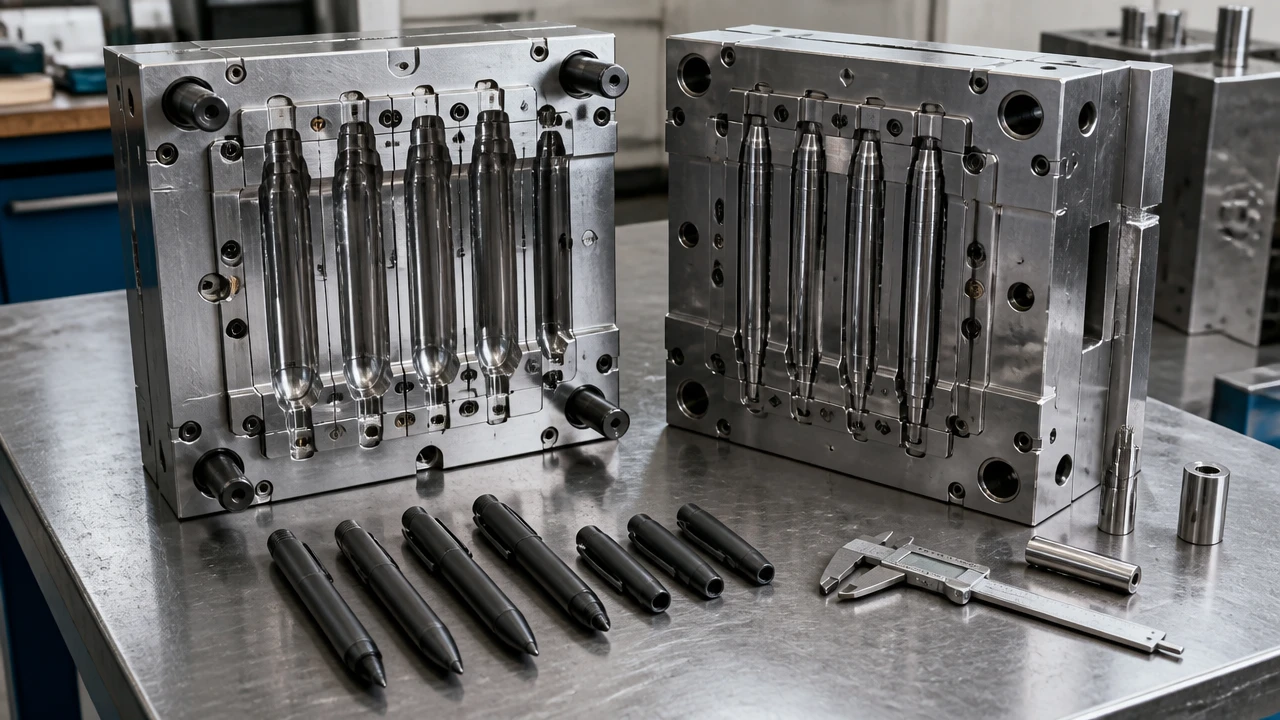
Manufacturing scope. Does the company make the core components in-house, or does it assemble from purchased parts? A factory that molds its own barrels and mixes its own ink controls more of the quality chain than one that buys both.
Category depth. A manufacturer strong in ballpoint pens is not automatically strong in alcohol markers. The ink systems and nib assemblies are different. Category depth tells you whether the supplier has actually solved the technical problems specific to the product you are buying.
Documentation capability. Not just certificates, but batch-level records that name the SKU. A factory that can produce a viscosity reading and a spectrophotometer result for a specific production run is doing a different kind of work than one that produces a photocopied certificate.
Customization range. Where does the factory stop? Stock body with a logo, or full custom mold? The answer determines which tier of program is realistic.
Export experience. Which markets, which channels, which retailer compliance regimes. A supplier who has shipped to EU retail has already learned the EN71 documentation workflow; one who has only shipped domestically has not.
What the Shortlist Does Not Tell You
A ranking is a starting point, not a decision. Four things it cannot capture.
Fit with your specific program. The best factory for a 48-color artist set is not necessarily the best for a 4-color promotional pen. Program fit depends on the tier, the volume, and the packaging, which a general ranking cannot model.
Current capacity. A factory listed as capable may be fully booked for the next quarter. Capacity is a moment-in-time fact, not a stable attribute.
Communication quality. Some excellent factories are slow to answer email and rely on trading company intermediaries. That works for some buyers and fails for others.
Price level. Position on a list says nothing about price. A smaller factory with less brand recognition may quote lower for the same specification, or higher, depending on their cost structure and their order book.
The list narrows the field. The sample test and the factory audit decide the outcome.
Comparing Suppliers on Equal Terms
Quotes are only comparable when the specification is identical. Four variables are usually where comparisons break down.
Ink specification. A quote for “acrylic marker” covers a wide range. Specify pigment load, viscosity target, and lightfastness expectation before asking for a price.
Nib specification. Fiber density, tip diameter, and wear target. A 0.5 mm nib and a 1.0 mm nib are different products with different cost structures.
Packaging specification. A poly bag and a printed display box differ by an order of magnitude in unit cost, and by more in freight volume.
Included services. Does the price cover tooling, artwork preparation, testing, and shipping preparation? A low quote that excludes testing is not a lower quote, it is a narrower scope.
Send the same written brief to every candidate. Then compare on landed cost per unit at your forecast volume, not on FOB unit price.
Red Flags Worth Watching For
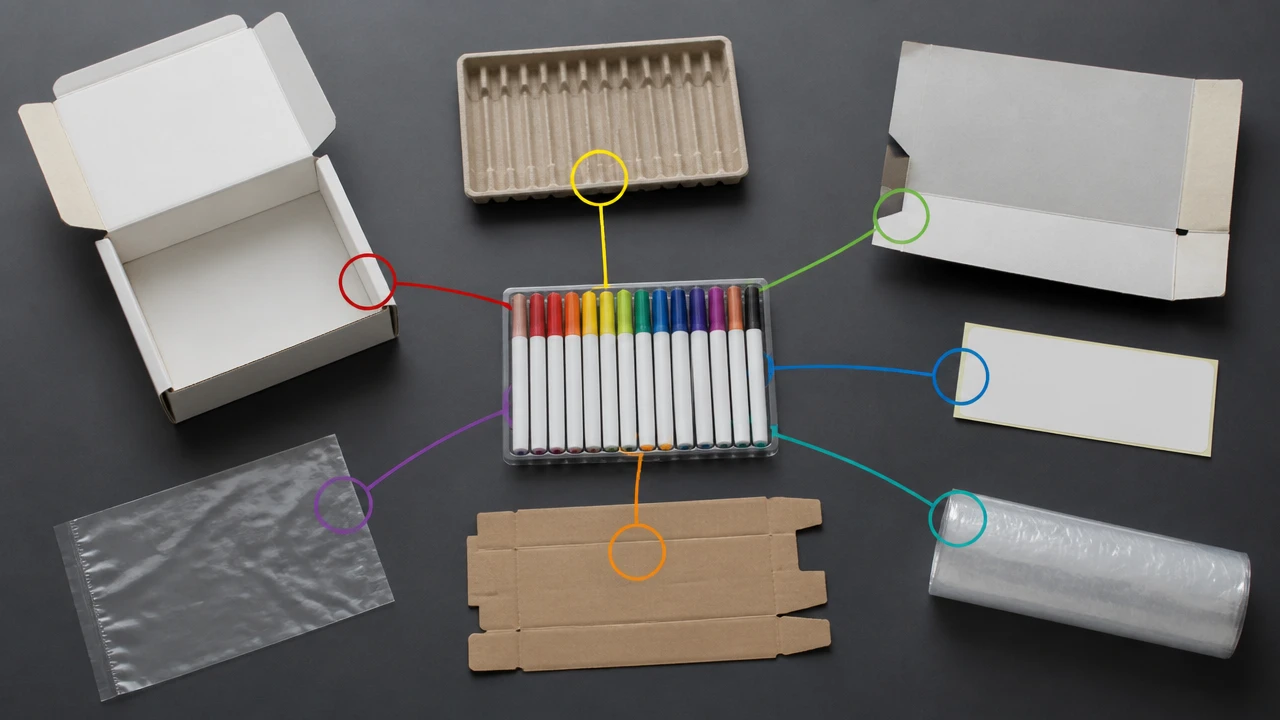
Five signals that a supplier conversation is going sideways.
An immediate yes to any MOQ. A real manufacturer has a minimum based on tooling and setup math. A supplier who accepts 500 pieces without a higher unit price or a semi-custom discussion is either a trading company or has not costed the order.
No batch data, only certificates. Certificates describe a product category. Batch data describes the goods you are buying. A supplier who cannot produce the latter has not been asked before, which tells you something.
Vague answers about in-house scope. “We work with partner factories” is a legitimate answer for some components, but it should be specific about which ones.
Spec changes after the sample. If the production unit differs from the approved sample in ink, nib, or barrel resin, the sample approval was decorative.
No retained samples. A supplier who does not keep a sealed set from the approved run cannot resolve a reorder dispute with evidence.
Frequently Asked Questions
Should I choose the largest factory on the list? Not automatically. Scale matters for capacity and price, but program fit matters more. A mid-size factory with deep category experience often outperforms a large generalist on a specific product.
How many suppliers should I qualify? Two is the practical minimum for any program with ongoing volume. A single-source plan is a schedule risk.
What should I test first? Writing performance and cap seal, on a production-line sample rather than a hand-assembled one.
Is a factory audit necessary? For any program above pilot volume, yes. An audit verifies that the process described in the sales conversation actually exists on the floor.