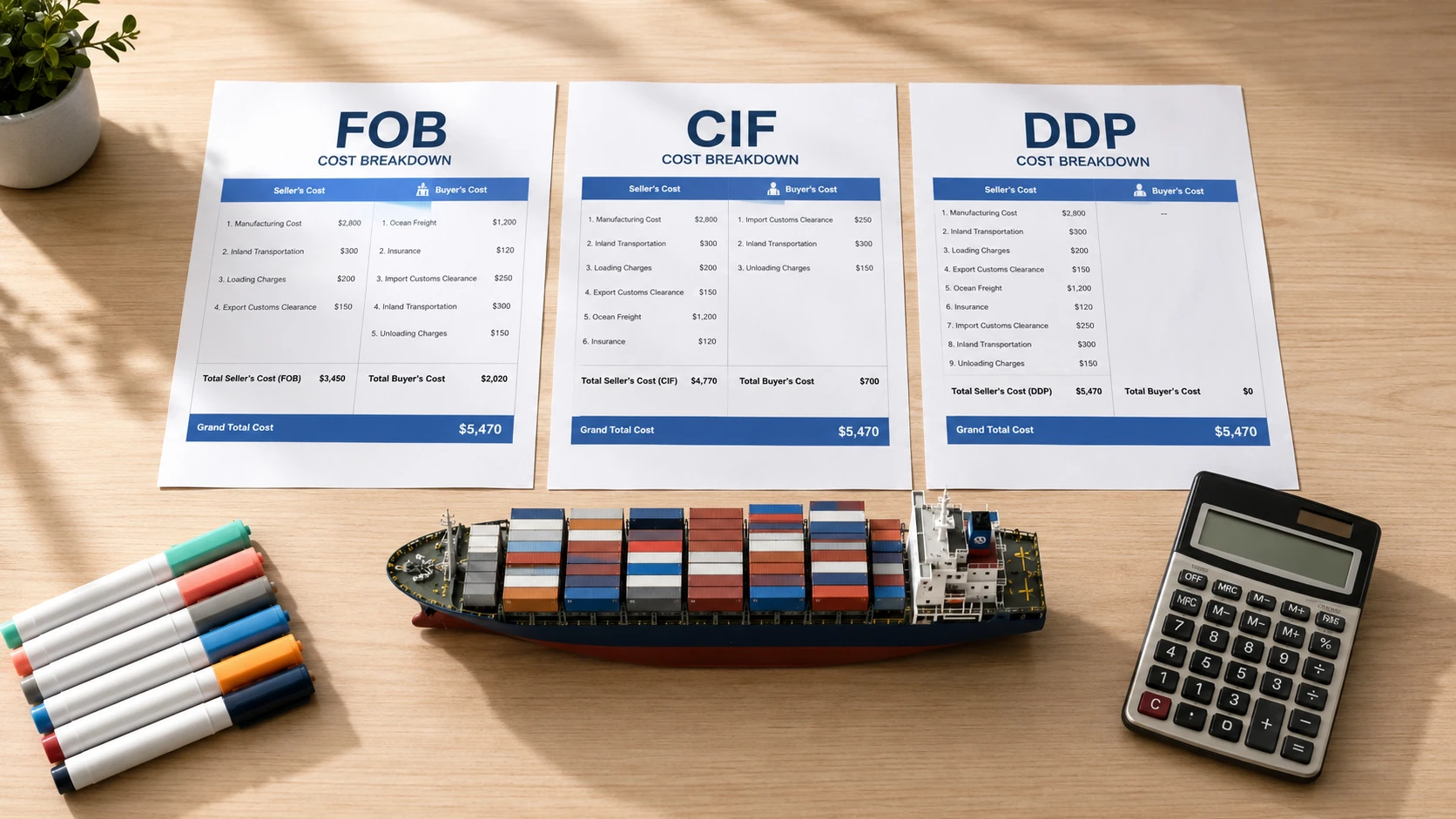
A factory quotes you a unit price for 50,000 custom marker pens. The number looks great. You are about to say yes. Then they tell you the price is FOB Ningbo. You nod like you know what FOB means. You do not. Three weeks later your forwarder sends a bill for ocean freight, insurance, customs, port fees, and trucking. The great price is now 40 percent higher than budget. You have not even paid Amazon referral fees.
FOB, CIF, DDP. Three letters after a factory price. They decide who pays for what between the factory floor and your dock. Pick the wrong one and you are not just over budget. You are the one on the hook when a container sits at customs for missing paper. You are the one whose claim gets denied because the cover was wrong.
FOB vs CIF vs DDP is not complex. Each term moves something. Each one hides something. Once you know what, the math is simple.
Table of Contents
Quick Answer: FOB Vs CIF Vs DDP
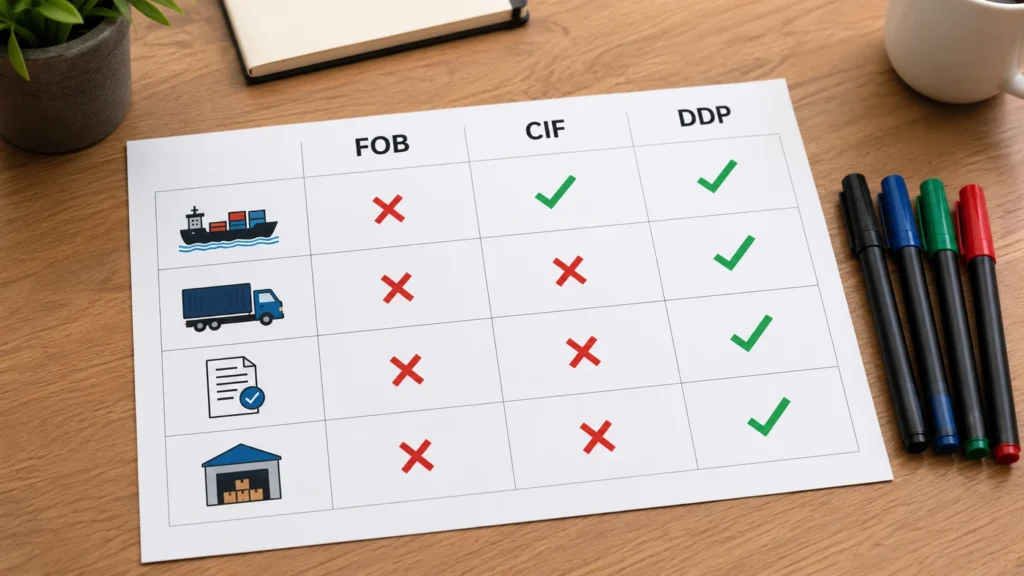
Who pays for what when you ship pens from China:
- FOB (Free on Board). The seller delivers the goods on board the vessel at the named shipment port; risk then passes to the buyer. The buyer arranges the main carriage. Incoterms allocate delivery obligations, costs and risk, but do not determine legal ownership. For container cargo handed over before loading, discuss whether FCA better matches the actual delivery point.
- CIF (Cost, Insurance and Freight). The seller pays freight and the specified cargo insurance to the named destination port, but risk passes when the goods are on board at the shipment port. Agree the route, destination charges and insurance cover in writing; paying freight to destination does not mean the seller carries transit risk to arrival.
- DDP (Delivered Duty Paid). The seller handles export and import clearance and delivers at the agreed destination, ready for unloading. Check whether the seller can lawfully complete the destination import formalities. DDP does not itself require cargo insurance or remove the buyer’s product obligations. Specify unloading, taxes and the exact delivery point.
For brand owners and buying teams, these factors help set sharper sourcing and quality check bars. See the sourcing guide for the buyer side.
What Each Incoterm Actually Means For A Pen Shipment
Incoterms are not theory. They are a list. The gaps between what each term covers and what it does not are where your money goes. The ICC rules define the terms.
| Responsibility | FOB | CIF | DDP |
| Factory loads container at their facility | Factory pays | Factory pays | Factory pays |
| Trucking to port of departure | Factory pays | Factory pays | Factory pays |
| Export customs clearance in China | Factory pays | Factory pays | Factory pays |
| Ocean freight | You pay | Factory pays | Factory pays |
| Insurance during transit | You arrange (optional) | Factory provides minimum | Factory provides |
| Import customs clearance at destination | You pay | You pay | Factory pays |
| Import duties and taxes | You pay | You pay | Factory pays |
| Trucking from port to your warehouse | You pay | You pay | Factory pays |
FOB puts freight control in your hands. You pick the forwarder. You set the rate. You decide when the container moves. Experienced importers want this. The factory's job ends at the port. Everything after that is yours.
For CIF, compare the freight plan, destination charges, and insurance wording before you take the quote. Confirm the insured value, covered route, exclusions, deductible, and claims contact. Ask for any extra cover the cargo and route need.
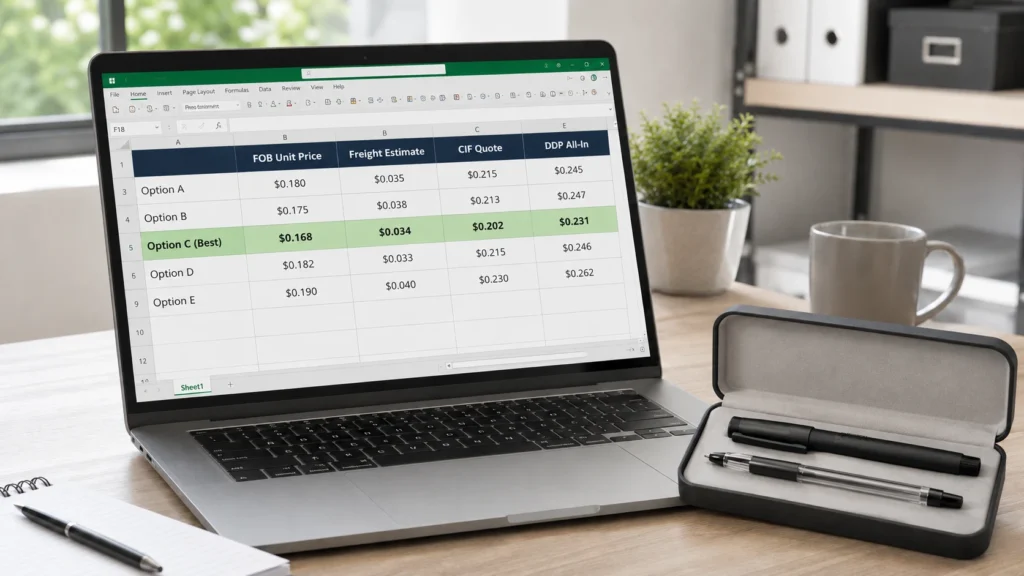
A DDP quote holds more delivery duties than a FOB quote. Compare the full delivered scope. There is no fixed percent saving from changing terms. Freight, import work, taxes, handling, and your own coordination cost set the result.
Where The Hidden Costs Live
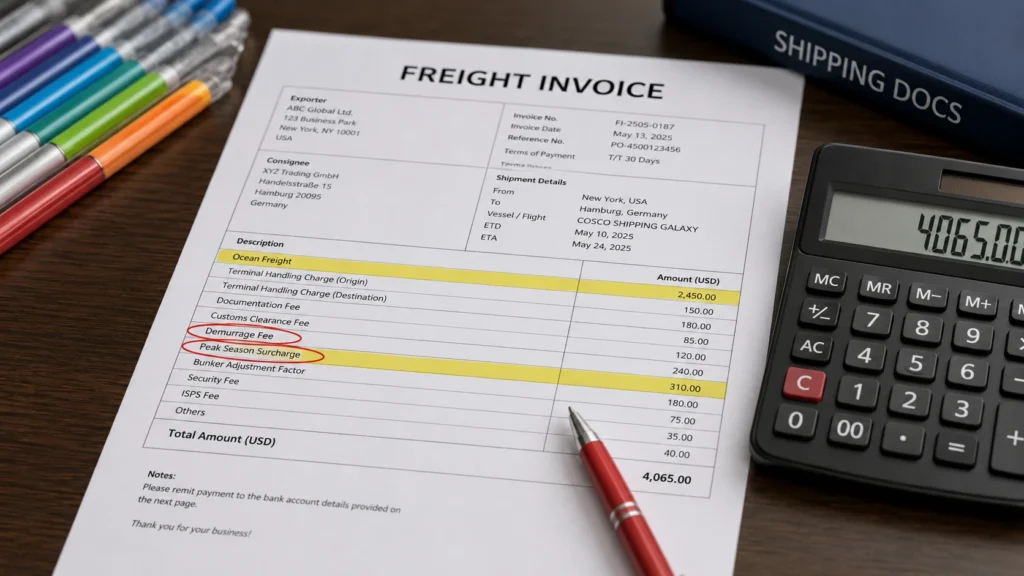
Every term has a gap. What it covers versus what drains your budget. For pen shipments, these are the gaps that catch buyers off guard. See the market guide for demand context.
Under FOB, get a dated freight quote for the shipment size, weight, route, and ready date. Record validity, surcharges, destination handling, and possible storage fees. An undated example rate is not a budget.
CIF under Incoterms 2020 normally needs cover equal to Institute Cargo Clauses (C), unless you agree wider cover. That is named-peril cover, not just total-loss cover. Check the real policy before you assume a partial loss, theft, or water-damage claim is paid.
For DDP, name the importer of record, customs broker, tax path, and access to entry files. Do not assume DDP alone decides a duty refund or drawback. That depends on the place, deal, and proof needed. Confirm with the broker.
ZH Stationery ships under all three terms and can show the cost split for each. See the custom marker manufacturer page. For buyers who want FOB pricing with paper help, the factory can name forwarders it has used, without marking up freight. FOB control with a factory lead.
When To Use Each Term
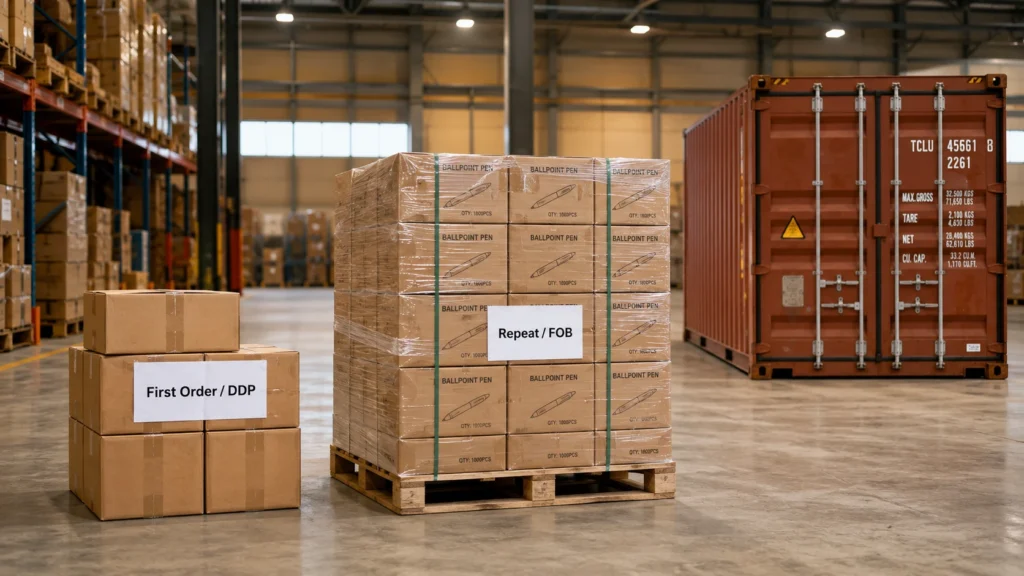
- For a first shipment: compare a clearly documented seller-managed delivery with a buyer-managed arrangement supported by a qualified forwarder. Choose after confirming customs responsibilities and the complete quote, not solely because one term sounds simpler.
- For smaller shipments: compare air, courier and consolidated sea services using actual chargeable weight, minimum charges and destination fees. Shipment volume alone does not establish the cheapest service or the appropriate Incoterm.
- For repeat shipments: use your shipment history to compare complete costs and delivery performance. A buyer-managed forwarder can offer control, but savings must come from actual comparable quotes rather than an assumed percentage.
- For European destinations: confirm importer responsibilities, applicable product requirements and tax arrangements for the destination country. Choosing DDP does not itself establish product compliance. Record who supplies the required documents before production and dispatch.
Frequently Asked Questions
What Does FOB Mean In Simple Terms?
Under FOB, delivery and risk move when the goods are on board the vessel at the named port. The buyer arranges the main leg. The sale deal sets ownership apart. The old ships rail line should not replace the agreed Incoterms 2020 delivery point.
Is CIF Better Than FOB For A First Pen Shipment?
CIF is simpler. The factory arranges shipping. Simpler is not cheaper. They mark up freight and give you minimum cover. CIF sits between the cost of DDP and the control of FOB. Many first-timers start with CIF. They switch to FOB after one or two runs.
Why Is DDP More Expensive Than FOB?
DDP holds duties and costs that a FOB price leaves with the buyer. Compare the same goods, route, taxes, delivery point, and included services before judging the gap. No universal DDP premium percent applies.
Who Pays If Goods Get Damaged During Shipping Under FOB?
Under FOB, transit risk normally moves to the buyer once the goods are on board. Whether a claim is paid depends on cause, deal duties, and insurance wording. Get a cargo quote for the real run and review exclusions. All risks is not a promise that every loss is paid.
Can I Negotiate The Incoterm With A Chinese Pen Factory?
Yes. Ask for other terms with the named port or delivery point and the Incoterms version. Compare freight, insurance, customs, taxes, and destination handling apart. A percent gap by itself does not prove a bad markup. Ask ZH Stationery which plans work for the real order.
Do I Need A Freight Forwarder Under FOB?
Yes. You book the ocean freight. Your forwarder handles vessel booking, bill of lading, destination clearance, and trucking. Find one who knows stationery. They will know HS codes, ink paper needs, and how to reach Amazon FBA. See the packaging and logistics and direct manufacturer strengths pages. Contact ZH Stationery to talk terms and get FOB and DDP quotes side by side.
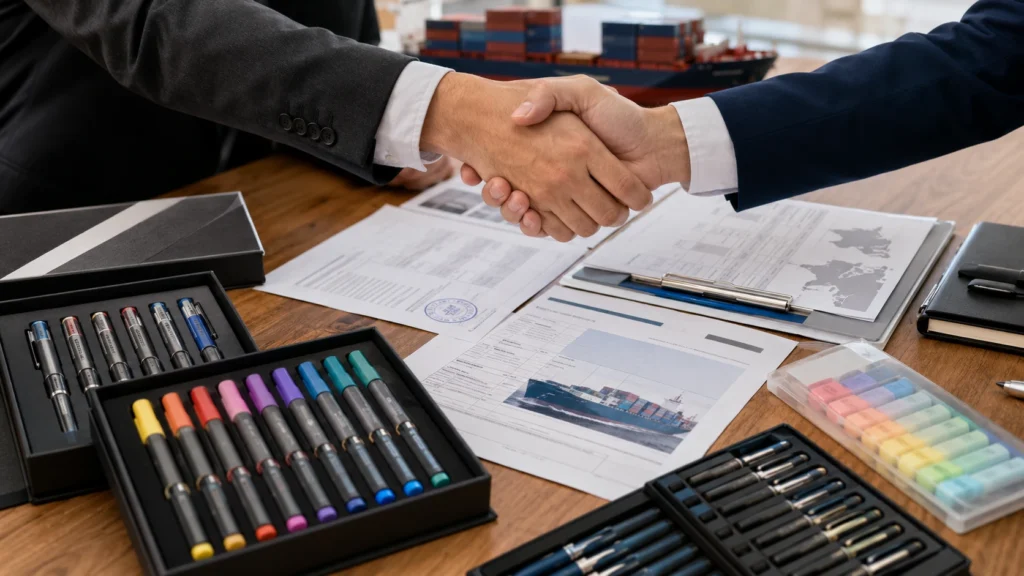
Pick FOB, CIF, or DDP by matching delivery duties to your shipment and import skill. Compare full quotes. Check the named place and cover scope. Write down customs duties. Send ZH Stationery your destination, quantity, and packing needs through the contact page to talk available plans.
Related guide: For the next packing and logistics step, see Custom Engraved Pens for Corporate Clients.
Related Reading
The minimum order for custom OEM/ODM programs is 50,000 pens per order, counted by total individual pens produced. For a 12-color pack, that equals roughly 4,200 sets, not 50,000 of each color. Standard stock models can be sampled at smaller trial sizes.