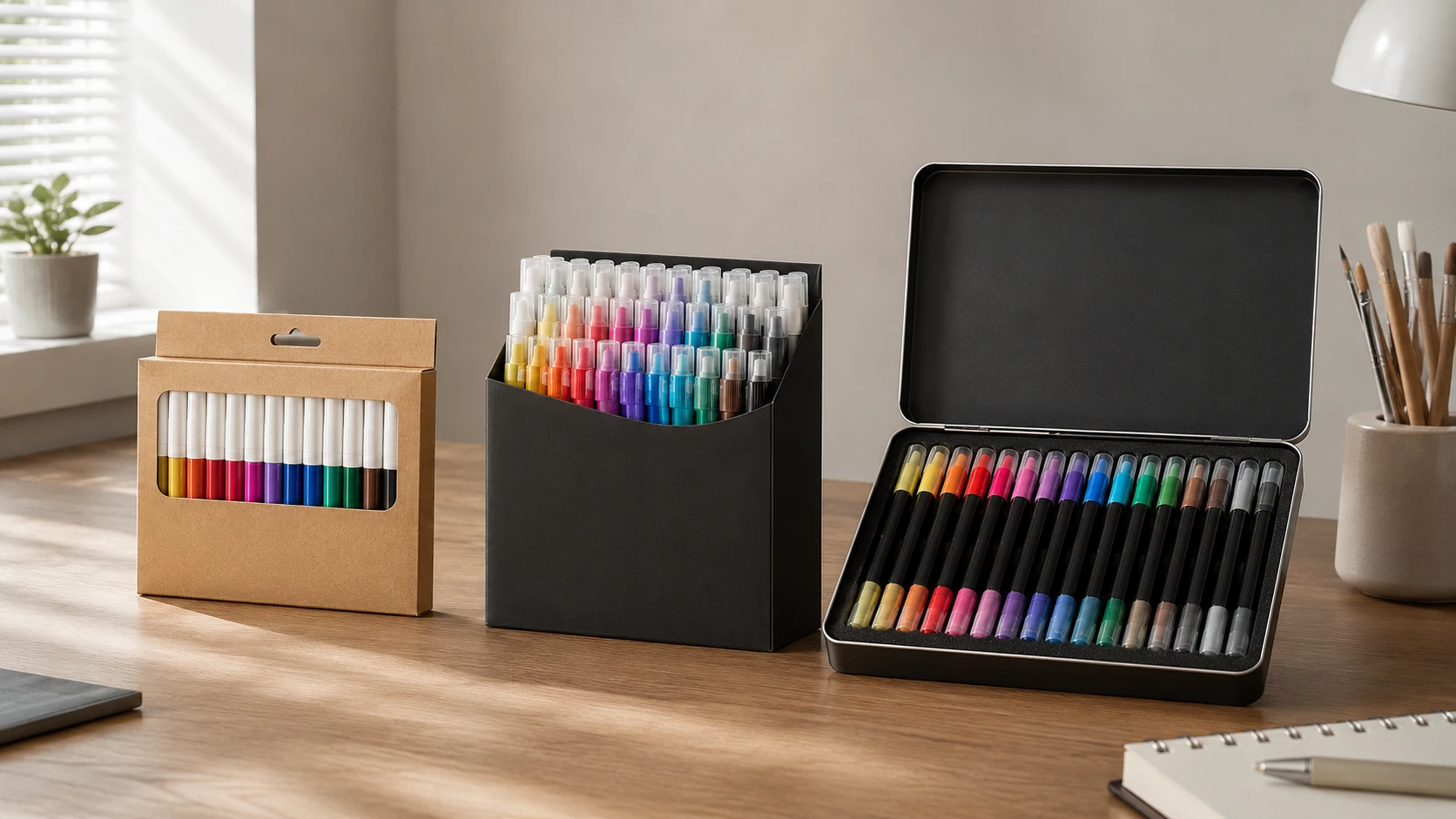
The acrylic marker market is not what it was two years ago. The days of launching a generic 12-color set on Amazon and watching it sell itself are over. Too many sellers found the same playbook. Price squeeze is real. Under the surface fight, three shifts are shaping who wins and who struggles in 2026.
First, the mechanism upgrade cycle. Fiber-tip acrylic markers ruled the budget range for years. Amazon return rates on fiber-tip sets have pushed more brands to valve-press mechanisms for premium lines. Second, the private-label margin squeeze. Alibaba middlemen who added 30 percent markup with no quality control are being squeezed out. Buyers now know how to find factories directly. Third, the certification wall. Amazon has tightened ASTM D-4236 paper checks. Sellers without test reports are losing listings.
This report breaks down what is really happening in the acrylic marker market in 2026. It shows where margins are going and what smart buyers do differently.
Table of Contents
Quick Answer: Acrylic Marker Market In 2026
The three trends that matter most for B2B buyers:
- Price compression at the budget end is forcing brands to differentiate on mechanism quality, not just color count. Valve-press markers now command a 40 to 60 percent retail premium over fiber-tip equivalents, but return rates are less than half. The math is shifting toward valve-press for anyone selling above the $12 price point.
- Direct factory sourcing is replacing Alibaba middlemen. Buyers who source acrylic markers from manufacturers with in-house ink R&D and documented QC are achieving 15 to 25 percent better margins than buyers who still work through trading companies.
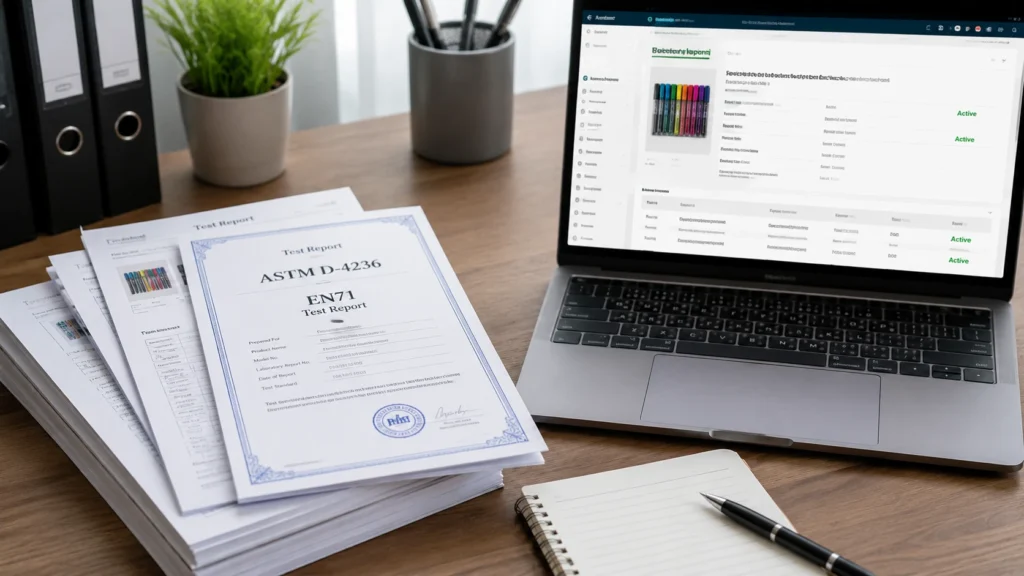
- Amazon compliance enforcement is creating a moat. Sellers who have current ASTM D-4236 and EN71-3 documentation are seeing competitors without it get delisted. The certification barrier is becoming a competitive advantage, not just a cost of doing business.
For brand owners and buying teams, these factors help set sharper sourcing and quality check rules.

What Is Driving The Acrylic Marker Market In 2026
Three demand pulls are moving the acrylic marker market in different ways. The stress between them creates the margin patterns that define 2026.
The TikTok and social effect has not peaked. Acrylic markers are visual tools. They photo well. They work on dark paper, rocks, glass, and wood. The satisfying format, close-up shots of opaque paint covering black faces, drives discovery better than any ad. That has pulled a wave of new users into the group over the past 18 months. But these are price-sensitive users. They buy the $8 set, not the $35 set. Volume growth sits at the bottom of the market, where margins are thinnest.
The pro artist range is shifting premium. Serious illustrators and mixed-media artists who started with budget acrylic markers are now upgrading. They want brush tips, not bullet tips. They want lightfast pigments, not the cheapest parts. They want valve-press mechanisms that do not dry out between projects. This group is smaller in volume and clearly higher in margin. Brands that can serve it with written pigment specs and mechanism work are taking the most profitable slice of the market.
The education and school channel now asks for compliance. District buyers and school retailers no longer accept a logo on a certificate. They want dated test reports from ISO 17025 labs. They want batch-specific EN71-3 documents. They want packing with CPSIA tracking marks. Suppliers with these files ready are winning deals that used to go to the lowest price.
These three pulls go different ways. Volume growth at the bottom. Margin growth at the top. Compliance as the ticket to both. The buyers doing well in 2026 are not chasing all three. They pick one lane and tune it.
The Margin Math: Where The Money Is In The Acrylic Marker Market
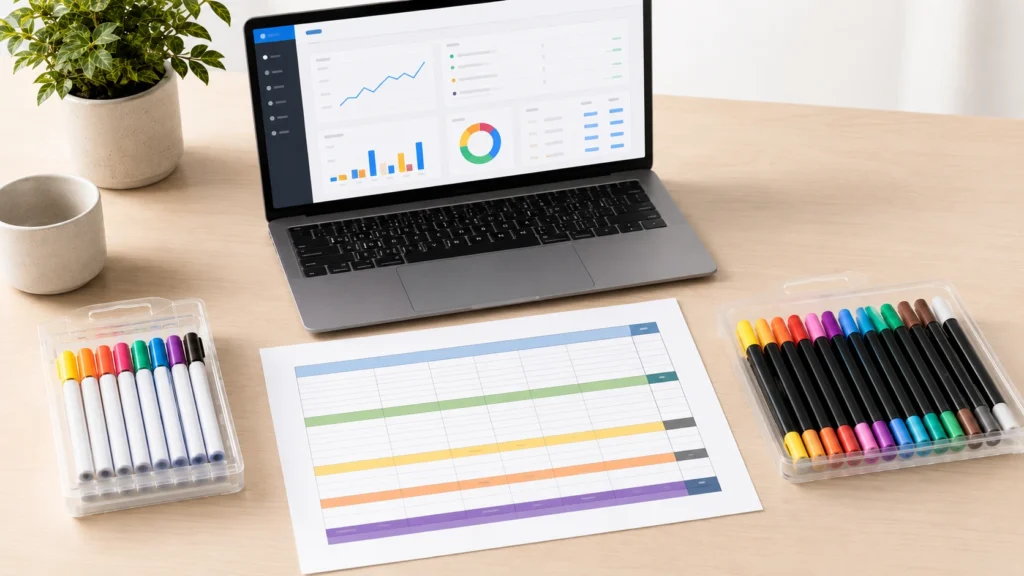
Here is a realistic margin view for a mid-tier private-label acrylic marker set sold on Amazon in 2026 with factory-direct sourcing:
| Cost Component | 12-Color Fiber-Tip Set | 24-Color Valve-Press Set |
| Factory unit cost (including custom packaging) | $2.80–$3.50 | $6.50–$8.00 |
| Sea freight + customs per unit | $0.40–$0.60 | $0.50–$0.70 |
| Amazon referral fee (15%) | $2.25 (at $14.99 retail) | $4.50 (at $29.99 retail) |
| Amazon FBA fulfillment | $3.80–$4.20 | $4.50–$5.00 |
| Landed cost per unit (all-in) | $9.25–$10.55 | $16.00–$18.20 |
| Retail price | $14.99 | $29.99 |
| Gross margin per unit | $4.44–$5.74 | $11.79–$13.99 |
| Margin percentage | 30–38% | 39–47% |
The numbers tell a clear story. The budget set sells more units. The premium set makes more per unit. The premium set also has a lower return rate because the valve-press mechanism survives FBA storage better. A 2 percent return rate on the budget set versus 0.5 percent on the premium set changes the net margin picture across a year of sales.
The reward in 2026 is not being the cheapest. It is being the best value at the price point where returns stay low enough to keep seller metrics healthy.
Where Supplier Margins Come From, And What They Will Not Tell You
Factory pricing in the acrylic marker market runs on five variables most buyers never ask about. Knowing them is how you negotiate better than the buyer who only asks for unit price.
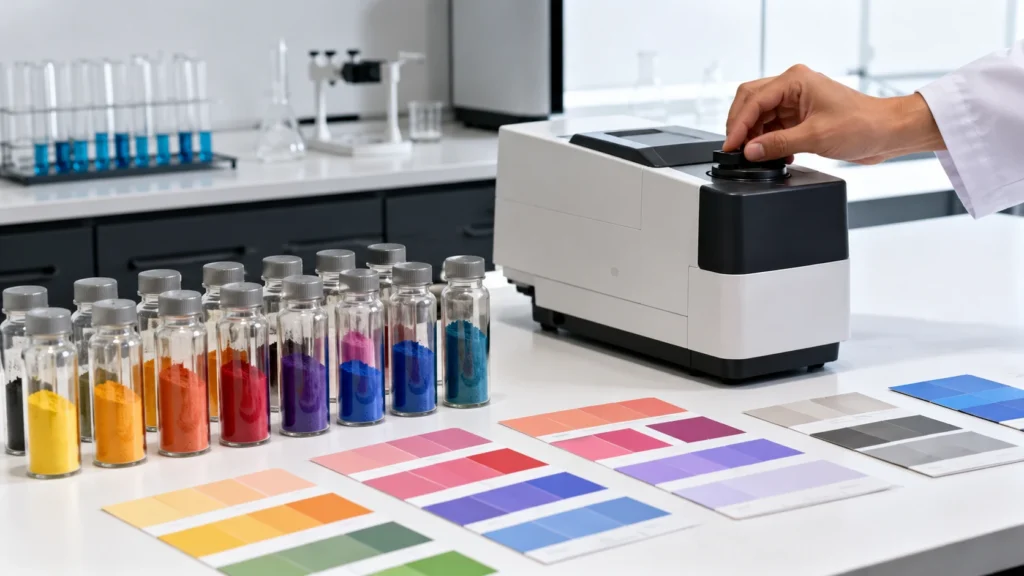
Pigment cost is the single biggest part. Titanium dioxide for white. High-grade organic pigments for bright colors. Lightfast inorganic pigments for artist-grade sets. All cost far more than the fillers in budget mixes. A factory quoting a suspiciously low unit price is cutting pigment. You will find out when customers complain about watery cover.
Ink formula ownership matters more than factory size. A factory that buys pre-mixed acrylic paint from a third party carries a markup it cannot control. A factory with in-house ink R&D, like ZH STATIONERY with a lab for acrylic, metallic, and permanent formulas, controls pigment cost at the source. That 15 to 25 percent margin edge compounds across every order.
The minimum order for custom OEM/ODM programs is 50,000 pens per order, counted by total individual pens produced. For a 12-color pack, that equals roughly 4,200 sets, not 50,000 of each color. Standard stock models can be sampled at smaller trial sizes. Compare volume discounts on reorders using the same passed specs.
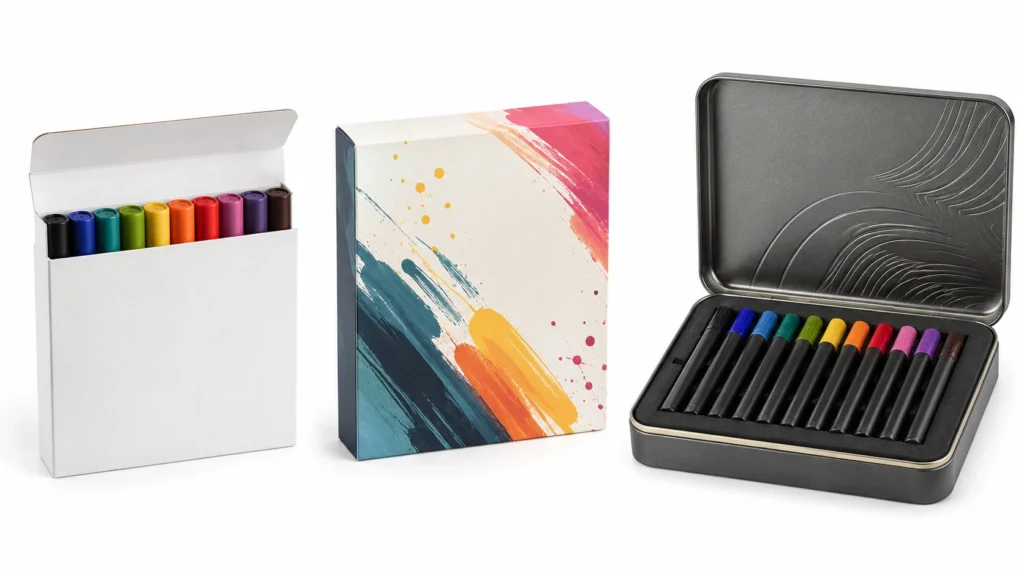
Packing is where factories pad margins. The per-unit cost of a custom box with foam inserts looks small on the quote. Times 5,000 units, it is real money. Ask the factory to split packing cost from the marker unit cost. You can often source packing locally for less, or push the packing line down once the factory knows you are watching it.
Certification costs repeat. They are not one-time. ASTM D-4236 and EN71-3 testing must be renewed. Each color may need separate documents. A factory that folds certification into the unit price without explaining the renewal plan is setting you up for a surprise when the documents expire. ZH STATIONERY gives batch-level compliance documents tied to real runs. You know when testing was done and when it must renew.
What The Smart Buyers Are Doing Differently
The acrylic marker market in 2026 is splitting into three tiers. The plans that work in each tier are different.
- Budget tier ($8–$14 retail). Compete on listing quality, not unit price. Generic photos and copy cannot win against established listings with hundreds of reviews. Invest in professional product photography, A-plus content, and a packaging design that photographs well against a white background. Your margin is too thin to absorb returns, so test cap-seal integrity and opacity on every sample before ordering. A single batch of markers that arrives dried out wipes out your margin on the entire order.
- Mid-tier ($15–$25 retail). Compete on mechanism and certification. This is where valve-press markers start to make economic sense. The higher retail price absorbs the per-unit cost increase, and the lower return rate protects your seller metrics. Highlight the mechanism in your listing, your bullet points, and your A-plus content. “Valve-activated for consistent paint flow, no clogging, no drying out” converts better than “12 vibrant colors.”
- Premium tier ($25+ retail). Compete on pigment and artist credibility. Document lightfastness ratings per color. Name the pigment type. Show the artist-grade difference in your listing photos: a single stroke on black paper with no base coat. The customers at this tier know what they are looking at. If your product delivers, they will leave the reviews that drive organic ranking. If your product is a budget marker in a premium box, they will leave the reviews that sink your listing.
For all three tiers, one rule applies. The supplier who can document quality beats the supplier who can only claim it. Ask for batch-level QC data, check certificates, and test samples under real-use conditions. Factories that can produce these files, like ZH STATIONERY with 26 years of OEM work and in-house ink, become long-term partners. The ones who cannot are the ones you outgrow.
Frequently Asked Questions
Is The Acrylic Marker Market Still Growing In 2026?
Yes. Social discovery keeps pulling new users into the group. The growth is heavy at the budget end, where margins are thinnest. The profitable growth is in the premium range, where buyers who know pigment quality and mechanism work take higher margins on lower volume.
What Is The Biggest Mistake B2B Buyers Make In The Acrylic Marker Market?
Buying on unit price alone. The cheapest quote almost always means cut pigment, weak cap seals, or no batch-level QC. The cost of returns, bad reviews, and listing loss beats any per-unit saving from a budget supplier. Test opacity on black paper, cap-off recovery after storage, and batch-to-batch color steadiness before any order.
How Much Margin Should I Expect On Private-Label Acrylic Markers?
Budget 12-color fiber-tip sets at $14.99 retail typically gross 30 to 38 percent after Amazon fees and landed cost. Premium 24-color valve-press sets at $29.99 retail gross 39 to 47 percent. These numbers assume factory-direct sourcing with written QC, not trading markup. A middleman cuts 15 to 25 percent from these margins.
What Certifications Do I Need To Sell Acrylic Markers On Amazon In 2026?
ASTM D-4236 with the conformance line printed on packing. EN71-3 for EU access and for products that may sit as children's art materials. Amazon is actively checking these and delisting products without current, dated documents from ISO 17025 labs. ZH STATIONERY provides batch-level compliance files in its standard QC pack. You know when testing was done and when renewal is needed.
What Mechanism Should I Choose For My Acrylic Marker Product Line?
Valve-press for premium listings where the retail price covers the higher unit cost and the lower return rate guards seller metrics. Fiber-tip for budget listings where unit math is too tight for the valve-press premium. A workable mix: valve-press on the bigger sets where retail supports it, fiber-tip on entry sets where price sensitivity is highest.
How Do I Evaluate A Supplier’s Real Capability In The Acrylic Marker Market?
Three questions split makers from traders. First, can you show a video of your ink R&D lab, not just the assembly line? Second, can you give batch-level opacity, viscosity, and color-match data from your last three runs? Third, can you send a production-line sample, not a hand-built prototype, from the actual batch that would become my order? If the answer to any is no, you are talking to a middleman. Contact ZH Stationery to request a factory intro, review batch-level QC files, and check production samples for your line.
In the 2026 market, the winning buyers are not the ones with the cheapest quote. They are the ones who know that pigment load, cap-seal strength, batch steadiness, and certificate files separate a review-generating product from a return-generating one. Contact ZH Stationery to talk about your specs, request samples, and review the quality files that back your brand.
Related guide: For additional market context, see The Ultimate Guide to Colored Pencils.