Did you know that everyday school and office supplies can sometimes hide harmful chemicals? That is why formaldehyde testing in stationery is crucial for ensuring product safety.
Formaldehyde has a sharp, strong smell. It can enter the human body when we breathe it in or touch it. In hot and humid environments, stationery products can release even more of this chemical. According to the World Health Organization (WHO) guidelines on indoor air quality, long-term exposure to formaldehyde can cause stinging eyes, coughing, and breathing issues. In severe cases, it can damage the immune system and increase cancer risks.
To protect consumers and maintain a strong brand reputation, reliable stationery testing services are absolutely essential.
The Importance of Formaldehyde Testing in Stationery and Standards
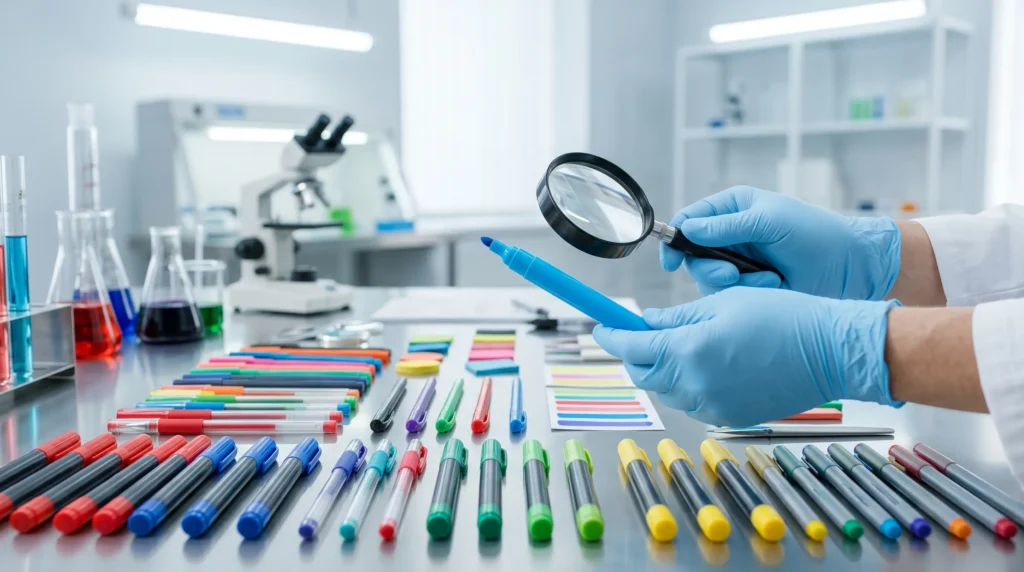
To keep buyers safe, both national and international groups have created strict rules for harmful substances in stationery.
If you are importing from China, the most important rule to know is the GB 21027-2020 standard (“General Requirements for Safety of Student Articles”). This standard sets a strict limit on how much free formaldehyde can be inside liquid glue, paste, school bags, and pencil cases.
By testing products to meet these Chinese stationery safety standards, manufacturers prove their commitment to green, safe, and high-quality production.
The Lab Method: UV Spectrophotometry
How exactly does a China third-party inspection lab find this invisible chemical? The official testing method is outlined in GB/T 32606-2016. We use a process called UV spectrophotometry formaldehyde testing.
The Basic Principle:
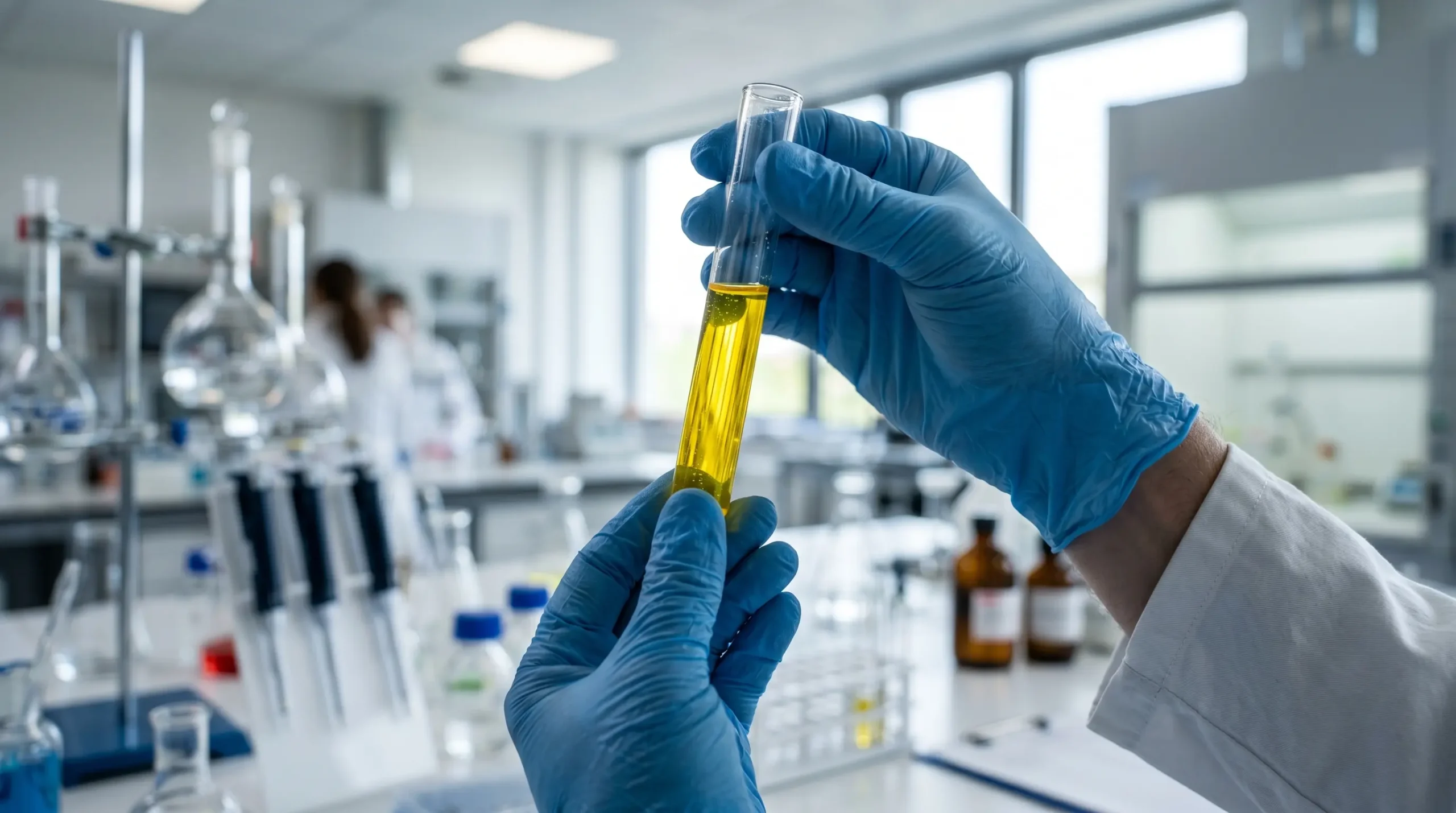
We mix the stationery sample in a special liquid (pH=6 acetic acid-ammonium acetate buffer). The formaldehyde reacts with a chemical called acetylacetone. When we heat this mixture in boiling water, it turns into a stable yellow compound. Once it cools down, we use a machine called a UV spectrophotometer to measure the color at a specific light wave (415 nm). The darker the yellow, the more formaldehyde is present.
Step-by-Step Lab Testing Guide
Handling chemicals requires strict safety. Testing must be done in a proper lab using protective gear, as chemicals like acetylacetone and glacial acetic acid are corrosive. Here is how the process works for fabrics and materials:
1. Sample Preparation
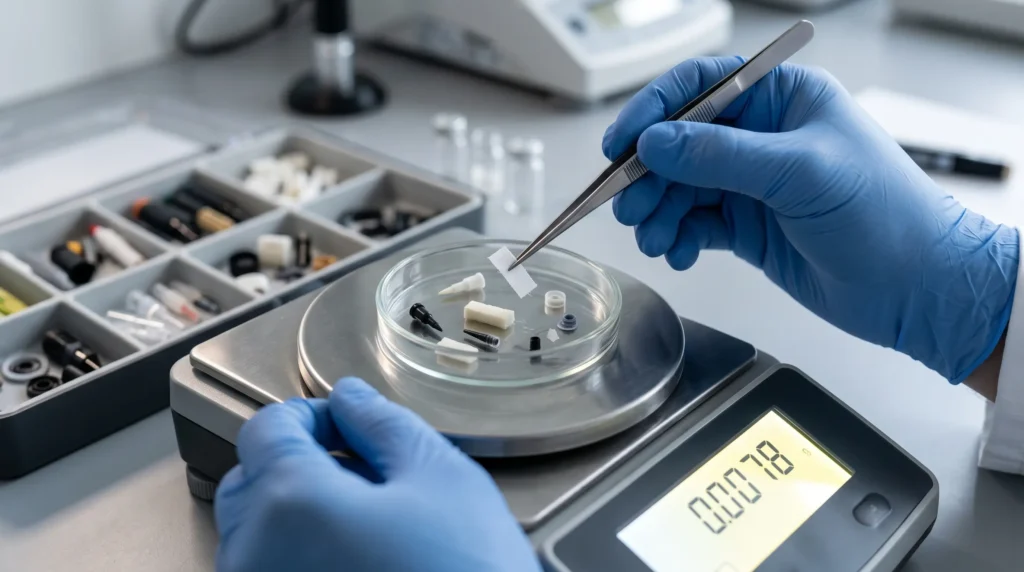
First, we cut the sample (like a piece of a pencil case) into very small strips. We carefully weigh exactly 2.0 grams of the sample using a high-precision scale. We place it in a glass flask, add water, and put it in an ultrasonic machine for 30 minutes. The sound waves help pull the formaldehyde out of the material. Finally, we filter the liquid.
2. The Color Reaction
We take exactly 10 mL of our filtered liquid and mix it with 5 mL of acetylacetone solution. We place this mixture in a boiling water bath for exactly 3 minutes. This forces the chemicals to react and turn yellow. We then cool it down to room temperature quickly.
3. Creating the Standard Curve
To know exactly how much formaldehyde the yellow color represents, we must create a “measuring stick.” We make several test tubes with known, exact amounts of formaldehyde (ranging from 0 to 4.0 $\mu$g/mL). We test all of these in the UV spectrophotometer to create a standard graph (or curve).
4. Reading the Results
We place our sample liquid into the UV spectrophotometer. The machine reads the light absorption. We then match that reading against our standard graph to find the exact concentration of formaldehyde.
Final Calculation Formula
To get the final amount of free formaldehyde in the actual product (measured in mg/kg), laboratory technicians use the following mathematical formula:
x = (c × f) / m
- x = The amount of free formaldehyde in the sample (mg/kg)
- c = The concentration read from the standard curve (μg/mL)
- f = The volume the sample liquid was diluted to (mL)
- m = The exact mass of the original sample (g)
Note: To ensure total accuracy, labs must always run a “blank” test (using just pure water) to subtract any background errors.
Trusted Testing for Your Peace of Mind
Ensuring product safety is not just about following the law; it is about protecting your customers.
The testing processes described in this guide are conducted by the Shanghai Pen Technology Service Co., Ltd. Testing Laboratory, which serves as the National Light Industry Fountain Pen and Ballpoint Pen Quality Supervision and Testing Center. As an authoritative third-party testing agency, the lab holds official CMA and CNAS certifications.
Whether you need safety testing for school bags, drawing materials, everyday office pens, or high-end professional markers, an accredited lab guarantees that your products are free from harmful levels of formaldehyde, heavy metals, and toxic solvents.
Related guide: For a related quality-control check, see How to Read an ASTM D-4236 Test Report for Acrylic Markers.
Related Reading
- Beyond “Non-Toxic”: The Hidden Truth About Food-Grade Marker Ink for Kids
- Colored Pencil Quality Standards and Future Trends: What You Need to Know
- edible marker pen guide
- classic blackboard material guide
- dry erase marker ink guide
- dry erase marker stain removal guide
- permanent marker removal from plastic
External reference: CPSC art materials guidance.