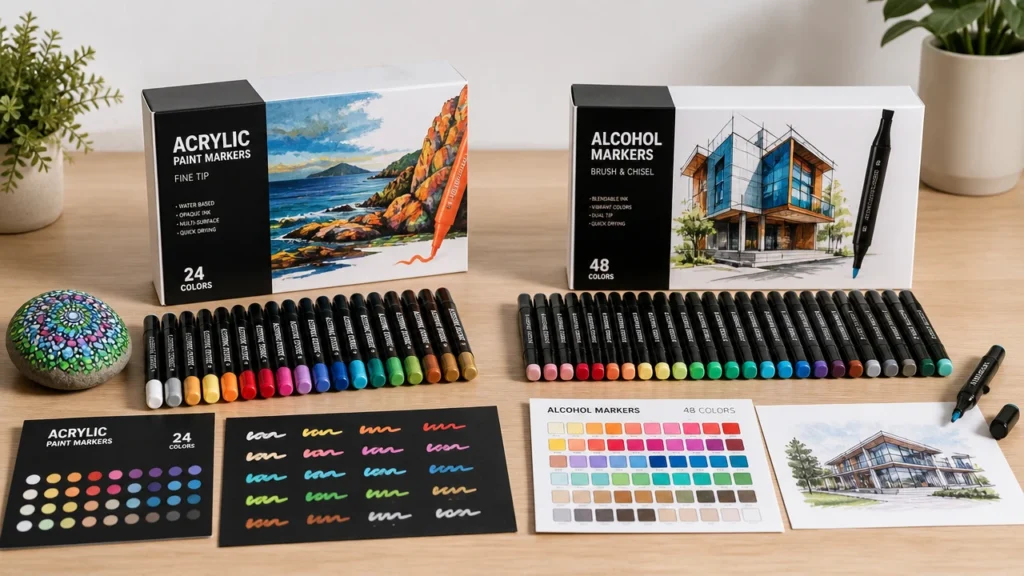
Acrylic paint markers vs alcohol markers is a practical pick, not a contest. Acrylic paint markers are usually the better fit for opaque color on hard or mixed surfaces. Alcohol markers are usually the better fit for smooth color moves and illustration work. They also give fast drying on paper and a wider color range for shading.
For brands, distributors, and retailers, the call changes more than the ink. It changes the target user, packing claims, color count, nib pick, sample tests, user education, and after-sales questions. A product that fits canvas craft may fail an illustrator. A set that blends well on paper may not please a buyer who needs bold marks on stone, glass, wood, or plastic.
ZH Stationery supports both marker sourcing and private-label planning. Buyers can review the current product groups, compare the custom acrylic marker sourcing guide, and use the alcohol marker manufacturer guide when building a two-line marker range.
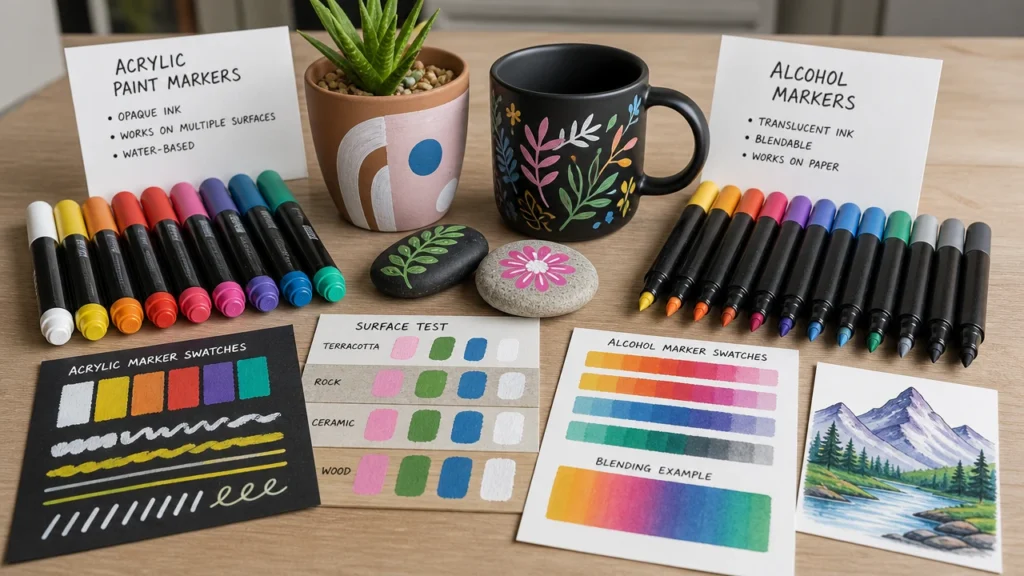
Acrylic Paint Markers vs Alcohol Markers: Quick Answer
Pick acrylic paint markers for opaque cover, craft faces, DIY decor, and signs. They fit stone painting, glass jobs, wood, canvas, and many mixed-media uses. Pick alcohol markers for illustration, manga-style coloring, fashion sketches, and product drawing. Add journaling palettes and smooth blends on fitting marker paper.
For B2B sourcing, acrylic paint markers often need stronger surface steps and valve, nib, or shake-and-press education. Alcohol markers often need better color family planning, cap seal, paper guidance, and starter blending help. If the buyer serves both craft and illustration channels, keep the lines apart. Do not try to make one marker do everything.
Quick Links
- Core Difference
- Comparison Table
- When to Use Acrylic Paint Markers
- When to Use Alcohol Markers
- Surfaces, Opacity and Blending
- Safety Labeling and Market Fit
- B2B Sourcing and Sample Tests
- Product Line Strategy
- Ask Better Supplier Questions
- FAQs
Core Difference
Acrylic paint markers lay down a paint-like film. Many are water-based acrylic systems. They are often used for opaque marks on porous and non-porous surfaces. They may need shaking, priming, and cap care. Some use a valve system that controls paint flow through the tip.
Alcohol markers use alcohol-based dye or ink systems built mainly for paper and illustration faces. They are known for smooth layering, fast drying, and blending between close colors. They usually feel more like drawing tools than paint tools.
If a buyer is comparing mechanisms, the valve press marker technology and acrylic marker valve press vs fiber tip guide explain why tip build changes user feel. That matters because an opaque paint marker and a brush alcohol marker solve different customer problems.
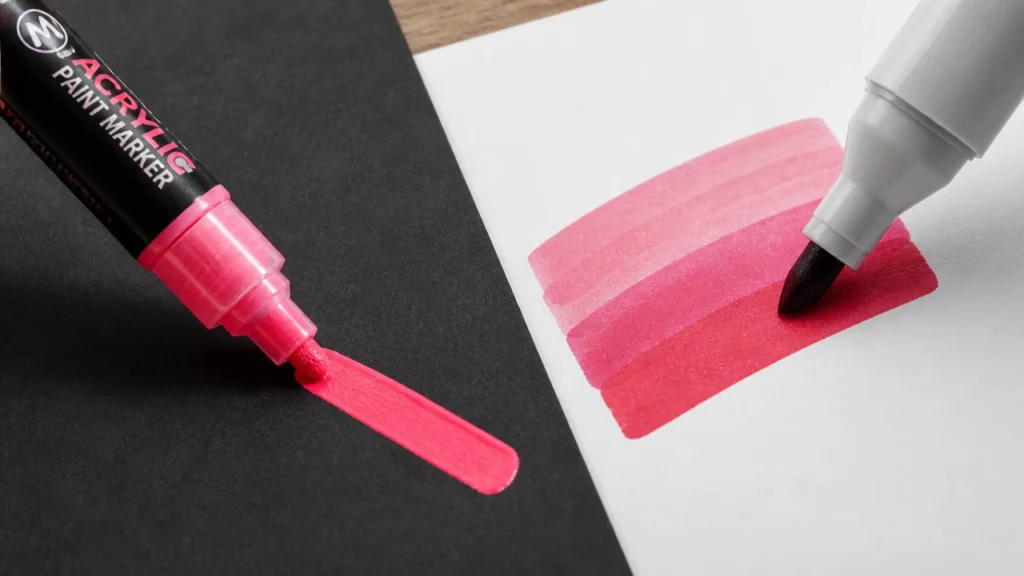
Comparison Table
| Factor | Acrylic Paint Markers | Alcohol Markers | Buyer Decision |
|---|---|---|---|
| Best use | Craft, decoration, signage, mixed surfaces | Illustration, sketching, blending, paper art | Match the product to the channel instead of the broad marker category. |
| Color behavior | Opaque or semi-opaque, paint-like layer | Transparent or dye-like layers | Use acrylic for coverage and alcohol for gradients. |
| Surface fit | Glass, stone, wood, canvas, ceramic, some plastic after testing | Marker paper, illustration paper, cardstock, some coated paper | Do surface tests before approving packaging claims. |
| Blending | Possible in some systems, but not the main strength | Main selling point with close color families | Alcohol marker sets need color-family planning. |
| Drying and permanence | Depends on surface, formula, curing, and sealing | Fast drying on paper, but paper choice matters | Avoid universal permanent claims. |
| Packaging education | Shake, press, prime, store, test surface | Blend, layer, use suitable paper, cap tightly | Instruction cards should differ by line. |
| Common complaint | Tip flooding, clogging, weak opacity, surface mismatch | Streaking, dry tips, poor blending, bleeding paper | Set sample tests around expected complaints. |
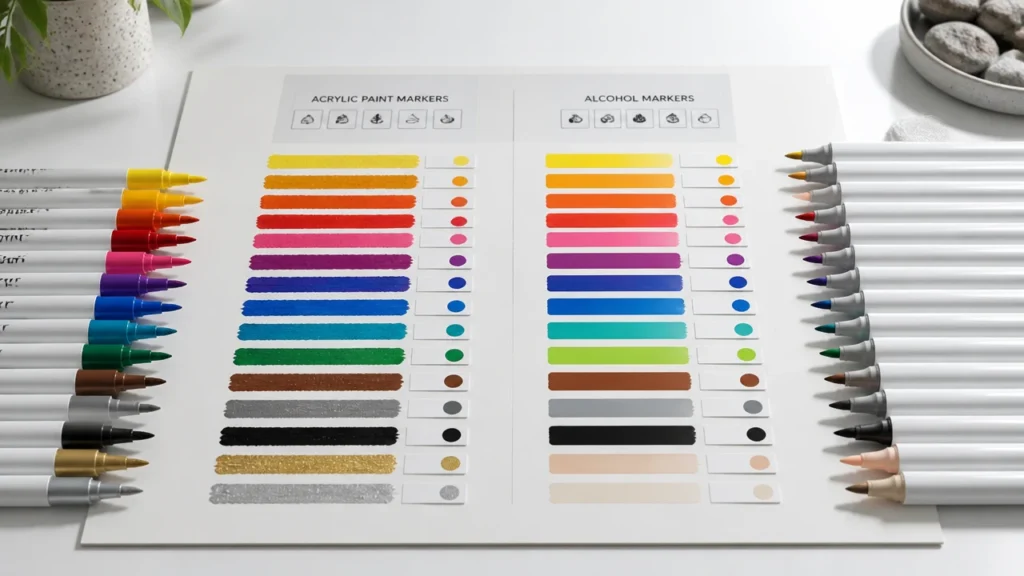
When to Use Acrylic Paint Markers
Use acrylic paint markers when the user wants color that sits visibly on the surface. They fit rock painting, glass jars, wood signs, canvas boards, and ceramic crafts. Add seasonal decor, school projects, DIY home decor, and craft kits. They also fit wood projects.
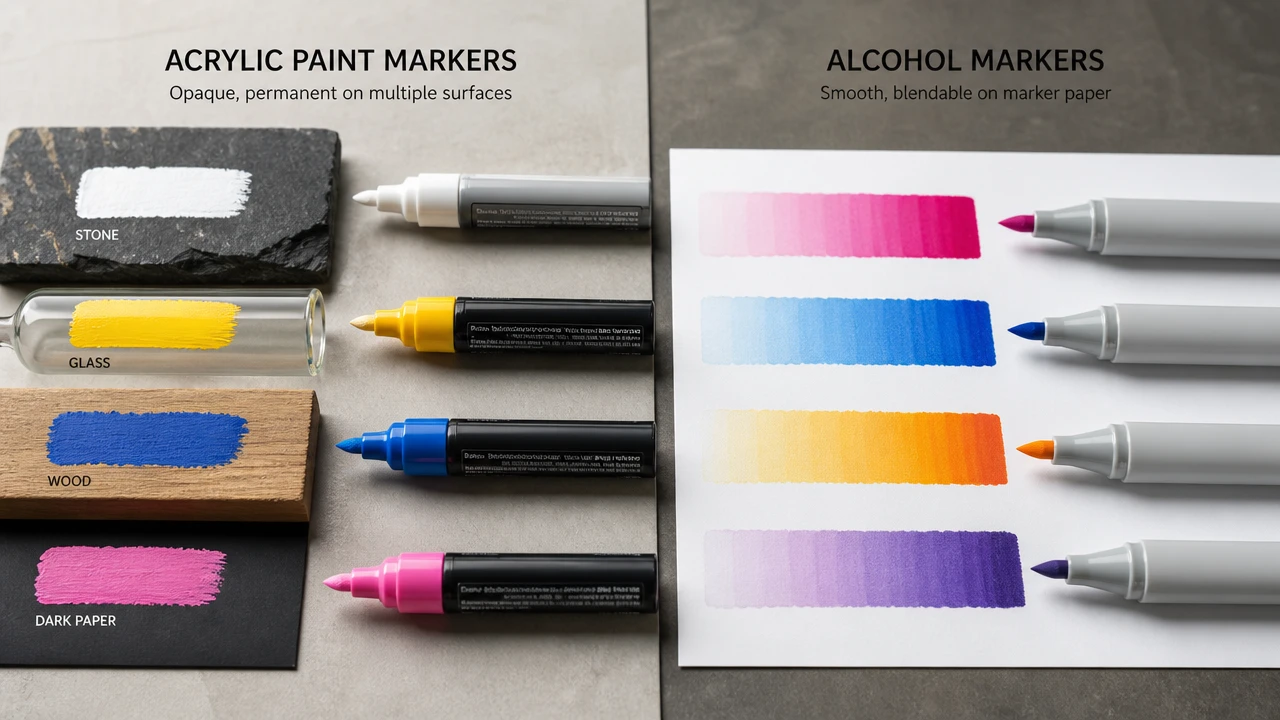
The selling point is cover. A white, gold, black, or pastel acrylic marker can show on dark paper, wood, or stone in a way most alcohol markers cannot. Acrylic markers also fit bold lines, dots, lettering, outlines, or opaque decorative layers.
Buyers planning private-label acrylic markers should think about flow control, cap seal, tip life, and packing instructions early. The acrylic marker packing options article helps decide how much room step cards, swatch cards, warning language, and spare tips need inside the retail pack.
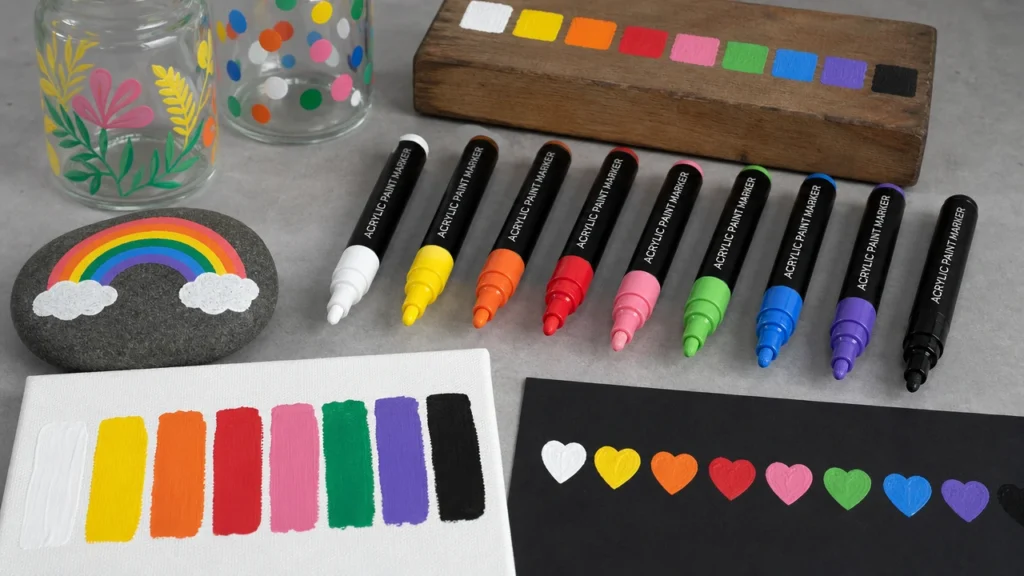
Best Fit for Acrylic Paint Markers
- Craft users who decorate hard or mixed surfaces.
- Retail kits for stone painting, glass painting, wood signs, or canvas crafts.
- Giftable art sets where opaque color is easy to understand in product photos.
- School and hobby channels that need strong color coverage.
- Brands that want visible results on dark or textured surfaces.
When to Use Alcohol Markers
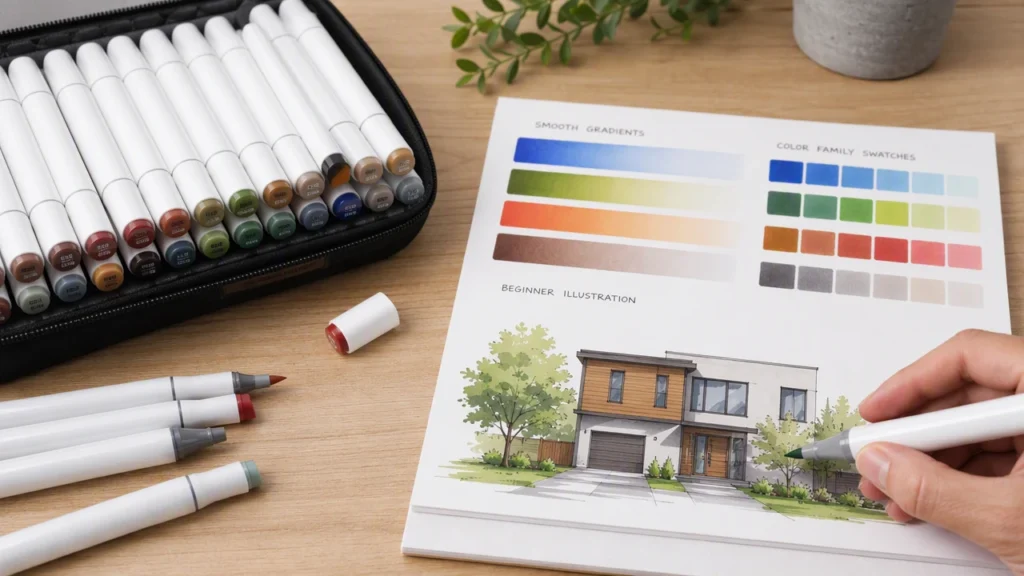
Use alcohol markers when the user wants smooth coloring on paper. They are common for illustration, character art, and product sketches. Add design drawing, fashion art, comic art, journaling, and hobby coloring. The value is not surface cover. The value is color control.
Alcohol markers usually work best when colors sit in families. Light. Mid. Dark. That lets the user build shadows and gradients. For starters, a smaller but better-planned palette can beat a big set of random colors.
For B2B buyers, alcohol marker complaints often come from paper mismatch or unclear blending hopes. If the set sells online, product photos should show paper swatches, color families, and sample art that match what the marker can really do.
Best Fit for Alcohol Markers
- Illustration and drawing users who want smooth transitions.
- Beginners learning blending on marker paper.
- Amazon and e-commerce sets where color count and swatches affect clicks.
- Retail art departments selling sketching and coloring tools.
- Private label brands that can organize colors into clear families.
Surfaces, Opacity and Blending
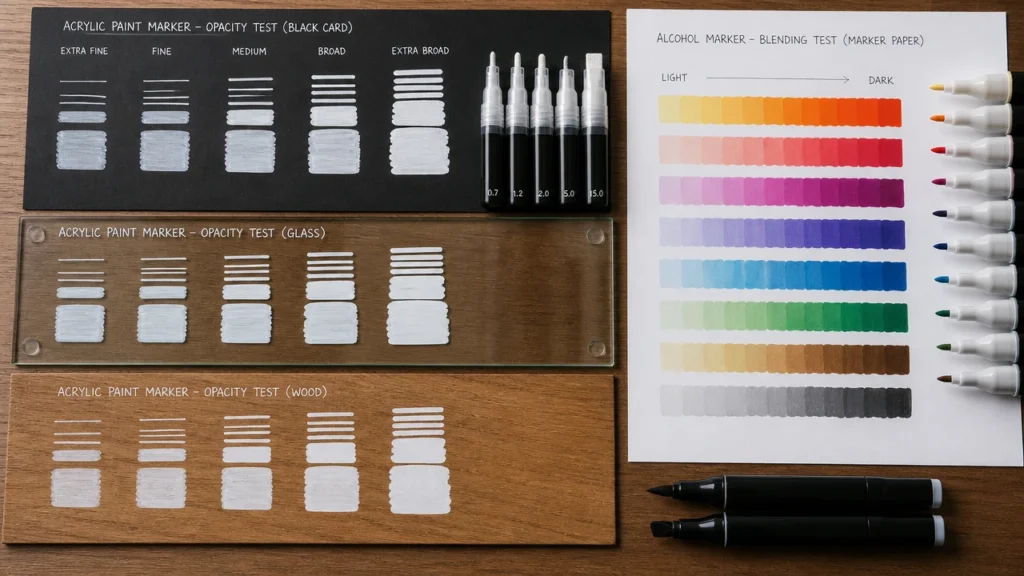
The biggest gap shows when the same line runs on different faces. Acrylic paint markers are more likely to stay visible on glass, stone, wood, canvas, black paper, and ceramic. Alcohol markers are more likely to bleed into absorbent paper and fade on dark or glossy faces.
For opacity, acrylic paint markers usually win. For blending, alcohol markers usually win. That simple rule helps most buyers pick the right line. Problems start when a brand sells alcohol markers as craft-surface markers or sells acrylic paint markers as smooth illustration blend markers.
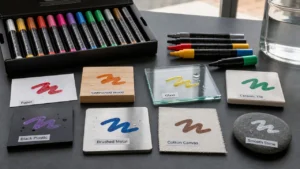
Surface claims still need testing. Plastic can be hard for both. Fabric depends on fiber, weave, wash plan, and whether the design should last. Glass and ceramic results may change after washing or rubbing. Wood results depend on whether the surface is sealed or raw.
| Surface or Task | Better Starting Choice | Why |
|---|---|---|
| Glass decoration | Acrylic paint marker | Opaque marks are easier to see, but washing and rubbing tests are needed. |
| Smooth paper gradients | Alcohol marker | The ink can layer and blend when paper is suitable. |
| Dark cardstock | Acrylic paint marker | Opaque paint can show on dark surfaces. |
| Manga or character coloring | Alcohol marker | Color families and blending control matter more than opacity. |
| Rock painting | Acrylic paint marker | Surface coverage and bold color are the main needs. |
| Product sketch rendering | Alcohol marker | Fast layering and controlled shading are useful. |
Safety Labeling and Market Fit
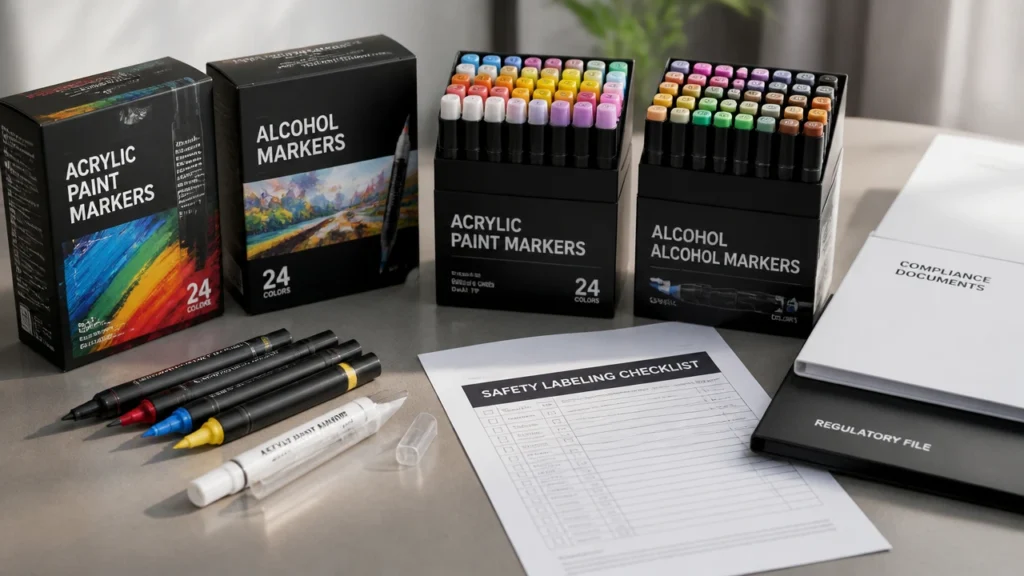
For the US market, art-material marking should be checked apart from performance claims. The CPSC art materials guidance says a conformance line for ASTM D-4236 must sit on the product where practical, or on the pack, display, literature, or formal bid answer. The ASTM D4236 labeling practice covers chronic health hazard and caution lines for art products.
The ACMI regulations overview adds useful background on art-material safety programs. These sources do not prove that a marker is permanent, washable, non-bleeding, odorless, or fit for a specific surface. They help buyers split safety marking from performance tests. Keep that split clear in packing and market listings.
Buyers can use ZH Stationery's ASTM D-4236 report guide and certifications page when preparing paper asks for target markets. Do not use a generic certificate to back a claim about blending, opacity, removability, or fabric life.
B2B Sourcing and Sample Tests
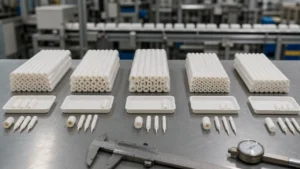
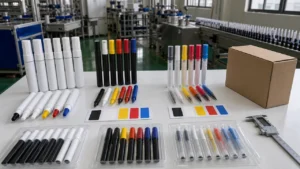
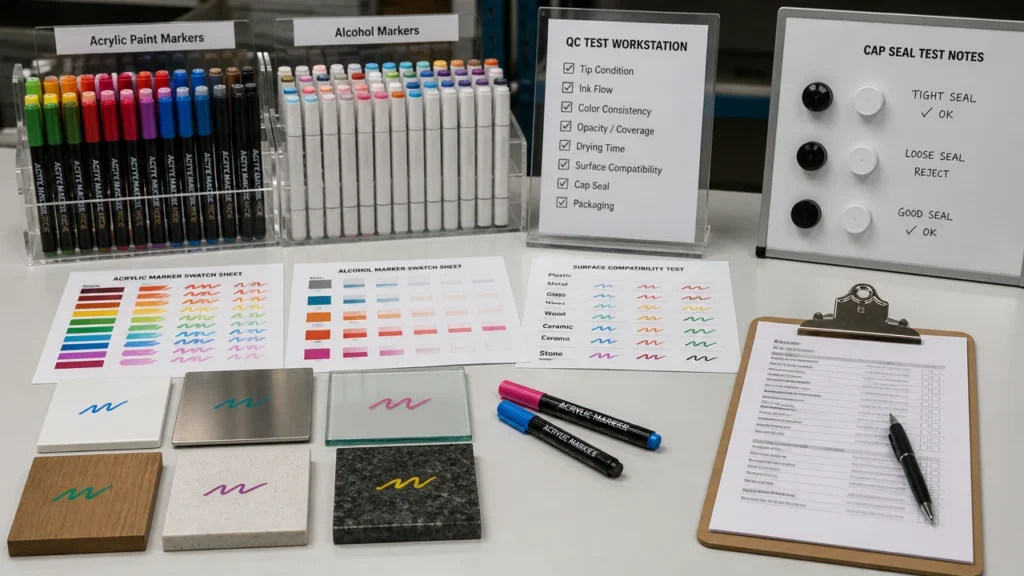
A fair sample test should match the product promise. For acrylic paint markers, test opacity on light and dark faces. Test flow after shake and prime. Test tip recovery after storage, cap seal, drying performance, rub resistance, and surface fit. For alcohol markers, test first stroke and restart after storage. Test cap seal, color-family blending, bleed-through on paper, brush tip feel, and chisel fill.
Do not compare only barrel look. Two sets can look alike in packing and perform very differently in use. A buyer should pass the art only after ink, tip, cap, color list, packing instructions, and kept sample are lined up.
| Test | Acrylic Paint Marker | Alcohol Marker |
|---|---|---|
| First-use instruction | Shake, press, prime, test flow. | Uncap, swatch, check both tips. |
| Surface test | Glass, wood, stone, canvas, ceramic, selected plastic. | Marker paper, sketch paper, cardstock, notebook paper. |
| Color test | Opacity, coverage, color on dark surface. | Color family, blending edge, streaking, bleed-through. |
| Storage test | Cap seal, tip clogging, restart after horizontal and vertical storage. | Dry tip risk, cap fit, restart and even ink flow. |
| Packaging test | Instruction card, warning text, replacement tips if needed. | Swatch card, color chart, paper recommendation, blending guide. |
Product Line Strategy
For many buyers, the better answer is not one marker type. It is a clean product line. Acrylic paint markers can serve craft and surface buyers. Alcohol markers can serve illustration and coloring buyers. The two lines can share brand voice. The packing, color planning, and claims should not be copied blindly from one to the other.
A starter craft SKU might use 12 or 24 acrylic paint markers with strong opaque colors and surface steps. An illustration SKU might use 24, 36, 48, or 60 alcohol markers with clear color families and blending examples. Gift sets can hold both only when the packing explains the use gap clearly.
Before a big order, ask for product photos, sample swatches, carton data, and retail pack art. ZH Stationery's factory tour and who we are can help buyers read the production context. Use them before final RFQ talk.
Ask Better Supplier Questions
Supplier questions should force a clear product pick. A vague yes to both types is not enough for sourcing.
- 1. Which user is this marker set designed for?
A useful answer names the intended channel, such as craft, school, illustration, Amazon gift set, hobby art, or retail stationery. - 2. Which surfaces or papers did you test?
A useful answer lists actual surface samples, paper types, and drying conditions rather than broad claims. - 3. What makes this acrylic marker suitable for opaque surface work?
A useful answer mentions opacity testing, flow control, tip structure, cap sealing, and surface instructions. - 4. What makes this alcohol marker suitable for blending?
A useful answer explains color-family planning, paper recommendation, nib type, and sample swatch evidence. - 5. Can the packaging explain the difference clearly?
A useful answer covers instruction card layout, warning text, swatch card, language version, and retail-channel limits. - 6. Which compliance documents apply to the target market?
A useful answer separates safety labeling, test reports, age grading, marketplace requests, and performance evidence.
FAQs
Are acrylic paint markers better than alcohol markers?
They are better for opaque marks on craft faces. They are not better for every use. Alcohol markers are usually better for smooth blending, illustration, and paper coloring.
Can alcohol markers be used on glass or wood?
They can leave marks on some faces. They are not usually the best pick for opaque glass or wood decor. Acrylic paint markers are a better start for those uses, with surface testing before any claim is printed.
Which marker is better for starters?
For craft starters, acrylic paint markers are easier to read because the result is bold and opaque. For drawing starters, alcohol markers are better when the set includes paper guidance and clear color families.
Do acrylic paint markers blend like alcohol markers?
Some can be layered or softened while wet. Smooth gradient blending is not their main strength. Alcohol markers are usually better for controlled blends on fitting marker paper.
Which type should a private-label brand source first?
Pick acrylic first if the brand targets crafts, faces, DIY kits, and giftable decor. Pick alcohol first if the brand targets illustration, coloring, sketching, and artist-style sets.
Does ASTM D-4236 prove which marker performs better?
No. ASTM D-4236 covers chronic hazard marking for art products. It does not prove opacity, blending, permanence, washability, surface fit, or ink flow.
Conclusion
Acrylic vs alcohol should be decided by the end use. Pick acrylic for opaque craft faces and visible decor. Pick alcohol for paper illustration, blending, and controlled color families. If the buyer needs both markets, build two clear lines.
For sourcing, the next step is not only picking the ink type. Set the target user, surface or paper list, color count, packing format, compliance market, and sample-test needs. That gives the supplier enough context to quote the right marker, not the nearest catalog item.
Related guide: How to Handle Customer Complaints About Dry Markers or Color Differences.