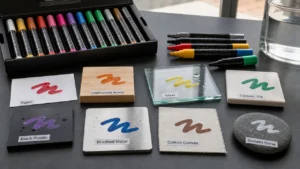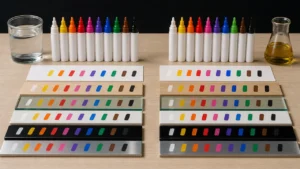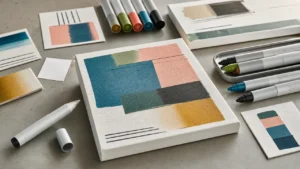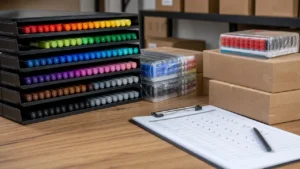
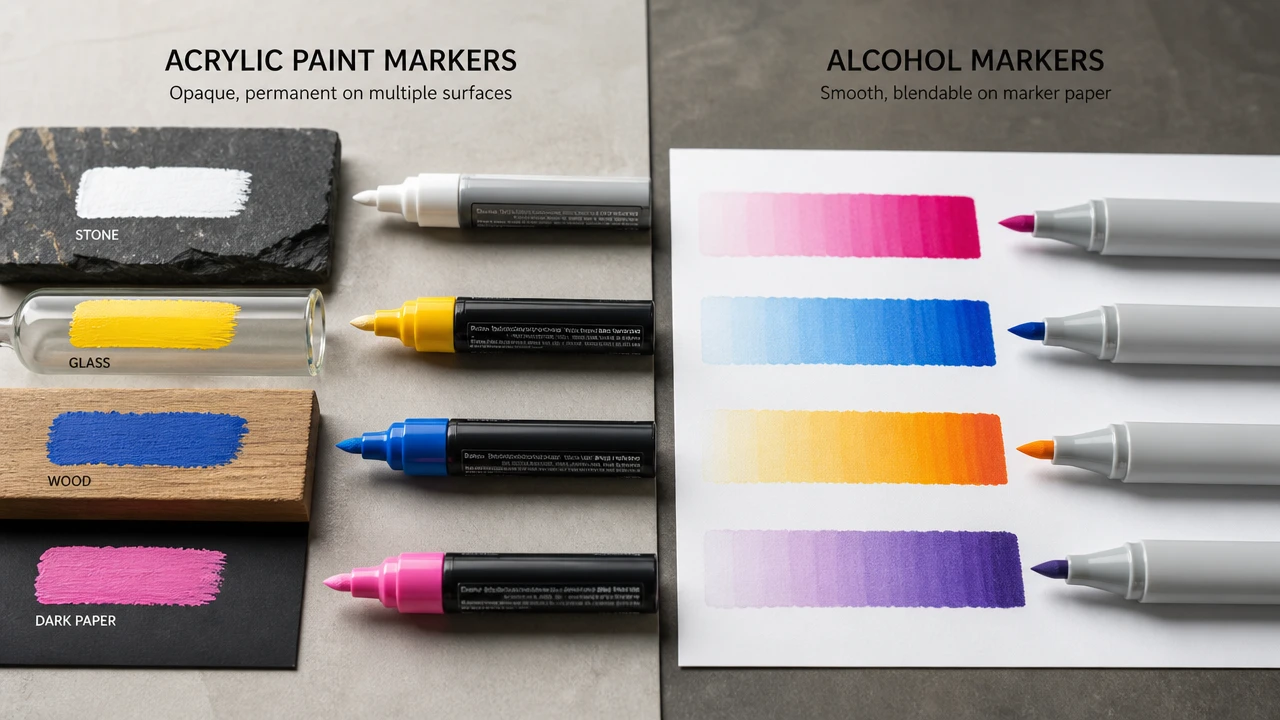
Le choix entre les marqueurs à peinture acrylique et les marqueurs à alcool est une décision pratique, pas un concours. Les marqueurs à peinture acrylique sont généralement le meilleur choix lorsque l'utilisateur souhaite une couleur opaque sur des surfaces dures ou mixtes. Les marqueurs à alcool sont généralement le meilleur choix lorsque l'utilisateur souhaite des transitions de couleur fluides, un travail d'illustration, un séchage rapide sur papier et une gamme de couleurs plus large pour les dégradés.
Pour les marques, les distributeurs et les détaillants, cette décision va au-delà de l'encre. Elle modifie l'utilisateur cible, les mentions sur l'emballage, le nombre de couleurs, le choix de la pointe, les tests d'échantillons, l'éducation du client et les questions après-vente. Un produit parfait pour les loisirs créatifs sur toile peut décevoir un illustrateur. Un ensemble de marqueurs qui se fondent parfaitement sur papier peut ne pas satisfaire un acheteur qui a besoin de traits marqués sur la pierre, le verre, le bois ou le plastique.
ZH Stationery prend en charge à la fois l'approvisionnement en marqueurs et la planification de marque privée. Les acheteurs peuvent consulter les catégories de produits, comparer les guide d'approvisionnement en marqueurs acryliques personnalisés, et utiliser le guide du fabricant de marqueurs à alcool lors de la création d'une gamme de marqueurs à deux lignes.
Marqueurs à peinture acrylique vs marqueurs à alcool : réponse rapide
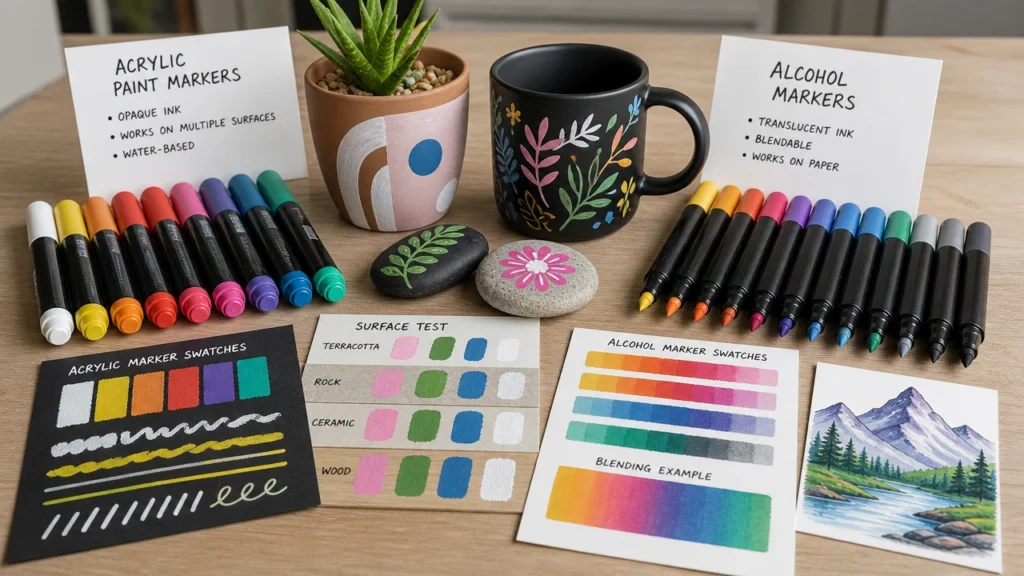
Choisissez les marqueurs à peinture acrylique pour une couverture opaque, les surfaces de loisirs créatifs, la décoration DIY, les enseignes, la peinture sur pierre, les projets sur verre, le bois, la toile et de nombreuses applications mixtes. Choisissez les marqueurs à alcool pour l'illustration, le coloriage style manga, les croquis de mode, le rendu de produits, les palettes de couleurs pour journaling et les fondus fluides sur papier adapté aux marqueurs.
Pour l'approvisionnement B2B, les marqueurs à peinture acrylique nécessitent souvent des instructions de surface plus détaillées et une éducation sur la valve, la pointe ou le système agiter-presser. Les marqueurs à alcool nécessitent souvent une meilleure planification des familles de couleurs, l'étanchéité du capuchon, des conseils sur le papier et un accompagnement au fondu pour les débutants. Si l'acheteur dessert à la fois les canaux loisirs créatifs et illustration, séparez les lignes de produits au lieu d'essayer de faire d'un seul marqueur un produit polyvalent.
Liens rapides
- Différence fondamentale
- Tableau comparatif
- Quand utiliser les marqueurs à peinture acrylique
- Quand utiliser les marqueurs à alcool
- Surfaces, opacité et fondu
- Étiquetage de sécurité et adéquation au marché
- Approvisionnement B2B et tests d'échantillons
- Stratégie de gamme de produits
- Posez de meilleures questions au fournisseur
- FAQ
Différence fondamentale
Les marqueurs à peinture acrylique déposent un film de type peinture. Beaucoup utilisent des systèmes acryliques à base d'eau, souvent utilisés pour des marques opaques sur des surfaces poreuses et non poreuses. Ils peuvent nécessiter d'être secoués, amorcés et un entretien du capuchon. Certains utilisent un système à valve qui contrôle le flux de peinture à travers la pointe.
Les marqueurs à alcool utilisent des systèmes d'encre ou de teinture à base d'alcool conçus principalement pour le papier et les surfaces d'illustration. Ils sont connus pour leur superposition fluide, leur séchage rapide et leur fondu entre couleurs proches. Ils ressemblent généralement plus à des outils de dessin qu'à des outils de peinture.
Si un acheteur compare les mécanismes des marqueurs, le Technologie de marquage de presse de vanne et guide valve de marqueur acrylique vs pointe fibre explique pourquoi la structure de la pointe change l'expérience utilisateur. Cela importe car un marqueur à peinture opaque et un marqueur à alcool à pointe pinceau résolvent des problèmes clients différents.
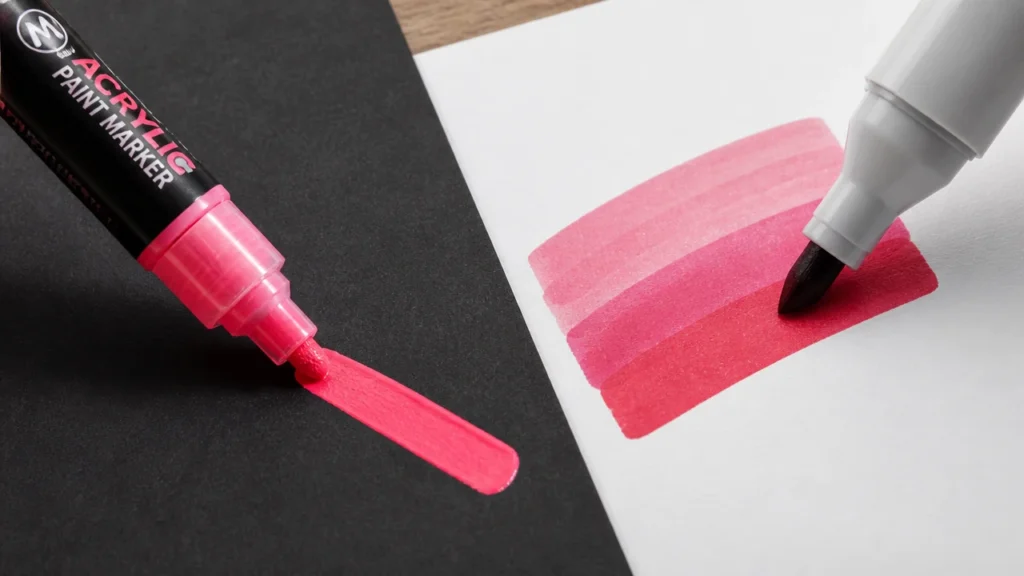
Tableau comparatif
| Facteur | Marqueurs de peinture acrylique | Marqueurs à encre à base d'alcool | Décision de l'acheteur |
|---|---|---|---|
| Meilleure utilisation | Loisirs créatifs, décoration, signalétique, surfaces mixtes | Illustration, croquis, fondu, art sur papier | Adaptez le produit au canal plutôt qu'à la large catégorie des marqueurs. |
| Comportement des couleurs | Couche opaque ou semi-opaque, type peinture | Couches transparentes ou type teinture | Utilisez l'acrylique pour la couverture et l'alcool pour les dégradés. |
| Adéquation des surfaces | Verre, pierre, bois, toile, céramique, certains plastiques après test | Papier pour marqueurs, papier à dessin, carton, certains papiers couchés | Effectuez des tests de surface avant d'approuver les mentions sur l'emballage. |
| Fondu | Possible dans certains systèmes, mais pas la force principale | Principal argument de vente avec des familles de couleurs proches | Les ensembles de marqueurs à alcool nécessitent une planification des familles de couleurs. |
| Séchage et permanence | Dépend de la surface, de la formule, du durcissement et de l'étanchéité | Séchage rapide sur papier, mais le choix du papier est important | Évitez les mentions universelles de permanence. |
| Éducation sur l'emballage | Secouer, presser, amorcer, stocker, tester la surface | Fondre, superposer, utiliser un papier adapté, bien refermer le capuchon | Les cartes d'instructions doivent différer selon la ligne. |
| Réclamation courante | Inondation de la pointe, bouchage, opacité faible, inadéquation de surface | Traînées, pointes sèches, mauvais fondu, papier qui saigne | Définissez les tests d'échantillons en fonction des réclamations attendues. |
Quand utiliser les marqueurs à peinture acrylique
Utilisez des marqueurs à peinture acrylique lorsque l'utilisateur souhaite une couleur qui se dépose visiblement sur la surface. Ils conviennent parfaitement pour la peinture sur pierre, les bocaux en verre, les panneaux en bois, les toiles sur châssis, les objets en céramique, les décorations saisonnières, les projets scolaires, la décoration intérieure DIY et de nombreux kits de loisirs créatifs.
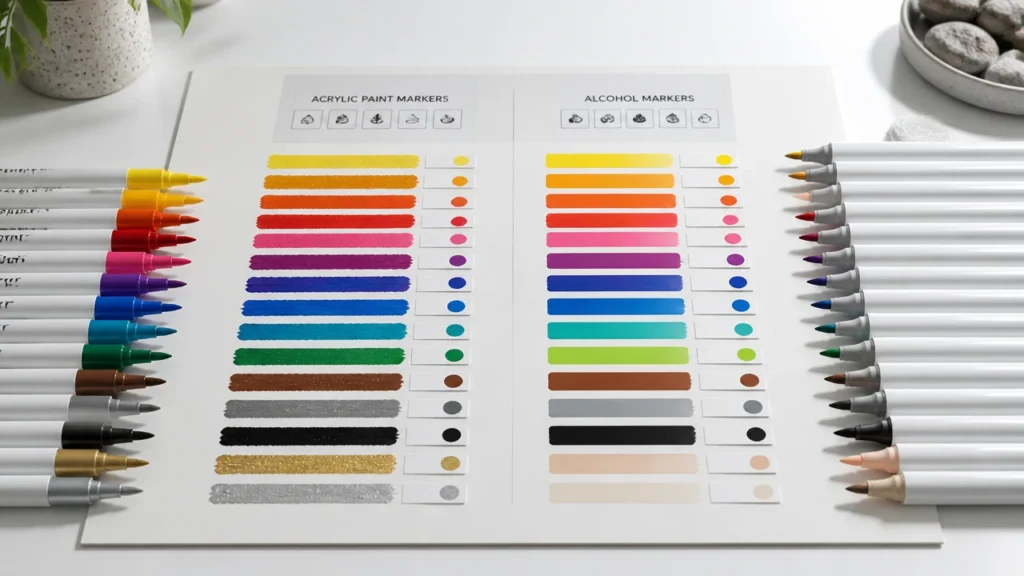
L'argument de vente est la couverture. Un marqueur à peinture acrylique blanc, or, noir ou pastel peut ressortir sur papier foncé, bois ou pierre d'une manière que la plupart des marqueurs à alcool ne peuvent pas. Les marqueurs acryliques sont également pertinents lorsque l'utilisateur souhaite des lignes audacieuses, des points, des lettrages, des contours ou des couches décoratives opaques.
Les acheteurs qui planifient des marqueurs acryliques en marque privée doivent réfléchir tôt au contrôle du flux, à l'étanchéité du capuchon, à la durabilité de la pointe et aux instructions sur l'emballage. L' les options d'emballage des marqueurs acryliques article est utile pour décider de l'espace nécessaire pour les cartes d'instructions, les cartes d'échantillons, les textes d'avertissement et les pointes de rechange dans l'emballage de détail.
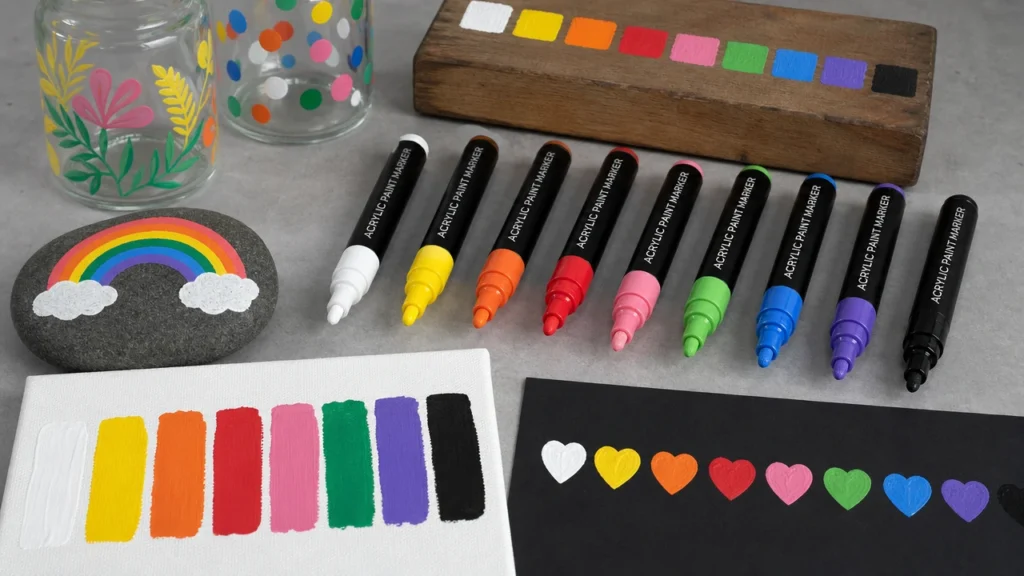
Meilleure adéquation pour les marqueurs à peinture acrylique
- Utilisateurs de loisirs créatifs qui décorent des surfaces dures ou mixtes.
- Kits de détail pour la peinture sur pierre, la peinture sur verre, les panneaux en bois ou les loisirs créatifs sur toile.
- Ensembles artistiques cadeaux où la couleur opaque est facile à comprendre sur les photos produits.
- Canaux scolaires et loisirs qui nécessitent une forte couverture de couleur.
- Marques qui souhaitent des résultats visibles sur des surfaces sombres ou texturées.
Quand utiliser les marqueurs à alcool
Utilisez les marqueurs à alcool lorsque l'utilisateur souhaite un coloriage fluide sur papier. Ils sont courants pour l'illustration, l'art des personnages, les croquis de produits, le rendu de design, les dessins de mode, l'art de la bande dessinée, le journaling et le coloriage de loisir. La valeur ne réside pas dans la couverture de surface. La valeur réside dans le contrôle des couleurs.
Les marqueurs à alcool fonctionnent généralement mieux lorsque les couleurs sont organisées par familles : tons clairs, moyens et foncés. Cela permet à l'utilisateur de créer des ombres et des dégradés. Pour les débutants, une palette plus petite mais mieux planifiée peut être plus efficace qu'un grand ensemble de couleurs aléatoires.
Pour les acheteurs B2B, les plaintes concernant les marqueurs à alcool proviennent souvent d'une incompatibilité de papier ou d'attentes floues en matière de fusion des couleurs. Si l'ensemble est vendu en ligne, les photos produit doivent montrer des échantillons sur papier, des familles de couleurs et des exemples d'illustrations correspondant à ce que le marqueur peut réellement faire.
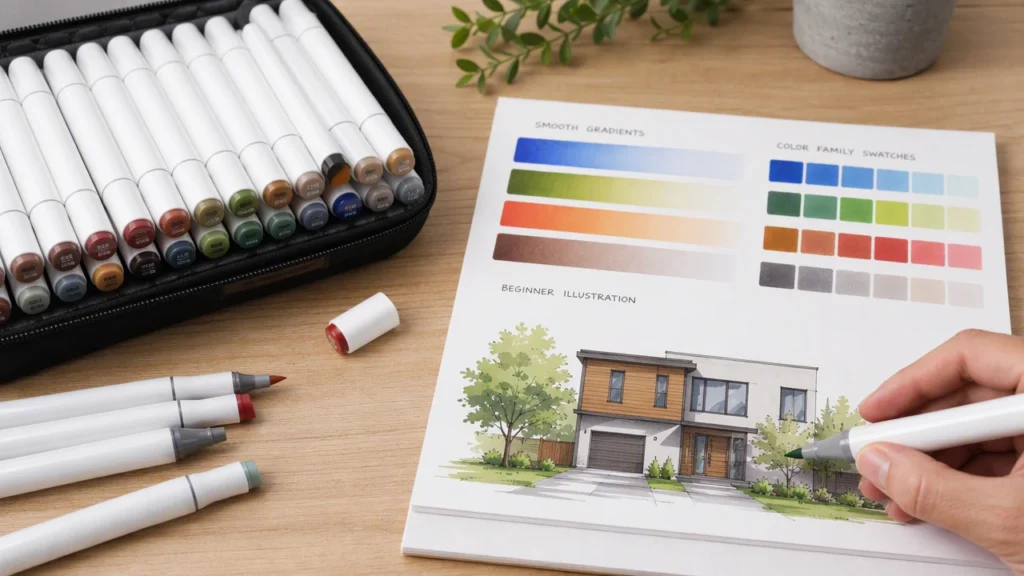
Meilleure adaptation pour les marqueurs à alcool
- Utilisateurs d'illustration et de dessin recherchant des transitions fluides.
- Débutants apprenant la fusion des couleurs sur papier à marqueurs.
- Ensembles Amazon et e-commerce où le nombre de couleurs et les échantillons influencent les clics.
- Rayons d'art et de loisirs créatifs en magasin vendant des outils de dessin et de coloriage.
- Marques de distributeur pouvant organiser les couleurs en familles claires.
Surfaces, opacité et fondu
La plus grande différence apparaît lorsque le même trait est appliqué sur différentes surfaces. Les marqueurs à peinture acrylique sont plus susceptibles de rester visibles sur le verre, la pierre, le bois, la toile, le papier noir et la céramique. Les marqueurs à alcool sont plus susceptibles de saigner dans le papier absorbant et de disparaître visuellement sur les surfaces sombres ou brillantes.
Pour l'opacité, les marqueurs à peinture acrylique gagnent généralement. Pour la fusion des couleurs, les marqueurs à alcool gagnent généralement. Cette règle simple aide la plupart des acheteurs à choisir la bonne gamme de produits. Les problèmes commencent lorsqu'une marque tente de vendre des marqueurs à alcool comme marqueurs pour surfaces artisanales ou des marqueurs à peinture acrylique comme marqueurs de fusion pour illustration lisse.
Les affirmations sur les surfaces nécessitent encore des tests. Le plastique peut être difficile pour les deux types. Le tissu dépend de la fibre, du tissage, du plan de lavage et de la durabilité souhaitée du motif. Les résultats sur verre et céramique peuvent changer après lavage ou frottement. Les résultats sur bois dépendent de la finition de la surface.
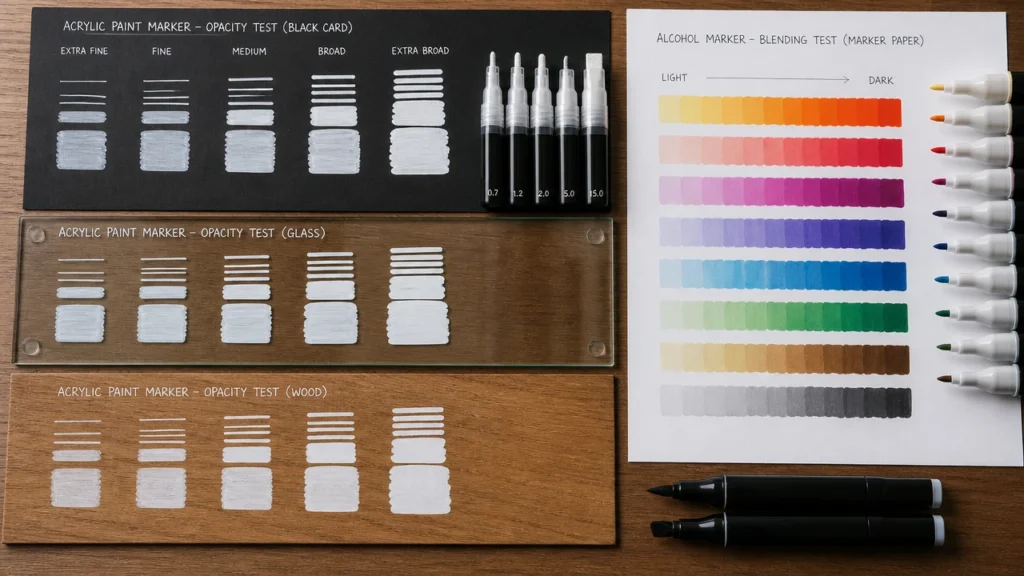
| Surface ou tâche | Meilleur choix de départ | Pourquoi |
|---|---|---|
| Décoration sur verre | Marqueur à peinture acrylique | Les marques opaques sont plus faciles à voir, mais des tests de lavage et de frottement sont nécessaires. |
| Dégradés sur papier lisse | Marqueur à alcool | L'encre peut se superposer et se fondre lorsque le papier est adapté. |
| Cartonnette sombre | Marqueur à peinture acrylique | La peinture opaque peut être visible sur les surfaces sombres. |
| Coloriage manga ou personnages | Marqueur à alcool | Les familles de couleurs et le contrôle de la fusion importent plus que l'opacité. |
| Peinture sur pierre | Marqueur à peinture acrylique | La couverture de surface et les couleurs vives sont les besoins principaux. |
| Rendu d'esquisse produit | Marqueur à alcool | La superposition rapide et l'ombrage contrôlé sont utiles. |
Étiquetage de sécurité et adéquation au marché
Pour le marché américain, l'étiquetage des matériaux d'art doit être vérifié séparément des affirmations de performance. Guide sur les matériaux d'art de la CPSC explique qu'une déclaration de conformité pour ASTM D-4236 doit être placée sur le produit lorsque c'est réalisable, ou sinon sur l'emballage, l'affichage, la documentation ou la réponse formelle à l'appel d'offres. pratique d'étiquetage ASTM D4236 décrit une pratique d'étiquetage pour les avertissements de risque chronique pour la santé et les précautions d'emploi des matériaux d'art.
Le marqueur à base d’huile de Sharpie est excellent pour une utilisation en extérieur. Il résiste bien au soleil et aux rayures. Il n’est pas aussi facile à mélanger que certains autres, mais il est parfait pour les travaux exigeants. Aperçu des réglementations ACMI ajoute un contexte utile sur les programmes de sécurité des matériaux d'art. Ces sources ne prouvent pas qu'un marqueur est permanent, lavable, sans bavure, sans odeur ou adapté à une surface spécifique. Elles aident les acheteurs à distinguer l'étiquetage de sécurité des tests de performance. Gardez cette distinction claire dans l'emballage et les annonces en ligne.
Les acheteurs peuvent utiliser ZH Stationery's Guide des rapports de test ASTM D-4236 et page des certifications lors de la préparation des demandes de documents pour les marchés cibles. N'utilisez pas un certificat générique pour appuyer une affirmation concernant la fusion, l'opacité, la réversibilité ou la durabilité du tissu.
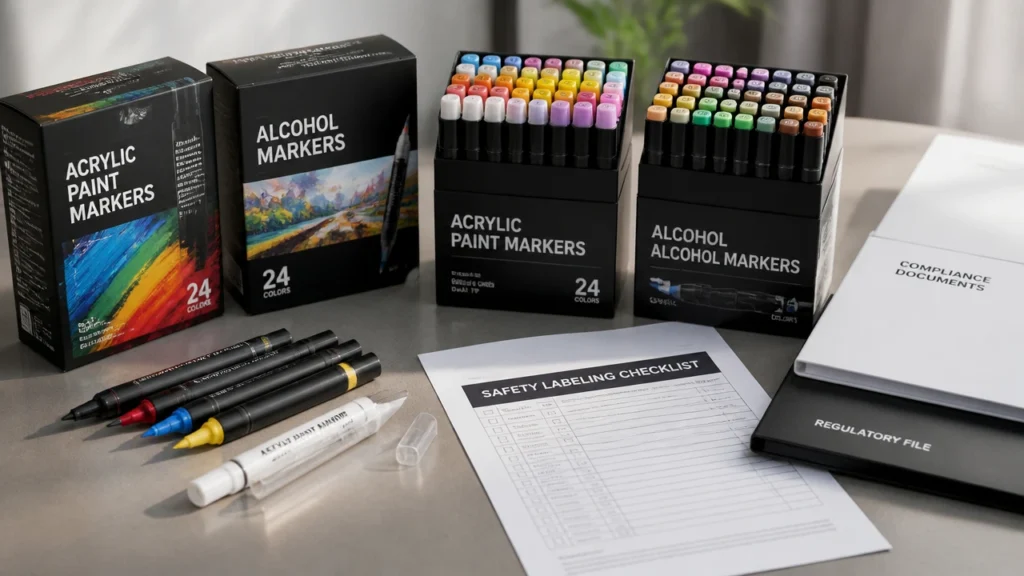
Approvisionnement B2B et tests d'échantillons
Un test d'échantillon équitable doit refléter la promesse du produit. Pour les marqueurs à peinture acrylique, testez l'opacité sur surfaces claires et sombres, le débit après agitation et amorçage, la récupération de la pointe après stockage, l'étanchéité du capuchon, le comportement au séchage, la résistance au frottement et la compatibilité avec les surfaces. Pour les marqueurs à alcool, testez le premier trait, le redémarrage après stockage, l'étanchéité du capuchon, la fusion par familles de couleurs, le saignement sur papier, la sensation de la pointe pinceau et le remplissage de la pointe biseau.
Ne comparez pas uniquement l'apparence du corps du marqueur. Deux ensembles de marqueurs peuvent sembler similaires dans leur emballage et se comporter très différemment à l'usage. Un acheteur ne devrait approuver le graphisme qu'après avoir aligné l'encre, la pointe, le capuchon, la liste des couleurs, les instructions d'emballage et l'échantillon conservé.
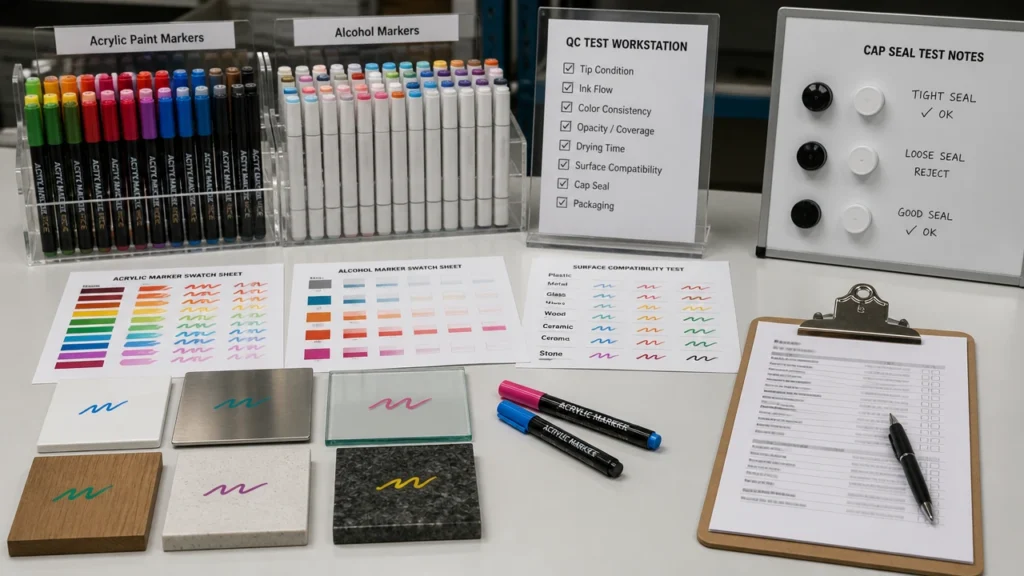
| Test | Marqueur à peinture acrylique | Marqueur à alcool |
|---|---|---|
| Instructions de première utilisation | Agiter, presser, amorcer, tester le débit. | Déboucher, tester, vérifier les deux pointes. |
| Test de surface | Verre, bois, pierre, toile, céramique, plastique sélectionné. | Papier à marqueurs, papier à dessin, cartonnette, papier de carnet. |
| Test de couleur | Opacité, couverture, couleur sur surface sombre. | Famille de couleurs, bord de fusion, stries, saignement. |
| Test de stockage | Étanchéité du capuchon, obstruction de la pointe, redémarrage après stockage horizontal et vertical. | Risque de pointe sèche, ajustement du capuchon, redémarrage et débit d'encre régulier. |
| Test d'emballage | Carte d'instructions, texte d'avertissement, pointes de rechange si nécessaire. | Carte d'échantillons, nuancier, recommandation de papier, guide de fusion. |
Stratégie de gamme de produits
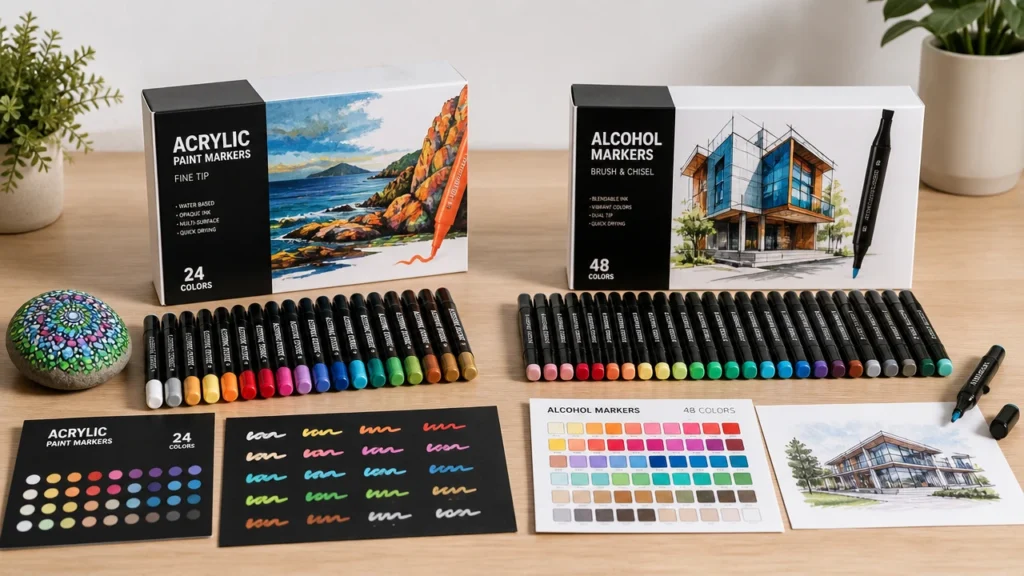
Pour de nombreux acheteurs, la meilleure réponse n'est pas un seul type de marqueur. C'est une gamme de produits claire. Les marqueurs à peinture acrylique peuvent servir les acheteurs de loisirs créatifs et de décoration de surfaces. Les marqueurs à alcool peuvent servir les acheteurs d'illustration et de coloriage. Les deux gammes peuvent partager un langage de marque, mais l'emballage, la planification des couleurs et les affirmations ne doivent pas être copiés aveuglément de l'une à l'autre.
Un SKU débutant en loisirs créatifs pourrait utiliser 12 ou 24 marqueurs à peinture acrylique avec des couleurs opaques fortes et des instructions de surface. Un SKU d'illustration pourrait utiliser 24, 36, 48 ou 60 marqueurs à alcool avec des familles de couleurs logiques et des exemples de fusion. Les coffrets cadeaux peuvent inclure les deux uniquement si l'emballage explique clairement la différence d'utilisation.
Avant de passer une commande importante, demandez des photos produit, des échantillons, des données carton et le graphisme de l'emballage de détail. ZH Stationery's visite de l'usine et les informations sur l'entreprise sur qui nous sommes peuvent aider les acheteurs à comprendre le contexte de production et de fournisseur avant la discussion finale sur le RFQ.
Posez de meilleures questions au fournisseur
Les questions au fournisseur doivent imposer une recommandation produit claire. Un vague oui à la fois pour les marqueurs à peinture acrylique et les marqueurs à alcool ne suffit pas pour l'approvisionnement.
- 1. Pour quel utilisateur cet ensemble de marqueurs est-il conçu ?
Une réponse utile nomme le canal visé, comme les loisirs créatifs, l'école, l'illustration, le coffret cadeau Amazon, l'art de loisir ou la papeterie de détail. - 2. Quelles surfaces ou quels papiers avez-vous testés ?
Une réponse utile énumère des échantillons de surfaces réels, les types de papier et les conditions de séchage, plutôt que des affirmations générales. - 3. Qu'est-ce qui rend ce marqueur acrylique adapté aux surfaces opaques ?
Une réponse utile mentionne les tests d'opacité, le contrôle du débit d'encre, la structure de la pointe, l'étanchéité du capuchon et les instructions relatives aux surfaces. - 4. Qu'est-ce qui rend ce marqueur à alcool adapté au fondu des couleurs ?
Une réponse utile explique la planification des familles de couleurs, les recommandations de papier, le type de pointe et les preuves par échantillons de couleurs. - 5. L'emballage peut-il expliquer clairement la différence ?
Une réponse utile couvre la disposition de la carte d'instructions, les textes d'avertissement, la carte d'échantillons, la version linguistique et les limites des canaux de vente au détail. - 6. Quels documents de conformité s'appliquent au marché cible ?
Une réponse utile distingue l'étiquetage de sécurité, les rapports d'essai, la classification par âge, les demandes des places de marché et les preuves de performance.
FAQ
Ces réponses doivent correspondre au fichier de schéma Rank Math si le schéma FAQPage est importé.
1. Les marqueurs à peinture acrylique sont-ils meilleurs que les marqueurs à alcool ?
Ils sont meilleurs pour les marques opaques sur les surfaces de loisirs créatifs, mais pas meilleurs pour tous les usages. Les marqueurs à alcool sont généralement meilleurs pour le fondu homogène, l'illustration et la coloration sur papier.
2. Les marqueurs à alcool peuvent-ils être utilisés sur le verre ou le bois ?
Ils peuvent laisser des marques sur certaines surfaces, mais ils ne sont généralement pas le meilleur choix pour la décoration opaque sur verre ou bois. Les marqueurs à peinture acrylique constituent un meilleur point de départ pour ces usages, avec des tests de surface avant toute affirmation imprimée.
3. Quel marqueur est le mieux adapté aux débutants ?
Pour les débutants en loisirs créatifs, les marqueurs à peinture acrylique sont plus faciles à comprendre car le résultat est net et opaque. Pour les débutants en dessin, les marqueurs à alcool sont préférables lorsque l'ensemble comprend des conseils sur le papier adapté et des familles de couleurs claires.
4. Les marqueurs à peinture acrylique se fondent-ils comme les marqueurs à alcool ?
Certains marqueurs à peinture acrylique peuvent être superposés ou adoucis lorsqu'ils sont humides, mais le fondu en dégradé homogène n'est pas leur principal atout. Les marqueurs à alcool sont généralement meilleurs pour les fondus contrôlés sur un papier à marqueurs adapté.
5. Quel type de marqueur une marque de distributeur devrait-elle sourcer en premier ?
Choisissez d'abord les marqueurs à peinture acrylique si la marque cible les loisirs créatifs, les surfaces, les kits DIY et la décoration cadeau. Choisissez d'abord les marqueurs à alcool si la marque cible l'illustration, la coloration, le croquis et les ensembles de style artistique.
6. Est-ce que ASTM D-4236 prouve quel marqueur est le plus performant ?
Non. ASTM D-4236 concerne l'étiquetage des dangers chroniques pour les matériaux d'art. Il ne prouve pas l'opacité, le fondu, la permanence, la lavabilité, la compatibilité avec les surfaces ou le débit d'encre.
Conclusion
Le choix entre marqueurs à peinture acrylique et marqueurs à alcool doit être décidé en fonction de l'utilisation finale. Choisissez les marqueurs à peinture acrylique pour les surfaces de loisirs créatifs opaques et la décoration visible. Choisissez les marqueurs à alcool pour l'illustration sur papier, le fondu et les familles de couleurs contrôlées. Si l'acheteur a besoin des deux marchés, créez deux gammes de produits distinctes.
Pour le sourcing, la prochaine étape ne consiste pas seulement à choisir le type d'encre. Préparez l'utilisateur cible, la liste des surfaces ou papiers, le nombre de couleurs, le format d'emballage, le marché de conformité et les exigences de test des échantillons. Cela donne au fournisseur suffisamment de contexte pour proposer le bon marqueur plutôt que l'article le plus proche du catalogue.
相关指南: 如需相关的质量控制检查,请参阅 Comment Gérer les Réclamations Clients Concernant les Marqueurs Secs ou les Différences de Couleur.