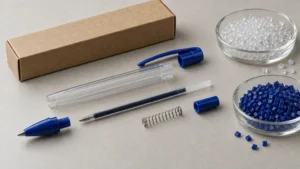

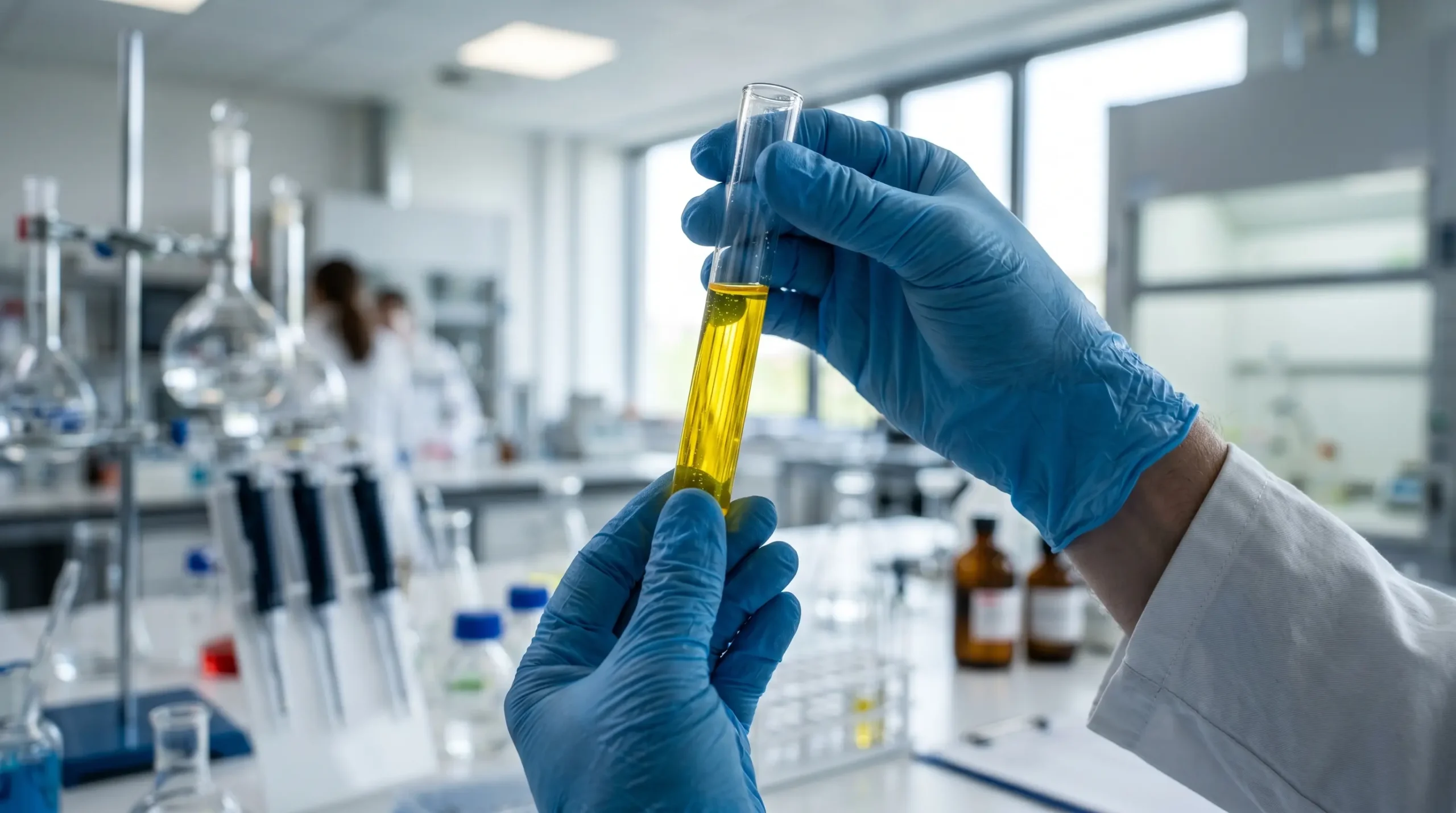
Você sabia que materiais escolares e de escritório do dia a dia às vezes podem esconder substâncias químicas nocivas? É por isso que o teste de formaldeído em produtos de escrita é importante para a segurança.
As diretrizes da OMS de 2010 para qualidade do ar interno em poluentes selecionados incluem formaldeído. Elas cobrem a exposição no ar interno. Não estabelecem um limite universal de aprovação para produtos de escrita. O teste do produto deve indicar a parte amostrada, a norma de produto aplicável e o método de teste utilizado.
Para proteger os compradores e manter uma marca forte, serviços de teste confiáveis são essenciais.

A Importância dos Testes de Formaldeído em Papelaria e Normas
Para manter os compradores seguros, grupos nacionais e internacionais estabeleceram regras rígidas para partes nocivas em produtos de escrita.
Para artigos escolares em seu escopo, a GB 21027-2020 é a norma de produto chinesa a ser verificada. Suas exigências dependem do artigo e da parte. Confirme separadamente as necessidades do mercado de destino. Um relatório com norma chinesa por si só não demonstra conformidade para todos os mercados de exportação.
Ao testar de acordo com essas normas, os fabricantes demonstram seu trabalho em produção verde, segura e de alta qualidade.
O Método de Laboratório: Espectrofotometria com Acetilacetona
A listagem oficial da GB/T 32606-2016 nomeia o método de teste de formaldeído como espectrofotometria com acetilacetona. Peça ao laboratório para declarar a edição do método. Confirme que suas etapas de amostragem e extração se adequam à parte testada.
O Princípio Básico:
O método da acetilacetona produz um produto de reação colorido. O laboratório compara sua absorbância com soluções calibradas. O laboratório deve seguir as condições declaradas de preparo de reagentes, extração, reação e medição. Esta visão geral não é a norma completa. Também não é um procedimento de laboratório.
O Que Verificar no Relatório do Laboratório
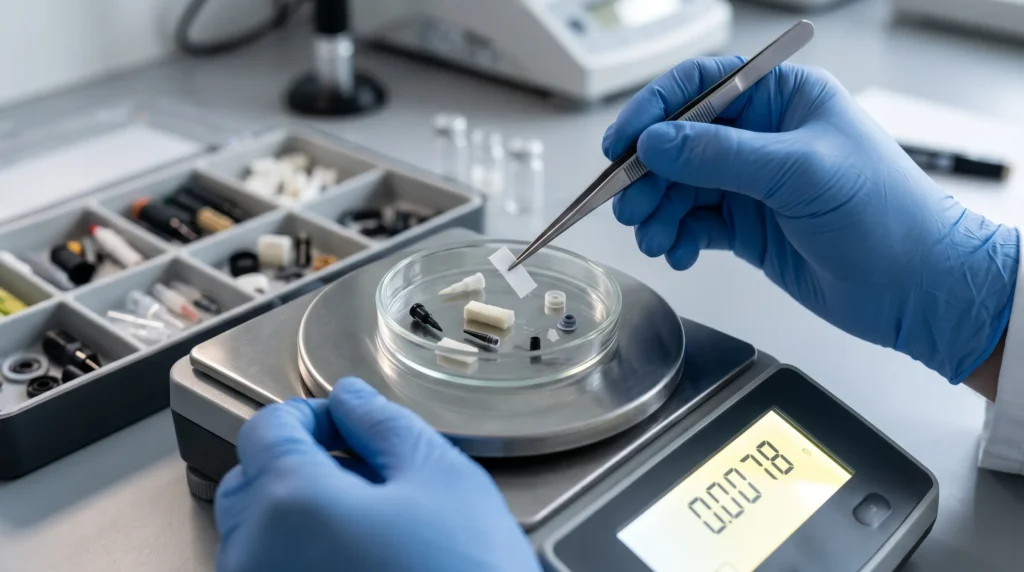
Use estes quatro pontos para revisar o relatório com o laboratório. O método de teste completo define massa da amostra, condições de extração, volumes de reagentes, tempo de reação e faixa de calibração. Não infira esses dados de um artigo geral de sourcing.
1. Preparação da Amostra
Nomeie o modelo, a parte e o material amostrados. Pergunte como a parte foi preparada e extraída de acordo com o método citado. Confirme que o relatório nomeia a amostra, não um produto ou lote diferente.
2. A Reação de Cor
Verifique se o laboratório seguiu o método citado para preparo de reagentes, reação e leitura de absorbância. Peça esclarecimentos se o relatório não nomear o método ou descrever um procedimento alterado.
3. Criação da Curva Padrão
Pergunte como a faixa de calibração e o branco do método foram definidos. Pergunte se o resultado da amostra ficou dentro da faixa de medição verificada. O método aplicável, não um artigo geral, define os níveis de calibração.
4. Leitura dos Resultados
Leia o valor reportado com suas unidades, limite de detecção ou quantificação e o limite de aprovação aplicável. Um valor abaixo de um limite de reporte deve ser lido como reportado. Não o considere prova de que não existe formaldeído.
Fórmula de Cálculo Final
A expressão abaixo mostra uma mudança de unidade apenas quando c já está corrigido pelo branco e a diluição extra é contabilizada. O método completo e a regra matemática do laboratório regem o resultado reportado. Esta expressão não é o procedimento completo da GB/T 32606.
x = (c × f) / m
- x = A quantidade de formaldeído livre na amostra (mg/kg)
- c = Concentração corrigida pelo branco, com qualquer diluição adicional considerada (μg/mL)
- f = O volume para o qual o líquido da amostra foi diluído (mL)
- m = A massa exata da amostra original (g)
Verifique o branco do método, os fatores de diluição e as unidades de reporte com o laboratório. Uma correção do branco por si só não significa que o total seja exato.
Testes Confiáveis para a Sua Tranquilidade
Manter os produtos seguros não é apenas uma questão de lei. É sobre proteger seus clientes.
Escolha um laboratório cujo escopo de acreditação atual cubra o método necessário. Verifique o emissor do relatório, o nome da amostra e o escopo diretamente. Este artigo não define as credenciais atuais ou o escopo de nenhum laboratório nomeado.
Para marcadores e outros produtos de escrita, um relatório de teste registra a amostra, o método e os resultados. Compare esses resultados com as necessidades do produto aplicáveis. A acreditação não significa que todo modelo, peça ou lote não testado esteja livre de componentes nocivos.
Guia relacionado: Como Ler um Relatório de Teste ASTM D-4236 para Marcadores Acrílicos.
Leitura relacionada
- Além de “Não Tóxico”: A Verdade Oculta Sobre a Tinta de Marcador de Grau Alimentar para Crianças
- Padrões de Qualidade de Lápis de Cor e Tendências Futuras: O Que Você Precisa Saber
- guia de caneta marcadora comestível
- guia de material clássico de quadro-negro
- Guia de Tinta para Marcadores para Quadro Branco
- guia de remoção de manchas de marcador para quadro branco
- remoção de marcador permanente de plástico
Why Formaldehyde Still Appears in Stationery
Formaldehyde is not added to markers on purpose. It arrives as a residual from three sources: adhesives in packaging, preservatives in water-based ink, and finishes on wooden or paper components. In each case the amount is small, but the regulatory limit is also small, and the test measures what is present rather than what was intended.
The adhesive route is the most common. Casein and urea-formaldehyde glues are cheap and strong, which is why they still appear in some cartons and laminated boards. A marker itself may pass while the display box it ships in does not.
The ink route matters for water-based formulas. Some preservative systems release formaldehyde slowly as they break down, which is why a freshly mixed batch can pass and a batch tested after six months in a warehouse can fail. That is not a manufacturing defect in the usual sense; it is a formulation choice with a time dimension.
How the Acetylacetone Method Works
GB/T 32606-2016 specifies acetylacetone spectrophotometry as the formaldehyde test method. The procedure runs in four stages.
Extraction. The sample is placed in water at a controlled temperature for a set period. Formaldehyde migrates into the water. The extraction time and temperature are specified, and changing either one changes the result.
Reaction. Acetylacetone reagent is added. In the presence of ammonium acetate, formaldehyde reacts to form a yellow compound, 3,5-diacetyl-1,4-dihydrolutidine. The reaction needs a fixed time and temperature to complete.
Measurement. The solution is read in a spectrophotometer at 412 nanometers. Absorbance is proportional to formaldehyde concentration within the calibrated range.
Calculation. Concentration is derived from the calibration curve, corrected for the blank, and converted to milligrams per kilogram of sample.
The formula only works when the blank is properly corrected and any additional dilution is counted. A report that quotes a number without stating the method edition, the extraction conditions, and the blank value is not reproducible.
Reading a Report: What the Numbers Mean
Three numbers matter on a formaldehyde report: the result, the limit, and the detection limit.
The result should be expressed in mg/kg with the measurement uncertainty stated. A result of 15 mg/kg with an uncertainty of plus or minus 3 is a different statement from 15 mg/kg with no uncertainty given.
The limit depends on the destination market and the product category. Textile and wood components have their own limits under separate standards; stationery is often assessed against the general consumer goods framework. Confirm which limit applies before comparing a result to a pass threshold.
The detection limit tells you whether the test could actually see a failure. A method with a detection limit of 20 mg/kg cannot demonstrate compliance with a 16 mg/kg limit, no matter what the result says.
Sampling and Extraction: Where Tests Go Wrong
Most false passes and false failures trace to sampling, not to the instrument.
The sample must represent the batch. A single marker taken from the top of a carton is not a batch sample. The correct approach is to composite material from several units, because formaldehyde distribution within a production run is not uniform.
The extraction conditions must match the method. Water temperature, extraction time, and the ratio of sample mass to water volume all affect the result. A lab that shortens the extraction to save time will report a lower number than the method intends.
The tested part must be the part that matters. For a marker, that means the barrel, the cap, the ink, and the packaging assessed separately, because each has a different risk profile and a different limit may apply.
Perguntas Frequentes
Does passing a formaldehyde test mean the product is safe? No. It means formaldehyde is below the applicable limit for that test method. Other substances are covered by other tests.
How often should formaldehyde be retested? At minimum once per production batch, and again whenever the ink supplier, adhesive supplier, or packaging supplier changes.
Can a factory self-test? It can screen internally, but the report that goes to a retailer should come from an accredited third-party lab with the method edition stated.
What happens if a batch fails? The batch should be held, the source identified — ink, adhesive, or packaging — and the affected lots traced. Retesting the same sample rarely changes the result.
Where Formaldehyde Comes From in the Supply Chain
The test measures what is present, not what was intended. Three upstream sources account for most failures.
Adhesive suppliers. Casein and urea-formaldehyde glues remain cheap and strong, which is why they still appear in laminated boards and some cartons. A marker can pass while the display box it ships in does not. Ask for the adhesive declaration separately from the ink declaration.
Preservative systems in water-based ink. Certain preservatives release formaldehyde as they break down. A freshly mixed batch passes; the same batch tested after six months in a warm warehouse may not. This is a formulation choice with a time dimension, and it is the most common cause of a late failure.
Wood and paper components. Pencil barrels, wooden display stands, and some paper stocks carry residual formaldehyde from processing. These are usually low, but they add to the total when the test composites multiple materials.
The practical implication: test the finished product as it ships, not the individual components in isolation. A composite sample catches the additive effect that single-component testing misses.
Setting a Retest Cadence That Actually Catches Drift
Most programs retest once per production batch, which is not enough to catch a slow drift.
A supplier can change an adhesive vendor, a preservative concentration, or a packaging source without announcing it, and the change shows up three batches later as a failed test. The cadence that catches this has three triggers.
Per batch. A basic screening test on every production run. This is a factory-side control, not a third-party report.
Per quarter. A full third-party report on the current production. This catches drift before it becomes a retailer issue.
Per change. Any change to ink supplier, adhesive supplier, packaging supplier, or formulation triggers an immediate retest regardless of the quarterly schedule. This is the trigger most programs omit, and it is the one that catches the failures that matter.
Put the change trigger in the purchase order, not in a side agreement. A clause that requires notification before any material substitution is enforceable; a verbal understanding is not.