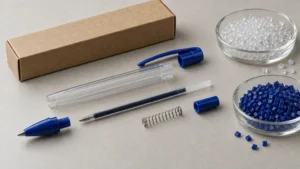

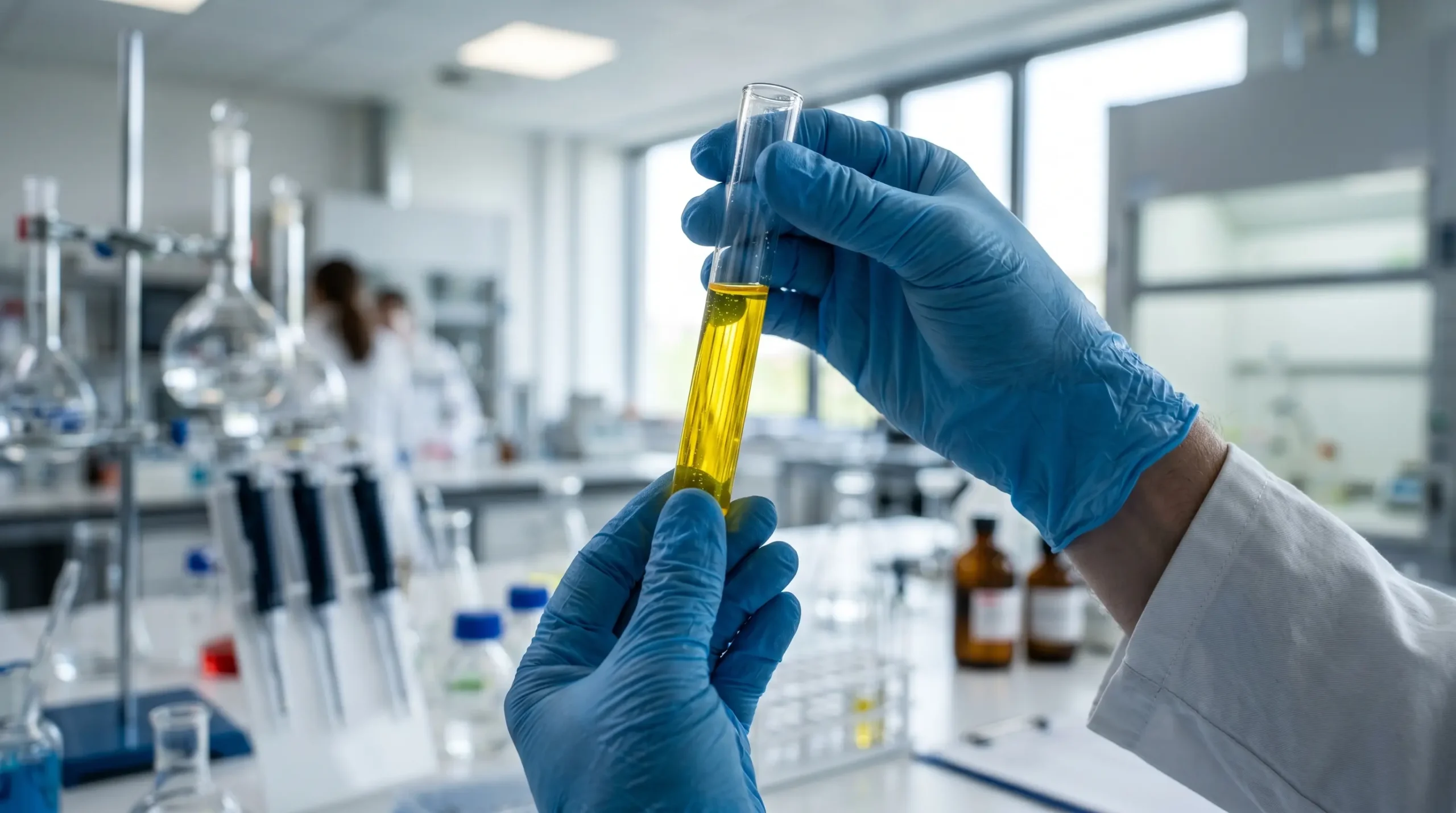
日常の学校用品やオフィス用品に有害な化学物質が隠れていることがあるのをご存知ですか?だからこそ、筆記具のホルムアルデヒド検査は安全のために重要です。
WHOの2010年屋内空気ガイドライン(一部汚染物質対象)にはホルムアルデヒドが含まれます。これは屋内空気中の曝露を対象とします。筆記製品に対する普遍的な合格基準を定めるものではありません。製品試験では、サンプリングした部位、適用される製品規格、使用した試験方法を明記すべきです。
バイヤーを保護し、強力なブランド名を維持するためには、信頼できる検査サービスが不可欠です。

文房具におけるホルムアルデヒド試験の重要性と基準
バイヤーの安全を守るため、国内外の機関は筆記具に含まれる有害物質に対して厳しい規則を設けています。
その範囲内の学生用品については、GB 21027-2020が確認すべき中国の製品規格です。その要件は用品と部位によって異なります。仕向市場の要件は別途確認してください。中国規格の報告書だけでは、すべての輸出市場への適合を示すものではありません。
これらの規格に基づいて試験することで、メーカーは環境に優しく、安全で高品質な生産への取り組みを示すことができます。
試験方法:アセチルアセトン吸光光度法
The official listing for GB/T 32606-2016 names the formaldehyde test method as acetylacetone spectrophotometry. Ask the lab to state the method edition. Confirm that its sampling and extraction steps fit the tested part.
基本原理:
アセチルアセトン法では着色反応生成物が生じます。試験所はその吸光度を校正済み溶液と比較します。試験所は指定された試薬調製、抽出、反応、測定条件に従わなければなりません。この概要は規格の全文ではなく、試験手順書でもありません。
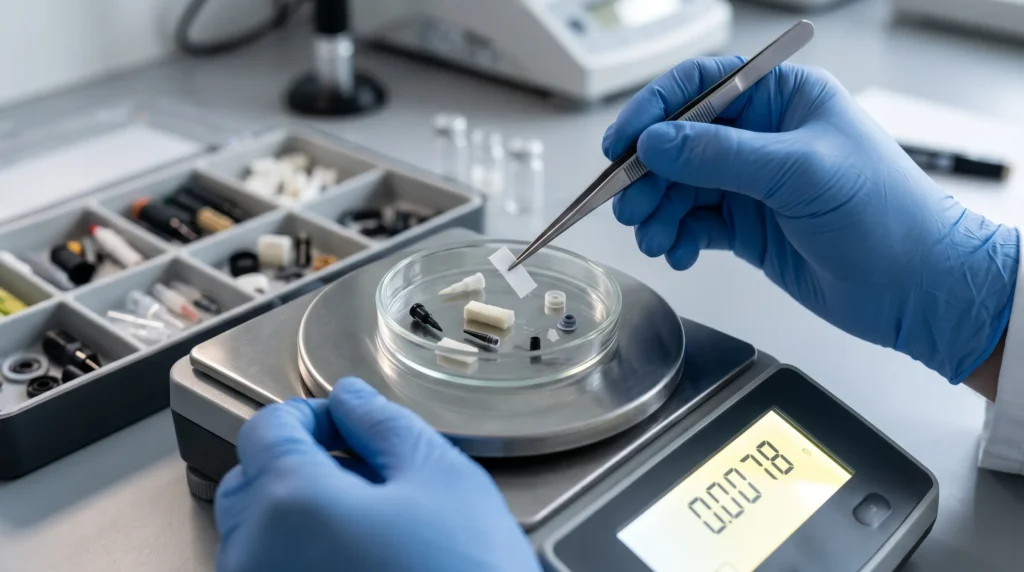
試験所報告書で確認すべき事項
報告書を試験所と確認する際は、以下の4点を確認してください。完全な試験方法では、試料質量、抽出条件、試薬量、反応時間、校正範囲が定められています。一般的な調達記事からこれらを推測しないでください。
1. サンプル調製
サンプルとしたモデル、部品、材料を明記してください。引用された方法に基づき、その部品がどのように前処理・抽出されたかを尋ねてください。報告書がサンプルを特定しており、異なる製品やロットではないことを確認してください。
2. 呈色反応
試験所が引用された方法に従って試薬調製、反応、吸光度測定を行ったか確認してください。報告書に方法名が記載されていない場合や変更された手順が記載されている場合は、明確化を求めてください。
3. 検量線の作成
校正範囲とブランクの設定方法を尋ねてください。サンプル結果が検証済みの測定範囲内に収まっているか確認してください。適用される方法(一般的な記事ではなく)が校正レベルを定めます。
4. 結果の読み取り
報告値を単位、検出限界または定量限界、適用される合格基準とともに確認してください。報告限界未満の値は、報告されたとおりに解釈してください。ホルムアルデヒドが存在しないことの証明とはみなさないでください。
最終計算式
The expression below shows a unit change only when c is already blank-corrected and extra dilution is counted. The full method and the lab's math rule the reported result. This expression is not the full GB/T 32606 procedure.
x = (c × f) / m
- x x = サンプル中の遊離ホルムアルデヒド量(mg/kg)
- c = ブランク補正済み濃度、追加の希釈を考慮(μg/mL)
- f f = サンプル液の希釈量(mL)
- m m = 元のサンプルの正確な質量(g)
メソッドブランク、希釈倍率、報告単位を試験所と確認してください。ブランク補正だけでは合計値が正確であるとは限りません。
安心のための信頼できる試験
製品の安全性を確保することは、単に法律を守ることだけではありません。お客様を守ることでもあります。
必要な方法が現在の認定範囲に含まれている試験所を選んでください。報告書の発行者、サンプル名、認定範囲を直接確認してください。本記事は、特定の試験所の現在の資格や認定範囲を定めるものではありません。
マーカーなどの筆記具について、試験報告書にはサンプル、方法、結果が記録されます。それらの結果を適用される製品要求事項と比較してください。認定を受けているからといって、未試験のモデル、部品、ロットに有害物質が含まれないとは限りません。
関連ガイド: ASTM D-4236試験報告書の読み方(アクリルマーカー用).
関連記事
Why Formaldehyde Still Appears in Stationery
Formaldehyde is not added to markers on purpose. It arrives as a residual from three sources: adhesives in packaging, preservatives in water-based ink, and finishes on wooden or paper components. In each case the amount is small, but the regulatory limit is also small, and the test measures what is present rather than what was intended.
The adhesive route is the most common. Casein and urea-formaldehyde glues are cheap and strong, which is why they still appear in some cartons and laminated boards. A marker itself may pass while the display box it ships in does not.
The ink route matters for water-based formulas. Some preservative systems release formaldehyde slowly as they break down, which is why a freshly mixed batch can pass and a batch tested after six months in a warehouse can fail. That is not a manufacturing defect in the usual sense; it is a formulation choice with a time dimension.
How the Acetylacetone Method Works
GB/T 32606-2016 specifies acetylacetone spectrophotometry as the formaldehyde test method. The procedure runs in four stages.
Extraction. The sample is placed in water at a controlled temperature for a set period. Formaldehyde migrates into the water. The extraction time and temperature are specified, and changing either one changes the result.
Reaction. Acetylacetone reagent is added. In the presence of ammonium acetate, formaldehyde reacts to form a yellow compound, 3,5-diacetyl-1,4-dihydrolutidine. The reaction needs a fixed time and temperature to complete.
Measurement. The solution is read in a spectrophotometer at 412 nanometers. Absorbance is proportional to formaldehyde concentration within the calibrated range.
Calculation. Concentration is derived from the calibration curve, corrected for the blank, and converted to milligrams per kilogram of sample.
The formula only works when the blank is properly corrected and any additional dilution is counted. A report that quotes a number without stating the method edition, the extraction conditions, and the blank value is not reproducible.
Reading a Report: What the Numbers Mean
Three numbers matter on a formaldehyde report: the result, the limit, and the detection limit.
The result should be expressed in mg/kg with the measurement uncertainty stated. A result of 15 mg/kg with an uncertainty of plus or minus 3 is a different statement from 15 mg/kg with no uncertainty given.
The limit depends on the destination market and the product category. Textile and wood components have their own limits under separate standards; stationery is often assessed against the general consumer goods framework. Confirm which limit applies before comparing a result to a pass threshold.
The detection limit tells you whether the test could actually see a failure. A method with a detection limit of 20 mg/kg cannot demonstrate compliance with a 16 mg/kg limit, no matter what the result says.
Sampling and Extraction: Where Tests Go Wrong
Most false passes and false failures trace to sampling, not to the instrument.
The sample must represent the batch. A single marker taken from the top of a carton is not a batch sample. The correct approach is to composite material from several units, because formaldehyde distribution within a production run is not uniform.
The extraction conditions must match the method. Water temperature, extraction time, and the ratio of sample mass to water volume all affect the result. A lab that shortens the extraction to save time will report a lower number than the method intends.
The tested part must be the part that matters. For a marker, that means the barrel, the cap, the ink, and the packaging assessed separately, because each has a different risk profile and a different limit may apply.
よくある質問
Does passing a formaldehyde test mean the product is safe? No. It means formaldehyde is below the applicable limit for that test method. Other substances are covered by other tests.
How often should formaldehyde be retested? At minimum once per production batch, and again whenever the ink supplier, adhesive supplier, or packaging supplier changes.
Can a factory self-test? It can screen internally, but the report that goes to a retailer should come from an accredited third-party lab with the method edition stated.
What happens if a batch fails? The batch should be held, the source identified — ink, adhesive, or packaging — and the affected lots traced. Retesting the same sample rarely changes the result.
Where Formaldehyde Comes From in the Supply Chain
The test measures what is present, not what was intended. Three upstream sources account for most failures.
Adhesive suppliers. Casein and urea-formaldehyde glues remain cheap and strong, which is why they still appear in laminated boards and some cartons. A marker can pass while the display box it ships in does not. Ask for the adhesive declaration separately from the ink declaration.
Preservative systems in water-based ink. Certain preservatives release formaldehyde as they break down. A freshly mixed batch passes; the same batch tested after six months in a warm warehouse may not. This is a formulation choice with a time dimension, and it is the most common cause of a late failure.
Wood and paper components. Pencil barrels, wooden display stands, and some paper stocks carry residual formaldehyde from processing. These are usually low, but they add to the total when the test composites multiple materials.
The practical implication: test the finished product as it ships, not the individual components in isolation. A composite sample catches the additive effect that single-component testing misses.
Setting a Retest Cadence That Actually Catches Drift
Most programs retest once per production batch, which is not enough to catch a slow drift.
A supplier can change an adhesive vendor, a preservative concentration, or a packaging source without announcing it, and the change shows up three batches later as a failed test. The cadence that catches this has three triggers.
Per batch. A basic screening test on every production run. This is a factory-side control, not a third-party report.
Per quarter. A full third-party report on the current production. This catches drift before it becomes a retailer issue.
Per change. Any change to ink supplier, adhesive supplier, packaging supplier, or formulation triggers an immediate retest regardless of the quarterly schedule. This is the trigger most programs omit, and it is the one that catches the failures that matter.
Put the change trigger in the purchase order, not in a side agreement. A clause that requires notification before any material substitution is enforceable; a verbal understanding is not.