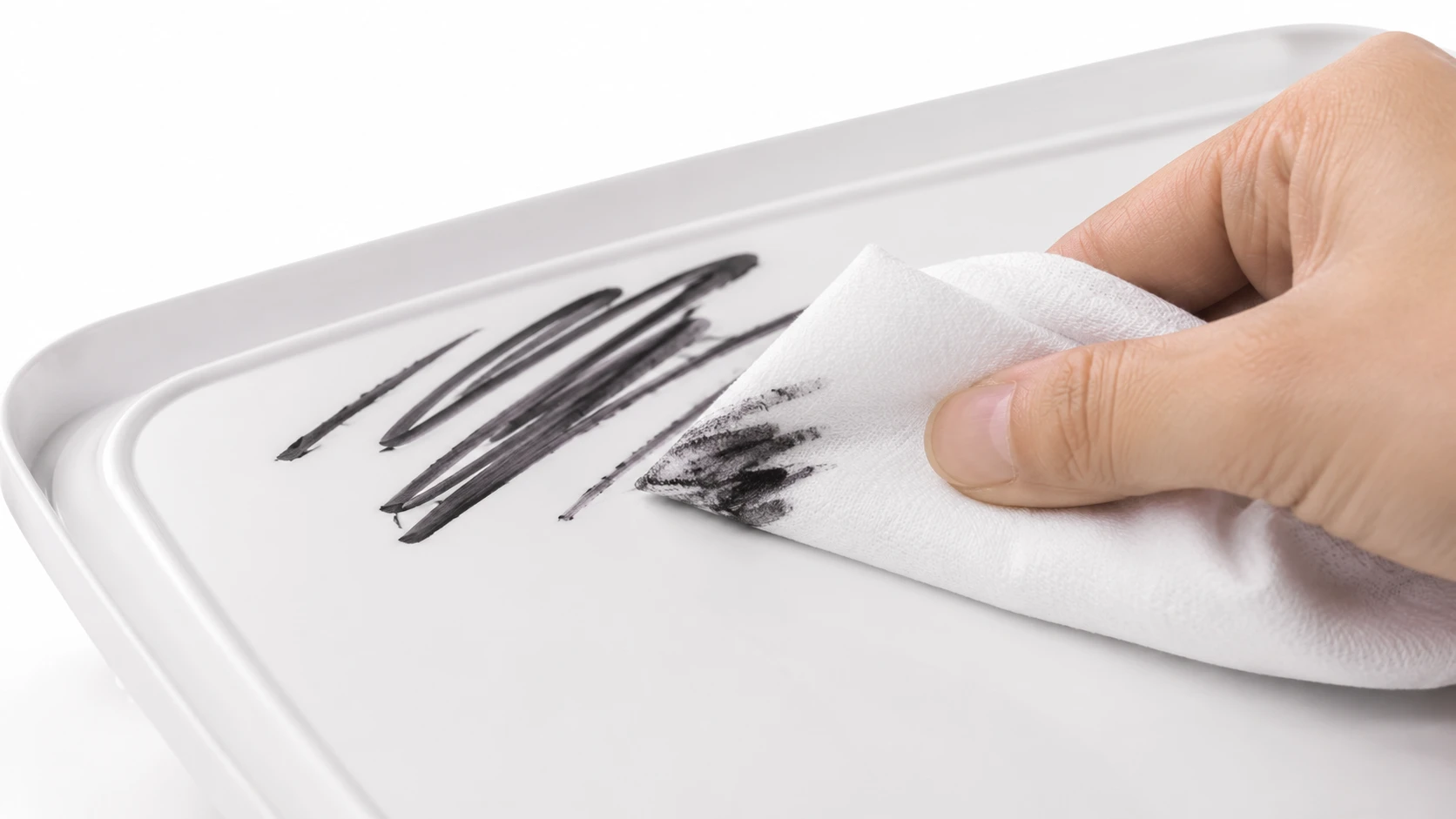
Someone writes on a plastic storage bin with a permanent marker. Then they change their mind. Water does nothing. Soap does nothing. Glass cleaner leaves a faint smear at best. The marker is doing exactly what it was built to do. The user is not impressed.
For B2B buyers sourcing permanent markers, that moment matters. Every end user who cannot remove permanent marker from plastic blames the brand, not the chemistry. They remember which marker failed them.
The removal problem is not random. It measures how well the ink formula does its job. Know what makes permanent marker bond to plastic. Know what solvent chemistry breaks that bond. Then you have a real method to judge ink quality before placing orders.
目次
クイックアンサー:プラスチックから永久マーカーを除去する方法
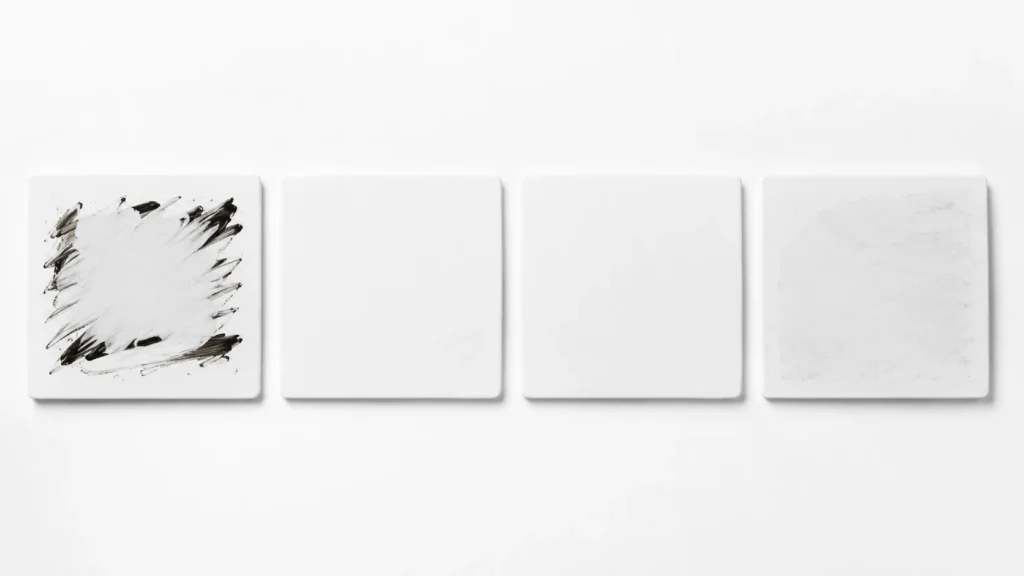
以下の各方法は、インクの異なる部分に作用する。効果があった方法が、そのマーカーが使用する溶剤系を示す。
- 消毒用アルコール(イソプロピルアルコール、70~90%) ほとんどの油性マーカーに対応する。アクリル樹脂が完全に硬化する前に再溶解する。まずはこれを試す。布に含ませ、優しく拭く。インクが浮き上がる。
- アセトン(除光液) より強力だ。硬化後でもアクリルを溶解する。しかし、アセトンは一部のプラスチックも溶解する。ABS、ポリスチレン、塗装面は接触すると曇ったり軟化したりする。目立たない場所でテストすること。
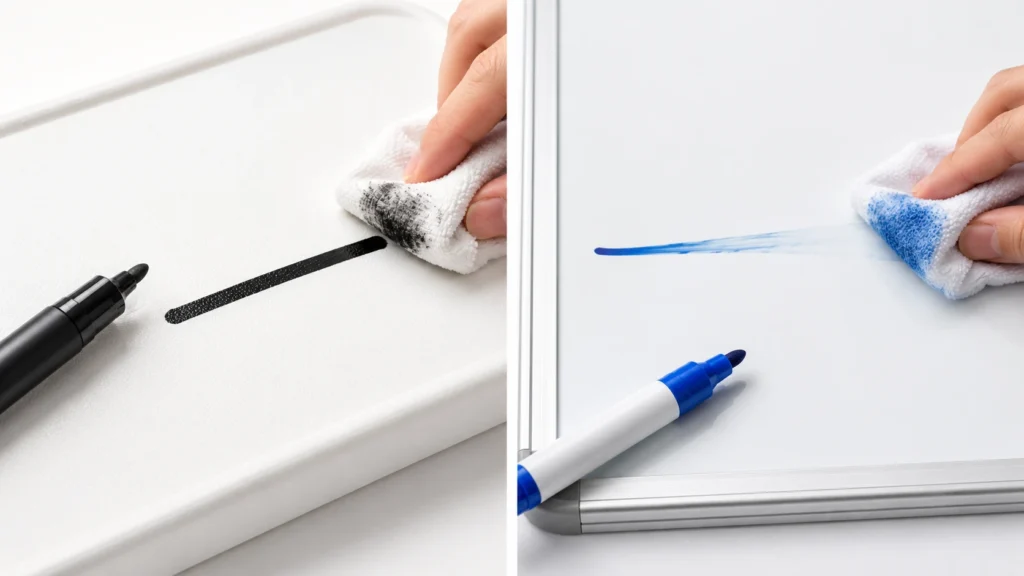
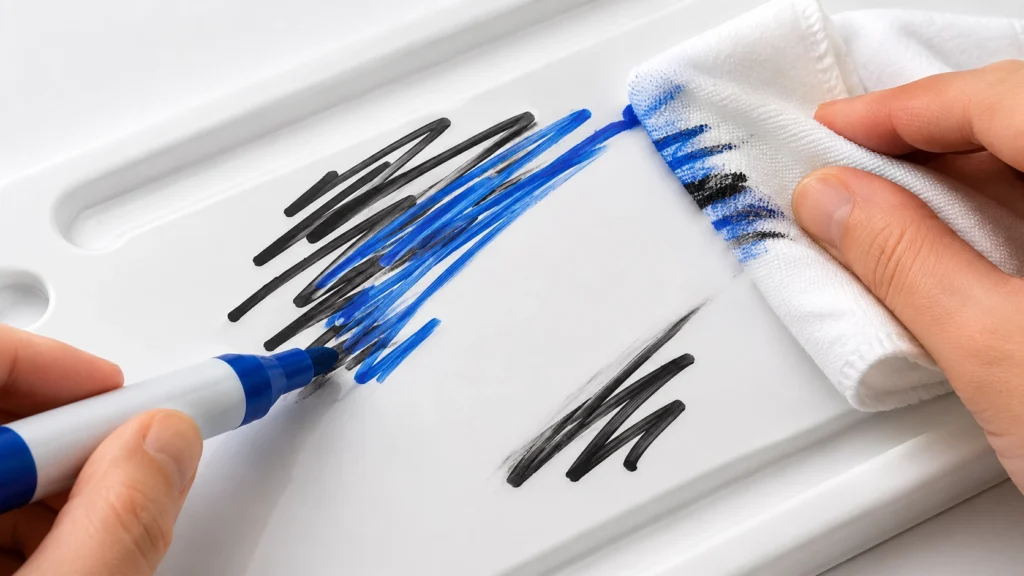
- ホワイトボードマーカーのトリック. 油性マーカーの上からホワイトボードマーカーで落書きし、拭き取る。ホワイトボードマーカーの溶剤が油性樹脂を再液化する。両方のマーカーはアルコールキャリアを共有している。デリケートなプラスチックに最も優しい方法。
- 重曹ペースト. 重曹に数滴の水を加えて濃厚なペースト状にし、布で優しく擦り、洗い流す。軽度の研磨がインク膜を物理的に剥がす。溶剤だけでは溝の顔料に届かないテクスチャードプラスチックに効果的。
- 市販のクリーナー(Goo Gone、メラミンスポンジ). 溶剤と微研磨の組み合わせ。硬化した古い汚れに効果的。まずは目立たないプラスチックでテストすること。一部の製品には特定のポリマーを侵す石油系溶剤が含まれている。
ブランドオーナーや購買チームにとって、これらの要素は調達と品質チェックの基準をより明確にするのに役立ちます。
除去の難しさが示す、永久マーカーのインク品質について
Every removal method either gets the ink off or does not. The reason tells you something exact about the formula. For B2B buyers, the removal profile says more about ingredient quality than a spec sheet ever will:
| 除去方法 | 作用機序 | インクについて明らかになること | B2B品質シグナル |
| 消毒用アルコール | 完全硬化前にアクリル樹脂を再溶解 | インクはアルコール可溶性アクリルを使用。顔料は懸濁しており、結合していない。 | 標準的なアルコール系配合。樹脂硬化時間と溶剤純度を確認。 |
| アセトン | 硬化アクリルを溶解。より強力な溶剤作用。 | 樹脂はアクリル系で、ケトン系溶剤に反応する。 | 堅牢なアクリル系。工業用の恒久的用途に適する。耐アセトン性は高グレードの樹脂を示す。 |
| ホワイトボードマーカーの上書き | ホワイトボードマーカーのアルコール溶剤が油性樹脂を再液化 | 両方のマーカーはアルコールキャリアを共有。樹脂は互換性がある。 | 業界標準の溶剤化学。これが効かない場合、マーカーはキシレンやトルエンを使用している可能性があり、異なる品質レベルを示す。 |
| 重曹(研磨) | 乾燥したインク膜を表面から物理的に剥がす | インク膜は機械的接着性を持つ。顔料は硬化樹脂に固定されている。 | 耐久性のある膜で、恒久的用途に適する。重曹だけで簡単に除去できる場合、膜が実際の恒久的使用には弱すぎる可能性がある。 |
| 何も効かない | 樹脂が完全に架橋し、プラスチックと化学的に結合している | 基材との強力な接着性を持つ高性能樹脂 | 真に恒久的。工業用ラベリングにはこれが望ましい。消費者向け製品では、このレベルは苦情を生む可能性がある。 |
Permanent markers are supposed to be permanent. The real question is whether they come off under the conditions your end users face. A marker that shrugs off alcohol but gives in to acetone is well built for office and school use. A marker that resists everything, acetone included, is built for industrial labels where permanence is the only goal. Different markets. Different formulas.
なぜ永久マーカーがプラスチックに付着するのか
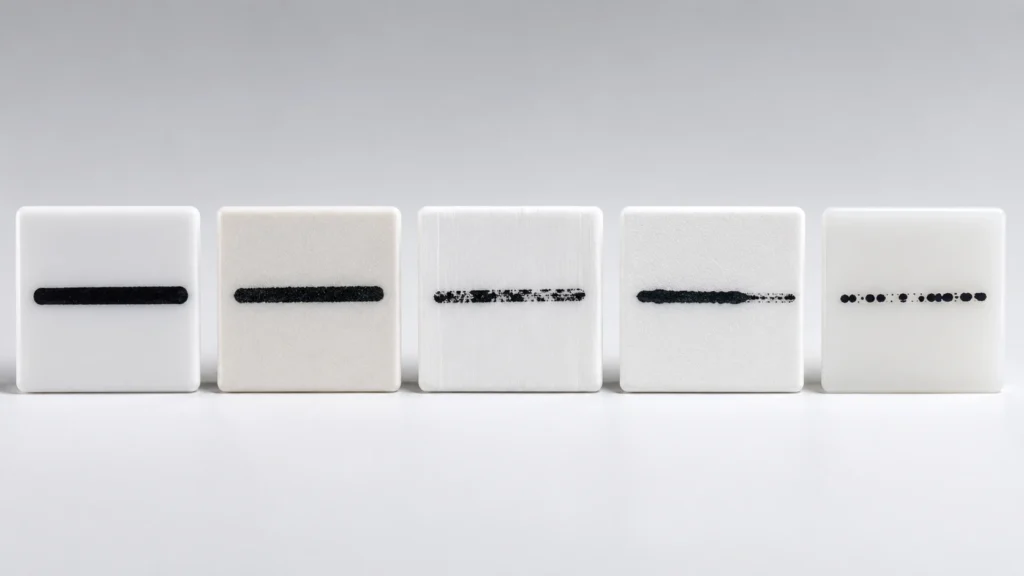
Plastic is not one material. It is a family of polymers. Each has its own surface chemistry. Which plastic your marker hits explains why some removal methods work on one surface and fail on another.
Polyethylene and polypropylene are the hardest to bond to. Low surface energy. Liquids bead up instead of spreading. Permanent ink grips these faces by shape. The resin film wraps micro texture and sets in place. Rubbing alcohol usually works because it re-dissolves the resin and breaks that mechanical grip. No chemical bond to break.
Polystyrene and ABS are easier to bond to and easier to damage. The acrylic resin in permanent ink can partly dissolve the surface of these plastics. That makes a mixed polymer layer at the join. Acetone works well here. It also damages here. Same solvent, two effects.
ポリカーボネート and acrylic sit in the middle. They resist most solvents better than polystyrene. They bond more easy than polyethylene. Alcohol usually gets the job done. Avoid acetone. It crazes or clouds polycarbonate almost at once.
Polyvinyl chloride shows in plumbing, vinyl, and some packing. Moderate chemical resistance. Alcohol is safe. Acetone softens PVC with enough contact time.
The same marker acts different across these faces. A marker that writes well on a polypropylene shipping label can smear on a polystyrene pen barrel. If your buyers use markers on varied plastics, ask the supplier for grip data across several bases. A factory that tests one surface is not giving data you can trust.
永久性 vs. ホワイトボード用マーカー:たった一つのポリマーの違い
Permanent and dry erase markers are nearly the same under the hood. Both use a polyester core, a felt or fiber tip, and an alcohol solvent carrier. According to the 王立化学会によると、ホワイトボード用と永久マーカーの主な違いはポリマーの選択にある:永久マーカーはアクリルを使用し、乾燥後に表面に永久的に結合する;ホワイトボード用マーカーはシリコーンを使用し、非結合膜を形成する。しかし、そのシリコーン膜は滑らかで非多孔質の表面でのみ結合を防ぐ。インクが布地に触れる瞬間、溶剤は顔料を繊維構造の深部に運び、剥離剤が介入できない。, the whole difference is one part. The polymer.
アクリル樹脂 を使用する。アルコールが蒸発し、アクリルが硬化して表面に結合する硬い膜になる。アクリル絵の具と同じ化学的性質。一旦硬化すると、耐久性があり、防水性があり、適合する溶剤なしでは除去が難しい。. The alcohol leaves. The acrylic cures into a hard film that bonds to the surface. Same chemistry as acrylic paint. Once cured, it is durable, waterproof, and hard to remove without a matching solvent.
シリコーンポリマー に置き換える。シリコーンは表面に付着せずに載る膜を形成する。乾いた布で膜全体を一度に剥がすことができる。結合はない。しかし、この同じシリコーンが、ホワイトボードマーカーが衣服を汚す理由でもある。撥水性があるため、洗剤が下の顔料に到達しない。. The silicone makes a film that sits on the surface without attaching. A dry cloth lifts the whole film in one pass. No bond. That same silicone is why dry erase stains clothes. It repels water, so soap never reaches the pigment underneath.
A factory making both types runs two separate polymer systems. Permanent markers need exact acrylic balance between grip and removal. Dry erase markers need exact silicone balance between erase and film strength. A factory with in-house ink R&D holds both at formula level instead of buying pre-mixed ink outside.
ZH Stationery runs its own ink lab. It has built custom inks for marker pens, permanent markers included, across 26-plus years of OEM/ODM work. See the 產品範圍. For private-label lines, the ability to tune resin chemistry and solvent ratio to end-user needs turns a catalog order into a spec talk.
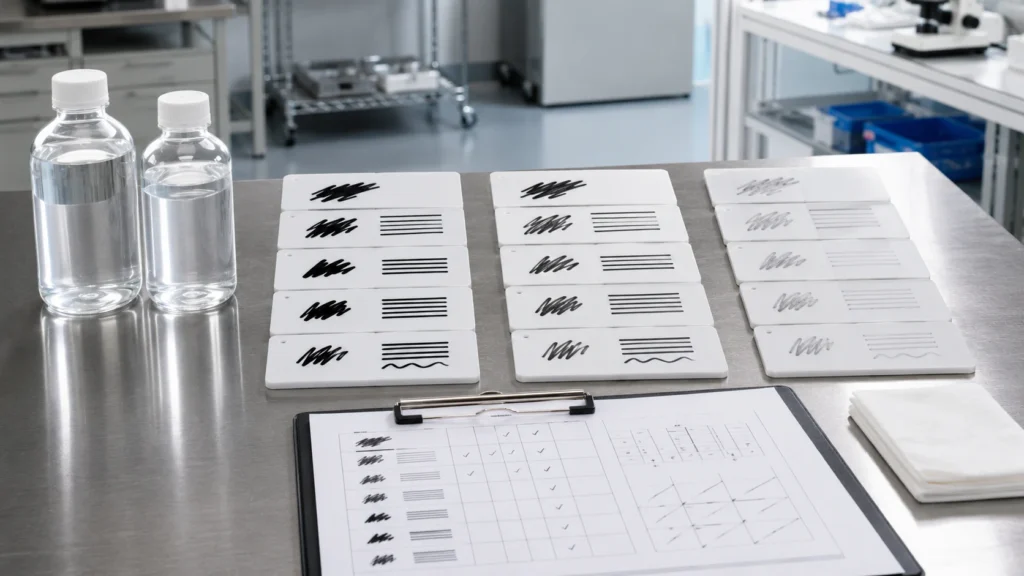
B2Bバイヤーが永久マーカーを注文する前にテストすべきこと
Catalog claims about permanent and waterproof mean nothing alone. Four tests tell you what the ink really does:
- ターゲット基材への密着性。 お客様が実際に使用するプラスチックに筆記してください。ポリプロピレン製の収納箱、PVCパイプ、ABSハウジング、ポリカーボネート製メガネ。インクを1時間硬化させ、除去を試みてください。どの表面が保持し、どの表面が剥離するかを記録してください。それが実際の性能ベースラインです。
- 耐溶剤性。 24時間硬化させます。アルコール、次にアセトン、さらに市販のクリーナーで除去テストを行います。優れた パーマネントマーカー は、非多孔質プラスチック上ではアルコールに耐性を持つべきですが、 アセトン. には屈する必要があります。アルコールだけで除去できる場合、樹脂の硬化が弱いことを示します。何も除去できない場合、工業グレードの配合です。それが市場に適合するか判断してください。
- 完全硬化後の耐水性。 プラスチックに筆記します。24時間硬化させます。1時間水に浸します。インクがにじんだり、浮き上がったり、退色したりしてはいけません。耐水性は、パーマネントと表示されるものにとって最低限の条件です。インクがこれに不合格の場合、樹脂システムに欠陥があります。
- 耐紫外線性および耐退色性。 マークされたプラスチックサンプルを72時間直射日光に当てます。未暴露の対照サンプルと比較します。屋外、建設、造園、出荷で使用されるマーカーには、UV安定性のある顔料が必要です。インクが数日で退色する場合、産業ユーザーは気付くでしょう。サプライヤーに使用している顔料化学と、UV安定剤が配合に含まれているかを尋ねてください。
A factory running 100 percent check on every unit, with batch QC files, can make this data. The question for suppliers is not is your marker permanent. Ask: can you show grip results on polypropylene, ABS, and polycarbonate after 24 hour cure, with solvent resistance data? See the 工場見学.
よくある質問
プラスチックから永久マーカーを除去する最良の方法は何ですか?
Rubbing alcohol, 70 to 90 percent, on a cloth. Rub gently. It re-dissolves the acrylic resin before it fully cures. For cured stains, step up to acetone. Test a hidden spot first. Acetone eats some plastics. The dry erase trick is safest for delicate faces. Scribble dry erase ink over the mark and wipe both away. The B2B marker guide にラインの詳細が記載されています。
なぜ永久マーカーはプラスチックにこれほど強く接着するのか?
Acrylic resin is the binder. Alcohol leaves. Acrylic cures into a hard film that grips the plastic. On slightly rough faces, the resin flows into micro texture and locks by shape. Alcohol removes it by re-dissolving the acrylic before it hardens. After full cure, you need acetone.
なぜドライイレースマーカーは永久マーカーを除去できるのか?
Both marker types use an alcohol solvent carrier. Scribble dry erase over permanent. The alcohol in the dry erase ink re-liquefies the acrylic resin. Then the silicone release agent in the dry erase ink coats the loose pigment and stops it from re-bonding. Wipe once. Everything comes off. The trick works because the two markers share solvent chemistry even with different polymers.
すべてのプラスチックから油性マーカーが同じ方法で落ちるのか?
No. PE and PP release most easy with alcohol. The bond is by shape, not chemistry. ポリスチレン and ABS hold tighter. Acetone works better on them and also attacks them. Polycarbonate is acetone-sensitive and will craze on touch. Always test a hidden spot of the exact plastic you are cleaning.
何が永久マーカーを本当に永久にするのか?
The resin load, the cure chemistry, and the pigment type. More resin makes a stronger film. Some formulas cross-link for extra life. Carbon black and iron oxide hold under UV far better than organic dyes. A marker that washes off with water has a resin problem. One that fades in sun has a pigment problem. ZH Stationery, through its ink lab, tunes these by need. See the カスタムマーカーメーカー および ペイントマーカーの製造工程 のページをご覧ください。
B2Bバイヤーは購入前に、どのようにして永久マーカーの品質をテストすべきですか?
Test grip on the real plastics your buyers use, not the factory card. Test solvent resistance after 24 hour cure with alcohol and acetone. Test water by soaking a marked sample for one hour. Test UV with 72 hours of direct sun. If the supplier cannot give this data for your SKU, the claims are not verified. ZH Stationery puts batch grip and life files in the QC pack for permanent orders.
Knowing how to remove permanent marker from plastic tells you more about formula quality than any catalog claim. If you source permanent markers for industrial labels, office supply, or private label, contact ZH Stationery to talk ink specs. See the インク品質ガイド、 アルコールマーカーメーカー, or the お問い合わせページから.
関連ガイド: ホワイトボードマーカーの汚れ落とし.
関連ガイド: 3Dプリント用ペイントマーカー.