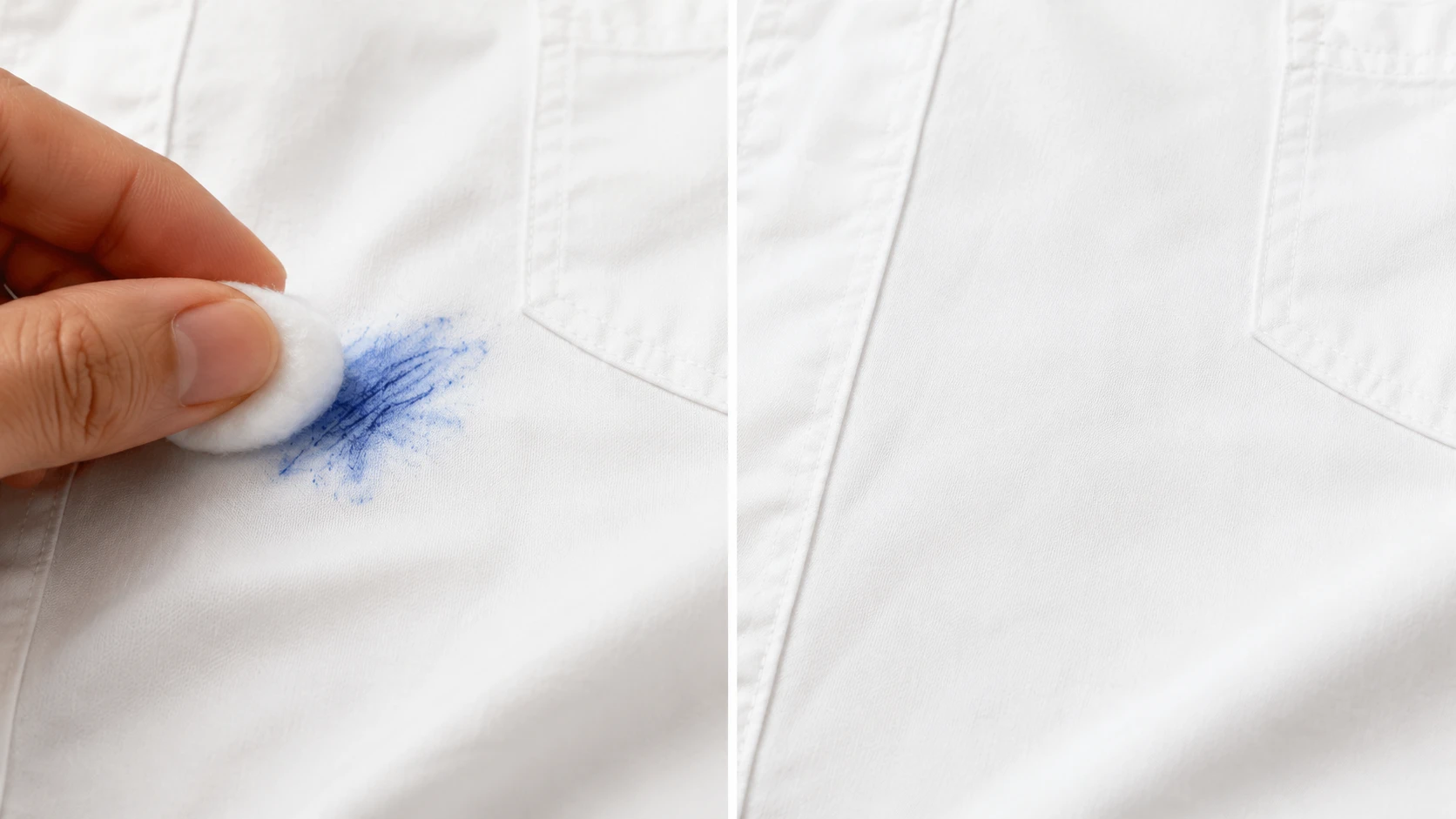
A teacher grabs a whiteboard marker, uncaps it, waves toward the board, and leaves a blue streak across a white shirt sleeve. The stain looks permanent. She tries water. Soap. Scrubbing. Nothing works. The marker goes in the trash. The brand goes on a mental blacklist.
For B2B buyers sourcing dry erase markers, that moment is not just buyer frustration. It is a quality failure with a real cost. Every end user who cannot lift a stain is a lost repeat buyer. Every school that swaps brands after one complaint is a buying call you never hear about.
Dry erase stain removal difficulty is not random. It follows from ink-formulation decisions made at the factory. Know what makes a stain removable. Know what makes it permanent. Then you have a practical frame for judging marker quality before bulk orders. Start with the ink quality guide.
目次
クイックアンサー:ホワイトボードマーカーの汚れを除去する方法
The methods below are ranked by effect. Each one works or fails because of exact ink chemistry:
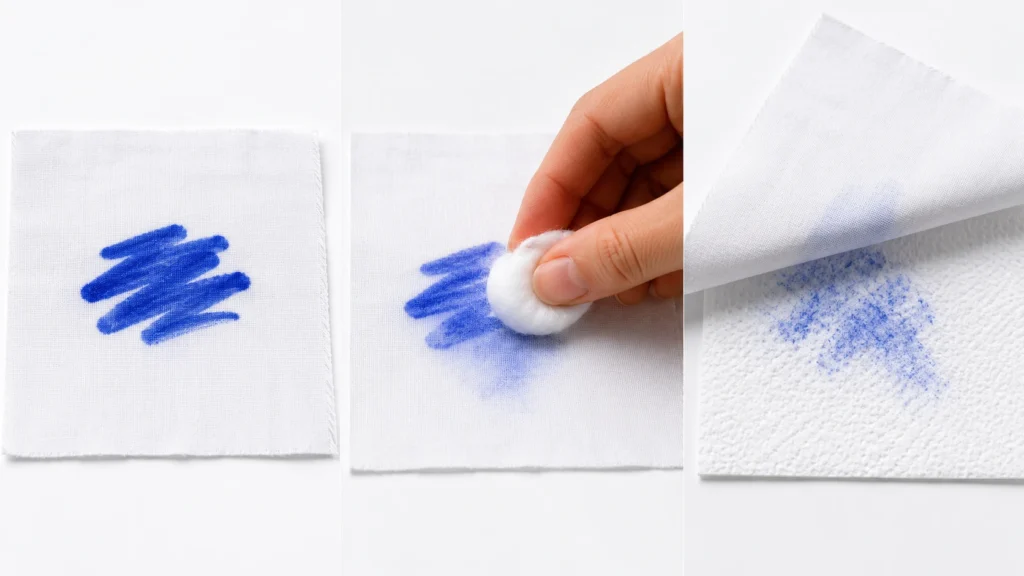
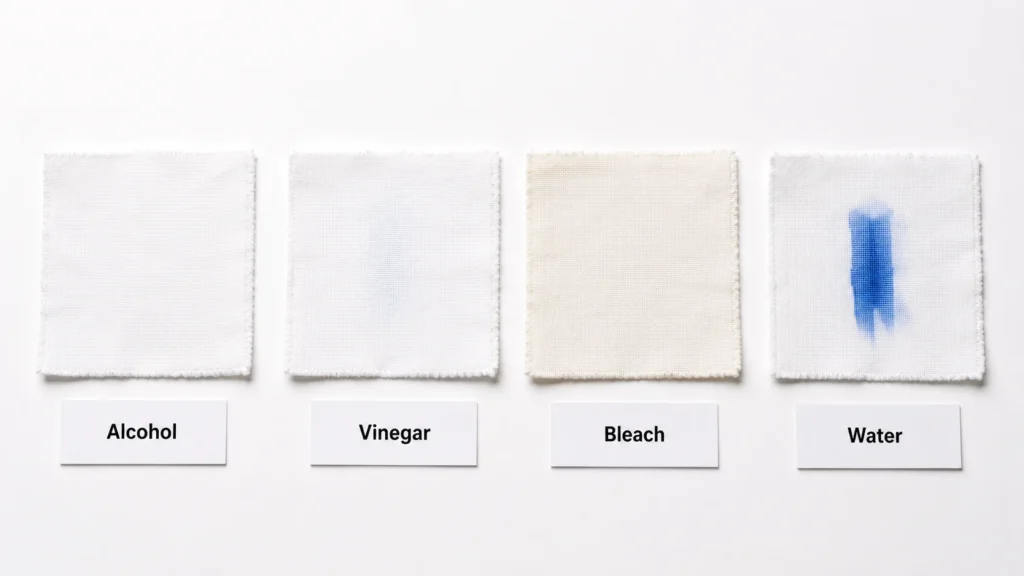
- 消毒用アルコール (イソプロピルアルコール、70~90%)は最も強力な選択肢である。これは繊維の繊維内で顔料を閉じ込める樹脂バインダーを再溶解し、染みをより深くこすり込む代わりに拭き取る。ドライイレースインクはアルコールを溶媒キャリアとして使用する。インクをバレル内で液体に保つ同じ化学が、それを布地から除去する化学である。
- 白酢 は弱酸である。一部の樹脂バインダーを分解できるが、濃い染みに対してはアルコールよりも遅く、効果が弱い。アルコールが素材を変色させる可能性があるデリケートな布地には最も安全な選択肢である。
- レモン汁 はおおよそ酢と同じ働きをする。クエン酸が顔料を繊維表面から緩めるのに役立つ。綿の新鮮で薄い染みに最適である。
- 漂白剤 は酸化によって顔料を除去する。白い布地のみに使用する。バインダーを溶解する代わりに色分子を破壊するため、やり過ぎると布地を損傷する可能性がある。
- 水と石鹸, は、それだけではほとんど効果がない。ドライイレースインクに含まれるシリコーンポリマー剥離剤は水をはじくように設計されている。それがインクがホワイトボードからきれいに消去される理由全体である。また、それが水性洗剤で衣類から洗い流せない理由でもある。
ブランドオーナーや購買チームにとって、これらの要素は調達と品質チェックの基準をより明確にするのに役立ちます。
ホワイトボード用マーカーのインク除去の難易度が示す、マーカーインクの品質について
Every removal method wins or fails by a specific chemical interaction with the ink. For B2B buyers, the removal profile of a marker says more about ingredient quality than any catalog line does:
| 除去方法 | ドライイレースインクへの作用方法 | インク配合について明らかにすること | B2B品質シグナル |
| 消毒用アルコール(イソプロピル) | 繊維上の顔料を保持する樹脂バインダーを再溶解;元の溶媒キャリア化学と一致 | インクはアルコール可溶性樹脂を使用;顔料は繊維に化学結合していない | 標準的なアルコールベースの溶媒システム。溶媒の純度と蒸発速度を確認すること。 |
| 白酢(酢酸) | 弱酸が樹脂と繊維の接着を部分的に破壊;剥離剤濃度が高いと効果が低下 | 樹脂には酸感受性がある;剥離剤レベルが除去の容易さに影響 | 高い剥離剤(ボード消去に良い)は酸ベースの除去を難しくする。ボード性能と染み除去の間には直接的なトレードオフがある。 |
| 漂白剤(酸化) | 酸化により顔料の色分子を破壊;樹脂バインダーは溶解しない | 顔料の感受性は異なる:有機顔料は漂白される;無機金属酸化物は耐性がある | 顔料の種類が重要。有機顔料(アゾ化合物)は漂白される。二酸化チタンと酸化鉄顔料は漂白されない。サプライヤーにどの化学を使用しているか尋ねること。 |
| 水+洗剤 | 顔料を乳化・懸濁しようとする;剥離剤コーティングが水をはじく | 剥離剤はその役割を果たしている。耐水性は意図的である。 | インクが普通の水で洗い流せるマーカーは、適切なボード消去性のために剥離剤が少なすぎる。それは配合の選択であり、欠陥ではない。 |
| 熱(アイロン、乾燥機) | 樹脂バインダーを繊維に架橋し、染みを永久に固定する | 樹脂は熱硬化性である。一度熱硬化すると、溶媒による再溶解は機能しなくなる。 | 熱固定された染みは最も永久的な損傷を引き起こす。包装には冷水のみの洗濯指示を明確に記載する必要がある。 |
The table shows something buyers rarely hear. The same formula calls that make a marker erase clean from a board, strong release agent, alcohol-soluble resin, steady pigment, are the same calls that make it stain clothing. The best markers are not stain proof. They are stain manageable. Their chemistry answers well when you use the right removal method.
布地の種類が染み抜きのすべてを変える理由
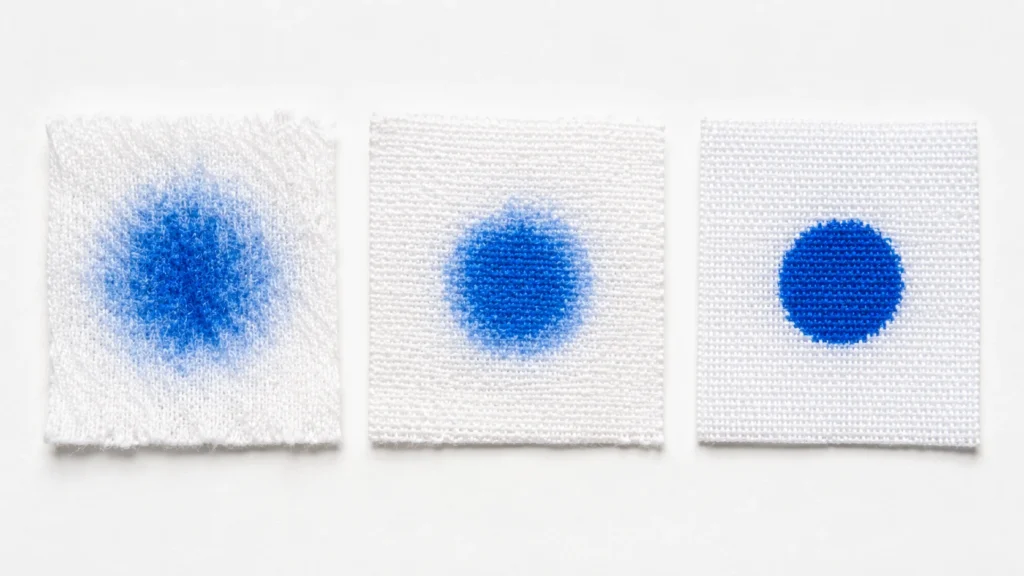
Fabrics are not all equally stainable. Fiber pores and chemistry decide how deep the pigment goes and how hard it is to pull out.
Cotton is the worst. Cotton fibers are hollow, ribbon-like cellulose. They wick liquid into the core fast. When alcohol solvent carries pigment into a cotton fiber, the pigment ends up trapped inside the fiber cavity, not just on the surface. Water cannot reach pigment that deep. Rubbing alcohol can, because it travels the same route the solvent took.
ポリエステル is a different problem. Polyester fibers are synthetic and water-shy. They do not take water. They do take organic solvents. The alcohol in dry erase ink moves into polyester easy and carries pigment deep into the fiber body. When solvent leaves, the pigment is locked inside that smooth polymer. Solvent removal works on polyester only when the stain is fresh, within minutes to hours. Once the resin cures, heat speeds this, polyester stains get brutal.
Cotton-polyester blends join both problems. Cotton wicks ink in. Polyester traps it. Act fast. Use the right solvent. Never add heat before the stain is fully lifted.
Silk and wool are protein fibers. They take pigment fast. Strong solvents hurt them. Diluted vinegar or special dry-cleaning solvents are safer than rubbing alcohol, though weaker on heavy stains.
For B2B buyers, here is the point. The fabric your end users wear decides how they feel your product. A marker that makes easy stains on 100 percent cotton swatches can leave permanent marks on the poly-cotton blend uniforms in real classrooms. When a supplier says washable, ask what fabric they tested. A vague answer means the data is not solid.
B2Bバイヤーが理解すべき「配合のトレードオフ」
Dry-erase ink formulation involves a built-in tradeoff. The three traits buyers want most fight each other.
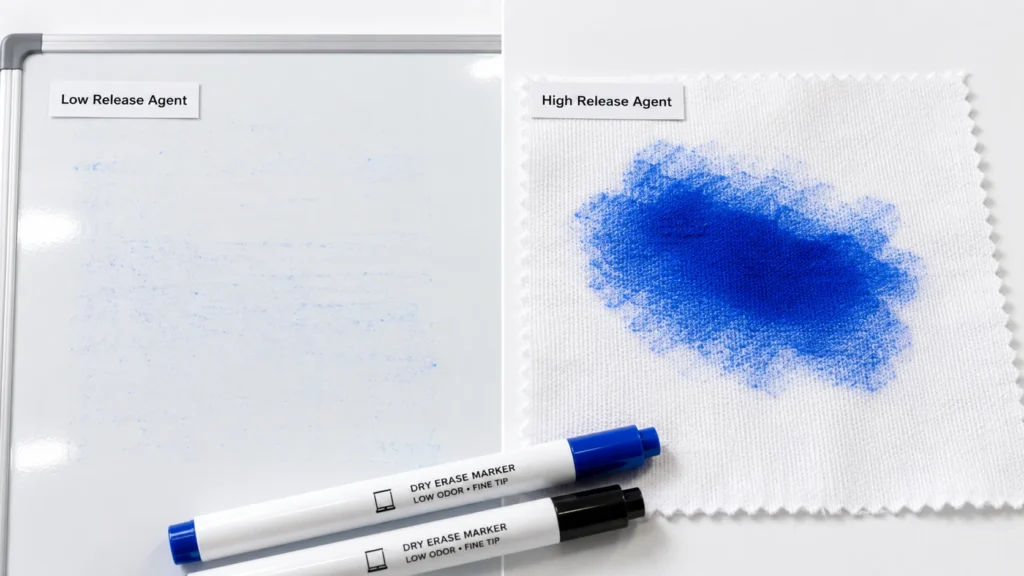
- きれいなボード消去性 には強い剥離剤が必要であり、通常は顔料とホワイトボード表面の間に非結合性フィルムを形成するシリコーンポリマーである。剥離剤が多いほど、消去はきれいになる。しかし、同じ剥離剤が水をはじくため、洗剤が衣類の染みを除去できない。ボード性能が良いほど、染み除去は難しくなる。
- 強い色 には高い顔料充填が必要であり、通常はインク配合の重量の30~50%である。顔料が多いほど、ボード上で大胆で視認性の高い書き込みが可能になる。また、染みが発生した際に繊維に閉じ込められる固体粒子も多くなる。色が良いほど、染みは悪化する。
- 洗濯性 には、顔料から高分子染料(分子レベルで溶解し洗濯で洗い流される)への切り替え、または 放置時間後のボード消去性。 着色剤が布地に結合するのを防ぐ添加剤の追加が必要である。高分子染料はボード上でやや強度の低い色を与える。染料ブロッカーはコストが高く、インク粘度に影響を与える可能性がある。洗濯性が良いほど、ボード性能または製造コストのトレードオフを受け入れることを意味する。
No factory solves this. B2B buyers move through it by understanding their market's priorities. A school brand puts washability first. Teachers forgive slightly lighter board writing if uniforms survive the week. An office brand puts board performance first. Adults are less likely to ink their clothes. They complain about ghosting.
A factory with its own ink lab can tune pigment-to-dye ratio, release agent level, and dye blockers by what the market needs. ZH Stationery has built custom inks for marker pens, dry erase included, across 26-plus years of OEM/ODM work. See the paint marker process および alcohol marker makers pages. The skill is knowing which trades your market takes.
B2Bバイヤーがホワイトボードマーカーの注文前にテストすべきこと
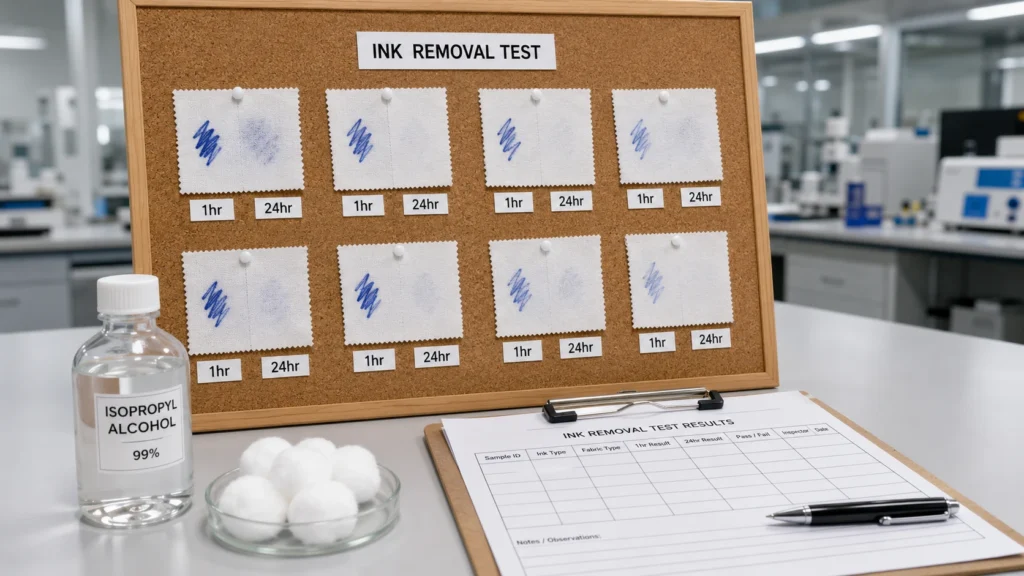
Catalog lines will not tell you how a marker really stains fabric. Run these four tests instead:
- ポリコットン混紡布地における洗濯堅牢性テスト. 65/35ポリコットン見本(最も一般的な学校制服生地)にインクを塗布します。1時間乾燥させます。70%イソプロピルアルコールを使用し、ブロッティング法で除去を試みます。別の乾燥した染みについては、24時間待ってから再度試みます。毎回、どれだけの顔料が残るかを記録します。これにより、製品が直面する実際のシナリオをシミュレートします。
- 24時間後のボード消去性テスト. 標準的なホワイトボードに書き込みます。インクを24時間放置します。乾いた布で消去します。高品質な配合では何も残りません。ゴーストが発生する場合は、離型剤の不足または樹脂化学の誤りを示しており、どちらも染み除去に影響します。
- キャップオフ回復性テスト. キャップを外します。マーカーを2時間露出させます。その後、書き込みます。すぐに書き始め、スキップやプライミングは不要であるべきです。キャップオフ不良は、溶剤の蒸発速度とキャップシール設計に起因し、どちらも工場が配合段階で管理します。
- 熱セット染みテスト. 布地にインクを塗布します。1時間乾燥させます。温かいアイロン(スチームなし)で10秒間プレスします。アルコールで除去を試みます。熱後に染みが永久的になる場合、樹脂は熱硬化性です。つまり、誤って染みのついたシャツを乾燥機に入れたエンドユーザーは、決してそれを取り除くことができません。これはパッケージの警告に記載すべきです。 梱包前に、4,000平方メートルの自動化施設全体でこれらのテストを実施する工場は、このデータを生成するQCインフラを備えています。. そのように運営されています。尋ねるべき質問は「インクは洗い落ちますか」ではありません。「ポリコットン混紡布地における、1時間後と24時間後、熱曝露の有無にかかわらず、洗濯堅牢性データを見せていただけますか」と尋ねてください。
A factory that runs 100 percent check on every unit before packing, across a 10,000+ sqm site with 8 workshops, can make this data. ZH Stationery works that way. See the 工場見学 和 カスタムマーカーメーカー. The question is not does your ink wash out. Ask: can you show wash data on poly-cotton blend after 1 hour and 24 hours, with and without heat?
よくある質問
衣類からドライイレースマーカーを除去する最も効果的な方法は何ですか?
消毒用アルコール, 70 to 90 percent. It re-dissolves the resin binder that holds pigment on fibers. The chemistry matches the solvent carrier the marker itself uses. Put alcohol on a clean cloth. Blot from the outside edges inward. Do not rub. Rubbing pushes pigment deeper. Swap the cloth as it picks ink. Keep going until no more pigment moves. Then wash in cold water. Never add heat before the stain is fully out.
なぜ水や石鹸では落とせないドライイレースの汚れが、消毒用アルコールで除去できるのか?
Dry erase ink has a silicone release agent that makes it water-shy. That is on purpose. It is the same trait that lets ink wipe clean from a board. Water and soap cannot pass this silicone wall. Rubbing alcohol works because it is close to the solvent already in the ink, isopropanol or ethanol. It re-dissolves the resin that traps pigment so the pigment can lift. See the RSC explainer.
乾いた消去マーカーの汚れを落とすのに酢は効果がありますか?
White vinegar can partly lift light, fresh dry erase stains. It weakens the bond between resin and fibers. It is weaker than alcohol and safer on silk and wool, where alcohol may discolor. For cotton and polyester, alcohol is still better. Vinegar works best as a pre-wash for mild stains.
一部のホワイトボードマーカーが他よりも強く染みつくのはなぜですか?
Three things in the formula set stain weight. Pigment size. Smaller particles go deeper. Release agent level. More agent gives better board erase and worse stain lift. Pigment versus dye. Dye inks wash out easier. Markers loaded with pigment and strong release agent perform best on the board and stain worst on fabric. That is not a defect. It is a trade. The patent example shows the chemistry direction.
ヒートセットされたドライイレースのシミは除去可能か?
No. Once heat hits a dry erase stain, from iron, dryer, or hot water, the resin bonds to the fibers and the stain becomes near-permanent. The solvent ways that work on fresh stains stop because the bond changed. Packing should always say wash in cold water only for garments with marker ink. ZH Stationery, after 26-plus years of global work, knows which warning language prevents complaints.
B2Bバイヤーは、購入前にホワイトボードマーカーの消去性をどのように評価すべきか?
Ask the supplier for wash data on 65/35 poly-cotton blend, not 100 percent cotton swatches. Get results for 1 hour and 24 hour set times, with and without heat. Make sure they used 70 percent isopropyl and the blot method, not scrubbing. If the supplier cannot give this for your exact SKU, the wash claim is not verified. ZH Stationery puts batch wash files in the standard QC pack for dry erase orders.
If you source dry erase markers for school programs, office retail, or private label, contact ZH Stationery to talk ink options, ask wash samples, and judge specs for your market. See the お問い合わせページから.
関連ガイド: 志望アーティストが知っておくべき10のマーカーテクニック.