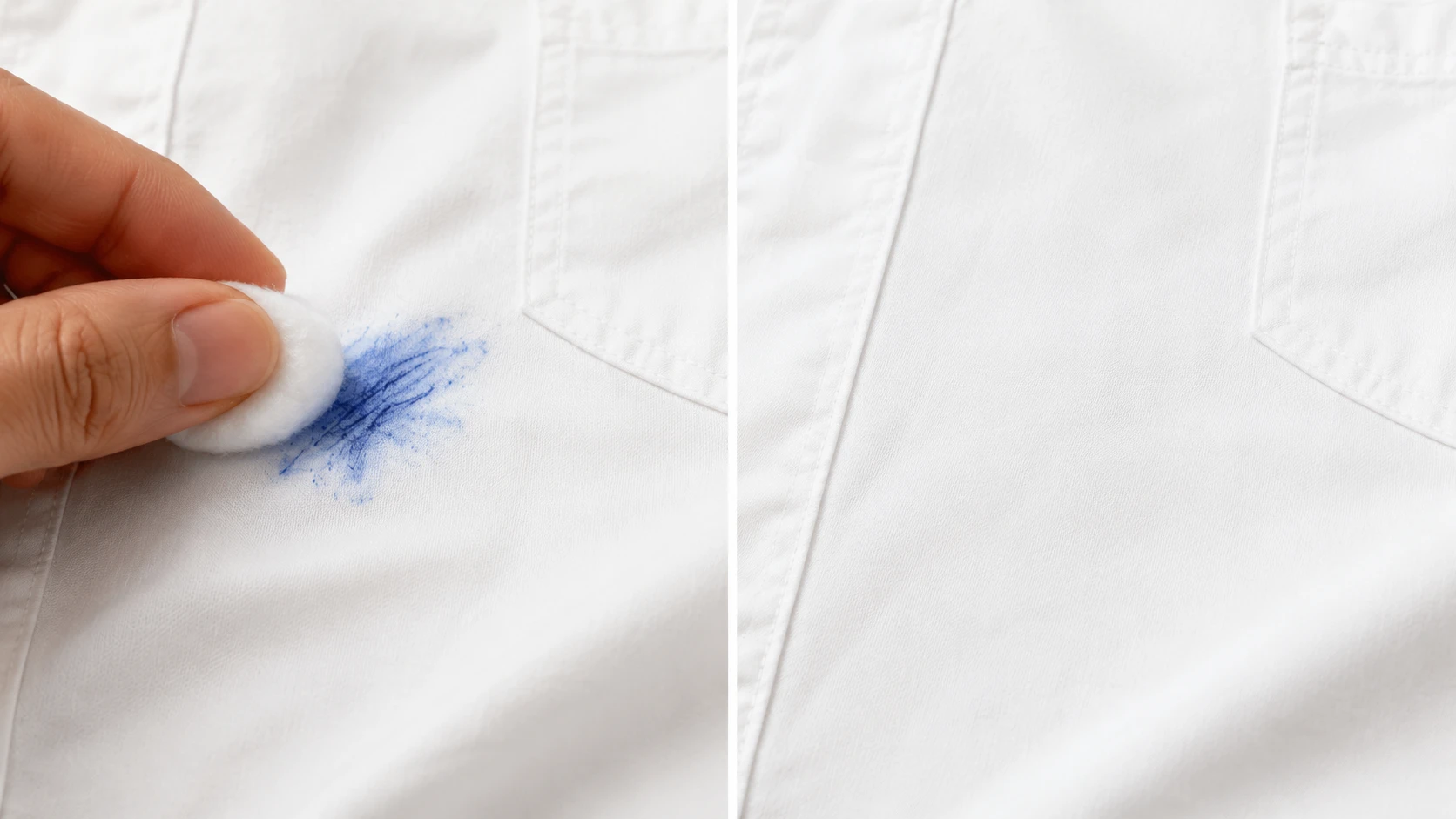
A teacher grabs a whiteboard marker, uncaps it, waves toward the board, and leaves a blue streak across a white shirt sleeve. The stain looks permanent. She tries water. Soap. Scrubbing. Nothing works. The marker goes in the trash. The brand goes on a mental blacklist.
For B2B buyers sourcing dry erase markers, that moment is not just buyer frustration. It is a quality failure with a real cost. Every end user who cannot lift a stain is a lost repeat buyer. Every school that swaps brands after one complaint is a buying call you never hear about.
Dry erase stain removal difficulty is not random. It follows from ink formula calls made at the factory. Know what makes a stain removable. Know what makes it permanent. Then you have a practical frame for judging marker quality before bulk orders. Start with the 잉크 품질 가이드.
목차
빠른 답변: 드라이 이레이즈 마커 얼룩 제거 방법
The methods below are ranked by effect. Each one works or fails because of exact ink chemistry:
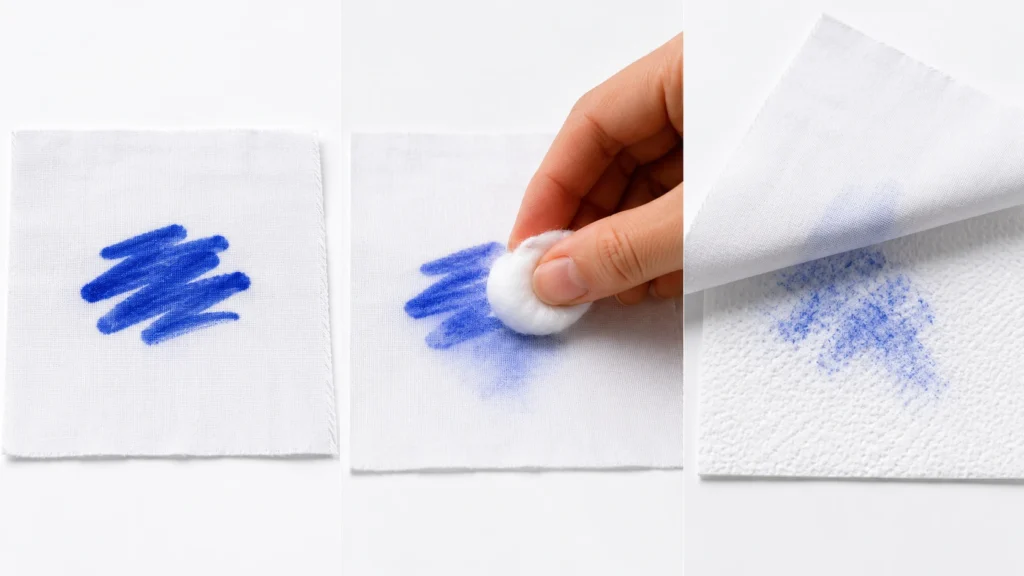
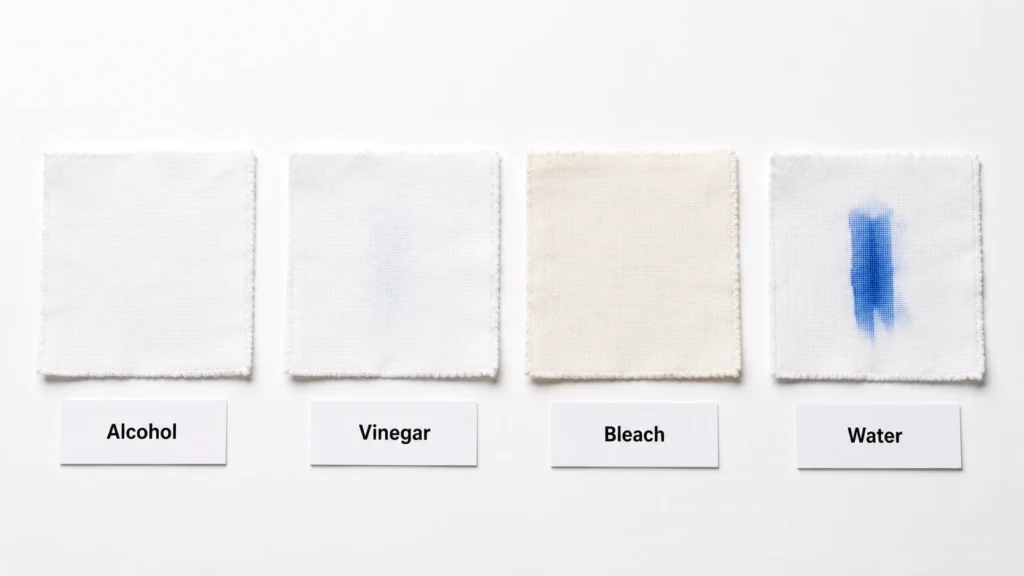
- 소독용 알코올 (이소프로필 알코올, 70~90%) 가장 강력한 옵션입니다. 섬유 직물에 색소를 가두는 수지 바인더를 재용해하여 얼룩을 더 깊이 문지르는 대신 밖으로 흡수해 냅니다. 드라이 이레이즈 잉크는 알코올을 용매 운반체로 사용합니다. 통 안에서 잉크를 액체로 유지하는 동일한 화학 성분이 직물에서 잉크를 제거하는 화학 성분입니다.
- 백식초 는 약산입니다. 일부 수지 바인더를 분해할 수 있지만, 심한 얼룩에는 알코올보다 느리고 약합니다. 알코올이 재료를 변색시킬 수 있는 섬세한 직물에 가장 안전한 선택입니다.
- 레몬즙 은 대략 식초와 동일한 역할을 합니다. 구연산이 섬유 표면에서 색소를 느슨하게 하는 데 도움을 줍니다. 면 소재의 신선하고 가벼운 얼룩에 가장 효과적입니다.
- 표백제 는 산화를 통해 색소를 제거합니다. 흰색 직물에만 사용합니다. 바인더를 용해하는 대신 색소 분자를 파괴하므로, 과도하게 사용하면 직물을 손상시킬 수 있습니다.
- 물과 비누, 는 단독으로는 거의 효과가 없습니다. 드라이 이레이즈 잉크의 실리콘 폴리머 이형제는 물을 밀어내도록 설계되었습니다. 이것이 바로 잉크가 화이트보드에서 깨끗이 지워지는 이유입니다. 또한 수성 세제로 옷에서 씻겨 나가지 않는 이유이기도 합니다.
브랜드 소유자와 구매 팀의 경우, 이러한 요소는 더 명확한 소싱 및 품질 검사 기준을 설정하는 데 도움이 됩니다.
드라이 이레이즈 마커 얼룩 제거 난이도가 마커 잉크 품질에 대해 알려주는 점
Every removal method wins or fails by a specific chemical touch with the ink. For B2B buyers, the removal profile of a marker says more about ingredient quality than any catalog line does:
| 제거 방법 | 드라이 이레이즈 잉크에 작용하는 방식 | 잉크 배합에 대해 밝혀내는 것 | B2B 품질 신호 |
| 소독용 알코올 (이소프로필) | 섬유 직물에 색소를 고정하는 수지 바인더를 재용해함; 원래 용매 운반체 화학 성분과 일치 | 잉크는 알코올 가용성 수지를 사용함; 색소는 섬유에 화학적으로 결합되지 않음 | 표준 알코올 기반 용매 시스템. 용매 순도와 증발 속도를 확인하십시오. |
| 백식초 (아세트산) | 약산이 수지-섬유 접착을 부분적으로 분해함; 이형제 농도가 높을 때 덜 효과적 | 수지는 약간의 산 민감성이 있음; 이형제 수준이 제거 용이성에 영향을 미침 | 높은 이형제 (보드 지우기에 좋음)는 산 기반 제거를 더 어렵게 만듦. 보드 성능과 얼룩 제거 사이에 직접적인 상충 관계가 있음. |
| 표백제 (산화) | 산화를 통해 색소 분자를 파괴함; 수지 바인더는 용해하지 않음 | 색소 민감성은 다양함: 유기 색소는 표백됨; 무기 금속 산화물은 저항함 | 색소 유형이 중요함. 유기 색소 (아조 화합물)는 표백됨. 이산화티타늄 및 산화철 색소는 그렇지 않음. 공급업체에 어떤 화학 성분을 사용하는지 문의하십시오. |
| 물 + 세제 | 색소를 유화 및 현탁시키려고 시도함; 이형제 코팅이 물을 밀어냄 | 이형제가 제 역할을 하고 있음. 내수성은 의도적임. | 잉크가 일반 물로 씻겨 나가는 마커는 적절한 보드 지우기 성능을 위한 이형제가 너무 적은 것임. 이는 결함이 아닌 배합 선택임. |
| 열 (다리미, 건조기) | 수지 바인더를 섬유 직물에 가교 결합시켜 얼룩을 영구적으로 고정함 | 수지는 열경화성임. 열 경화 후에는 용매 재용해가 작동하지 않음. | 열 고정 얼룩이 가장 영구적인 손상을 유발함. 포장에는 냉수 세탁 지침만 명확히 표시해야 함. |
The table shows something buyers rarely hear. The same formula calls that make a marker erase clean from a board, strong release agent, alcohol-soluble resin, steady pigment, are the same calls that make it stain clothing. The best markers are not stain proof. They are stain manageable. Their chemistry answers well when you use the right removal method.
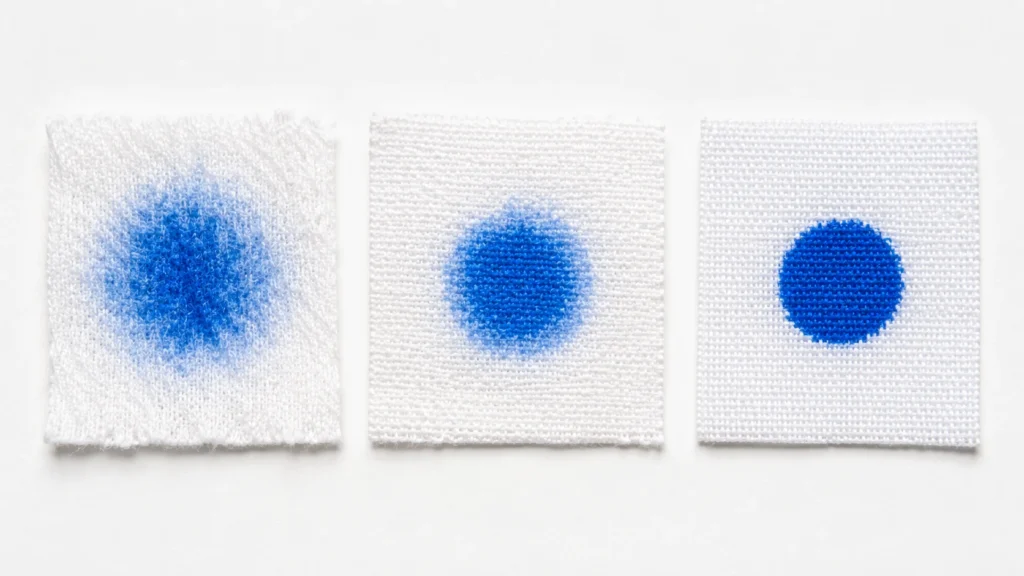
직물 유형이 얼룩 제거의 모든 것을 바꾸는 이유
Fabrics are not all equally stainable. Fiber pores and chemistry decide how deep the pigment goes and how hard it is to pull out.
Cotton is the worst. Cotton fibers are hollow, ribbon-like cellulose. They wick liquid into the core fast. When alcohol solvent carries pigment into a cotton fiber, the pigment ends up trapped inside the fiber cavity, not just on the surface. Water cannot reach pigment that deep. Rubbing alcohol can, because it travels the same route the solvent took.
폴리에스터 is a different problem. Polyester fibers are synthetic and water-shy. They do not take water. They do take organic solvents. The alcohol in dry erase ink moves into polyester easy and carries pigment deep into the fiber body. When solvent leaves, the pigment is locked inside that smooth polymer. Solvent removal works on polyester only when the stain is fresh, within minutes to hours. Once the resin cures, heat speeds this, polyester stains get brutal.
Cotton-polyester blends join both problems. Cotton wicks ink in. Polyester traps it. Act fast. Use the right solvent. Never add heat before the stain is fully lifted.
Silk and wool are protein fibers. They take pigment fast. Strong solvents hurt them. Diluted vinegar or special dry-cleaning solvents are safer than rubbing alcohol, though weaker on heavy stains.
For B2B buyers, here is the point. The fabric your end users wear decides how they feel your product. A marker that makes easy stains on 100 percent cotton swatches can leave permanent marks on the poly-cotton blend uniforms in real classrooms. When a supplier says washable, ask what fabric they tested. A vague answer means the data is not solid.
B2B 구매자가 이해해야 할 제형의 트레이드오프
Dry erase making has a built-in pull. The three traits buyers want most fight each other.
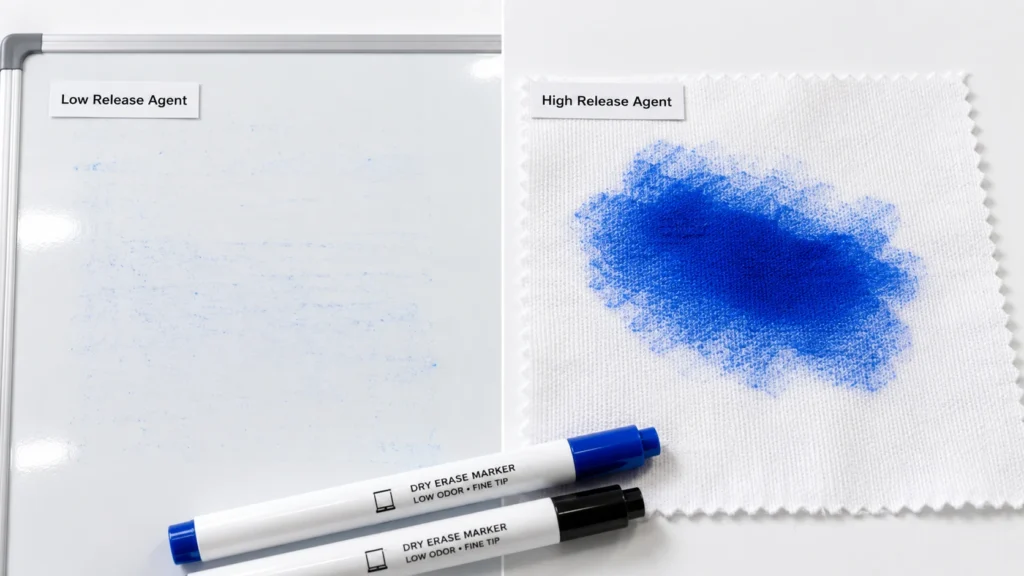
- 깨끗한 보드 지우기 성능 은 강한 이형제, 일반적으로 색소와 화이트보드 표면 사이에 비결합 필름을 형성하는 실리콘 폴리머가 필요합니다. 이형제가 많을수록 지우기가 더 깨끗해집니다. 그러나 동일한 이형제가 물을 밀어내므로 세제가 옷 얼룩을 제거할 수 없는 이유입니다. 더 나은 보드 성능은 더 어려운 얼룩 제거와 같습니다.
- 강한 색상 은 높은 색소 함량, 일반적으로 잉크 배합 중량의 30~50%가 필요합니다. 더 많은 색소는 보드에서 더 굵고 선명한 글씨를 의미합니다. 또한 얼룩이 발생할 때 섬유 직물에 갇힐 수 있는 더 많은 고체 입자를 의미합니다. 더 나은 색상은 더 심한 얼룩과 같습니다.
- 세탁 가능성 은 색소에서 고분자 염료(분자 수준에서 용해되어 세탁 시 씻겨 나감)로 전환하거나 염료 차단 화합물 을 추가하여 착색제가 직물에 결합하는 것을 방지해야 합니다. 고분자 염료는 보드에서 약간 덜 강렬한 색상을 제공합니다. 염료 차단제는 비용이 더 많이 들고 잉크 점도에 영향을 줄 수 있습니다. 더 나은 세탁 가능성은 보드 성능이나 제조 비용에서 절충을 수용하는 것을 의미합니다.
No factory solves this. B2B buyers move through it by knowing their market's order. A school brand puts washability first. Teachers forgive slightly lighter board writing if uniforms survive the week. An office brand puts board performance first. Adults are less likely to ink their clothes. They complain about ghosting.
A factory with its own ink lab can tune pigment-to-dye ratio, release agent level, and dye blockers by what the market needs. ZH Stationery has built custom inks for marker pens, dry erase included, across 26-plus years of OEM/ODM work. See the 페인트 마커 공정 그리고 알코올 마커 제조업체 pages. The skill is knowing which trades your market takes.
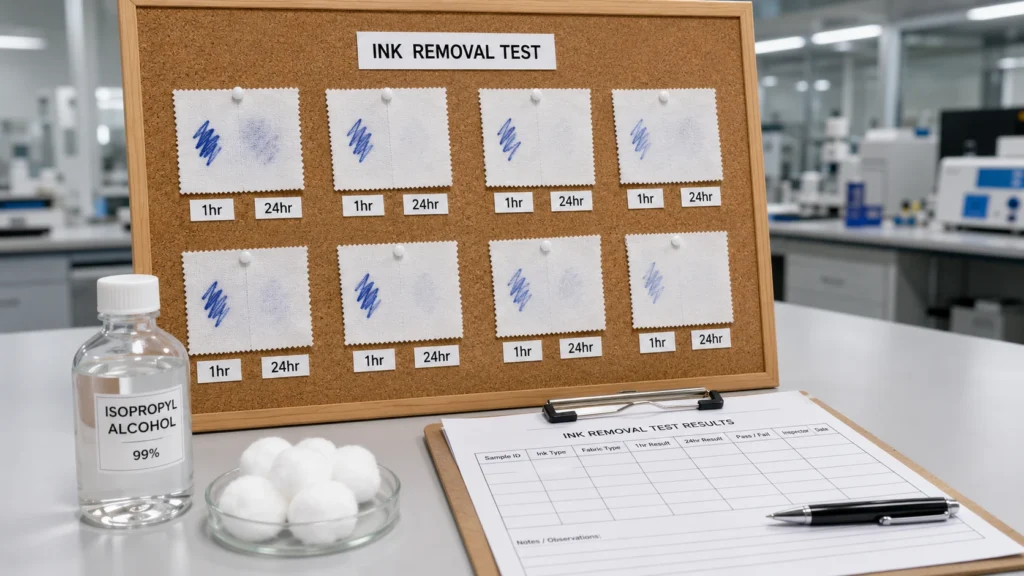
B2B 구매자가 화이트보드 마커 주문 전에 테스트해야 할 사항
Catalog lines will not tell you how a marker really stains fabric. Run these four tests instead:
- 폴리-코튼 혼방 직물의 세척성 테스트. 65/35 폴리-코튼 견본(가장 일반적인 교복 원단)에 잉크를 도포합니다. 1시간 동안 건조시킵니다. 70% 이소프로필 알코올을 사용하여 블로팅(흡수) 방식으로 제거를 시도합니다. 별도의 건조된 얼룩에 대해 24시간을 기다린 후 다시 시도합니다. 매번 잔류하는 안료의 양을 기록합니다. 이는 귀하의 제품이 직면할 실제 시나리오를 시뮬레이션합니다.
- 24시간 후 보드 지우기 성능. 표준 화이트보드에 글씨를 씁니다. 잉크를 24시간 동안 방치합니다. 마른 천으로 지웁니다. 품질 좋은 제형은 아무것도 남기지 않습니다. 잔상(고스팅)은 이형제 부족 또는 잘못된 수지 화학 성분을 의미하며, 이는 모두 얼룩 제거에도 영향을 미칩니다.
- 캡 오프 회복 테스트. 캡을 제거합니다. 마커를 2시간 동안 노출시킵니다. 그런 다음 글씨를 써봅니다. 즉시, 끊김 없이, 프라이밍(사전 준비) 없이 시작되어야 합니다. 캡 오프 실패는 용매 증발 속도와 캡 밀봉 설계에서 비롯되며, 이는 모두 공장이 제형 단계에서 관리합니다.
- 열 고정 얼룩 테스트. 직물에 잉크를 도포합니다. 1시간 동안 건조시킵니다. 따뜻한 다리미(스팀 없음)로 10초간 누릅니다. 알코올로 제거를 시도합니다. 열을 가한 후 얼룩이 영구적으로 변하면, 해당 수지는 열경화성. 입니다. 즉, 얼룩진 셔츠를 실수로 건조기에 넣은 최종 사용자는 절대 제거할 수 없음을 의미합니다. 이 정보는 포장 경고 문구에 포함되어야 합니다.
A factory that runs 100 percent check on every unit before packing, across a 10,000+ sqm site with 8 workshops, can make this data. ZH Stationery works that way. See the 공장 견학 및 당사는 젤펜 및 OEM 마커 솔루션의 최신 혁신 제품을 선보일 예정입니다.. The question is not does your ink wash out. Ask: can you show wash data on poly-cotton blend after 1 hour and 24 hours, with and without heat?
자주 묻는 질문
마른 지우개 마커를 옷에서 제거하는 가장 효과적인 방법은 무엇인가요?
소독용 알코올, 70 to 90 percent. It re-dissolves the resin binder that holds pigment on fibers. The chemistry matches the solvent carrier the marker itself uses. Put alcohol on a clean cloth. Blot from the outside edges inward. Do not rub. Rubbing pushes pigment deeper. Swap the cloth as it picks ink. Keep going until no more pigment moves. Then wash in cold water. Never add heat before the stain is fully out.
물과 비누로는 지울 수 없는 드라이 이레이즈 얼룩을 문지르는 알코올이 제거하는 이유는 무엇인가요?
Dry erase ink has a silicone release agent that makes it water-shy. That is on purpose. It is the same trait that lets ink wipe clean from a board. Water and soap cannot pass this silicone wall. Rubbing alcohol works because it is close to the solvent already in the ink, isopropanol or ethanol. It re-dissolves the resin that traps pigment so the pigment can lift. See the RSC explainer.
식초가 드라이 이레이즈 마커 얼룩 제거에 효과가 있나요?
White vinegar can partly lift light, fresh dry erase stains. It weakens the bond between resin and fibers. It is weaker than alcohol and safer on silk and wool, where alcohol may discolor. For cotton and polyester, alcohol is still better. Vinegar works best as a pre-wash for mild stains.
일부 드라이 이레이즈 마커가 다른 것보다 얼룩이 더 심한 이유는 무엇인가요?
Three things in the formula set stain weight. Pigment size. Smaller particles go deeper. Release agent level. More agent gives better board erase and worse stain lift. Pigment versus dye. Dye inks wash out easier. Markers loaded with pigment and strong release agent perform best on the board and stain worst on fabric. That is not a defect. It is a trade. The 특허 예시 shows the chemistry direction.
열경화성 드라이 이레이즈 얼룩을 제거할 수 있을까요?
No. Once heat hits a dry erase stain, from iron, dryer, or hot water, the resin bonds to the fibers and the stain becomes near-permanent. The solvent ways that work on fresh stains stop because the bond changed. Packing should always say wash in cold water only for garments with marker ink. ZH Stationery, after 26-plus years of global work, knows which warning language prevents complaints.
B2B 구매자는 구매 전에 드라이 이레이즈 마커의 지워짐 성능을 어떻게 평가해야 합니까?
Ask the supplier for wash data on 65/35 poly-cotton blend, not 100 percent cotton swatches. Get results for 1 hour and 24 hour set times, with and without heat. Make sure they used 70 percent isopropyl and the blot method, not scrubbing. If the supplier cannot give this for your exact SKU, the wash claim is not verified. ZH Stationery puts batch wash files in the standard QC pack for dry erase orders.
If you source dry erase markers for school programs, office retail, or private label, contact ZH Stationery to talk ink options, ask wash samples, and judge specs for your market. See the 문의 페이지.
관련 가이드: 모든 신진 아티스트가 알아야 할 마커 테크닉 10가지.