In today’s fast-paced world, using art therapy for stress relief has become an essential and creative way to improve mental health. Anxiety and depression have become invisible threats to our daily well-being. Because of this, the field of mental health is always looking for new, creative ways to help people heal.
One of the most effective new methods is an interdisciplinary approach to art therapy. By combining psychology, neuroscience, and art, this method breaks away from traditional talk therapy. Specifically, using “healing illustrations” has proven to be an incredible tool. Whether you are dealing with burnout or anxiety, using art therapy for stress relief works through three powerful strategies: creating safe spaces, building emotional resonance, and using metaphors to guide the mind.
1. Creating a Safe Space Through Visual Art
We learn and heal best when we are in the right environment. Knowledge without a safe space can feel abstract and hard to grasp. Healing illustrations act as a bridge, instantly transporting participants into a calming mental space—like a quiet beach, a blooming garden, or a cozy room. This takes them away from the noise of reality and helps them feel secure.
Environmental psychology shows that a comfortable, visually pleasing space can significantly lower anxiety and boost positive emotions. Soft colors and smooth lines in art create a peaceful vibe, helping people open up to the healing process.
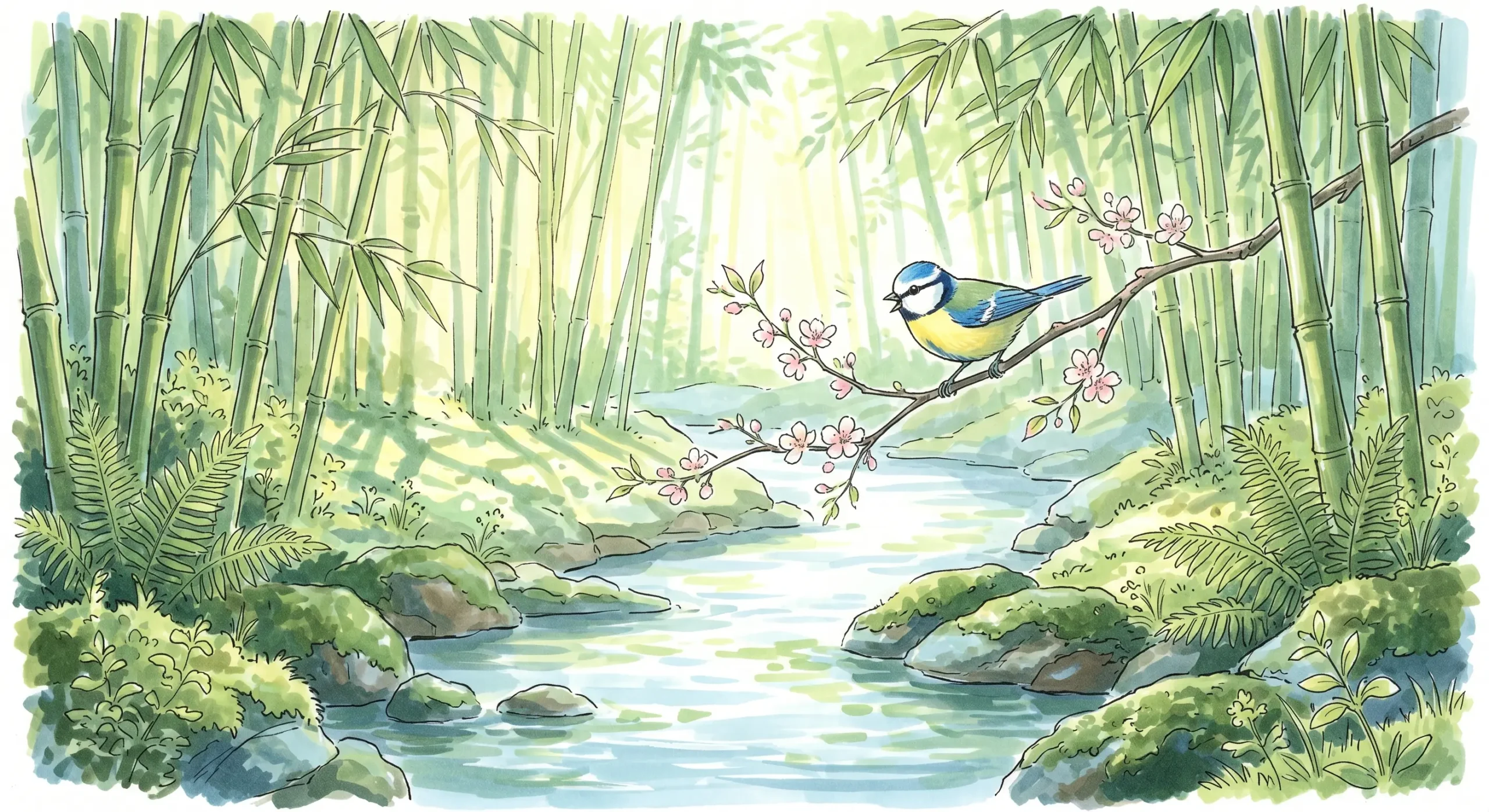
Real-World Example: In an art therapy for stress relief class designed for professionals, the teacher hung illustrations of “nature’s calm” around the room. The artwork showed a gentle breeze in a bamboo forest, sunlight shining through a misty stream, and birds singing on branches.
The teacher asked the students to close their eyes, breathe deeply, and imagine walking through this exact scene. A financial worker dealing with chronic stress shared: “At first, I couldn’t calm down. But looking at the art and listening to the guide, I felt like I was actually in the bamboo forest. The tension in my body faded, and my mind cleared.” Because their emotions were stabilized by the art, the students were much more engaged when discussing stress management later in the class.
2. Sparking Emotional Resonance to Heal from Within
Our emotions and our thoughts are deeply connected. Healing illustrations use visual imagery to deliver specific emotional messages. When the positive message in the art matches what the viewer is secretly longing for, it creates “emotional resonance.” This helps the person understand their own feelings in a new way.
According to Self-Determination Theory, we all have a core need for connection and competence. Art therapy meets these needs by making people feel understood and supported, which unlocks their natural ability to heal themselves.
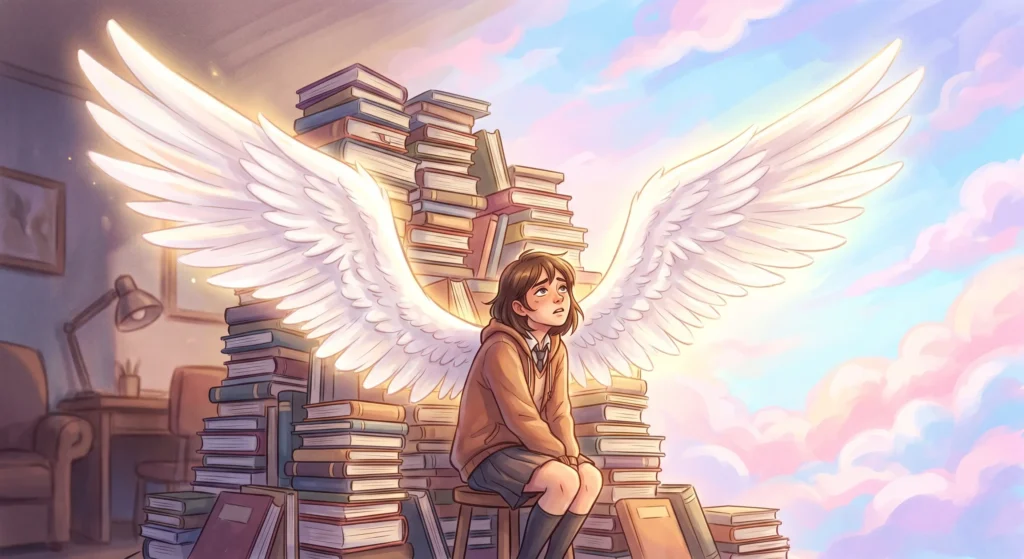
Real-World Example: In a class helping students manage academic pressure, the teacher showed a piece of art titled “Overcoming Hardship to Grow.” The illustration featured a student buried under a mountain of books. However, from the top of the books, a pair of white wings was unfolding—symbolizing freedom gained through hard work.
Many students were deeply moved. One student who struggled with study anxiety said, “Seeing this picture made me feel like my stress was finally understood. It gave me hope. If I just keep going, I can break through this pressure.” The art sparked a group conversation where students stopped feeling isolated and started actively looking for ways to cope.
3. Unlocking the Subconscious with Metaphors
Sigmund Freud, the founder of psychoanalysis, believed that our subconscious mind heavily influences our behavior and emotions. Often, our mental struggles come from repressed conflicts or incorrect beliefs hidden deep within us.
Healing illustrations are full of metaphors that turn abstract mental concepts into concrete images. For example, dark clouds might represent depression, while a sprouting seed represents new hope. When we look at these illustrations, our subconscious picks up on these symbols, bypassing our mental defenses and sparking deep reflection.
Furthermore, Cognitive Behavioral Therapy (CBT) (SEO Note: Hyperlink to Mayo Clinic or similar) teaches that changing irrational thoughts is the key to mental healing. The metaphors in art therapy provide a gentle starting point for this change.
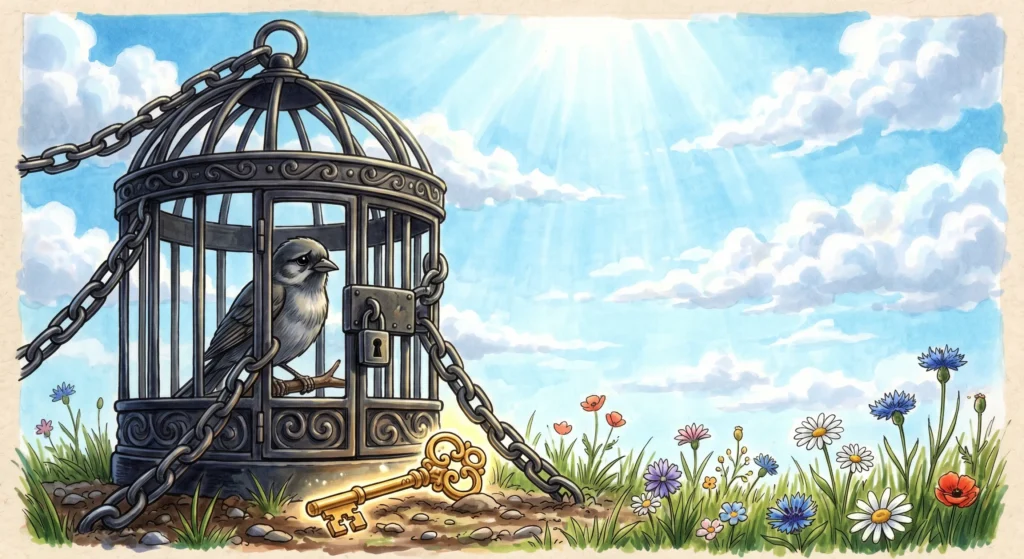
Real-World Example: During an emotion-management workshop for adults, the group studied an illustration of a bird locked inside a cage with a heavy iron chain. The bird looked sad. Outside the cage was a beautiful blue sky and fluffy white clouds. But right next to the cage, slightly hidden, was a key.
At first, the adults only focused on the feeling of being trapped. But as they talked, they realized the bird represented themselves. The iron chain was their unnecessary fear and worry. The key—the solution to their problems—was right beside them all along, but they had ignored it.
One participant who suffered from social anxiety noted, “I always thought the outside world was dangerous, so I hid in my cage. This picture made me realize I was the one locking myself away.” Using the imagery of the “blue sky” and the “key,” this participant successfully started trying new social behaviors.
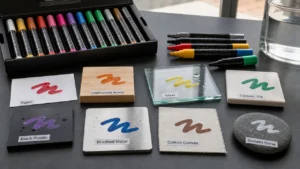
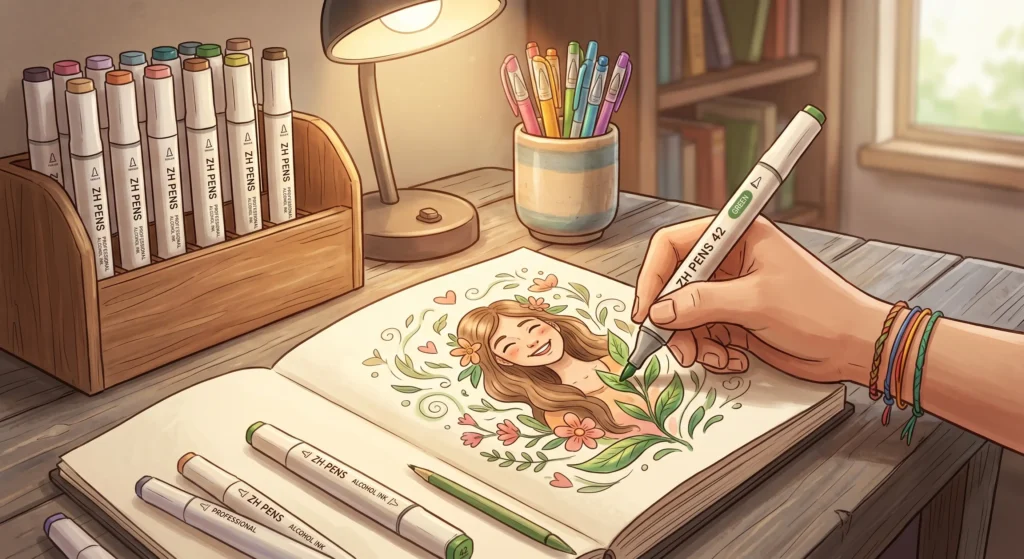
Creating your own healing illustrations using professional markers can also be a powerful form of self-care.
Conclusion
The use of healing illustrations in interdisciplinary art therapy shows incredible potential. By creating an immersive safe space, sparking emotional resonance, and using metaphors to reshape negative thoughts, these three strategies work together as a powerful healing system.
As research in this field continues to grow, art therapy for stress relief will undoubtedly become an even more precise and effective tool, helping more people step out of the darkness and embrace a positive, peaceful life.
Related guide: For another view of factory capability and process control, see A Triumphant Spring: ZH STATIONERY Shines at the 139th Canton Fair 2026.
Related Reading
- The Ultimate Guide to Kids Art Materials: Enhancing Artistic Perception Through Interactive Play
- 15 Summer Coloring Ideas Using Gel Pens
- TikTok Marker Art: 5 Viral Trends You Can Create with Just 3 Pens
- children's marker OEM safety guide
- food-grade marker ink guide
- formaldehyde testing in stationery guide
- pocket stationery mini pens and markers guide
External reference: American Art Therapy Association: about art therapy.