

在現今快速的世界中,藝術治療作為壓力紓解已成為支持心理健康的重要且具創意的方法。焦慮與憂鬱是日常生活中隱形的風險。因此,心理健康工作持續尋求新的、有創意的方式來幫助人們療癒。
其中一種最有效的新方法是跨學科的藝術治療方法。它結合了心理學、腦科學和藝術。這種方法超越了傳統的談話治療。療癒插畫是一種經過驗證的工具。無論你面對的是倦怠還是焦慮,藝術治療緩解壓力通過三個強有力的步驟發揮作用。創造安全的空間。建立情感共鳴。運用隱喻引導心靈。
1. 透過視覺藝術創造安全空間
我們在合適的空間中學習和療癒效果最好。沒有安全感的知識會讓人感覺遙遠且難以掌握。療癒插畫就像一座橋樑。它們將參與者帶入一個平靜的心理空間。一片寧靜的海灘。一座盛開的花園。一個舒適的房間。這使他們擺脫日常的喧囂,感到安全。
環境心理學 研究表明,舒適宜人的空間可以降低焦慮並提升正面情緒。藝術中的柔和色彩和流暢線條營造出平靜的氛圍。它們幫助人們敞開心扉,接受療癒過程。
真實案例:在一個為專業人士開設的藝術治療課程中,老師在房間裡掛滿了自然寧靜的插畫。畫中展現了竹林中的微風。陽光穿過霧氣繚繞的溪流。鳥兒在枝頭歌唱。
老師要求學生閉上眼睛,深呼吸,想像自己走進那個場景。一位長期承受壓力的金融工作者說:起初,我無法平靜下來。但看著藝術作品,聽著引導,我感覺自己置身於竹林之中。身體的緊張感消失了。我的頭腦清晰了。因為藝術穩定了他們的情緒,學生們更輕鬆地參與了壓力討論。

2. 激發情感共鳴,從內在療癒
我們的情緒和思緒緊密相連。療癒插畫利用圖像傳遞特定的情感訊息。當藝術中的正面訊息與觀者內心的渴望相契合時,就會產生情感共鳴。這有助於人們以新的方式看待自己的感受。
自我決定理論指出,我們都需要連結感和能力感。藝術治療通過讓人們感到被看見和被支持來滿足這些需求。這開啟了他們內在的療癒力量。
真實案例:在一堂關於學業壓力的課程中,老師展示了一幅名為《克服困難,成長》的作品。畫中一名學生被埋在書山之下。從山頂上,白色的翅膀展開。它們象徵著通過努力獲得的自由。
許多學生深受感動。一位飽受學習焦慮困擾的學生說:這幅畫讓我感到我的壓力終於被理解了。它給了我希望。如果我堅持下去,我就能突破。藝術引發了小組討論。學生們不再感到孤單,開始尋找應對的方法。

3. 運用隱喻解鎖潛意識
精神分析學創始人西格蒙德·佛洛伊德認為,潛意識強烈地塑造著我們的行為和感受。通常,心理困擾源於隱藏的衝突或內心深處的錯誤信念。
療癒插畫充滿隱喻。它們將抽象的心理概念轉化為清晰的圖像。烏雲可以代表抑鬱。一顆成長的種子代表新的希望。當我們觀看這些圖像時,潛意識會接收這些象徵。它超越了我們的心理防線,引發深層思考。
此外, 認知行為治療 教導改變無益的想法是療癒的關鍵。藝術治療中的隱喻為這種改變提供了一個溫和的起點。
真實案例:在一個成人情緒工作坊中,小組研究了一隻被沉重鐵鍊鎖在籠中的鳥。鳥看起來很悲傷。外面是美麗的藍天和柔軟的白雲。籠子旁邊,部分隱藏著一把鑰匙。
起初,成人們只感受到被困住。隨著討論,他們發現那隻鳥就是他們自己。鐵鍊是他們不必要的恐懼。鑰匙,也就是他們問題的答案,一直就在他們身邊。他們卻忽略了它。
一位有社交焦慮的參與者說:我總是以為外面的世界很危險,所以我躲在自己的籠子裡。這幅畫讓我看到,是我自己把自己鎖起來的。藉由藍天和鑰匙,這位參與者開始嘗試新的社交步驟。
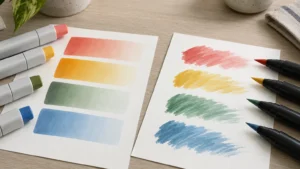
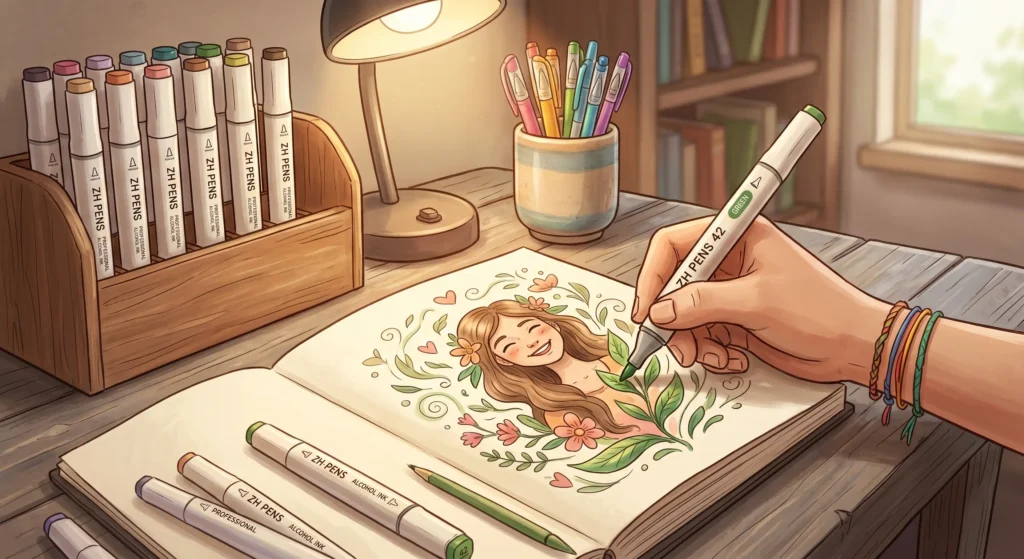
用……製作您自己的療癒插圖 專業馬克筆 創作自己的療癒插畫也可以是一種強烈的自我照顧方式。
結論
跨領域藝術治療中的療癒插畫展現了真正的潛力。它們建立安全的空間。它們激發情感共鳴。它們運用隱喻重塑困難的想法。這三個步驟共同構成一個療癒系統。
隨著研究進展,用於壓力緩解的藝術治療將變得更加精確和實用。它將幫助更多人走出黑暗,邁向平靜、正向的生活。
相關指南: 如需了解工廠產能及流程管控的另一視角,請參閱 春意盎然:ZH STATIONERY 在第139屆廣交會2026年大放異彩.
相關閱讀
Why Repetitive Mark-Making Calms the Nervous System
Coloring is a constrained task. The page sets the boundary, the color sets the variable, and nothing outside that frame needs attention for the next ten minutes. That constraint is the mechanism. When attention narrows to something concrete and low-stakes, the mind stops rehearsing the open loops that keep stress responses running.
The rhythm matters as much as the content. Filling an area with short, even strokes settles breathing into a slower pattern. Many people notice it around the third or fourth minute without being told to look for it. Long, continuous strokes have a different effect — more energizing, less settling — which is why fine liners and chisel tips produce different experiences even when the color is identical.
The third factor is low consequence. Nothing in a coloring page can be done wrong in a way that matters. That is rare in adult life, and the absence of consequence is itself restful.
Choosing Materials That Support the Process
Material choice changes the experience more than most beginners expect. Four variables are worth thinking about before buying a set.
Tip type. Fine tips suit detail and small areas, which supports focused attention. Chisel tips cover large areas quickly, which suits a more rhythmic, less deliberate session. Brush tips sit between the two and are the most forgiving for people who have not drawn since school.
Ink system. Water-based markers are low-odor, easy to clean, and safe around children. Alcohol markers blend smoothly but carry a solvent smell that some people find distracting in a quiet room. Acrylic markers are opaque and work on dark paper, which opens up a different visual vocabulary.
Paper weight. Thin paper bleeds through and creates a second problem to manage. A 100 to 160 gsm stock absorbs enough ink to keep edges clean and lets the session stay about the session.
Color range. A 12-color set is enough to start. Larger sets introduce choice, and choice can become its own small stressor. Many people do better with a limited palette for the first few weeks.
Three Exercises You Can Start Today
Color field. Pick three colors that do not obviously belong together. Fill three horizontal bands across the page, letting the edges bleed slightly. Add simple line work over the top — a horizon, a few marks. The exercise takes about fifteen minutes and produces something that reads as intentional even when it was not planned.
One-color study. Use a single marker for the whole page. Work only with line weight and density. Filling space with more lines makes an area read darker; fewer lines make it lighter. The constraint removes color decisions and leaves only rhythm, which is often the more settling part.
Repeat pattern. Draw the same small shape across a grid. The repetition is the point. It occupies the part of attention that would otherwise drift, and the result is visually coherent regardless of drawing skill.
What Art Therapy Is Not
Art therapy as a clinical practice is delivered by a trained therapist within a treatment relationship. Coloring at home is not that, and it is worth being clear about the difference.
What a coloring session can do is provide a structured, low-demand activity that many people find settling. What it cannot do is diagnose, treat, or substitute for professional care. If stress is persistent, disruptive, or tied to a specific condition, a coloring page is not the intervention.
The honest framing is this: coloring is a accessible practice that supports attention and rhythm. It is not a cure, and presenting it as one does a disservice to the people who need actual clinical support.
常見問題解答
How long should a session last? Ten to twenty minutes is enough for most people to notice a shift. Longer sessions are fine but the effect tends to plateau.
Do I need to be good at drawing? No. The exercises above are designed so that the result reads as intentional regardless of skill.
Are alcohol markers suitable for a quiet room? They carry a solvent odor. Water-based markers are usually a better fit for shared or small spaces.
What paper should I use? 100 to 160 gsm, single-sided if possible, to avoid bleed-through becoming a distraction.
Common Mistakes That Undo the Benefit
Three habits reliably cancel the settling effect of a coloring session.
Choosing the subject before sitting down. Deciding what to draw turns the session into a performance task. The exercises above work because the page has already decided for you. Pick the page in advance and let the session be only about color.
Working on a screen. Digital coloring removes the tactile feedback that does most of the work. The resistance of paper against a tip is part of why the activity settles attention; a stylus on glass does not produce the same effect for most people.
Checking the result against someone else’s. Comparison reopens the evaluation loop the activity was meant to close. The session works when the output is not being judged, including by you.
The practical version: pick the page the night before, use paper, and put the finished sheet somewhere without looking at it again that day.
Setting Up a Repeatable Ritual
The benefit comes from repetition more than duration. A fifteen-minute session four times a week does more than a single two-hour session, because the settling effect depends on the activity becoming familiar enough that it stops requiring decisions.
Three things make repetition easier. Keep the materials accessible rather than packed away. Use the same paper size each time so the scale of the task is predictable. And end the session at a natural stopping point rather than when time runs out, so the next session starts without a leftover task.
Most people who try coloring and abandon it do so because the setup cost exceeded the session length. Reducing friction matters more than extending the session.
Keep the paper and markers where you can see them. Visible materials get used; stored materials do not.