

في عالم اليوم السريع، أصبح العلاج بالفن لتخفيف التوتر وسيلة أساسية وإبداعية لدعم الصحة النفسية. القلق والاكتئاب مخاطر صامتة تهدد الحياة اليومية. ولهذا، يواصل العاملون في مجال الصحة النفسية البحث عن طرق جديدة ومبتكرة لمساعدة الناس على التعافي.
من أكثر الطرق الجديدة فعالية أسلوب العلاج بالفن متعدد التخصصات. فهو يجمع بين علم النفس وعلوم الدماغ والفن. يتجاوز هذا الأسلوب العلاج التقليدي بالكلام. الرسوم التوضيحية العلاجية أداة مثبتة. سواء كنت تواجه الاحتراق الوظيفي أو القلق، يعمل العلاج بالفن لتخفيف التوتر من خلال ثلاث خطوات قوية: خلق مساحات آمنة، وبناء صدى عاطفي، واستخدام الاستعارات لتوجيه العقل.
1. خلق مساحة آمنة من خلال الفن البصري
نتعلم ونتعافى بشكل أفضل في المساحة المناسبة. المعرفة بدون أمان قد تبدو بعيدة وصعبة الاستيعاب. تعمل الرسوم التوضيحية العلاجية كجسر ينقل المشاركين إلى حالة ذهنية هادئة. شاطئ هادئ، حديقة مزهرة، غرفة مريحة. هذا ينقلهم بعيدًا عن ضجيج الحياة اليومية ويساعدهم على الشعور بالأمان.
علم النفس البيئي تشير الدراسات إلى أن المساحة المريحة والممتعة يمكن أن تخفض القلق وترفع المشاعر الإيجابية. الألوان الناعمة والخطوط الانسيابية في الفن تخلق مزاجًا هادئًا، وتساعد الناس على الانفتاح على عملية التعافي.
مثال واقعي: في فصل للعلاج بالفن للمهنيين، علّق المعلم رسومًا توضيحية لهدوء الطبيعة حول الغرفة. أظهرت اللوحات نسيمًا لطيفًا في غابة خيزران، وضوء الشمس يتسلل عبر جدول ضبابي، وعصافير تغرد على الأغصان.
طلب المعلم من الطلاب إغلاق أعينهم والتنفس بعمق وتخيل أنفسهم يمشون في ذلك المشهد. قال موظف مالي يعاني من ضغط طويل الأمد: في البداية، لم أستطع الهدوء. لكن عند النظر إلى اللوحات والاستماع إلى الإرشاد، شعرت أنني في غابة الخيزران. تلاشى التوتر في جسدي وصفا ذهني. ولأن الفن ثبّت مشاعرهم، انضم الطلاب إلى نقاش التوتر بسهولة أكبر.

2. إثارة الرنين العاطفي للتعافي من الداخل
عواطفنا وأفكارنا مترابطة بعمق. تستخدم الرسوم التوضيحية العلاجية الصور لإرسال رسائل عاطفية محددة. عندما تتطابق الرسالة الإيجابية في العمل الفني مع ما يرغب فيه المشاهد بصمت، يحدث صدى عاطفي. وهذا يساعد الشخص على رؤية مشاعره بطريقة جديدة.
تشير نظرية تقرير المصير إلى أننا جميعًا نحتاج إلى التواصل والقدرة. يلبي العلاج بالفن هذه الاحتياجات بجعل الناس يشعرون بأنهم مرئيون ومحتضنون، مما يفتح قوتهم الطبيعية على التعافي.
مثال واقعي: في فصل عن الضغط الدراسي، عرض المعلم لوحة بعنوان "التغلب على الصعاب للنمو". أظهرت الصورة طالبًا مدفونًا تحت جبل من الكتب، ومن الأعلى انبثقت أجنحة بيضاء ترمز إلى الحرية المكتسبة من خلال العمل الجاد.
تأثر العديد من الطلاب. قال طالب يعاني من قلق الدراسة: هذه الصورة جعلتني أشعر أن ضغطي مفهوم أخيرًا. أعطتني الأمل. إذا واصلت، يمكنني الاختراق. بدأ العمل الفني نقاشًا جماعيًا، فتوقف الطلاب عن الشعور بالوحدة وبدأوا في البحث عن طرق للتكيف.

3. فتح العقل الباطن بالاستعارات
يعتقد سيغموند فرويد، مؤسس التحليل النفسي، أن العقل الباطن يشكل بقوة أفعالنا ومشاعرنا. غالبًا ما تنبع الصراعات النفسية من صراعات خفية أو معتقدات خاطئة في أعماقنا.
الرسوم التوضيحية العلاجية مليئة بالاستعارات، فهي تحول الأفكار النفسية المجردة إلى صور واضحة. يمكن أن ترمز الغيوم الداكنة إلى الاكتئاب، والبذرة النامية إلى أمل جديد. عندما ننظر إلى هذه الصور، يلتقط العقل الباطن الرموز، ويتجاوز حواجزنا العقلية ويبدأ تفكيرًا عميقًا.
أيضًا، العلاج السلوكي المعرفي يُعلّم أن تغيير الأفكار غير المفيدة هو مفتاح الشفاء. الاستعارات في العلاج بالفن توفر بداية لطيفة لذلك التغيير.
مثال من الواقع: في ورشة عمل للعواطف للبالغين، درس المشاركون طائراً محبوساً في قفص بسلسلة حديدية ثقيلة. بدا الطائر حزيناً. في الخارج كانت هناك سماء زرقاء جميلة وسحب بيضاء ناعمة. بجوار القفص مباشرة، مخفي جزئياً، كان هناك مفتاح.
في البداية، شعر البالغون بالفخ فقط. أثناء حديثهم، أدركوا أن الطائر هو أنفسهم. كانت السلسلة خوفهم غير الضروري. المفتاح، الإجابة على مشكلتهم، كان بجانبهم طوال الوقت. لكنهم تجاهلوه.
قال أحد المشاركين الذي يعاني من القلق الاجتماعي: لطالما اعتقدت أن العالم الخارجي خطير، لذلك اختبأت في قفصي. جعلتني هذه الصورة أرى أنني كنت من يحبس نفسه بعيداً. باستخدام السماء الزرقاء والمفتاح، بدأ هذا المشارك في تجربة خطوات اجتماعية جديدة.
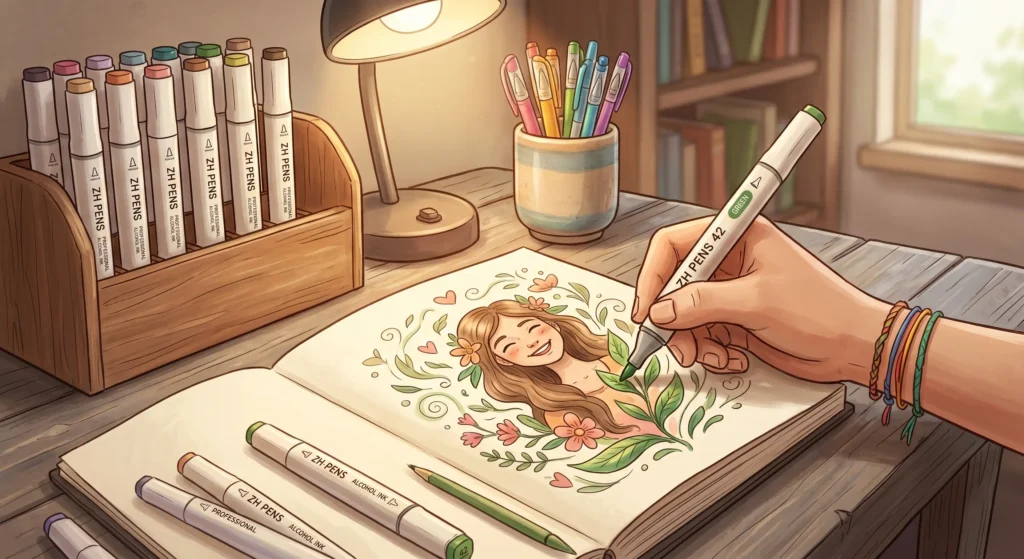
صنع رسومك التوضيحية العلاجية الخاصة باستخدام أقلام الماركر الاحترافية عالية الجودة يمكن أن يكون أيضًا شكلًا قويًا من الرعاية الذاتية.
الاستنتاج
الرسوم التوضيحية العلاجية في العلاج بالفن متعدد التخصصات تُظهر وعداً حقيقياً. فهي تبني مساحة آمنة. وتثير صدى عاطفياً. وتستخدم الاستعارات لإعادة تشكيل الأفكار الصعبة. تعمل هذه الحركات الثلاث معاً كنظام شفاء.
مع نمو البحث، سيصبح العلاج بالفن لتخفيف التوتر أكثر دقة وفائدة. وسيساعد المزيد من الناس على الخروج من الظلام إلى حياة هادئة وإيجابية.
الدليل ذو الصلة: للحصول على نظرة أخرى على قدرات المصنع ومراقبة العمليات، راجع ربيع منتصِر: شركة ZH STATIONERY تتألق في معرض كانتون 139 لعام 2026.
قراءات ذات صلة
- الدليل الشامل لمواد الفن للأطفال: تعزيز الإدراك الفني من خلال اللعب التفاعلي
- 15 فكرة تلوين صيفية باستخدام أقلام الجل
- فن الماركر على تيك توك: 5 اتجاهات فيروسية يمكنك إنشاؤها باستخدام 3 أقلام فقط
- دليل سلامة قلم التحديد للأطفال OEM
- دليل حبر العلامات الغذائية
- دليل اختبار الفورمالديهايد في الأدوات المكتبية
- دليل الأقلام الصغيرة وأقلام التحديد المكتبية الجيبية
Why Repetitive Mark-Making Calms the Nervous System
Coloring is a constrained task. The page sets the boundary, the color sets the variable, and nothing outside that frame needs attention for the next ten minutes. That constraint is the mechanism. When attention narrows to something concrete and low-stakes, the mind stops rehearsing the open loops that keep stress responses running.
The rhythm matters as much as the content. Filling an area with short, even strokes settles breathing into a slower pattern. Many people notice it around the third or fourth minute without being told to look for it. Long, continuous strokes have a different effect — more energizing, less settling — which is why fine liners and chisel tips produce different experiences even when the color is identical.
The third factor is low consequence. Nothing in a coloring page can be done wrong in a way that matters. That is rare in adult life, and the absence of consequence is itself restful.
Choosing Materials That Support the Process
Material choice changes the experience more than most beginners expect. Four variables are worth thinking about before buying a set.
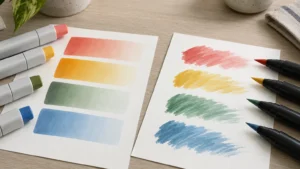
Tip type. Fine tips suit detail and small areas, which supports focused attention. Chisel tips cover large areas quickly, which suits a more rhythmic, less deliberate session. Brush tips sit between the two and are the most forgiving for people who have not drawn since school.
Ink system. Water-based markers are low-odor, easy to clean, and safe around children. Alcohol markers blend smoothly but carry a solvent smell that some people find distracting in a quiet room. Acrylic markers are opaque and work on dark paper, which opens up a different visual vocabulary.
Paper weight. Thin paper bleeds through and creates a second problem to manage. A 100 to 160 gsm stock absorbs enough ink to keep edges clean and lets the session stay about the session.
Color range. A 12-color set is enough to start. Larger sets introduce choice, and choice can become its own small stressor. Many people do better with a limited palette for the first few weeks.
Three Exercises You Can Start Today
Color field. Pick three colors that do not obviously belong together. Fill three horizontal bands across the page, letting the edges bleed slightly. Add simple line work over the top — a horizon, a few marks. The exercise takes about fifteen minutes and produces something that reads as intentional even when it was not planned.
One-color study. Use a single marker for the whole page. Work only with line weight and density. Filling space with more lines makes an area read darker; fewer lines make it lighter. The constraint removes color decisions and leaves only rhythm, which is often the more settling part.
Repeat pattern. Draw the same small shape across a grid. The repetition is the point. It occupies the part of attention that would otherwise drift, and the result is visually coherent regardless of drawing skill.
What Art Therapy Is Not
Art therapy as a clinical practice is delivered by a trained therapist within a treatment relationship. Coloring at home is not that, and it is worth being clear about the difference.
What a coloring session can do is provide a structured, low-demand activity that many people find settling. What it cannot do is diagnose, treat, or substitute for professional care. If stress is persistent, disruptive, or tied to a specific condition, a coloring page is not the intervention.
The honest framing is this: coloring is a accessible practice that supports attention and rhythm. It is not a cure, and presenting it as one does a disservice to the people who need actual clinical support.
الأسئلة الشائعة
How long should a session last? Ten to twenty minutes is enough for most people to notice a shift. Longer sessions are fine but the effect tends to plateau.
Do I need to be good at drawing? No. The exercises above are designed so that the result reads as intentional regardless of skill.
Are alcohol markers suitable for a quiet room? They carry a solvent odor. Water-based markers are usually a better fit for shared or small spaces.
What paper should I use? 100 to 160 gsm, single-sided if possible, to avoid bleed-through becoming a distraction.
Common Mistakes That Undo the Benefit
Three habits reliably cancel the settling effect of a coloring session.
Choosing the subject before sitting down. Deciding what to draw turns the session into a performance task. The exercises above work because the page has already decided for you. Pick the page in advance and let the session be only about color.
Working on a screen. Digital coloring removes the tactile feedback that does most of the work. The resistance of paper against a tip is part of why the activity settles attention; a stylus on glass does not produce the same effect for most people.
Checking the result against someone else’s. Comparison reopens the evaluation loop the activity was meant to close. The session works when the output is not being judged, including by you.
The practical version: pick the page the night before, use paper, and put the finished sheet somewhere without looking at it again that day.
Setting Up a Repeatable Ritual
The benefit comes from repetition more than duration. A fifteen-minute session four times a week does more than a single two-hour session, because the settling effect depends on the activity becoming familiar enough that it stops requiring decisions.
Three things make repetition easier. Keep the materials accessible rather than packed away. Use the same paper size each time so the scale of the task is predictable. And end the session at a natural stopping point rather than when time runs out, so the next session starts without a leftover task.
Most people who try coloring and abandon it do so because the setup cost exceeded the session length. Reducing friction matters more than extending the session.
Keep the paper and markers where you can see them. Visible materials get used; stored materials do not.