
عند توريد أقلام تلوين للأطفال، فإن العثور على حبر أقلام تلوين آمن حقًا بدرجة غذائية هو أكبر قلق لمعظم علامات B2B التجارية. بالنسبة لمعظم الشركات، الإجابة هي السلامة. يمكن أن يؤدي خطر كيميائي واحد إلى عمليات سحب، ومعارك قانونية مكلفة، وعلامة تجارية محطمة. اليوم، يطلب المشترون منتجات غير سامة أو بدرجة غذائية.
كمصنع مصدر يتمتع بسنوات من أعمال البحث والتطوير، نحتاج إلى مشاركة حقيقة صناعية. ليس كل قلم تلوين بدرجة غذائية آمنًا حقًا. دعونا نلقي نظرة على ما تعنيه السلامة الكيميائية الحقيقية. دعونا نوضح كيف يستخدم مصنعنا تقنية حبر متقدمة لحماية الأطفال وعملك.
1. ثغرة ادعاءات “الدرجة الغذائية” المزيفة
مصطلح درجة غذائية غالبًا ما يكون خدعة تسويقية. تستخدم العديد من المصانع اختصارًا خطيرًا. يستخدمون ملونات بدرجة غذائية، الأصباغ التي تجعل الحبر أحمر أو أزرق. ثم يطبعون درجة غذائية على العبوة. يتجاهلون بقية المكونات.
الحبر أكثر من مجرد لون. يحتاج إلى مذيبات للحفاظ على تدفق السائل. يحتاج إلى عوامل حفظ لمنع العفن. في الأقلام الرخيصة منخفضة الجودة، تكون هذه الأجزاء المخفية غالبًا مواد كيميائية صناعية قاسية.
قد يلامس الأطفال الحبر على أيديهم أو يضعون الغطاء في أفواههم. افحص المنتج النهائي وفقًا للفئة العمرية المخطط لها والاستخدام المحتمل. راجع التركيبة الكاملة والغطاء والسدادة النهائية. لا تخمن مرضًا معينًا أو تأثيرًا طويل المدى من كلمة مادة حافظة صناعية وحدها. هوية المكون والتعرض والمراجعة الخاصة بالمنتج مهمة.

2. ابتكارنا: معيار “الحبر كغذاء”
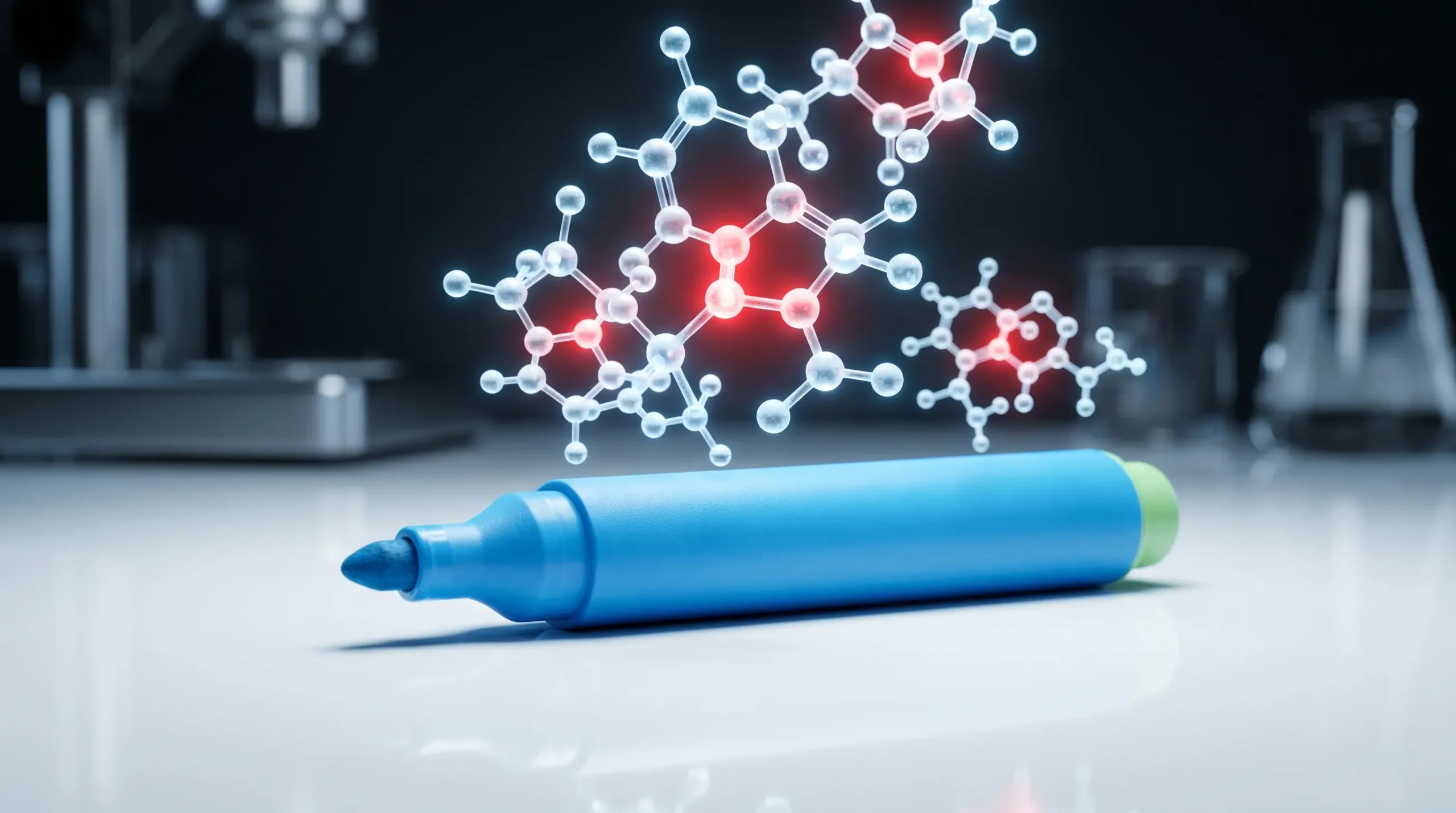
لإصلاح مشكلة الصناعة هذه، بنى فريق البحث والتطوير لدينا معيارًا صارمًا جديدًا. نسميه فكرة الحبر كغذاء. يجب أن يفي كل جزء داخل حبر أقلامنا بمعايير الإضافات الغذائية الصارمة، مثل معيار GB 2760. نحن لا نستبدل الملونات فقط. نغير المذيبات والمواد الرابطة وعوامل الحفظ إلى خيارات طبيعية وآمنة غذائيًا. لدينا الفريق يمتلك هذا العمل.
قد تسأل: إذا استخدمت مكونات طبيعية، فهل لا يزال القلم يرسم جيدًا؟ الإجابة هي نعم. باستخدام تقنية الخلط والاستحلاب المتقدمة، يحافظ مهندسونا على حبر مشرق وسلس وثابت. الألوان عميقة وحيوية على الورق. يتدفق الحبر جيدًا دون أن يجف بسرعة كبيرة. لقد أثبتنا أنك لا تحتاج إلى مواد كيميائية سامة لصنع أداة فنية عالية الجودة للأطفال.
3. التحدي الأصعب: المواد الحافظة الطبيعية واختبار USP51
أصعب جزء في الحبر الآمن هو إيقاف البكتيريا والعفن. تبقى الأقلام على الرفوف وفي المستودعات لشهور. بدون عوامل حفظ طازجة، يمكن أن ينمو العفن بسرعة في الحبر المائي. تستخدم المصانع القديمة مبيدات حيوية كيميائية قوية. لقد رفضنا هذا الاختصار. بنينا نظام دفاع باستخدام عوامل حفظ طازجة طبيعية فقط من الدرجة الغذائية.
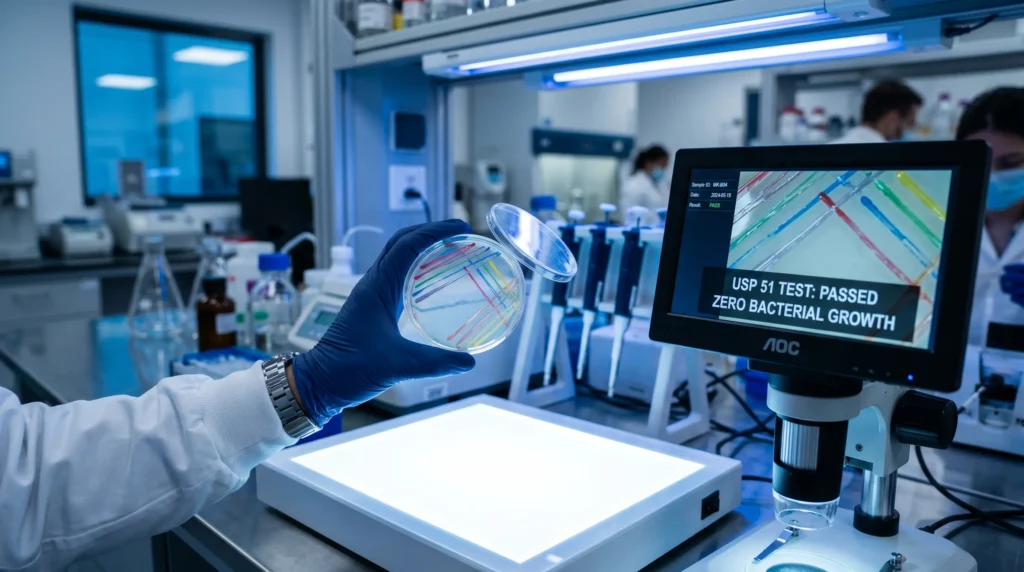
لإثبات فعاليته، أرسلنا حبرنا إلى مختبر خارجي معتمد لإجراء اختبار اختبار الفعالية المضادة للميكروبات USP51. هذا اختبار عالمي صارم. يتحقق مما إذا كان المنتج يوقف نمو الجراثيم. اختبر المختبر ضد بكتيريا قوية مثل الإشريكية القولونية والمكورات العنقودية الذهبية. كما اختبر عفنًا قويًا مثل المبيضات البيضاء.
ZH Stationery has confirmed that supporting USP 51 test records exist. They include counts below 10 cfu/g at days 14 and 28. Review the real report for the tested formula, organisms, method, and pass rules. Below 10 cfu/g is not proof of zero germs. An antimicrobial result does not by itself mean the ink is edible. It also does not review every chemical exposure risk.
4. الصدق والثقة: لماذا لا تعني “الدرجة الغذائية” “صالحة للأكل”
في مصنعنا، نؤمن بالصدق الكامل مع شركاء B2B والمستخدمين النهائيين. لذا يجب أن نذكر تحذيرًا واضحًا. على الرغم من أن مكونات الحبر لدينا آمنة بما يكفي للطعام، فإن الأقلام ليست صالحة للأكل.
لماذا؟ مصنع الكتابة ليس مطبخ طعام. آلات التشكيل وهواء المصنع وخطوط التجميع تتبع معايير سلامة صناعية صارمة. لا تتبع معايير نظافة خبز الطعام. يجب ألا يأكل الطفل قلمًا أبدًا.
المكونات المضافة للطعام لا تحول القلم النهائي إلى منتج غذائي أو تجميلي. حافظ على استخدام الكتابة والتحذيرات واضحة. راجع ملامسة الجلد، والمضغ المحتمل، والتعرضات الحقيقية الأخرى من خلال فحص المنتج المناسب. لا تصف المخاطر الكيميائية بأنها صفر أو قريبة من الصفر.

5. بناء علامة تجارية موثوقة مع مصنع مصدر موثوق
إذا كنت تريد علامة تجارية موثوقة وفاخرة لكتابة، فأنت بحاجة إلى مُصنّع يأخذ السلامة على محمل الجد كما تفعل أنت. أقلامنا المحددة بحبر آمن غذائياً بالكامل تجتاز المعايير العالمية الصارمة، بما في ذلك قواعد الاتحاد الأوروبي EN71-3 وEN71-9.
باختيار مصنع مصدر حقيقي يتحكم في العمل الكيميائي العميق للحبر، فإنك تحمي مستخدميك. كما تحمي سلسلة التوريد العالمية الخاصة بك من إخفاقات الامتثال. لا تراهن بعلامتك التجارية على ملصقات سلامة مزيفة. اعمل معنا لتقديم أقلام تلوين آمنة حقًا ومشرقة وعالية الجودة إلى الفصول الدراسية والمنازل.
الدليل ذو الصلة: لماذا تستحق العلامات التجارية الممتازة الاستثمار في عام 2026.
قراءات ذات صلة
- دليل أقلام التحديد للأطفال OEM: بيئة العمل والسلامة لعلامات B2B التجارية
- كيفية توريد أقلام تلوين للأطفال: دليل مشترٍ B2B يستند إلى تفضيلات الألوان للأعمار 3-6 سنوات
- كيفية قراءة تقرير اختبار ASTM D-4236 لأقلام التحديد الأكريليكية
- هل أقلام التلوين الكحولية آمنة للبشرة؟ لماذا لا تعني عبارة “غير سامة” أنها آمنة للبشرة
- الدليل الشامل لاختبار الفورمالديهايد الحر في القرطاسية
- أقلام تلوين صالحة للأكل: تزيين الطعام الإبداعي – من تزيين البسكويت إلى فن الكعك
- ما هي أقلام الكتابة الأكثر أمانًا على الجلد؟
- دليل مواد السبورة الكلاسيكية
- دليل حبر أقلام السبورة الجافة
What “Food-Grade” Can and Cannot Mean for a Marker
The phrase gets used loosely, and the looseness is the problem. For a marker, “food-grade” cannot mean the ink is edible. It can mean some narrower and more defensible things: that the ink contains no substance prohibited under food-contact regulations, that the pigments used appear on an approved list, and that the finished ink passes a migration test appropriate to the intended contact scenario.
Each of those claims requires a specific document. “No prohibited substances” needs a formulation review against the relevant positive list. “Approved pigments” needs the color index numbers named. “Passes migration” needs a test report naming the simulant, the temperature, the contact time, and the detection limit.
A supplier who says “food-grade” and produces none of those is using the phrase as marketing. That is common, and buyers who do not ask for the underlying documents are the ones who discover the gap when a retailer’s compliance team reviews the file.
The Regulatory Gap Between Food Contact and Art Material
Food-contact materials and art materials are regulated under separate frameworks with different assumptions about exposure.
Food-contact regulation assumes the material touches food and models migration into the food over a defined time and temperature. Art material regulation assumes the material is used as intended — drawn with, not eaten — and focuses on acute and chronic hazard labeling.
For a marker that might be used on a plate or a cake topper, both frameworks are relevant. The art material review covers the labeling obligation; the food-contact review covers the migration question. Passing one does not satisfy the other, and a supplier that offers only the art material statement has not addressed the part of the risk a food-contact buyer actually cares about.
There is also a practical middle ground worth naming: many products marketed as food-safe are not intended to touch food at all. They are intended to decorate packaging or write on labels. In that case the correct claim is about the packaging material, not about the ink.
Preservatives: The Hardest Formulation Problem
Water-based ink supports microbial growth. Without an effective preservative, a marker reservoir becomes a culture medium within weeks. That is why preservative choice is the hardest part of building a genuinely food-safe water-based ink.
The common preservatives — isothiazolinones, formaldehyde releasers, and various organic acids — are effective and inexpensive. Several of them are also restricted or under scrutiny in food-contact contexts, which puts formulators in a bind: the preservative that works best is often the one that is hardest to defend.
Natural alternatives exist but come with tradeoffs. Some are pH-sensitive and lose effectiveness as the ink ages. Some have narrow spectrum coverage, leaving a gap against either bacteria or fungi. Some interact with pigments and cause color shift over shelf life.
The practical answer for most programs is a preservation system rather than a single agent, validated by a challenge test that models the actual product. A challenge test inoculates the ink with representative organisms and measures whether the system recovers. It is the only credible evidence that a preservative package works in that specific formulation.
How to Verify a Supplier’s Claim
Four documents separate a verifiable claim from a marketing phrase.
Formulation declaration. A list of the substances in the ink, by function, with the regulatory status of each named. A supplier that refuses to disclose the formulation to a buyer under NDA is not protecting a trade secret; it is declining to be checked.
Pigment identification. The color index numbers for every pigment used. This lets the buyer check the pigments against the positive list for the target market independently.
Migration test report. The simulant used, the temperature and contact time, the detection limit, and the result. A report without those parameters is not reproducible.
Challenge test report. The organisms tested and the recovery results, tied to the specific formulation and the specific preservative concentration.
A supplier who can produce all four is doing the work. A supplier who produces one and calls it food-grade is selling a phrase.
الأسئلة الشائعة
Does food-grade mean the ink is safe to eat? No. It means the ink meets certain restrictions relevant to food contact. Edibility is a different claim and should never be implied.
Can a marker be both art-material compliant and food-contact compliant? Yes, but both reviews have to be done. One does not imply the other.
Why is preservative choice so difficult? Because the most effective preservatives are often the most restricted, and natural alternatives have narrower coverage or stability problems.
What should I ask for first? The formulation declaration and the pigment color index numbers. Without those, nothing downstream can be verified.
The Cost of Getting This Wrong
A failed food-contact claim is not a marketing embarrassment. It is a recall event. If a retailer discovers that a marker sold as food-safe has no migration test behind it, the product comes off the shelf, the buyer loses the program, and the factory’s name goes on an internal do-not-use list that persists for years.
The cost is asymmetric. Doing the testing costs a few thousand dollars and adds two to three weeks to the timeline. Skipping it costs the entire program plus the relationship. That math is not close.
Buyers should also distinguish between the two failure modes. A product that fails a test is a technical problem with a known fix. A product that claims compliance without testing is a credibility problem, and credibility does not come back through a reorder.