

При закупке детских маркеров поиск по-настоящему безопасных чернил для маркеров пищевого класса — главная забота большинства B2B-брендов. Для большинства компаний ответ — безопасность. Один химический риск может привести к отзыву продукции, дорогостоящим судебным спорам и разрушению бренда. Сегодня покупатели требуют нетоксичные продукты или продукты пищевого класса.
Как завод-источник с многолетними исследованиями и разработками, мы должны поделиться отраслевым фактом. Не каждый маркер пищевого класса действительно безопасен. Давайте посмотрим, что означает настоящая химическая безопасность. Давайте покажем, как наш завод использует передовые чернильные технологии для защиты детей и вашего бизнеса.
1. Лазейка ложных заявлений о “пищевом” качестве
Термин «пищевой класс» часто является маркетинговым трюком. Многие заводы используют опасное упрощение. Они используют красители пищевого класса — красители, которые делают чернила красными или синими. Затем они печатают на упаковке «Food Grade». Они игнорируют остальные ингредиенты.
Чернила — это больше, чем цвет. Им нужны растворители, чтобы жидкость оставалась текучей. Им нужны консерванты, чтобы предотвратить плесень. В дешёвых низкокачественных маркерах эти скрытые компоненты часто являются жёсткими промышленными химикатами.
Дети могут испачкать руки чернилами или взять колпачок в рот. Проверьте готовый продукт на соответствие планируемой возрастной группе и вероятному использованию. Изучите полную формулу, колпачок и заглушку. Не делайте выводов о конкретном заболевании или долгосрочном эффекте только из слова «промышленный консервант». Важны идентификация ингредиентов, экспозиция и проверка конкретного продукта.

2. Наша инновация: стандарт “Чернила как еда”
Чтобы решить эту отраслевую проблему, наша команда R&D установила строгую новую планку. Мы называем это концепцией «Чернила как еда». Каждый компонент внутри чернил нашего маркера должен соответствовать строгим стандартам пищевых добавок, таким как стандарт GB 2760. Мы не просто заменяем красители. Мы меняем растворители, связующие и консерванты на натуральные, безопасные для пищевых продуктов варианты. Наши team owns this work.
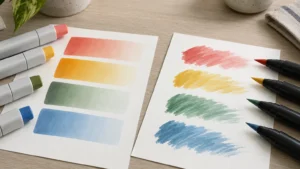
Вы можете спросить: если вы используете натуральные компоненты, маркер всё ещё хорошо рисует? Ответ — да. Благодаря передовым технологиям смешивания и эмульгирования наши инженеры сохраняют чернила яркими, гладкими и стабильными. Цвета глубокие и насыщенные на бумаге. Чернила хорошо текут и не высыхают слишком быстро. Мы доказали, что для создания высококачественного художественного инструмента для детей не нужны токсичные химикаты.
3. Самая сложная задача: натуральные консерванты и тест USP51
Самая сложная часть безопасных чернил — остановить бактерии и плесень. Маркеры стоят на полках и складах месяцами. Без консервантов чернила на водной основе могут быстро заплесневеть. Заводы старого образца используют сильные химические биоциды. Мы отказались от этого упрощения. Мы построили систему защиты только с натуральными консервантами пищевого класса.
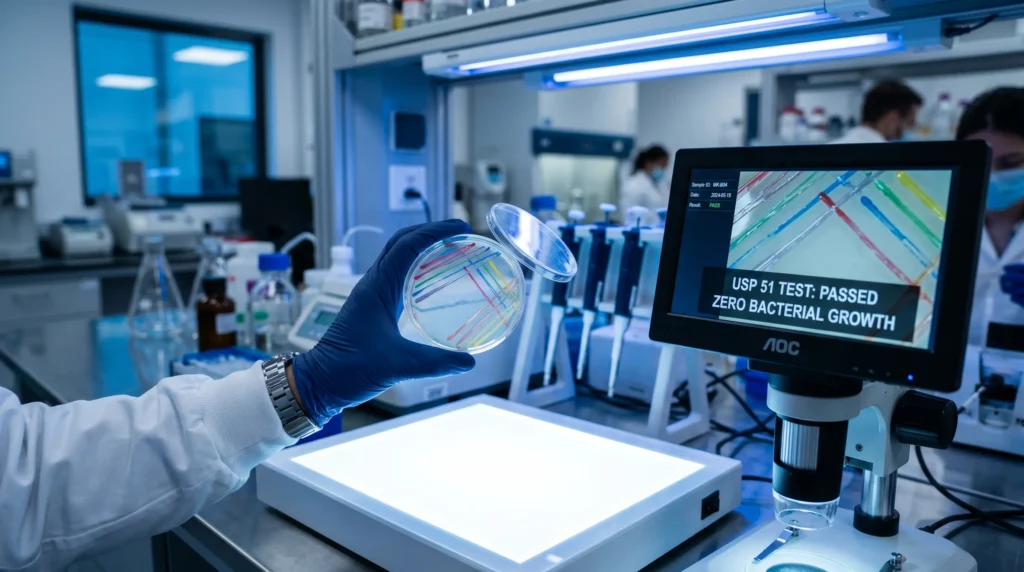
To prove it works, we sent our ink to a certified third-party lab for the теста на противомикробную эффективность USP51. Это строгий глобальный тест. Он проверяет, препятствует ли продукт росту микробов. Лаборатория проводила испытания против устойчивых бактерий, таких как E. coli и Staphylococcus aureus. Также проводились испытания против сильных плесеней, таких как Candida albicans.
ZH Stationery has confirmed that supporting USP 51 test records exist. They include counts below 10 cfu/g at days 14 and 28. Review the real report for the tested formula, organisms, method, and pass rules. Below 10 cfu/g is not proof of zero germs. An antimicrobial result does not by itself mean the ink is edible. It also does not review every chemical exposure risk.
4. Честность и доверие: почему “пищевой” не означает “съедобный”
На нашем заводе мы верим в полную честность с B2B-партнёрами и конечными пользователями. Поэтому мы обязаны сделать чёткое предупреждение. Хотя компоненты наших чернил достаточно безопасны для пищевых продуктов, маркеры не съедобны.
Почему? Завод по производству письменных принадлежностей — не пищевая кухня. Формовочные машины, заводской воздух и сборочные линии соответствуют строгим промышленным стандартам безопасности. Они не соответствуют санитарным нормам пищевого производства. Ребёнок никогда не должен есть маркер.
Компоненты пищевых добавок не превращают готовый маркер в пищевой или косметический продукт. Сохраняйте ясность в отношении назначения для письма и предупреждений. Оценивайте контакт с кожей, вероятное попадание в рот и другие реальные экспозиции посредством надлежащей проверки продукта. Не называйте химический риск нулевым или близким к нулю.

5. Постройте доверенный бренд с надежной фабрикой-производителем
Если вам нужен надёжный премиальный бренд письменных принадлежностей, вам нужен производитель, который относится к безопасности так же серьёзно, как и вы. Наши маркеры с полностью пищевыми чернилами проходят строгие мировые стандарты, включая правила ЕС EN71-3 и EN71-9.
Выбирая настоящий завод-источник, который контролирует глубокую химическую работу над чернилами, вы защищаете своих пользователей. Вы также защищаете свою глобальную цепочку поставок от нарушений соответствия. Не ставьте свой бренд на поддельные этикетки безопасности. Работайте с нами, чтобы принести по-настоящему безопасные, яркие, высококачественные маркеры в классы и дома.
Связанное руководство: Почему премиальные маркеры стоят инвестиций в 2026 году.
Связанные материалы
- Руководство по детским маркерам OEM: эргономика и безопасность для брендов B2B
- Как закупать детские маркеры для рисования: руководство для B2B-покупателей на основе цветовых предпочтений детей 3–6 лет
- Как читать отчет об испытаниях по стандарту ASTM D-4236 для акриловых маркеров
- Безопасны ли спиртовые маркеры для кожи? Почему “нетоксичный” не означает безопасность для кожи
- Руководство по испытанию канцелярских изделий на свободный формальдегид
- Съедобные маркеры: креативное украшение еды – от глазури для печенья до искусства украшения тортов.
- Какие самые безопасные ручки для письма на коже?
- руководство по классическому материалу для доски
- Руководство по чернилам для маркеров сухого стирания
What “Food-Grade” Can and Cannot Mean for a Marker
The phrase gets used loosely, and the looseness is the problem. For a marker, “food-grade” cannot mean the ink is edible. It can mean some narrower and more defensible things: that the ink contains no substance prohibited under food-contact regulations, that the pigments used appear on an approved list, and that the finished ink passes a migration test appropriate to the intended contact scenario.
Each of those claims requires a specific document. “No prohibited substances” needs a formulation review against the relevant positive list. “Approved pigments” needs the color index numbers named. “Passes migration” needs a test report naming the simulant, the temperature, the contact time, and the detection limit.
A supplier who says “food-grade” and produces none of those is using the phrase as marketing. That is common, and buyers who do not ask for the underlying documents are the ones who discover the gap when a retailer’s compliance team reviews the file.
The Regulatory Gap Between Food Contact and Art Material
Food-contact materials and art materials are regulated under separate frameworks with different assumptions about exposure.
Food-contact regulation assumes the material touches food and models migration into the food over a defined time and temperature. Art material regulation assumes the material is used as intended — drawn with, not eaten — and focuses on acute and chronic hazard labeling.
For a marker that might be used on a plate or a cake topper, both frameworks are relevant. The art material review covers the labeling obligation; the food-contact review covers the migration question. Passing one does not satisfy the other, and a supplier that offers only the art material statement has not addressed the part of the risk a food-contact buyer actually cares about.
There is also a practical middle ground worth naming: many products marketed as food-safe are not intended to touch food at all. They are intended to decorate packaging or write on labels. In that case the correct claim is about the packaging material, not about the ink.
Preservatives: The Hardest Formulation Problem
Water-based ink supports microbial growth. Without an effective preservative, a marker reservoir becomes a culture medium within weeks. That is why preservative choice is the hardest part of building a genuinely food-safe water-based ink.
The common preservatives — isothiazolinones, formaldehyde releasers, and various organic acids — are effective and inexpensive. Several of them are also restricted or under scrutiny in food-contact contexts, which puts formulators in a bind: the preservative that works best is often the one that is hardest to defend.
Natural alternatives exist but come with tradeoffs. Some are pH-sensitive and lose effectiveness as the ink ages. Some have narrow spectrum coverage, leaving a gap against either bacteria or fungi. Some interact with pigments and cause color shift over shelf life.
The practical answer for most programs is a preservation system rather than a single agent, validated by a challenge test that models the actual product. A challenge test inoculates the ink with representative organisms and measures whether the system recovers. It is the only credible evidence that a preservative package works in that specific formulation.
How to Verify a Supplier’s Claim
Four documents separate a verifiable claim from a marketing phrase.
Formulation declaration. A list of the substances in the ink, by function, with the regulatory status of each named. A supplier that refuses to disclose the formulation to a buyer under NDA is not protecting a trade secret; it is declining to be checked.
Pigment identification. The color index numbers for every pigment used. This lets the buyer check the pigments against the positive list for the target market independently.
Migration test report. The simulant used, the temperature and contact time, the detection limit, and the result. A report without those parameters is not reproducible.
Challenge test report. The organisms tested and the recovery results, tied to the specific formulation and the specific preservative concentration.
A supplier who can produce all four is doing the work. A supplier who produces one and calls it food-grade is selling a phrase.
Часто задаваемые вопросы
Does food-grade mean the ink is safe to eat? No. It means the ink meets certain restrictions relevant to food contact. Edibility is a different claim and should never be implied.
Can a marker be both art-material compliant and food-contact compliant? Yes, but both reviews have to be done. One does not imply the other.
Why is preservative choice so difficult? Because the most effective preservatives are often the most restricted, and natural alternatives have narrower coverage or stability problems.
What should I ask for first? The formulation declaration and the pigment color index numbers. Without those, nothing downstream can be verified.
The Cost of Getting This Wrong
A failed food-contact claim is not a marketing embarrassment. It is a recall event. If a retailer discovers that a marker sold as food-safe has no migration test behind it, the product comes off the shelf, the buyer loses the program, and the factory’s name goes on an internal do-not-use list that persists for years.
The cost is asymmetric. Doing the testing costs a few thousand dollars and adds two to three weeks to the timeline. Skipping it costs the entire program plus the relationship. That math is not close.
Buyers should also distinguish between the two failure modes. A product that fails a test is a technical problem with a known fix. A product that claims compliance without testing is a credibility problem, and credibility does not come back through a reorder.