

Nel mondo veloce di oggi, l'arteterapia per il sollievo dallo stress è diventata un metodo chiave e creativo per sostenere la salute mentale. L'ansia e la depressione sono rischi silenziosi per la vita quotidiana. Per questo motivo, il lavoro sulla salute mentale continua a cercare modi nuovi e creativi per aiutare le persone a guarire.
Uno dei nuovi metodi più efficaci è un approccio interdisciplinare di arteterapia. Unisce psicologia, neuroscienze e arte. Questo metodo supera la vecchia terapia della parola. Le illustrazioni curative sono uno strumento comprovato. Che tu affronti burnout o ansia, l'arteterapia per il sollievo dallo stress funziona attraverso tre mosse potenti. Creare spazi sicuri. Costruire un eco emotivo. Usare metafore per guidare la mente.
1. Creare uno Spazio Sicuro Attraverso l’Arte Visiva
Impariamo e guarigiamo meglio nello spazio giusto. La conoscenza senza sicurezza può sembrare lontana e difficile da trattenere. Le illustrazioni curative agiscono come un ponte. Portano i partecipanti in un luogo mentale calmo. Una spiaggia tranquilla. Un giardino in fiore. Una stanza accogliente. Questo li allontana dal rumore quotidiano e li aiuta a sentirsi al sicuro.
La psicologia ambientale mostra che uno spazio confortevole e piacevole può ridurre l'ansia e sollevare le sensazioni positive. Colori tenui e linee morbide nell'arte creano un'atmosfera calma. Aiutano le persone ad aprirsi al processo di guarigione.
Esempio reale: in una classe di arteterapia per professionisti, l'insegnante ha appeso illustrazioni della calma della natura intorno alla stanza. L'arte mostrava un vento gentile in una foresta di bambù. La luce del sole si muoveva attraverso un ruscello nebbioso. Gli uccelli cantavano sui rami.
L'insegnante ha chiesto agli studenti di chiudere gli occhi, respirare profondamente e immaginare di camminare attraverso quella scena. Un impiegato finanziario che affrontava uno stress prolungato ha detto: All'inizio non riuscivo a calmarmi. Ma guardando l'arte e ascoltando la guida, mi sono sentito nella foresta di bambù. La tensione nel mio corpo si è attenuata. La mia mente si è schiarita. Poiché l'arte ha stabilizzato le loro emozioni, gli studenti hanno partecipato al discorso sullo stress con maggiore facilità.

2. Stimolare la Risonanza Emotiva per Guarire dall’Interno
Le nostre emozioni e i nostri pensieri sono profondamente legati. Le illustrazioni curative usano le immagini per inviare messaggi emotivi specifici. Quando il messaggio positivo nell'arte corrisponde a ciò che lo spettatore desidera silenziosamente, si crea un eco emotivo. Questo aiuta la persona a vedere i propri sentimenti in un modo nuovo.
La Teoria dell'Autodeterminazione afferma che tutti abbiamo bisogno di connessione e capacità. L'arteterapia soddisfa questi bisogni facendo sentire le persone viste e sostenute. Questo apre il loro potere naturale di guarigione.
Esempio reale: in una classe sulla pressione scolastica, l'insegnante ha mostrato un'opera intitolata Superare le difficoltà per crescere. L'immagine mostrava uno studente sepolto sotto una montagna di libri. Dalla cima, si dispiegavano ali bianche. Rappresentavano la libertà guadagnata con il duro lavoro.
Molti studenti sono stati toccati. Uno studente che affrontava l'ansia da studio ha detto: Questa immagine mi ha fatto sentire che il mio stress era finalmente compreso. Mi ha dato speranza. Se continuo, posso superarlo. L'arte ha avviato una conversazione di gruppo. Gli studenti hanno smesso di sentirsi soli e hanno iniziato a cercare modi per affrontare la situazione.

3. Sbloccare il Subconscio con le Metafore
Sigmund Freud, il fondatore della psicoanalisi, credeva che il subconscio plasmi fortemente le nostre azioni e i nostri sentimenti. Spesso, le lotte mentali derivano da conflitti nascosti o convinzioni errate in profondità dentro di noi.
Le illustrazioni curative sono piene di metafore. Trasformano idee mentali astratte in immagini chiare. Le nuvole scure possono rappresentare la depressione. Un seme che cresce rappresenta una nuova speranza. Quando guardiamo queste immagini, il subconscio coglie i simboli. Supera le nostre barriere mentali e avvia un pensiero profondo.
Inoltre, Terapia Cognitivo Comportamentale insegna che cambiare i pensieri inutili è la chiave per la guarigione. Le metafore nell'arteterapia offrono un avvio morbido per quel cambiamento.
Esempio reale: in un laboratorio sulle emozioni per adulti, il gruppo ha studiato un uccello rinchiuso in una gabbia con una pesante catena di ferro. L'uccello sembrava triste. Fuori c'era un bellissimo cielo blu e soffici nuvole bianche. Proprio accanto alla gabbia, parzialmente nascosta, c'era una chiave.
All'inizio, gli adulti hanno percepito solo la trappola. Mentre parlavano, hanno visto che l'uccello erano loro. La catena era la loro paura inutile. La chiave, la risposta al loro problema, era lì accanto a loro per tutto il tempo. L'avevano ignorata.
Un partecipante con ansia sociale ha detto: Ho sempre pensato che il mondo esterno fosse pericoloso, quindi mi nascondevo nella mia gabbia. Questa immagine mi ha fatto vedere che ero io a rinchiudermi. Usando il cielo blu e la chiave, questo partecipante ha iniziato a provare nuovi passi sociali.
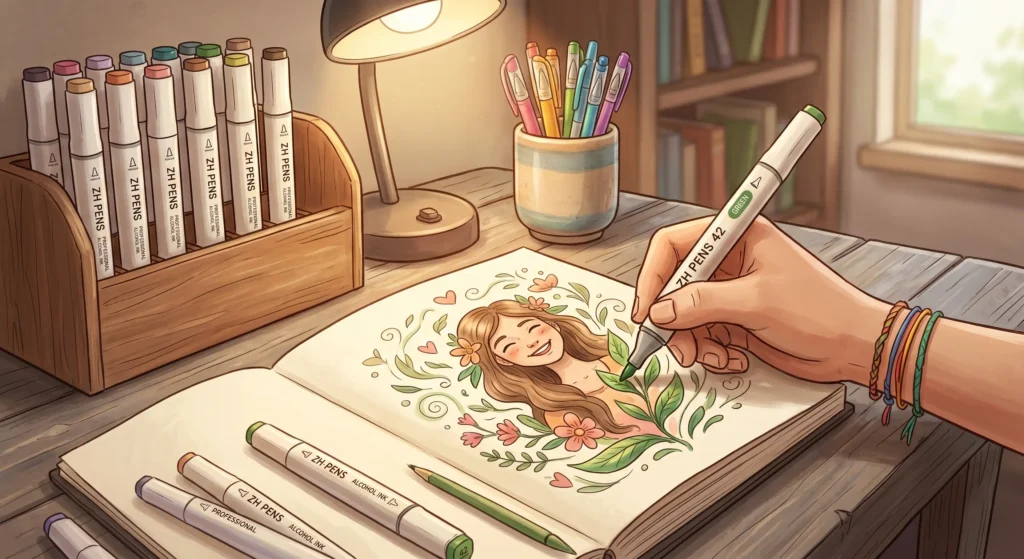
Creare le proprie illustrazioni terapeutiche con pennarelli professionali può anche essere una forte forma di cura di sé.
Conclusione
Le illustrazioni curative nell'arteterapia interdisciplinare mostrano un reale potenziale. Costruiscono uno spazio sicuro. Suscitano un eco emotivo. Usano metafore per rimodellare i pensieri difficili. Queste tre mosse lavorano insieme come un sistema curativo.
Man mano che la ricerca cresce, l'arteterapia per il sollievo dallo stress diventerà ancora più precisa e utile. Aiuterà più persone a uscire dal buio e a entrare in una vita calma e positiva.
Guida correlata: Per un'altra prospettiva sulle capacità dello stabilimento e sul controllo dei processi, consultare Una Primavera Trionfante: ZH STATIONERY Brilla alla 139ª Fiera di Canton 2026.
Letture correlate
- La Guida Definitiva ai Materiali Artistici per Bambini: Migliorare la Percezione Artistica Attraverso il Gioco Interattivo
- 15 Idee per Colorare Estive con Penne Gel
- Arte con i Marker di TikTok: 5 Tendenze Virali che Puoi Creare con Solo 3 Penne
- Guida alla sicurezza dei pennarelli per bambini OEM
- Guida all'inchiostro per pennarelli di grado alimentare
- Guida ai test sulla formaldeide nella cancelleria
- Guida alle penne e ai pennarelli tascabili mini per articoli di cancelleria
Why Repetitive Mark-Making Calms the Nervous System
Coloring is a constrained task. The page sets the boundary, the color sets the variable, and nothing outside that frame needs attention for the next ten minutes. That constraint is the mechanism. When attention narrows to something concrete and low-stakes, the mind stops rehearsing the open loops that keep stress responses running.
The rhythm matters as much as the content. Filling an area with short, even strokes settles breathing into a slower pattern. Many people notice it around the third or fourth minute without being told to look for it. Long, continuous strokes have a different effect — more energizing, less settling — which is why fine liners and chisel tips produce different experiences even when the color is identical.
The third factor is low consequence. Nothing in a coloring page can be done wrong in a way that matters. That is rare in adult life, and the absence of consequence is itself restful.
Choosing Materials That Support the Process
Material choice changes the experience more than most beginners expect. Four variables are worth thinking about before buying a set.
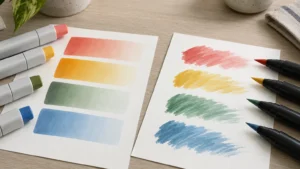
Tip type. Fine tips suit detail and small areas, which supports focused attention. Chisel tips cover large areas quickly, which suits a more rhythmic, less deliberate session. Brush tips sit between the two and are the most forgiving for people who have not drawn since school.
Ink system. Water-based markers are low-odor, easy to clean, and safe around children. Alcohol markers blend smoothly but carry a solvent smell that some people find distracting in a quiet room. Acrylic markers are opaque and work on dark paper, which opens up a different visual vocabulary.
Paper weight. Thin paper bleeds through and creates a second problem to manage. A 100 to 160 gsm stock absorbs enough ink to keep edges clean and lets the session stay about the session.
Color range. A 12-color set is enough to start. Larger sets introduce choice, and choice can become its own small stressor. Many people do better with a limited palette for the first few weeks.
Three Exercises You Can Start Today
Color field. Pick three colors that do not obviously belong together. Fill three horizontal bands across the page, letting the edges bleed slightly. Add simple line work over the top — a horizon, a few marks. The exercise takes about fifteen minutes and produces something that reads as intentional even when it was not planned.
One-color study. Use a single marker for the whole page. Work only with line weight and density. Filling space with more lines makes an area read darker; fewer lines make it lighter. The constraint removes color decisions and leaves only rhythm, which is often the more settling part.
Repeat pattern. Draw the same small shape across a grid. The repetition is the point. It occupies the part of attention that would otherwise drift, and the result is visually coherent regardless of drawing skill.
What Art Therapy Is Not
Art therapy as a clinical practice is delivered by a trained therapist within a treatment relationship. Coloring at home is not that, and it is worth being clear about the difference.
What a coloring session can do is provide a structured, low-demand activity that many people find settling. What it cannot do is diagnose, treat, or substitute for professional care. If stress is persistent, disruptive, or tied to a specific condition, a coloring page is not the intervention.
The honest framing is this: coloring is a accessible practice that supports attention and rhythm. It is not a cure, and presenting it as one does a disservice to the people who need actual clinical support.
Domande Frequenti
How long should a session last? Ten to twenty minutes is enough for most people to notice a shift. Longer sessions are fine but the effect tends to plateau.
Do I need to be good at drawing? No. The exercises above are designed so that the result reads as intentional regardless of skill.
Are alcohol markers suitable for a quiet room? They carry a solvent odor. Water-based markers are usually a better fit for shared or small spaces.
What paper should I use? 100 to 160 gsm, single-sided if possible, to avoid bleed-through becoming a distraction.
Common Mistakes That Undo the Benefit
Three habits reliably cancel the settling effect of a coloring session.
Choosing the subject before sitting down. Deciding what to draw turns the session into a performance task. The exercises above work because the page has already decided for you. Pick the page in advance and let the session be only about color.
Working on a screen. Digital coloring removes the tactile feedback that does most of the work. The resistance of paper against a tip is part of why the activity settles attention; a stylus on glass does not produce the same effect for most people.
Checking the result against someone else’s. Comparison reopens the evaluation loop the activity was meant to close. The session works when the output is not being judged, including by you.
The practical version: pick the page the night before, use paper, and put the finished sheet somewhere without looking at it again that day.
Setting Up a Repeatable Ritual
The benefit comes from repetition more than duration. A fifteen-minute session four times a week does more than a single two-hour session, because the settling effect depends on the activity becoming familiar enough that it stops requiring decisions.
Three things make repetition easier. Keep the materials accessible rather than packed away. Use the same paper size each time so the scale of the task is predictable. And end the session at a natural stopping point rather than when time runs out, so the next session starts without a leftover task.
Most people who try coloring and abandon it do so because the setup cost exceeded the session length. Reducing friction matters more than extending the session.
Keep the paper and markers where you can see them. Visible materials get used; stored materials do not.