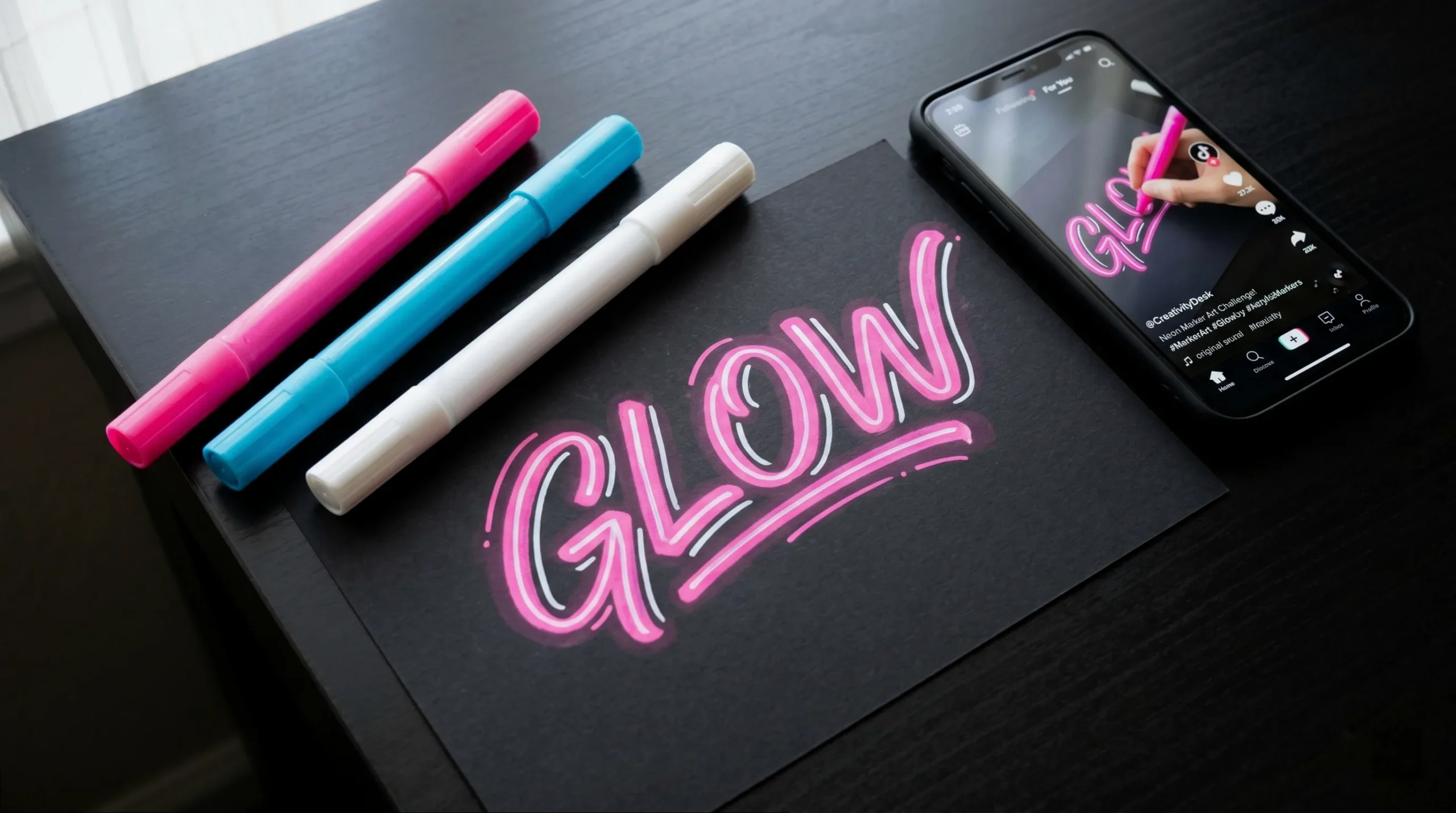
Scrolling through TikTok, you have seen them. A hand holding three markers. A sheet of black paper. Fifteen seconds later. A neon sign that looks like it belongs in a Tokyo alley. A galaxy across a notebook page. A portrait in three shades of blue.
Then you look at your own desk. A handful of half-dry pens. Maybe an old sketchbook. And you wonder. Can you actually pull that off?
You can. What splits TikTok creators from the rest is not a 200-color set. It is knowing which three pens to pick and what to do with them. The trends that rack up millions of views share a common thread. They are built on technique, not inventory.
In this article, I walk through five TikTok marker art trends that need only three pens each. I break down which marker types give the best results. I explain why ink formula matters more than color count. And for the buying managers and brand owners reading. What factory-level QC splits a marker that trends from one that disappoints.
Table of Contents
Quick Answer: What Are The Most Popular TikTok Marker Art Trends Right Now?
If you want the short version, here it is. These five trends rule TikTok marker art in 2026. Each one needs exactly three pens.
- Neon glow on black paper: White marker + two bright colors. The white base layer makes colors fluoresce against a dark background. Acrylic markers are non-negotiable here (water-based inks won’t give you the opacity.
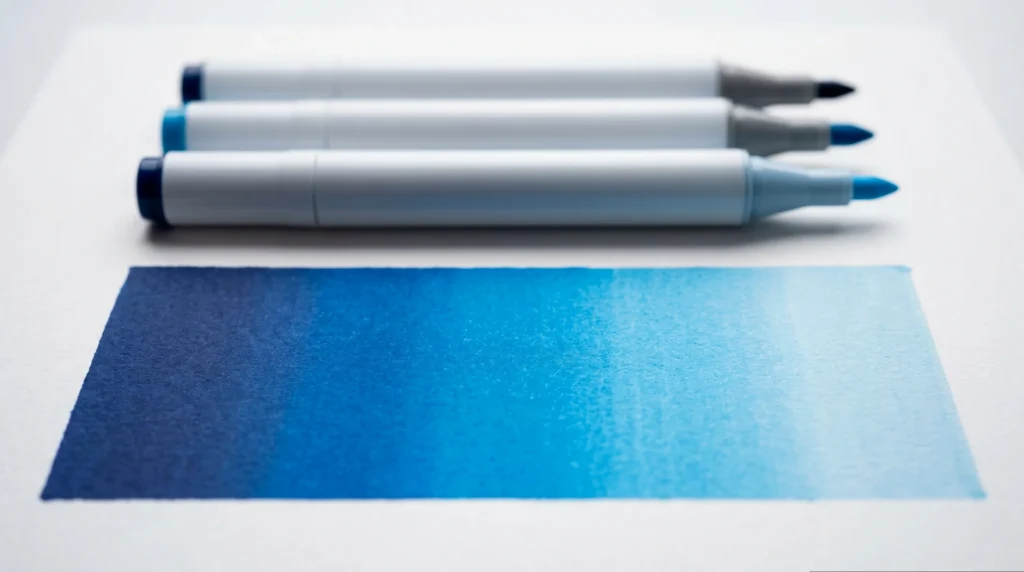
- Gradient blending with three shades: One light, one medium, one dark of the same color family. Alcohol-based markers blend seamlessly because the ink reactivates the layer beneath. The result looks like digital airbrushing.
- One-color challenge drawings: A single color, three pens) fine tip, brush tip, broad chisel. This trend proves skill beats inventory. The constraint forces you to think about line weight and negative space.
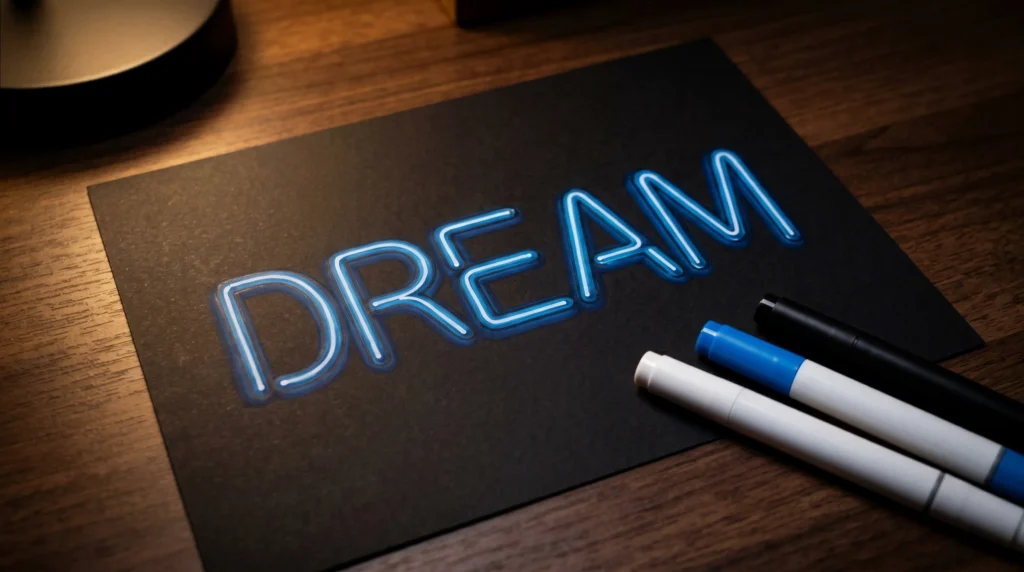
- Fake neon sign lettering: White outline, one bright fill, black background. The trick isn’t the colors (it’s the offset highlight on one side that mimics real neon tube lighting.
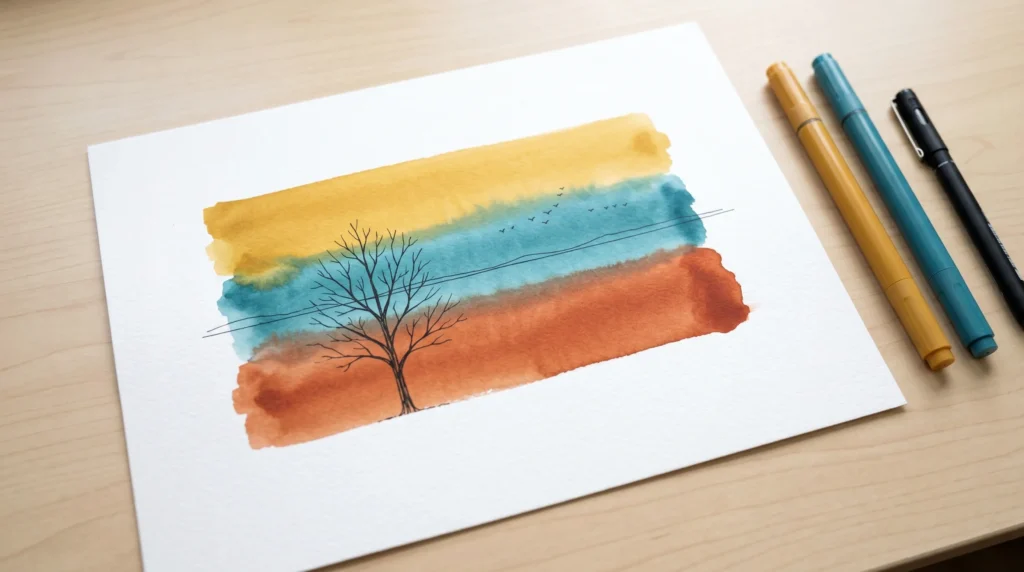
- Abstract marker swatch landscapes: Three colors you’d never put together. The trend exploded because it rewards spontaneity. Swatch them side by side, let them bleed into each other, add minimalist line work on top.
For brand owners and buying teams, knowing why these trends work helps set sharper sourcing and quality check bars. A marker that cannot give opacity on black paper, bleeds without control, or fades after a week will never make the kind of organic content that drives demand.
What Makes A Marker Go Viral: The Technical Foundation Of TikTok Marker Art
TikTok does not care about your supply chain. The algorithm rewards one thing without mercy. Visual impact in the first 0.8 seconds. And visual impact, for marker art, is pure materials science.
Three factors decide whether a marker makes that scroll-stopping effect. Ink opacity. Color saturation. Drying performance. Get one wrong and the video flatlines.
Alcohol-based markers, the workhorses behind most TikTok marker art, use dye dissolved in alcohol solvent. The alcohol leaves in seconds. The dye moves into the paper fibers. This makes smooth, streak-free color that blends while wet and locks when dry. That is why gradient blending looks seamless on camera.
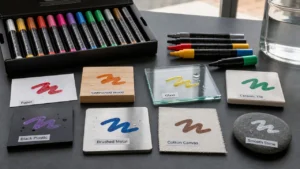
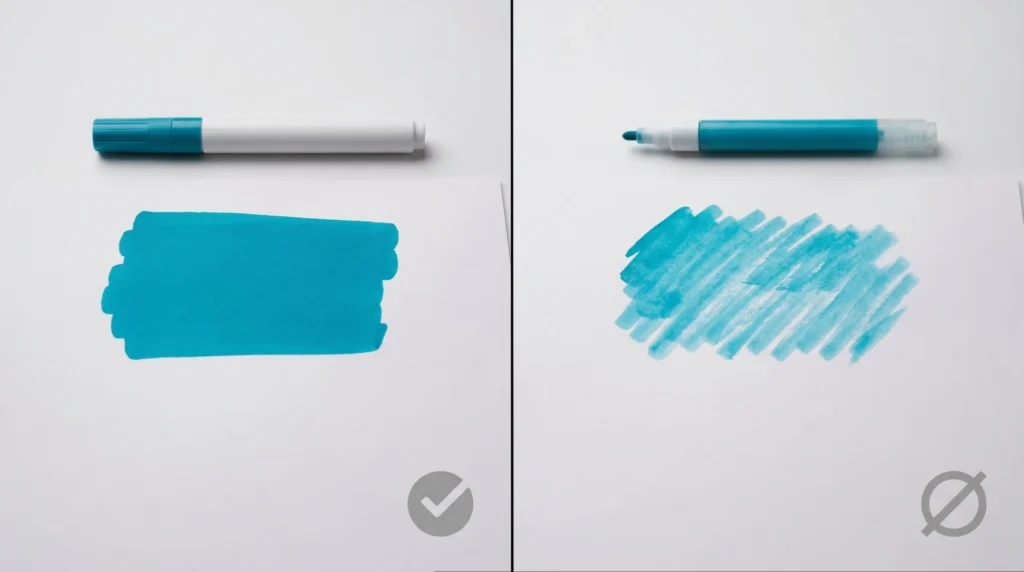
Acrylic markers perform differently. They lay a layer of pigment in acrylic resin, which cures into a flexible film on the surface. This film sits on top of the paper instead of soaking in. That is the secret behind the neon-on-black trend. The white acrylic base makes an opaque canvas. The color layers sit on it and reflect light back through the pigment instead of being taken by the dark paper.
Water-based markers, the kind most people have lying around, are the weakest picks for TikTok content. Their ink soaks into paper unevenly. Colors look muted on dark bases. They cannot layer without tearing the paper surface.
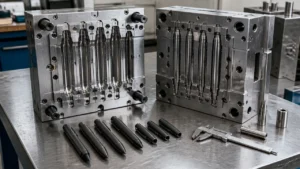
But not all alcohol markers are equal. Neither are all acrylic markers. This is where the gap between a consumer complaint and a loyal customer traces back to a factory floor in Tonglu.
| Common Feature/Issue | Why It Matters/Fails (Root Cause of Customer Complaints) | Factory Quality Control Metric |
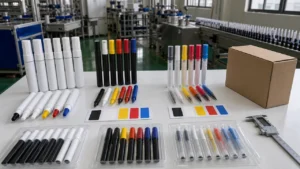
| Ink color matching between batches | If Batch A’s “Cerulean Blue” differs from Batch B’s, creators can’t replicate tutorials (and they blame the brand, not the factory | Compare dried strokes against the approved master under recorded lighting and measurement conditions; agree the tolerance for the intended paper and use. |
| Cap seal failure → drying out | A cap that doesn’t click shut with consistent force lets solvent escape through the microscopic gap. The nib dries. The marker’s dead in two weeks | Cap pull-force test (≥15N), accelerated aging at 50°C for 72 hours, leak test at 0.05 MPa |
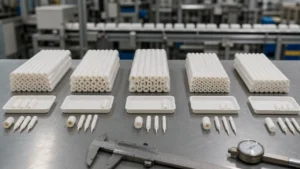
| Nib fraying / scratchy writing | Cheap felt nibs degrade after 200 meters of continuous writing. The tip splays, ink flow becomes uneven, and the “gliding” feel disappears | Nib abrasion test (500m minimum write distance); tip microscopy inspection at 40x magnification |
| Color streaking on large areas | Air pockets in the ink reservoir cause intermittent flow. The user sees pale patches between saturated streaks | Continuous write test (300m); automatic ink-level monitoring during filling; reservoir saturation check |
| Color fading on display | Low-lightfastness dyes degrade under UV exposure and indoor lighting. A drawing that looked vibrant on day one looks washed out by month three | Accelerated UV aging test (simulated 6-month exposure); lightfastness rating ≥ Blue Wool Scale 5 for artist-grade markers |
The table above maps what end users feel directly to what happens on the line. A cap-seal fail is not a small fault. It is the most common reason a marker gets thrown away and the buyer reaches for a rival next time. On a well-run line, that cap gets tested on a sample from every mold cycle. Not once at the start of the run.
At a 10,000+ sqm factory area with 8 workshops running machine assembly, the ink fill nozzle gets re-set every 2,000 units. Skip that step and the fill weight starts to drift, about 0.1 grams per 50 units, compounding. Within one shift, you have markers from 2.8g to 3.4g of ink. The user cannot measure the gap. They can see it. The overfilled one leaks on the first stroke. The underfilled one runs dry halfway through a drawing.
5 TikTok Marker Art Trends You Can Create With Just 3 Pens
1. The Neon Glow Effect On Black Paper
This trend began with Posca artists on TikTok and spread across the platform within weeks. The visual payoff is instant. Glowing, electric colors that seem to hover above the page.
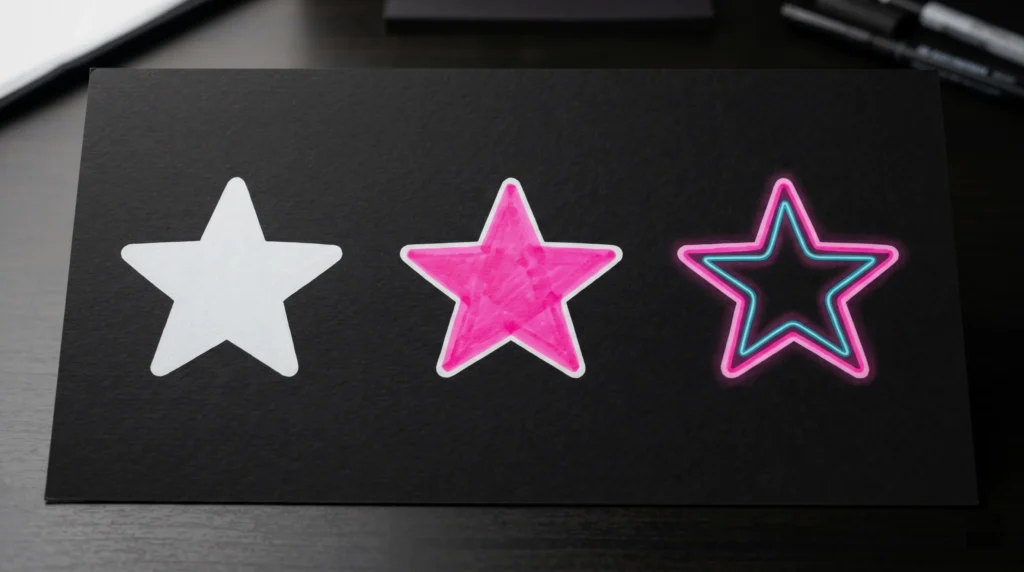
You need. One white acrylic marker. Two bright acrylic markers. Pick colors that contrast. Pink and cyan. Or orange and lime green.
The technique. Cover the area you want to glow with a solid white base. Let it dry fully, about 30 seconds with acrylic markers. Draw your design over the white base in the first color. Let that dry. Add a thinner line of the second color inside the first for a neon tube effect. The white under it bounces light back through the color layers. That makes the luminous quality that reads as neon on camera.
Why this works on TikTok. The before-and-after contrast is extreme. A black box becomes a glowing sign in under 60 seconds. The change is naturally shareable.
The effect depends on opacity, flow, and the paper surface. Compare white and colored strokes on the black paper you plan to use. Let each layer dry. Record how many passes give the result you want. Pigment level alone does not set a cover percentage.
2. Gradient Blending With Three Shades
This is the technique that makes three markers look like a 24-color set. Pick one color family. Say, blue. Pick a pale sky blue, a true medium blue, and a deep navy. With alcohol-based markers, these three make a steady gradient the eye reads as endless shades.
The technique. Lay the lightest color across the full gradient area. While it is still wet, bring in the medium shade at the midpoint with small circles to merge the edge. Tap the dark shade into the deepest end. The key is wet-into-wet. Alcohol-based ink stays workable for about 8 to 12 seconds. That is your blend window. If the first layer dries before the second, you get a hard line instead of a gradient.
The TikTok appeal. Watching a gradient form in real time is deeply pleasing. The algorithm rewards watch-through rate. Gradient videos keep viewers until the merge happens.
Alcohol-based ink steadiness is where making precision decides art results. If the solvent leaves at different rates between the three markers, say the medium dries in 6 seconds and the dark in 14, blending becomes hard. The user blames their skill. The real cause is batch-to-batch solvent ratio drift.
3. The “One-Color Challenge” Drawings
This trend strips everything back to one color. The artist talks only through line weight, hatching, and negative space. Creators on TikTok have made portraits, cityscapes, and abstract pieces with a single marker by switching tip types.
You need. Three markers in the same color. One with a fine bullet tip at 0.7mm. One with a brush tip. One with a broad chisel tip. See the markers that paint range.
The technique. Use the chisel for large fills. Switch to the brush for organic lines, curves, and varied stroke weight. Use the fine bullet for hatching and detail. The one-color limit pushes you to think about value through density. More lines per square reads darker. Fewer reads lighter.
The takeaway for buyers. Tip quality across tip types is not uniform in many factories. A brush tip with great flow for one ink may clog with another. A factory with 26 years of OEM work has the data to match nib parts to ink chemistry. Polyester fiber tips hold alcohol inks better than nylon. A brush tip's capillary channel needs to adjust for higher-viscosity acrylic formulas. See ACMI for art-material context.

4. Fake Neon Sign Lettering
This is the most copied TikTok marker art trend of the past two years. It mimics the look of glass neon tubing using only markers and black paper. The illusion rests on a specific optical trick.
You need. One white acrylic marker. One bright color. Hot pink, electric blue, or neon green work best. One black marker for touch-ups.
The technique. Draw your lettering or shape in the bright color with a medium-thick line. Once dry, add a white highlight line along one edge. The same edge for every letter. This offset highlight sells the neon look. A real neon tube has a highlight on one side from glass curve reflecting light. Your white line copies that. Finally, use the black marker to clean wobbly edges.
Why it trends. The result looks like costly custom signage. The process looks like anyone can do it. That gap between impressive result and easy process is the sweet spot for viral content.
5. Abstract Marker Swatch Landscapes
This trend is newer, from early 2026, and the most forgiving of the five. The idea. Take three colors that do not belong together. Swatch them in horizontal bands across the page. Add simple line work. A few birds. A far horizon. A single tree. Turn an abstract color field into a landscape.
You need. Three markers in unrelated colors. Ochre, teal, and rust. Or lavender, olive, and coral.
The technique. Swatch each color in a horizontal block. Let the edges bleed into each other a little. Once dry, use the darkest of the three to draw sparse, suggestive landscape parts. The contrast between the abstract field and the line work reads as on purpose and refined.
The color steadiness of these swatches, whether teal shifts green after a week of indoor light, depends on the lightfastness of the dyes. A factory that batch-tests inks under fast UV aging does not leave this to chance. Sites where every batch gets spectro checks make markers that deliver the same color on day 90 as day one. That matters to creators whose content stays online. It matters more to brand owners whose name rides on product steadiness. A user who posts a faded marker is not posting a review. They are posting a warning. See ISO 9001 context.
Frequently Asked Questions
1. What Type Of Marker Works Best For TikTok Marker Art On Black Paper?
Opaque acrylic paint markers are a practical pick for bright designs on black paper. Transparent alcohol-marker colors usually show much less on a dark base. Test the exact marker and paper. Compare single and multiple layers. Stop if repeated passes hurt the surface. There is no universal cover percentage for this technique.
2. Why Do My Marker Gradients Look Streaky Instead Of Smooth?
Two likely causes. First, you use water-based markers. They dry too fast for wet-into-wet blending and leave hard edges. Switch to alcohol-based. Second, even with alcohol markers, if you let the first layer dry fully before the second, the ink will not wake and the edge becomes final. You have about 8 to 12 seconds to blend before the solvent leaves.
3. How Can I Tell If A Marker Is Good Quality Before Buying?
Look for three things on the pack or listing. Ink type. Alcohol for blending. Acrylic for opacity. Tip part. Polyester fiber tips last longer than basic felt. Safety files. If a brand lists EN71 or ASTM D-4236, that is a base sign of making care. These standards need third-party toxicology review, not self-declared claims. Past the pack, a real sign is whether the manufacturer shows batch-level QC data or only sales lines. A factory that hands you batch logs has nothing to hide. See the EU toy rules.
4. Can I Use Metallic Markers For These TikTok Trends?
Yes, with a caveat. Metallic markers work well for highlights and accents in trends like neon lettering and abstract landscapes. The mica pigment reflects light in a way that photos well. They are not a stand-in for white acrylic or alcohol markers in the other techniques. Metallic ink has lower opacity than pigmented acrylic. It does not blend like alcohol dyes. It is an accent tool, not a base tool.
5. How Do I Source Reliable Markers For My Own Brand If I Want To Sell To TikTok Creators?
Start with the ink. If a supplier buys ink from third parties, you inherit their formula drift. Your buyers will notice when Batch 2 does not match Batch 1. Look for makers with in-house ink R&D who can show color steadiness data, Delta E across runs. A factory like ZH Stationery, with a dedicated ink lab and spectro checks per batch, can also send physical samples before production so you test opacity, blending, and cap-seal on your own desk. Not on a spec sheet. If you compare suppliers, the team can walk you through QC files and send sample sets. The minimum order for custom OEM/ODM programs is 50,000 pens per order, counted by total individual pens produced. For a 12-color pack, that equals roughly 4,200 sets, not 50,000 of each color. Standard stock models can be sampled at smaller trial sizes.
6. How Long Should A Good Marker Last For Art Projects?
For alcohol markers. A full marker with about 3 to 4 grams of ink should deliver roughly 300 to 400 meters of steady writing on standard 80gsm paper before running dry. That is about 200 to 300 A4 drawings at medium cover. The real life variable is not ink volume. It is cap-seal performance. A marker stored with a good cap should stay usable 18 to 24 months. A weak cap will dry in weeks no matter how much ink it started with.
The five trends above share a common DNA. Low barrier to try. High payoff to share. You do not need a 120-color set. You do not need art school. You need three markers that perform the same every time. Ink that lays at the right opacity. Tips that hold shape through hundreds of strokes. Caps that seal tight every time.
For the casual creator, that means a trip to the art store with a clearer list. For the brand owner sourcing for this exact audience, it means asking suppliers the questions that split a making partner from a one-time deal. How do you verify batch-to-batch color steadiness? What is your cap-seal fail rate? Can I see the QC logs? See the paint marker process.
The answers decide whether the markers you ship create TikTok content or customer returns.
If you source markers for your brand and want to talk specs, inks, or request physical samples, reach the ZH Stationery team through the contact page for a no-obligation talk.
Related guide: For more market context, see Acrylic Marker Market 2026.
Related Reading
- 10 Marker Techniques Every Aspiring Artist Should Know: A Factory Expert’s Guide to Tools That Perform
- Marker Techniques Every Beginner Artist Should Learn
- Pocket Stationery Is Having a Moment in 2026: Best Mini Pens and Markers for On-the-Go Creativity
- The Power of Art Therapy: Using Healing Illustrations for Stress Relief and Mental Wellness
- summer coloring ideas using gel pens
- colored pencil types and market trends