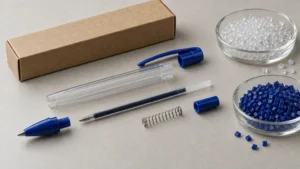

일상적인 학교 및 사무용품에 때때로 유해 화학 물질이 숨어 있을 수 있다는 사실을 알고 계셨습니까? 그래서 필기구의 포름알데히드 시험이 안전을 위해 중요합니다.
WHO 2010 실내 공기 질 가이드라인에는 선택된 오염 물질에 포름알데히드가 포함되어 있습니다. 실내 공기 중 노출을 다룹니다. 필기구에 대한 보편적인 통과 한도를 설정하지 않습니다. 제품 시험은 시료 채취 부위, 적용되는 제품 표준, 사용된 시험 방법을 명시해야 합니다.
바이어를 보호하고 강력한 브랜드 명성을 유지하려면 신뢰할 수 있는 시험 서비스가 필수적입니다.

문구류 내 포름알데히드 테스트의 중요성 및 기준
바이어의 안전을 위해 국내외 단체는 필기구의 유해 성분에 대한 엄격한 규정을 마련했습니다.
해당 범위의 학생 용품에 대해서는 GB 21027-2020이 확인해야 할 중국 제품 표준입니다. 그 요구 사항은 용품과 부품에 따라 달라집니다. 목적지 시장의 요구 사항은 별도로 확인하십시오. 중국 표준 보고서만으로는 모든 수출 시장에 대한 적합성을 보여주지 않습니다.
이러한 표준에 대한 테스트를 통해 제조업체는 친환경적이고 안전하며 고품질의 생산에 대한 노력을 보여줍니다.
시험 방법: 아세틸아세톤 분광광도법
GB/T 32606-2016 공식 문서에는 포름알데히드 시험 방법이 아세틸아세톤 분광광도법으로 명시되어 있습니다. 시험소에 방법의 판본을 명시하도록 요청하세요. 시료 채취 및 추출 단계가 시험 부품에 적합한지 확인하세요.
기본 원리:
아세틸아세톤 방법은 발색 반응 생성물을 만듭니다. 시험소는 이를 교정 용액과 비교하여 흡광도를 측정합니다. 시험소는 명시된 시약 준비, 추출, 반응, 측정 조건을 따라야 합니다. 이 개요는 전체 표준이 아니며 시험 절차도 아닙니다.
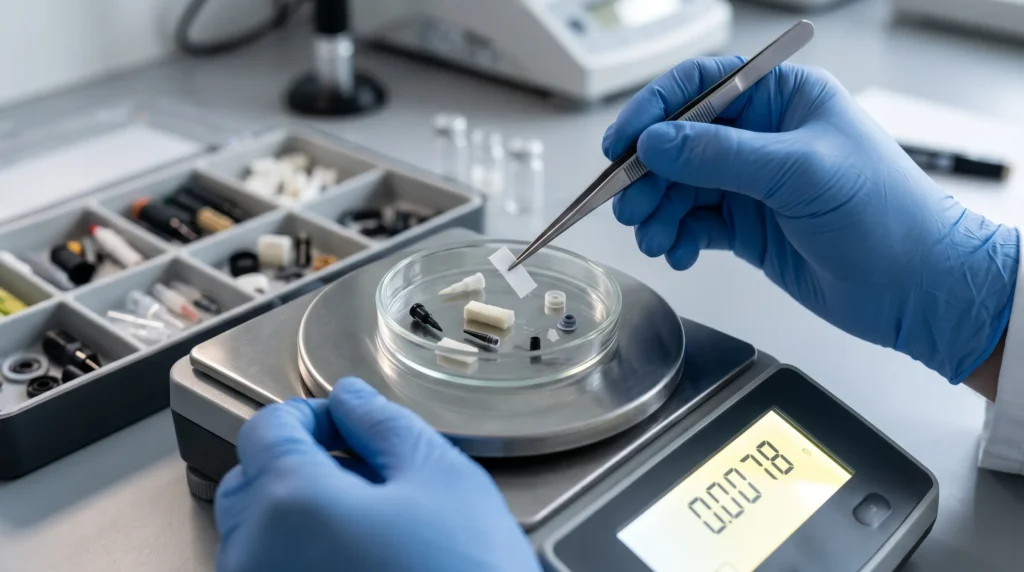
실험실 보고서에서 확인해야 할 사항
이 네 가지 포인트를 사용하여 시험소와 보고서를 검토하세요. 전체 시험 방법은 시료 질량, 추출 조건, 시약 부피, 반응 시간, 교정 범위를 규정합니다. 일반 소싱 문서에서 이를 추론하지 마세요.
1. 시료 준비
시험 대상 모델, 부품, 재질을 명시하세요. 해당 방법에 따라 부품이 어떻게 준비되고 추출되었는지 문의하세요. 보고서에 다른 제품이나 배치가 아닌 해당 시료가 명시되어 있는지 확인하세요.
2. 발색 반응
시험소가 인용된 방법에 따라 시약 준비, 반응, 흡광도 측정을 수행했는지 확인하세요. 보고서에 방법이 명시되지 않았거나 절차가 변경된 것으로 설명된 경우 명확히 해달라고 요청하세요.
3. 표준 곡선 작성
교정 범위와 방법 블랭크가 어떻게 설정되었는지 문의하세요. 시료 결과가 검증된 측정 범위 내에 있는지 문의하세요. 적용되는 방법(일반 문서가 아님)이 교정 수준을 설정합니다.
4. 결과 판독
보고된 값을 단위, 검출 한계 또는 정량 한계, 적용되는 합격 기준과 함께 읽으세요. 보고 한계 미만의 값은 보고된 대로 읽어야 합니다. 포름알데히드가 존재하지 않는다는 증거로 간주하지 마세요.
최종 계산 공식
아래 식은 c가 이미 블랭크 보정되었고 추가 희석이 계산된 경우에만 단위 변환을 보여줍니다. 전체 방법과 시험소의 계산 규칙이 보고된 결과를 결정합니다. 이 식은 GB/T 32606 절차 전체가 아닙니다.
x = (c × f) / m
- x x = 시료 내 유리 포름알데히드 양 (mg/kg)
- c = 공백 보정 농도, 추가 희석을 모두 반영한 값 (μg/mL)
- f f = 시료 액체가 희석된 부피 (mL)
- m m = 원래 시료의 정확한 질량 (g)
시험소와 방법 블랭크, 희석 계수, 보고 단위를 확인하세요. 블랭크 수정만으로 총량이 정확하다는 의미는 아닙니다.
마음의 평화를 위한 신뢰할 수 있는 테스트
제품 안전 유지는 단순히 법률 준수만의 문제가 아닙니다. 고객을 보호하는 것입니다.
현재 인정 범위가 필요한 방법을 포함하는 시험소를 선택하십시오. 보고서 발행자, 시료명, 범위를 직접 확인하십시오. 이 문서는 명명된 시험소의 현재 자격이나 범위를 설정하지 않습니다.
마커 및 기타 필기구의 경우, 시험 보고서는 시료, 방법, 결과를 기록합니다. 해당 결과를 적용되는 제품 요구 사항과 비교하십시오. 인정이 모든 미시험 모델, 부품 또는 배치에 유해 성분이 없음을 의미하지는 않습니다.
관련 가이드: ASTM D-4236 아크릴 마커 테스트 보고서 읽는 방법.
관련 읽을거리
Why Formaldehyde Still Appears in Stationery
Formaldehyde is not added to markers on purpose. It arrives as a residual from three sources: adhesives in packaging, preservatives in water-based ink, and finishes on wooden or paper components. In each case the amount is small, but the regulatory limit is also small, and the test measures what is present rather than what was intended.
The adhesive route is the most common. Casein and urea-formaldehyde glues are cheap and strong, which is why they still appear in some cartons and laminated boards. A marker itself may pass while the display box it ships in does not.
The ink route matters for water-based formulas. Some preservative systems release formaldehyde slowly as they break down, which is why a freshly mixed batch can pass and a batch tested after six months in a warehouse can fail. That is not a manufacturing defect in the usual sense; it is a formulation choice with a time dimension.
How the Acetylacetone Method Works
GB/T 32606-2016 specifies acetylacetone spectrophotometry as the formaldehyde test method. The procedure runs in four stages.
Extraction. The sample is placed in water at a controlled temperature for a set period. Formaldehyde migrates into the water. The extraction time and temperature are specified, and changing either one changes the result.
Reaction. Acetylacetone reagent is added. In the presence of ammonium acetate, formaldehyde reacts to form a yellow compound, 3,5-diacetyl-1,4-dihydrolutidine. The reaction needs a fixed time and temperature to complete.
Measurement. The solution is read in a spectrophotometer at 412 nanometers. Absorbance is proportional to formaldehyde concentration within the calibrated range.
Calculation. Concentration is derived from the calibration curve, corrected for the blank, and converted to milligrams per kilogram of sample.
The formula only works when the blank is properly corrected and any additional dilution is counted. A report that quotes a number without stating the method edition, the extraction conditions, and the blank value is not reproducible.
Reading a Report: What the Numbers Mean
Three numbers matter on a formaldehyde report: the result, the limit, and the detection limit.
The result should be expressed in mg/kg with the measurement uncertainty stated. A result of 15 mg/kg with an uncertainty of plus or minus 3 is a different statement from 15 mg/kg with no uncertainty given.
The limit depends on the destination market and the product category. Textile and wood components have their own limits under separate standards; stationery is often assessed against the general consumer goods framework. Confirm which limit applies before comparing a result to a pass threshold.
The detection limit tells you whether the test could actually see a failure. A method with a detection limit of 20 mg/kg cannot demonstrate compliance with a 16 mg/kg limit, no matter what the result says.
Sampling and Extraction: Where Tests Go Wrong
Most false passes and false failures trace to sampling, not to the instrument.
The sample must represent the batch. A single marker taken from the top of a carton is not a batch sample. The correct approach is to composite material from several units, because formaldehyde distribution within a production run is not uniform.
The extraction conditions must match the method. Water temperature, extraction time, and the ratio of sample mass to water volume all affect the result. A lab that shortens the extraction to save time will report a lower number than the method intends.
The tested part must be the part that matters. For a marker, that means the barrel, the cap, the ink, and the packaging assessed separately, because each has a different risk profile and a different limit may apply.
자주 묻는 질문
Does passing a formaldehyde test mean the product is safe? No. It means formaldehyde is below the applicable limit for that test method. Other substances are covered by other tests.
How often should formaldehyde be retested? At minimum once per production batch, and again whenever the ink supplier, adhesive supplier, or packaging supplier changes.
Can a factory self-test? It can screen internally, but the report that goes to a retailer should come from an accredited third-party lab with the method edition stated.
What happens if a batch fails? The batch should be held, the source identified — ink, adhesive, or packaging — and the affected lots traced. Retesting the same sample rarely changes the result.
Where Formaldehyde Comes From in the Supply Chain
The test measures what is present, not what was intended. Three upstream sources account for most failures.
Adhesive suppliers. Casein and urea-formaldehyde glues remain cheap and strong, which is why they still appear in laminated boards and some cartons. A marker can pass while the display box it ships in does not. Ask for the adhesive declaration separately from the ink declaration.
Preservative systems in water-based ink. Certain preservatives release formaldehyde as they break down. A freshly mixed batch passes; the same batch tested after six months in a warm warehouse may not. This is a formulation choice with a time dimension, and it is the most common cause of a late failure.
Wood and paper components. Pencil barrels, wooden display stands, and some paper stocks carry residual formaldehyde from processing. These are usually low, but they add to the total when the test composites multiple materials.
The practical implication: test the finished product as it ships, not the individual components in isolation. A composite sample catches the additive effect that single-component testing misses.
Setting a Retest Cadence That Actually Catches Drift
Most programs retest once per production batch, which is not enough to catch a slow drift.
A supplier can change an adhesive vendor, a preservative concentration, or a packaging source without announcing it, and the change shows up three batches later as a failed test. The cadence that catches this has three triggers.
Per batch. A basic screening test on every production run. This is a factory-side control, not a third-party report.
Per quarter. A full third-party report on the current production. This catches drift before it becomes a retailer issue.
Per change. Any change to ink supplier, adhesive supplier, packaging supplier, or formulation triggers an immediate retest regardless of the quarterly schedule. This is the trigger most programs omit, and it is the one that catches the failures that matter.
Put the change trigger in the purchase order, not in a side agreement. A clause that requires notification before any material substitution is enforceable; a verbal understanding is not.