

색연필이 어떻게 만들어지고 왜 그렇게 부드럽게 느껴지는지 궁금해한 적이 있습니까? ZH Stationery에서는 훌륭한 그림이 고품질 심에서 시작된다고 믿습니다. 흑연 연필과 달리 색연필 제조는 과학의 섬세한 예술입니다. 색상은 높은 열을 견딜 수 없습니다. 참조하십시오 홈페이지 에서 제품군을 확인하세요.
이 가이드에서는 모든 전문 색연필 뒤에 있는 재료와 공정을 보여드리기 위해 저희 연필 공장 내부로 안내합니다. 그 공장 견학 제작 맥락을 더합니다.

1. 색연필심 안에는 무엇이 들어 있을까요?
색연필의 심은 사실 납이 아닙니다. 선명한 색상과 부드러운 그립을 위해 만들어진 복합 혼합물입니다. 맞춤 제작을 원하신다면 저희의 OEM 연필 서비스.
- 를 확인해 보세요. 안료: 이것이 연필에 색을 부여합니다. 저희는 유기 안료.
- 를 사용하여 밝고 선명한 색조를 구현하고, 무기 안료(광물 등)를 사용하여 햇빛 아래에서도 바래지 않는 색상을 구현합니다. 충전재(카올린 & 활석):.
- 이 천연 점토는 심에 형태와 강도를 부여합니다. 결합제:.
- 이것은 모든 성분을 함께 고정시켜 심이 부서지지 않도록 하는 "접착제" 역할을 합니다. 왁스와 오일:.
- 이것이 부드럽고 "버터 같은" 느낌의 비결입니다. 저희는 다양한 왁스를 혼합하여 연필이 종이 위를 완벽하게 미끄러지도록 합니다. 계면활성제:.

청결한 공장 내부의 전문가용 색연필심 압출 및 제조 공정
ZH Stationery 사이트에서 고품질 심을 만드는 과정은 여러 정밀한 단계를 거칩니다:
- ZH STATIONERY 시설에서 고품질 심을 만드는 과정은 여러 정밀 단계를 거칩니다: 혼합 및 반죽:.
- 안료, 점토, 결합제를 물과 녹인 왁스와 함께 매끄러운 반죽이 될 때까지 혼합합니다. 분쇄:.
- 혼합물은 무거운 롤러를 통과하여 매우 미세하게 만들어집니다. 이는 그림을 그릴 때 거친 입자가 없도록 보장합니다. 압출(성형):.
- 강력한 기계가 혼합물을 작은 구멍을 통해 밀어내어 길고 가는 "스파게티" 모양의 심 줄기를 만듭니다. 세심한 건조:.
- 이것이 가장 중요한 단계입니다. 저희는 특수 오븐에서 낮은 온도로 심을 건조시킵니다. 너무 뜨거우면 심이 부서지기 쉽고, 너무 차가우면 심이 부드럽게 남아 쉽게 부러집니다. 품질 테스트:.

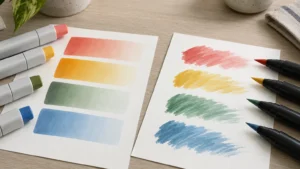
종이 위에서 선명한 색상과 부드러운 블렌딩을 보여주는 전문가용 색연필
저희는 단순히 문구류를 만들지 않습니다. 기준을 세웁니다. 저희 도매 상품은 다음과 같은 국제 안전 규정에 따라 테스트됩니다. 저희는 단순히 문구류를 만드는 것이 아니라 기준을 세웁니다. 저희 도매 제품은. 심은 과도한 사용에도 강하고 아름다운 블렌딩을 위해 충분히 부드럽도록 보장합니다.
와 같은 국제 안전 규정을 충족하도록 테스트되었습니다. 저희는 심이 과도한 사용에도 강하지만 아름다운 블렌딩을 위해 충분히 부드럽도록 보장합니다. 영업팀에 문의하세요 오늘 무료 견적을 받아보세요.
무료 견적을 위해 문의하세요!
Q1: 색연필 심이 일반 흑연 심보다 부드러운 이유는 무엇인가요? A: 색연필 심은 흑연처럼 고온 가마에서 구울 수 없습니다. 안료가 타버릴 수 있기 때문입니다. 열로 경화되지 않으므로 자연적으로 더 부드럽습니다. 강도를 유지하려면 더 높은 품질의 바인더가 필요합니다.
Q2: ZH Stationery 연필의 재료는 어린이에게 안전한가요? A: 네. 무독성 안료와 엄격한 EN 71 규정을 통과한 부품을 사용합니다. 따라서 학생과 전문가 모두에게 안전합니다. 저희 키즈 색연필 컬렉션을 살펴보세요.
Q3: 색연필이 전문가용 등급이 되려면 무엇이 필요한가요? A: 안료 함량과 왁스 혼합입니다. 전문가용 연필은 더 밝은 색상을 위해 안료가 더 많고, 더 나은 레이어링과 블렌딩을 위해 고품질 왁스를 사용합니다.
Q4: 색연필을 고품질로 유지하려면 어떻게 보관해야 하나요? A: 직사광선을 피해 건조한 곳에 보관하세요. 습기는 심을 약화시킬 수 있습니다. 열은 내부 왁스를 녹일 수 있습니다.
관련 가이드: 관련 규정 준수 계획은 다음을 참조하세요. 팀 역량 강화: 직원 웰빙과 윤리적 제조 at ZH Stationery.
관련 읽을거리
The Ingredient List and What Each Part Does
A colored pencil core is four things: pigment, binder, wax, and filler. Every property a customer notices — how bright the color is, how smoothly it lays down, whether it breaks when dropped — comes from how those four are balanced.
Pigment carries the color and determines lightfastness. Organic pigments from the azo family give brilliant saturation but fade. Inorganic pigments such as titanium dioxide and iron oxide are stable but limited in hue. Premium sets blend both families.
Binder holds the pigment particles together. Cellulose derivatives and modified starches are common. Too little binder and the core crumbles; too much and the color lays down waxy and refuses to layer.
Wax controls how the core glides on paper. Paraffin and microcrystalline waxes are the usual choices. A higher wax fraction makes blending easier and burnishing possible, but it also softens the core and increases break risk in transit.
Filler is the volume component, usually clay or talc. It extends the pigment, adds body, and affects opacity. Cheap pencils load up on filler and thin out the pigment, which is why they look pale no matter how hard you press.
Mixing, Milling, and Particle Size
The pigment arrives as a powder and must be dispersed evenly through the binder and wax. This happens in two stages: dry mixing to distribute the powders, then milling to break up agglomerates.
Particle size is the variable most buyers never ask about and most factories guard closely. Larger particles produce a grainy stroke and clog the sharpener; very fine particles produce smooth color but require more binder to stay suspended, which softens the core. The working window is narrow.
After milling, the mixture is extruded into rods or rolled into sheets and cut. The core diameter is set at this stage, and it has to match the barrel bore precisely. A core that is too loose rattles; too tight and the wood splits during pressing.
Baking, Hardening, and Why Color Cores Differ from Graphite
Graphite cores are fired in a kiln at temperatures above 1,000 degrees Celsius. The carbon survives, and the extreme heat is what makes graphite hard and consistent.
Colored cores cannot take that heat. Pigments decompose well below graphite’s sintering temperature, and the color shifts or dies. So color cores are dried and hardened at much lower temperatures, typically under 200 degrees Celsius, and the strength comes from the binder rather than from sintering.
That single constraint explains almost every difference customers notice. Color cores are softer than graphite. They wear faster. They are more sensitive to moisture. And they depend far more heavily on binder quality, because the binder is doing the job that heat does in a graphite pencil.
Assembly: Slat, Glue, Press, Shape, Paint
The core is sandwiched between two grooved wooden slats. The wood is usually basswood or cedar, chosen for straight grain and clean sharpening.
Glue is applied to the groove, the core is seated, and the second slat is pressed on. The glue line is a critical quality point: too little and the core rattles, too much and it bleeds into the wood and causes sharpening tears.
The sandwiched block is then shaped into individual pencils, sanded, and painted. Multiple lacquer coats are typical for a premium pencil, with a color-coded end dip for identification. Each coat has to dry fully before the next, which is why painting is often the bottleneck in a pencil line.
Finally the pencils are sharpened, tipped if they are pre-sharpened, and packed. Pre-sharpened pencils save the customer a step but add a breakage risk, because a sharpened tip is the most fragile part of the pencil.
자주 묻는 질문
Why are colored pencil cores softer than graphite? Because pigment cannot survive kiln temperatures. Color cores harden through binder chemistry at low heat, so they end up softer than sintered graphite.
What makes a pencil break in transit? Usually the glue line or the core diameter, not the wood. A drop test on a full carton is the quickest way to find out which.
Does more pigment always mean better quality? Higher pigment load gives brighter color, but it also softens the core unless the binder is adjusted. Balance matters more than the raw percentage.
What is the MOQ for a custom colored pencil program? Stock bodies with custom paint and packaging typically start at 3,000 to 5,000 sets. Custom barrel profiles or new tin formats raise the floor.
What Buyers Should Verify Before Ordering
Five checks separate a repeatable pencil program from a one-off shipment.
Core diameter consistency. Measure across a sample of twenty pencils. A variation above 0.1 mm produces rattling cores and sharpening failures.
Glue line integrity. Drop a full carton from 30 centimeters three times, then open it and shake each pencil. A rattle means the core has separated.
Color match within the set. Lay all pencils of the same nominal shade side by side on white paper. A visible difference across three or more units indicates separate pigment batches.
Sharpening behavior. Sharpen ten pencils with the same sharpener. Torn wood or broken cores point to moisture content or grain problems.
Paint adhesion at the tip end. Poor lacquer adhesion leaves flakes in the sharpener, which becomes a customer complaint unrelated to the pigment quality.
Ask for the results in writing before the production run, not after the shipment arrives.
자주 묻는 질문
Why do colored pencils smell different between brands? The wax fraction and any added fragrance differ. A stronger smell usually indicates a higher paraffin content, which softens the core and speeds up wax bloom.
Can the same line produce both wax and oil pencils? Not without cleaning down the mixing equipment between runs. Cross-contamination shows up as inconsistent laydown within a batch, which is why factories usually dedicate a line to one chemistry.
What is a realistic production lead time? With existing barrel molds and stock colors, 25 to 35 days from sample approval. New barrel profiles or custom tin formats add 15 to 25 days for tooling.
How many colors can one line handle per shift? It depends on the cleaning regime between shades. Light colors after dark ones require more thorough cleaning, so a 48-color set usually takes longer per unit than a 12-color set.