Paint pens for rocks should do three jobs. Cover the stone well. Stay readable after handling. Work with a clear sealer without bleeding or lifting. For most rock work, water-based acrylic paint markers are the best start. They give opaque color. They sit clearly on stone. They fit craft kits better than alcohol markers or normal permanent markers. See the acrylic versus alcohol guide.
The catch is that the marker is only half the result. A rough, dusty, or damp stone can ruin good ink. A heavy spray coat can smear fresh art. A retail pack that says waterproof without explaining sealing and cure can create complaints. Buyers need to treat rock painting as a marker plus surface plus sealer system.
ZH Stationery works with buyers planning acrylic paint markers, private-label craft sets, and retail pack. If you source a rock SKU, use this guide to set the marker type, nib, colors, steps, safety language, and sample tests before the quote. If the same line targets wooden ornaments or signs, compare the prep and sealing steps in our acrylic markers on wood guide.
Paint Pens for Rocks: Quick Answer
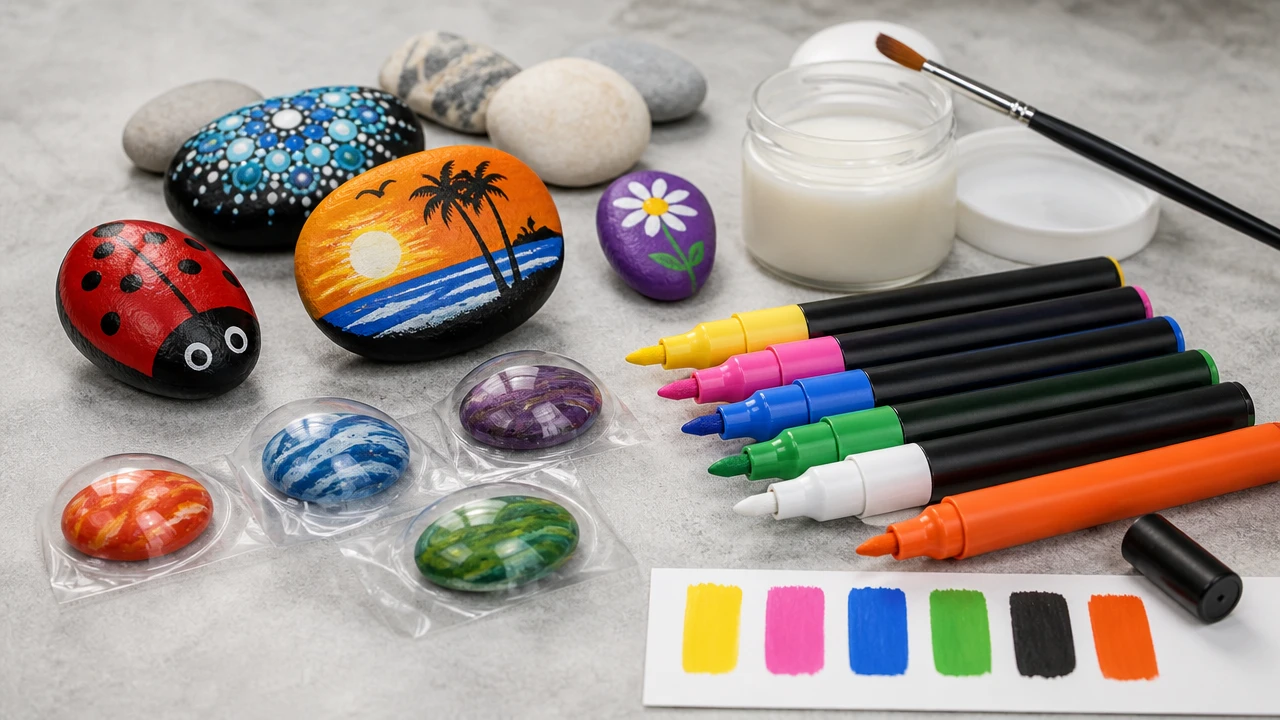
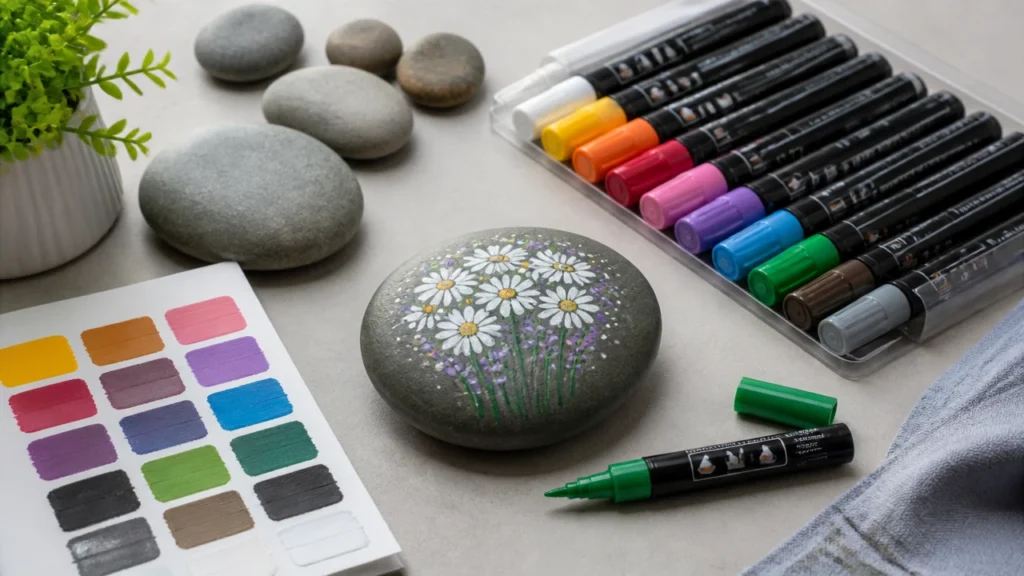
Pick acrylic paint pens for rocks when you need opaque color, clean dots, line art, lettering, and bright marks on natural stone. Pick medium tips for general craft kits. Fine tips for details. Extra-fine only when the stones are smooth enough. For outdoor rocks, let the marker dry fully. Then apply a fitting clear sealer in thin coats by the sealer label.
Do not sell normal alcohol markers as rock markers. They can stain some stones. They usually lack opacity. They can fade or look weak on textured faces. Oil-based paint pens may last on some stones. They bring stronger smell, slower dry, and more pack care. For family craft, school, hobby, and gift rock kits, acrylic paint markers are usually the safer shelf spot.
Quick Links
- Which Markers Work Best
- Marker Type Comparison
- Choose the Right Tip and Color Set
- Prepare Rocks Before Marking
- How to Seal Painted Rocks
- Outdoor Durability and Claims
- B2B Kit Packaging and Instructions
- Quality Control Tests
- Ask Better Supplier Questions
- FAQs
Which Markers Work Best
The best paint pens for rocks are usually water-based acrylic paint markers with strong pigment, steady valve flow, and tips that handle a slightly textured surface. The paint needs enough body to cover gray, brown, black, or speckled stone. It also needs to dry clean before a sealer.
A valve marker can help control paint flow, especially when users shake, press, prime, and restart. ZH Stationery's valve press marker technology article explains why the part matters for acrylic use. For rock painting, poor flow control shows as dry strokes, blobs, flooded tips, or uneven dots.
A good rock marker does not need to promise every surface forever. It should give steady cover on common craft stones. It should dry without heavy tack. It should survive normal handling after proper sealing. That is a safer claim than a wide waterproof line on the box front.
Marker Type Comparison
| Marker Type | Rock Painting Fit | Strength | Risk to Manage |
|---|---|---|---|
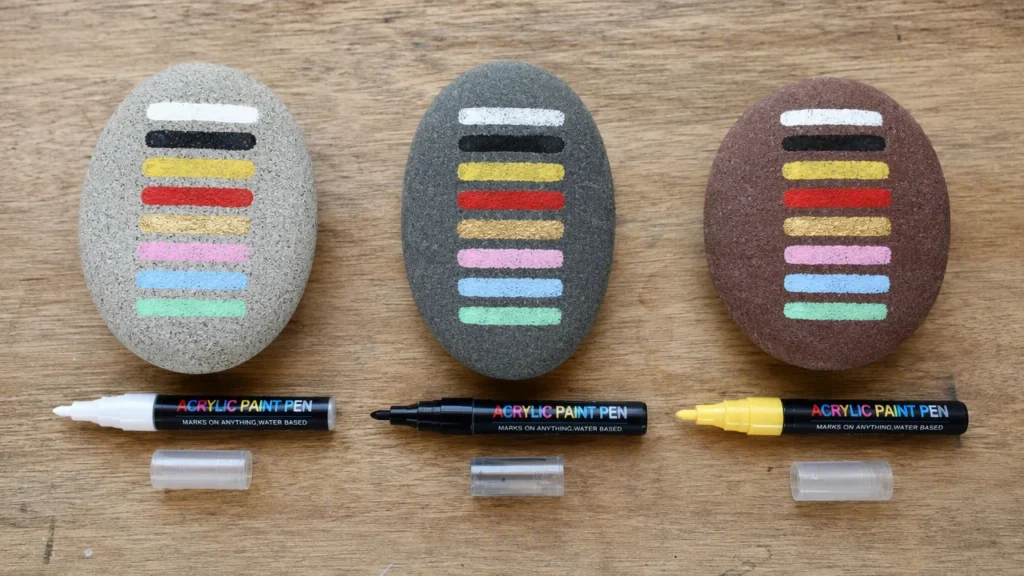
| Water-based acrylic paint pens | Best overall choice for most rock painting kits | Opaque color, low odor positioning, easy craft use | Needs priming, drying time, cap care, and sealer guidance |
| Oil-based paint pens | Useful for some durable craft or industrial-style marks | Good adhesion on selected hard surfaces after testing | Odor, slower drying, solvent concerns, and stronger caution wording |
| Permanent markers | Limited use for outlines or simple writing on pale smooth stones | Easy to use and quick drying | Weak opacity on dark stones and poor craft-kit positioning |
| Alcohol markers | Not the main choice for rocks | Good for paper illustration | Low opacity on stone and possible fading or uneven staining |
| Chalk markers | Temporary or decorative use only | Bright look on some smooth surfaces | Can wipe away or fail outdoors without the right surface and sealer |
For B2B buyers, the compare should lead to sample calls. Do not pass pack art until the supplier sends marked stones, dried samples, and sealed samples. The same marker can look strong inside and weak outside if the sealer, stone texture, or cure time changes.
Choose the Right Tip and Color Set
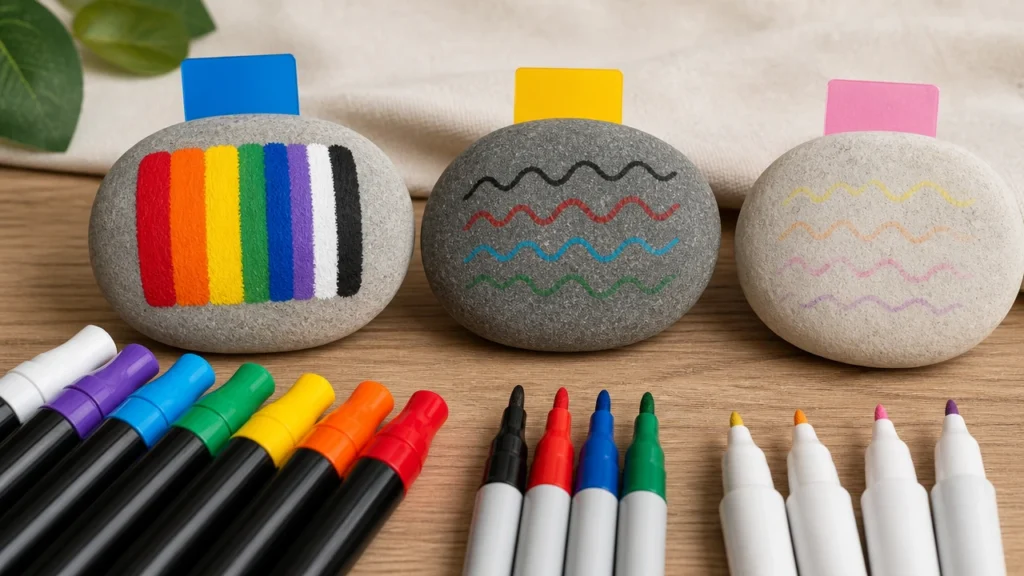
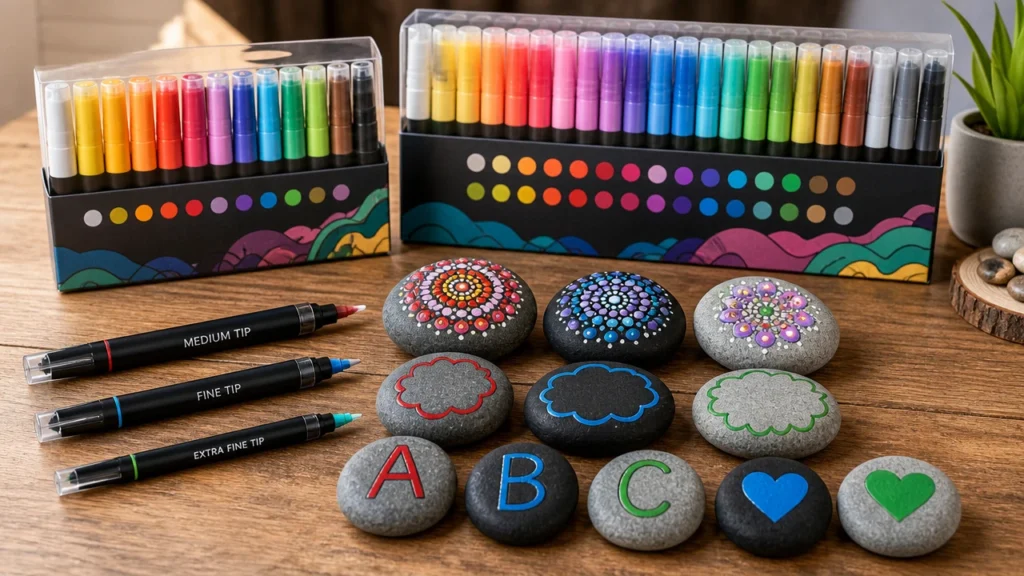
Tip choice changes the user feel more than many buyers expect. Medium bullet tips are the safest pick for general rock painting. They work for fill, outlines, dots, and simple lettering. Fine tips fit detail kits. They can feel scratchy on rough stones. Brush tips are less common for rocks because textured faces can hurt the tip.
Color plans should start with contrast. White, black, gold, silver, red, yellow, blue, green, pink, and purple read easy in product photos. Pastels can look nice on white stones and disappoint on darker rocks. Metallic and glitter colors can support gift kits. They need separate swatches because cover can perform differently from solid colors.
If the buyer wants a gift line, pair standard colors with super glitter acrylic markers as a separate SKU. Do not mix every effect into one box. That keeps hopes clear and gives retailers more than one price point.
Prepare Rocks Before Marking
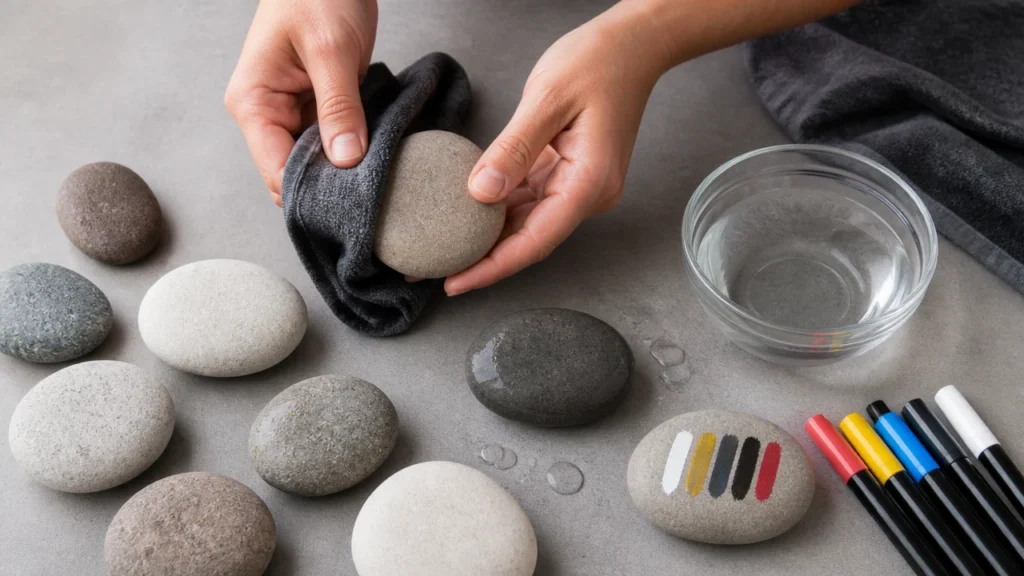
Rock prep is simple. It is not optional. Wash the stone. Clear dust. Let it dry. Test the first stroke on the back or a spare stone. Smooth river stones give the cleanest result. Very porous stones can take paint and make colors dull. Rough stones can wear fine tips.
Some users add a white acrylic base coat before drawing. That can make colors brighter and cut the marker paint needed. For a retail kit, the steps should say whether a base coat is needed, optional, or not included. If the kit has no base coat, avoid photos that make color look brighter than normal use.
A practical card can say. Wash. Dry. Sketch lightly if needed. Shake the marker. Press the tip on scrap. Draw in thin layers. Let each layer dry. Seal only after the design no longer feels tacky. This is plain copy. It stops avoidable returns.
How to Seal Painted Rocks
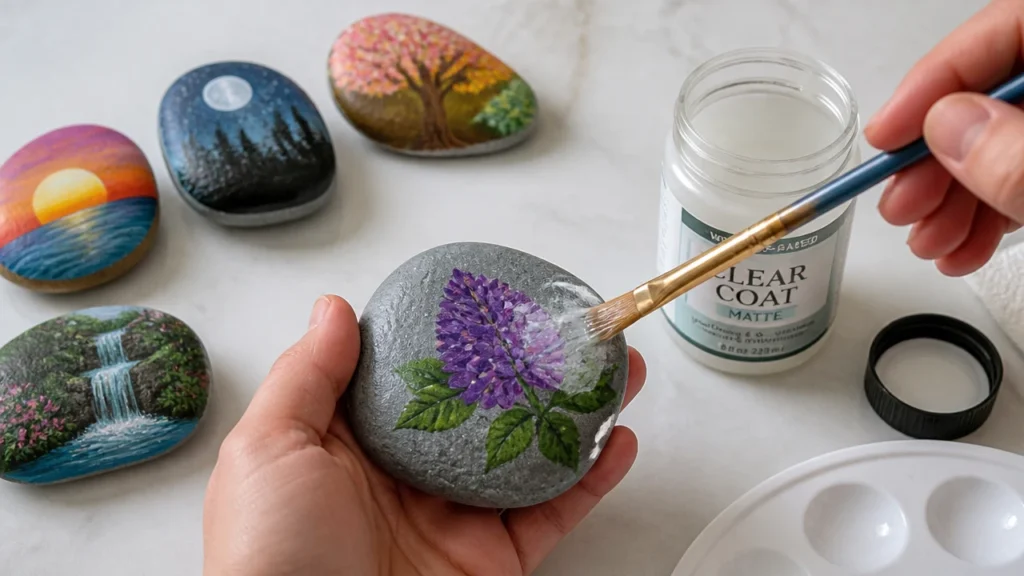
To seal painted rocks, let the art dry first. Apply a fitting clear acrylic sealer, craft varnish, or outdoor clear coat in thin layers. Brush-on sealers give more control inside. Spray sealers can cover even. Users need to follow the label and use fresh air.
The CPSC Art and Craft Safety Guide warns that spray fixatives may hold solvents that are risky to breathe. It advises safer picks where possible. A marker kit should not casually tell families to spray seal inside. Safer language. Follow the sealer label. Work in a fresh area. Keep children away from adult-use coats when the label asks.
Seal in light coats, not one wet coat. Heavy coats can wake marker layers, pool around stone texture, or leave a cloudy finish. Let each coat dry before the next. For outdoor rocks, test one sample outside before printing a strong life claim.
Sealer Options Buyers Should Test
- Water-based brush-on acrylic varnish for indoor craft kits and controlled application.
- Outdoor clear acrylic sealer when the product is positioned for garden rocks.
- Matte finish when the buyer wants a natural stone look.
- Gloss finish when the buyer wants stronger color pop in product photos.
- UV-resistant clear coat only when the supplier or sealer label supports the claim.
Outdoor Durability and Claims
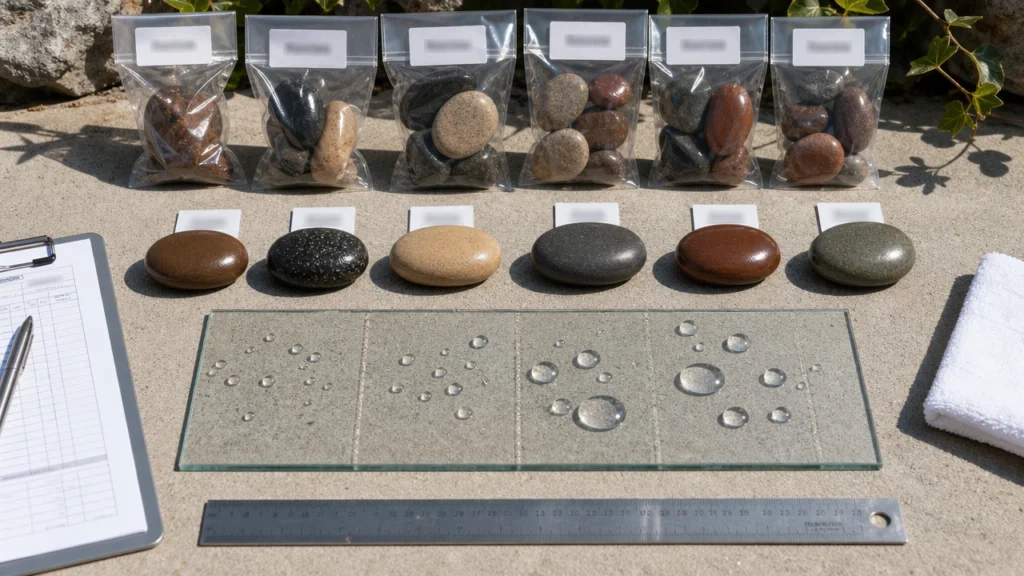
Outdoor rock claims need careful language. Sun. Rain. Freeze-thaw cycles. Stone porosity. Sealer type. Dry time. They all change the result. A marker that works on a sealed sample in a studio may not perform the same on a porous garden stone left outside for months.
For pack, use measured language. Suitable for rock painting and outdoor display after proper sealing and curing. Avoid wide claims. Permanent on all rocks. Weatherproof forever. Child-safe sealer included. Dishwasher safe. Use them only when tests and label review back each claim.
In the US, art materials must follow chronic risk mark rules. CPSC art materials guidance says art materials need toxicology review. ASTM D4236 labeling practice covers warning labels. ZH Stationery's ASTM D-4236 report guide can help split safety labels from performance tests.
B2B Kit Packaging and Instructions
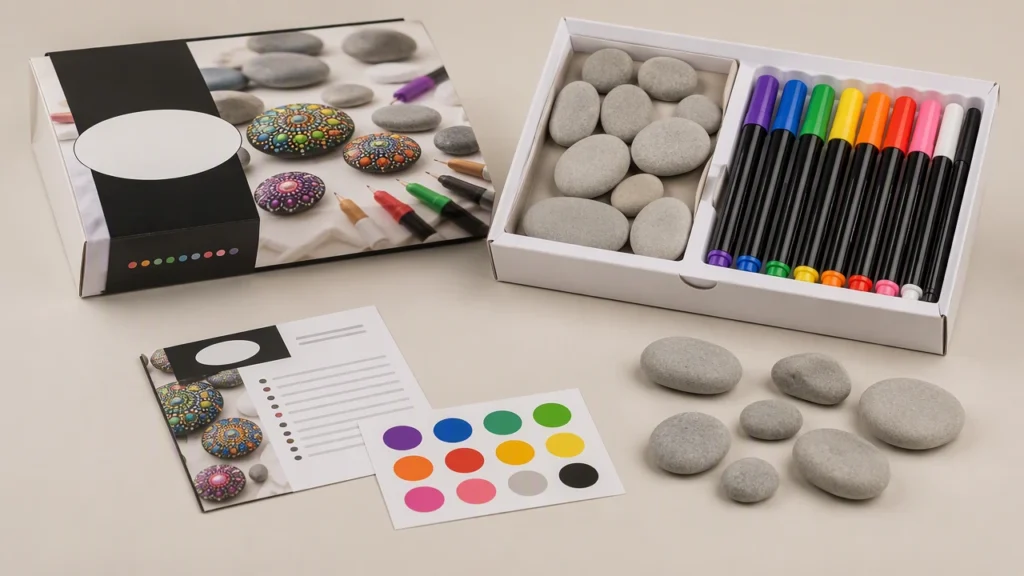
A rock kit is easier to sell when the buyer controls the whole user path. The box should show real stones, real marker strokes, and clear color swatches. The card should explain prep, prime, dry, layer, seal, store, and age notes.
Pack also needs room for safety and rule language. ACMI explains that its seals relate to toxicology review and marking. The materials safety page gives background. For real market entry, buyers should review the final SKU, age grade, formula, pack copy, and needed files with qualified help.
For private-label programs, ask the supplier to quote the marker set and the pack parts. The acrylic marker packaging guide is useful for trays, color cards, instruction cards, warning panels, barcode labels, and outer cartons.
Quality Control Tests for Rock Painting Markers
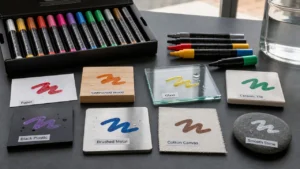
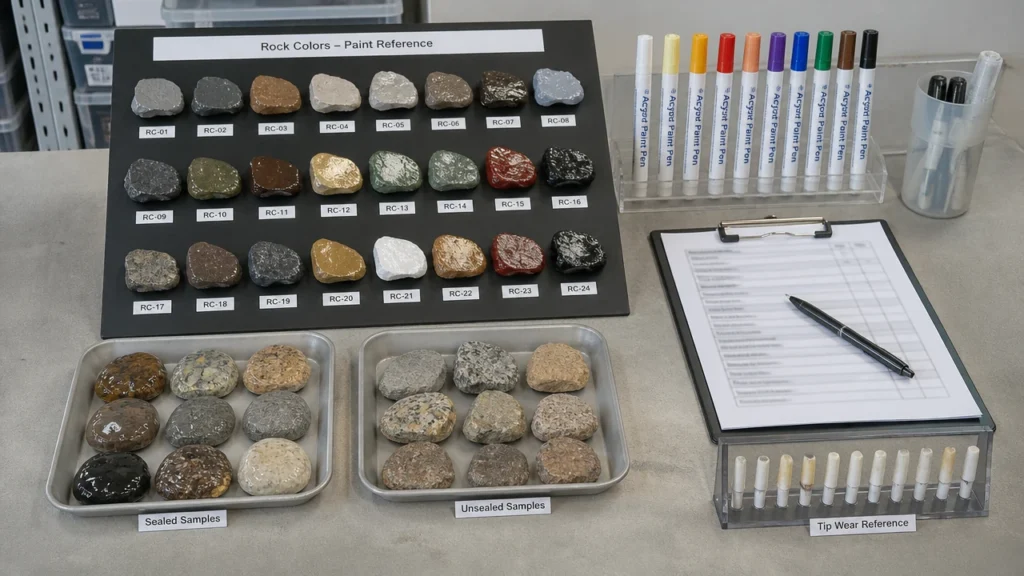
A good sample test should use the same stones and steps buyers will use. Test smooth stones, porous stones, dark stones, and a base-coated sample. Swatch every color. Check first-use prime, opacity, dry time, second-layer performance, and sealer fit.
| QC Point | What to Check | Why It Matters |
|---|---|---|
| Opacity | White, yellow, metallic, pastel, and black on dark and light stones | Weak colors cause poor product photos and customer disappointment |
| Flow | First priming, restart after storage, dot control, line consistency | Rock users often need dots, outlines, and small details |
| Tip wear | Fine and medium tips on smooth and rough stones | Rough stones can damage tips faster than paper |
| Drying | Touch-dry time before second layer and before sealing | Sealing too early can smear or lift artwork |
| Sealer compatibility | Brush-on and spray sealer samples after full drying | Some sealers can bleed or cloud the design |
| Packaging instruction | Whether users can understand prep, drying, and sealing steps | Clear instructions reduce returns and reviews about failed durability |
Ask for kept samples and production swatches before reorders. ZH Stationery's certifications page, factory tour, and who we are pages give proof and context for buyer compare.
Ask Better Supplier Questions
A supplier who gets rock painting should answer with test details, not only catalog claims.
- 1. Which marker formula do you recommend for rock painting, and why?
A useful answer names the ink type, expected opacity, tip system, drying behavior, and surface limits. - 2. Which stones did you test?
A useful answer separates smooth river stones, porous stones, dark stones, base-coated stones, and sealed samples. - 3. Does the marker need a sealer for outdoor display?
A useful answer says yes for outdoor use and explains that the buyer must test a compatible clear sealer before printing a durability claim. - 4. Can you provide swatches before and after sealing?
A useful answer includes photos or physical samples that show color shift, gloss change, bleeding risk, and clouding risk. - 5. What instructions should go inside the retail kit?
A useful answer covers washing stones, drying, priming the marker, thin layers, drying before sealing, cap storage, and adult supervision for sealers when needed. - 6. What compliance documents apply to this SKU?
A useful answer separates art material labeling, age grading, formula review, market-specific documents, and any sealer-related documents if the kit includes one.
FAQs
What are the best paint pens for rocks?
Water-based acrylic paint pens are the best start for most rock work. They give opaque color on stone. They work for dots and lettering. They fit family craft kits better than normal permanent or alcohol markers.
Do I need to seal paint pens on rocks?
Yes, if the rocks will be handled often or shown outside. Let the marker dry fully. Test a fitting clear acrylic sealer or varnish in thin coats before passing pack claims.
Are acrylic paint pens waterproof on rocks?
They may resist light handling after dry. Outdoor water resistance depends on the stone, paint formula, dry time, and sealer. Avoid waterproof claims unless the full marker and sealer system has been tested.
Can alcohol markers be used for rock painting?
Alcohol markers are not the main pick for rocks. They can mark some pale smooth stones. They usually do not give the opaque cover rock users expect.
Should a rock painting kit include a sealer?
It depends on the user and market. A sealer can lift the result. It also adds safety, label, shipping, and step needs. Many brands sell the markers and give separate sealer notes instead.
What should B2B buyers test before ordering rock markers?
Test opacity, first-use flow, tip wear, dry time, layering, sealer fit, color shift after sealing, cap storage, pack steps, and rule files for the market.
Conclusion
Paint pens for rocks work best when the buyer treats the project as a full system. The marker needs opaque acrylic color, steady flow, and a tip that handles stone. The rock needs washing and drying. The design needs the right sealer if it will be handled or used outside.
For sourcing, do not pass a rock marker from catalog photos. Ask for real stone swatches, sealed samples, card copy, and rule files before the order. That gives the product a better chance of matching what buyers see on the pack.
Related guide: High Quality Acrylic Paint Markers.
Related Reading
The minimum order for custom OEM/ODM programs is 50,000 pens per order, counted by total individual pens produced. For a 12-color pack, that equals roughly 4,200 sets, not 50,000 of each color. Standard stock models can be sampled at smaller trial sizes.