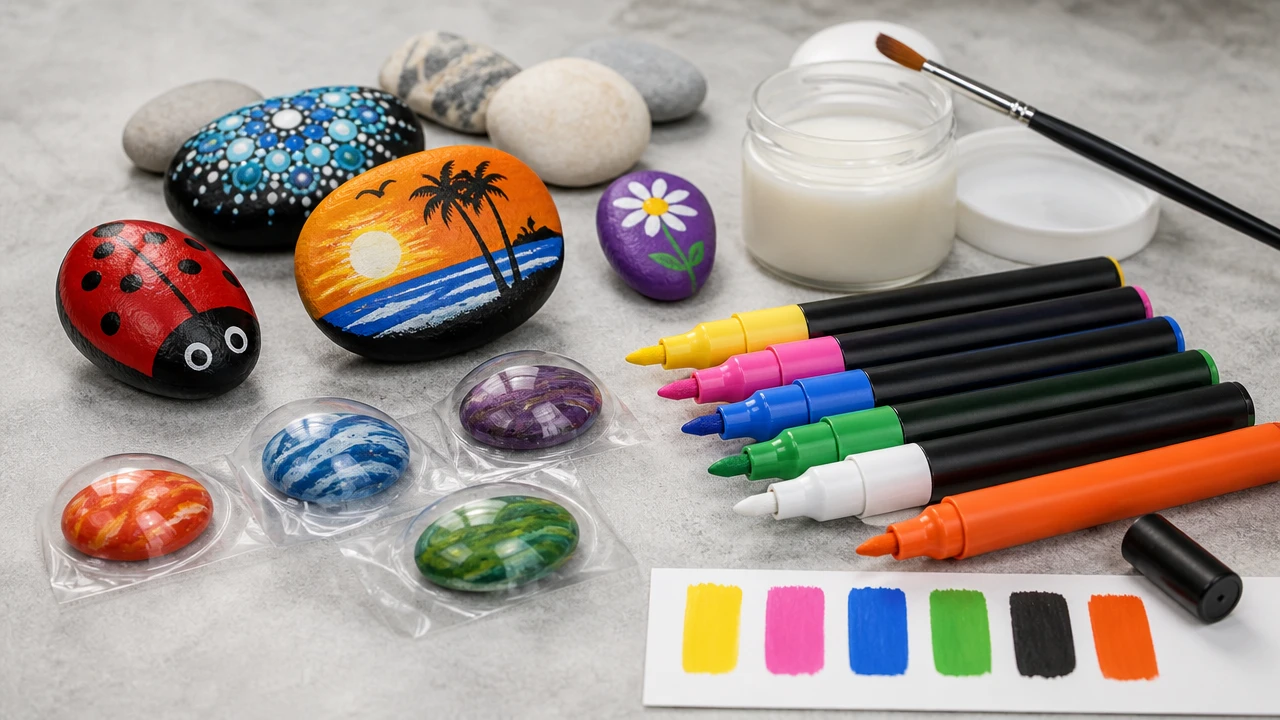
أقلام الطلاء المستخدمة في الرسم على الصخور يجب أن تؤدي ثلاث مهام: تغطية سطح الحجر جيدًا، والحفاظ على وضوح الكتابة بعد التداول، والعمل مع طبقة عازلة شفافة دون نزيف أو تقشر. بالنسبة لمعظم مشاريع الرسم على الصخور،, تُعد أقلام تحديد الطلاء المائي القائمة على الأكريليك أفضل نقطة انطلاق. فهي توفر لونًا معتمًا، وتظهر بوضوح على سطح الحجر، وتناسب مجموعات الحرف اليدوية بشكل أفضل من أقلام الكحول أو أقلام التحديد الدائمة العادية.
المشكلة أن القلم يمثل نصف النتيجة فقط. فالحجر الخشن أو المغبر أو الرطب يمكن أن يفسد الحبر الجيد. وطبقة الرش الثقيلة يمكن أن تلطخ العمل الفني الطازج. والعبوة التي تدّعي أنها مقاومة للماء دون شرح عملية العزل والمعالجة يمكن أن تسبب شكاوى من العملاء. يحتاج المشترون إلى التعامل مع طلاء الصخور كنظام متكامل من القلم والسطح والعازل.
تعمل ZH Stationery مع المشترين الذين يخططون أقلام طلاء أكريليك, ومجموعات الحرف اليدوية ذات العلامة الخاصة، وتغليف أقلام التجزئة. إذا كنت تبحث عن توريد مجموعة أدوات الرسم على الصخور، فاستخدم هذا الدليل لتحديد نوع القلم، ورأس الكتابة، ومجموعة الألوان، والتعليمات، ومتطلبات السلامة، واختبارات العينات قبل طلب عرض سعر من المورد. إذا كانت نفس المجموعة تستهدف أيضًا الزخارف الخشبية أو اللافتات، فقارن خطوات التحضير والعزل في دليلنا الخاص بـ أقلام الطلاء الأكريليكي على الخشب.
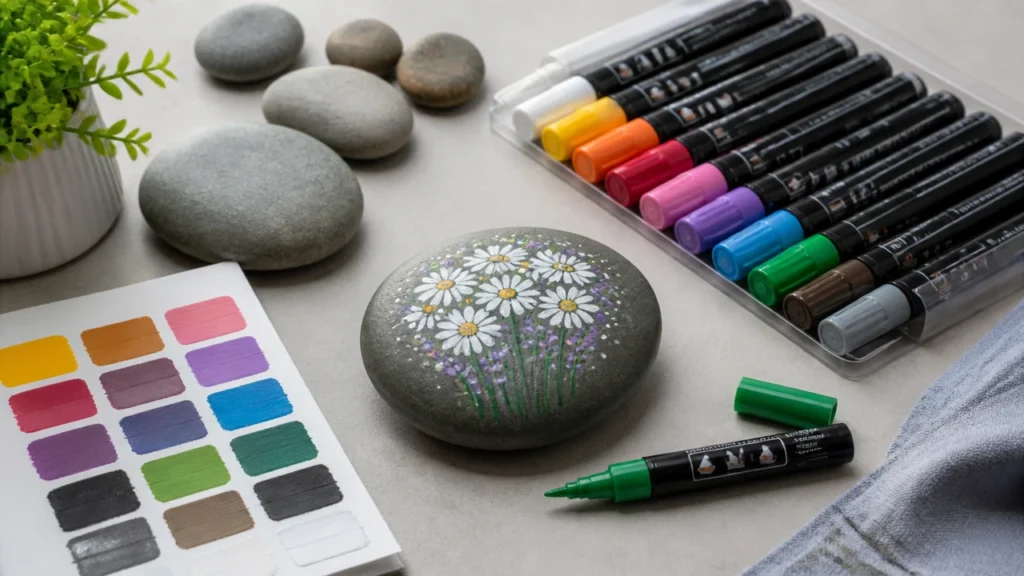
أقلام الطلاء للصخور: إجابة سريعة
اختر أقلام الطلاء الأكريليكية للصخور عندما تحتاج إلى لون معتم ونقاط نظيفة وفن الخط والكتابة وعلامات مشرقة على الحجر الطبيعي. اختر الأطراف المتوسطة لمجموعات الحرف العامة، والأطراف الدقيقة للتفاصيل، والأطراف فائقة الدقة فقط عندما تكون الأحجار ناعمة بما يكفي. للصخور الخارجية، اترك القلم يجف تمامًا، ثم ضع عازلًا شفافًا متوافقًا في طبقات رقيقة وفقًا لتعليمات العازل.
تجنب بيع أقلام الكحول العادية كأقلام صخور. فقد تترك بقعًا على بعض الأحجار، لكنها عادةً تفتقر إلى التعتيم ويمكن أن تتلاشى أو تبدو ضعيفة على الأسطح المحببة. قد تكون أقلام الطلاء الزيتية متينة على بعض الأحجار، لكنها قد تسبب رائحة أقوى وتجفيفًا أبطأ ومزيدًا من التحذيرات على التغليف. للحرف العائلية والمدرسية والهوايات ومجموعات طلاء الصخور القابلة للهدية، تُعد أقلام الطلاء الأكريليكية عادةً الخيار التجاري الأكثر أمانًا.
روابط سريعة
- أي الأقلام تعمل بشكل أفضل
- مقارنة أنواع الأقلام
- اختر السن المناسب ومجموعة الألوان
- تحضير الصخور قبل الطلاء
- كيفية عزل الصخور المطلية
- المتانة الخارجية والادعاءات
- تغليف مجموعات B2B والتعليمات
- اختبارات مراقبة الجودة
- اطرح أسئلة أفضل على المورد
- الأسئلة الشائعة
أي الأقلام تعمل بشكل أفضل
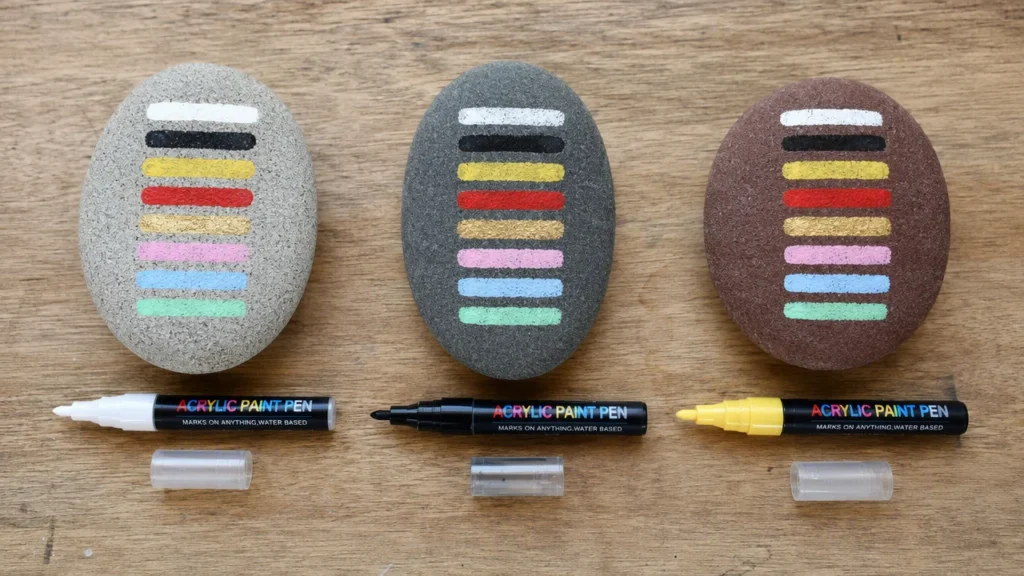
أفضل أقلام الطلاء للصخور عادةً هي أقلام الطلاء الأكريليكية ذات الأساس المائي مع صبغة قوية وتدفق صمام ثابت وأطراف يمكنها التعامل مع سطح محبب قليلًا. يحتاج الطلاء إلى كثافة كافية لتغطية الحجر الرمادي أو البني أو الأسود أو المنقط. كما يحتاج إلى الجفاف بنظافة قبل تطبيق العازل.
يمكن أن يساعد قلم الصمام في التحكم بتدفق الطلاء، خاصةً عندما يحتاج المستخدمون إلى الرج والضغط والتجهيز وإعادة تشغيل القلم. تشرح مقالة ZH Stationery سبب أهمية الآلية لاستخدام أقلام الأكريليك. لطلاء الصخور، يظهر ضعف التحكم في التدفق غالبًا على شكل ضربات جافة أو كتل أو أطراف مغمورة أو نقاط غير متساوية. تقنية وضع العلامات بالضغط على الصمام لا يحتاج قلم الصخور الجيد إلى الوعد بتغطية كل سطح إلى الأبد. يجب أن يوفر تغطية موثوقة على أحجار الحرف الشائعة، وأن يجف دون لزوجة زائدة، وأن يتحمل التداول العادي بعد العزل المناسب. هذا ادعاء أكثر قابلية للدفاع من وعد واسع بمقاومة الماء مطبوع على مقدمة العلبة.
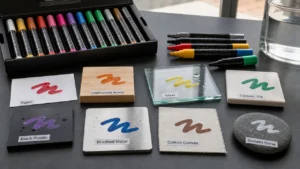
اختبارات تعتيم أقلام الطلاء الأكريليكية على الصخور الفاتحة والداكنة.
مقارنة أنواع الأقلام
| نوع القلم | أقلام الطلاء الأكريليكية ذات الأساس المائي | القوة | المخاطر التي يجب إدارتها |
|---|---|---|---|
| الخيار الأفضل عمومًا لمعظم مجموعات طلاء الصخور | لون معتم، وموقع منخفض الرائحة، وسهولة الاستخدام الحرفي | يتطلب التجهيز ووقت التجفيف والعناية بالغطاء وإرشادات العزل | أقلام الطلاء الزيتية |
| مفيدة لبعض العلامات الحرفية المتينة أو ذات الطابع الصناعي | التصاق جيد على الأسطح الصلبة المختارة بعد الاختبار | رائحة وتجفيف أبطأ ومخاوف من المذيبات وصياغة تحذيرية أقوى | استخدام محدود للخطوط العريضة أو الكتابة البسيطة على الأحجار الملساء الفاتحة |
| أقلام العلامات الدائمة | سهل الاستخدام ويجف بسرعة | تعتيم ضعيف على الأحجار الداكنة وموقع ضعيف لمجموعات الحرف | ليس الخيار الرئيسي للصخور |
| أقلام الكحول | جيد للرسم على الورق | تعتيم منخفض على الحجر واحتمال التلاشي أو التلوين غير المتساوي | أقلام الطباشير |
| للاستخدام المؤقت أو الزخرفي فقط | مظهر مشرق على بعض الأسطح الملساء | يمكن أن تُمحى أو تفشل في الخارج دون السطح والعازل المناسبين | بالنسبة لمشتري B2B، يجب أن تؤدي المقارنة إلى قرارات بشأن العينات. لا تعتمد تصميم التغليف حتى يرسل المورد أحجارًا ملطخة وعينات مجففة وعينات معزولة. يمكن أن يبدو القلم نفسه قويًا في الداخل وضعيفًا في الخارج إذا تغير العازل أو نسيج الحجر أو وقت المعالجة. |
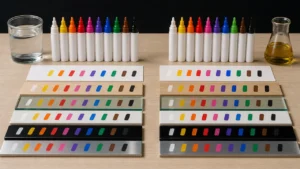
مقارنة أقلام الأكريليك وأقلام التحديد الدائمة وأقلام الكحول على الأحجار.
اختر السن المناسب ومجموعة الألوان
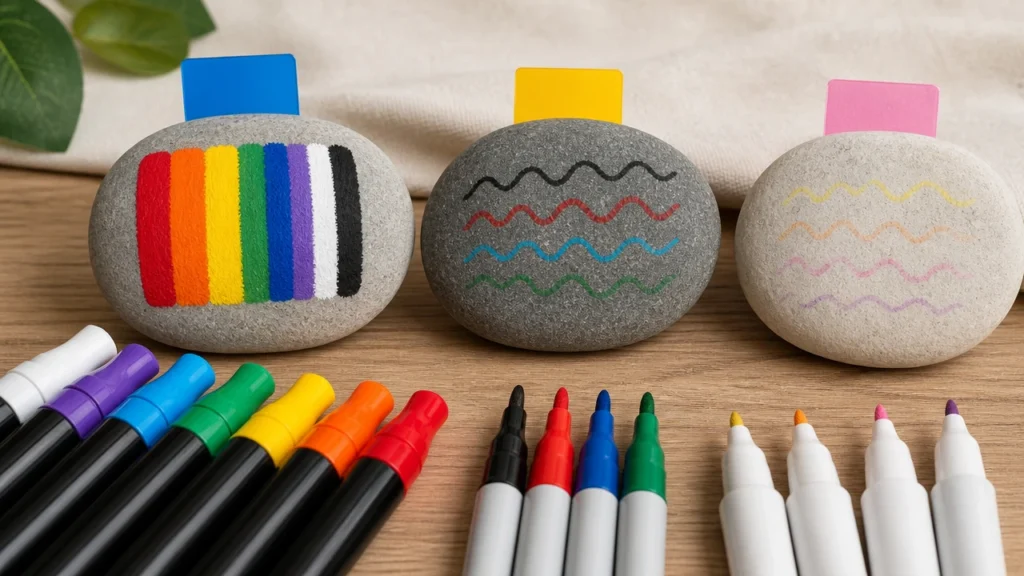
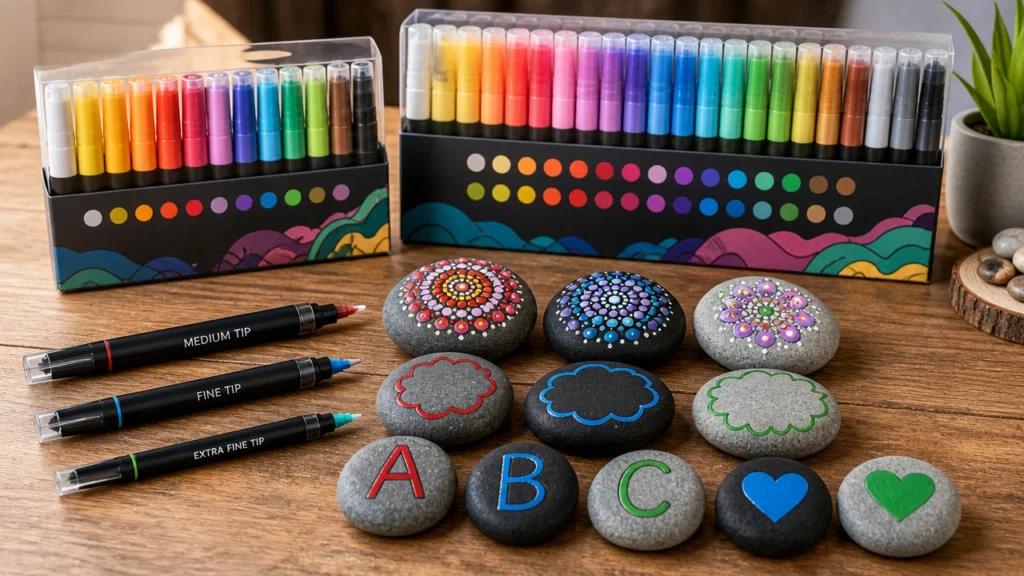
يجب أن يبدأ تخطيط الألوان بالتباين. الأبيض والأسود والذهبي والفضي والأحمر والأصفر والأزرق والأخضر والوردي والأرجواني سهلة الفهم في صور المنتجات. يمكن أن تبدو الألوان الباستيلية جذابة على الأحجار البيضاء لكنها قد تخيب الآمال على الصخور الداكنة. يمكن أن تدعم الألوان المعدنية واللامعة المجموعات القابلة للهدية، لكنها تحتاج إلى عينات منفصلة لأن تغطيتها قد تتصرف بشكل مختلف عن الألوان الصلبة.
إذا كان المشتري يريد خطًا قابلًا للهدية، ففكر في إقران الألوان القياسية مع.
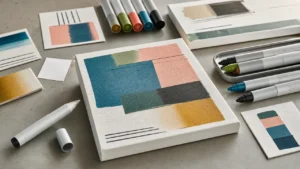
كـ SKU منفصل بدلاً من خلط كل التأثيرات في صندوق واحد. هذا يحافظ على وضوح التوقعات ويمنح تجار التجزئة أكثر من نقطة سعر واحدة. أقلام تحديد أكريليك فائقة اللمعان أحجام أطراف الأقلام وتخطيط مجموعات الألوان لمجموعات طلاء الصخور.
تحضير الصخور قبل الطلاء
يضيف بعض المستخدمين طبقة أساس بيضاء أكريليكية قبل الرسم. يمكن أن يجعل ذلك الألوان أكثر إشراقًا ويقلل من كمية طلاء القلم المطلوبة. لمجموعة التجزئة، يجب أن توضح التعليمات ما إذا كانت الطبقة الأساسية مطلوبة أو اختيارية أو غير متضمنة. إذا كانت المجموعة لا تتضمن طبقة أساسية، فتجنب صور المنتجات التي تجعل اللون يبدو أكثر إشراقًا من الاستخدام العادي.
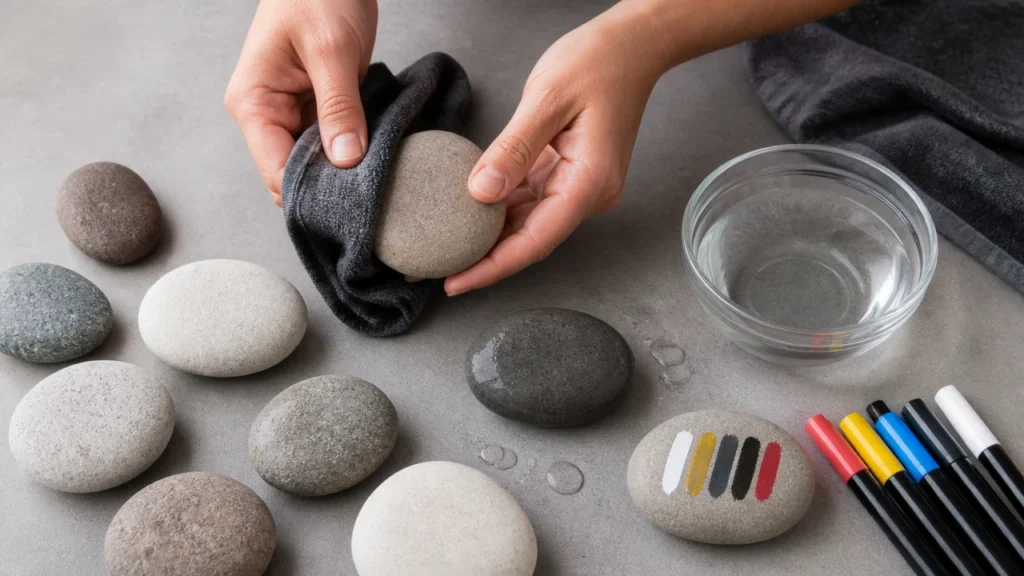
يمكن أن تقول بطاقة التعليمات العملية: اغسل وجفف وارسم بخفة إذا لزم الأمر وارج القلم واضغط الطرف على مادة خردة وارسم في طبقات رقيقة واترك كل طبقة تجف ثم اعزل فقط بعد أن لا يشعر التصميم باللزوجة. هذا نص ممل، لكنه يمنع المرتجعات التي يمكن تجنبها.
أحجار ملساء مغسولة ومجففة وجاهزة لأقلام الطلاء الأكريليكية.
كيفية عزل الصخور المطلية
يحذر دليل سلامة الفنون والحرف CPSC من أن مثبتات الرش والمنتجات المماثلة قد تحتوي على مذيبات خطرة عند استنشاقها، ويقترح اختيار مواد أكثر أمانًا حيثما أمكن. لهذا السبب لا يجب أن تخبر مجموعة الأقلام العائلات برش العازل في الداخل بشكل عابر. الصياغة الأكثر أمانًا هي اتباع ملصق العازل والعمل في منطقة جيدة التهوية وإبقاء الأطفال بعيدًا عن الطلاءات المخصصة للبالغين عندما يتطلب الملصق ذلك.
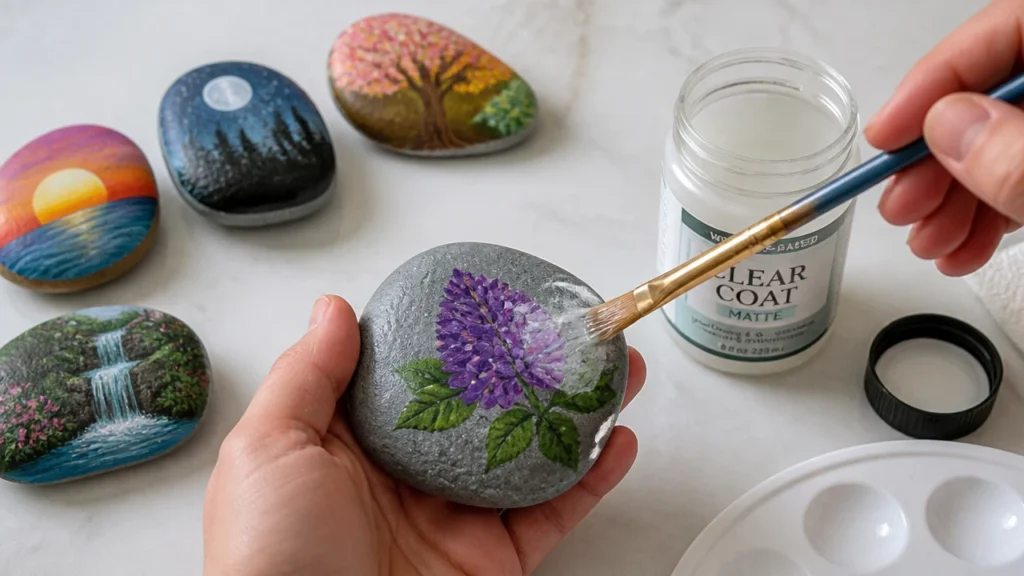
The اعزل في طبقات خفيفة بدلاً من طبقة واحدة مبللة. يمكن أن تعيد الطبقات الثقيلة تنشيط طبقات القلم وتتجمع حول نسيج الحجر أو تترك لمسة نهائية ضبابية. اترك كل طبقة تجف قبل إضافة التالية. للصخور الخارجية، اختبر عينة واحدة في الخارج قبل طباعة ادعاء متانة قوي. تطبيق عازل شفاف على الصخور المطلية في طبقات رقيقة.
خيارات العازل التي يجب على المشترين اختبارها.
عازل أكريليك شفاف خارجي عندما يكون المنتج موجهًا لصخور الحدائق.
- لمسة نهائية غير لامعة عندما يريد المشتري مظهر الحجر الطبيعي.
- لمسة نهائية لامعة عندما يريد المشتري ألوانًا أكثر بروزًا في صور المنتجات.
- طبقة علوية شفافة مقاومة للأشعة فوق البنفسجية فقط عندما يدعم المورد أو ملصق العازل الادعاء.
- ادعاءات طلاء الصخور الخارجية تحتاج إلى صياغة دقيقة. يمكن لأشعة الشمس والمطر ودورات التجميد والذوبان ومسامية الحجر ونوع العازل ووقت التجفيف أن تغير النتيجة جميعًا. قد لا يتصرف القلم الذي يعمل على عينة معزولة في الاستوديو بنفس الطريقة على حجر حديقة مسامي يُترك في الخارج لأشهر.
- للتغليف، استخدم لغة مقاسة مثل مناسب لطلاء الصخور والعرض الخارجي بعد العزل والمعالجة المناسبين. تجنب الادعاءات المطلقة مثل دائم على جميع الصخور أو مقاوم للطقس إلى الأبد أو يتضمن عازلًا آمنًا للأطفال أو آمن للغسالة في dishwasher ما لم يكن كل ادعاء مدعومًا باختبارات المنتج الصحيحة ومراجعة الملصق.
المتانة الخارجية والادعاءات
في الولايات المتحدة، يجب أن تتبع المواد الفنية متطلبات وضع العلامات على المخاطر المزمنة. يجب أن.
For packaging, use measured language such as suitable for rock painting and outdoor display after proper sealing and curing. Avoid absolute claims such as permanent on all rocks, weatherproof forever, child-safe sealer included, or dishwasher safe unless each claim is backed by the correct product tests and label review.
In the United States, art materials must follow chronic hazard labeling requirements. The دليل مواد الفنون 說明藝術材料需要毒理學評估,而 ASTM D-4236標籤規範 يغطي وضع العلامات التحذيرية لمواد الفنون. ZH Stationery’s دليل تقرير اختبار ASTM D-4236 يمكن أن يساعد المشترين في فصل علامات السلامة عن اختبارات الأداء.
تغليف مجموعات B2B والتعليمات
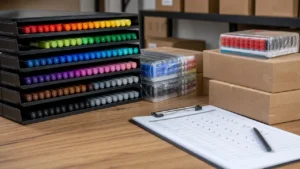
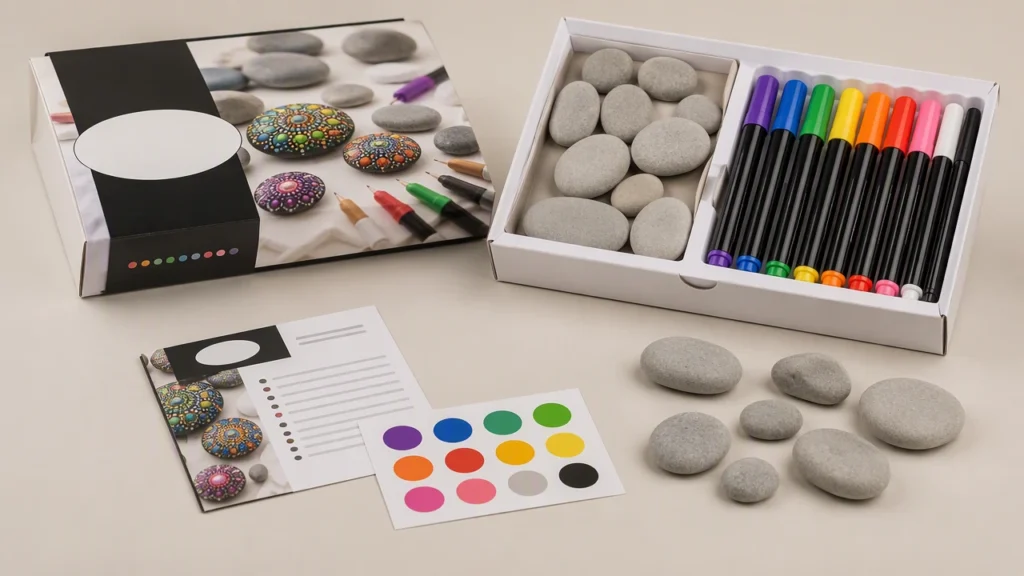
من الأسهل بيع طقم طلاء الأحجار عندما يتحكم المشتري في تجربة المستخدم بالكامل. يجب أن يُظهر الصندوق أحجارًا واقعية، وضربات قلم حقيقية، وعينات ألوان واضحة. يجب أن تشرح بطاقة التعليمات التحضير، والطلاء التمهيدي، والتجفيف، والطبقات، والإغلاق، والتخزين، وإرشادات العمر.
تحتاج العبوة أيضًا إلى مساحة للنصوص المتعلقة بالسلامة والامتثال. توضح ACMI أن أختام AP وCL الخاصة بها تتعلق بالتقييم السمي ووضع العلامات، بينما نظرة عامة على لوائح ACMI و ACMI材料安全頁面 توفر خلفية مفيدة لوضع العلامات على مواد الفنون. لدخول السوق الفعلي، يجب على المشترين مراجعة SKU النهائي، والفئة العمرية، والتركيبة، ونصوص العبوة، والمستندات المطلوبة مع دعم امتثال مؤهل.
بالنسبة لبرامج العلامات الخاصة، اطلب من المورد عرض سعر لكل من أقلام التحديد ومكونات العبوة. خيارات تغليف أقلام الأكريليك الدليل مفيد عند التخطيط للصواني، وبطاقات الألوان، وبطاقات التعليمات، ولوحات التحذير، وملصقات الباركود، والكرتون الخارجي.
اختبارات مراقبة الجودة لأقلام طلاء الأحجار
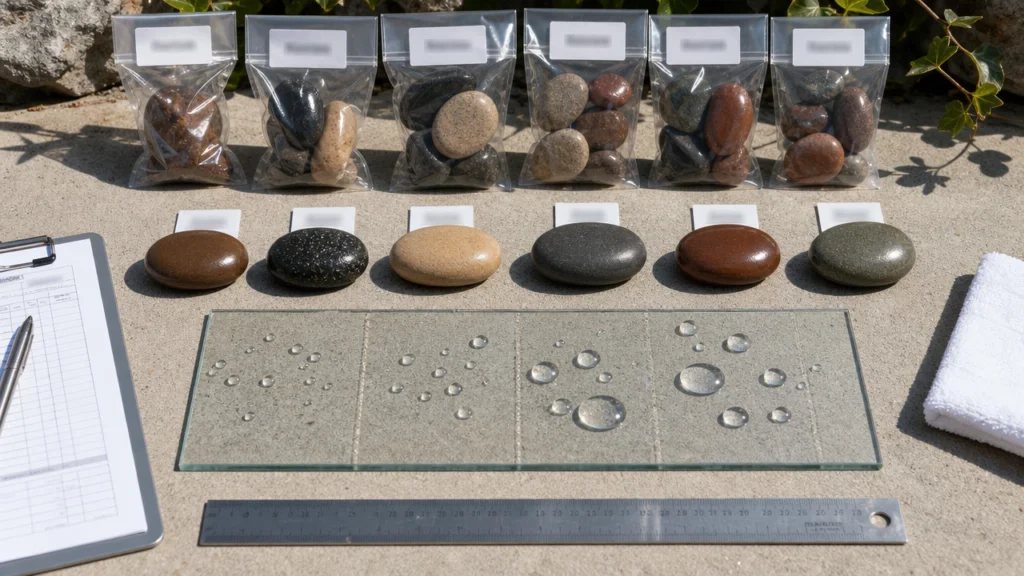
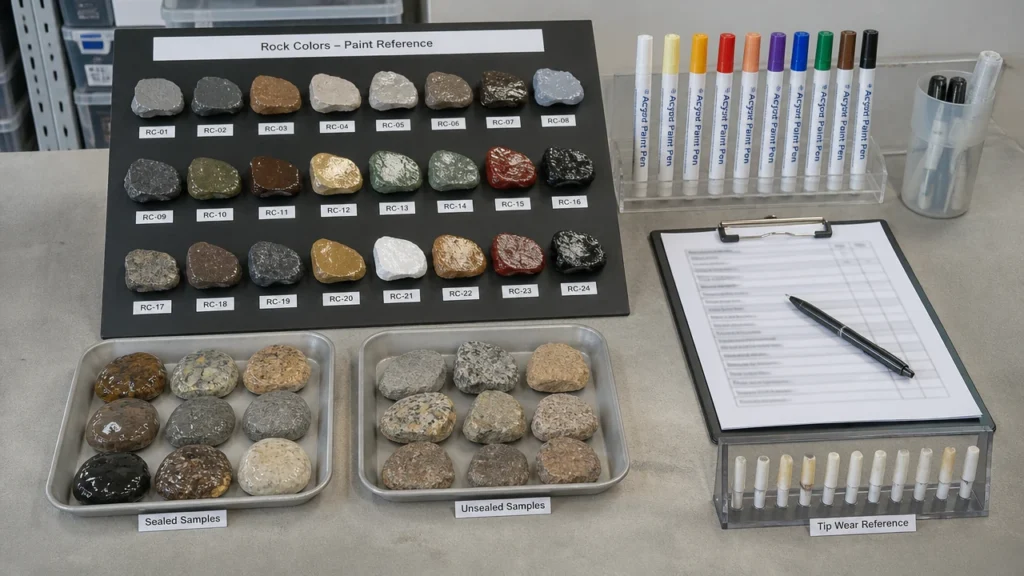
يجب أن يستخدم اختبار العينة الجيد نفس نوع الأحجار والتعليمات التي سيستخدمها العملاء. اختبر الأحجار الملساء، والأحجار المسامية، والأحجار الداكنة، وعينة ذات طبقة أساسية. ضع عينات لجميع الألوان. تحقق من التمهيد الأول، والعتامة، ووقت التجفيف، وسلوك الطبقة الثانية، والتوافق مع المادة المانعة للتسرب.
| QC檢查點 | 檢查項目 | لماذا هو مهم |
|---|---|---|
| 不透明度 | الأبيض، والأصفر، والمعدني، والباستيل، والأسود على أحجار داكنة وفاتحة | الألوان الضعيفة تسبب صور منتج رديئة وخيبة أمل العملاء |
| 流量 | التمهيد الأول، وإعادة التشغيل بعد التخزين، والتحكم في النقاط، واتساق الخطوط | غالبًا ما يحتاج مستخدمو الأحجار إلى نقاط وخطوط عريضة وتفاصيل صغيرة |
| تآكل رأس القلم | رؤوس دقيقة ومتوسطة على أحجار ملساء وخشنة | يمكن للأحجار الخشنة أن تتلف الرؤوس أسرع من الورق |
| 乾燥 | وقت الجفاف عند اللمس قبل الطبقة الثانية وقبل الإغلاق | الإغلاق المبكر يمكن أن يلطخ التصميم أو يرفعه |
| التوافق مع المادة المانعة للتسرب | عينات من المادة المانعة للتسرب بالفرشاة والرش بعد التجفيف الكامل | بعض المواد المانعة للتسرب يمكن أن تسبب نزيفًا أو ضبابية في التصميم |
| تعليمات العبوة | ما إذا كان المستخدمون قادرين على فهم خطوات التحضير والتجفيف والإغلاق | التعليمات الواضحة تقلل من المرتجعات والمراجعات حول فشل المتانة |
اطلب عينات محفوظة وعينات إنتاج قبل الطلبات المتكررة. ZH Stationery’s صفحة الشهادات, جولة في المصنع, و من نحن توفر الصفحات سياق المصنع والإثبات للمشترين عند مقارنة الموردين.
اطرح أسئلة أفضل على المورد
المورد الذي يفهم طلاء الأحجار يجب أن يجيب بتفاصيل الاختبار، وليس فقط ادعاءات الكتالوج.
- 1. أي تركيبة قلم توصي بها لطلاء الأحجار، ولماذا؟
الإجابة المفيدة تذكر نوع الحبر، والعتامة المتوقعة، ونظام الرأس، وسلوك التجفيف، وحدود السطح. - 2. أي الأحجار اختبرتها؟
الإجابة المفيدة تفصل بين أحجار الأنهار الملساء، والأحجار المسامية، والأحجار الداكنة، والأحجار ذات الطبقة الأساسية، والعينات المغلقة. - 3. هل يحتاج القلم إلى مادة مانعة للتسرب للعرض الخارجي؟
الإجابة المفيدة تقول نعم للاستخدام الخارجي وتوضح أن المشتري يجب أن يختبر مادة مانعة للتسرب شفافة متوافقة قبل طباعة ادعاء المتانة. - 4. هل يمكنك توفير عينات قبل وبعد الإغلاق؟
الإجابة المفيدة تتضمن صورًا أو عينات مادية تظهر تغير اللون، وتغير اللمعان، وخطر النزيف، وخطر الضبابية. - 5. ما التعليمات التي يجب أن توضع داخل طقم التجزئة؟
الإجابة المفيدة تغطي غسل الأحجار، والتجفيف، وتمهيد القلم، والطبقات الرقيقة، والتجفيف قبل الإغلاق، وتخزين الأغطية، وإشراف الكبار عند الحاجة للمواد المانعة للتسرب. - 6. ما مستندات الامتثال المطبقة على هذا SKU؟
الإجابة المفيدة تفصل بين وضع العلامات على مواد الفنون، والفئة العمرية، ومراجعة التركيبة، والمستندات الخاصة بالسوق، وأي مستندات متعلقة بالمادة المانعة للتسرب إذا كان الطقم يتضمنها.
الأسئلة الشائعة
يجب أن تتطابق هذه الإجابات مع ملف مخطط Rank Math إذا تم استيراد مخطط FAQPage.
1. ما هي أفضل أقلام الطلاء للأحجار؟
تُعد أقلام الرسم الأكريليكية ذات الأساس المائي أفضل نقطة بداية لمعظم مشاريع الرسم على الصخور، لأنها تمنح ألوانًا غير شفافة على الحجر، وتعمل بشكل جيد للنقاط والكتابة، وتناسب أطقم الحرف العائلية بشكل أفضل من الأقلام الدائمة العادية أو أقلام الكحول.
2. هل أحتاج إلى إغلاق أقلام الطلاء على الأحجار؟
نعم، إذا كانت الصخور ستُتداول بشكل متكرر أو تُعرض في الهواء الطلق. اترك العلامة تجف تمامًا، ثم اختبر طبقة واقية شفافة من الأكريليك أو الورنيش المتوافق بطبقات رقيقة قبل اعتماد ادعاءات التغليف.
3. هل أقلام الأكريليك مقاومة للماء على الأحجار؟
قد تقاوم التعامل الخفيف بعد الجفاف، لكن مقاومة الماء في الهواء الطلق تعتمد على الحجر وتركيبة الطلاء ووقت الجفاف والمادة العازلة. تجنب الادعاءات بمقاومة الماء ما لم يتم اختبار نظام القلم والعازل بالكامل.
4. هل يمكن استخدام أقلام الكحول لطلاء الأحجار؟
أقلام التلوين الكحولية ليست الخيار الأساسي للرسم على الصخور. يمكنها وضع علامات على بعض الأحجار الفاتحة والناعمة، لكنها عادةً لا توفر التغطية المعتمة التي يتوقعها مستخدمو الرسم على الصخور.
5. هل يجب أن يتضمن طقم طلاء الأحجار مادة مانعة للتسرب؟
يعتمد ذلك على المستخدم المستهدف والسوق. قد يؤدي تضمين مادة مانعة للتسرب إلى تحسين النتيجة النهائية، لكنه يضيف أيضًا متطلبات تتعلق بالسلامة ووضع العلامات والشحن والتعليمات. تبيع العديد من العلامات التجارية الأقلام وتقدم إرشادات منفصلة بشأن المادة المانعة للتسرب بدلاً من ذلك.
6. ما الذي يجب أن يختبره مشترو B2B قبل طلب أقلام طلاء الأحجار؟
اختبار العتامة، وتدفق الحبر عند أول استخدام، وتآكل السن، وزمن الجفاف، والطبقات، والتوافق مع المادة العازلة، وتغيّر اللون بعد العزل، وتخزين الغطاء، وتعليمات التغليف، ووثائق الامتثال للسوق المستهدف.
الاستنتاج
تعمل أقلام الطلاء للأحجار بشكل أفضل عندما يتعامل المشتري مع المشروع كنظام متكامل. يحتاج القلم إلى لون أكريليك معتم، وتدفق ثابت، ورأس يمكنه تحمل الحجر. يحتاج الحجر إلى الغسيل والتجفيف. يحتاج التصميم النهائي إلى المادة المانعة للتسرب المناسبة إذا سيتم التعامل معه أو استخدامه في الخارج.
بالنسبة للتوريد، لا تعتمد قلم طلاء الأحجار من صور الكتالوج فقط. اطلب عينات أحجار حقيقية، وعينات مغلقة، ونص بطاقة التعليمات، ومستندات الامتثال قبل تقديم الطلب. هذا يمنح المنتج فرصة أفضل لمطابقة ما يراه العملاء على العبوة.
الدليل ذو الصلة: لفحص مراقبة الجودة ذي الصلة، راجع أقلام طلاء أكريليك عالية الجودة.