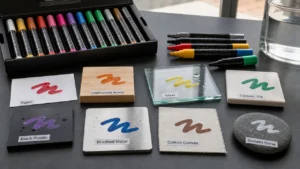
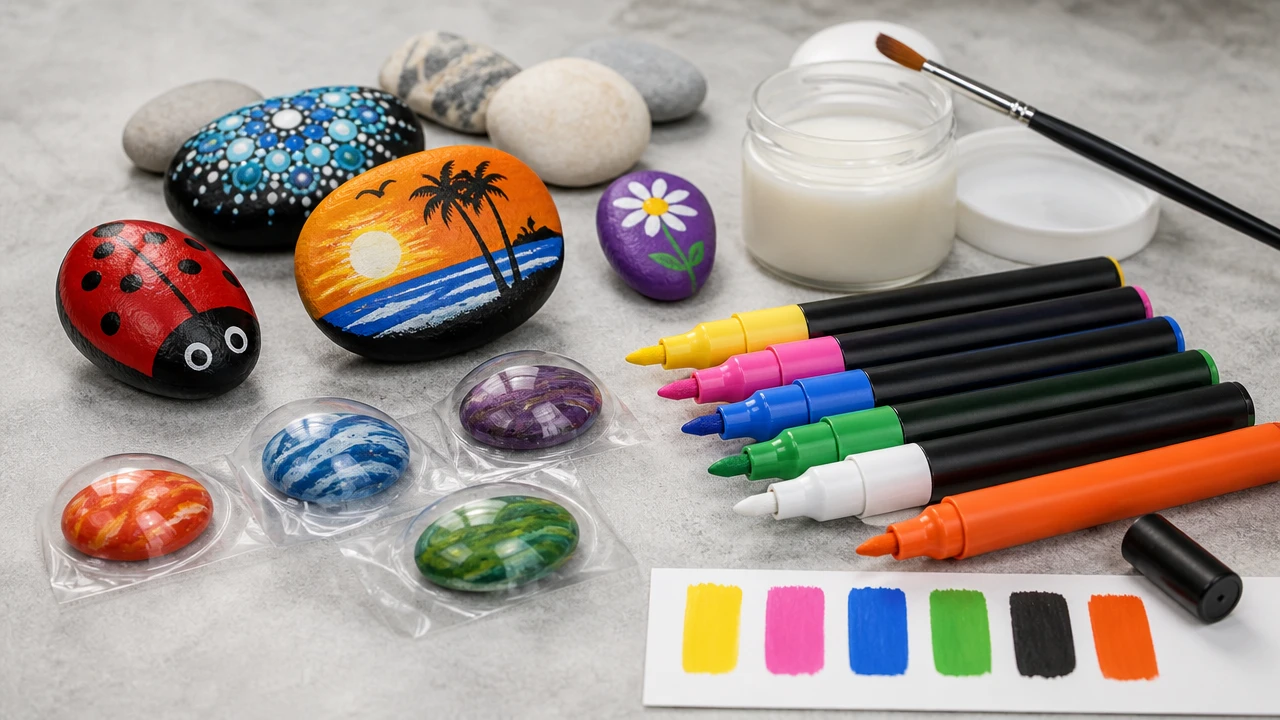
Los rotuladores de pintura para piedras deben cumplir tres funciones: cubrir bien la piedra, mantener la legibilidad tras la manipulación y funcionar con un sellador transparente sin sangrar ni levantarse. Para la mayoría de los proyectos de pintura en piedra, los rotuladores de pintura acrílica a base de agua son el mejor punto de partida. Ofrecen color opaco, se asientan visiblemente sobre la piedra y encajan mejor en kits de manualidades que los rotuladores de alcohol o los marcadores permanentes comunes.
El detalle es que el rotulador solo es la mitad del resultado. Una piedra rugosa, polvorienta o húmeda puede arruinar una buena tinta. Una capa gruesa de spray puede manchar el arte recién hecho. Un paquete minorista que dice impermeable sin explicar el sellado y el curado puede generar quejas de los clientes. Los compradores deben tratar la pintura en piedras como un sistema de rotulador más superficie más sellador.
ZH Stationery trabaja con compradores que planean marcadores de pintura acrílica, kits de manualidades de marca privada y empaques minoristas de rotuladores. Si está abasteciendo un SKU de pintura en piedras, use esta guía para definir el tipo de rotulador, la punta, el set de colores, las instrucciones, el lenguaje de seguridad y las pruebas de muestra antes de pedir una cotización al proveedor. Si el mismo surtido también se dirige a adornos o letreros de madera, compare los pasos de preparación y sellado en nuestra guía de rotuladores de pintura acrílica sobre madera.
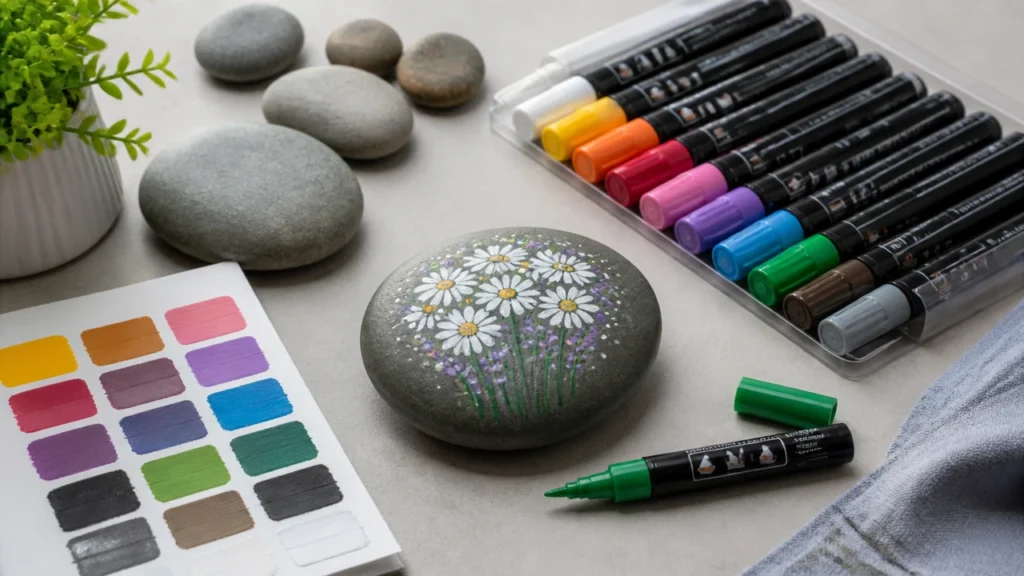
Rotuladores de Pintura para Piedras: Respuesta Rápida
Elija rotuladores de pintura acrílica para piedras cuando necesite color opaco, puntos limpios, arte de líneas, lettering y marcas brillantes sobre piedra natural. Elija puntas medianas para kits de manualidades generales, puntas finas para detalles y puntas extrafinas solo cuando las piedras sean lo suficientemente lisas. Para piedras de exterior, deje que el rotulador se seque por completo, luego aplique un sellador transparente compatible en capas finas según la etiqueta del sellador.
Evite vender rotuladores de alcohol comunes como rotuladores para piedras. Pueden manchar algunas piedras, pero generalmente carecen de opacidad y pueden desvanecerse o verse débiles en superficies texturizadas. Los rotuladores de pintura a base de aceite pueden ser duraderos en algunas piedras, pero pueden traer un olor más fuerte, un secado más lento y más advertencias en el empaque. Para manualidades familiares, escolares, pasatiempos y kits de pintura en piedras como regalo, los rotuladores de pintura acrílica suelen ser la posición comercial más segura.
Enlaces rápidos
- Qué Rotuladores Funcionan Mejor
- Comparación de Tipos de Rotuladores
- Elija la Punta y el Set de Colores Correctos
- Prepare las Piedras Antes de Marcar
- Cómo Sellar Piedras Pintadas
- Durabilidad en Exteriores y Afirmaciones
- B2B Empaque del Kit e Instrucciones
- Pruebas de control de calidad
- Haga mejores preguntas al proveedor
- Preguntas frecuentes
Qué Rotuladores Funcionan Mejor
Los mejores rotuladores de pintura para piedras suelen ser los rotuladores de pintura acrílica a base de agua con pigmento fuerte, flujo de válvula estable y puntas que puedan manejar una superficie ligeramente texturizada. La pintura necesita suficiente cuerpo para cubrir piedra gris, marrón, negra o moteada. También necesita secarse limpiamente antes de aplicar un sellador.
Un rotulador de válvula puede ayudar a controlar el flujo de pintura, especialmente cuando los usuarios necesitan agitar, presionar, cebar y reiniciar el rotulador. El tecnología de marcado por presión de válvula artículo de ZH Stationery explica por qué el mecanismo importa para el uso de rotuladores acrílicos. Para la pintura en piedras, el mal control del flujo a menudo se manifiesta como trazos secos, grumos, puntas inundadas o puntos desiguales.
Un buen rotulador para piedras no necesita prometer todas las superficies para siempre. Debe dar una cobertura confiable en piedras de manualidades comunes, secarse sin pegajosidad excesiva y soportar la manipulación normal después de un sellado adecuado. Esa es una afirmación más defendible que una promesa amplia de impermeabilidad impresa en la parte frontal de la caja.
Comparación de Tipos de Rotuladores
| Tipo de marcador | Idoneidad para Pintura en Piedras | Fortaleza | Riesgo a gestionar |
|---|---|---|---|
| Rotuladores de pintura acrílica a base de agua | Mejor opción general para la mayoría de los kits de pintura en piedras | Color opaco, posicionamiento de bajo olor, fácil uso en manualidades | Requiere cebado, tiempo de secado, cuidado de la tapa y guía de sellado |
| Rotuladores de pintura a base de aceite | Útil para algunas marcas duraderas de manualidades o estilo industrial | Buena adherencia en superficies duras seleccionadas después de pruebas | Olor, secado más lento, preocupaciones por solventes y advertencias más fuertes |
| Marcadores permanentes | Uso limitado para contornos o escritura simple en piedras lisas pálidas | Fácil de usar y secado rápido | Opacidad débil en piedras oscuras y mal posicionamiento para kits de manualidades |
| Marcadores de alcohol | No es la opción principal para piedras | Bueno para ilustración en papel | Baja opacidad en piedra y posible desvanecimiento o manchado desigual |
| Rotuladores de tiza | Solo para uso temporal o decorativo | Aspecto brillante en algunas superficies lisas | Pueden borrarse o fallar en exteriores sin la superficie y el sellador adecuados |
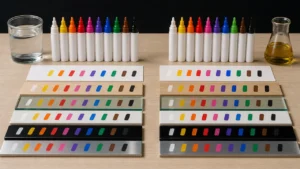
Para compradores de B2B, la comparación debería llevar a decisiones de muestras. No apruebe el arte del empaque hasta que el proveedor envíe piedras marcadas, muestras secas y muestras selladas. El mismo rotulador puede verse fuerte en interiores y débil en exteriores si el sellador, la textura de la piedra o el tiempo de curado cambian.
Elija la Punta y el Set de Colores Correctos
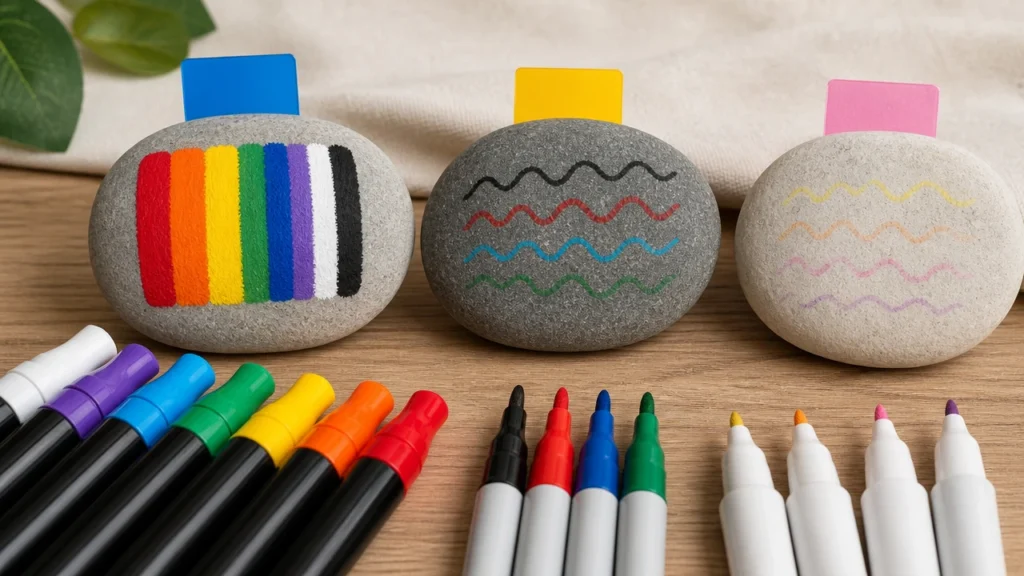
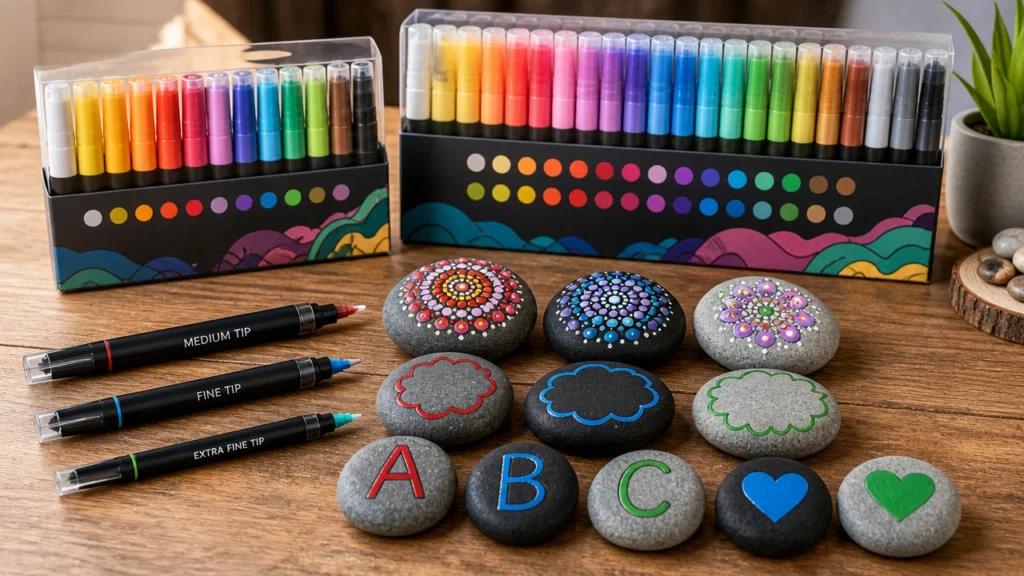
La selección de la punta cambia la experiencia del usuario más de lo que muchos compradores esperan. Las puntas bala medianas son la opción más segura para la pintura general en piedras porque funcionan para rellenar, contornos, puntos y lettering simple. Las puntas finas son útiles para kits de detalles, pero pueden sentirse ásperas en piedras rugosas. Las puntas de pincel son menos comunes para la pintura en piedras porque las superficies texturizadas pueden dañar la punta.
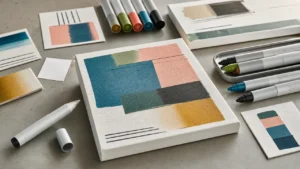
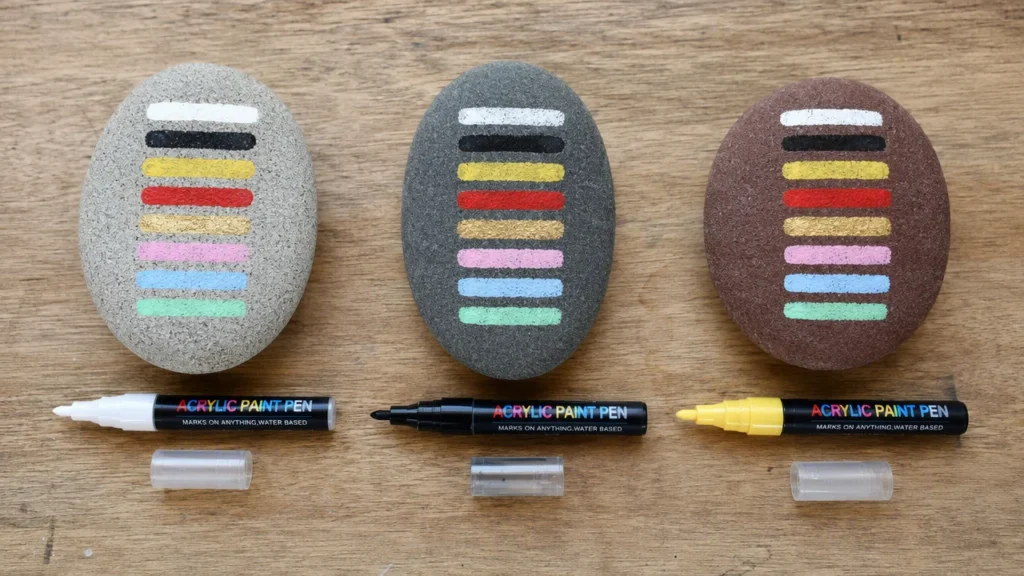
La planificación de colores debe comenzar con el contraste. Blanco, negro, dorado, plateado, rojo, amarillo, azul, verde, rosa y púrpura son fáciles de entender en fotos de producto. Los pasteles pueden verse atractivos en piedras blancas pero pueden decepcionar en rocas más oscuras. Los colores metálicos y de purpurina pueden respaldar kits de regalo, pero necesitan muestras separadas porque su cobertura puede comportarse de manera diferente a los colores sólidos.
Si el comprador quiere una línea de regalo, considere combinar colores estándar con Marcadores de pintura acrílica con super brillo como un SKU separado en lugar de mezclar todos los efectos en una sola caja. Esto mantiene las expectativas más claras y les da a los minoristas más de un punto de precio.
Prepare las Piedras Antes de Marcar
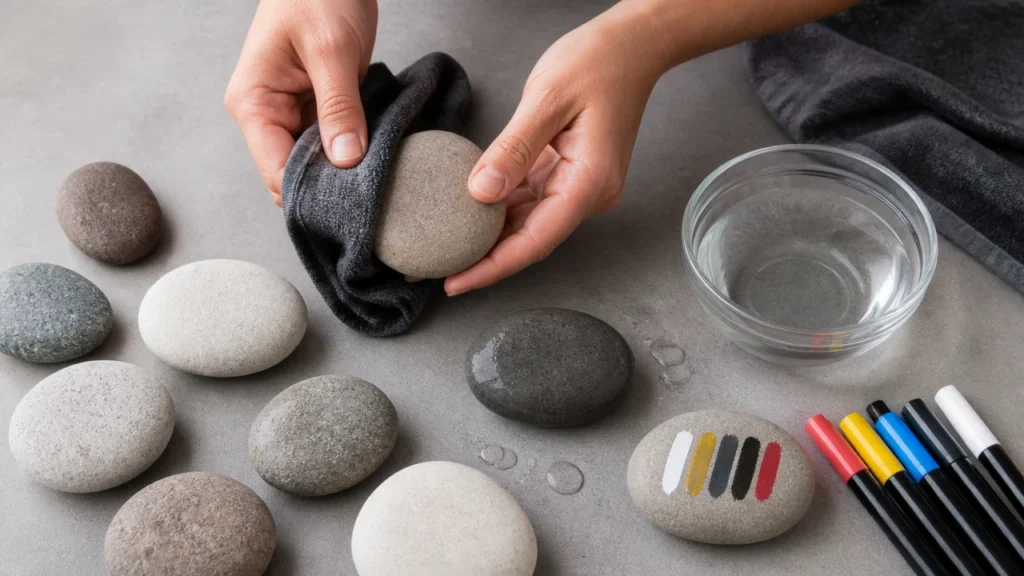
La preparación de la piedra es simple, pero no es opcional. Lave la piedra, elimine el polvo, déjela secar por completo y pruebe el primer trazo en la parte posterior o en una piedra de repuesto. Las piedras de río lisas suelen dar el resultado más limpio. Las piedras muy porosas pueden absorber la pintura y hacer que los colores se vean apagados. Las piedras rugosas pueden desgastar las puntas finas.
Algunos usuarios añaden una capa base acrílica blanca antes de dibujar. Eso puede hacer que los colores sean más brillantes y reducir la cantidad de pintura de rotulador necesaria. Para un kit minorista, las instrucciones deben explicar si la capa base es requerida, opcional o no está incluida. Si el kit no incluye una capa base, evite fotos de producto que hagan que el color se vea más brillante que el uso normal.
Una tarjeta de instrucciones práctica puede decir: lave, seque, dibuje ligeramente si es necesario, agite el rotulador, presione la punta sobre material de desecho, dibuje en capas finas, deje secar cada capa y luego selle solo después de que el diseño ya no se sienta pegajoso. Este es un texto aburrido, pero previene devoluciones evitables.
Cómo Sellar Piedras Pintadas
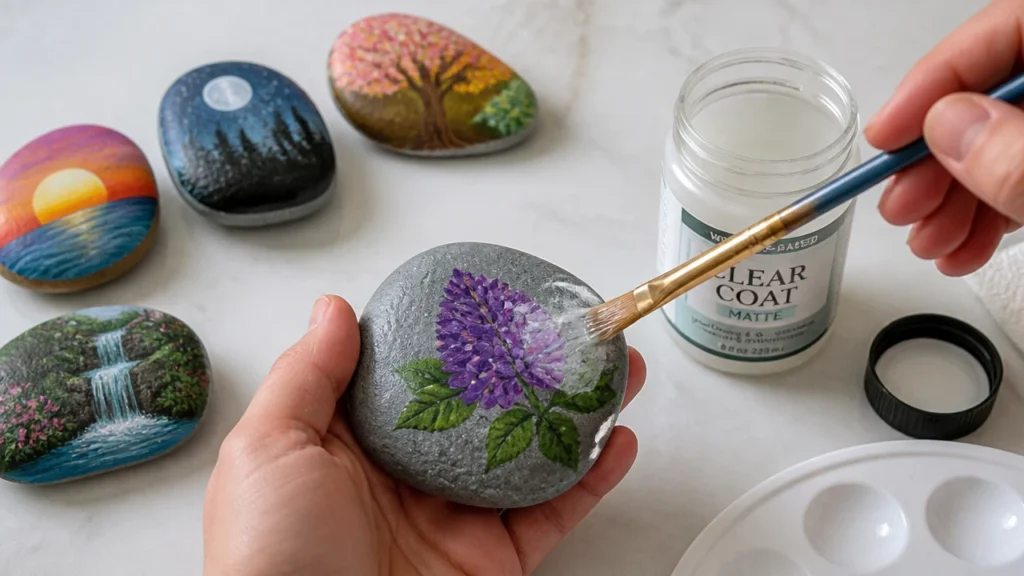
Para sellar piedras pintadas, deje secar primero el arte del rotulador. Luego aplique un sellador acrílico transparente compatible, barniz de manualidades o capa transparente de exterior en capas finas. Los selladores de brocha dan más control en interiores. Los selladores en spray pueden cubrir uniformemente, pero los usuarios deben seguir la etiqueta del producto y usar ventilación adecuada.
El set de marcadores de pintura acrílica La CPSC Guía de Seguridad para Arte y Manualidades advierte que los fijadores en spray y productos similares pueden contener solventes que son peligrosos al inhalarse, y sugiere elegir materiales más seguros cuando sea posible. Por eso un kit de rotuladores no debe decir casualmente a las familias que rocíen sellador en interiores. La redacción más segura es seguir la etiqueta del sellador, trabajar en un área bien ventilada y mantener a los niños alejados de recubrimientos de uso adulto cuando la etiqueta lo requiera.
Selle en capas ligeras en lugar de una capa húmeda gruesa. Las capas pesadas pueden reactivar las capas del rotulador, acumularse alrededor de la textura de la piedra o dejar un acabado nublado. Deje secar cada capa antes de añadir la siguiente. Para piedras de exterior, pruebe una muestra al aire libre antes de imprimir una afirmación fuerte de durabilidad.
Opciones de sellador que los compradores deben probar
- Barniz acrílico de brocha a base de agua para kits de manualidades de interior y aplicación controlada.
- Sellador acrílico transparente de exterior cuando el producto está posicionado para piedras de jardín.
- Acabado mate cuando el comprador quiere un aspecto de piedra natural.
- Acabado brillante cuando el comprador quiere un color más vibrante en las fotos de producto.
- Capa transparente resistente a UV solo cuando el proveedor o la etiqueta del sellador respalden la afirmación.
Durabilidad en Exteriores y Afirmaciones
Las afirmaciones de pintura en piedras de exterior necesitan una redacción cuidadosa. La luz solar, la lluvia, los ciclos de congelación y descongelación, la porosidad de la piedra, el tipo de sellador y el tiempo de secado pueden cambiar el resultado. Un rotulador que funciona en una muestra sellada en un estudio puede no comportarse igual en una piedra porosa de jardín dejada al aire libre durante meses.
Para el empaque, use un lenguaje medido como adecuado para pintura en piedras y exhibición en exteriores después de un sellado y curado adecuados. Evite afirmaciones absolutas como permanente en todas las piedras, resistente a la intemperie para siempre, sellador seguro para niños incluido o apto para lavavajillas a menos que cada afirmación esté respaldada por las pruebas de producto correctas y la revisión de la etiqueta.
En los Estados Unidos, los materiales de arte deben cumplir con los requisitos de etiquetado de peligros crónicos. La CPSC sobre materiales de arte explica que los materiales de arte necesitan evaluación toxicológica, y Práctica de etiquetado ASTM D4236 cubre el etiquetado de precaución para materiales de arte. ZH Stationery’s Guía del informe de prueba ASTM D-4236 puede ayudar a los compradores a separar el etiquetado de seguridad de las pruebas de rendimiento.
B2B Empaque del Kit e Instrucciones
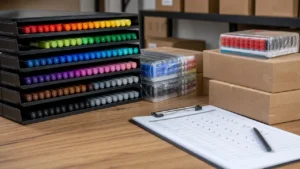
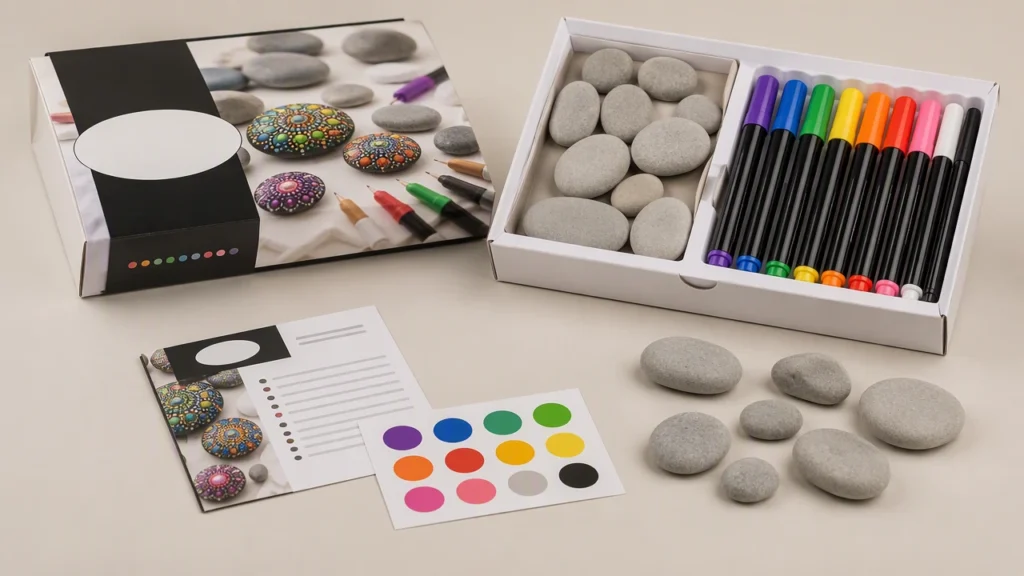
Un kit de pintura en piedras es más fácil de vender cuando el comprador controla todo el recorrido del usuario. La caja debe mostrar piedras realistas, trazos reales de marcador y muestras de color claras. La tarjeta de instrucciones debe explicar la preparación, la imprimación, el secado, las capas, el sellado, el almacenamiento y la guía de edad.
El empaque también necesita espacio para el lenguaje de seguridad y cumplimiento. ACMI explica que sus sellos AP y CL se relacionan con la evaluación toxicológica y el etiquetado, mientras que el Resumen de regulaciones ACMI y Página de seguridad de materiales de ACMI proporciona contexto útil para el etiquetado de materiales de arte. Para la entrada real al mercado, los compradores deben revisar el SKU final, la clasificación de edad, la fórmula, el texto del empaque y los documentos requeridos con soporte de cumplimiento calificado.
Para programas de marca privada, solicite al proveedor que cotice tanto el set de marcadores como los componentes del empaque. La opciones de empaque para rotuladores acrílicos guía es útil al planificar bandejas, tarjetas de color, tarjetas de instrucciones, paneles de advertencia, etiquetas de código de barras y cartones exteriores.
Pruebas de control de calidad para marcadores de pintura en piedras
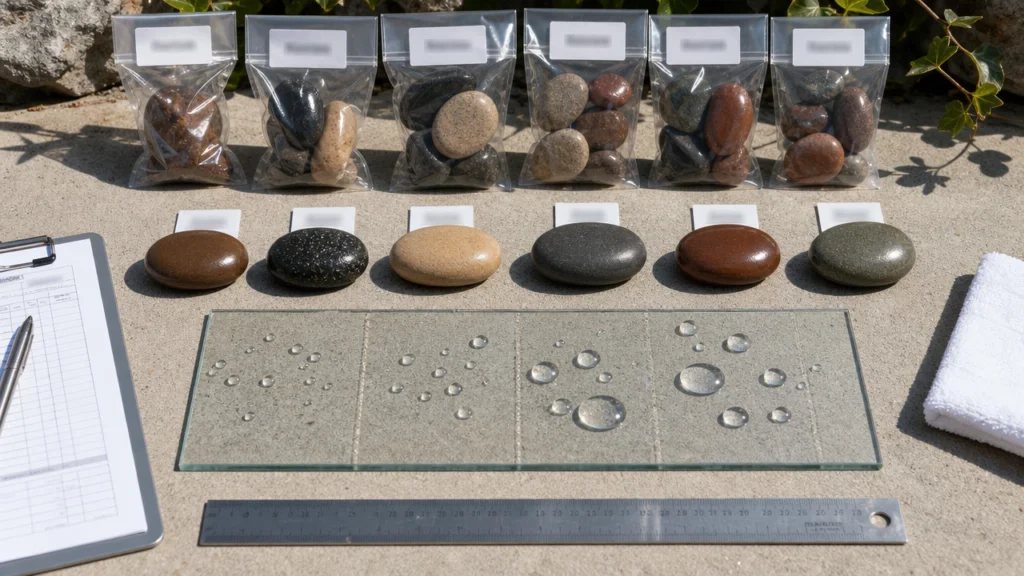
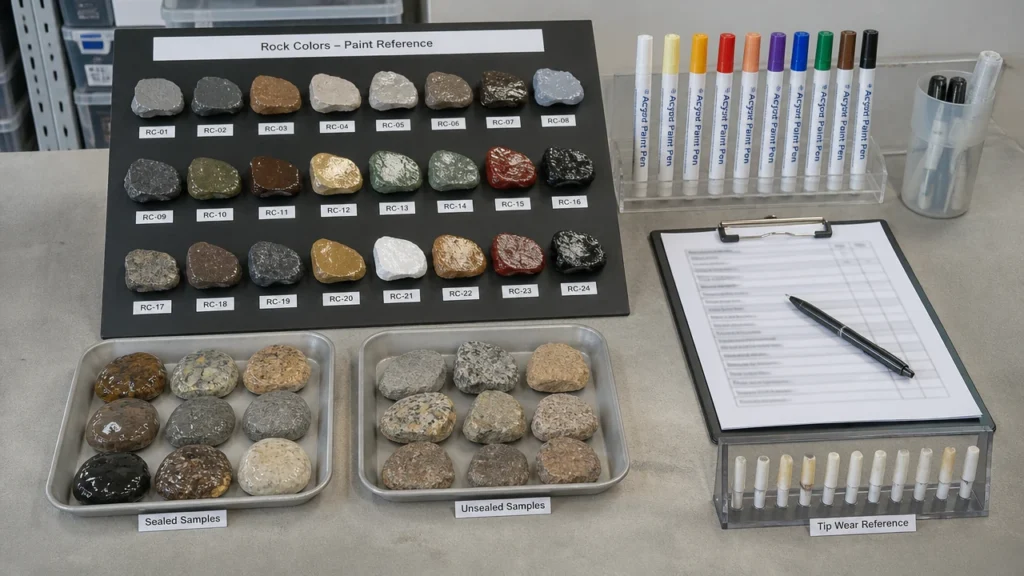
Una buena prueba de muestra debe usar el mismo tipo de piedras e instrucciones que usarán los clientes. Pruebe piedras lisas, piedras porosas, piedras oscuras y una muestra con capa base. Pruebe cada color. Verifique la imprimación del primer uso, la opacidad, el tiempo de secado, el comportamiento de la segunda capa y la compatibilidad con el sellador.
| Punto de control de calidad | Qué verificar | Formato del juego minorista |
|---|---|---|
| Opacidad | Blanco, amarillo, metálico, pastel y negro sobre piedras oscuras y claras | Los colores débiles causan malas fotos de producto y decepción del cliente |
| Flujo | Primera imprimación, reinicio después del almacenamiento, control de puntos, consistencia de línea | Los usuarios de piedras a menudo necesitan puntos, contornos y pequeños detalles |
| Desgaste de la punta | Puntas finas y medianas en piedras lisas y rugosas | Las piedras rugosas pueden dañar las puntas más rápido que el papel |
| Secado | Tiempo de secado al tacto antes de la segunda capa y antes del sellado | Sellar demasiado pronto puede manchar o levantar la obra |
| Compatibilidad del sellador | Muestras de sellador con brocha y en spray después del secado completo | Algunos selladores pueden sangrar o nublar el diseño |
| Instrucciones del empaque | Si los usuarios pueden entender los pasos de preparación, secado y sellado | Las instrucciones claras reducen devoluciones y reseñas sobre durabilidad fallida |
Solicite muestras retenidas y muestras de producción antes de pedidos repetidos. ZH Stationery’s página de certificaciones, recorrido por la fábrica, y quiénes somos Las páginas proporcionan contexto de fábrica y prueba para compradores que comparan proveedores.
Haga mejores preguntas al proveedor
Un proveedor que entiende la pintura en piedras debe responder con detalles de prueba, no solo con afirmaciones del catálogo.
- 1. ¿Qué fórmula de marcador recomienda para pintura en piedras y por qué?
Una respuesta útil nombra el tipo de tinta, la opacidad esperada, el sistema de punta, el comportamiento de secado y las limitaciones de superficie. - 2. ¿Qué piedras probó?
Una respuesta útil separa piedras de río lisas, piedras porosas, piedras oscuras, piedras con capa base y muestras selladas. - 3. ¿El marcador necesita un sellador para exhibición en exteriores?
Una respuesta útil dice que sí para uso exterior y explica que el comprador debe probar un sellador transparente compatible antes de imprimir una afirmación de durabilidad. - 4. ¿Puede proporcionar muestras antes y después del sellado?
Una respuesta útil incluye fotos o muestras físicas que muestren cambio de color, cambio de brillo, riesgo de sangrado y riesgo de nubosidad. - 5. ¿Qué instrucciones deben incluirse dentro del kit minorista?
Una respuesta útil cubre lavar las piedras, secar, imprimar el marcador, capas finas, secar antes de sellar, almacenamiento con tapa y supervisión de adultos para selladores cuando sea necesario. - 6. ¿Qué documentos de cumplimiento aplican a esta SKU?
Una respuesta útil separa el etiquetado de materiales de arte, la clasificación de edad, la revisión de fórmula, los documentos específicos del mercado y cualquier documento relacionado con el sellador si el kit lo incluye.
Preguntas frecuentes
Estas respuestas deben coincidir con el archivo de esquema Rank Math si se importa el esquema FAQPage.
1. ¿Cuáles son los mejores rotuladores de pintura para piedras?
Los rotuladores de pintura acrílica al agua son el mejor punto de partida para la mayoría de los proyectos de pintura en piedra, ya que ofrecen color opaco sobre la piedra, funcionan bien para puntos y lettering, y se adaptan mejor a los kits de manualidades familiares que los rotuladores permanentes o de alcohol comunes.
2. ¿Necesito sellar los rotuladores de pintura sobre piedras?
Sí, si las piedras se manipularán con frecuencia o se exhibirán al aire libre. Deje que el marcador se seque por completo y luego pruebe un sellador acrílico transparente o barniz compatible en capas finas antes de aprobar las afirmaciones del empaque.
3. ¿Los rotuladores de pintura acrílica son impermeables sobre piedras?
Pueden resistir una manipulación ligera después del secado, pero la resistencia al agua en exteriores depende de la piedra, la fórmula de la pintura, el tiempo de secado y el sellador. Evite afirmaciones de impermeabilidad a menos que se haya probado el sistema completo de marcador y sellador.
4. ¿Se pueden usar marcadores de alcohol para pintar piedras?
Los marcadores de alcohol no son la opción principal para piedras. Pueden marcar algunas piedras pálidas y lisas, pero generalmente no proporcionan la cobertura opaca que los usuarios de pintura en piedras esperan.
5. ¿Un kit de pintura en piedras debe incluir un sellador?
Depende del usuario objetivo y del mercado. Incluir un sellador puede mejorar el resultado final, pero también añade requisitos de seguridad, etiquetado, envío e instrucciones. Muchas marcas venden los marcadores y proporcionan orientación sobre el sellador por separado.
6. ¿Qué deben probar los compradores B2B antes de pedir marcadores de pintura en piedras?
Pruebe la opacidad, el flujo en el primer uso, el desgaste de la punta, el tiempo de secado, el laminado, la compatibilidad con el sellador, el cambio de color después del sellado, el almacenamiento con tapa, las instrucciones de empaque y los documentos de cumplimiento para el mercado objetivo.
Conclusión
Los rotuladores de pintura para piedras funcionan mejor cuando el comprador trata el proyecto como un sistema completo. El marcador necesita color acrílico opaco, flujo constante y una punta que pueda manejar la piedra. La piedra necesita lavado y secado. El diseño terminado necesita el sellador adecuado si se va a manipular o usar en exteriores.
Para el abastecimiento, no apruebe un marcador de pintura en piedras solo por fotos del catálogo. Solicite muestras en piedras reales, muestras selladas, texto de la tarjeta de instrucciones y documentos de cumplimiento antes de realizar el pedido. Eso le da al producto una mejor oportunidad de coincidir con lo que los clientes ven en el empaque.
Guía relacionada: Para una verificación de control de calidad relacionada, consulte Rotuladores de pintura acrílica de alta calidad.