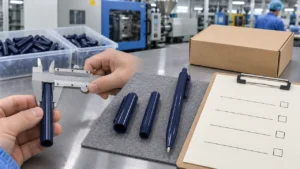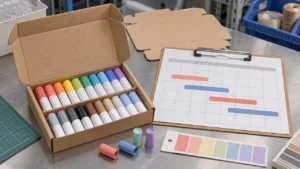

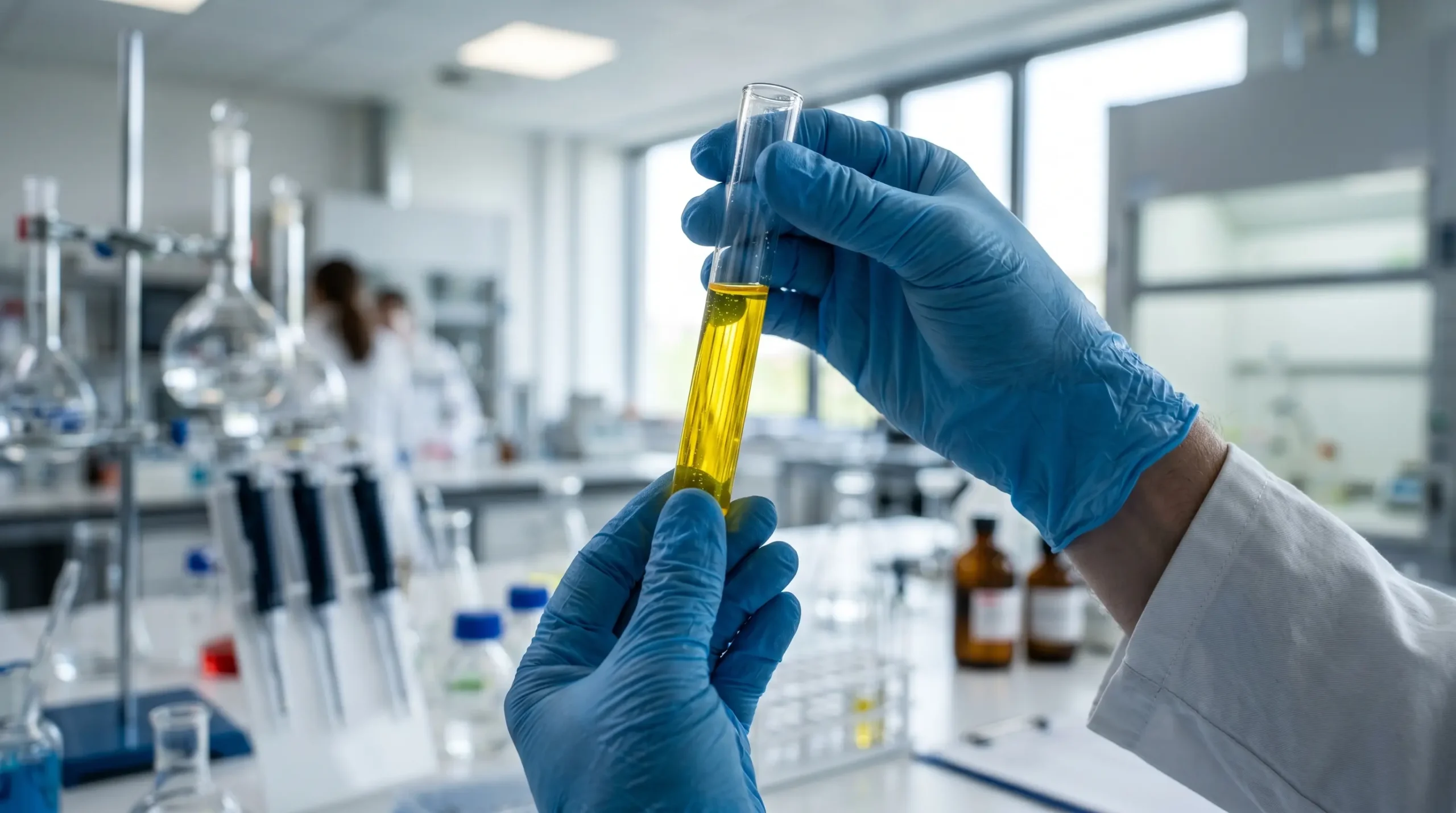
¿Sabía que los artículos escolares y de oficina de uso diario a veces pueden ocultar sustancias químicas nocivas? Por eso es importante realizar pruebas de formaldehído en los productos de escritura para garantizar la seguridad.
Las directrices de la OMS de 2010 sobre la calidad del aire interior para contaminantes seleccionados incluyen el formaldehído. Cubren la exposición en el aire interior. No establecen un límite de aprobación universal para los productos de escritura. Las pruebas de productos deben indicar la parte muestreada, la norma de producto aplicable y el método de ensayo utilizado.
Para proteger a los compradores y mantener una marca sólida, son esenciales servicios de pruebas fiables.

La Importancia del Análisis de Formaldehído en Artículos de Papelería y las Normas
Para mantener seguros a los compradores, grupos nacionales e internacionales han establecido normas estrictas para las partes nocivas en los productos de escritura.
Para los artículos escolares dentro de su alcance, la norma de producto china GB 21027-2020 es la que se debe verificar. Sus requisitos dependen del artículo y de la parte. Confirme por separado los requisitos del mercado de destino. Un informe basado únicamente en la norma china no demuestra la conformidad para todos los mercados de exportación.
Al realizar pruebas según estas normas, los fabricantes demuestran su trabajo en una producción ecológica, segura y de alta calidad.
El método de laboratorio: espectrofotometría con acetilacetona
La lista oficial de la norma GB/T 32606-2016 indica que el método de ensayo de formaldehído es la espectrofotometría con acetilacetona. Pida al laboratorio que indique la edición del método. Confirme que sus pasos de muestreo y extracción se ajustan a la parte analizada.
El Principio Básico:
El método de la acetilacetona produce un producto de reacción coloreado. El laboratorio compara su absorbancia con soluciones calibradas. El laboratorio debe seguir la preparación de reactivos, extracción, reacción y condiciones de medición indicadas. Esta descripción general no es la norma completa. Tampoco es un procedimiento de laboratorio.
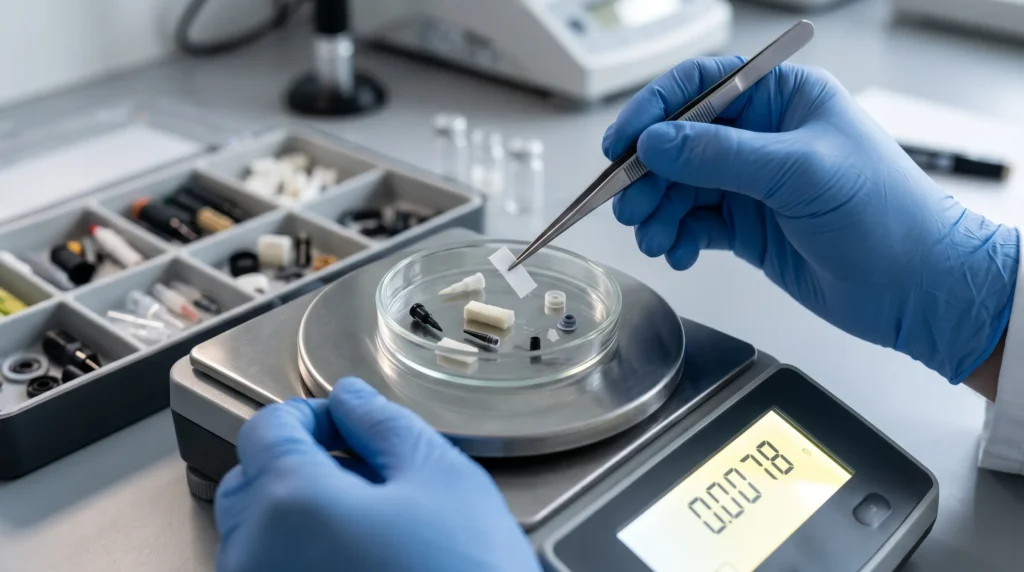
Qué verificar en el informe de laboratorio
Utilice estos cuatro puntos para revisar el informe con el laboratorio. El método de ensayo completo establece la masa de la muestra, las condiciones de extracción, los volúmenes de reactivos, el tiempo de reacción y el rango de calibración. No infiera esos datos de un artículo general de abastecimiento.
1. Preparación de la Muestra
Indique el modelo, la parte y el material muestreados. Pregunte cómo se preparó y extrajo la parte según el método citado. Confirme que el informe se refiere a la muestra, no a un producto o lote diferente.
2. La Reacción de Color
Compruebe que el laboratorio siguió el método citado para la preparación de reactivos, la reacción y la lectura de absorbancia. Pida aclaraciones si el informe no indica el método o describe un procedimiento modificado.
3. Creación de la Curva Estándar
Pregunte cómo se establecieron el rango de calibración y el blanco del método. Pregunte si el resultado de la muestra se encontraba dentro del rango de medición verificado. El método aplicable, no un artículo general, establece los niveles de calibración.
4. Lectura de los Resultados
Lea el valor reportado con sus unidades, el límite de detección o cuantificación y el límite de aprobación que corresponda. Un valor por debajo de un límite de reporte debe leerse tal como se reporta. No lo considere prueba de que no existe formaldehído.
Fórmula de Cálculo Final
La expresión siguiente muestra un cambio de unidades solo cuando c ya está corregida por el blanco y se cuenta la dilución adicional. El método completo y las reglas matemáticas del laboratorio rigen el resultado reportado. Esta expresión no es el procedimiento completo de GB/T 32606.
x = (c × f) / m
- x = La cantidad de formaldehído libre en la muestra (mg/kg)
- c = Concentración corregida por el blanco, con cualquier dilución adicional tenida en cuenta (μg/mL)
- f = El volumen al que se diluyó el líquido de la muestra (mL)
- m = La masa exacta de la muestra original (g)
Verifique el blanco del método, los factores de dilución y las unidades de reporte con el laboratorio. Una corrección del blanco por sí sola no significa que el total sea exacto.
Análisis de Confianza para su Tranquilidad
Mantener los productos seguros no es solo cuestión de ley. Se trata de proteger a sus clientes.
Elija un laboratorio cuyo alcance de acreditación vigente cubra el método necesario. Verifique el emisor del informe, el nombre de la muestra y el alcance directamente. Este artículo no establece las credenciales ni el alcance actuales de ningún laboratorio mencionado.
Para marcadores y otros productos de escritura, un informe de prueba registra la muestra, el método y los resultados. Compare esos resultados con las necesidades del producto que correspondan. La acreditación no significa que cada modelo, pieza o lote no probado esté libre de componentes nocivos.
Guía relacionada: Cómo Leer un Informe de Prueba ASTM D-4236 para Marcadores Acrílicos.
Lecturas relacionadas
- Más allá de “No Tóxico”: La Verdad Oculta sobre la Tinta de Marcador de Grado Alimenticio para Niños
- Estándares de calidad de los lápices de colores y tendencias futuras: Lo que necesita saber
- Guía para rotuladores comestibles
- Guía de materiales clásicos para pizarra
- Guía de tinta para marcadores de borrado en seco
- Guía para eliminar manchas de rotuladores de borrado en seco
- Eliminación de rotulador permanente de plástico
Why Formaldehyde Still Appears in Stationery
Formaldehyde is not added to markers on purpose. It arrives as a residual from three sources: adhesives in packaging, preservatives in water-based ink, and finishes on wooden or paper components. In each case the amount is small, but the regulatory limit is also small, and the test measures what is present rather than what was intended.
The adhesive route is the most common. Casein and urea-formaldehyde glues are cheap and strong, which is why they still appear in some cartons and laminated boards. A marker itself may pass while the display box it ships in does not.
The ink route matters for water-based formulas. Some preservative systems release formaldehyde slowly as they break down, which is why a freshly mixed batch can pass and a batch tested after six months in a warehouse can fail. That is not a manufacturing defect in the usual sense; it is a formulation choice with a time dimension.
How the Acetylacetone Method Works
GB/T 32606-2016 specifies acetylacetone spectrophotometry as the formaldehyde test method. The procedure runs in four stages.
Extraction. The sample is placed in water at a controlled temperature for a set period. Formaldehyde migrates into the water. The extraction time and temperature are specified, and changing either one changes the result.
Reaction. Acetylacetone reagent is added. In the presence of ammonium acetate, formaldehyde reacts to form a yellow compound, 3,5-diacetyl-1,4-dihydrolutidine. The reaction needs a fixed time and temperature to complete.
Measurement. The solution is read in a spectrophotometer at 412 nanometers. Absorbance is proportional to formaldehyde concentration within the calibrated range.
Calculation. Concentration is derived from the calibration curve, corrected for the blank, and converted to milligrams per kilogram of sample.
The formula only works when the blank is properly corrected and any additional dilution is counted. A report that quotes a number without stating the method edition, the extraction conditions, and the blank value is not reproducible.
Reading a Report: What the Numbers Mean
Three numbers matter on a formaldehyde report: the result, the limit, and the detection limit.
The result should be expressed in mg/kg with the measurement uncertainty stated. A result of 15 mg/kg with an uncertainty of plus or minus 3 is a different statement from 15 mg/kg with no uncertainty given.
The limit depends on the destination market and the product category. Textile and wood components have their own limits under separate standards; stationery is often assessed against the general consumer goods framework. Confirm which limit applies before comparing a result to a pass threshold.
The detection limit tells you whether the test could actually see a failure. A method with a detection limit of 20 mg/kg cannot demonstrate compliance with a 16 mg/kg limit, no matter what the result says.
Sampling and Extraction: Where Tests Go Wrong
Most false passes and false failures trace to sampling, not to the instrument.
The sample must represent the batch. A single marker taken from the top of a carton is not a batch sample. The correct approach is to composite material from several units, because formaldehyde distribution within a production run is not uniform.
The extraction conditions must match the method. Water temperature, extraction time, and the ratio of sample mass to water volume all affect the result. A lab that shortens the extraction to save time will report a lower number than the method intends.
The tested part must be the part that matters. For a marker, that means the barrel, the cap, the ink, and the packaging assessed separately, because each has a different risk profile and a different limit may apply.
Preguntas Frecuentes
Does passing a formaldehyde test mean the product is safe? No. It means formaldehyde is below the applicable limit for that test method. Other substances are covered by other tests.
How often should formaldehyde be retested? At minimum once per production batch, and again whenever the ink supplier, adhesive supplier, or packaging supplier changes.
Can a factory self-test? It can screen internally, but the report that goes to a retailer should come from an accredited third-party lab with the method edition stated.
What happens if a batch fails? The batch should be held, the source identified — ink, adhesive, or packaging — and the affected lots traced. Retesting the same sample rarely changes the result.
Where Formaldehyde Comes From in the Supply Chain
The test measures what is present, not what was intended. Three upstream sources account for most failures.
Adhesive suppliers. Casein and urea-formaldehyde glues remain cheap and strong, which is why they still appear in laminated boards and some cartons. A marker can pass while the display box it ships in does not. Ask for the adhesive declaration separately from the ink declaration.
Preservative systems in water-based ink. Certain preservatives release formaldehyde as they break down. A freshly mixed batch passes; the same batch tested after six months in a warm warehouse may not. This is a formulation choice with a time dimension, and it is the most common cause of a late failure.
Wood and paper components. Pencil barrels, wooden display stands, and some paper stocks carry residual formaldehyde from processing. These are usually low, but they add to the total when the test composites multiple materials.
The practical implication: test the finished product as it ships, not the individual components in isolation. A composite sample catches the additive effect that single-component testing misses.
Setting a Retest Cadence That Actually Catches Drift
Most programs retest once per production batch, which is not enough to catch a slow drift.
A supplier can change an adhesive vendor, a preservative concentration, or a packaging source without announcing it, and the change shows up three batches later as a failed test. The cadence that catches this has three triggers.
Per batch. A basic screening test on every production run. This is a factory-side control, not a third-party report.
Per quarter. A full third-party report on the current production. This catches drift before it becomes a retailer issue.
Per change. Any change to ink supplier, adhesive supplier, packaging supplier, or formulation triggers an immediate retest regardless of the quarterly schedule. This is the trigger most programs omit, and it is the one that catches the failures that matter.
Put the change trigger in the purchase order, not in a side agreement. A clause that requires notification before any material substitution is enforceable; a verbal understanding is not.