Choosing between water-based and oil-based paint markers is not just chemistry. Odor matters. Drying time matters. Surface grip matters. So do packaging claims, shipping risk, and complaints. For B2B buyers, the best ink system fits the channel and the surface promise.
Water-Based vs Oil-Based Paint Markers: Quick Answer
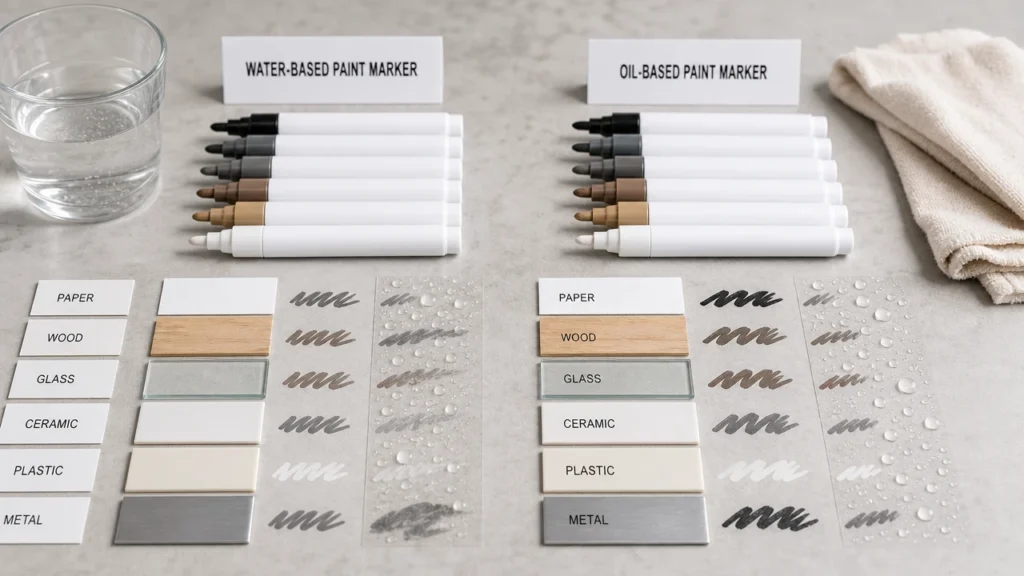
In most retail and school-supply programs, water-based paint markers are easier to position. They usually give lower odor and easier cleanup. Oil-based markers are often chosen when the buyer needs stronger grip on metal, glass, ceramic, plastic, or outdoor surfaces. Neither type is automatically better. The right choice depends on the surface, the lasting claim, the compliance documents, and the end user.
ZH Stationery builds OEM and ODM acrylic paint markers, specialty paint markers, and private-label sets. Buyers get formula, nib, packaging, and compliance planning in one workflow. If your line covers school crafts, hobby retail, Amazon sets, hardware marking, or giftable art kits, choose the ink system first. Do not lock artwork and claims too early.
Quick Links
- Buyer Decision Table
- Durability Differences
- Safety, Odor and Compliance
- Best Uses by Channel
- Surface Fit
- Packaging Claims
- Ask Better Supplier Questions
- FAQs
Buyer Decision Table
| Buyer Question | Water-Based Paint Markers | Oil-Based Paint Markers | Sourcing Note |
|---|---|---|---|
| Main positioning | School, craft, hobby, indoor art, family use. | Industrial-style marking, outdoor utility, slick-surface marking. | Do not sell one formula as perfect for every surface. |
| Odor | Usually lower odor and easier for indoor retail positioning. | Often stronger odor because of organic solvents. | Review VOC and ventilation wording for the exact solvent system. |
| Cleanup | Often easier before full drying or curing. | Harder to remove after drying. | A washable claim still needs its own test. |
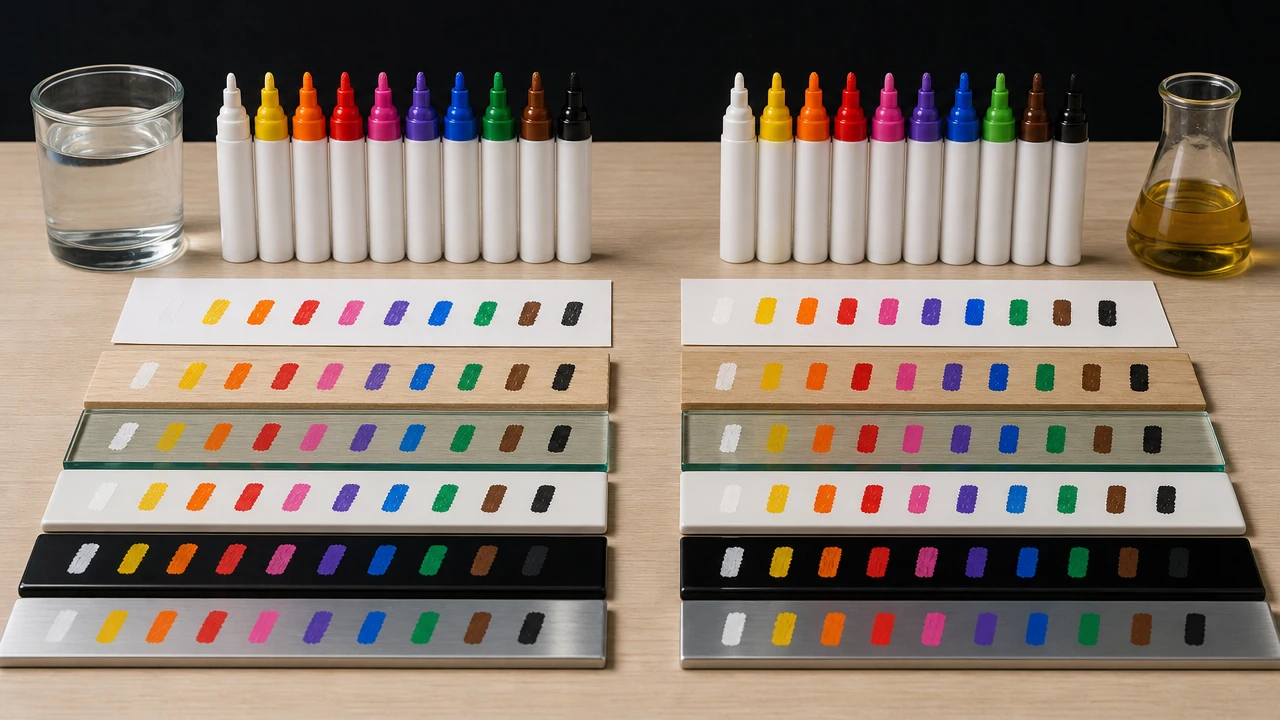
| Durability | Good on porous craft surfaces and many acrylic marker uses. | Often stronger on metal, glass, ceramic, and some plastics. | Approve the exact surface and test method. |
| Drying behavior | May dry slower on slick surfaces. | Often dries faster and bites harder on slick surfaces. | Drying speed affects smearing and cap-off risk. |
| Children or school use | Usually the better starting point. | Usually needs more caution and clearer warning language. | Match age grade, market, and test documents. |
| Packaging claim | Low odor, water based, easy cleanup, craft surface use. | Permanent, water resistant, strong surface adhesion, outdoor marking when tested. | Avoid broad claims that exceed proof. |
Durability Differences Buyers Should Test
Oil-based paint markers are often chosen for lasting. The solvent system helps the resin wet low-energy surfaces and form a harder film. That matters on metal tools, glass jars, ceramics, plastic parts, coated boards, and outdoor labels. The trade-off is clear. Stronger grip usually means stronger odor and harder cleanup.
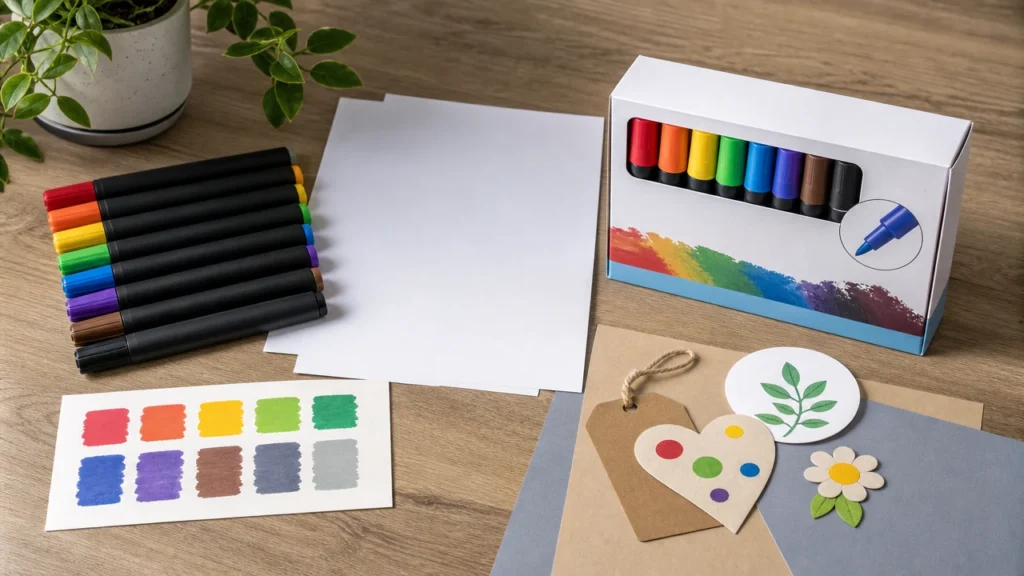
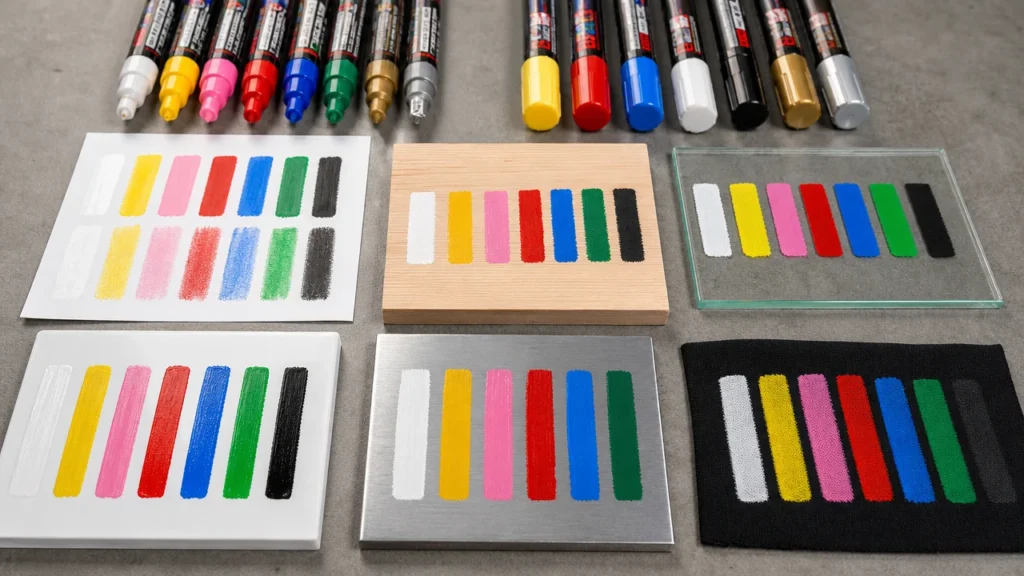
Water-based paint markers, including many acrylic systems, can also last after full curing. On paper, wood, canvas, cardboard, and stone, the acrylic film grips well because the surface anchors the paint. On glass and plastic, the same ink may need surface cleaning, longer drying time, or a sealer.
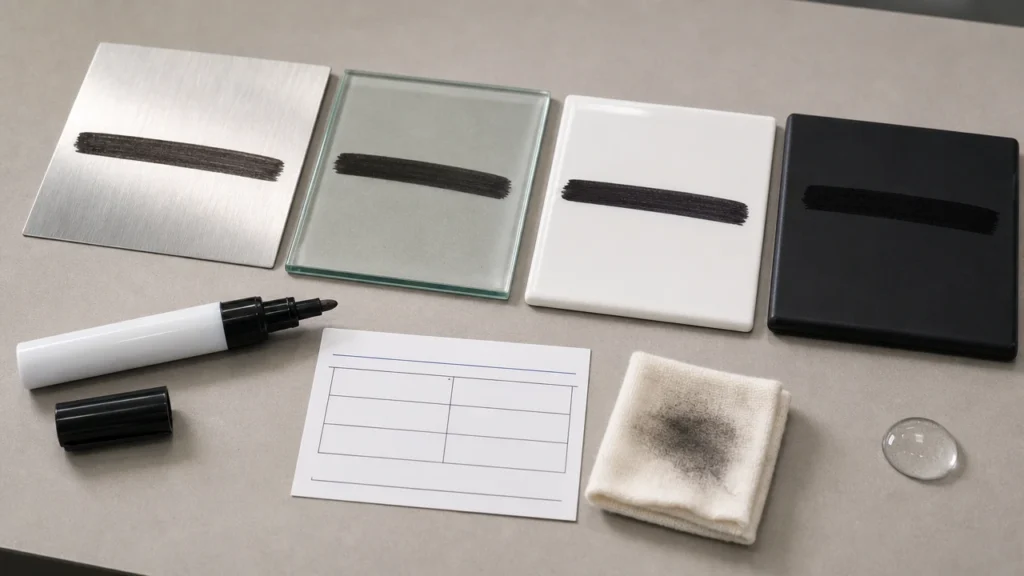
Do not judge lasting from one bright sample stroke. Ask the supplier to show water-drop, wet-wipe, dry-rub, and scratch checks. Ask for retained samples too. The ASTM D3359 tape adhesion standard is a coating basis. It gives buyers a useful method. Adhesion needs a defined test protocol.
Safety, Odor and Compliance
Safety language is where buyers need care. Water-based does not mean non-toxic by itself. Oil-based does not mean unsafe by itself. The exact formula, ingredient limits, user age, intended use, warning label, and destination rules define the compliance path.
For US art products, the CPSC art materials guidance sets the path. Covered art products need a toxicology review and ASTM D-4236 labeling. ASTM D4236 covers chronic health-hazard labels. It does not prove that a marker is washable, food-safe, odor-free, waterproof, or fit for every child.
VOC and odor review matters more for oil-based systems. Buyers should not reduce safety to odor alone. The EPA explains that VOCs can come from paints, lacquers, glues, and permanent markers. Oil-based solvents with low flash points may trigger Class 3 flammable liquid rules. These rules come from the IATA DGR and the IMDG Code for air or sea freight. Exporters should confirm whether the finished marker needs a 16-section SDS or a dangerous-goods declaration. If the product is used indoors, in schools, or by young users, ask for the test reports. Ask for packaging copy before approval. ZH buyers can start with the ASTM D-4236 test report guide and confirm current certificates during sample sign-off.
Best Uses by Channel
| Sales Channel or Use Case | Better Starting Point | Why | Buyer Check |
|---|---|---|---|
| Kids craft sets | Water-based | Lower odor and easier cleanup support parent and school expectations. | Review age grade, warnings, and guidance from the skin-safe marker guide when skin contact might occur. |
| Amazon hobby art sets | Water-based acrylic | Good balance of color, comfort, and surface range for indoor users. | Test leakage, cap seal, packaging claims, and photo-ready color output. |
| Rock painting and wood crafts | Water-based acrylic | Porous surfaces usually hold acrylic film well after drying. | Test dry rub, water drops, and outdoor sealer instructions. |
| Metal tools or machinery labels | Oil-based | Stronger bite and water resistance may matter more than odor. | Check ventilation wording, surface cleaning, and abrasion. |
| Glass and ceramic decoration | Depends on claim | Water-based can work for craft decoration; oil-based may grip more strongly. | Separate water resistance from dishwasher resistance. |
| Outdoor signs and garden markers | Oil-based or sealed water-based | UV, rain, and abrasion raise the durability requirement. | Run weathering or customer-condition checks before claims. |
| Acrylic display panels or PVC figurines | Water-based acrylic paint marker | Oil-based solvents can soften, craze, or etch ABS and PS plastics. | Require adhesion tests on the exact plastic grade before bulk orders. |
Surface Fit: Where Each Formula Performs Better
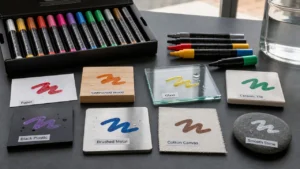
Surface fit is the simplest method for preventing wrong orders. A buyer may ask for one marker on paper, school projects, glass jars, metal tools, shoes, plastic decor, and outdoor labels. That request covers many use cases. The supplier should narrow the priority. Do not accept a blanket yes.
- Paper and cardboard: water-based paint markers are usually easier to use and easier to position for craft sets.
- Wood and stone: water-based acrylic markers often perform well, but dust and sealers can change adhesion.
- Glass and ceramic: both types can mark the surface, but oil-based systems often have stronger adhesion when the surface is clean.
- Plastic: oil-based markers may grip better on some plastics, but PP and PE remain difficult and need exact testing.
- Metal: oil-based markers are often preferred for utility marking, while water-based markers may suit decorative indoor metal items.
- Fabric: neither type should be sold as a washable fabric marker unless the exact formula has passed wash testing.
The nib and ink flow matter too. Thicker paint ink may need a wider channel and controlled priming. ZH Stationery's valve-press marker page explains why paint markers need controlled delivery. The dual tip marker guide shows why tip design should match the ink system.
Drying, Cap Seal and Shelf Life
Water-based formulas can be easier for the user. They still need care against dry tips, pigment settling, germ risk, and uneven flow after storage. Oil-based formulas face a different risk profile. Solvent loss, odor, leakage, and cap-seal quality become the critical checks.
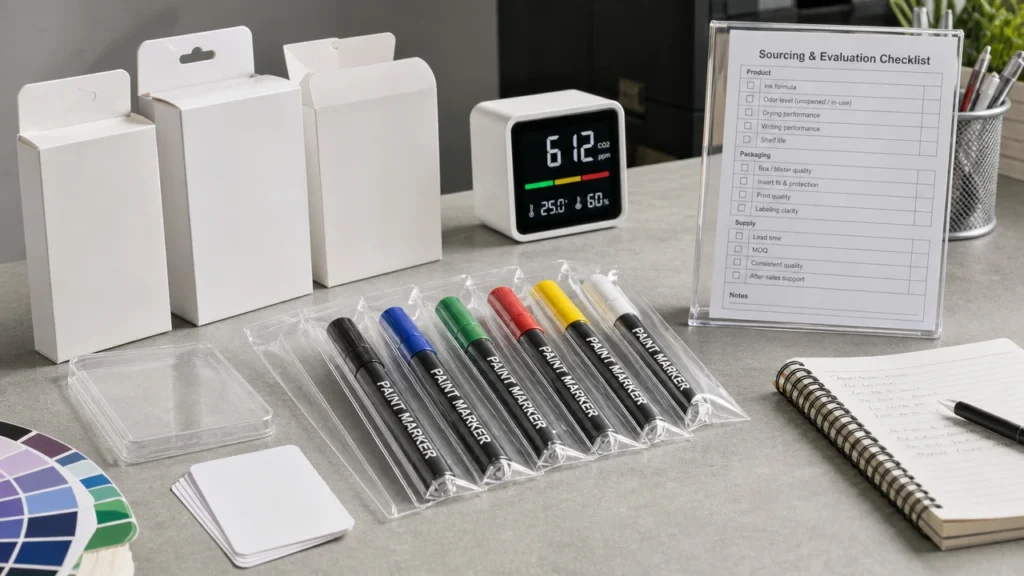
Cap-seal quality is a sourcing item, not a minor extra. The cap must protect the nib through warehouse storage, ocean transit, and shelf display. It must protect the nib through consumer use. Buyers should add cap-off time, leak, drop, high-heat storage, and restart checks to the sample approval checklist. For related QC logic, review the marker quality control article.
Packaging Claims That Need Proof
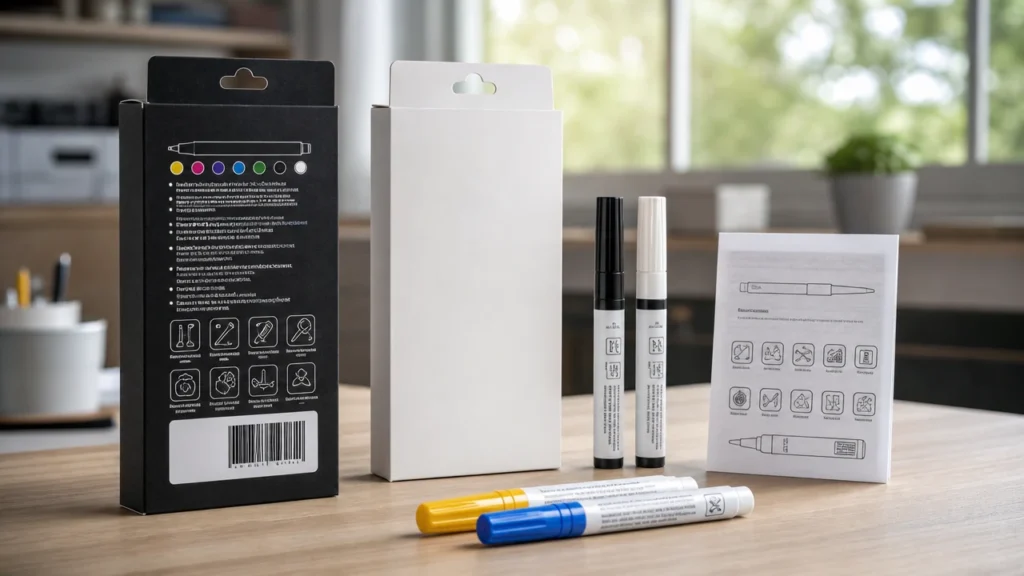
Packaging turns formula decisions into legal and service risk. A phrase that feels harmless in a catalog can cause returns when the customer expects more than the marker can deliver. The claim must match the tested surface and the intended user.
| Claim | Risk | Better Control |
|---|---|---|
| Non-toxic | Too broad without the current report and exact market context. | Use only with product-specific support and required labeling. |
| Low odor | Odor is subjective unless the buyer defines comparison and use condition. | Pair with formula type and ventilation guidance. |
| Permanent | Customers may read this as permanent on every surface. | State suitable surfaces and drying time. |
| Waterproof | May be confused with dishwasher, outdoor, or wash resistance. | Define water exposure and surface. |
| For kids | Requires age grade, warning labels, and channel-specific compliance review. | Confirm documentation before artwork approval. |
| Works on all surfaces | Nearly always too broad. | List tested surfaces and advise testing first. |
Packaging format also shapes the guidelines. A blister card has less room for warnings than a color box or gift box. If you select the retail format at the same time as the ink system, compare acrylic marker packaging options before final artwork. For premium color or sparkle lines, super glitter acrylic paint markers may need extra space for priming, surface testing, and storage notes.
Ask Better Supplier Questions
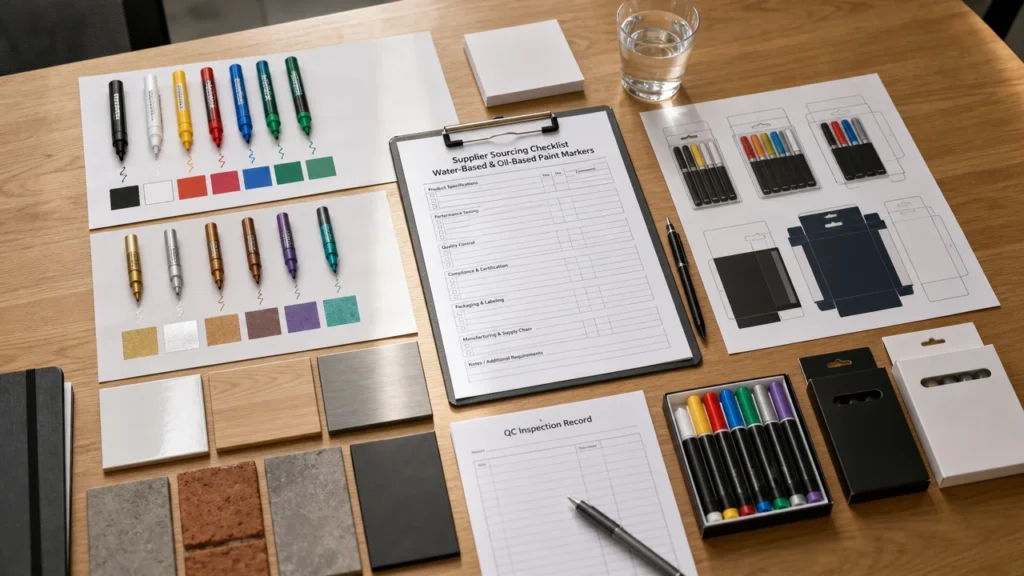
A useful supplier answer should connect the ink system to test evidence. It should not simply repeat water-based or oil-based as a selling point.
- Which formula type are you quoting? A good answer names the ink system and explains why it fits the target surfaces.
- What surfaces did you test? A good answer lists exact surfaces, cleaning method, drying time, and result limits.
- How do you define durability? A good answer separates water resistance, rub resistance, scratch resistance, outdoor exposure, and dishwasher exposure.
- What odor or ventilation wording is needed? A good answer changes by water-based, oil-based, alcohol-based, and target user age.
- Which safety documents can you provide for this exact SKU? A good answer provides current product-specific reports, not a generic factory certificate.
- Can you keep retained samples? A good answer includes finished markers, packaging proof, marked surface panels, and batch records.
- Can we revise packaging claims after testing? A good supplier welcomes safer wording instead of forcing broad claims that may create complaints.
FAQs
These answers are for B2B buyers selecting a paint marker formula for retail, distributor, school, craft, hardware, or private-label programs.
Are water-based paint markers safer than oil-based?
Water-based markers often have lower odor and are easier to position for school, craft, and indoor retail. Safety still depends on the exact formula, age grade, labeling, and test reports. Do not treat water-based as child-safe by default without test documents.
Are oil-based paint markers more durable?
Oil-based markers often grip low-energy surfaces better, including metal, glass, ceramic, and plastic. They may offer better water and rub resistance. Lasting still needs testing on the exact surface and use conditions.
Which type is better for metal or glass?
Oil-based markers are often chosen for metal and glass when stronger grip is needed. Water-based acrylic markers can also work, especially on clean surfaces with sealing. Buyers should still approve wipe, scratch, and grip tests before bulk orders.
Conclusion
Which type is better for children or school?
Water-based paint markers are usually the better start for children, classroom, and craft programs. Odor and cleanup are easier to manage. The final product still needs the right warning labels, age grade, and safety documents.
Can one formulation cover every use?
No. A system with low odor and easy cleanup may not give the strongest grip on metal. A system that bonds hard to low-energy surfaces may need stricter air flow, labeling, and handling rules.
What should buyers ask before selecting a type?
Ask for the ink type and target surfaces. Also ask for odor data, drying time, water and rub tests, safety reports, packaging copy, retained samples, and compliance documents for your channel.
Water-based paint markers are often the better start for indoor craft, school, hobby, and low-odor retail. Oil-based markers are often stronger when the buyer needs higher grip, water resistance, and utility marks on low-energy surfaces. The final call should come from the surface, the claim, and the test method. This is a B2B OEM/ODM factory program. The minimum order is 50,000 pens per order, with smaller trial sizes available for standard stock models.
For an OEM or ODM project, send ZH Stationery your target surfaces, selling country, age group, packing format, lasting claim, color count, and order plan. We can compare formula direction, nib build, sample testing, and packaging copy before bulk production.