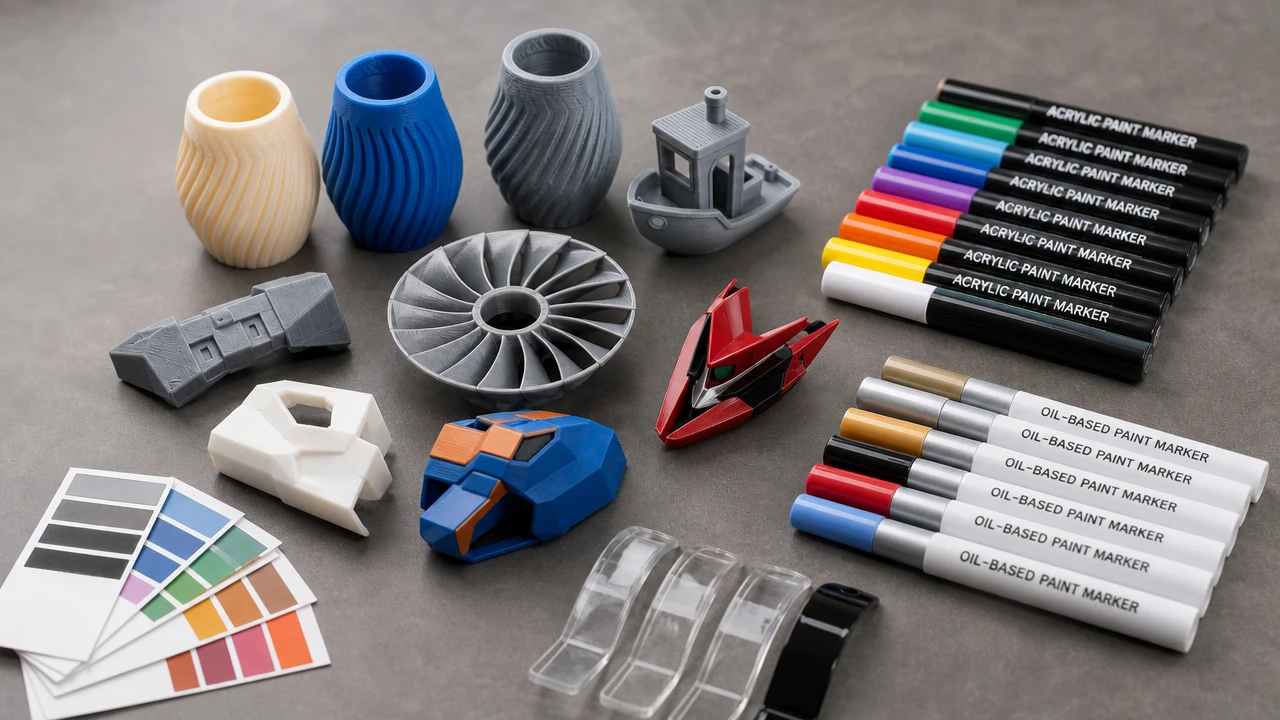
Paint markers for 3d prints are useful for eyes, panel lines, labels, wear marks, edge details, color notes, and small graphics after a model is printed. The best pick depends on the plastic, face texture, sanding level, primer, handling, and whether the part needs a guard clear coat.
For most hobby, school, retail, and craft-kit use, water-based acrylic paint markers are the safer first pick. They are easier to place for general creative use. They usually have lower odor than solvent-heavy picks. They work well on primed or lightly sanded plastic. Oil-based markers can be stronger on some hard plastic surfaces. They need more care around odor, dry time, air, and pack claims.
ZH Stationery supports buyers planning acrylic paint markers, private-label sets, and B2B packing programs. See the product range. If you sell to 3D hobbyists, model-kit users, classrooms, makerspaces, or online craft channels, define the print material, surface prep, marker type, seal step, and sample method before passing a production order.
Paint Markers for 3D Prints: Quick Answer
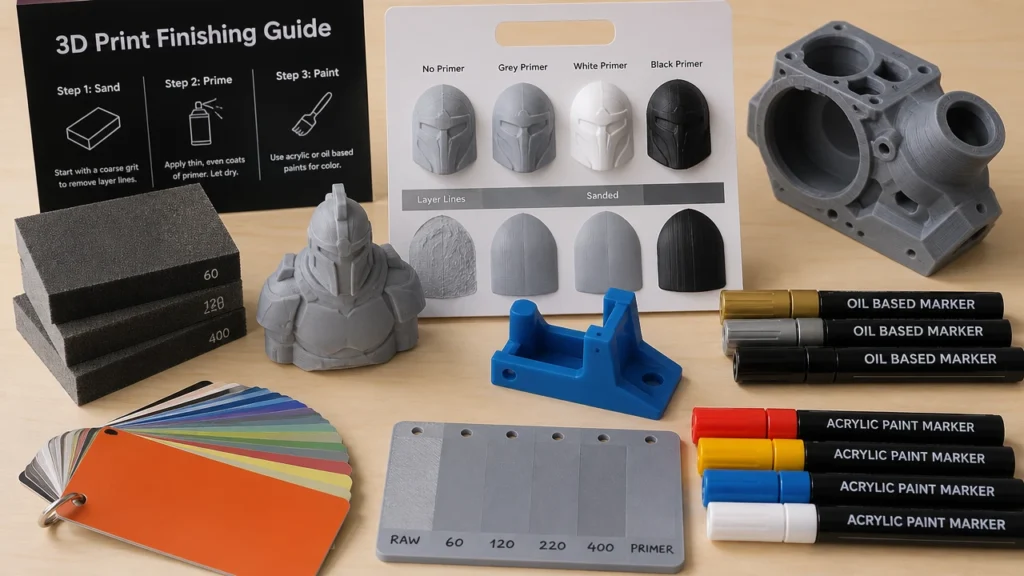
Pick water-based acrylic paint markers for most 3D models when the surface is sanded, cleaned, and best primed. They fit PLA models, decorative minis, cosplay props, signs, classroom projects, and retail craft kits. Pick oil-based only when the buyer tested the exact plastic and needs stronger grip or a harder look. The product must also carry the right safety and air steps.
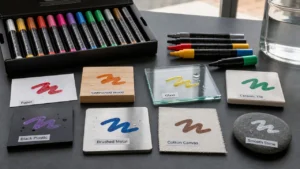
Do not pass either pick from a flat paper swatch. Test on real 3D parts with layer lines, curves, removed supports, sanded areas, primer, and clear coat. PLA, ABS, PETG, resin prints, and painted prints can perform differently.
Quick Links
- Acrylic vs Oil-Based Markers
- 3D Print Surface Comparison
- Prep the Print Before Marking
- When Acrylic Markers Work Best
- When Oil-Based Markers May Fit
- Sealing and Clear Coat Tests
- B2B Packaging and Claim Control
- Quality Control Tests
- Ask Better Supplier Questions
- FAQs
Acrylic vs Oil-Based Markers
| Option | Best Fit | Strength | Risk to Manage |
|---|---|---|---|
| Water-based acrylic markers | Primed PLA, decorative models, school and craft kits, cosplay details | Opaque color, easier instruction set, lower odor positioning | Needs surface prep, drying time, adhesion testing, and sealing for handled parts |
| Oil-based paint markers | Selected hard plastic parts after testing | Can give stronger-looking marks on some smooth or hard surfaces | Odor, slower drying, solvent caution, ventilation needs, and stronger label review |
| Permanent markers | Quick outlines or temporary labels on selected prints | Easy to use and fast drying | Weak opacity and less craft-ready color coverage |
| Alcohol markers | Paper sketches, concept color work, or some pale plastic tests | Good color blending on paper | Usually not ideal for opaque marks on 3D printed plastic |
| Brush paint | Large model coverage and base coats | More even coverage for big areas | Slower process and more cleanup than a marker set |
The marker pick should follow the job. For small details on a primed mini, acrylic is usually enough. For a hard mark on a smooth plastic tag, oil-based may be worth a test. To color a whole model, markers may not be the right main tool.
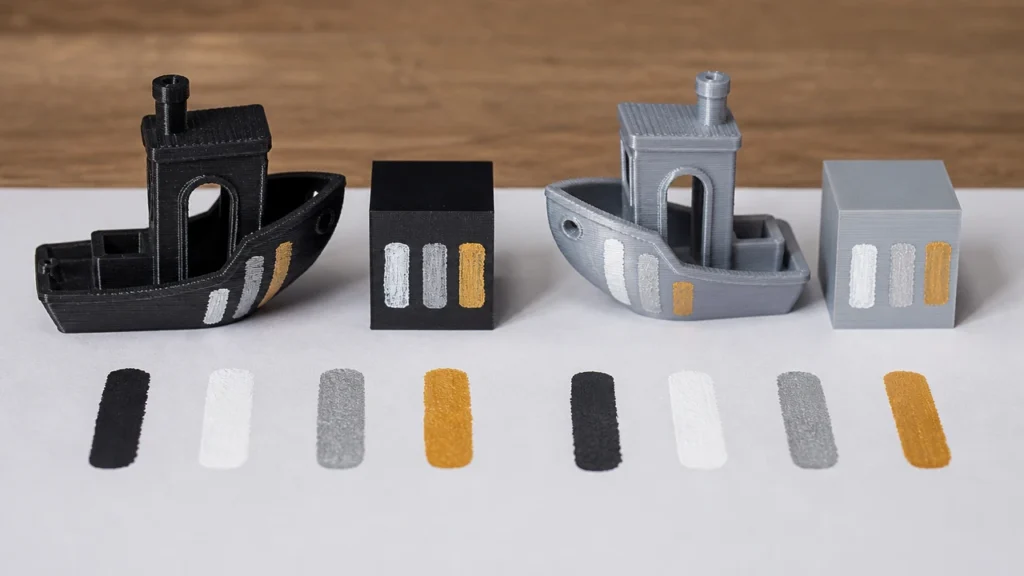
3D Print Surface Comparison
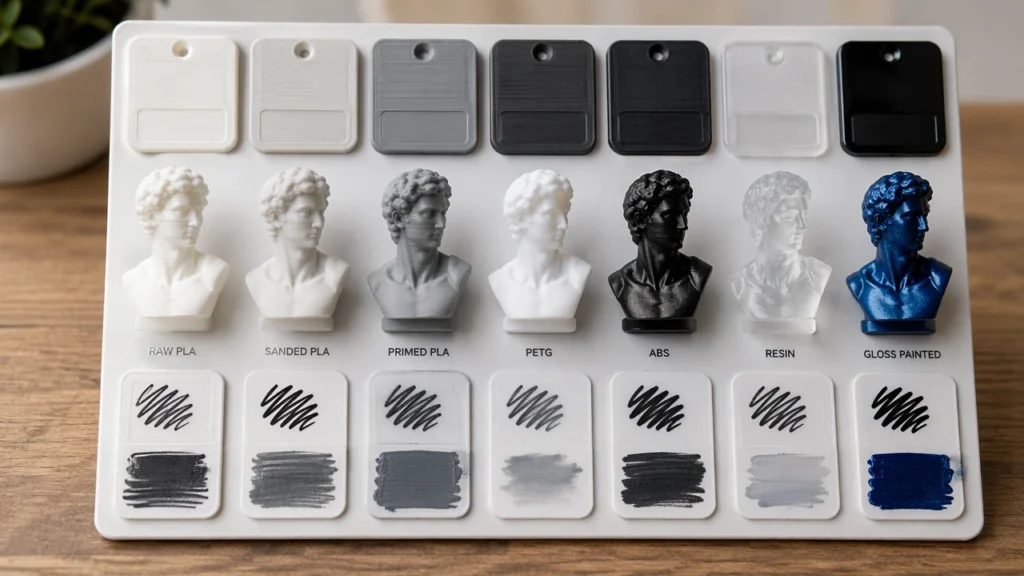
3D printed parts are not one surface. Layer lines, filament type, sanding marks, primer, support scars, and resin cure can all change marker grip. A smooth PLA tile may not predict a curved prop or a fine resin mini.
| Print Surface | Marker Behavior | Buyer Recommendation |
|---|---|---|
| Raw PLA | May accept acrylic marks, but layer lines can cause uneven edges | Sand, clean, and test before claims. |
| Sanded PLA | Cleaner line edge and better contact area | Best practical starting point for acrylic marker kits. |
| Primed PLA or ABS | More predictable opacity and adhesion | Recommended for product photos and model-kit instructions. |
| PETG | Can be slick and less forgiving | Require adhesion and scratch tests before approval. |
| Resin prints | Can work after proper cleaning and curing, but surface chemistry varies | Test on the buyer’s actual resin and post-process method. |
| Glossy painted prints | Paint marker may bead or scratch | Light surface prep or a different coating may be needed. |
NIOSH notes that 3D printing has health and safety gaps. It studied printer air and controls in office-style settings. That does not decide marker performance. It reminds buyers that manufacturer and classroom products need clear safety context, especially when finishing adds sanding, solvents, or spray coats.
Prep the Print Before Marking
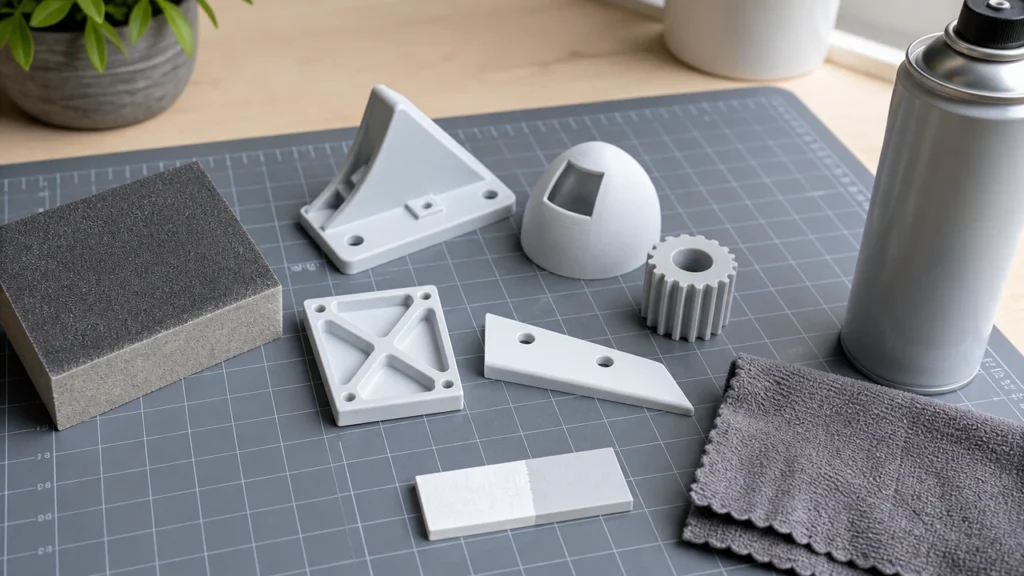
Prep decides whether the marker looks clean. Remove support marks. Sand rough areas. Wipe off dust. Make sure the print is dry. If the part has grease, release film, uncured resin, or sanding dust, the marker may skip, bead, or peel.
For better color, use a fitting primer before marking. Primer can cut plastic slickness, hide layer lines, and make pale colors brighter. If your retail kit has no primer, do not show only primed samples in product photos unless the steps tell users to prime first.
A valve marker needs a simple first-use flow. Shake. Press the tip on scrap. Test flow. Then mark the print with light pressure. The valve press marker technology guide explains why prime and flow control matter for paint marker users.
When Acrylic Markers Work Best
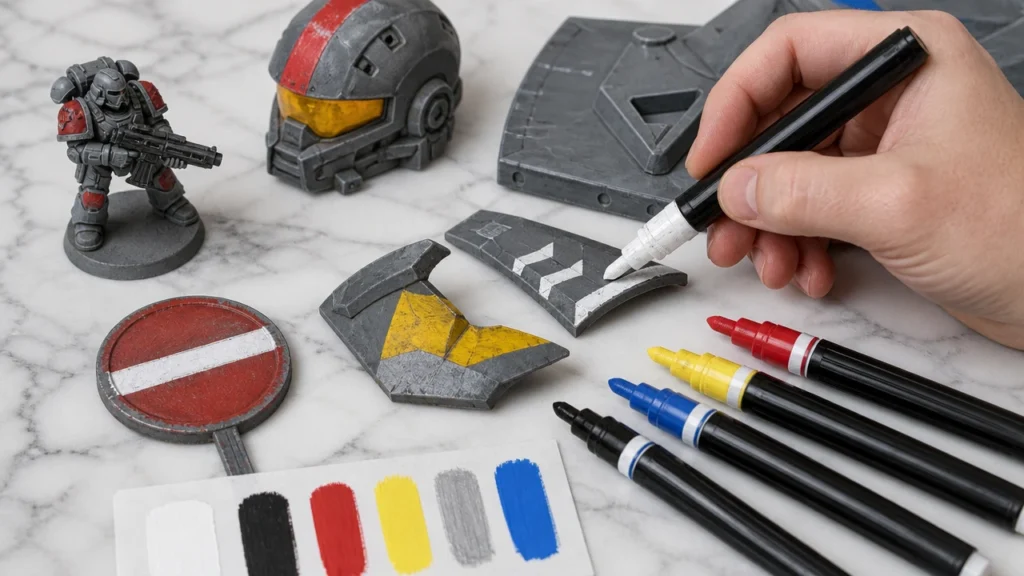
Acrylic paint markers perform best on 3D prints when the user needs opaque details and can prep the surface. They are practical for mini bases, character eyes, small props, printed signs, cosplay accent lines, classroom projects, and decorative model parts.
The retail edge is that acrylic markers are easier to explain. A card can say to sand lightly, clean dust, prime for best cover, use thin layers, let dry, and seal handled pieces. That is easier for a wide craft crowd than asking them to handle strong-smelling solvent markers.
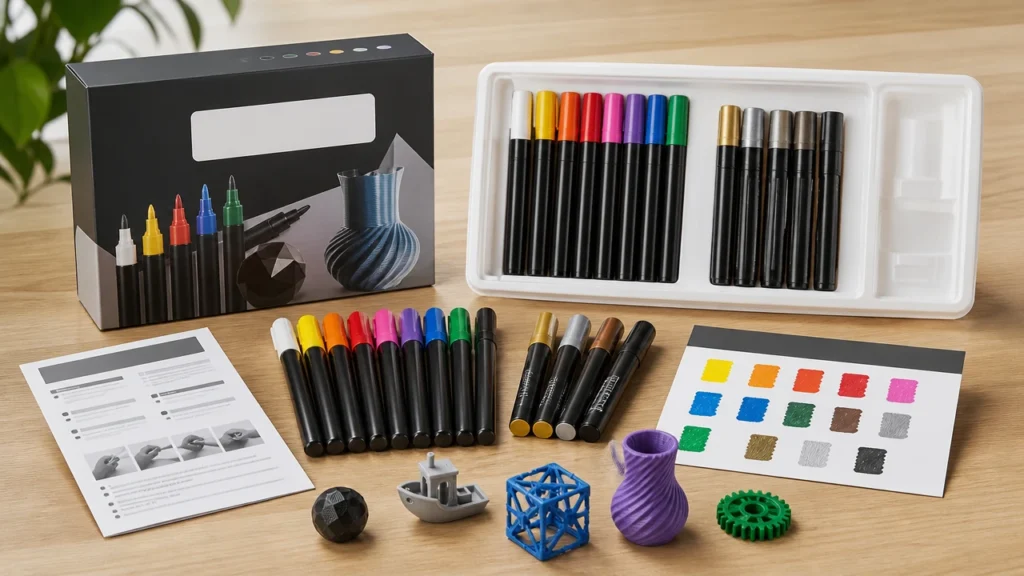
For buyers building an acrylic marker SKU, start with useful contrast colors. White, black, red, yellow, blue, green, silver, gold, and a few bright notes. The custom acrylic marker sourcing guide can help connect color planning with private-label sourcing.
When Oil-Based Markers May Fit
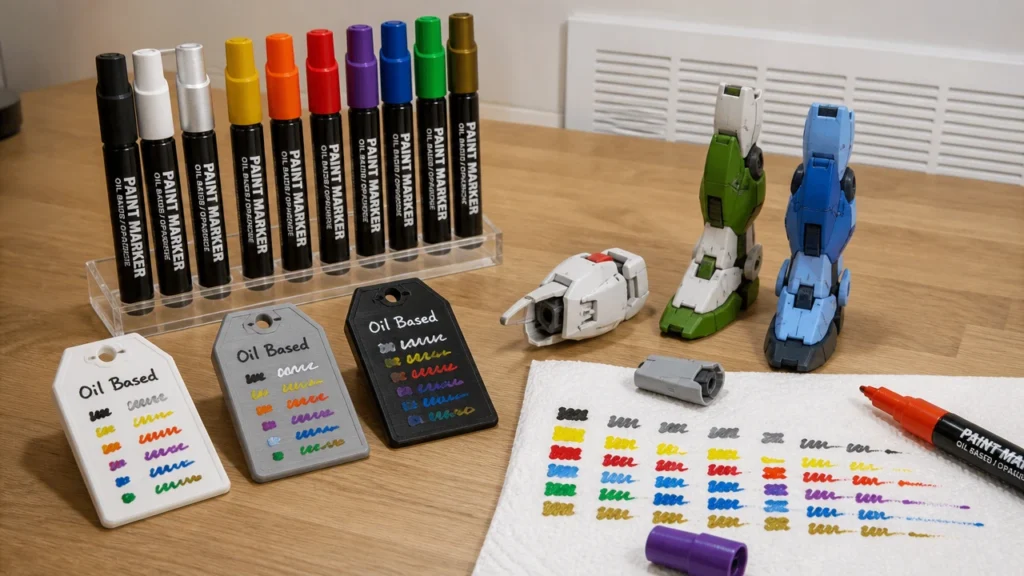
Oil-based paint markers may fit some 3D projects when the buyer needs stronger marks on chosen hard plastic surfaces and accepts a tighter use case. They can be useful for adult model users, industrial-style labels, hard plastic tags, or parts that need a more enamel-like finish after testing.
The trade is user learning. Oil-based markers can have stronger odor and longer dry time. Some may need more care language. They are not a default pick for young kids, classrooms, or poorly aired hobby spaces.
OSHA's spray finishing air rule needs aired spray areas for spray work that releases solvent vapor. A hand marker is not the same as industrial spray finishing. The source is a useful reminder. Solvent-heavy finish and coat claims need careful safety review, especially when packing tells users to seal or topcoat a project.
Sealing and Clear Coat Tests
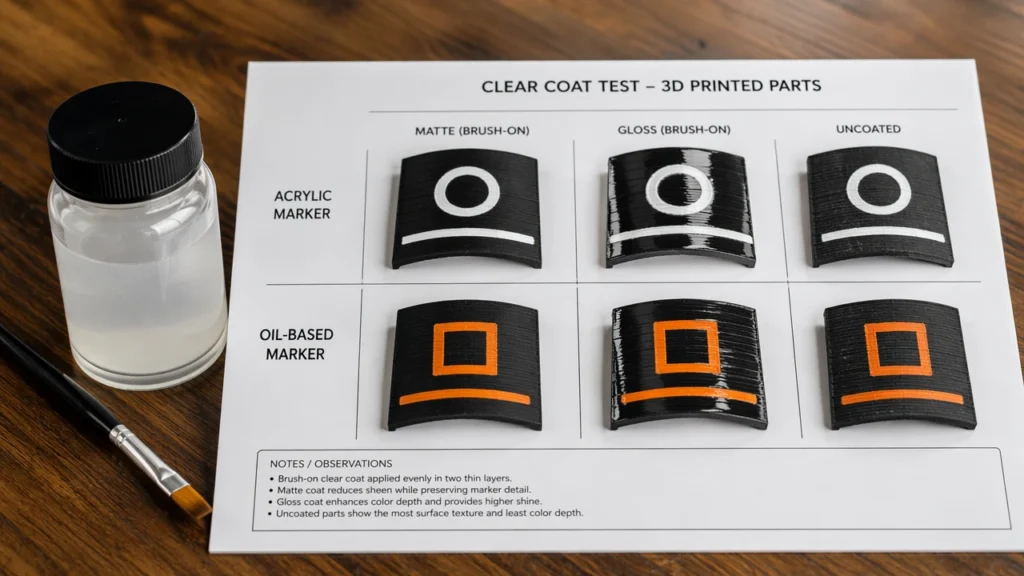
A clear coat can guard marker details on handled 3D prints. It can also ruin a sample if the marker is not dry or the coat does not fit. Test brush-on and spray coats on sample parts before writing pack steps. Look for smear, cloud, gloss shift, tack, cracks, and color change.
For most consumer craft kits, the safer language is to let the marker dry fully and test a fitting clear coat on a spare area. If the final item will be handled often or shown outdoors, sealing may help. The claim should tie to the tested marker, plastic, primer, and coat system.
Avoid wide claims like permanent on all 3D prints, waterproof on all plastics, works on every filament, or safe for all model coats. Those claims are too wide unless the buyer has real test proof for each material and use state.
B2B Packaging and Claim Control
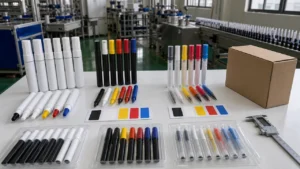
A 3D print marker kit needs a different card from a paper set. It should cover surface prep, sanding dust removal, primer, thin layers, dry time, clear coat test, cap storage, and age notes. If the product sells to makerspaces or schools, keep the copy plain and practical.
Packing also needs room for warning panels and compliance language. CPSC art materials guidance says art materials need toxicology review. ASTM D4236 marking practice covers chronic risk marks. ACMI's materials safety page gives buyers background on AP and CL seal meanings.
The acrylic marker packaging options guide can help buyers plan cards, color swatches, trays, barcode labels, spare tips, and carton labels. Do not squeeze sealer and prep guidance off the box just to add more sales copy.
Quality Control Tests for 3D Print Markers
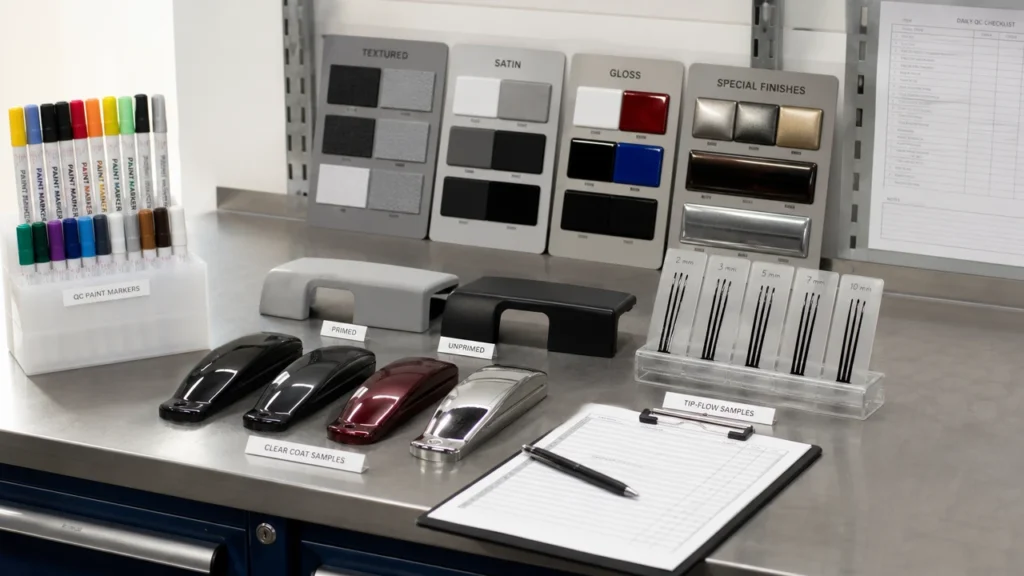
A useful sample test should use real printed parts, not only molded plastic sheets. Include raw PLA, sanded PLA, primed PLA, ABS, PETG, and resin samples when relevant. Add curved parts, layer-line areas, and small details. Test every color that may perform differently. White, yellow, metallic, pastel, black, and neon matter most.
| QC Point | What to Check | Why It Matters |
|---|---|---|
| Opacity | Light and dark colors on raw, sanded, and primed parts | Weak colors disappoint model users and hurt product photos. |
| Adhesion | Scratch after drying and after clear coat | 3D prints are handled, assembled, and displayed. |
| Line edge | Layer lines, curves, support scars, and small details | Uneven surfaces can break clean lettering and panel lines. |
| Flow | First priming, restart after storage, dot control, and tip pressure | Blobs and dry strokes are common marker complaints. |
| Drying | Touch-dry time and cure before clear coat | Sealing too early can smear or cloud the design. |
| Compatibility | Primer and clear coat combinations | The whole finishing system matters more than the marker alone. |
Before passing a private-label program, ask for kept samples and test photos. ZH Stationery's certifications page, factory tour, and who we are pages give proof and factory context for buyer review.
Ask Better Supplier Questions
A useful supplier answer should name the print material, marker formula, prep method, and claim limits. A catalog yes is not enough.
- 1. Which 3D print materials did you test?
A useful answer separates PLA, ABS, PETG, resin, primed parts, painted parts, and the buyer’s actual printed samples. - 2. Do you recommend acrylic or oil-based markers for our target user?
A useful answer explains odor, drying time, opacity, adhesion, safety wording, and whether the product is for children, hobbyists, schools, or adult model users. - 3. Does the marker need sanding or primer?
A useful answer explains when sanding, cleaning, or primer improves line edge, opacity, and adhesion. - 4. Which clear coat did you test with the marker?
A useful answer includes sealed samples and notes any smearing, clouding, gloss shift, tackiness, or color change. - 5. What instructions should go inside the retail kit?
A useful answer covers surface prep, first-use priming, thin layers, drying, sealing, cap storage, and adult supervision for coatings when needed. - 6. What compliance documents apply to this SKU?
A useful answer separates art material labeling, formula review, age grading, market-specific documents, and any coating or solvent-related documents if included.
FAQs
What paint markers work best on 3D prints?
Water-based acrylic paint markers are the best start for most models when the part is sanded, cleaned, and best primed. Oil-based may fit chosen hard plastic parts after testing.
Do acrylic paint markers work on PLA?
Yes. They can work on PLA, especially when the print is sanded, cleaned, and primed. Raw PLA should still be tested for grip, line edge, and scratch resistance.
Are oil-based markers better for 3D prints?
Not always. Oil-based may grip well on some hard plastic surfaces. They can bring stronger odor, slower dry, and more care language. Test them against the target plastic and user group.
Should 3D prints be primed before using paint markers?
Primer is advised when the user wants brighter color, smoother lines, and better grip. It helps most on visible layer lines, dark filament, or parts that get handled.
Should paint marker designs on 3D prints be sealed?
Seal handled or display parts when durability matters. Test the clear coat first. Some coats can smear, cloud, or soften marker layers if the marker is not dry or the coat does not fit.
What should B2B buyers test before ordering markers for 3D prints?
Test opacity, grip, line edge, dry time, primer fit, clear coat fit, scratch resistance, cap storage, pack steps, and compliance files for the target market.
Conclusion
Paint markers for 3d prints should be picked by surface and user. Acrylic markers are usually the better first pick for wide craft, school, and hobby channels. Oil-based may fit narrower adult or hard-surface use after testing. Neither should be passed from paper swatches alone.
For sourcing, ask for real 3D printed samples, not only catalog claims. Test raw, sanded, primed, and sealed parts. Review odor, dry, grip, clear coat performance, pack steps, and compliance files before placing a private-label order.
Related guide: How to Use Acrylic Paint Markers on Wood.