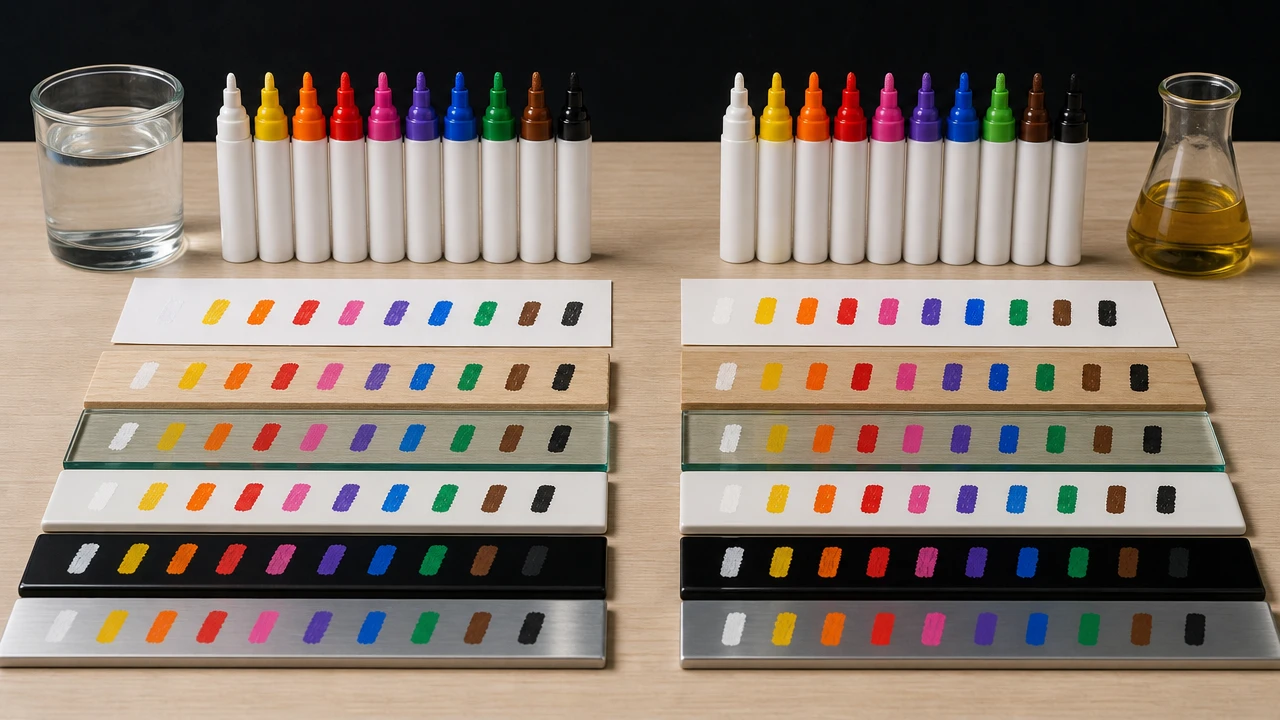
Choosing between water-based and oil-based paint markers is not just chemistry. Odor matters. Drying time matters. Surface grip matters. So do packaging claims, shipping risk, and complaints. For B2B buyers, the best ink system fits the channel and the surface promise.
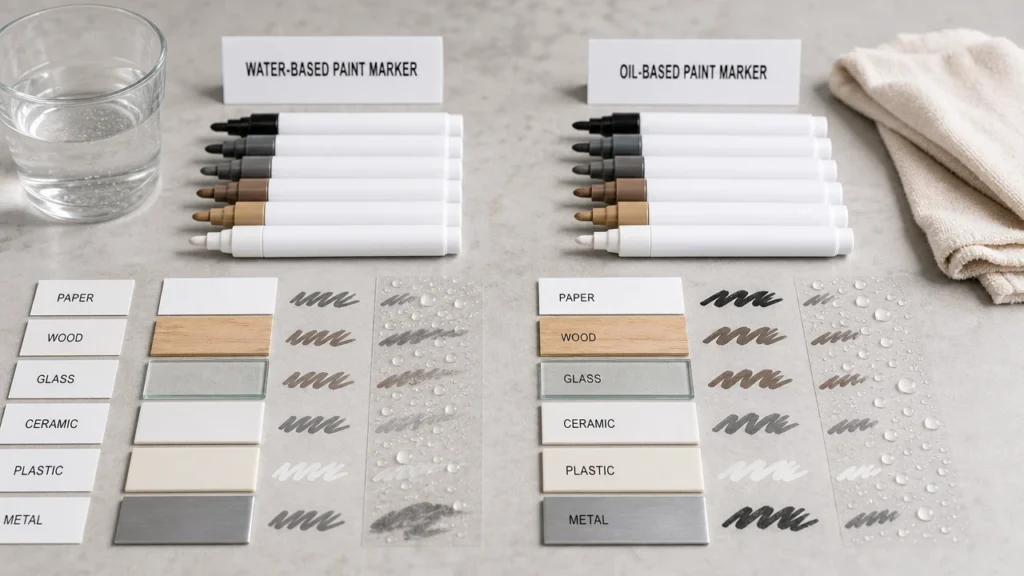
أقلام التحديد ذات الأساس المائي مقابل الأساس الزيتي: إجابة سريعة
In most retail and school-supply programs, water-based paint markers are easier to position. They usually give lower odor and easier cleanup. Oil-based markers are often chosen when the buyer needs stronger grip on metal, glass, ceramic, plastic, or outdoor surfaces. Neither type is automatically better. The right choice depends on the surface, the lasting claim, the compliance documents, and the end user.
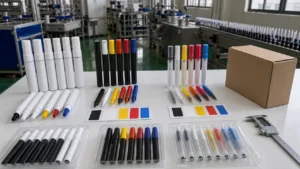
ZH Stationery builds OEM and ODM acrylic paint markers, specialty paint markers, and private-label sets. Buyers get formula, nib, packaging, and compliance planning in one workflow. If your line covers school crafts, hobby retail, Amazon sets, hardware marking, or giftable art kits, choose the ink system first. Do not lock artwork and claims too early.
روابط سريعة
- جدول قرار المشتري
- اختلافات المتانة
- السلامة والرائحة والامتثال
- أفضل الاستخدامات حسب القناة
- ملاءمة السطح
- ادعاءات التغليف
- اطرح أسئلة أفضل على المورد
- الأسئلة الشائعة
جدول قرار المشتري
| سؤال المشتري | أقلام تحديد ذات أساس مائي | أقلام تحديد ذات أساس زيتي | ملاحظة حول المصادر |
|---|---|---|---|
| التموضع الرئيسي | استخدام مدرسي، حرفي، هواية، فني داخلي، وعائلي. | وضع علامات بأسلوب صناعي، استخدام خارجي، ووضع علامات على الأسطح الملساء. | لا تبيع تركيبة واحدة على أنها مثالية لكل سطح. |
| الرائحة | عادةً ما تكون رائحتها أقل وسهلة التموضع في متاجر التجزئة الداخلية. | غالبًا ما تكون رائحتها أقوى بسبب المذيبات العضوية. | Review VOC and ventilation wording for the exact solvent system. |
| التنظيف | غالبًا أسهل قبل الجفاف أو المعالجة الكاملة. | أصعب في الإزالة بعد الجفاف. | الادعاء بأنه قابل للغسل لا يزال يتطلب اختبارًا خاصًا به. |
| المتانة | جيد على الأسطح الحرفية المسامية والعديد من استخدامات أقلام الأكريليك. | غالبًا ما يكون أقوى على المعدن والزجاج والسيراميك وبعض أنواع البلاستيك. | اعتمد السطح الدقيق وطريقة الاختبار. |
| سلوك التجفيف | قد يجف بشكل أبطأ على الأسطح الملساء. | غالبًا ما يجف بشكل أسرع ويلتصق بقوة أكبر على الأسطح الملساء. | تؤثر سرعة التجفيف على خطر التلطخ وفقدان الغطاء. |
| استخدام الأطفال أو المدرسة | عادةً ما يكون نقطة البداية الأفضل. | يتطلب عادةً مزيدًا من الحذر ولغة تحذير أوضح. | طابق الفئة العمرية والسوق ووثائق الاختبار. |
| ادعاء التغليف | رائحة منخفضة، أساس مائي، تنظيف سهل، استخدام على الأسطح الحرفية. | دائم، مقاوم للماء، التصاق قوي بالسطح، مناسب للعلامات الخارجية عند الاختبار. | تجنب الادعاءات الواسعة التي تتجاوز الإثبات. |
اختلافات المتانة التي يجب على المشترين اختبارها
Oil-based paint markers are often chosen for lasting. The solvent system helps the resin wet low-energy surfaces and form a harder film. That matters on metal tools, glass jars, ceramics, plastic parts, coated boards, and outdoor labels. The trade-off is clear. Stronger grip usually means stronger odor and harder cleanup.
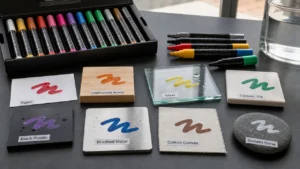
Water-based paint markers, including many acrylic systems, can also last after full curing. On paper, wood, canvas, cardboard, and stone, the acrylic film grips well because the surface anchors the paint. On glass and plastic, the same ink may need surface cleaning, longer drying time, or a sealer.
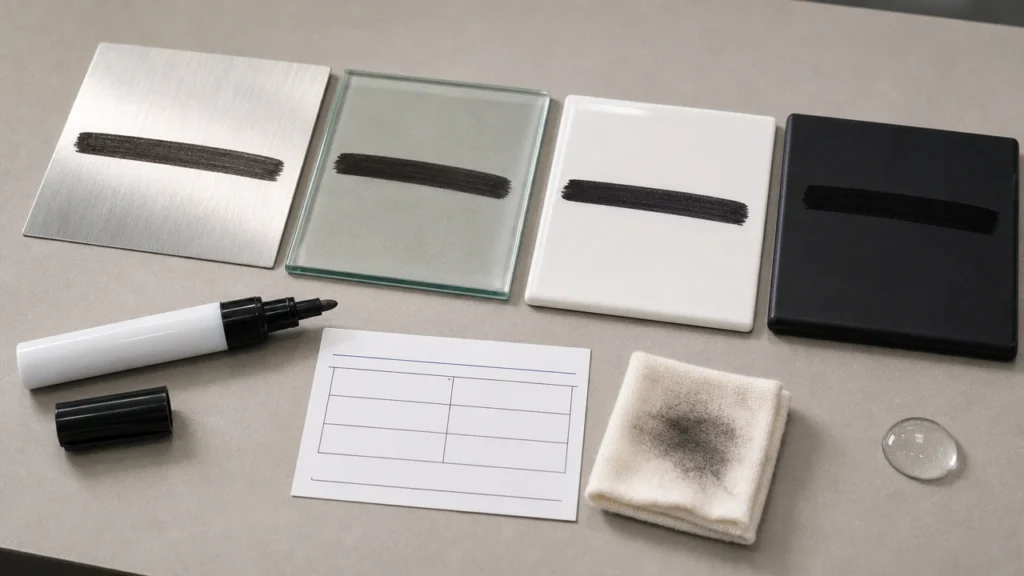
Do not judge lasting from one bright sample stroke. Ask the supplier to show water-drop, wet-wipe, dry-rub, and scratch checks. Ask for retained samples too. The ASTM D3359 لالتصاق الشريط is a coating basis. It gives buyers a useful method. Adhesion needs a defined test protocol.
السلامة والرائحة والامتثال
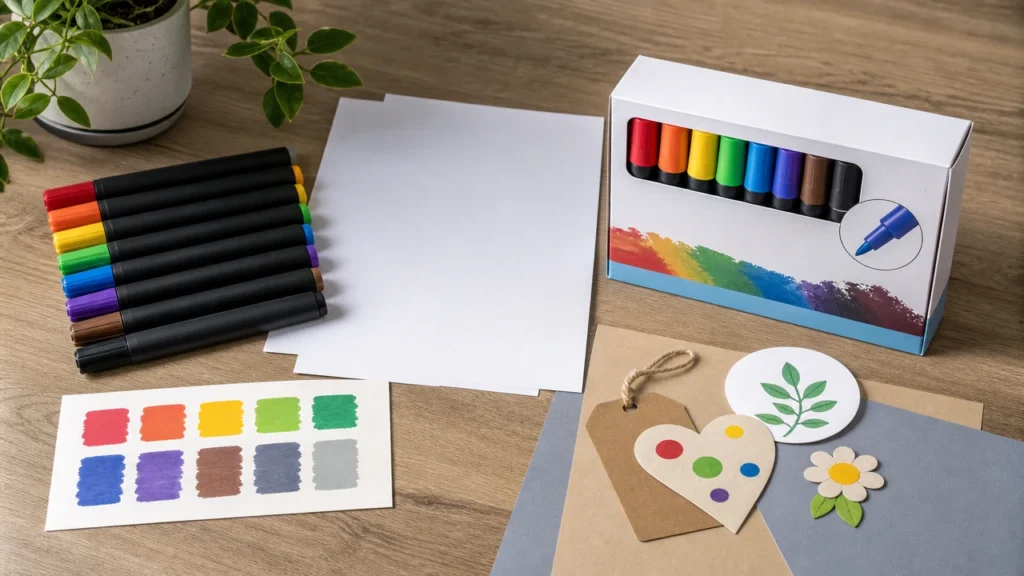
Safety language is where buyers need care. Water-based does not mean non-toxic by itself. Oil-based does not mean unsafe by itself. The exact formula, ingredient limits, user age, intended use, warning label, and destination rules define the compliance path.
For US art products, the دليل مواد الفنون sets the path. Covered art products need a toxicology review and ASTM D-4236 labeling. ASTM D4236 covers chronic health-hazard labels. It does not prove that a marker is washable, food-safe, odor-free, waterproof, or fit for every child.
VOC and odor review matters more for oil-based systems. Buyers should not reduce safety to odor alone. The EPA explains that VOCs can come from paints, lacquers, glues, and permanent markers. Oil-based solvents with low flash points may trigger Class 3 flammable liquid rules. These rules come from the IATA DGR and the IMDG Code for air or sea freight. Exporters should confirm whether the finished marker needs a 16-section SDS or a dangerous-goods declaration. If the product is used indoors, in schools, or by young users, ask for the test reports. Ask for packaging copy before approval. ZH buyers can start with the دليل تقرير اختبار ASTM D-4236 and confirm current certificates during sample sign-off.
أفضل الاستخدامات حسب القناة
| قناة البيع أو حالة الاستخدام | نقطة بداية أفضل | السبب | فحص المشتري |
|---|---|---|---|
| مجموعات الحرف اليدوية للأطفال | ذو أساس مائي | رائحة أقل وسهولة تنظيف تدعم توقعات الآباء والمدارس. | راجع الفئة العمرية والتحذيرات والإرشادات من دليل الماركر الآمن للبشرة عندما قد يحدث تلامس مع الجلد. |
| مجموعات الفنون والهوايات على أمازون | أكريليك مائي | توازن جيد بين الألوان والراحة وتنوع الأسطح للمستخدمين في الأماكن المغلقة. | اختبر التسرب، وإحكام الغطاء، وادعاءات العبوة، وإخراج لوني جاهز للتصوير. |
| الرسم على الصخور والحرف الخشبية. | أكريليك مائي | الأسطح المسامية عادة ما تثبت طبقة الأكريليك جيدًا بعد الجفاف. | اختبر الفرك الجاف وقطرات الماء وتعليمات مانع التسرب الخارجي. |
| ملصقات الأدوات المعدنية أو الآلات. | قائم على الزيت | قد تكون قوة الالتصاق ومقاومة الماء أكثر أهمية من الرائحة. | تحقق من صياغة التهوية وتنظيف السطح ومقاومة التآكل. |
| تزيين الزجاج والسيراميك. | يعتمد على الادعاء. | النوع المائي يمكن أن يعمل لتزيين المشغولات اليدوية؛ وقد يلتصق النوع الزيتي بقوة أكبر. | افصل بين مقاومة الماء ومقاومة غسالة الأطباق. |
| اللافتات الخارجية وعلامات الحدائق | أساس زيتي أو أساس مائي مغلق | الأشعة فوق البنفسجية والمطر والتآكل ترفع متطلبات المتانة. | قم بإجراء اختبارات التعرض للعوامل الجوية أو ظروف العملاء قبل إصدار الادعاءات. |
| Acrylic display panels or PVC figurines | Water-based acrylic paint marker | Oil-based solvents can soften, craze, or etch ABS and PS plastics. | Require adhesion tests on the exact plastic grade before bulk orders. |
ملاءمة السطح: أين يكون أداء كل تركيبة أفضل
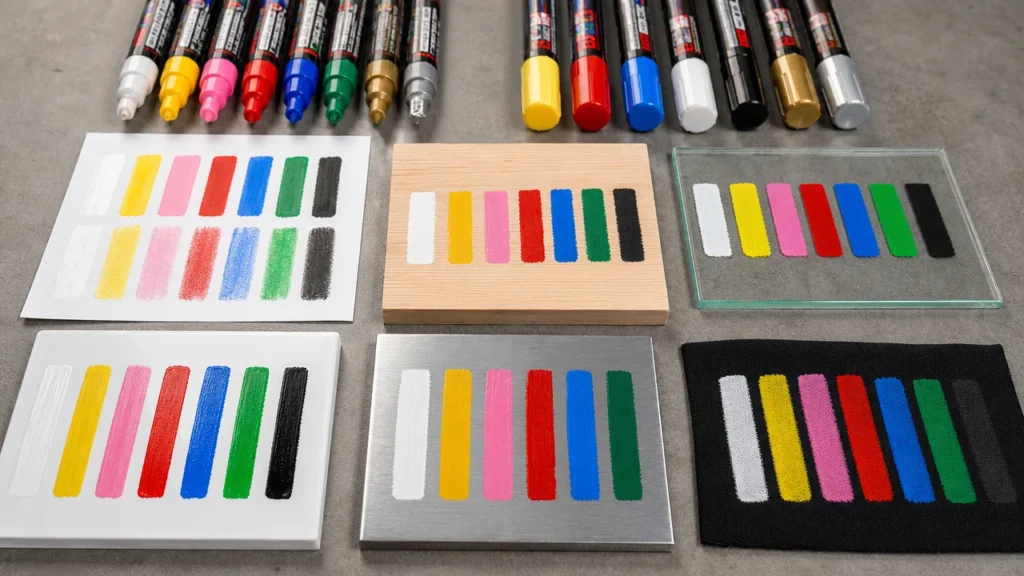
Surface fit is the simplest method for preventing wrong orders. A buyer may ask for one marker on paper, school projects, glass jars, metal tools, shoes, plastic decor, and outdoor labels. That request covers many use cases. The supplier should narrow the priority. Do not accept a blanket yes.
- الورق والكرتون: أقلام التحديد ذات الأساس المائي عادةً ما تكون أسهل في الاستخدام وأسهل في التموضع لمجموعات الحرف اليدوية.
- الخشب والحجر: أقلام الأكريليك ذات الأساس المائي غالبًا ما تؤدي بشكل جيد، لكن الغبار والمواد المانعة للتسرب يمكن أن تغير الالتصاق.
- الزجاج والسيراميك: كلا النوعين يمكنهما وضع علامات على السطح، لكن الأنظمة ذات الأساس الزيتي غالبًا ما تتمتع بالتصاق أقوى عندما يكون السطح نظيفًا.
- البلاستيك: قد تكون أقلام التحديد ذات الأساس الزيتي أفضل إمساكًا على بعض أنواع البلاستيك، لكن البولي بروبلين (PP) والبولي إيثيلين (PE) يظلان صعبين ويحتاجان إلى اختبار دقيق.
- المعدن: غالبًا ما تُفضل أقلام التحديد ذات الأساس الزيتي لوضع العلامات الوظيفية، بينما قد تناسب أقلام التحديد ذات الأساس المائي العناصر المعدنية الداخلية المزخرفة.
- القماش: لا ينبغي بيع أي من النوعين كقلم تحديد للقماش قابل للغسل ما لم تكن التركيبة الدقيقة قد اجتازت اختبار الغسيل.
The nib and ink flow matter too. Thicker paint ink may need a wider channel and controlled priming. ZH Stationery's valve-press marker page explains why paint markers need controlled delivery. The dual tip marker guide يوضح لماذا يجب أن يتوافق تصميم السن مع نظام الحبر.
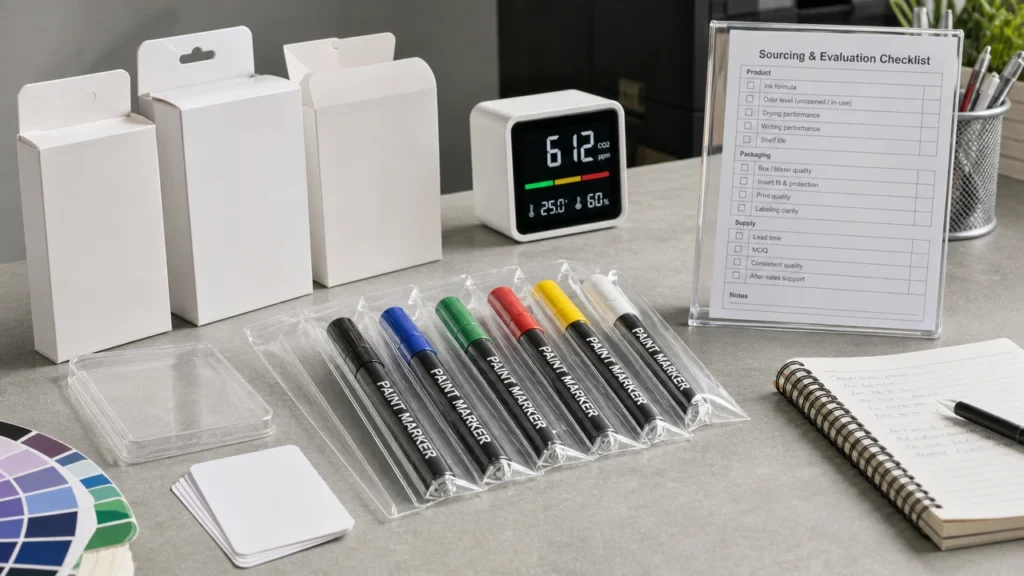
التجفيف، إحكام الغطاء، ومدة الصلاحية
Water-based formulas can be easier for the user. They still need care against dry tips, pigment settling, germ risk, and uneven flow after storage. Oil-based formulas face a different risk profile. Solvent loss, odor, leakage, and cap-seal quality become the critical checks.
Cap-seal quality is a sourcing item, not a minor extra. The cap must protect the nib through warehouse storage, ocean transit, and shelf display. It must protect the nib through consumer use. Buyers should add cap-off time, leak, drop, high-heat storage, and restart checks to the 样品批准检查清单. For related QC logic, review the مراقبة جودة الأقلام.
ادعاءات التغليف التي تحتاج إلى إثبات
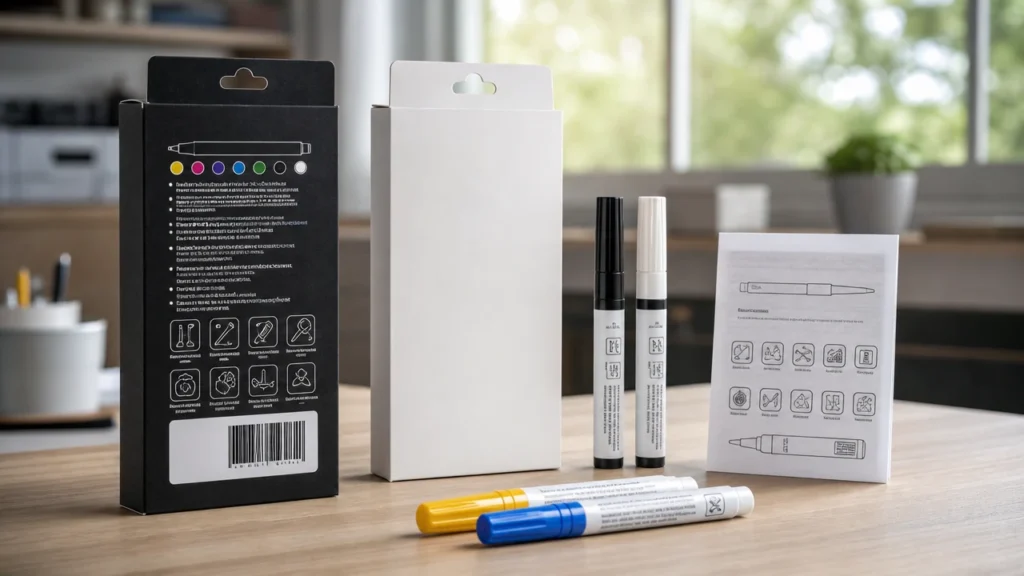
Packaging turns formula decisions into legal and service risk. A phrase that feels harmless in a catalog can cause returns when the customer expects more than the marker can deliver. The claim must match the tested surface and the intended user.
| الادعاء | المخاطر | تحكم أفضل |
|---|---|---|
| غير سام | عام جدًا بدون التقرير الحالي وسياق السوق الدقيق. | يُستخدم فقط مع دعم خاص بالمنتج والملصقات المطلوبة. |
| رائحة خفيفة | تقييم الرائحة أمر شخصي ما لم يحدد المشتري المقارنة وظروف الاستخدام. | اقرنه بنوع التركيبة وإرشادات التهوية. |
| دائم | قد يفسر العملاء هذا على أنه دائم على جميع الأسطح. | حدد الأسطح المناسبة ووقت الجفاف. |
| مقاوم للماء | قد يُخلط بينه وبين مقاومة غسالة الأطباق أو الاستخدام الخارجي أو الغسيل. | حدد التعرض للماء والسطح. |
| للأطفال | يتطلب مراجعة الفئة العمرية والتحذيرات والامتثال الخاص بالقناة. | تأكد من الوثائق قبل الموافقة على التصميم. |
| يعمل على جميع الأسطح | دائمًا ما يكون واسعًا جدًا. | اذكر الأسطح المختبرة وانصح بالاختبار أولاً. |
Packaging format also shapes the guidelines. A blister card has less room for warnings than a color box or gift box. If you select the retail format at the same time as the ink system, compare خيارات تغليف أقلام الأكريليك before final artwork. For premium color or sparkle lines, أقلام تحديد أكريليك فائقة اللمعان may need extra space for priming, surface testing, and storage notes.
اطرح أسئلة أفضل على المورد
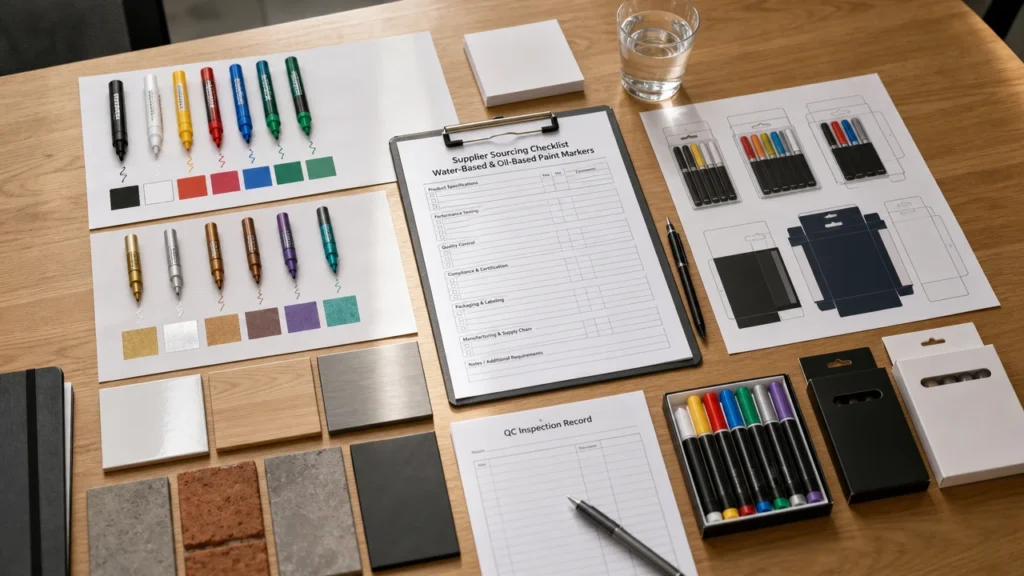
A useful supplier answer should connect the ink system to test evidence. It should not simply repeat water-based or oil-based as a selling point.
- ما نوع التركيبة الذي تقتبسه؟ الإجابة الجيدة تسمي نظام الحبر وتشرح لماذا يناسب الأسطح المستهدفة.
- ما الأسطح التي اختبرتها؟ الإجابة الجيدة تذكر الأسطح الدقيقة وطريقة التنظيف ووقت التجفيف وحدود النتائج.
- كيف تعرّف المتانة؟ الإجابة الجيدة تفصل بين مقاومة الماء، ومقاومة الفرك، ومقاومة الخدش، والتعرّض الخارجي، والتعرّض لغسالة الأطباق.
- ما هي الصياغة المطلوبة بخصوص الرائحة أو التهوية؟ الإجابة الجيدة تختلف حسب الأساس المائي، والأساس الزيتي، والأساس الكحولي، والفئة العمرية للمستخدم المستهدف.
- ما هي مستندات السلامة التي يمكنكم تقديمها لهذا SKU تحديدًا؟ الإجابة الجيدة تقدّم تقارير حديثة خاصة بالمنتج، وليس شهادة مصنع عامة.
- هل يمكنكم الاحتفاظ بعينات مرجعية؟ الإجابة الجيدة تشمل أقلام التحديد النهائية، وإثبات التغليف، ولوحات الأسطح المعلَّمة، وسجلات الدفعات.
- هل يمكننا مراجعة ادعاءات التغليف بعد الاختبار؟ المورّد الجيد يرحّب بصياغة أكثر أمانًا بدلاً من فرض ادعاءات واسعة قد تسبب شكاوى.
الأسئلة الشائعة
These answers are for B2B buyers selecting a paint marker formula for retail, distributor, school, craft, hardware, or private-label programs.
Are water-based paint markers safer than oil-based?
Water-based markers often have lower odor and are easier to position for school, craft, and indoor retail. Safety still depends on the exact formula, age grade, labeling, and test reports. Do not treat water-based as child-safe by default without test documents.
هل أقلام التحديد ذات الأساس الزيتي أكثر متانة؟
Oil-based markers often grip low-energy surfaces better, including metal, glass, ceramic, and plastic. They may offer better water and rub resistance. Lasting still needs testing on the exact surface and use conditions.
Which type is better for metal or glass?
Oil-based markers are often chosen for metal and glass when stronger grip is needed. Water-based acrylic markers can also work, especially on clean surfaces with sealing. Buyers should still approve wipe, scratch, and grip tests before bulk orders.
الاستنتاج
Which type is better for children or school?
Water-based paint markers are usually the better start for children, classroom, and craft programs. Odor and cleanup are easier to manage. The final product still needs the right warning labels, age grade, and safety documents.
Can one formulation cover every use?
No. A system with low odor and easy cleanup may not give the strongest grip on metal. A system that bonds hard to low-energy surfaces may need stricter air flow, labeling, and handling rules.
What should buyers ask before selecting a type?
Ask for the ink type and target surfaces. Also ask for odor data, drying time, water and rub tests, safety reports, packaging copy, retained samples, and compliance documents for your channel.
Water-based paint markers are often the better start for indoor craft, school, hobby, and low-odor retail. Oil-based markers are often stronger when the buyer needs higher grip, water resistance, and utility marks on low-energy surfaces. The final call should come from the surface, the claim, and the test method. This is a B2B OEM/ODM factory program. The minimum order is 50,000 pens per order, with smaller trial sizes available for standard stock models.
For an OEM or ODM project, send ZH Stationery your target surfaces, selling country, age group, packing format, lasting claim, color count, and order plan. We can compare formula direction, nib build, sample testing, and packaging copy before bulk production.