
您知道日常的學校和辦公室用品有時可能隱藏有害化學物質嗎?這就是為什麼書寫產品中的甲醛測試對安全至關重要。
世界衛生組織 2010 年關於選定污染物的室內空氣指南包括甲醛。它們涵蓋室內空氣中的暴露。它們並未為書寫產品設定通用的合格限值。產品測試應指明取樣部分、適用的產品標準以及所使用的測試方法。
為了保護買家並維持強大的品牌聲譽,可靠的測試服務至關重要。

文具甲醛檢測的重要性及相關標準
為了確保買家安全,國家和國際組織已針對書寫產品中的有害成分制定了嚴格的規定。
對於其範圍內的學生用品,GB 21027-2020 是應檢查的中國產品標準。其要求取決於用品和部件。請另行確認目的地市場的要求。僅有中國標準報告並不能證明符合每個出口市場的規定。
透過按照這些標準進行測試,製造商展示了他們在綠色、安全、高品質生產方面的努力。
實驗室方法:乙醯丙酮分光光度法
GB/T 32606-2016 的官方清單將甲醛測試方法指定為乙醯丙酮分光光度法。請要求實驗室註明方法版本。確認其取樣和萃取步驟適合所測試的部件。
基本原理:
乙醯丙酮法會產生有色反應產物。實驗室將其吸光度與校準溶液進行比較。實驗室必須遵循規定的試劑製備、萃取、反應和測量條件。本概述並非完整標準,也不是實驗室程序。
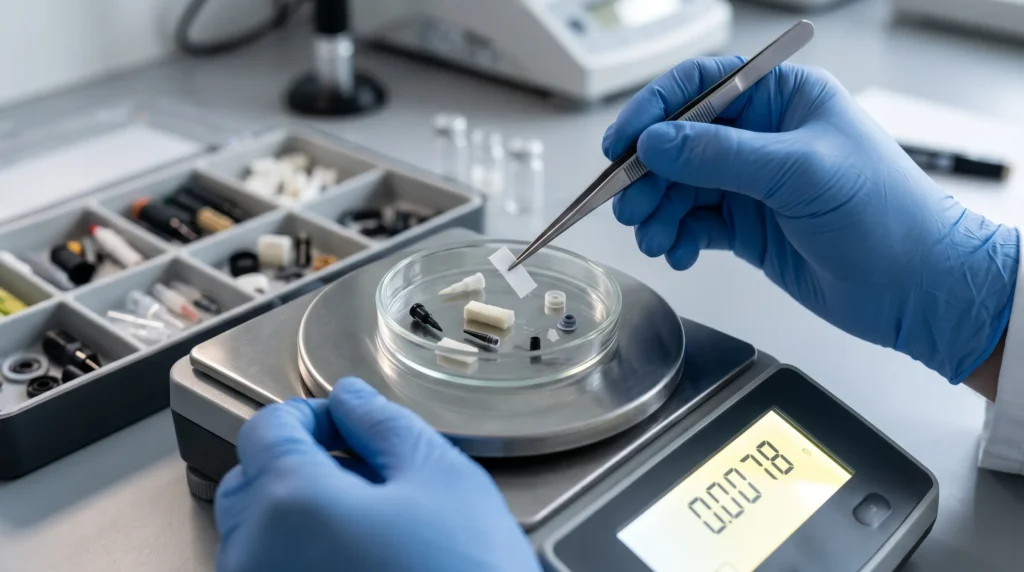
實驗室報告中應檢查的項目
使用以下四點與實驗室一起審查報告。完整的測試方法規定了樣品質量、萃取條件、試劑體積、反應時間和校準範圍。請勿從一般採購文章中推斷這些內容。
1. 樣品製備
指明所取樣的型號、部件和材料。詢問在引用方法下部件是如何製備和萃取的。確認報告中指明的是該樣品,而非不同的產品或批次。
2. 呈色反應
檢查實驗室是否遵循了引用方法中的試劑製備、反應和吸光度讀取。如果報告未指明方法或描述了更改的程序,請要求澄清。
3. 建立標準曲線
詢問校準範圍和方法空白是如何設定的。詢問樣品結果是否落在已檢查的測量範圍內。適用的方法(而非一般文章)規定了校準水平。
4. 讀取結果
請閱讀報告值及其單位、偵測或定量極限,以及適用的合格限值。低於報告限值的數值應如實讀取,不得將其視為不存在甲醛的證據。
最終計算公式
以下表達式僅在 c 已進行空白校正且已計入額外稀釋時,才顯示單位換算。完整方法與實驗室的數學規則決定報告結果。此表達式並非完整的 GB/T 32606 程序。
x = (c × f) / m
- x = 樣品中游離甲醛的含量(mg/kg)
- c = 空白校正後濃度,已計入任何額外稀釋(μg/mL)
- f = 樣品液體稀釋後的總體積(mL)
- m = 原始樣品的精確質量(g)
請與實驗室確認方法空白、稀釋倍數及報告單位。僅修正空白並不能代表總量精確。
值得信賴的檢測,讓您安心無憂
確保產品安全不僅是法律要求,更是保護您的客戶。
請選擇當前認證範圍涵蓋所需方法的實驗室。直接核實報告簽發者、樣品名稱及範圍。本文不設定任何具名實驗室的當前資格或範圍。
對於馬克筆及其他書寫產品,測試報告記錄樣品、方法及結果。請將這些結果與適用的產品需求進行比對。認證並不代表每個未經測試的型號、零件或批次均無有害成分。
相關指南: 如何閱讀壓克力馬克筆的ASTM D-4236測試報告.
相關閱讀
Why Formaldehyde Still Appears in Stationery
Formaldehyde is not added to markers on purpose. It arrives as a residual from three sources: adhesives in packaging, preservatives in water-based ink, and finishes on wooden or paper components. In each case the amount is small, but the regulatory limit is also small, and the test measures what is present rather than what was intended.
The adhesive route is the most common. Casein and urea-formaldehyde glues are cheap and strong, which is why they still appear in some cartons and laminated boards. A marker itself may pass while the display box it ships in does not.
The ink route matters for water-based formulas. Some preservative systems release formaldehyde slowly as they break down, which is why a freshly mixed batch can pass and a batch tested after six months in a warehouse can fail. That is not a manufacturing defect in the usual sense; it is a formulation choice with a time dimension.
How the Acetylacetone Method Works
GB/T 32606-2016 specifies acetylacetone spectrophotometry as the formaldehyde test method. The procedure runs in four stages.
Extraction. The sample is placed in water at a controlled temperature for a set period. Formaldehyde migrates into the water. The extraction time and temperature are specified, and changing either one changes the result.
Reaction. Acetylacetone reagent is added. In the presence of ammonium acetate, formaldehyde reacts to form a yellow compound, 3,5-diacetyl-1,4-dihydrolutidine. The reaction needs a fixed time and temperature to complete.
Measurement. The solution is read in a spectrophotometer at 412 nanometers. Absorbance is proportional to formaldehyde concentration within the calibrated range.
Calculation. Concentration is derived from the calibration curve, corrected for the blank, and converted to milligrams per kilogram of sample.
The formula only works when the blank is properly corrected and any additional dilution is counted. A report that quotes a number without stating the method edition, the extraction conditions, and the blank value is not reproducible.
Reading a Report: What the Numbers Mean
Three numbers matter on a formaldehyde report: the result, the limit, and the detection limit.
The result should be expressed in mg/kg with the measurement uncertainty stated. A result of 15 mg/kg with an uncertainty of plus or minus 3 is a different statement from 15 mg/kg with no uncertainty given.
The limit depends on the destination market and the product category. Textile and wood components have their own limits under separate standards; stationery is often assessed against the general consumer goods framework. Confirm which limit applies before comparing a result to a pass threshold.
The detection limit tells you whether the test could actually see a failure. A method with a detection limit of 20 mg/kg cannot demonstrate compliance with a 16 mg/kg limit, no matter what the result says.
Sampling and Extraction: Where Tests Go Wrong
Most false passes and false failures trace to sampling, not to the instrument.
The sample must represent the batch. A single marker taken from the top of a carton is not a batch sample. The correct approach is to composite material from several units, because formaldehyde distribution within a production run is not uniform.
The extraction conditions must match the method. Water temperature, extraction time, and the ratio of sample mass to water volume all affect the result. A lab that shortens the extraction to save time will report a lower number than the method intends.
The tested part must be the part that matters. For a marker, that means the barrel, the cap, the ink, and the packaging assessed separately, because each has a different risk profile and a different limit may apply.
常見問題解答
Does passing a formaldehyde test mean the product is safe? No. It means formaldehyde is below the applicable limit for that test method. Other substances are covered by other tests.
How often should formaldehyde be retested? At minimum once per production batch, and again whenever the ink supplier, adhesive supplier, or packaging supplier changes.
Can a factory self-test? It can screen internally, but the report that goes to a retailer should come from an accredited third-party lab with the method edition stated.
What happens if a batch fails? The batch should be held, the source identified — ink, adhesive, or packaging — and the affected lots traced. Retesting the same sample rarely changes the result.
Where Formaldehyde Comes From in the Supply Chain
The test measures what is present, not what was intended. Three upstream sources account for most failures.
Adhesive suppliers. Casein and urea-formaldehyde glues remain cheap and strong, which is why they still appear in laminated boards and some cartons. A marker can pass while the display box it ships in does not. Ask for the adhesive declaration separately from the ink declaration.
Preservative systems in water-based ink. Certain preservatives release formaldehyde as they break down. A freshly mixed batch passes; the same batch tested after six months in a warm warehouse may not. This is a formulation choice with a time dimension, and it is the most common cause of a late failure.
Wood and paper components. Pencil barrels, wooden display stands, and some paper stocks carry residual formaldehyde from processing. These are usually low, but they add to the total when the test composites multiple materials.
The practical implication: test the finished product as it ships, not the individual components in isolation. A composite sample catches the additive effect that single-component testing misses.
Setting a Retest Cadence That Actually Catches Drift
Most programs retest once per production batch, which is not enough to catch a slow drift.
A supplier can change an adhesive vendor, a preservative concentration, or a packaging source without announcing it, and the change shows up three batches later as a failed test. The cadence that catches this has three triggers.
Per batch. A basic screening test on every production run. This is a factory-side control, not a third-party report.
Per quarter. A full third-party report on the current production. This catches drift before it becomes a retailer issue.
Per change. Any change to ink supplier, adhesive supplier, packaging supplier, or formulation triggers an immediate retest regardless of the quarterly schedule. This is the trigger most programs omit, and it is the one that catches the failures that matter.
Put the change trigger in the purchase order, not in a side agreement. A clause that requires notification before any material substitution is enforceable; a verbal understanding is not.