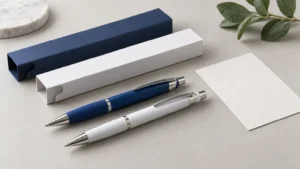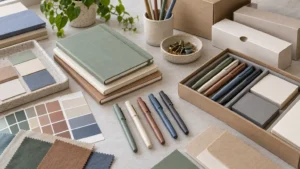


Chào mừng đến với trung tâm sản xuất của ZH STATIONERY. Là nhà sản xuất bút lông tùy chỉnh hàng đầu, chúng tôi hiểu rằng người mua toàn cầu cần nhiều hơn những sản phẩm tiêu chuẩn.
Họ cần những đối tác nhà máy ổn định, có thể đảm bảo chất lượng đồng đều, khả năng mở rộng và các giải pháp OEM/ODM phù hợp. Đặt tại Đồng Lư, Trung Quốc, nhà máy của chúng tôi được xây dựng để đáp ứng chính xác các thông số kỹ thuật của các thương hiệu trên toàn thế giới.
Đồng Lư, Trung Quốc, được biết đến trên toàn thế giới là Thủ phủ sản xuất bút. Qua nhiều năm, nơi đây đã phát triển thành một trung tâm lớn cho chuỗi cung ứng văn phòng phẩm toàn cầu. Giờ đây thị trường đòi hỏi chất lượng cao hơn. Phong cách cũ giá rẻ và cơ bản không còn đủ. Người mua ngày nay muốn những sản phẩm cao cấp.
Là nhà máy hàng đầu tại khu vực nổi tiếng này, ZH STATIONERY tập trung hoàn toàn vào bút lông chuyên nghiệp chất lượng cao. Chúng tôi kết hợp lịch sử sản xuất phong phú của Đồng Lư với công nghệ hiện đại để mang đến dịch vụ OEM và ODM đẳng cấp thế giới cho các thương hiệu toàn cầu.
Đây là cách chúng tôi đang thay đổi cách sản xuất bút lông chuyên nghiệp.
1. Công thức mực cao cấp và ngòi bút chính xác
Nhiều loại bút lông trên thị trường trông giống nhau. Sự khác biệt thực sự nằm ở bên trong cây bút. Các nghệ sĩ và nhà thiết kế chuyên nghiệp cần mực mịn và màu sắc chính xác.
Để làm cho thương hiệu của bạn nổi bật, ZH STATIONERY đầu tư thực sự vào công nghệ lõi:
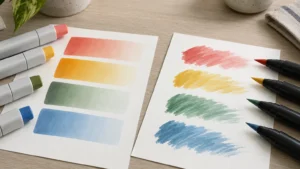
- Phòng thí nghiệm mực tiên tiến: Chúng tôi phát triển mực gốc cồn và gốc nước có độ chính xác cao. Bút marker của chúng tôi mang lại màu sắc tươi sáng, độ bão hòa cao, hòa trộn mượt mà và hiệu suất bền lâu.
- Ngòi bút chất lượng cao: Dù là ngòi vát rộng cho các vùng lớn hay ngòi cọ mềm cho chi tiết, chúng tôi chỉ sử dụng các linh kiện tốt nhất. Điều này đảm bảo mực chảy mượt mà không bị rò rỉ hoặc khô.
2. Năng lực R&D mạnh mẽ để phát triển thương hiệu của bạn
Nhờ sự hỗ trợ và tài trợ mạnh mẽ từ chính quyền địa phương Đồng Lư, ZH STATIONERY có đủ nguồn lực để tiếp tục sáng tạo. Chúng tôi không chỉ sản xuất bút tiêu chuẩn. Chúng tôi xây dựng tương lai của ngành viết.
Khi bạn chọn chúng tôi làm đối tác nhà máy, bạn có được một nhà cung cấp có thể biến ý tưởng của bạn thành sản phẩm một cách nhanh chóng. Muốn một bộ 120 màu khổng lồ cho nghệ sĩ? Muốn bút lông acrylic mới? Muốn thân bút lông tre thân thiện với môi trường? Đội ngũ R&D của chúng tôi có thể thực hiện nhanh chóng.
3. Thống nhất quyền sở hữu thiết kế và bảo mật
Một trong những lo lắng lớn nhất của người mua nước ngoài là: liệu nhà máy có sao chép thiết kế tùy chỉnh của tôi không?
Tại ZH STATIONERY, thương hiệu của bạn được bảo vệ hoàn toàn. Đồng Lư đã triển khai Hệ thống Bảo vệ Sở hữu Trí tuệ nghiêm ngặt để hỗ trợ các nhà sáng tạo thực sự.
- Bảo mật Hoàn toàn: Chúng tôi ký các thỏa thuận bảo mật (NDA) nghiêm ngặt với tất cả khách hàng.
- Hỗ trợ Pháp lý Địa phương: Với luật bảo hộ bằng sáng chế nhanh chóng tại thành phố của chúng tôi, những kẻ sao chép bị ngăn chặn nhanh chóng.
- Sáng tạo Không Lo Lắng: Vì thiết kế của bạn được bảo vệ bởi cả quy định nhà máy và luật pháp địa phương, bạn có thể an tâm hợp tác với chúng tôi để tạo ra khuôn bút dạ và bao bì tùy chỉnh độc đáo mà đối thủ không thể sao chép.
Hợp Tác Với Nhà Máy Bút Dạ Đáng Tin Cậy
Thị trường văn phòng phẩm đang chuyển từ Sản xuất tại Trung Quốc sang Sáng tạo Thông minh tại Trung Quốc. ZH STATIONERY tự hào dẫn đầu sự chuyển dịch này trong ngành bút lông chuyên nghiệp.
Bạn đang tìm kiếm nhà cung cấp bút dạ chất lượng cao, đáng tin cậy để nâng cấp dòng sản phẩm của mình?
Sẵn Sàng Nâng Tầm Thương Hiệu Văn Phòng Phẩm Của Bạn?
Đối tác nhà máy phù hợp là chìa khóa cho sự phát triển của bạn. Chúng tôi tự hào là nhà sản xuất bút lông đánh dấu tùy chỉnh được ưa chuộng cho khách hàng trên toàn cầu. Chúng tôi cung cấp giá cả hợp lý mà không giảm chất lượng. Dù bạn có thiết kế sẵn sàng sản xuất hay cần hỗ trợ tạo mẫu kỹ thuật số, đội ngũ của chúng tôi luôn sẵn sàng. Hãy liên hệ với chúng tôi ngay hôm nay để trao đổi về nhu cầu OEM của bạn. Hãy để chúng tôi hiện thực hóa các dự án bút lông đánh dấu của bạn.
Là nhà máy giàu kinh nghiệm tại Tonglu, chúng tôi thực hiện kiểm tra chất lượng nghiêm ngặt cho từng lô hàng trước khi vận chuyển toàn cầu. Hợp tác với chúng tôi đồng nghĩa với chuỗi cung ứng ổn định, năng suất cao cho sự thành công lâu dài của thương hiệu văn phòng phẩm của bạn.
Hướng dẫn liên quan: Cách sản xuất bút lông sơn.
Hướng dẫn liên quan: Để lập kế hoạch tuân thủ liên quan, xem Trao quyền cho đội ngũ của chúng tôi: Phúc lợi nhân viên và sản xuất có đạo đức tại ZH STATIONERY.
What a Custom Marker Pen Manufacturer Actually Controls
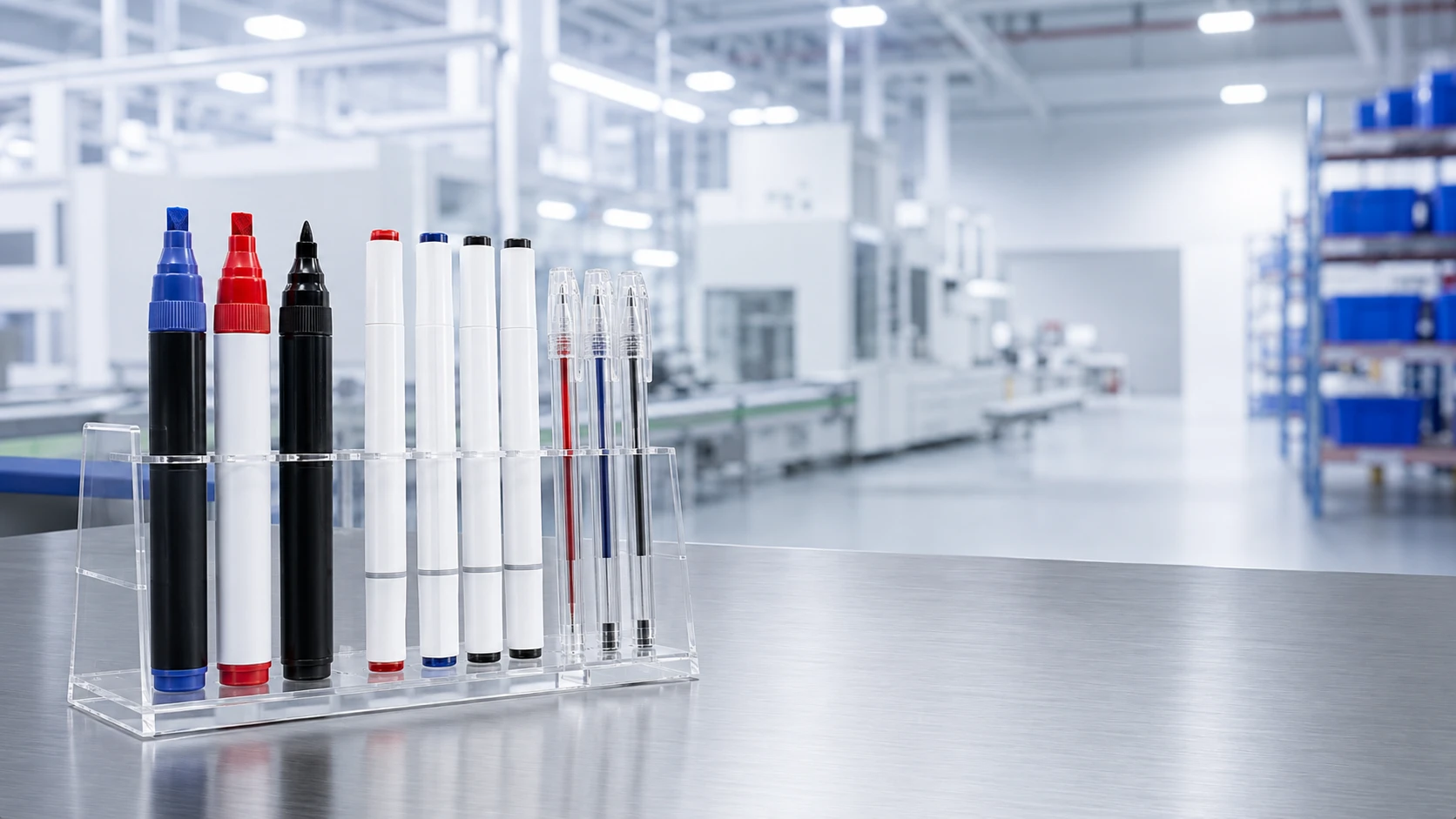
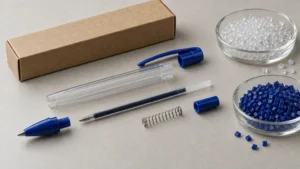
A marker looks simple from the outside. Inside, it is four subsystems that must work together: the ink, the nib, the barrel and cap, and the packaging. When a buyer evaluates a custom marker pen manufacturer, the useful question is not whether the factory can print a logo. It is which of those four subsystems the factory actually controls.
Ink is the hardest to control and the easiest to fake. A factory that buys pre-mixed ink from a third party inherits that supplier’s batch variation. A factory with its own ink lab can tune pigment load, viscosity, drying time, and lightfastness against a target surface. The difference shows up two months after delivery, when Batch 2 does not match Batch 1 on the shelf.
The nib decides how the marker feels in use. Fiber density, tip geometry, and the bond between fiber and binder determine whether a tip holds its shape through 500 strokes or turns mushy by stroke 50. Barrel and cap form a small sealed container. Their job is to stop the ink from evaporating, which is why cap seal should be tested with a closed-storage test, not a cap-off writing test.
Packaging is the fourth subsystem and the one most often treated as an afterthought. A retail card, blister, or display box changes freight volume, pallet configuration, and landed cost per unit. Buyers who approve packaging late usually pay for it twice: once in tooling, once in freight.
Ink Formulation: Where the Real Differentiation Lives

Most marker complaints trace back to ink, not to the pen body. The pigment-versus-dye choice sets the baseline. Pigment sits on the surface, gives opaque coverage, and resists UV fading. Dye dissolves into the carrier, blends smoothly, and produces brighter color at lower cost, but it fades faster and can wick into paper fibers unevenly.
For solvent-based markers, the carrier is usually alcohol with a small balance of wetting agents and release additives. For water-based markers, the carrier is water plus a humectant to slow drying in an uncapped tip. Both systems need a biocide package if the product will sit in a warehouse for months. Skipping that step is how a shipment arrives with mold in the reservoir.
Viscosity is the parameter buyers should ask about by number, not by feel. A difference of 200 cPs between batches is enough to change how a chisel tip lays down color. Factories with in-house ink capability can hold that window. Factories buying pre-mixed ink cannot, because they have no visibility into what changed upstream.
Ask for the ink batch record. A useful one lists pigment lot, carrier lot, viscosity reading, and the date the batch was mixed. If the supplier cannot produce that record for the SKU you are ordering, the batch consistency claim is not verifiable.
Nib Engineering and the Wear Test That Matters
The nib is the most-felt part of a marker and the least-specified in most purchase orders. Fiber density is the first number to pin down. Below 0.30 g/cm3, a tip collapses under repeated pressure and does not spring back. By the 50th stroke the fine end turns soft, and line precision drops off.
Geometry comes next. A bullet tip is predictable but flattens over time. A chisel tip gives three line widths from one nib but depends on a clean grind angle. A brush tip delivers organic variation but is the easiest to fray when the fiber-to-binder ratio is off.
Wear testing should run on the finished marker, not on a bare nib sample. Ask for a 100-meter writing trial on the intended substrate, with line width and color depth measured at the start and at the end. A tip that loses 15 percent of its line width over 100 meters is not ready for a retail program.
Cap retention and drop resistance belong in the same test plan. A cap that releases under a one-meter drop is a return waiting to happen, especially in school channels where bags get thrown around.
Quality Gates Before Shipment
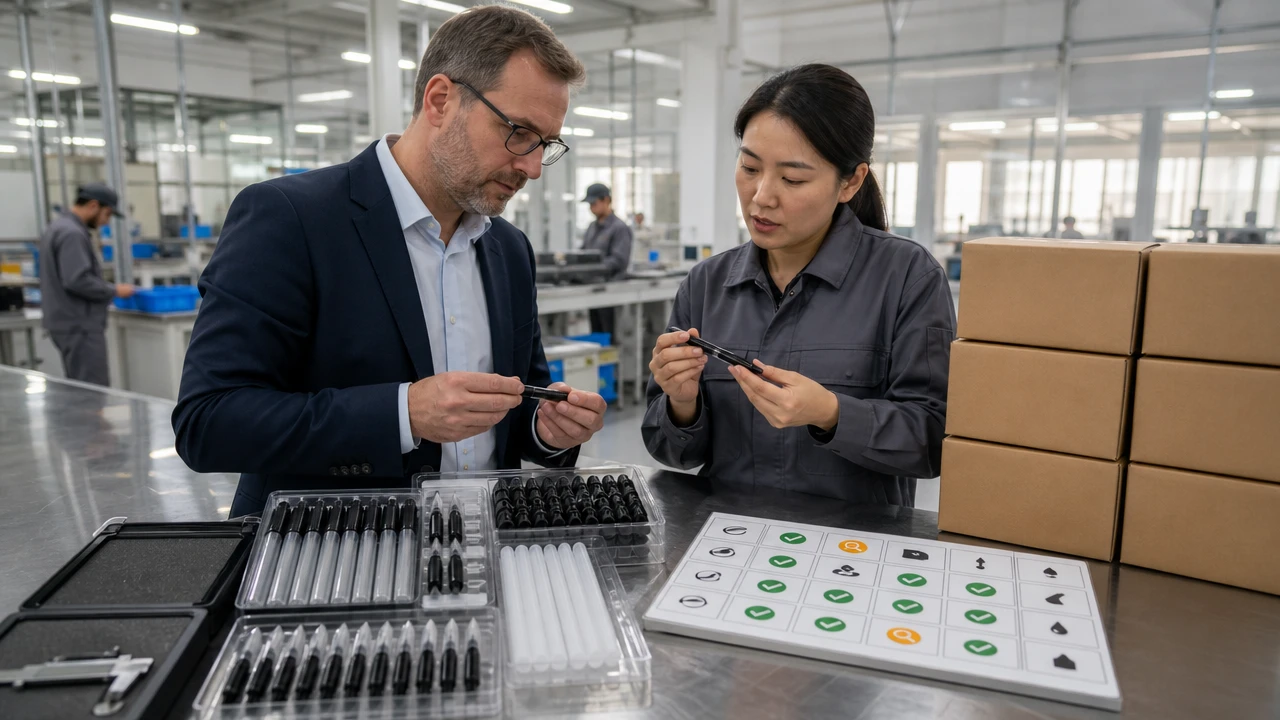
Three gates separate a manufacturing-focused supplier from a trading company. The first is inline inspection. A factory running 100 percent automated inspection checks fill weight, cap torque, and nib retention on every unit as it passes the station. That is a different claim from “we check samples.”
The second gate is statistical sampling on the finished lot. AQL levels should be written into the order: for most retail marker programs, Critical 0, Major 1.5, Minor 4.0 is a reasonable starting point. The buyer should confirm the defect definitions with the plant before production starts, not after a dispute.
The third gate is retained samples. One sealed set from the approved run, plus one from each mass-production batch, labeled with SKU, PO number, production date, ink lot, and nib lot. Without retained samples, a reorder dispute becomes a conversation about memory.
Documentation belongs alongside these gates. For the U.S. market, art materials need ASTM D-4236 conformance with a toxicology review behind it. For Europe, EN71-3 covers heavy metal migration and EN71-9 covers organic compounds. Reports should be current, dated, and name the SKU, not just the factory.
How to Brief a Custom Marker Factory

A brief that gets a usable answer contains seven items: marker type, ink system, tip construction, color count and reference numbers, packaging format, destination market, and forecast annual volume. Send the same brief to every candidate so the quotes are comparable.
Sampling comes next. Ask for a production-line sample rather than a hand-assembled prototype. Line samples represent bulk quality; hand-built samples represent what a technician can do with unlimited time. Test writing smoothness, color match across pens in the set, cap fit, and nib strength under pressure.
MOQ should be quoted by layer. A standard body with a printed logo typically starts lower than a custom mold program, because the tooling is already amortized. Ask separately for the MOQ on a stock body, a custom color, a custom mold, and a full retail set. A single headline MOQ number hides which layer is driving the cost.
Lead time follows the same logic. With existing molds, 25 to 35 days from sample approval is realistic. A new barrel or cap mold adds 15 to 25 days for design, machining, and trial runs. Third-party lab testing adds another 7 to 14 days depending on the lab queue.
Câu hỏi thường gặp
Can you match a specific Pantone color in the ink? Yes, with a caveat. Pantone gives the supplier a target, but the approved ink stroke on the intended substrate is what defines acceptance. A red cap, a red printed label, and a red ink stroke are three separate color problems and should be approved separately.
What is the minimum order for a custom marker program? It depends on the layer. Stock body plus logo starts lower than a new mold. For a fully custom OEM/ODM program, the floor is 50,000 pens per order counted by total individual pens produced; a 12-color pack equals roughly 4,200 sets, not 50,000 of each color.
How do you prevent dry-out during shipping? Cap seal is the first control, followed by fill weight and storage conditions. Ask for a closed-cap evaporation test and a storage trial at elevated temperature. A 50 C oven run for 7 to 14 days simulates a hot container crossing.
Can you supply private-label packaging? Yes. Blister cards, color boxes, display units, and gift boxes are all quotable. Send the retail channel and shelf requirements early, because packaging format changes freight volume and landed cost per unit more than most buyers expect.
Bài đọc liên quan
- Sản xuất bút đánh dấu: Điều người mua B2B nên biết về quy trình nhà máy
- Top 7 nhà sản xuất bút lông tốt nhất Trung Quốc năm 2026
- Gặp ZH STATIONERY tại Hội chợ Canton lần thứ 139: Nguồn cung đáng tin cậy cho bút marker và bút gel tùy chỉnh
- OEM ODM Sản xuất bút: Hướng dẫn quyết định cho người mua
- Một mùa xuân thắng lợi: ZH STATIONERY tỏa sáng tại Hội chợ Canton lần thứ 139 năm 2026
- Top 5 nhà sản xuất bút tại Trung Quốc: Cẩm nang tìm nguồn hàng toàn diện cho năm 2026
- Trao quyền cho đội ngũ của chúng tôi: Phúc lợi nhân viên và sản xuất có đạo đức tại ZH STATIONERY
Tooling is usually the largest upfront line item in a custom program. Our pen mold factory and OEM tooling guide breaks down mold cost, cavity counts, and trial-run timelines.