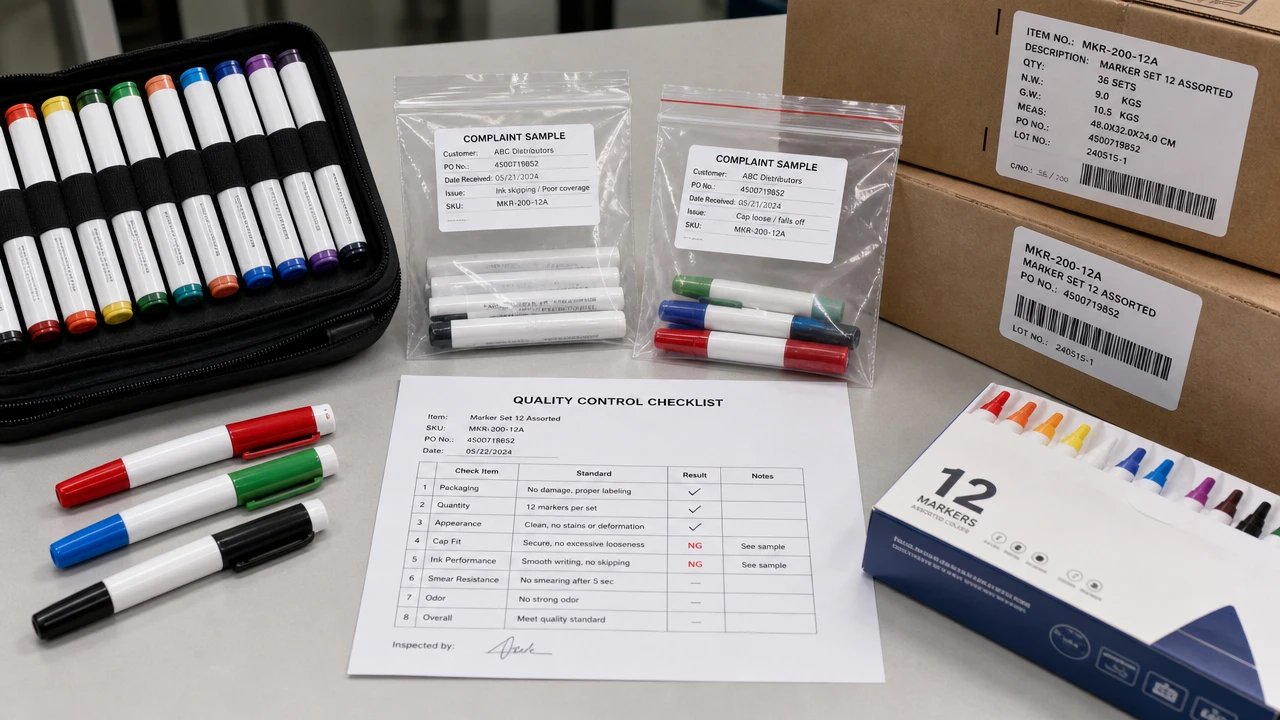
Marker dry-out complaints hurt a distributor because they usually show after the product has moved through the warehouse, channel, and shelf. In this anonymized case, ZH Stationery reviewed dry-out complaints for a distributor. We changed the control flow around cap seal, nib fit, storage risk, and reorder feedback.
This article does not name the buyer or print private complaint numbers. It shows the fix flow. Buyers can use the same method when sourcing markers, comparing a China manufacturer, or preparing an RFQ for private-label sets.
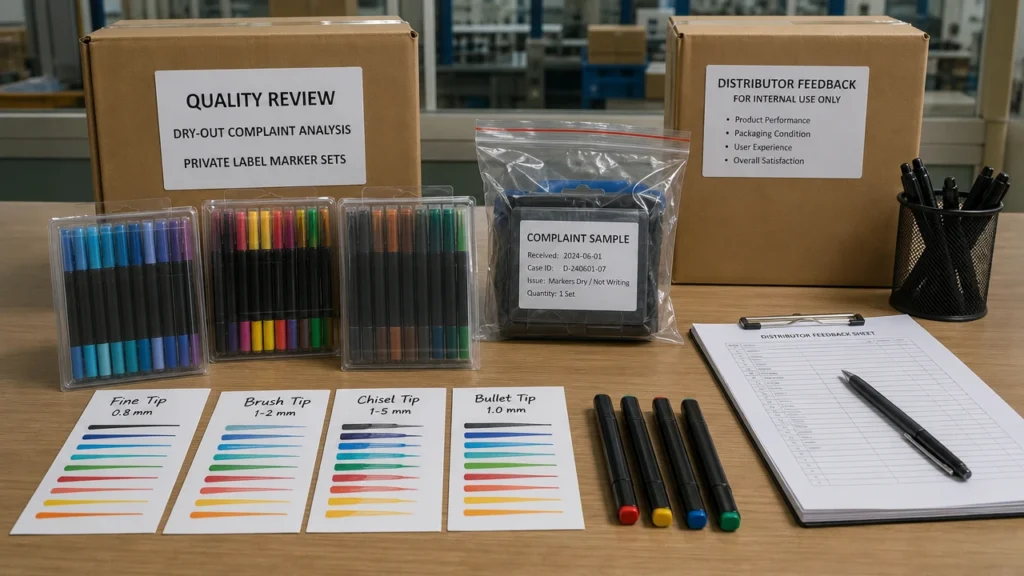
Resposta Rápida
We cut repeat dry-out complaints by treating the issue as a finished-product system problem. It was not only an ink problem. The fix plan checked cap seal, nib fit, ink flow, packing pressure, carton handling, storage exposure, and complaint tracking. The biggest change was simple. Every reorder had to tie the buyer complaint, kept sample, production batch, and pre-shipment writing test together.
Links Rápidos
- Resposta Rápida
- Contexto do Caso
- Primeiro Diagnóstico para Reclamações de Canetas que Secam
- Causas Raiz que Verificamos
- Mudanças na Fábrica
- Mudanças no Lado do Distribuidor
- Checklist de Controle de Qualidade
- Resultados e Limitações
- Faça Perguntas Melhores ao Fornecedor
- Perguntas Frequentes
Contexto do Caso
The distributor sold sets through a mixed channel. Retail stores. School-supply resellers. Online sellers. The complaint pattern was not dramatic at first. A few customers said some markers felt weak. Then several accounts reported markers that wrote for a short time and stopped. The product still sold in many spots. The distributor needed a cleaner answer before the next reorder.
The first mistake would have been blaming ink right away. Ink matters. Dry-out complaints can come from the cap, nib, barrel, storage time, carton pressure, hot warehouse conditions, or a slow retail shelf. We treated the case as a chain of small risks.
The distributor also needed compliance and marking files for retail review. For US art products, the Guia de materiais de arte CPSC explains ASTM D-4236 marking hopes. The official ASTM D4236 page covers chronic health hazard marking. Those documents matter. They do not prove shelf performance. We kept compliance review apart from dry-out fixes.
Primeiro Diagnóstico para Reclamações de Canetas que Secam
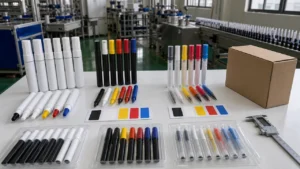
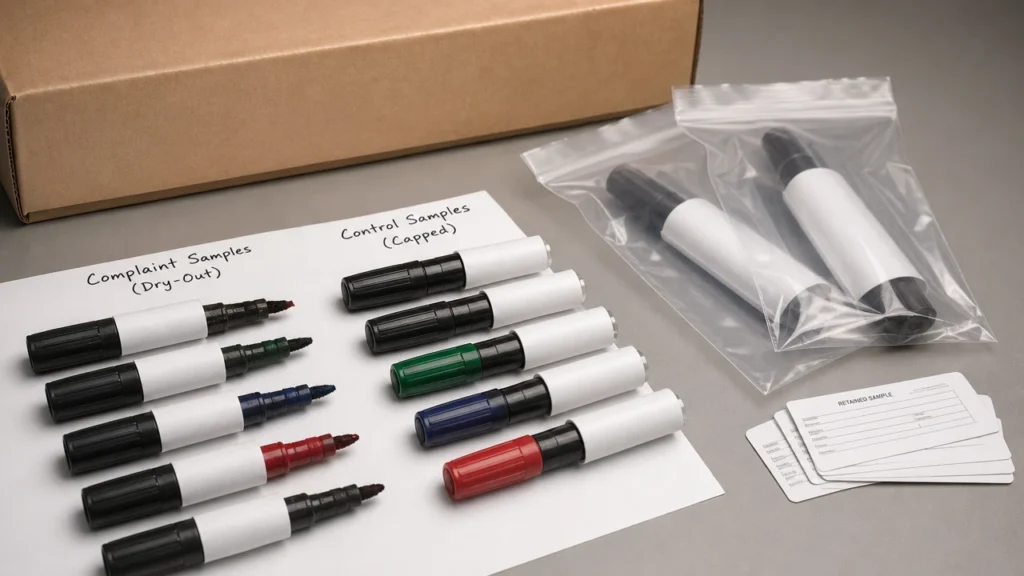
We asked the distributor to send three groups of info. Complaint samples. Unopened kept sets from the same order, if any. The carton or barcode data tied to the complaint lots. That gave the factory team something better than screenshots and customer remarks.
| Evidência Solicitada | Por que Era Necessária | O que Ajudou a Decidir |
|---|---|---|
| Amostras de reclamações | Mostraram se a tampa, ponta ou tinta tinham problemas visíveis | Se o defeito era isolado ou repetido |
| Conjuntos retidos não abertos | Separaram a condição da fábrica do manuseio no varejo | Se o problema existia antes da prateleira de varejo |
| Etiqueta do lote ou caixa | Conectaram as amostras de reclamações a um lote de produção | Quais registros de lote revisar |
| Notas de armazenamento | Mostraram exposição a calor, umidade e tempo de prateleira | Se o envio ou as condições do armazém podem ter contribuído |
| Cores afetadas | Mostraram se o problema era específico de cor | Se verificar uma tinta, uma ponta ou toda a estrutura do produto |
Causas Raiz que Verificamos
Dry-out complaints rarely have one clean cause. In this case, the useful question was not which part failed. It was which part of the system let a weak marker reach the buyer.
Vedação da Tampa e Ajuste do Corpo
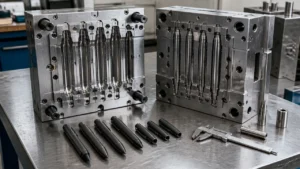
A cap can look right and still seal poorly. We checked whether the cap clicked firm. We checked whether the inner cap touched the nib area right. We checked whether cap looseness grew after carton pressure or handling. Small cap-fit changes matter. Water-based and acrylic systems can lose usable flow when the nib area stays open too long.
Ajuste da Ponta e Fluxo de Tinta
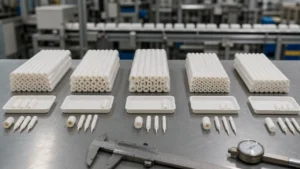
A nib that fits too loose may write uneven. A nib that fits too tight may not pull ink at the expected speed. That is why we tied the dry-out review to finished-marker writing tests. We did not check the ink alone. For acrylic projects, the valve press marker technology page is useful background. Valve control changes how ink reaches the tip.
Pressão da Embalagem e Condições de Trânsito
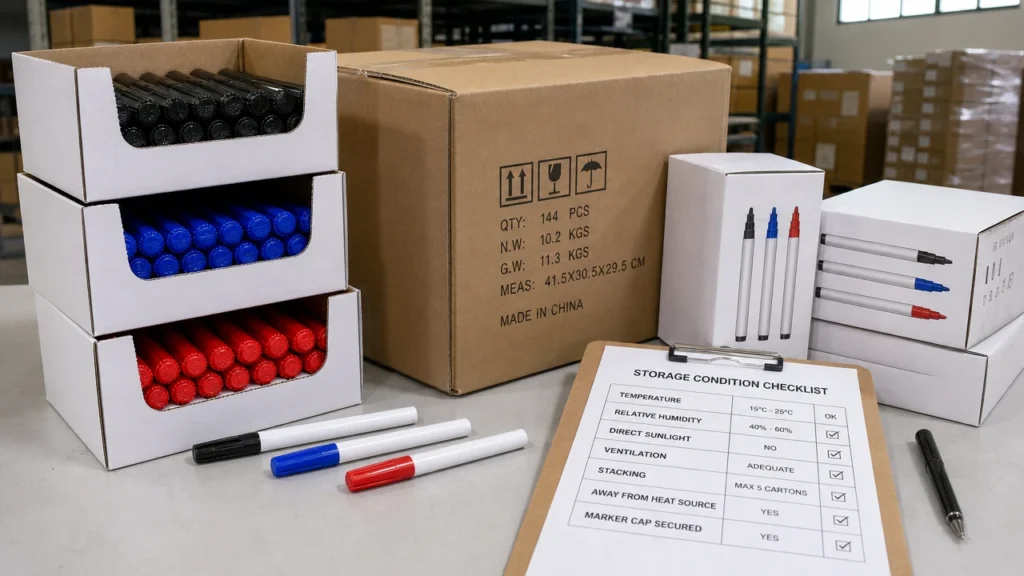
Packing can push caps, bend trays, or expose sets to heat and dryness in storage. The official ASTM D4332 page covers conditioning containers, packages, or packing parts to mimic field states in tests. For normal sourcing, buyers do not need a full lab program for every order. They should know that packing and environment shape complaints.
Mudanças na Fábrica
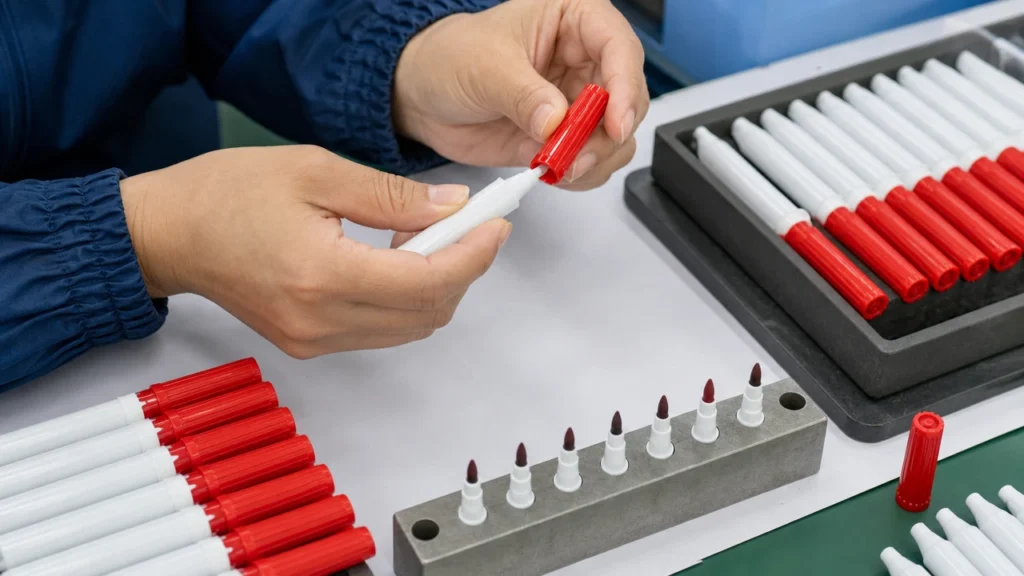
The fix focused on checks that could repeat on future orders. We did not want a one-time rescue. We wanted a flow the production team and the distributor could use again.
| Mudança | O que Adicionamos | Benefício para o Comprador |
|---|---|---|
| Amostragem do ajuste da tampa | Verificações mais frequentes do clique da tampa, aperto e ajuste pós-manuseio | Reduziu a chance de unidades com vedação fraca chegarem às caixas |
| Verificação do fluxo da ponta | Testes de escrita de canetas acabadas após a montagem e curto período de descanso | Detectou canetas que pareciam boas, mas escreviam fracamente |
| Amostras retidas | Conjuntos de amostras selados vinculados ao lote de produção e etiquetas da caixa | Tornou o rastreamento de reclamações futuras mais rápido |
| Revisão da embalagem | Verificação da pressão da bandeja, contacto da tampa, empilhamento das caixas e movimento do embalamento interno | Redução de tensões evitáveis no transporte e armazenamento |
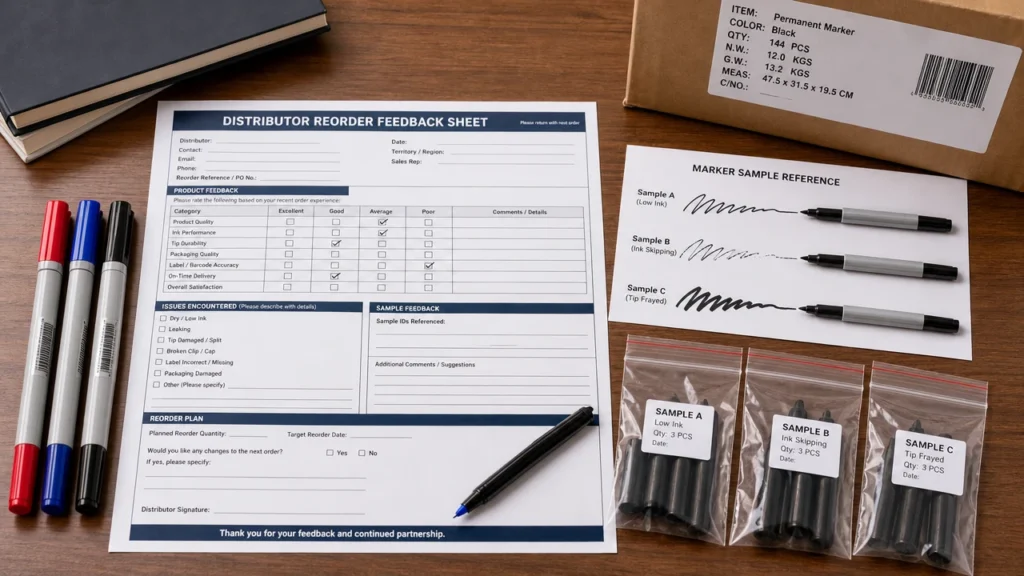
| Ficha de feedback de reclamações | Notas padronizadas do distribuidor para lote, cor, canal e tempo de prateleira | Transformação de reclamações vagas em dados utilizáveis |
We also reviewed whether the product group, cap design, and packing format matched the distributor channel. Buyers planning retail sets can tie this step to the acrylic marker packing formats guide e o 外箱尺寸与CBM指南.
Mudanças no Lado do Distribuidor
The distributor also changed its own handling. That part matters. If the supplier fixes factory checks but the buyer stores cartons near heat, opens inner boxes early, or mixes lots without marks, the problem can return.
- Manter um conjunto retido não aberto de cada envio e etiquetá-lo com o número de PO e a data de receção.
- Armazenar as caixas de marcadores longe de calor, luz solar direta e zonas de armazém muito secas.
- Pedir às contas de vendas que registem o SKU afetado, cor, lote, tempo de prateleira e fotografias antes de substituir o stock.
- Separar reclamações de secagem de reclamações de cor de tinta, reclamações de fugas e pedidos de embalagem danificada.
- Enviar amostras de reclamação de volta em sacos selados para que a fábrica possa inspecionar tampas e pontas sem mais exposição.
A steady reorder file also helped. The distributor tied complaint notes to the next PO. The new run could then be checked against real field feedback. That is close to the color-consistency reorder flow. Dry-out control just focuses on cap seal, nib flow, and storage instead of color match.

Checklist de Controle de Qualidade
For future orders, we turned the case into a simple QC checklist. The checklist is not a promise. It catches common fail points before the product reaches the distributor.
| Ponto de controle de qualidade | Verificação na Fábrica | Verificação no Distribuidor |
|---|---|---|
| Vedação da tampa | Verificar o ajuste da tampa após a montagem e após o manuseamento de amostras | Inspecionar conjuntos aleatórios após a receção das caixas |
| Condição da ponta | Verificar a posição da ponta, humidade e força de escrita | Testar amostras retidas antes de libertar uma reencomenda |
| Fluxo de tinta | Escrever traços de amostra após um curto período de repouso | Separar relatórios de fluxo fraco de relatórios de secagem total |
| Pressão da embalagem | Rever o ajuste da bandeja, contacto da tampa e empilhamento das caixas | Verificar se as caixas chegaram esmagadas ou expostas ao calor |
| Rastreabilidade do lote | Etiquetar amostras retidas e referências de caixas | Registar lote, SKU, canal e data da reclamação |
| Ficheiros de conformidade | Manter a documentação relevante de etiquetagem e testes pronta | Não confundir ficheiros de conformidade com prova de desempenho em prateleira |
For wider check and compliance context, buyers can review the ASTM D-4236 report guide, o guia de fornecimento de marcadores aquareláveis, e ZH Stationery's certifications page.
Resultados e Limitações
After the fix flow ran, the distributor had a cleaner complaint process and fewer repeat dry-out talks on the next order. The useful result was not a marketing number. It was control. The buyer and factory could name the affected SKU. They could compare kept samples. They could check cap and nib state. They could decide whether the issue came from production, packing, storage, or retail handling.
There are limits. No supplier can remove every dry-out risk after months of storage and mixed retail handling. Heat, wetness, shelf time, user behavior, and packing damage all matter. ISO 554 is a useful note that test conditions should be controlled when results are compared. For B2B sourcing, the practical lesson is simpler. Keep the test state steady before judging whether a batch changed.
That is why ZH Stationery treats dry-out complaints as a factory-and-channel problem. Factory checks matter. The distributor's receiving check, storage, and feedback care decide how fast the issue can be traced. Buyers who want to know factory ability can review the visita à fábrica e quem somos .
Faça Perguntas Melhores ao Fornecedor
When dry-out risk matters, ask questions that force a supplier to describe the control method. Do not accept only a product pitch.
| Pergunta | Uma Resposta Útil Deve Incluir |
|---|---|
| Como verifica a vedação da tampa antes do envio? | Método de amostragem, momento da inspeção e o que conta como tampa fraca |
| Testa marcadores acabados ou apenas amostras de tinta? | Teste de escrita de marcadores acabados, tempo de repouso e regras para cores afetadas |
| Como são etiquetadas as amostras retidas? | Número de PO, SKU, data do lote, referência de caixa ou lote e método de armazenamento |
| Que verificações de pressão da embalagem são utilizadas? | Ajuste da bandeja, contacto da tampa, empilhamento das caixas e revisão da proteção de envio |
| Como devem ser reportadas as reclamações de secagem? | Fotografias, cores afetadas, número do lote, tempo de prateleira, notas de armazenamento e processo de devolução de amostras |
| Que alterações exigem nova aprovação? | Tampa, ponta, corpo, fórmula da tinta, bandeja da embalagem, cartão de retalho ou estrutura da caixa |
Perguntas Frequentes
These FAQs cover the buyer questions that usually appear after a distributor gets dry-out complaints.
What usually causes dry-out complaints from distributors?
Weak cap seal, poor nib fit, ink loss in storage, damaged packing, long heat or dry-air time, and uneven retail handling. The supplier should check the finished marker, not only the ink mix.
Can a factory promise markers never dry out?
No good supplier should. Dry-out risk depends on design, ink system, cap fit, storage, shipping route, shelf time, and user behavior. A factory can cut preventable risks with cap-fit control, writing tests, kept samples, packing checks, and clear storage instructions.
Should distributors test samples before every reorder?
For repeat programs, yes. A short reorder check can confirm cap fit, nib flow, stroke strength, and packing state before mass production. If the product changed, treat it as a controlled update, not a simple reorder.
What should buyers ask after a dry-out case appears?
Ask for the lot number, production date, carton mark, photos of cap and nib, storage state, shelf time, and whether the issue hits one color, one SKU, or the whole shipment. Without this, the factory cannot trace the likely cause.
Does ASTM D-4236 fix dry-out problems?
No. ASTM D-4236 covers chronic health hazard marking for art products. It is not about cap seal or shelf performance. It matters for compliance. Dry-out control needs design, packing, storage, and QC checks.
Qual é a melhor redação de RFQ para prevenção de ressecamento?
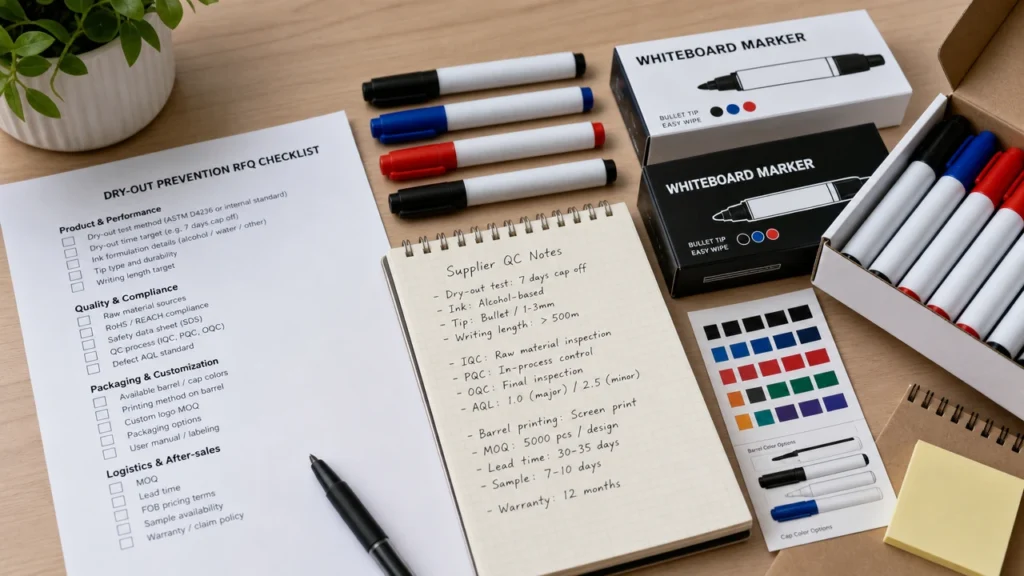
Use specific language. Require cap-fit checks, nib-flow sampling, kept samples, carton guard, storage instructions, and a fix flow for complaints. Avoid vague lines like premium quality or long shelf life unless the supplier defines how they are tested.
Conclusão
Dry-out complaints are easier to cut when buyer and factory stop treating them as isolated customer remarks. The better flow is practical. Collect samples and trace the batch. Check cap and nib fit, review packing pressure, and control storage guesses. Build the next reorder around what was learned.
If you are sourcing private-label markers for a distributor channel, send ZH Stationery the marker type, cap design, packing format, destination market, expected shelf time, and any past complaint notes. The team can turn those notes into a sampling and QC checklist before the next order.
Guia relacionado: Como Manter as Cores dos Marcadores Consistentes em Recompra.
Guia relacionado: Como Lidar com Reclamações de Clientes sobre Marcadores Secos ou Diferenças de Cor.