Um marcador geralmente seca por um motivo simples: a tinta perde água, álcool ou solvente mais rápido do que a tampa e o sistema de armazenamento podem protegê-la. Para um usuário doméstico, isso significa uma caneta desperdiçada. Para um distribuidor ou comprador de marca própria, significa devoluções, avaliações negativas e uma linha de produtos que parece não confiável, mesmo quando a fórmula da tinta era aceitável.
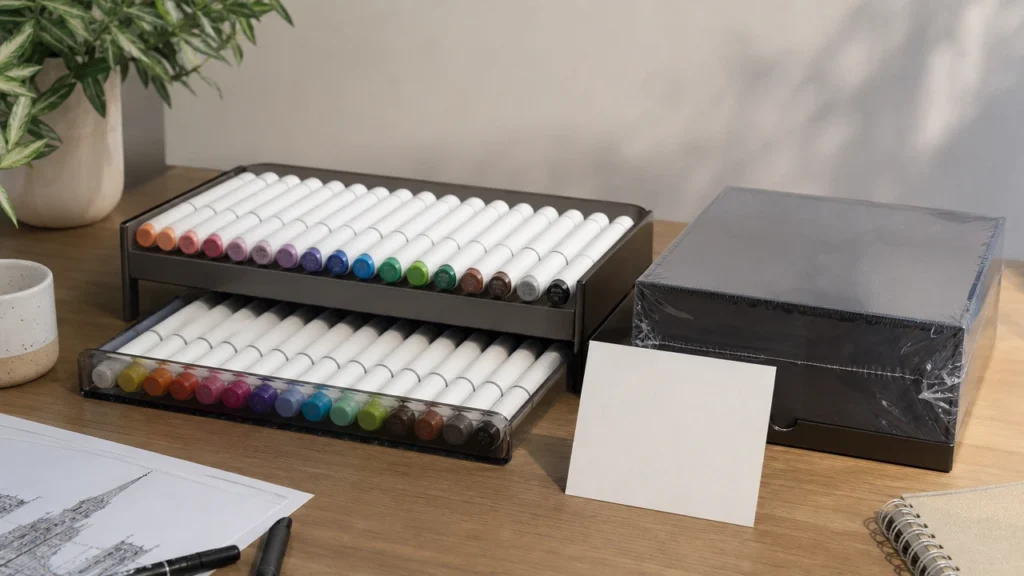
Como Armazenar Marcadores para Não Secarem: Resposta Rápida
A resposta geral mais segura para como armazenar marcadores para que não sequem é simples: tampe-os imediatamente, mantenha-os longe do calor e da luz solar direta, armazene a maioria dos marcadores de ponta dupla e à base de álcool na horizontal, mantenha as caixas de varejo seladas até a exibição e siga as instruções de armazenamento do fornecedor para o tipo exato de marcador. Para compradores B2B, também teste a vedação da tampa, as condições do armazém, a vibração do transporte e o manuseio na exibição de varejo antes de aprovar a embalagem.
A ZH Stationery fabrica marcadores de tinta acrílica, marcadores, canetas de gel e conjuntos de papelaria OEM/ODM. As orientações de armazenamento devem ser escritas por tipo de marcador, porque um marcador acrílico de válvula, um marcador de álcool, um marcador escolar lavável e um marcador permanente não falham exatamente da mesma maneira.
Links Rápidos
- Por que os Marcadores Secam
- Melhor Posição de Armazenamento por Tipo de Marcador
- Temperatura, Luz e Umidade
- Armazenamento em Armazém e no Varejo
- Verificações de Vedação da Tampa
- Marcadores Secos Podem Ser Consertados?
- Faça Perguntas Melhores ao Fornecedor
- Perguntas Frequentes
Por que os Marcadores Secam
O ressecamento não é apenas um erro do usuário. Pode vir do ajuste da tampa, do design da tampa interna, do material da ponta, da volatilidade da tinta, do calor do armazém, do armazenamento prolongado, de tampas rachadas, de expositores soltos no varejo ou de usuários que deixam a tampa aberta. Um bom produto precisa tanto de uma fórmula estável quanto de um sistema de vedação física que resista ao manuseio real.
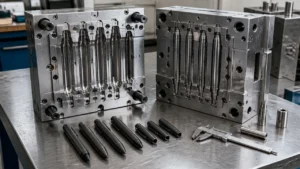
Nossa controle de qualidade de marcadores O artigo explica o lado da fábrica no controle de secagem: vedação da tampa, formulação da tinta, compatibilidade da ponta e verificações de armazenamento. A versão resumida é que um marcador deve proteger o caminho úmido desde a produção, passando pelo transporte, exposição na prateleira e uso pelo cliente.
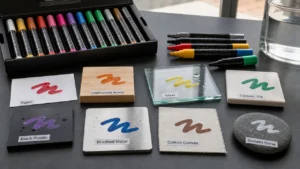
Para marcadores de tinta acrílica, o risco é maior porque a tinta acrílica seca pode curar dentro da ponta. O Válvula de pressão do marcador acrílico vs ponta de fibra a comparação explica por que o mecanismo do marcador afeta o risco de ressecamento sob uso intermitente.
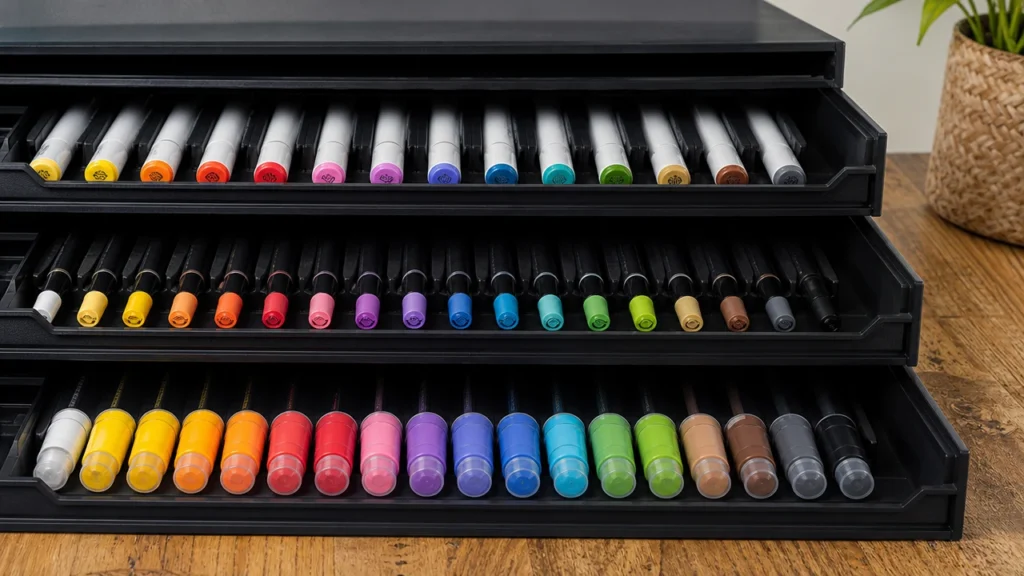
Melhor Posição de Armazenamento por Tipo de Marcador
| Tipo de Marcador | Armazenamento Geralmente Mais Seguro | Porquê | Nota para o Comprador |
|---|---|---|---|
| Marcadores de álcool de ponta dupla | Horizontal | Ajuda a manter ambas as pontas abastecidas e reduz o ressecamento de uma ponta. | Verifique a vedação da tampa em ambas as extremidades. |
| Marcadores de álcool de ponta única | Horizontal ou com a ponta para baixo conforme instrução do fornecedor | A evaporação do solvente é o principal risco. | Evite calor e tampas soltas. |
| Marcadores escolares à base de água | Horizontal ou com a ponta para baixo conforme o design | Mantém a ponta úmida, mas o risco de vazamento varia. | Teste vazamento após o transporte. |
| Marcadores de tinta acrílica | Horizontal com tampa apertada para muitos modelos | A tinta pigmentada necessita de umedecimento estável antes da preparação. | Combine com tecnologia de marcador de válvula instruções. |
| Marcadores de tinta à base de óleo | Horizontal ou especificado pelo fornecedor | Tanto a sedimentação do solvente quanto a do pigmento são importantes. | As instruções de agitação e preparação são importantes. |
| Marcadores pincel | Horizontal | Protege tanto o suprimento de tinta quanto o formato da ponta. | A proteção da ponta é importante na embalagem de varejo. |
Não imprima uma instrução de armazenamento universal sem testar. Se um marcador vazar quando armazenado com a ponta para baixo, essa instrução gera reclamações. Se um marcador de ponta dupla for armazenado na vertical por meses, um dos lados pode ter dificuldade para reiniciar. A orientação de armazenamento deve constar no arquivo de aprovação de amostras.
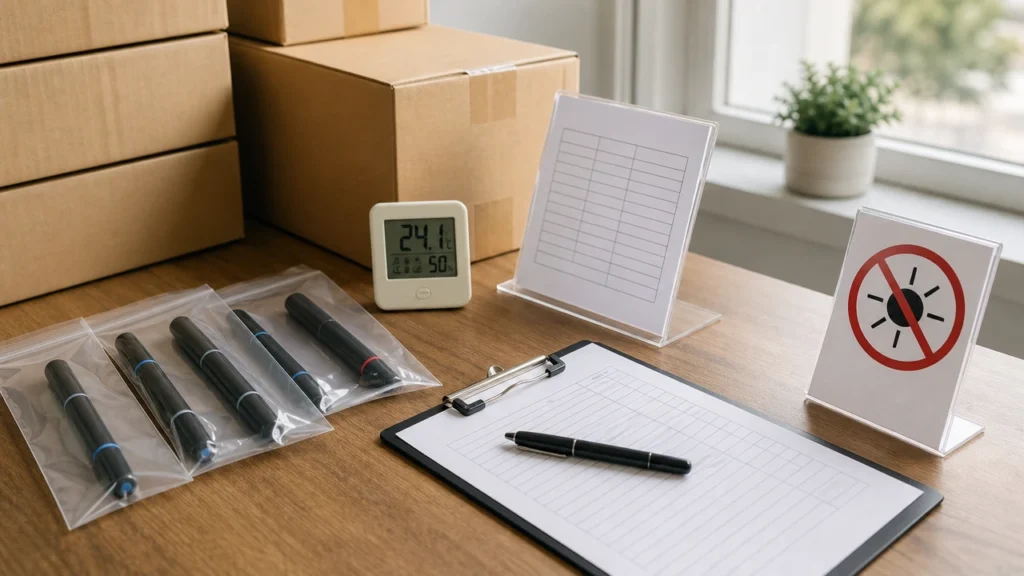
Temperatura, Luz e Umidade
O calor acelera a evaporação. A luz solar direta aquece o corpo do marcador e também pode afetar peças plásticas, rótulos e pigmentos. O ar interno muito seco pode prejudicar os expositores de marcadores, especialmente quando os clientes abrem repetidamente as embalagens ou testam as tampas. O armazenamento a frio geralmente é menos agressivo do que o calor, mas o congelamento ou variações extremas de temperatura podem criar outros problemas, dependendo do tipo de tinta.
- Guarde os marcadores longe de janelas, aquecedores, portas de armazém e veículos quentes.
- Mantenha as caixas fechadas até que o estoque seja necessário para exibição ou separação.
- Evite deixar marcadores de amostra sem tampa durante demonstrações de vendas.
- Faça a rotação do estoque por lote ou data de recebimento.
- Verifique o desempenho de reinício após simulações de armazenamento em alta temperatura.
- Mantenha as políticas de testadores de varejo separadas do estoque selado para consumidores.
Armazenamento em Armazém e no Varejo
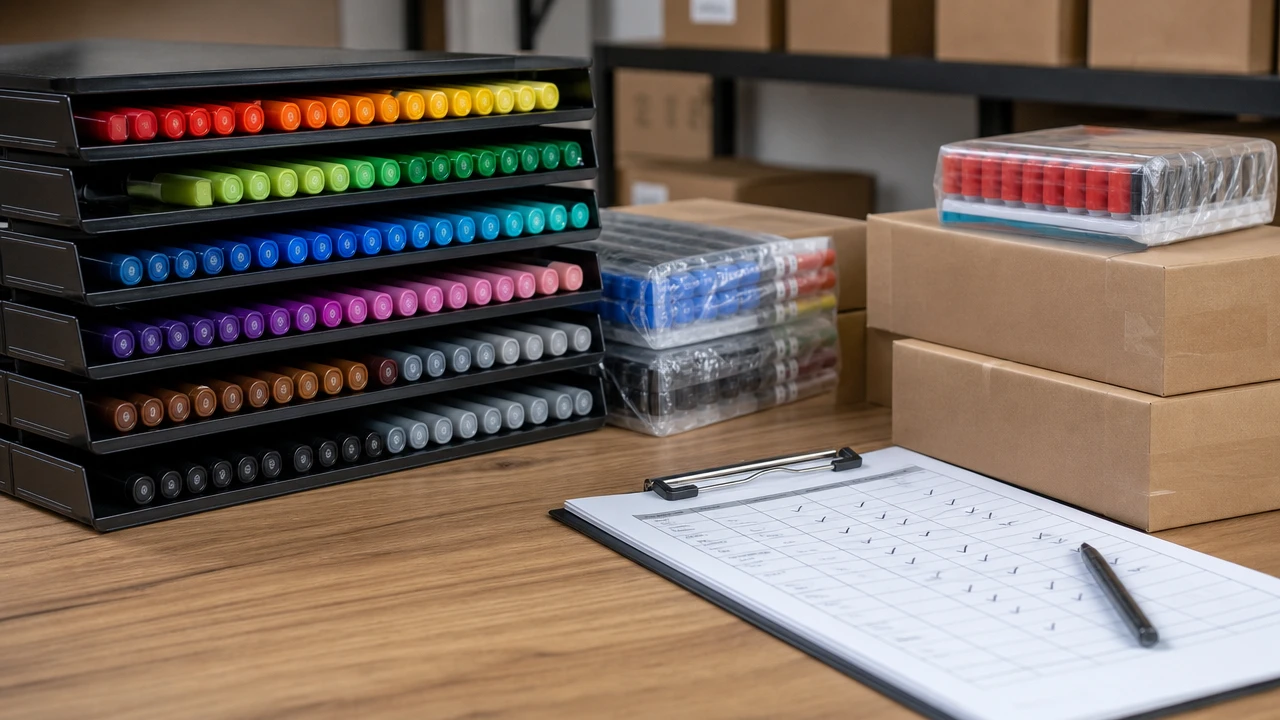
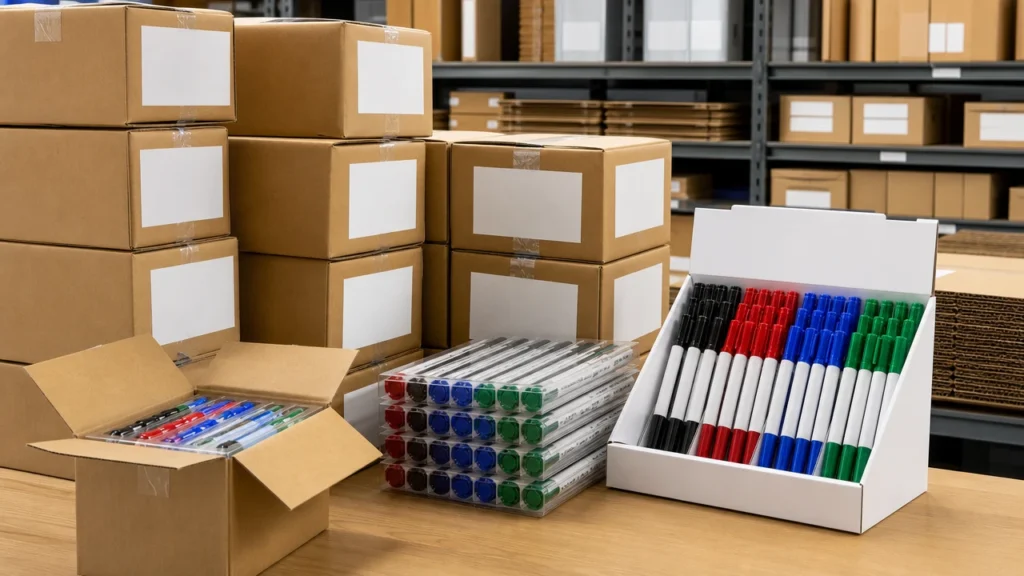
Os problemas de ressecamento do B2B muitas vezes começam antes de o cliente abrir o marcador. Uma caixa pode passar semanas em um contêiner quente, depois ficar perto de uma porta de armazém, e então ir para um expositor de varejo onde os clientes testam as tampas e sacodem as embalagens. Se a embalagem não proteger as tampas contra impactos, o marcador pode perder a vedação antes da venda.
O formato da embalagem é importante. Uma caixa colorida firme, bandeja ou estojo pode manter as tampas alinhadas e reduzir a abrasão no transporte. Um blister solto ou caixa de exibição pode vender bem visualmente, mas ainda precisa de verificações de proteção das tampas. Compare as opções de embalagem com o opções de embalagem para marcadores acrílicos artigo antes de selecionar a estrutura de varejo.
Compradores que preparam estoque para Amazon ou e-commerce também devem revisar o guia de marcadores acrílicos da China, porque o tempo de armazenamento, o manuseio de fulfillment e as janelas de devolução do cliente tornam a prevenção de ressecamento mais do que um item de inspeção de fábrica.
Verificações de vedação da tampa que os compradores devem solicitar
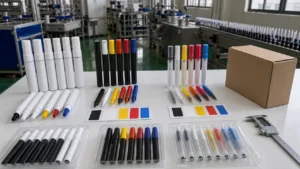
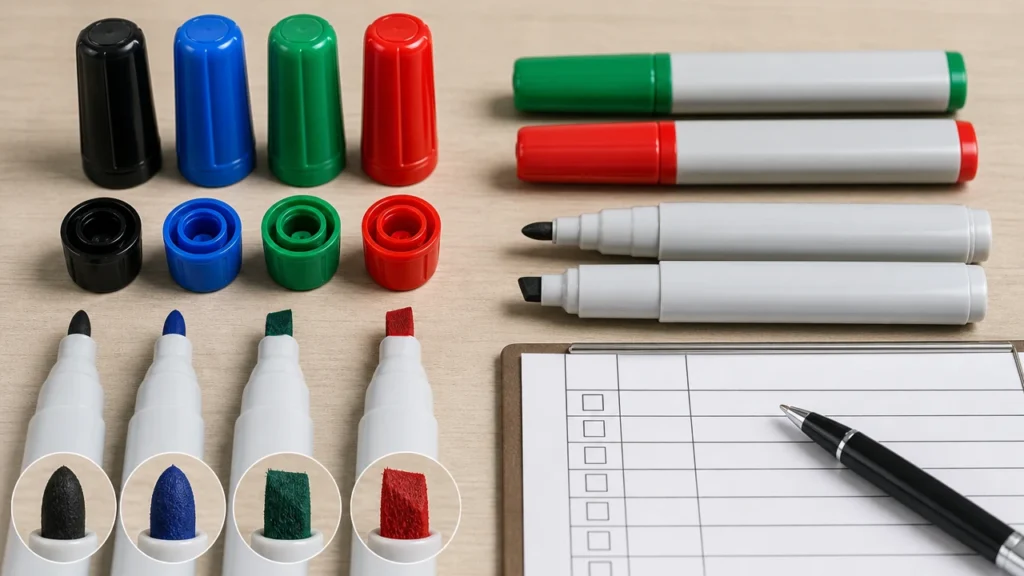
A tampa é a parte do marcador com aparência mais barata e uma das mais importantes. Uma tampa que encaixa bem não é automaticamente hermética. Os compradores devem perguntar como o fornecedor testa o ajuste da tampa, o contato da tampa interna, a força de fechamento e o desempenho de reinício após o armazenamento.
- Verificação da força de remoção e do encaixe da tampa após a montagem.
- Inspeção visual da tampa interna quanto a rebarbas, rachaduras ou deformações.
- Teste de tempo com a tampa removida para erros comuns do usuário.
- Teste de reinício após armazenamento em alta temperatura.
- Verificação de queda ou vibração para avaliar se as tampas se soltam no transporte.
- Teste de reinício da escrita após vários dias ou semanas de armazenamento selado.
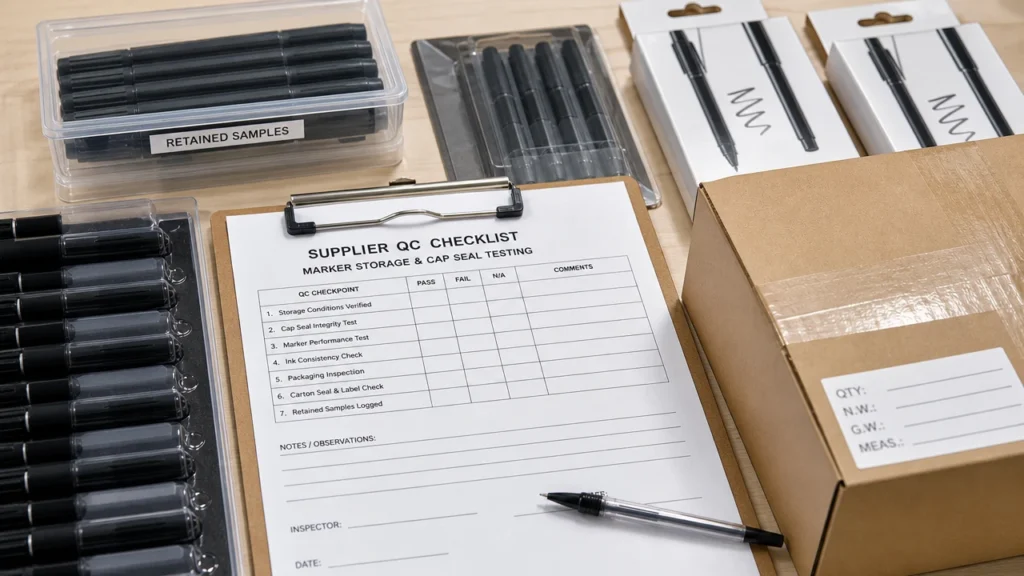
O processo de fabricação de canetas marcadoras guia cobre as causas de ressecamento no nível de produção. Para projetos de marca própria, inclua essas verificações de vedação da tampa no lista de verificação de aprovação de amostra, em seguida, mantenha amostras retidas dos lotes aprovados.
Marcadores Secos Podem Ser Consertados?
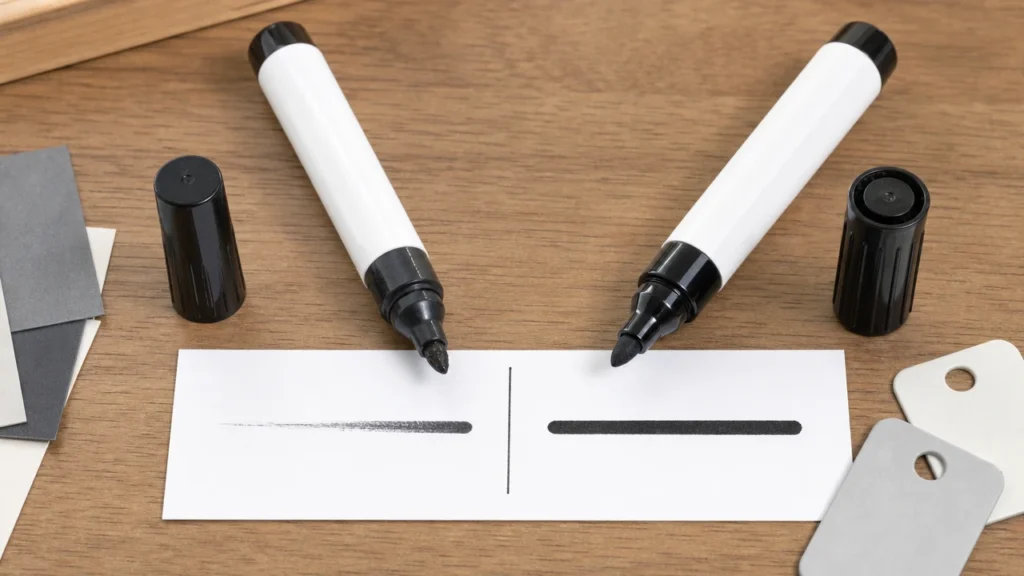
Às vezes. Um marcador à base de água com a ponta parcialmente seca pode se recuperar com um método de umedecimento compatível. Alguns marcadores de álcool podem reiniciar se a perda de solvente for pequena. Marcadores de tinta acrílica são menos tolerantes quando a tinta seca dentro da ponta. Marcadores à base de óleo dependem do sistema de solvente e do grau de obstrução da ponta.
Para embalagens de consumo, tenha cuidado com instruções de recuperação. Não diga aos usuários para adicionar solventes aleatórios, mergulhar pontas em líquidos inseguros ou forçar a válvula repetidamente. Uma instrução de resgate ruim pode danificar o marcador, causar vazamento ou levantar preocupações de segurança. Se houver orientação de recuperação, ela deve vir de instruções testadas do fornecedor.
Para marcas, a prevenção é mais útil do que o resgate. O estudo de caso de reclamação de marcador seco mostra como reclamações de ressecamento se relacionam ao ajuste da tampa, fluxo da ponta, embalagem, manuseio de envio e instruções ao cliente.
Notas de Segurança e Conformidade
A orientação de armazenamento é separada da rotulagem de segurança de materiais de arte. Nos Estados Unidos, o Guia de materiais de arte CPSC explica que os materiais de arte cobertos precisam de avaliação toxicológica e etiquetagem de conformidade ASTM D-4236. ASTM D4236 trata da rotulagem de riscos crônicos à saúde para materiais de arte. Isso não prova que um marcador não secará no armazenamento.
Mantenha arquivos de segurança, instruções de embalagem e documentos de certificação atuais juntos. Se seu canal de vendas incluir escolas, crianças, kits de arte ou redes de varejo, o texto de armazenamento não deve substituir avisos obrigatórios ou documentos de conformidade.
Faça Perguntas Melhores ao Fornecedor
Uma resposta útil do fornecedor deve incluir condições de teste, não apenas manter a tampa fechada. Peça evidências que correspondam ao seu canal de vendas.
- Qual é a posição de armazenamento recomendada para este marcador específico? Uma boa resposta indica o tipo de tinta, a configuração da ponta e o resultado do teste de vazamento.
- Como é testada a vedação da tampa? Uma boa resposta inclui ajuste da tampa, inspeção da tampa interna, armazenamento e verificações de reinício.
- Qual faixa de temperatura os armazéns devem evitar? Uma boa resposta fornece orientações práticas de manuseio e a base do teste.
- Qual é a vida útil esperada? Uma boa resposta explica as condições de armazenamento e se a afirmação é baseada em amostras retidas ou em verificações aceleradas.
- Como os testadores de varejo devem ser manuseados? Uma boa resposta separa os marcadores de teste do inventário selado e vendável.
- Qual embalagem protege as tampas durante o transporte? Uma boa resposta conecta o design da bandeja, caixa, inserto e cartucho à proteção das tampas.
- O que as instruções ao cliente devem dizer? Uma boa resposta fornece redação clara sobre tampa, armazenamento, preparação e reinício, sem conselhos de resgate inseguros.
Perguntas Frequentes
Estas respostas são escritas para compradores do B2B, equipes de varejo e marcas próprias que tentam reduzir as reclamações de ressecamento antes e depois da venda.
1. Os marcadores devem ser armazenados na horizontal ou na vertical?
Muitos marcadores, especialmente os de ponta dupla e os à base de álcool, são melhor armazenados na horizontal, pois isso ajuda a manter ambas as pontas abastecidas. Alguns marcadores de ponta única podem ser armazenados com a ponta para baixo ou na horizontal, dependendo do sistema de tinta. Siga a instrução testada pelo fornecedor para o produto exato.
2. Por que os marcadores secam mesmo com a tampa colocada?
Os motivos habituais são mau ajuste da tampa, tampas rachadas, vazamento na tampa interna, alta temperatura de armazenamento, longo tempo de prateleira, condições secas de exposição no varejo ou incompatibilidade entre tinta e ponta. Uma tampa pode parecer fechada e ainda assim falhar se o selo interno estiver fraco.
3. Marcadores secos podem ser recuperados?
Às vezes, mas depende do tipo de tinta e do quão seca a ponta está. Marcadores à base de água podem ser recuperados com um método compatível. Marcadores de tinta acrílica que secaram dentro da ponta são mais difíceis de recuperar. Para compradores B2B, a prevenção é mais confiável do que a recuperação.
4. Os marcadores de tinta acrílica precisam de armazenamento diferente dos marcadores à base de álcool?
Sim. Os marcadores de tinta acrílica geralmente usam sistemas de tinta pigmentada e podem precisar ser agitados e preparados antes do uso. Os marcadores à base de álcool são mais sensíveis à evaporação do solvente. Ambos precisam de tampas bem fechadas e armazenamento estável, mas os modos de falha não são idênticos.
5. Como os varejistas devem armazenar o estoque de marcadores?
Mantenha as caixas lacradas, evite luz solar direta, evite aquecedores e janelas quentes, faça rodízio do estoque por data de lote e evite layouts de exposição que deixem as tampas expostas a impactos ou adulteração pelo cliente.
6. O que os compradores devem perguntar aos fornecedores sobre o armazenamento de marcadores?
Solicite testes de vedação da tampa, posição de armazenamento recomendada, orientações de temperatura, base do prazo de validade, tempo sem tampa, instruções de manuseio em armazém e se a embalagem protege as tampas durante o transporte e a exposição no varejo.
Conclusão
O armazenamento de marcadores não é um detalhe menor. A instrução correta reduz pontas secas, primeiros traços fracos, surpresas de vazamento e reclamações de clientes. A instrução errada pode fazer um bom marcador parecer defeituoso.
Para um projeto de marcador OEM ou ODM, envie ZH Stationery seu tipo de marcador, sistema de tinta, estrutura da ponta, formato de embalagem, mercado de destino, plano de armazenamento e método de exposição no varejo. Podemos ajudar a revisar testes de vedação da tampa, instruções de armazenamento, proteção da embalagem e prevenção de ressecamento antes da produção em massa.
Leitura relacionada
Referência externa: Guia de materiais de arte CPSC.