

오늘날 빠르게 변화하는 세상에서 스트레스 해소를 위한 미술 치료는 정신 건강을 지원하는 핵심적이고 창의적인 방법이 되었습니다. 불안과 우울은 일상생활에 조용한 위험 요소입니다. 이 때문에 정신 건강 분야는 사람들의 치유를 돕기 위한 새롭고 창의적인 방법을 계속 모색하고 있습니다.
가장 효과적인 새로운 방법 중 하나는 학제 간 미술 치료 접근법입니다. 이는 심리학, 뇌과학, 예술을 결합합니다. 이 방법은 기존의 대화 치료를 넘어섭니다. 힐링 일러스트레이션은 검증된 도구입니다. 번아웃이나 불안에 직면하든, 스트레스 해소를 위한 미술 치료는 세 가지 강력한 단계로 작동합니다. 안전한 공간을 조성하고, 정서적 공명을 구축하며, 은유를 사용하여 마음을 안내합니다.
1. 시각 예술을 통한 안전한 공간 조성
우리는 적절한 공간에서 가장 잘 배우고 치유됩니다. 안전이 없는 지식은 멀게 느껴지고 붙잡기 어려울 수 있습니다. 힐링 일러스트레이션은 다리 역할을 합니다. 참가자들을 차분한 정신적 장소로 안내합니다. 조용한 해변, 꽃이 만발한 정원, 아늑한 방. 이는 일상의 소음을 넘어 안전함을 느끼도록 도와줍니다.
환경 심리학 편안하고 쾌적한 공간이 불안을 낮추고 긍정적인 감정을 높일 수 있음을 보여줍니다. 예술 속 부드러운 색상과 매끄러운 선은 차분한 분위기를 조성합니다. 이는 사람들이 치유 과정에 마음을 열도록 돕습니다.
실제 사례: 직장인을 위한 미술 치료 수업에서 강사는 방 주변에 자연의 평온함을 담은 일러스트레이션을 걸었습니다. 그림은 대나무 숲 속의 부드러운 바람을 보여주었습니다. 안개 낀 시냇물 사이로 햇빛이 움직였습니다. 새들이 나뭇가지에서 노래했습니다.
강사는 학생들에게 눈을 감고 심호흡하며 그 장면을 걷는 모습을 상상하라고 요청했습니다. 오랜 스트레스를 겪던 금융업 종사자가 말했습니다: 처음에는 진정할 수 없었어요. 하지만 그림을 보고 안내를 들으니 대나무 숲에 있는 것 같았어요. 몸의 긴장이 사라지고 마음이 맑아졌어요. 예술이 감정을 안정시켜 주었기 때문에 학생들은 스트레스 대화에 더 편안하게 참여했습니다.

2. 내면의 치유를 위한 정서적 공명 촉발
우리의 감정과 생각은 깊이 연결되어 있습니다. 힐링 일러스트레이션은 이미지를 사용하여 특정한 감정적 메시지를 전달합니다. 예술 속의 좋은 메시지가 보는 사람이 조용히 원하는 것과 일치할 때, 정서적 공명이 일어납니다. 이는 그 사람이 자신의 감정을 새로운 방식으로 보도록 돕습니다.
자기결정성 이론은 우리 모두 연결과 능력이 필요하다고 말합니다. 미술 치료는 사람들이 보여지고 지지받는다고 느끼게 함으로써 이러한 욕구를 충족시킵니다. 이는 자연스러운 치유력을 열어줍니다.
실제 사례: 학업 스트레스에 관한 수업에서 강사는 '역경을 극복하고 성장하다'라는 제목의 작품을 보여주었습니다. 이미지는 책 산더미에 묻힌 학생을 보여주었습니다. 꼭대기에서 흰 날개가 펼쳐졌습니다. 이는 노력을 통해 얻은 자유를 상징했습니다.
많은 학생들이 감동을 받았습니다. 학업 불안을 겪던 한 학생이 말했습니다: 이 그림은 제 스트레스가 마침내 이해받는 느낌을 주었어요. 희망을 주었어요. 계속하면 돌파할 수 있을 거예요. 예술이 그룹 대화를 시작하게 했습니다. 학생들은 혼자가 아니라고 느끼며 대처 방법을 찾기 시작했습니다.
3. 은유를 통한 무의식의 해방
정신분석학의 창시자인 지그문트 프로이트는 무의식이 우리의 행동과 감정을 강하게 형성한다고 믿었습니다. 종종 정신적 어려움은 숨겨진 갈등이나 잘못된 신념에서 비롯됩니다.
힐링 일러스트레이션은 은유로 가득합니다. 추상적인 정신적 개념을 명확한 이미지로 전환합니다. 먹구름은 우울증을 상징할 수 있습니다. 자라나는 씨앗은 새로운 희망을 상징합니다. 우리가 이러한 이미지를 볼 때, 무의식은 상징을 포착합니다. 이는 정신적 장벽을 넘어 깊은 사고를 시작하게 합니다.
또한, 인지 행동 치료 는 비합리적인 생각을 바꾸는 것이 치유의 핵심이라고 가르칩니다. 미술 치료의 은유는 그러한 변화에 부드러운 시작을 제공합니다.
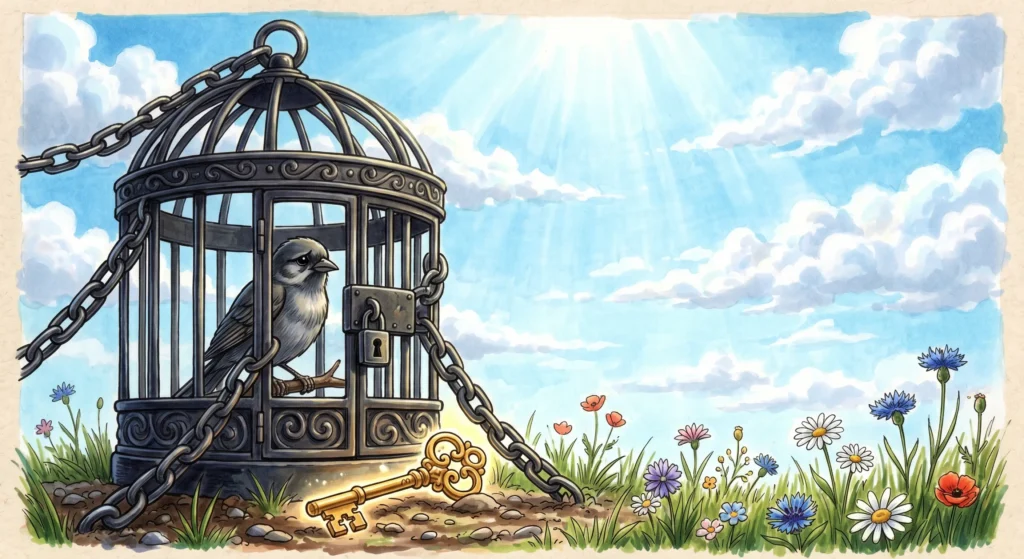
실제 사례: 성인 감정 워크숍에서 참가자들은 무거운 쇠사슬로 새장에 갇힌 새를 관찰했습니다. 새는 슬퍼 보였습니다. 바깥에는 아름다운 푸른 하늘과 부드러운 흰 구름이 있었습니다. 새장 바로 옆에는 부분적으로 숨겨진 열쇠가 있었습니다.
처음에 어른들은 덫만 느꼈습니다. 이야기를 나누면서 그들은 새가 자신들이라는 것을 깨달았습니다. 사슬은 그들의 불필요한 두려움이었습니다. 열쇠, 즉 문제의 해답은 내내 그들 곁에 있었습니다. 그들은 그것을 무시했던 것입니다.
사회 불안이 있는 한 참가자는 이렇게 말했습니다: 저는 항상 바깥 세상이 위험하다고 생각해서 우리 안에 숨었어요. 이 그림을 보고 제가 스스로를 가두고 있었다는 것을 깨달았어요. 파란 하늘과 열쇠를 사용하여 이 참가자는 새로운 사회적 단계를 시도하기 시작했습니다.
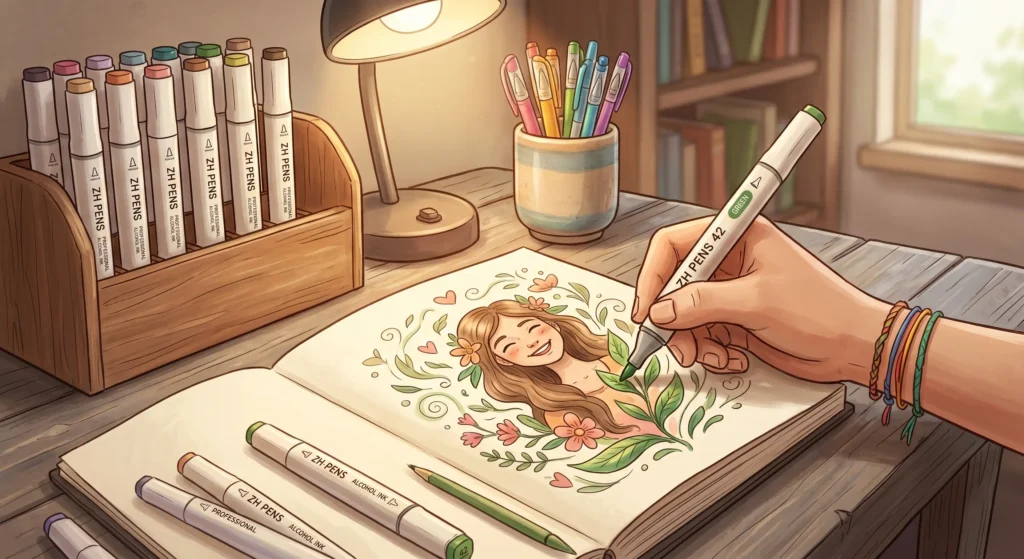
나만의 힐링 일러스트를 만드는 것은 전문 마커 강력한 자기 관리의 한 형태가 될 수도 있습니다.
결론
학제간 미술 치료에서 힐링 일러스트는 실질적인 가능성을 보여줍니다. 안전한 공간을 구축합니다. 감정적 공명을 불러일으킵니다. 은유를 사용하여 어려운 생각을 재구성합니다. 이 세 가지 움직임이 함께 치유 시스템으로 작동합니다.
연구가 성장함에 따라 스트레스 완화를 위한 미술 치료는 더욱 정확하고 유용해질 것입니다. 더 많은 사람들이 어둠에서 벗어나 평온하고 긍정적인 삶으로 나아가도록 도울 것입니다.
관련 가이드: 공장 역량 및 공정 관리에 대한 다른 관점을 보려면 다음을 참조하십시오. 승리의 봄: ZH STATIONERY, 제139회 캔톤 페어 2026에서 빛나다.
관련 읽을거리
Why Repetitive Mark-Making Calms the Nervous System
Coloring is a constrained task. The page sets the boundary, the color sets the variable, and nothing outside that frame needs attention for the next ten minutes. That constraint is the mechanism. When attention narrows to something concrete and low-stakes, the mind stops rehearsing the open loops that keep stress responses running.
The rhythm matters as much as the content. Filling an area with short, even strokes settles breathing into a slower pattern. Many people notice it around the third or fourth minute without being told to look for it. Long, continuous strokes have a different effect — more energizing, less settling — which is why fine liners and chisel tips produce different experiences even when the color is identical.
The third factor is low consequence. Nothing in a coloring page can be done wrong in a way that matters. That is rare in adult life, and the absence of consequence is itself restful.
Choosing Materials That Support the Process
Material choice changes the experience more than most beginners expect. Four variables are worth thinking about before buying a set.
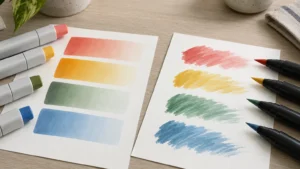
Tip type. Fine tips suit detail and small areas, which supports focused attention. Chisel tips cover large areas quickly, which suits a more rhythmic, less deliberate session. Brush tips sit between the two and are the most forgiving for people who have not drawn since school.
Ink system. Water-based markers are low-odor, easy to clean, and safe around children. Alcohol markers blend smoothly but carry a solvent smell that some people find distracting in a quiet room. Acrylic markers are opaque and work on dark paper, which opens up a different visual vocabulary.
Paper weight. Thin paper bleeds through and creates a second problem to manage. A 100 to 160 gsm stock absorbs enough ink to keep edges clean and lets the session stay about the session.
Color range. A 12-color set is enough to start. Larger sets introduce choice, and choice can become its own small stressor. Many people do better with a limited palette for the first few weeks.
Three Exercises You Can Start Today
Color field. Pick three colors that do not obviously belong together. Fill three horizontal bands across the page, letting the edges bleed slightly. Add simple line work over the top — a horizon, a few marks. The exercise takes about fifteen minutes and produces something that reads as intentional even when it was not planned.
One-color study. Use a single marker for the whole page. Work only with line weight and density. Filling space with more lines makes an area read darker; fewer lines make it lighter. The constraint removes color decisions and leaves only rhythm, which is often the more settling part.
Repeat pattern. Draw the same small shape across a grid. The repetition is the point. It occupies the part of attention that would otherwise drift, and the result is visually coherent regardless of drawing skill.
What Art Therapy Is Not
Art therapy as a clinical practice is delivered by a trained therapist within a treatment relationship. Coloring at home is not that, and it is worth being clear about the difference.
What a coloring session can do is provide a structured, low-demand activity that many people find settling. What it cannot do is diagnose, treat, or substitute for professional care. If stress is persistent, disruptive, or tied to a specific condition, a coloring page is not the intervention.
The honest framing is this: coloring is a accessible practice that supports attention and rhythm. It is not a cure, and presenting it as one does a disservice to the people who need actual clinical support.
자주 묻는 질문
How long should a session last? Ten to twenty minutes is enough for most people to notice a shift. Longer sessions are fine but the effect tends to plateau.
Do I need to be good at drawing? No. The exercises above are designed so that the result reads as intentional regardless of skill.
Are alcohol markers suitable for a quiet room? They carry a solvent odor. Water-based markers are usually a better fit for shared or small spaces.
What paper should I use? 100 to 160 gsm, single-sided if possible, to avoid bleed-through becoming a distraction.
Common Mistakes That Undo the Benefit
Three habits reliably cancel the settling effect of a coloring session.
Choosing the subject before sitting down. Deciding what to draw turns the session into a performance task. The exercises above work because the page has already decided for you. Pick the page in advance and let the session be only about color.
Working on a screen. Digital coloring removes the tactile feedback that does most of the work. The resistance of paper against a tip is part of why the activity settles attention; a stylus on glass does not produce the same effect for most people.
Checking the result against someone else’s. Comparison reopens the evaluation loop the activity was meant to close. The session works when the output is not being judged, including by you.
The practical version: pick the page the night before, use paper, and put the finished sheet somewhere without looking at it again that day.
Setting Up a Repeatable Ritual
The benefit comes from repetition more than duration. A fifteen-minute session four times a week does more than a single two-hour session, because the settling effect depends on the activity becoming familiar enough that it stops requiring decisions.
Three things make repetition easier. Keep the materials accessible rather than packed away. Use the same paper size each time so the scale of the task is predictable. And end the session at a natural stopping point rather than when time runs out, so the next session starts without a leftover task.
Most people who try coloring and abandon it do so because the setup cost exceeded the session length. Reducing friction matters more than extending the session.
Keep the paper and markers where you can see them. Visible materials get used; stored materials do not.