
Wussten Sie, dass alltägliche Schul- und Büroartikel manchmal schädliche Chemikalien verbergen können? Deshalb ist die Formaldehydprüfung bei Schreibprodukten für die Sicherheit wichtig.
Die WHO-Richtlinien von 2010 für Innenraumluft zu ausgewählten Schadstoffen umfassen Formaldehyd. Sie decken die Exposition in Innenraumluft ab. Sie legen keinen universellen Grenzwert für Schreibprodukte fest. Produkttests sollten das beprobte Teil, die anwendbare Produktnorm und die verwendete Testmethode benennen.
Um Käufer zu schützen und einen starken Markennamen zu bewahren, sind zuverlässige Testdienstleistungen unerlässlich.

Die Bedeutung der Formaldehydprüfung bei Schreibwaren und Normen
Um Käufer zu schützen, haben nationale und internationale Gremien strenge Regeln für schädliche Bestandteile in Schreibprodukten festgelegt.
Für Schülerartikel in ihrem Anwendungsbereich ist GB 21027-2020 die zu prüfende chinesische Produktnorm. Ihre Anforderungen hängen vom Artikel und vom Teil ab. Bestätigen Sie die Anforderungen des Zielmarkts separat. Ein Bericht nach chinesischer Norm allein belegt nicht die Konformität für jeden Exportmarkt.
Durch Tests nach diesen Standards zeigen Hersteller ihre Arbeit an umweltfreundlicher, sicherer und hochwertiger Produktion.
Die Labormethode: Acetylaceton-Spektrophotometrie
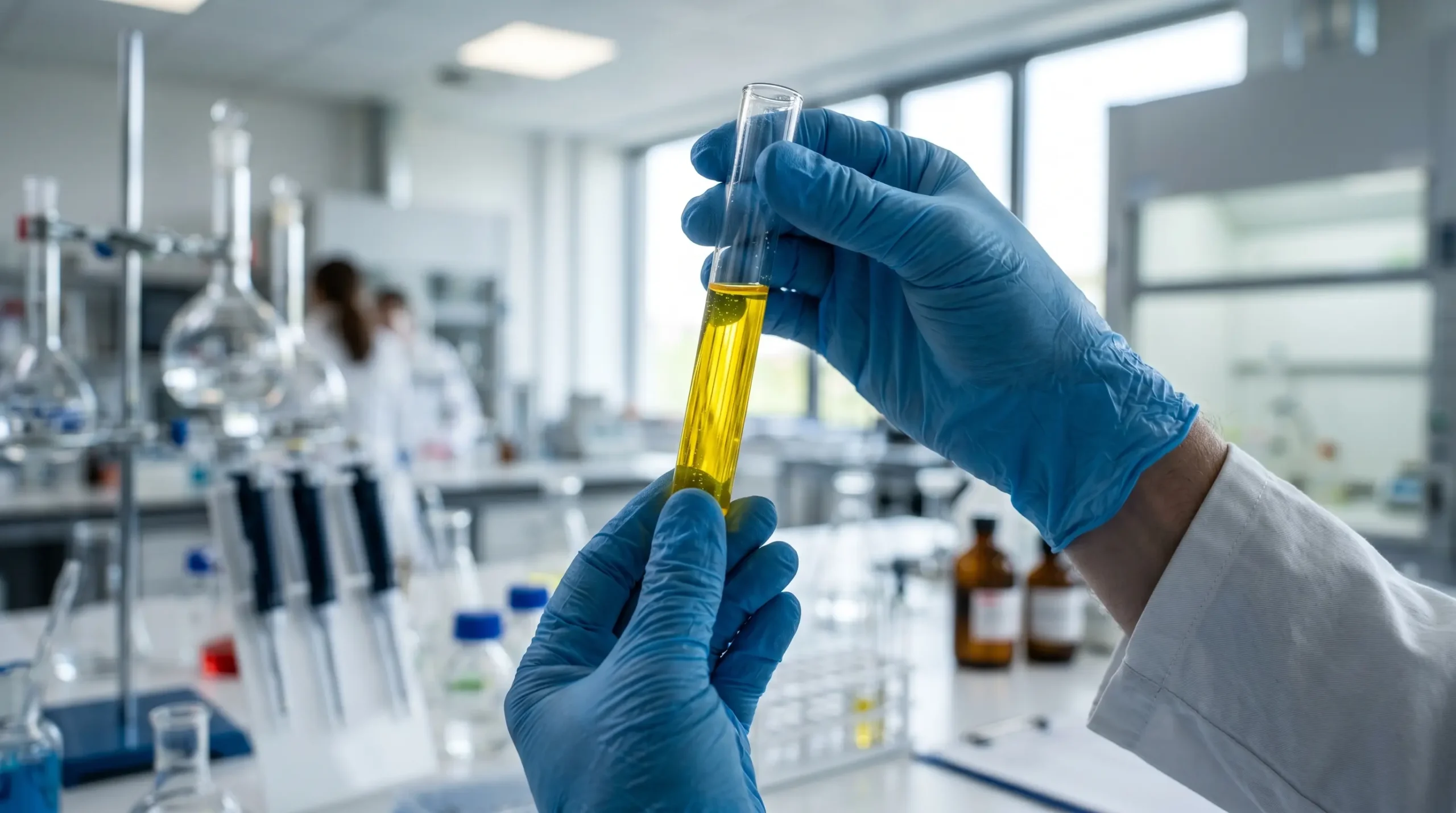
Die offizielle Auflistung für GB/T 32606-2016 nennt als Formaldehyd-Testmethode die Acetylaceton-Spektrophotometrie. Bitten Sie das Labor, die Ausgabe der Methode anzugeben. Bestätigen Sie, dass seine Probenahme- und Extraktionsschritte zum geprüften Teil passen.
Das Grundprinzip:
Die Acetylaceton-Methode erzeugt ein farbiges Reaktionsprodukt. Das Labor vergleicht seine Absorption mit kalibrierten Lösungen. Das Labor muss die angegebenen Bedingungen für Reagenzvorbereitung, Extraktion, Reaktion und Messung einhalten. Diese Übersicht ist nicht die vollständige Norm. Sie ist auch kein Laborverfahren.
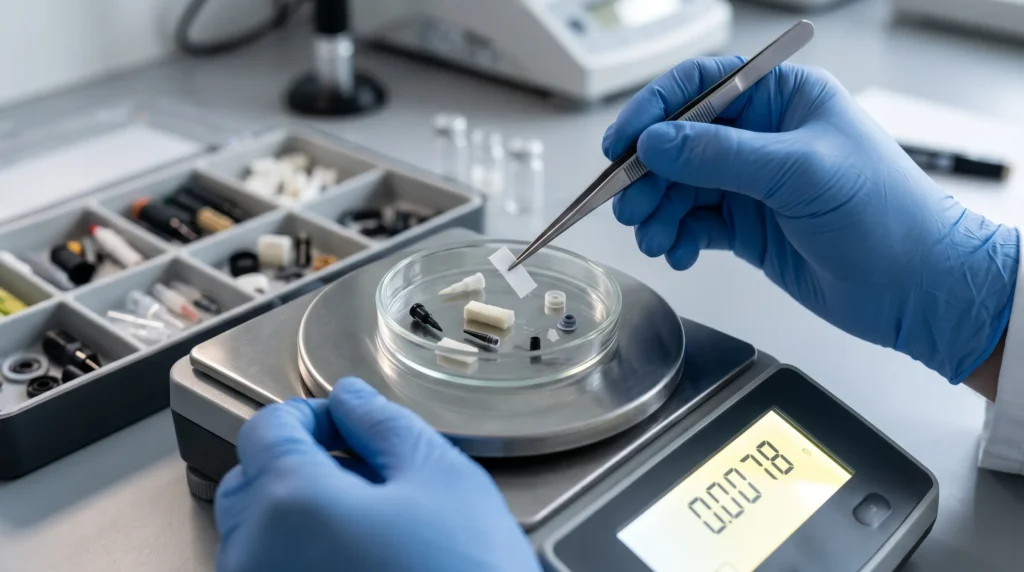
Was im Laborbericht zu prüfen ist
Nutzen Sie diese vier Punkte, um den Bericht mit dem Labor zu prüfen. Die vollständige Testmethode legt Probenmasse, Extraktionsbedingungen, Reagenzvolumina, Reaktionszeit und Kalibrierbereich fest. Leiten Sie diese nicht aus einem allgemeinen Beschaffungsartikel ab.
1. Probenvorbereitung
Benennen Sie das beprobte Modell, Teil und Material. Fragen Sie, wie das Teil nach der zitierten Methode vorbereitet und extrahiert wurde. Bestätigen Sie, dass der Bericht die Probe benennt und nicht ein anderes Produkt oder eine andere Charge.
2. Die Farbreaktion
Prüfen Sie, ob das Labor die zitierte Methode für Reagenzvorbereitung, Reaktion und Absorptionsmessung eingehalten hat. Bitten Sie um Klarstellung, wenn der Bericht die Methode nicht nennt oder ein geändertes Verfahren beschreibt.
3. Erstellung der Standardkurve
Fragen Sie, wie der Kalibrierbereich und der Methodenblindwert festgelegt wurden. Fragen Sie, ob das Probenergebnis innerhalb des geprüften Messbereichs lag. Die anwendbare Methode, nicht ein allgemeiner Artikel, legt die Kalibrierstufen fest.
4. Ablesen der Ergebnisse
Lesen Sie den berichteten Wert mit seinen Einheiten, der Nachweis- oder Quantifizierungsgrenze und der geltenden Bestehensgrenze. Ein Wert unterhalb einer Berichtsgrenze sollte als berichtet gelesen werden. Bezeichnen Sie ihn nicht als Beweis dafür, dass kein Formaldehyd vorhanden ist.
Endgültige Berechnungsformel
Der folgende Ausdruck zeigt nur dann eine Einheitenänderung, wenn c bereits blindwertkorrigiert ist und die zusätzliche Verdünnung berücksichtigt wird. Die vollständige Methode und die Rechnung des Labors bestimmen das berichtete Ergebnis. Dieser Ausdruck ist nicht das vollständige GB/T 32606-Verfahren.
x = (c × f) / m
- x = Die Menge an freiem Formaldehyd in der Probe (mg/kg)
- c = Blindwertkorrigierte Konzentration, mit Berücksichtigung einer zusätzlichen Verdünnung (μg/mL)
- f = Das Volumen, auf das die Probenflüssigkeit verdünnt wurde (mL)
- m = Die genaue Masse der ursprünglichen Probe (g)
Prüfen Sie mit dem Labor die Methodenblindprobe, Verdünnungsfaktoren und Berichtseinheiten. Eine bloße Blindwertkorrektur bedeutet nicht, dass die Summe exakt ist.
Vertrauenswürdige Prüfung für Ihre Sicherheit
Produkte sicher zu halten ist nicht nur eine Frage des Gesetzes. Es geht darum, Ihre Kunden zu schützen.
Wählen Sie ein Labor, dessen aktueller Akkreditierungsumfang die benötigte Methode abdeckt. Prüfen Sie Berichtsaussteller, Probenname und Umfang direkt. Dieser Artikel legt nicht die aktuellen Qualifikationen oder den Umfang eines genannten Labors fest.
Für Marker und andere Schreibprodukte zeichnet ein Testbericht die Probe, die Methode und die Ergebnisse auf. Vergleichen Sie diese Ergebnisse mit den anwendbaren Produktanforderungen. Akkreditierung bedeutet nicht, dass jedes ungetestete Modell, Teil oder jede Charge frei von schädlichen Bestandteilen ist.
Verwandter Leitfaden: Wie man einen ASTM D-4236 Prüfbericht für Acrylmarker liest.
Weiterführende Literatur
- JENSEITS VON “UNGIFTIG”: DIE VERBORGENE WAHRHEIT ÜBER LEBENSMITTELECHTE MARKERTINTE FÜR KINDER
- Qualitätsstandards für Buntstifte und zukünftige Trends: Was Sie wissen müssen
- Leitfaden für essbare Marker-Stifte
- Leitfaden für klassisches Tafelmaterial
- Leitfaden zur Tinte von Trockenlöschmarkern
- Leitfaden zur Entfernung von Whiteboard-Marker-Flecken
- Entfernung von Permanentmarkern von Kunststoff
Why Formaldehyde Still Appears in Stationery
Formaldehyde is not added to markers on purpose. It arrives as a residual from three sources: adhesives in packaging, preservatives in water-based ink, and finishes on wooden or paper components. In each case the amount is small, but the regulatory limit is also small, and the test measures what is present rather than what was intended.
The adhesive route is the most common. Casein and urea-formaldehyde glues are cheap and strong, which is why they still appear in some cartons and laminated boards. A marker itself may pass while the display box it ships in does not.
The ink route matters for water-based formulas. Some preservative systems release formaldehyde slowly as they break down, which is why a freshly mixed batch can pass and a batch tested after six months in a warehouse can fail. That is not a manufacturing defect in the usual sense; it is a formulation choice with a time dimension.
How the Acetylacetone Method Works
GB/T 32606-2016 specifies acetylacetone spectrophotometry as the formaldehyde test method. The procedure runs in four stages.
Extraction. The sample is placed in water at a controlled temperature for a set period. Formaldehyde migrates into the water. The extraction time and temperature are specified, and changing either one changes the result.
Reaction. Acetylacetone reagent is added. In the presence of ammonium acetate, formaldehyde reacts to form a yellow compound, 3,5-diacetyl-1,4-dihydrolutidine. The reaction needs a fixed time and temperature to complete.
Measurement. The solution is read in a spectrophotometer at 412 nanometers. Absorbance is proportional to formaldehyde concentration within the calibrated range.
Calculation. Concentration is derived from the calibration curve, corrected for the blank, and converted to milligrams per kilogram of sample.
The formula only works when the blank is properly corrected and any additional dilution is counted. A report that quotes a number without stating the method edition, the extraction conditions, and the blank value is not reproducible.
Reading a Report: What the Numbers Mean
Three numbers matter on a formaldehyde report: the result, the limit, and the detection limit.
The result should be expressed in mg/kg with the measurement uncertainty stated. A result of 15 mg/kg with an uncertainty of plus or minus 3 is a different statement from 15 mg/kg with no uncertainty given.
The limit depends on the destination market and the product category. Textile and wood components have their own limits under separate standards; stationery is often assessed against the general consumer goods framework. Confirm which limit applies before comparing a result to a pass threshold.
The detection limit tells you whether the test could actually see a failure. A method with a detection limit of 20 mg/kg cannot demonstrate compliance with a 16 mg/kg limit, no matter what the result says.
Sampling and Extraction: Where Tests Go Wrong
Most false passes and false failures trace to sampling, not to the instrument.
The sample must represent the batch. A single marker taken from the top of a carton is not a batch sample. The correct approach is to composite material from several units, because formaldehyde distribution within a production run is not uniform.
The extraction conditions must match the method. Water temperature, extraction time, and the ratio of sample mass to water volume all affect the result. A lab that shortens the extraction to save time will report a lower number than the method intends.
The tested part must be the part that matters. For a marker, that means the barrel, the cap, the ink, and the packaging assessed separately, because each has a different risk profile and a different limit may apply.
Häufig gestellte Fragen
Does passing a formaldehyde test mean the product is safe? No. It means formaldehyde is below the applicable limit for that test method. Other substances are covered by other tests.
How often should formaldehyde be retested? At minimum once per production batch, and again whenever the ink supplier, adhesive supplier, or packaging supplier changes.
Can a factory self-test? It can screen internally, but the report that goes to a retailer should come from an accredited third-party lab with the method edition stated.
What happens if a batch fails? The batch should be held, the source identified — ink, adhesive, or packaging — and the affected lots traced. Retesting the same sample rarely changes the result.
Where Formaldehyde Comes From in the Supply Chain
The test measures what is present, not what was intended. Three upstream sources account for most failures.
Adhesive suppliers. Casein and urea-formaldehyde glues remain cheap and strong, which is why they still appear in laminated boards and some cartons. A marker can pass while the display box it ships in does not. Ask for the adhesive declaration separately from the ink declaration.
Preservative systems in water-based ink. Certain preservatives release formaldehyde as they break down. A freshly mixed batch passes; the same batch tested after six months in a warm warehouse may not. This is a formulation choice with a time dimension, and it is the most common cause of a late failure.
Wood and paper components. Pencil barrels, wooden display stands, and some paper stocks carry residual formaldehyde from processing. These are usually low, but they add to the total when the test composites multiple materials.
The practical implication: test the finished product as it ships, not the individual components in isolation. A composite sample catches the additive effect that single-component testing misses.
Setting a Retest Cadence That Actually Catches Drift
Most programs retest once per production batch, which is not enough to catch a slow drift.
A supplier can change an adhesive vendor, a preservative concentration, or a packaging source without announcing it, and the change shows up three batches later as a failed test. The cadence that catches this has three triggers.
Per batch. A basic screening test on every production run. This is a factory-side control, not a third-party report.
Per quarter. A full third-party report on the current production. This catches drift before it becomes a retailer issue.
Per change. Any change to ink supplier, adhesive supplier, packaging supplier, or formulation triggers an immediate retest regardless of the quarterly schedule. This is the trigger most programs omit, and it is the one that catches the failures that matter.
Put the change trigger in the purchase order, not in a side agreement. A clause that requires notification before any material substitution is enforceable; a verbal understanding is not.