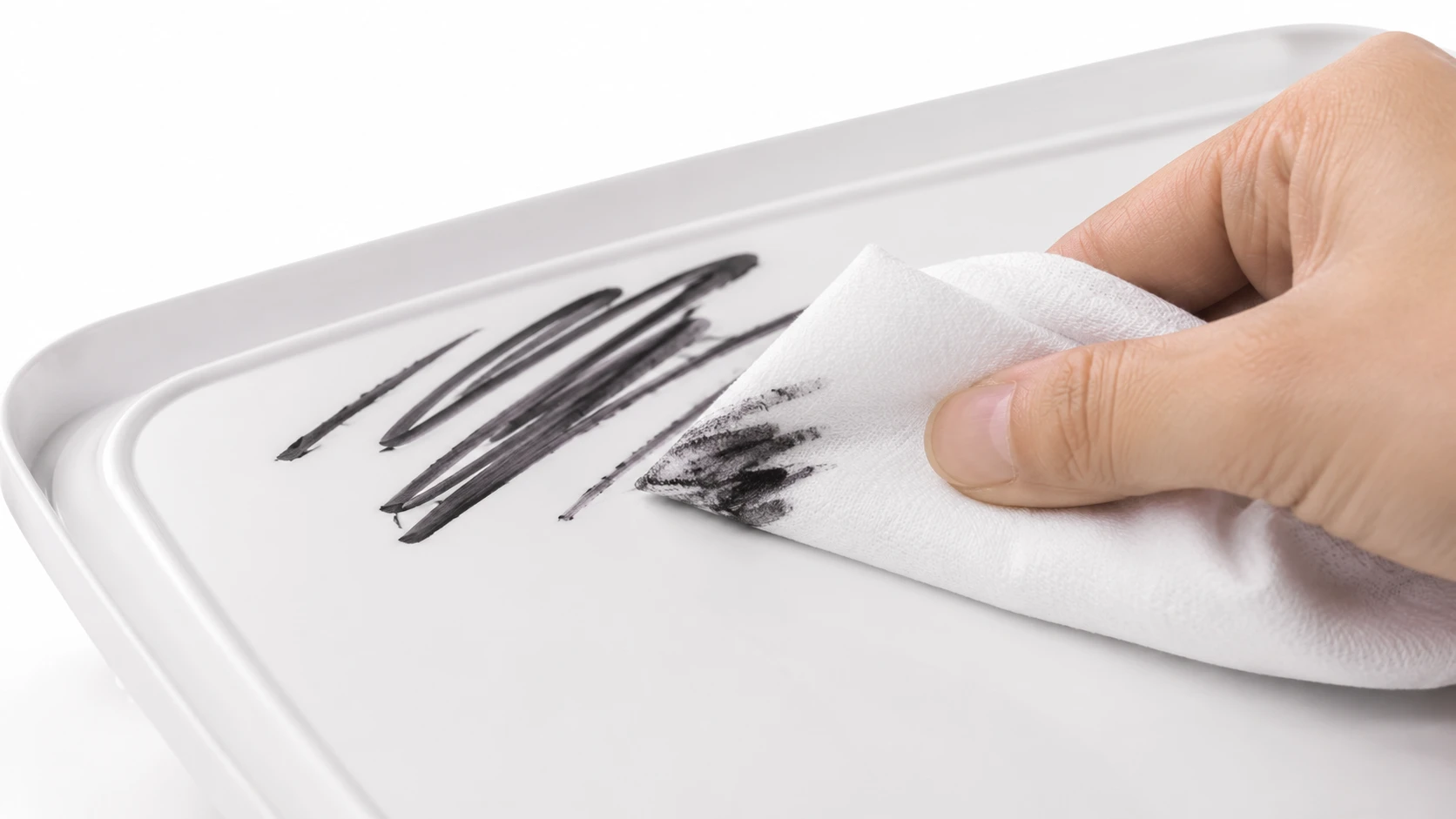
Someone writes on a plastic storage bin with a permanent marker. Then they change their mind. Water does nothing. Soap does nothing. Glass cleaner leaves a faint smear at best. The marker is doing exactly what it was built to do. The user is not impressed.
For B2B buyers sourcing permanent markers, that moment matters. Every end user who cannot remove permanent marker from plastic blames the brand, not the chemistry. They remember which marker failed them.
The removal problem is not random. It measures how well the ink formula does its job. Know what makes permanent marker bond to plastic. Know what solvent chemistry breaks that bond. Then you have a real method to judge ink quality before placing orders.
Table of Contents
Quick Answer: How To Remove Permanent Marker From Plastic
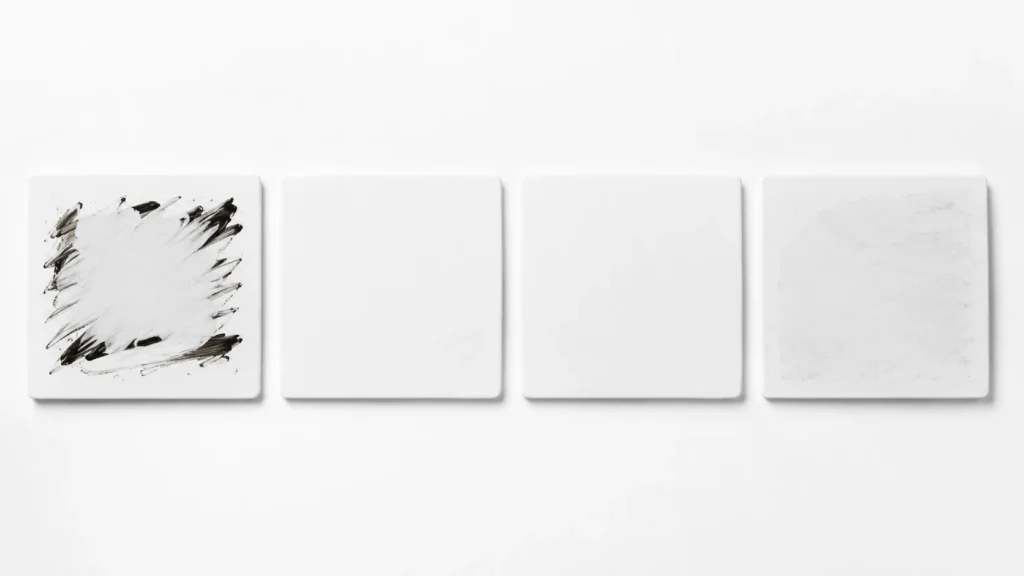
Each method below goes after a different part of the ink. The one that works tells you what solvent system the marker uses:
- Rubbing alcohol (isopropyl, 70 to 90 percent) handles most permanent markers. It re-dissolves the acrylic resin before it fully cures. Try this first. Put it on a cloth, rub gently. The ink lifts.
- Acetone (nail polish remover) is stronger. It dissolves acrylic even after curing. But acetone also dissolves some plastics. ABS, polystyrene, painted surfaces cloud or soften on contact. Test on a hidden spot.
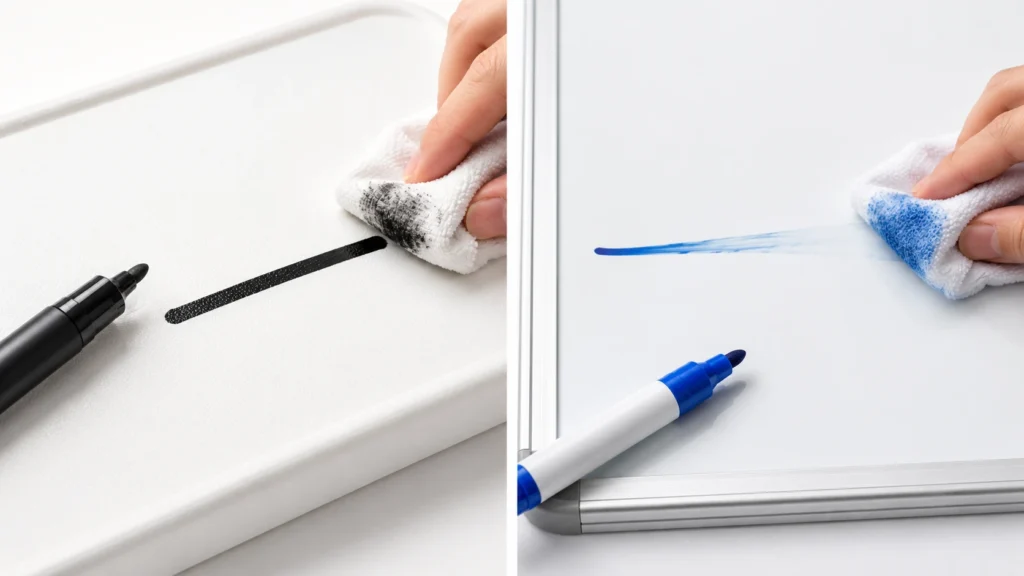
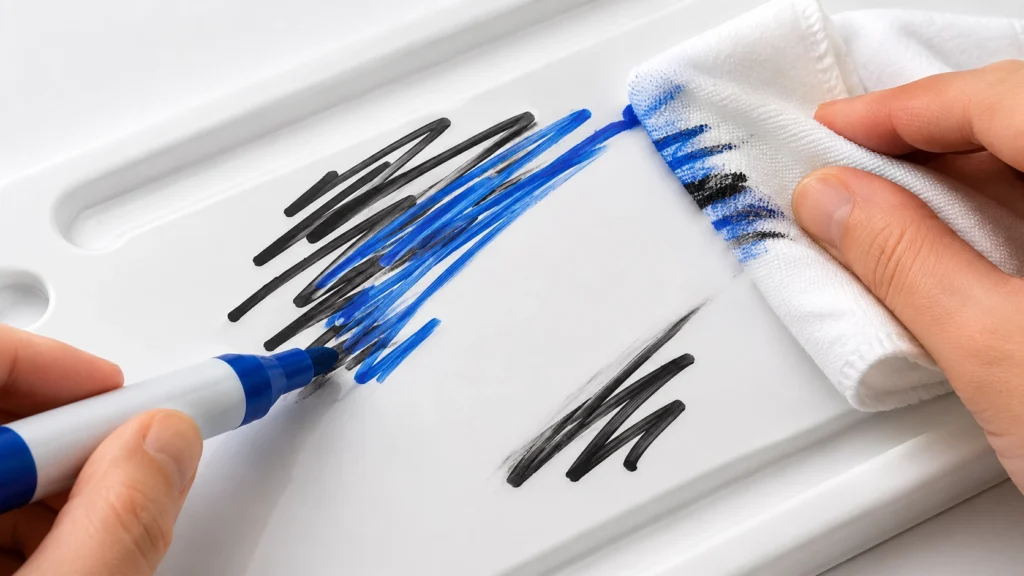
- Dry erase marker trick. Scribble dry erase ink over the permanent mark and wipe. The solvent in the dry erase ink re-liquefies the permanent resin. Both marker types share an alcohol carrier. Gentlest method for delicate plastics.
- Baking soda paste. Mix baking soda with a few drops of water into a thick paste, rub gently with a cloth, rinse. Mild abrasion lifts the ink film physically. Works on textured plastics where solvents alone can’t reach pigment in the grooves.
- Commercial cleaners (Goo Gone, Magic Eraser). Solvents plus micro abrasion. Effective on cured, aged stains. Test on hidden plastic first. Some contain petroleum distillates that eat certain polymers.
For brand owners and buying teams, these factors help set sharper sourcing and quality check bars.
What Removal Difficulty Reveals About Permanent Marker Ink Quality
Every removal method either gets the ink off or does not. The reason tells you something exact about the formula. For B2B buyers, the removal profile says more about ingredient quality than a spec sheet ever will:
| Removal Method | How It Works | What It Reveals About the Ink | B2B Quality Signal |
| Rubbing alcohol | Re-dissolves acrylic resin before full cure | Ink uses alcohol soluble acrylic; pigment is suspended, not bonded | Standard alcohol based formulation. Check resin cure time and solvent purity |
| Acetone | Dissolves cured acrylic; stronger solvent action | Resin is acrylic and responds to ketone solvents | Robust acrylic system. Good for industrial permanence. Acetone resistance means a higher grade resin |
| Dry erase marker over-write | Alcohol solvent in dry erase ink re-liquefies permanent resin | Both markers share an alcohol carrier; resins are compatible | Industry standard solvent chemistry. If this fails, the marker may use xylene or toluene, which signals a different quality tier |
| Baking soda (abrasion) | Physically lifts dried ink film off the surface | Ink film has mechanical adhesion; pigment locked in cured resin | Durable film, good for permanence. If baking soda alone removes it easily, the film may be too weak for real permanent use |
| Nothing works | Resin fully cross-linked and chemically bonded to the plastic | High performance resin with strong substrate adhesion | Genuinely permanent. For industrial labeling, this is what you want. For consumer products, this level may generate complaints |
Permanent markers are supposed to be permanent. The real question is whether they come off under the conditions your end users face. A marker that shrugs off alcohol but gives in to acetone is well built for office and school use. A marker that resists everything, acetone included, is built for industrial labels where permanence is the only goal. Different markets. Different formulas.
Why Permanent Marker Bonds To Plastic
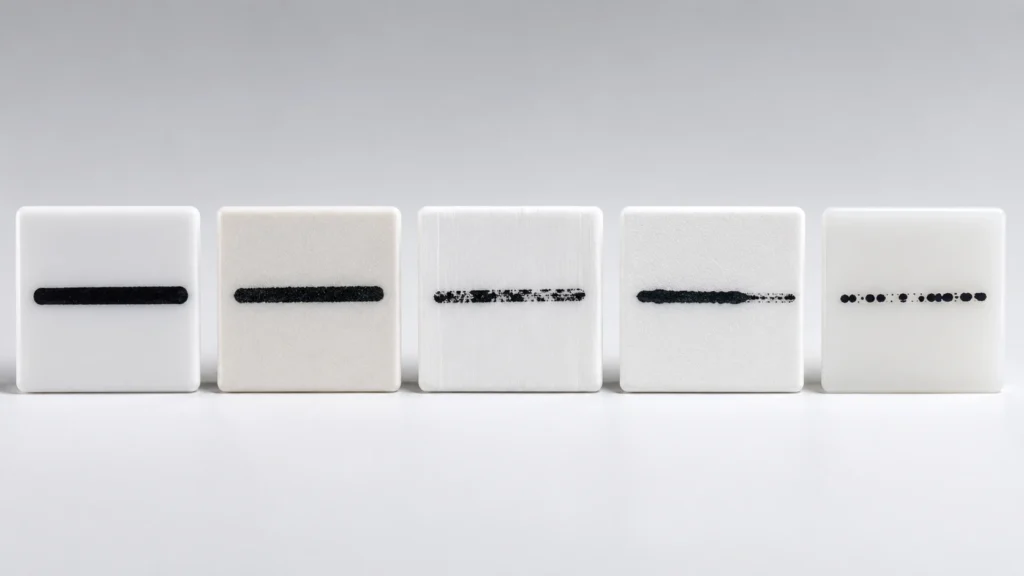
Plastic is not one material. It is a family of polymers. Each has its own surface chemistry. Which plastic your marker hits explains why some removal methods work on one surface and fail on another.
Polyethylene and polypropylene are the hardest to bond to. Low surface energy. Liquids bead up instead of spreading. Permanent ink grips these faces by shape. The resin film wraps micro texture and sets in place. Rubbing alcohol usually works because it re-dissolves the resin and breaks that mechanical grip. No chemical bond to break.
Polystyrene and ABS are easier to bond to and easier to damage. The acrylic resin in permanent ink can partly dissolve the surface of these plastics. That makes a mixed polymer layer at the join. Acetone works well here. It also damages here. Same solvent, two effects.
Polycarbonate and acrylic sit in the middle. They resist most solvents better than polystyrene. They bond more easy than polyethylene. Alcohol usually gets the job done. Avoid acetone. It crazes or clouds polycarbonate almost at once.
Polyvinyl chloride shows in plumbing, vinyl, and some packing. Moderate chemical resistance. Alcohol is safe. Acetone softens PVC with enough contact time.
The same marker acts different across these faces. A marker that writes well on a polypropylene shipping label can smear on a polystyrene pen barrel. If your buyers use markers on varied plastics, ask the supplier for grip data across several bases. A factory that tests one surface is not giving data you can trust.
Permanent Vs. Dry Erase: One Polymer Difference
Permanent and dry erase markers are nearly the same under the hood. Both use a polyester core, a felt or fiber tip, and an alcohol solvent carrier. According to the Royal Society of Chemistry, the whole difference is one part. The polymer.
Permanent markers use acrylic resin. The alcohol leaves. The acrylic cures into a hard film that bonds to the surface. Same chemistry as acrylic paint. Once cured, it is durable, waterproof, and hard to remove without a matching solvent.
Dry erase markers swap acrylic for silicone polymer. The silicone makes a film that sits on the surface without attaching. A dry cloth lifts the whole film in one pass. No bond. That same silicone is why dry erase stains clothes. It repels water, so soap never reaches the pigment underneath.
A factory making both types runs two separate polymer systems. Permanent markers need exact acrylic balance between grip and removal. Dry erase markers need exact silicone balance between erase and film strength. A factory with in-house ink R&D holds both at formula level instead of buying pre-mixed ink outside.
ZH Stationery runs its own ink lab. It has built custom inks for marker pens, permanent markers included, across 26-plus years of OEM/ODM work. See the product range. For private-label lines, the ability to tune resin chemistry and solvent ratio to end-user needs turns a catalog order into a spec talk.
What B2B Buyers Should Test Before Ordering Permanent Markers
Catalog claims about permanent and waterproof mean nothing alone. Four tests tell you what the ink really does:
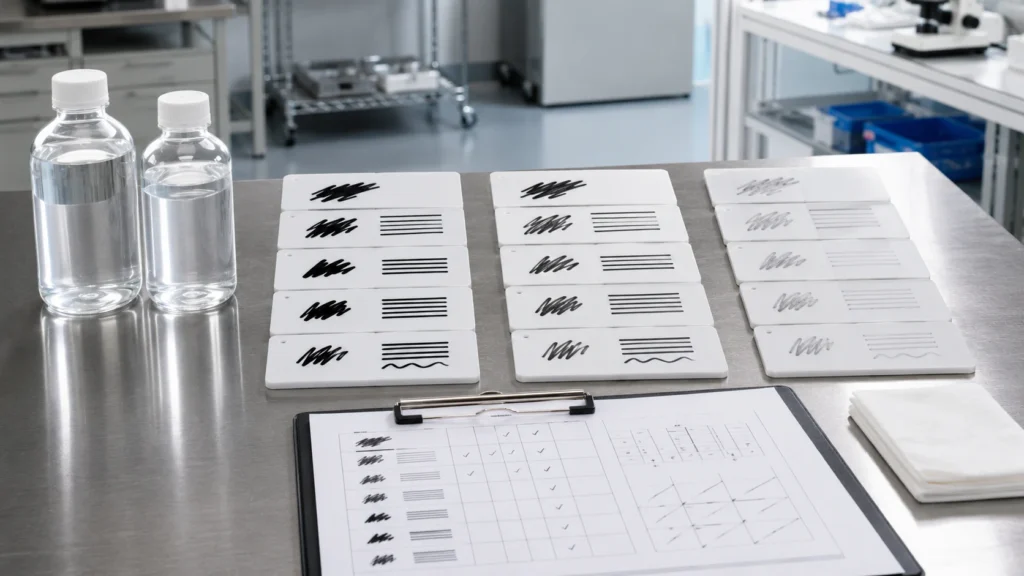
- Adhesion to target substrates. Write on the actual plastics your customers use. Polypropylene bins. PVC pipe. ABS housings. Polycarbonate glasses. Let the ink cure one hour. Try removing it. Document which surfaces hold and which release. That is your real performance baseline.
- Solvent resistance. Cure 24 hours. Test removal with alcohol, then acetone, then a commercial cleaner. A good permanent marker should resist alcohol on non porous plastics but yield to acetone. If alcohol alone takes it off, the resin cure is weak. If nothing takes it off, you have industrial grade formulation. Decide if that fits your market.
- Water resistance after full cure. Write on plastic. Cure 24 hours. Submerge in water for one hour. The ink should not smear, lift, or fade. Water resistance is table stakes for anything labeled permanent. If the ink fails this, the resin system is broken.
- UV and fade resistance. Put a marked plastic sample in direct sunlight for 72 hours. Compare to an unexposed control. Markers used outdoors, construction, landscaping, shipping, need UV stable pigments. If the ink fades in days, industrial users will notice. Ask the supplier what pigment chemistry they use and whether UV stabilizers are in the mix.
A factory running 100 percent check on every unit, with batch QC files, can make this data. The question for suppliers is not is your marker permanent. Ask: can you show grip results on polypropylene, ABS, and polycarbonate after 24 hour cure, with solvent resistance data? See the factory tour.
Frequently Asked Questions
What Is The Best Way To Remove Permanent Marker From Plastic?
Rubbing alcohol, 70 to 90 percent, on a cloth. Rub gently. It re-dissolves the acrylic resin before it fully cures. For cured stains, step up to acetone. Test a hidden spot first. Acetone eats some plastics. The dry erase trick is safest for delicate faces. Scribble dry erase ink over the mark and wipe both away. The B2B marker guide adds line context.
Why Does Permanent Marker Bond To Plastic So Strongly?
Acrylic resin is the binder. Alcohol leaves. Acrylic cures into a hard film that grips the plastic. On slightly rough faces, the resin flows into micro texture and locks by shape. Alcohol removes it by re-dissolving the acrylic before it hardens. After full cure, you need acetone.
Why Does A Dry Erase Marker Remove Permanent Marker?
Both marker types use an alcohol solvent carrier. Scribble dry erase over permanent. The alcohol in the dry erase ink re-liquefies the acrylic resin. Then the silicone release agent in the dry erase ink coats the loose pigment and stops it from re-bonding. Wipe once. Everything comes off. The trick works because the two markers share solvent chemistry even with different polymers.
Does Permanent Marker Come Off All Plastics The Same Way?
No. PE and PP release most easy with alcohol. The bond is by shape, not chemistry. Polystyrene and ABS hold tighter. Acetone works better on them and also attacks them. Polycarbonate is acetone-sensitive and will craze on touch. Always test a hidden spot of the exact plastic you are cleaning.
What Makes A Permanent Marker Truly Permanent?
The resin load, the cure chemistry, and the pigment type. More resin makes a stronger film. Some formulas cross-link for extra life. Carbon black and iron oxide hold under UV far better than organic dyes. A marker that washes off with water has a resin problem. One that fades in sun has a pigment problem. ZH Stationery, through its ink lab, tunes these by need. See the custom marker manufacturer and paint marker process pages.
How Should B2B Buyers Test Permanent Marker Quality Before Purchasing?
Test grip on the real plastics your buyers use, not the factory card. Test solvent resistance after 24 hour cure with alcohol and acetone. Test water by soaking a marked sample for one hour. Test UV with 72 hours of direct sun. If the supplier cannot give this data for your SKU, the claims are not verified. ZH Stationery puts batch grip and life files in the QC pack for permanent orders.
Knowing how to remove permanent marker from plastic tells you more about formula quality than any catalog claim. If you source permanent markers for industrial labels, office supply, or private label, contact ZH Stationery to talk ink specs. See the ink quality guide, the alcohol marker makers, or the contact page.
Related guide: Dry Erase Marker Stain Removal.
Related guide: Paint Markers for 3D Prints.
Related Reading
- Can You Write on CDs With Permanent Marker? Here’s What Actually Happens
- How to Get Sharpie Off Dry Erase Board: 3 Chemical-Free Removal Hacks
- How to Remove Paint Marker from Glass, Plastic, Wood and Fabric
- wet erase markers sourcing report
- wet erase markers comparison guide
- food-grade marker ink guide
- children's marker OEM safety guide