

現代の速い世界では、ストレス解消のためのアートセラピーは、メンタルヘルスを支える重要かつ創造的な方法となっています。不安やうつは日常生活における静かなリスクです。そのため、メンタルヘルスの分野では、人々の癒しを助ける新しい創造的な方法を模索し続けています。
最も効果的な新しい方法の一つが、学際的なアートセラピーです。心理学、脳科学、アートを結びつけます。この方法は従来のトークセラピーを超えます。ヒーリングイラストは実証済みのツールです。燃え尽きや不安に直面していても、ストレス解消のためのアートセラピーは3つの強力なステップで機能します。安全な空間を作る。感情の共鳴を築く。メタファーを用いて心を導く。
1. 視覚芸術による安全な空間の創出
私たちは適切な空間で最もよく学び、癒されます。安全のない知識は遠く感じられ、掴みにくいものです。ヒーリングイラストは橋の役割を果たします。参加者を穏やかな心の場所へと運びます。静かなビーチ。花咲く庭。居心地の良い部屋。それによって日常の雑音から離れ、安心感を得るのを助けます。
環境心理学 快適で心地よい空間が不安を軽減し、良い感情を高めることが示されています。アートにおける柔らかな色彩と滑らかな線は穏やかな気分を作り出します。それらは人々が癒しのプロセスに心を開くのを助けます。
実例:プロフェッショナル向けのアートセラピークラスで、講師は部屋の周りに自然の静けさを描いたイラストを飾りました。そのアートは竹林を吹き抜けるそよ風を表現していました。霧のかかった小川に陽の光が差し込み、枝では鳥がさえずっていました。
講師は生徒たちに目を閉じ、深く呼吸し、その風景の中を歩くイメージをするよう求めました。長期的なストレスに悩む金融関係の仕事をしている人はこう言いました。「最初は落ち着けませんでした。でもアートを見てガイドを聞いているうちに、竹林の中にいるように感じました。体の緊張が消え、心がクリアになりました。」アートが感情を安定させたため、生徒たちはストレスについての話し合いによりリラックスして参加できました。

2. 内面からの癒しを促す感情的な共鳴の喚起
私たちの感情と思考は深く結びついています。ヒーリングイラストはイメージを用いて特定の感情的なメッセージを送ります。アートの中の良いメッセージが、見る人が静かに望んでいることと一致するとき、感情の共鳴が生まれます。それによって、人は自分の感情を新しい方法で見ることができるようになります。
自己決定理論によれば、私たちは皆、つながりと能力を必要としています。アートセラピーは、人々に「見られている」「支えられている」と感じさせることで、これらのニーズを満たします。それが自然な治癒力を引き出します。
実例:学校のプレッシャーに関するクラスで、講師は「困難を乗り越えて成長する」という作品を見せました。そのイメージは、本の山に埋もれた学生を描いていました。その頂上から白い翼が広がっていました。それは努力によって得られた自由を象徴していました。
多くの学生が感動しました。勉強の不安に悩むある学生はこう言いました。「この絵を見て、自分のストレスがやっと理解された気がしました。希望が湧きました。続ければ突破できると。」そのアートがグループでの話し合いを始めました。学生たちは孤独感をなくし、対処法を探し始めました。

3. メタファーによる潜在意識の解放
精神分析の創始者であるジークムント・フロイトは、潜在意識が私たちの行動や感情を強く形作ると信じていました。多くの場合、精神的な苦しみは、心の奥深くにある隠れた葛藤や誤った信念から生じます。
ヒーリングイラストはメタファーに満ちています。抽象的な心の概念を明確なイメージに変えます。暗い雲はうつを表すことができます。成長する種は新しい希望を表します。これらのイメージを見ると、潜在意識がシンボルを拾い上げます。それは心の壁を越えて深い思考を始めます。
また、 認知行動療法 は、役に立たない思考を変えることが癒しの鍵であると教えています。アートセラピーにおけるメタファーは、その変化へのやさしい入り口となります。
実例:大人向けの感情ワークショップで、グループは重い鉄の鎖で檻に閉じ込められた鳥を題材にしました。鳥は悲しそうでした。外には美しい青空と柔らかな白い雲がありました。檻のすぐそばに、半分隠れるようにして、鍵がありました。
最初、大人たちは閉じ込められた感覚だけを感じていました。話し合ううちに、鳥が自分たちであることに気づきました。鎖は不必要な恐怖でした。鍵、つまり問題の答えは、ずっとそばにあったのに、無視していたのです。
社交不安を持つ参加者の一人はこう言いました。「外の世界はいつも危険だと思っていたので、自分の檻に隠れていました。この絵を見て、自分で自分を閉じ込めていたのだと気づきました。」青空と鍵を手がかりに、この参加者は新しい社会的な一歩を踏み出し始めました。
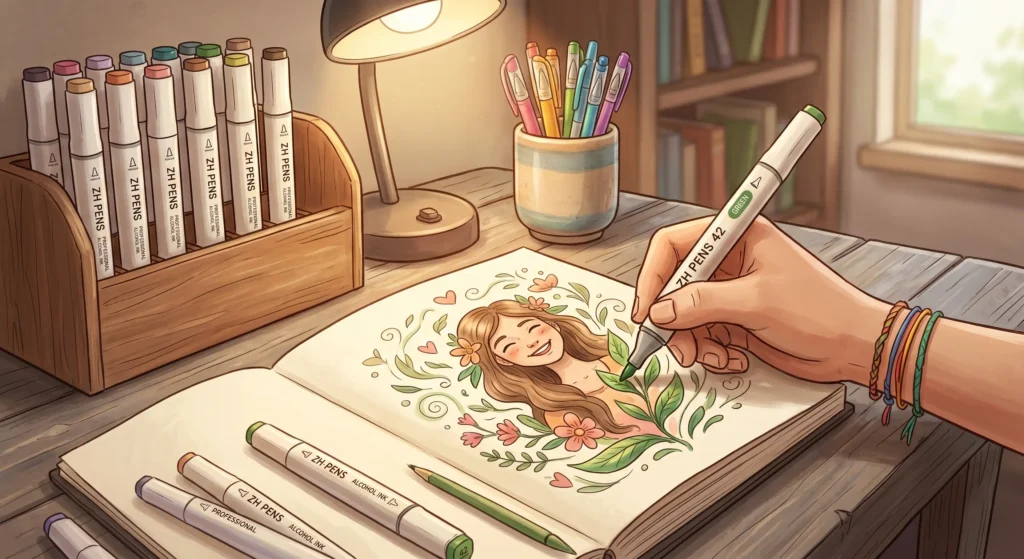
自分だけの癒しのイラストを プロ仕様マーカー で描くことも、強力なセルフケアの形になります。
結論
学際的アートセラピーにおける癒しのイラストは、大きな可能性を示しています。安全な空間を作り、感情の共鳴を引き起こし、メタファーを用いて難しい思考を再構築します。この3つの動きが組み合わさり、癒しのシステムとして機能します。
研究が進むにつれて、ストレス緩和のためのアートセラピーはさらに精密で有用なものになるでしょう。より多くの人々が暗闇から抜け出し、穏やかで前向きな生活へと踏み出す手助けとなるはずです。
関連ガイド: 工場の能力と工程管理を別の視点からご覧になるには、こちらをご参照ください。 勝利の春:ZH STATIONERY、第139回広州交易会2026で輝く.
関連記事
Why Repetitive Mark-Making Calms the Nervous System
Coloring is a constrained task. The page sets the boundary, the color sets the variable, and nothing outside that frame needs attention for the next ten minutes. That constraint is the mechanism. When attention narrows to something concrete and low-stakes, the mind stops rehearsing the open loops that keep stress responses running.
The rhythm matters as much as the content. Filling an area with short, even strokes settles breathing into a slower pattern. Many people notice it around the third or fourth minute without being told to look for it. Long, continuous strokes have a different effect — more energizing, less settling — which is why fine liners and chisel tips produce different experiences even when the color is identical.
The third factor is low consequence. Nothing in a coloring page can be done wrong in a way that matters. That is rare in adult life, and the absence of consequence is itself restful.
Choosing Materials That Support the Process
Material choice changes the experience more than most beginners expect. Four variables are worth thinking about before buying a set.
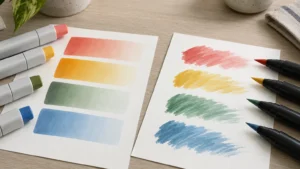
Tip type. Fine tips suit detail and small areas, which supports focused attention. Chisel tips cover large areas quickly, which suits a more rhythmic, less deliberate session. Brush tips sit between the two and are the most forgiving for people who have not drawn since school.
Ink system. Water-based markers are low-odor, easy to clean, and safe around children. Alcohol markers blend smoothly but carry a solvent smell that some people find distracting in a quiet room. Acrylic markers are opaque and work on dark paper, which opens up a different visual vocabulary.
Paper weight. Thin paper bleeds through and creates a second problem to manage. A 100 to 160 gsm stock absorbs enough ink to keep edges clean and lets the session stay about the session.
Color range. A 12-color set is enough to start. Larger sets introduce choice, and choice can become its own small stressor. Many people do better with a limited palette for the first few weeks.
Three Exercises You Can Start Today
Color field. Pick three colors that do not obviously belong together. Fill three horizontal bands across the page, letting the edges bleed slightly. Add simple line work over the top — a horizon, a few marks. The exercise takes about fifteen minutes and produces something that reads as intentional even when it was not planned.
One-color study. Use a single marker for the whole page. Work only with line weight and density. Filling space with more lines makes an area read darker; fewer lines make it lighter. The constraint removes color decisions and leaves only rhythm, which is often the more settling part.
Repeat pattern. Draw the same small shape across a grid. The repetition is the point. It occupies the part of attention that would otherwise drift, and the result is visually coherent regardless of drawing skill.
What Art Therapy Is Not
Art therapy as a clinical practice is delivered by a trained therapist within a treatment relationship. Coloring at home is not that, and it is worth being clear about the difference.
What a coloring session can do is provide a structured, low-demand activity that many people find settling. What it cannot do is diagnose, treat, or substitute for professional care. If stress is persistent, disruptive, or tied to a specific condition, a coloring page is not the intervention.
The honest framing is this: coloring is a accessible practice that supports attention and rhythm. It is not a cure, and presenting it as one does a disservice to the people who need actual clinical support.
よくある質問
How long should a session last? Ten to twenty minutes is enough for most people to notice a shift. Longer sessions are fine but the effect tends to plateau.
Do I need to be good at drawing? No. The exercises above are designed so that the result reads as intentional regardless of skill.
Are alcohol markers suitable for a quiet room? They carry a solvent odor. Water-based markers are usually a better fit for shared or small spaces.
What paper should I use? 100 to 160 gsm, single-sided if possible, to avoid bleed-through becoming a distraction.
Common Mistakes That Undo the Benefit
Three habits reliably cancel the settling effect of a coloring session.
Choosing the subject before sitting down. Deciding what to draw turns the session into a performance task. The exercises above work because the page has already decided for you. Pick the page in advance and let the session be only about color.
Working on a screen. Digital coloring removes the tactile feedback that does most of the work. The resistance of paper against a tip is part of why the activity settles attention; a stylus on glass does not produce the same effect for most people.
Checking the result against someone else’s. Comparison reopens the evaluation loop the activity was meant to close. The session works when the output is not being judged, including by you.
The practical version: pick the page the night before, use paper, and put the finished sheet somewhere without looking at it again that day.
Setting Up a Repeatable Ritual
The benefit comes from repetition more than duration. A fifteen-minute session four times a week does more than a single two-hour session, because the settling effect depends on the activity becoming familiar enough that it stops requiring decisions.
Three things make repetition easier. Keep the materials accessible rather than packed away. Use the same paper size each time so the scale of the task is predictable. And end the session at a natural stopping point rather than when time runs out, so the next session starts without a leftover task.
Most people who try coloring and abandon it do so because the setup cost exceeded the session length. Reducing friction matters more than extending the session.
Keep the paper and markers where you can see them. Visible materials get used; stored materials do not.